On this page
A bright berry smoothie, a creamy mango bowl, or an icy banana-and-chocolate shake can be a lovely way to use fruit already in the freezer. But the best smoothie is not always the one with the longest ingredient list or the boldest promise. It is the one you enjoy, can make safely, and know exactly what you are drinking. This updated What’s Baking? collection features 57 distinct, verified blended recipes—including sippable smoothies, thick smoothie bowls, and a handful of unmistakable dessert-style treats.
Every entry links to its own recipe, with a name that matches the ingredients. You will find a classic blueberry drink next to a berry bowl, mango blends next to a granola-topped mango bowl, and a pineapple creamsicle that contains real vanilla ice cream. These differences are worth knowing before you shop: a dessert-like shake can be wonderful, but it should not be mistaken for a fruit-only breakfast.
How to use this guide: browse by flavour or texture, select a recipe that matches your ingredients and dietary needs, then open its linked recipe page for exact measurements and preparation steps. The notes below explain what distinguishes each blend, what takes extra time, and which ingredients deserve clearer labelling. These recipes have different amounts of sugar, fat, protein, fibre and caffeine. Not every item is a balanced meal, a high-protein drink, or an everyday choice merely because it comes from a blender.
First, choose the texture and purpose you want
A drinkable smoothie needs enough liquid to pour and sip. A frozen-fruit base may require patience or small additions of liquid, but adding too much at once can make it watery. A smoothie bowl deliberately begins thicker and uses a spoon; toppings such as granola or chopped fruit are part of the experience. A dessert-style blended drink may include ice cream, cream, shortbread, chocolate-hazelnut spread, or substantial sweetener. Those ingredients are not hidden by calling the drink a smoothie.
Think about what you already have. Frozen bananas add body without needing ice. Greek yogurt often provides richness, but it contains dairy unless a suitable plant alternative is selected. Nut butters bring flavour and fat while adding a major allergen. Chia seeds absorb moisture and may thicken a drink after blending. Matcha adds tea flavour and caffeine; herbal powders and protein supplements warrant separate consideration. For an ordinary refreshing drink, simple fruit and milk of choice may be all you need.
A small blender routine that actually works
Wash produce that requires it, remove pits and hard seeds, check fruit for spoilage, and use a clean blender. Place liquids and softer ingredients near the blades as recommended by your equipment manual; then add frozen fruit gradually. Never blend boiling liquids in a sealed blender without manufacturer-approved procedures, as hot steam and pressure can cause injury. Start with a small volume of the recipe’s liquid and add more only if required for the blade to turn safely.
Taste before adding optional sweetener. Ripeness and fruit variety change sweetness naturally. If the smoothie is too tart, the recipe may already contain banana or yogurt that softens it; extra honey is not the only solution. If the drink is too thin, frozen fruit or the specific thickening ingredient in the recipe works better than throwing in unrelated powders. Avoid making untested substitutions when you need reliable nutrition or allergen control.
Berry smoothies and bowls: Tart, creamy and colourful
Berries give this section its bright colour, but not every berry recipe is simple or sugar-free. Some use Greek yogurt and banana; others include cookies, chocolate powder, nut butter or granola. The first two are a good starting point for a basic drink, while the shortcake and chocolate-hazelnut choices belong on the treat side of the menu.
1. Stress-Less Smoothie Bowl
This is a spoonable berry-and-banana bowl rather than a thin blueberry drink. The actual recipe uses frozen blueberries and blackberries, almond butter, chia, and optional ashwagandha and maca. Leave out optional herbal supplements unless a qualified clinician confirms that they are appropriate for the person eating it.

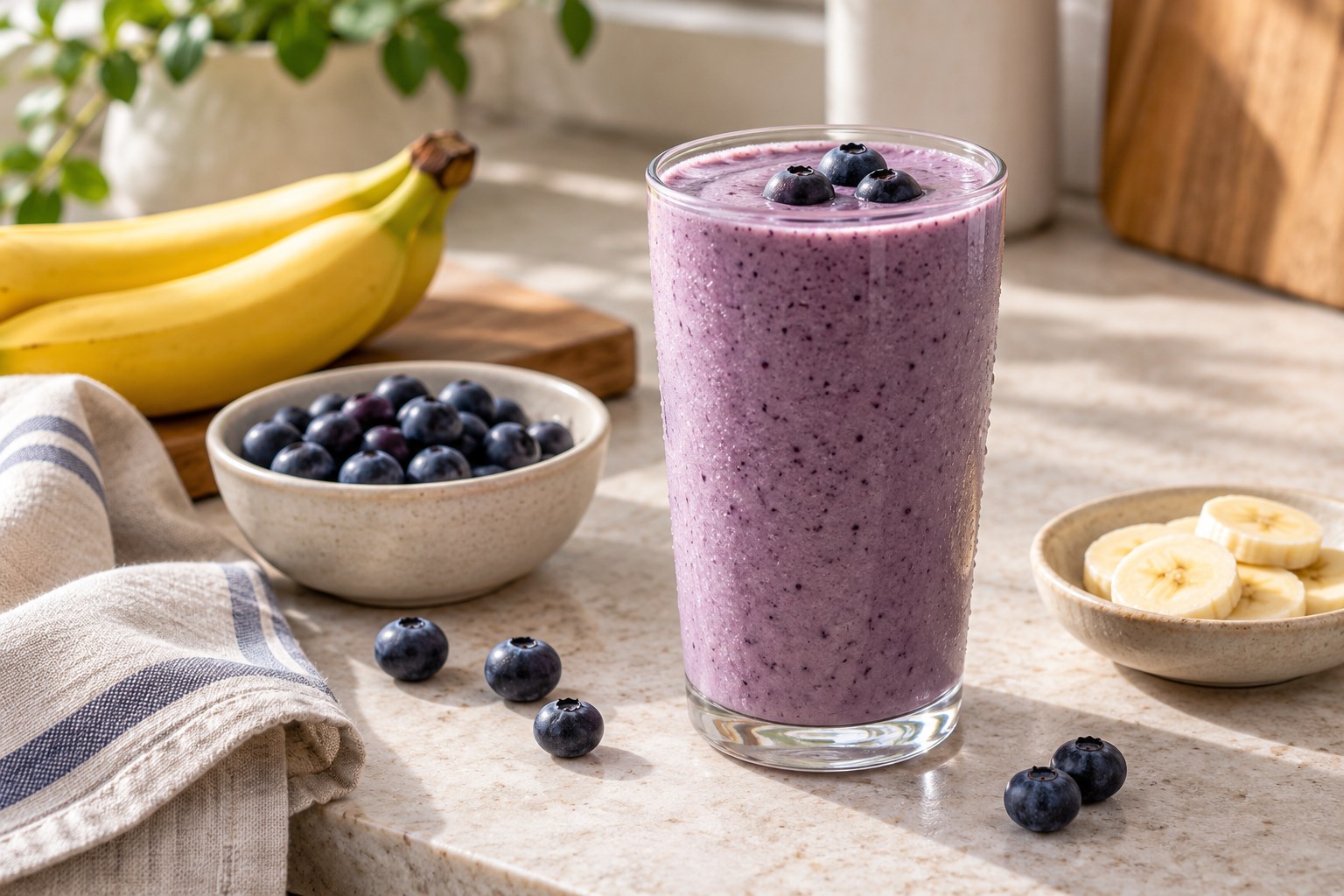
2. Classic Blueberry Smoothie
Frozen blueberries, banana, Greek yogurt, milk and vanilla produce a familiar creamy drink. The yogurt contributes dairy unless an appropriate plant-based version is used. Freeze the banana ahead for a thicker texture and taste before adding the optional honey or maple syrup; the fruit may already be sweet enough.
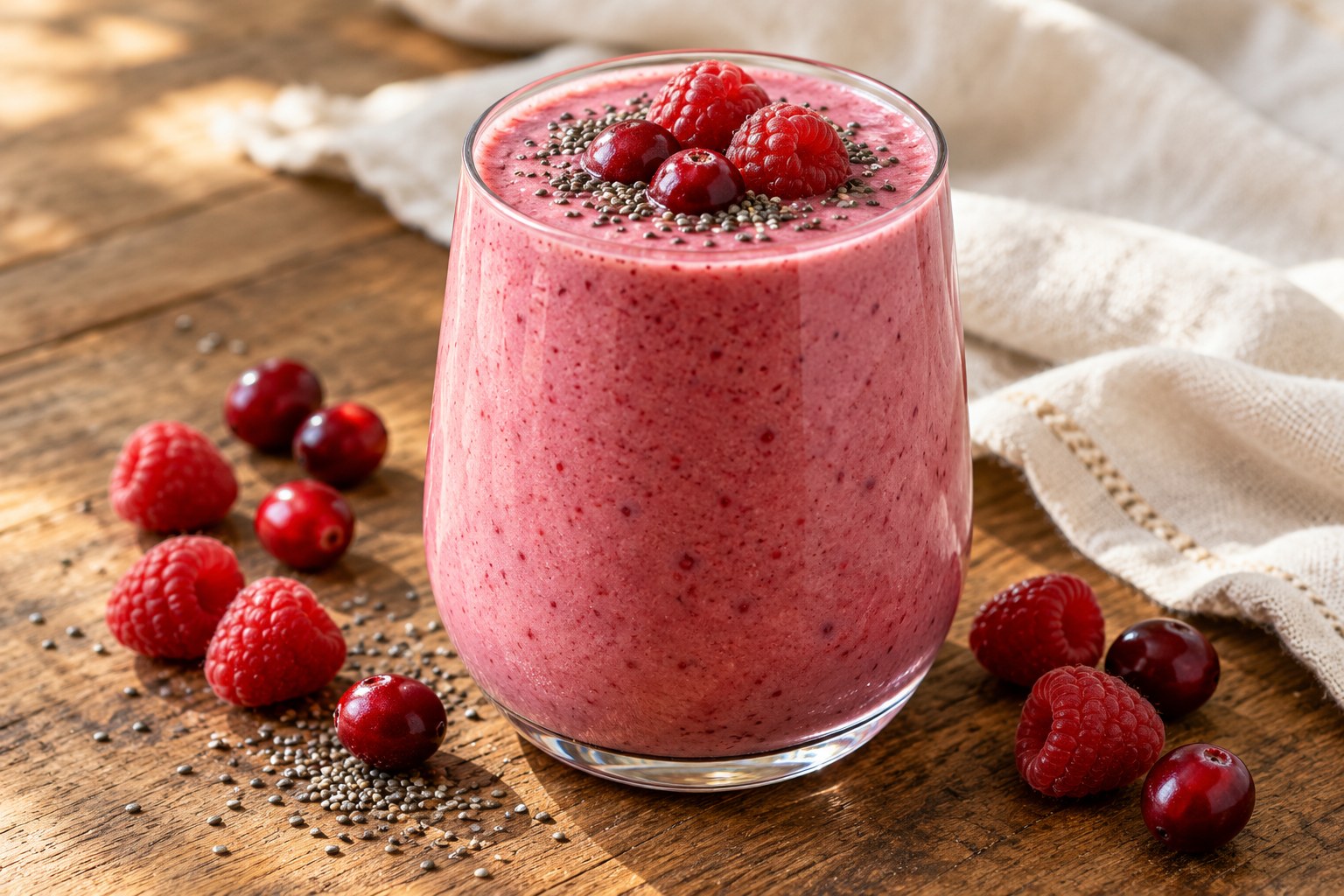
3. Cranraspberry Smoothie
Cranberries are sharper than many other smoothie fruits. This recipe balances them with raspberries, banana, yogurt, almond milk and optional sweetener. Blend long enough to break down the tart skins. It is a berry-and-yogurt drink, not an evidence-based immune treatment, and people with nut or dairy restrictions should check their chosen ingredients.
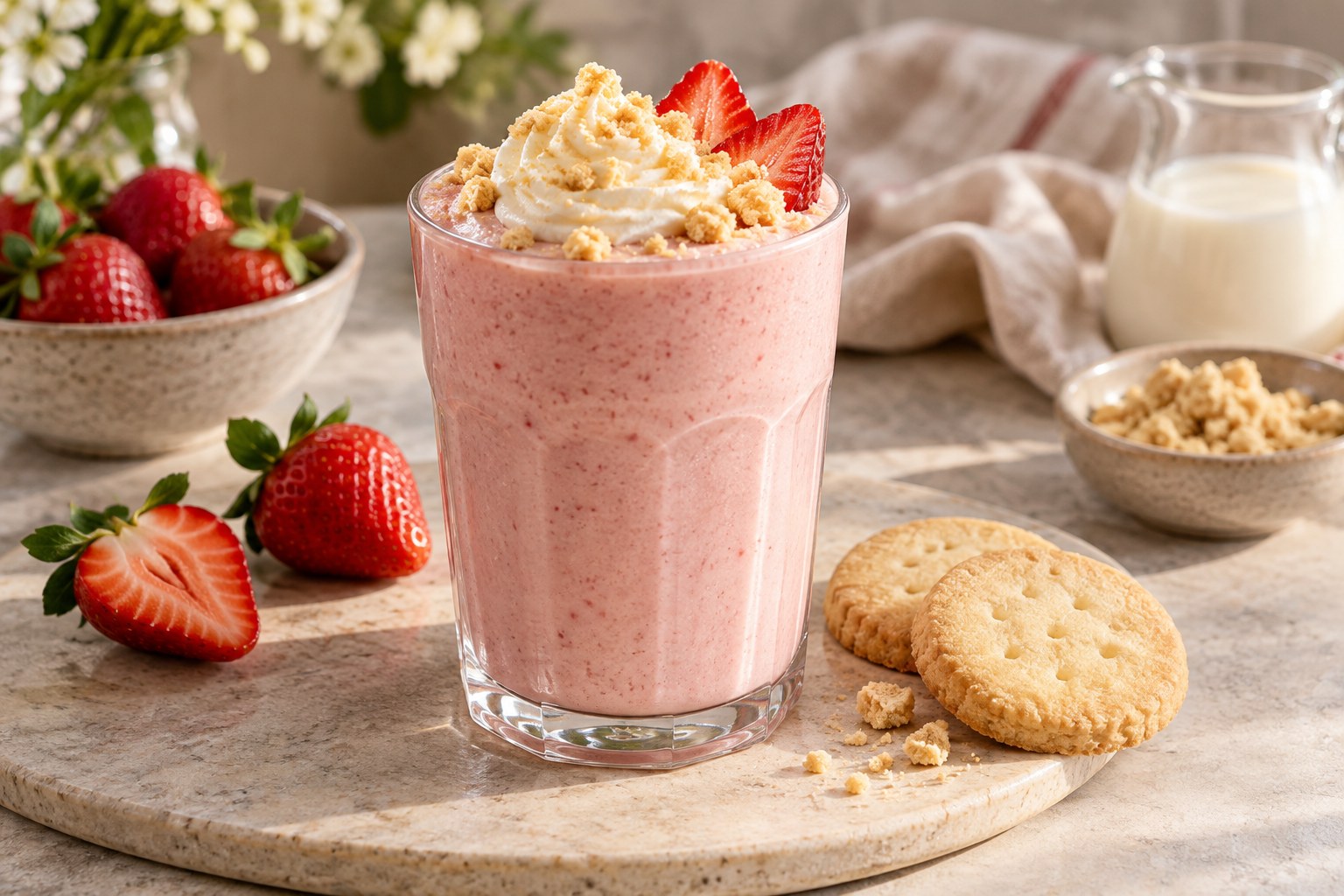
4. Strawberry Shortcake Smoothie
The linked version includes strawberries, vanilla shortbread cookies or wafers, cream cheese or yogurt, milk, vanilla and optional whipped cream. It is deliberately reminiscent of dessert; calling it an everyday low-sugar breakfast would be misleading. Crumble the cookie element just before serving if you want some texture rather than a completely smooth finish.
5. Purple Monstrosity Fruit Smoothie
This is more elaborate than a glass of blended berries: the published ingredients include an açai-or-berry base and a separate granola-style topping. Its purple colour comes from mixed berries, not a special health-boosting ingredient. Check the nuts and other toppings before serving anyone with allergies, and allow extra preparation time when making the topping.

6. Raspberry-Spinach Twist Smoothie
Raspberries, fresh spinach, banana and yogurt blend into a bright drink with a gentle green-vegetable note. The berries do not need to hide the spinach; tell children what is in the glass. Greek yogurt and almond milk are listed ingredients, so the default recipe cannot be labelled dairy-free or nut-free without verified substitutions.
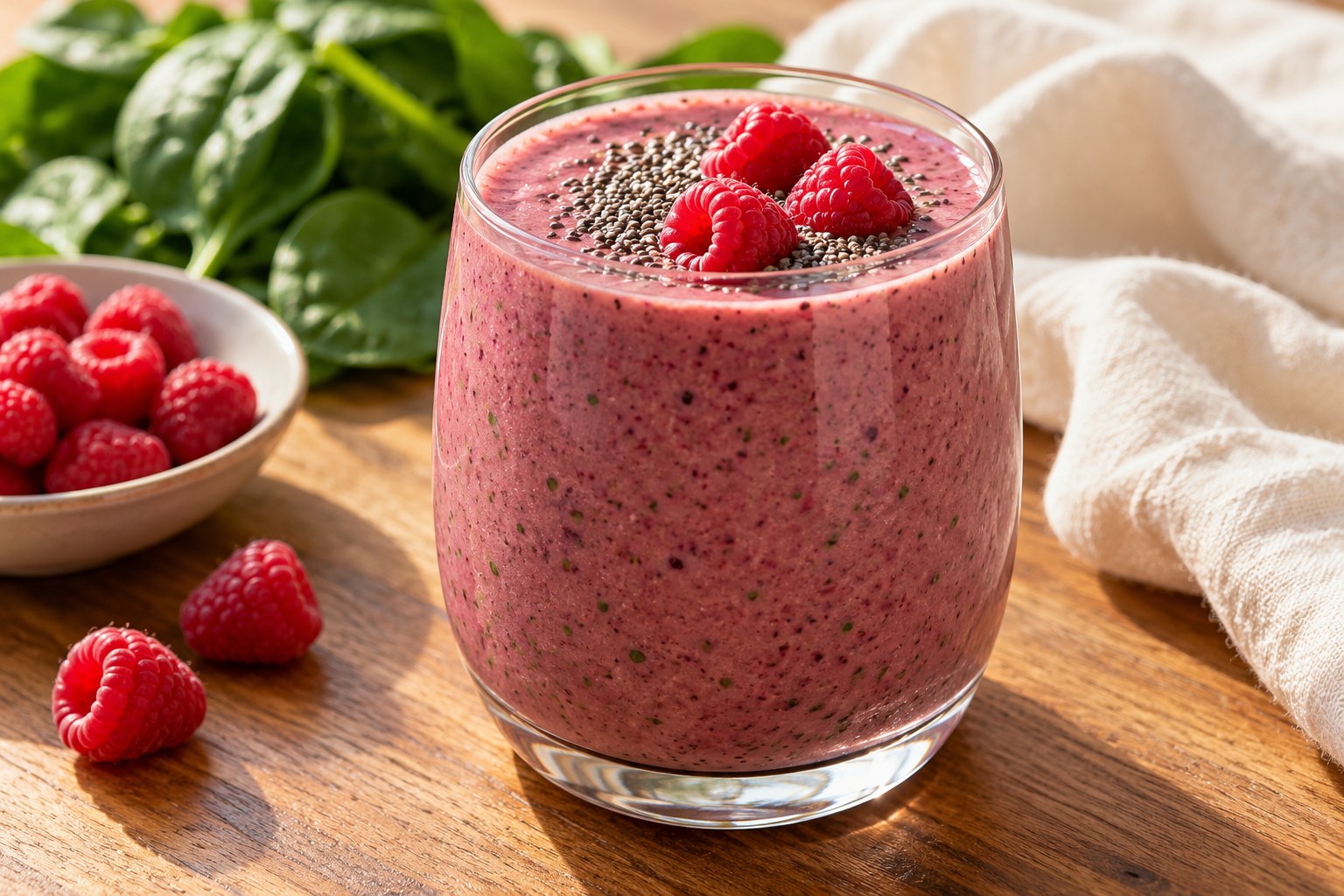
7. Berry, Chia, and Mint Smoothie
Fresh mint makes a useful contrast to berries, banana and the mild flavour of chia seeds. The recipe uses plant milk and optional honey or maple syrup. Chia absorbs liquid over time, so a glass kept in the fridge may become thicker than one served immediately; add the recipe-appropriate liquid and stir if needed.

8. Cranberry Banana Smoothie
Sweet banana moderates the intensity of cranberries in this chilled blend, which also includes orange juice, almond milk and optional yogurt. Expect more tartness than a standard banana smoothie. If you want a thicker drink, use the listed frozen banana; avoid assuming the optional yogurt is present when comparing the recipe with dairy-free choices.

9. Chocolate-Berry Protein Smoothie
Mixed berries meet cocoa, banana, yogurt and chocolate protein powder. This is a distinct formula from a simple chocolate milkshake, and the amount of protein depends on the actual powder and serving size. Readers do not need protein powder merely because a smoothie is described as post-workout; check personal dietary needs and product labels.

10. Berry Good Workout Smoothie
This version combines berries, banana, yogurt, chia and a measured portion of protein powder. It may suit someone who wants a more substantial smoothie, but it is not a guaranteed recovery drink. Choose a protein powder appropriate for the individual, and do not treat the recipe as a universal recommendation for children.

11. Strawberry Banana Nutella Smoothie
This version is notably more indulgent than a plain strawberry-banana smoothie. The actual recipe contains a chocolate-hazelnut spread, vanilla yogurt and optional whipped cream, so it belongs closer to a dessert-style fruit drink. Make the hazelnut content clear to guests; if you want a plain strawberry-banana version, use a different verified recipe rather than silently omitting Nutella.

Tropical blends: Mango, pineapple, coconut and passion fruit
Tropical recipes vary widely in richness. Coconut water is relatively thin; canned coconut milk and coconut cream are substantially richer. Mango and pineapple are excellent flavour partners, but their sweetness changes with ripeness. Smoothie bowls and granola toppings also take more work than a quick glass of blended fruit.
12. Caribbean Dream Smoothie
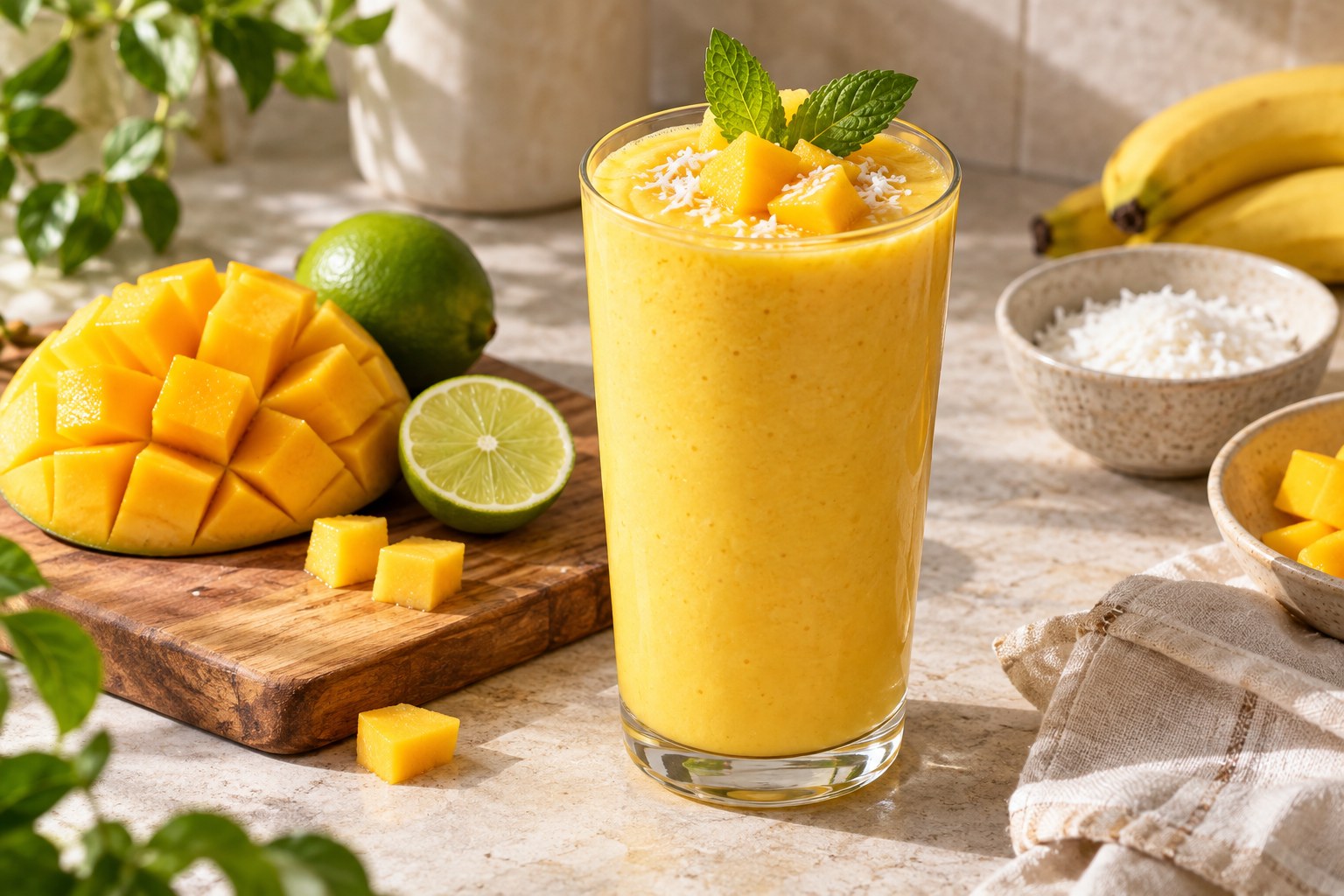
Mango, pineapple, frozen banana, canned coconut milk and lime make this a rich tropical blend. The combination is distinct from the pineapple-passion blend below, particularly because it uses a richer coconut-milk base. Canned coconut milk produces a different texture from the thinner coconut drink sold in cartons.
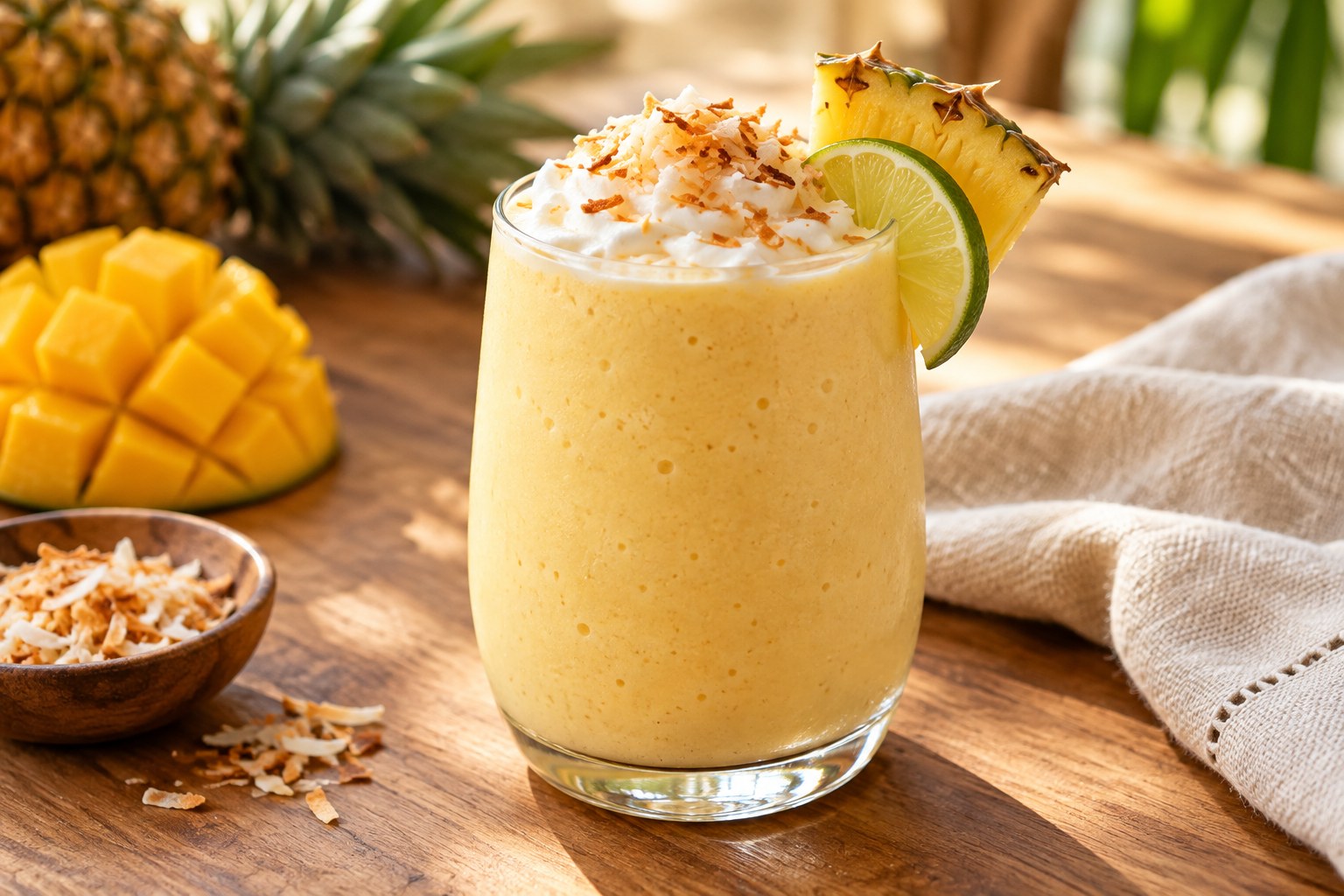
13. Mango Smoothie Bowl with Homemade Granola
This is a spoonable bowl, not a simple mango drink. The published recipe pairs a thick mango-and-banana base with homemade granola containing oats, nuts and coconut. A finished bowl requires extra work if the granola is made from scratch. Check nut allergens and serve with a spoon rather than expecting the consistency of a sippable smoothie.
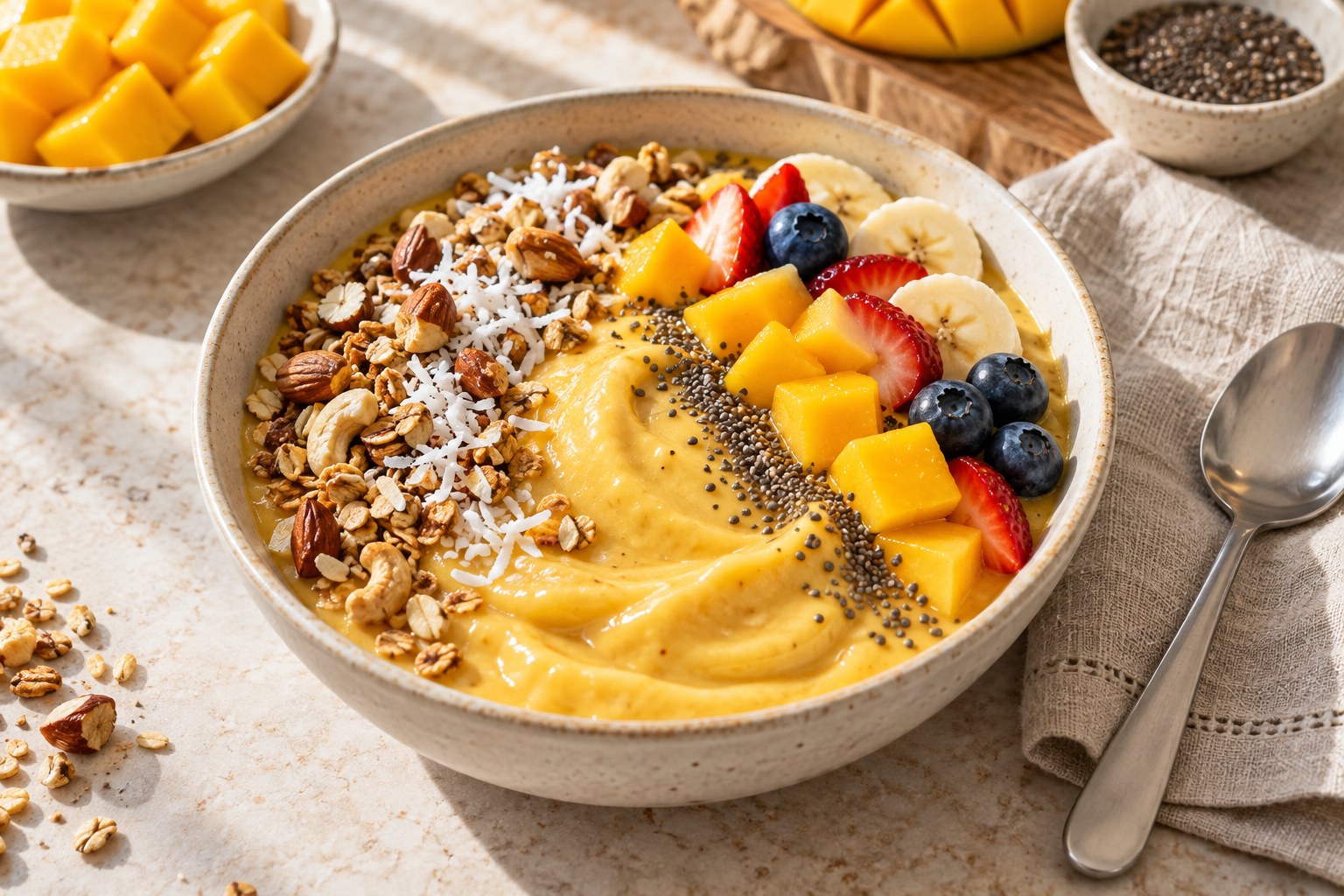
14. Mango Madness Smoothie
Ripe mangoes, Greek or coconut yogurt, coconut milk, banana and lime deliver a creamy, fruit-forward flavour. The recipe uses ripe mangoes rather than a required mixture of several mango varieties. Use ripe, fragrant mango flesh, chill the fruit first and adjust optional honey to taste rather than sweetening by default.
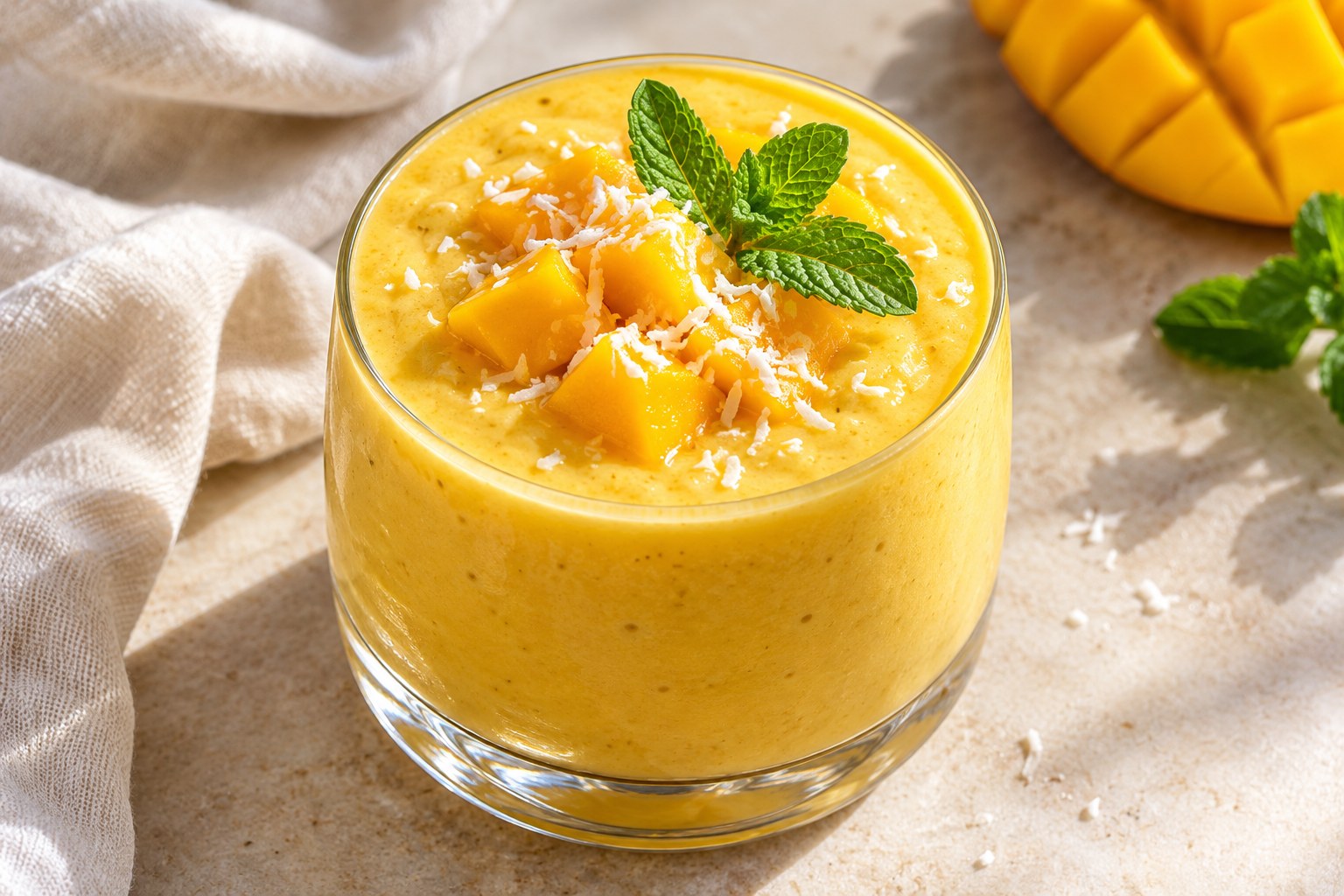
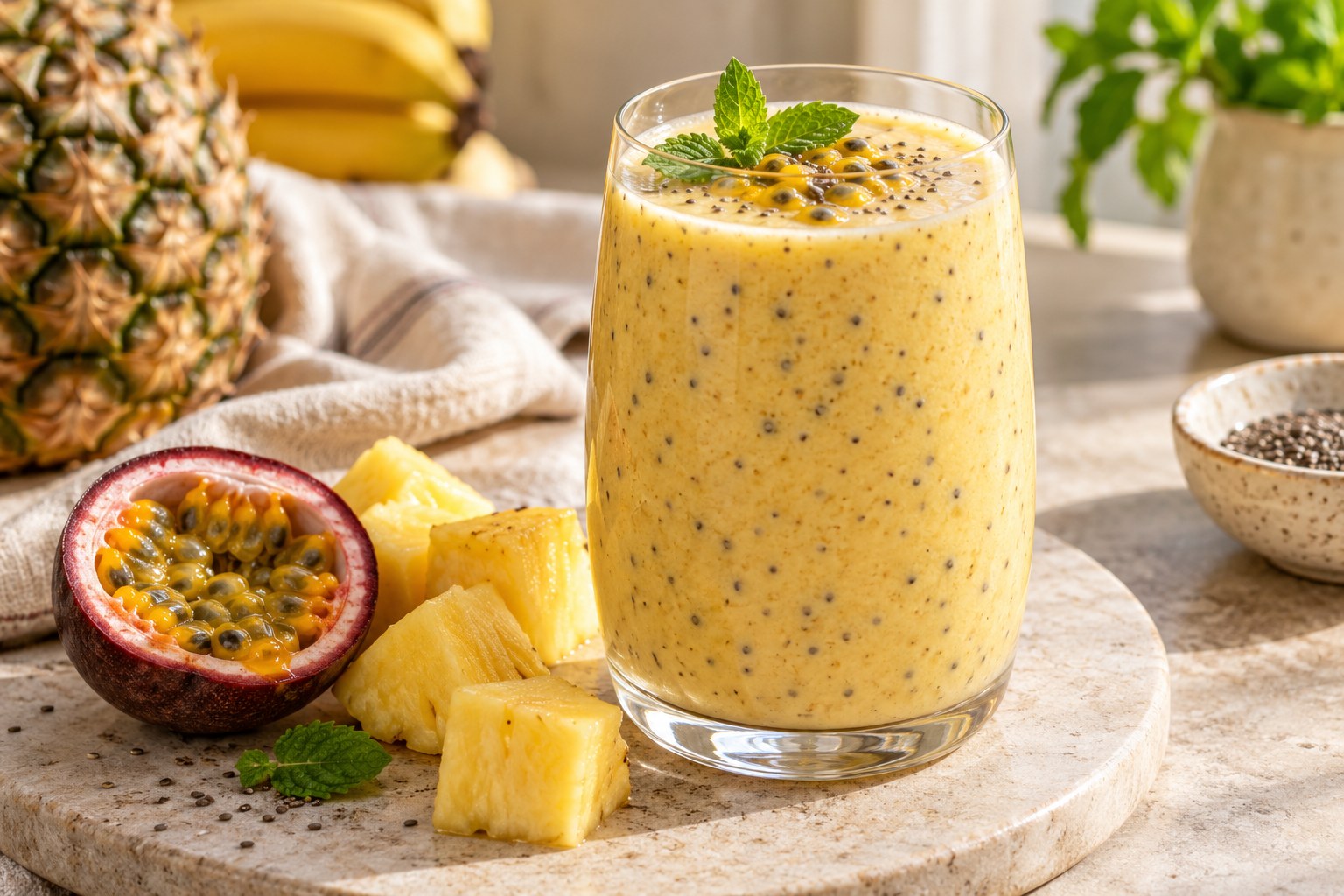
15. Pineapple Passion Smoothie
Pineapple and fresh passion-fruit pulp supply both sweet and tart notes, supported by banana, yogurt, coconut water and chia. It is distinct from the pineapple creamsicle smoothie later in the collection, which includes vanilla ice cream. Retain the seeds if you enjoy passion-fruit texture, or follow the original recipe method for a smoother result.
16. Dragon Fruit, Hibiscus, Banana, and Coconut Smoothie
Hibiscus needs to be brewed as tea before this smoothie can be assembled. The recipe then combines the cooled tea with dragon fruit, banana, yogurt and coconut cream. Plan that cooling step rather than putting boiling tea into a blender or directly onto frozen ingredients. Check whether hibiscus is suitable for anyone with relevant medication or health concerns.

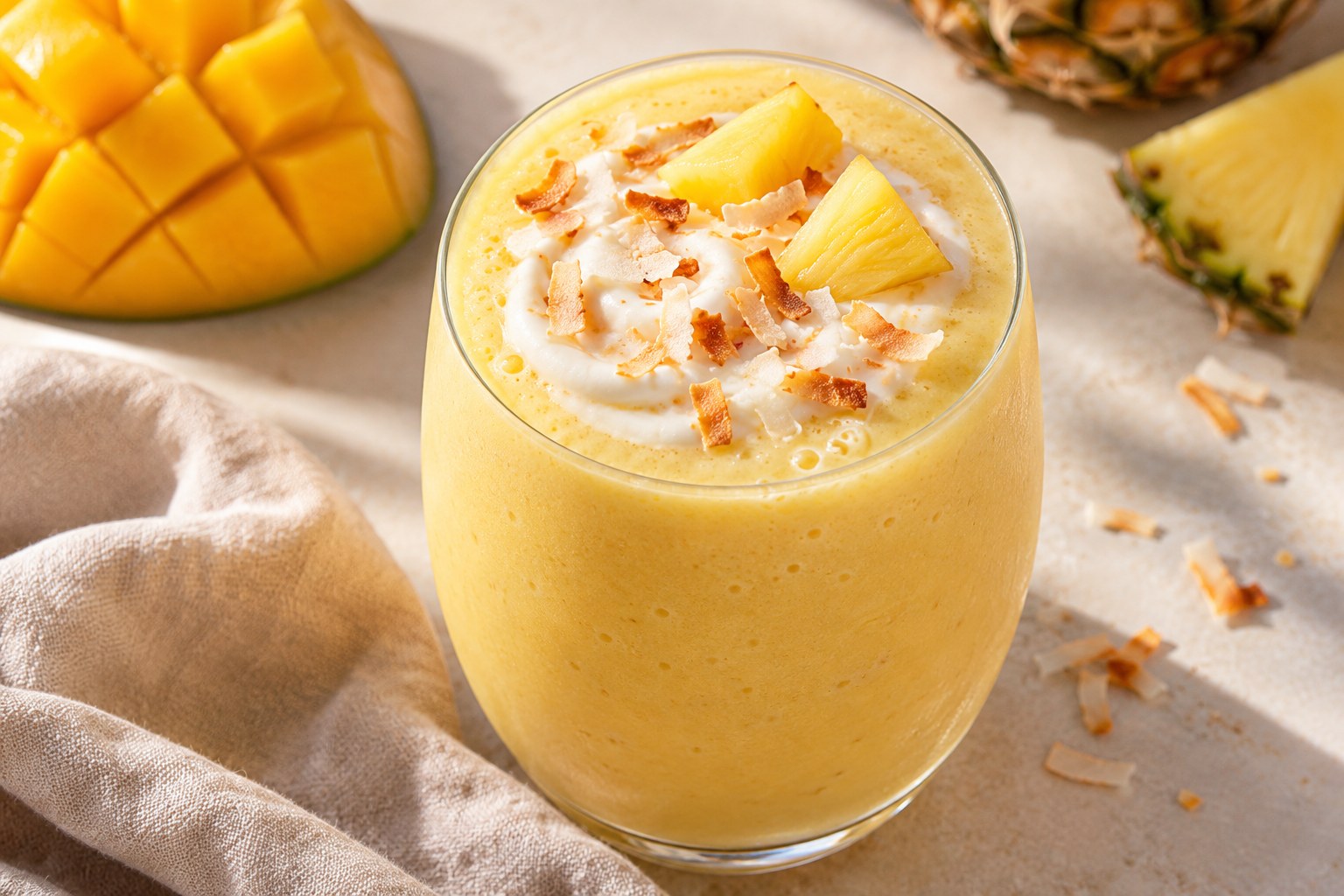
17. Pineapple Mango Coconut Smoothie
Pineapple and mango are backed by coconut cream, coconut milk, lime and optional frozen banana. This is richer than coconut-water-based versions, so serve it in a portion that suits the occasion. Toasted coconut adds aroma as a garnish but is optional; check ingredient labels if accommodating guests with allergies.
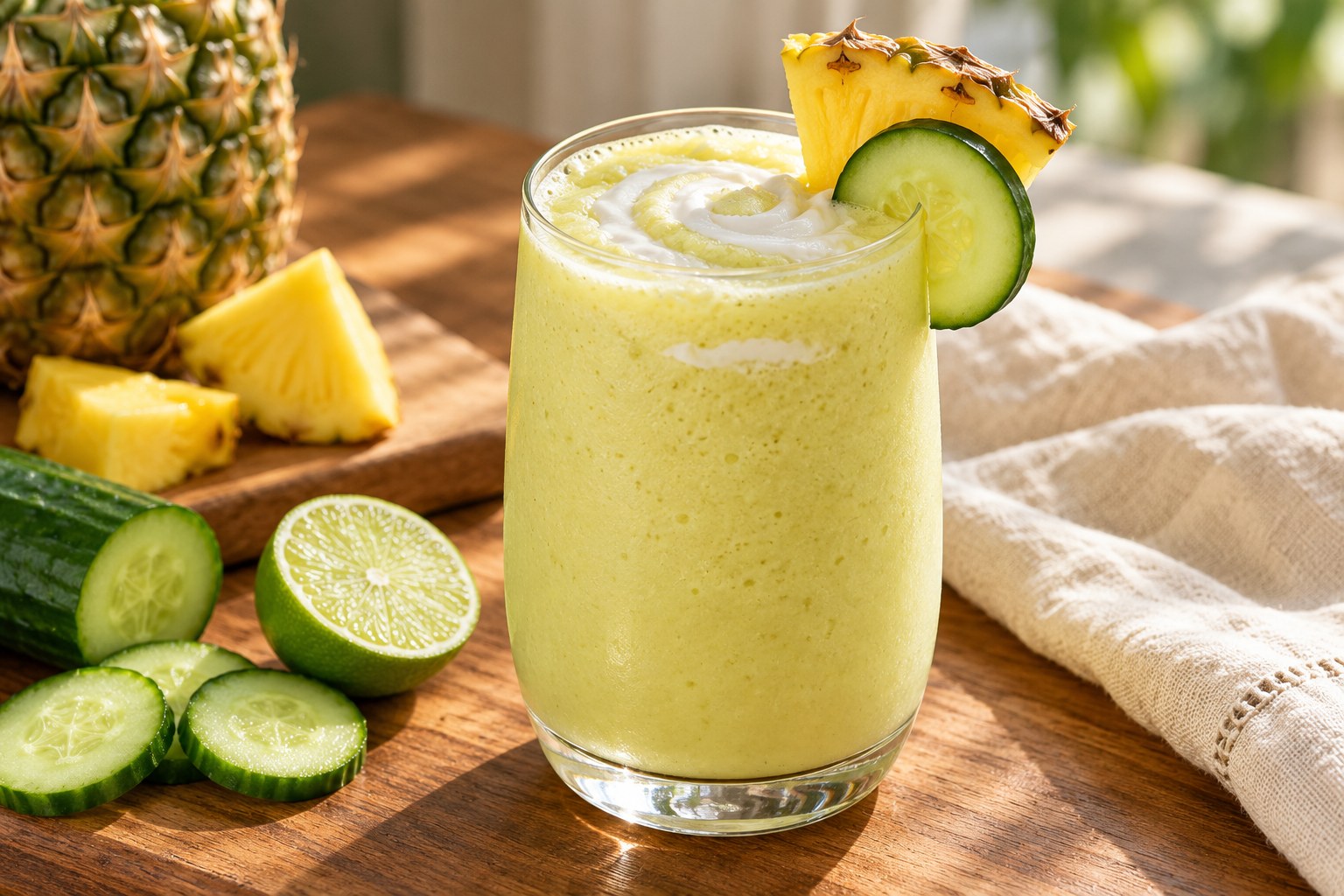
18. Pineapple-Cucumber Smoothie
This lighter-tasting drink includes cucumber, pineapple, coconut water and a little coconut milk. Cucumber changes the freshness and mouthfeel but does not make it a medical hydration product. Chill the fruit, blend until uniformly smooth and use optional honey only if the pineapple is particularly sharp.
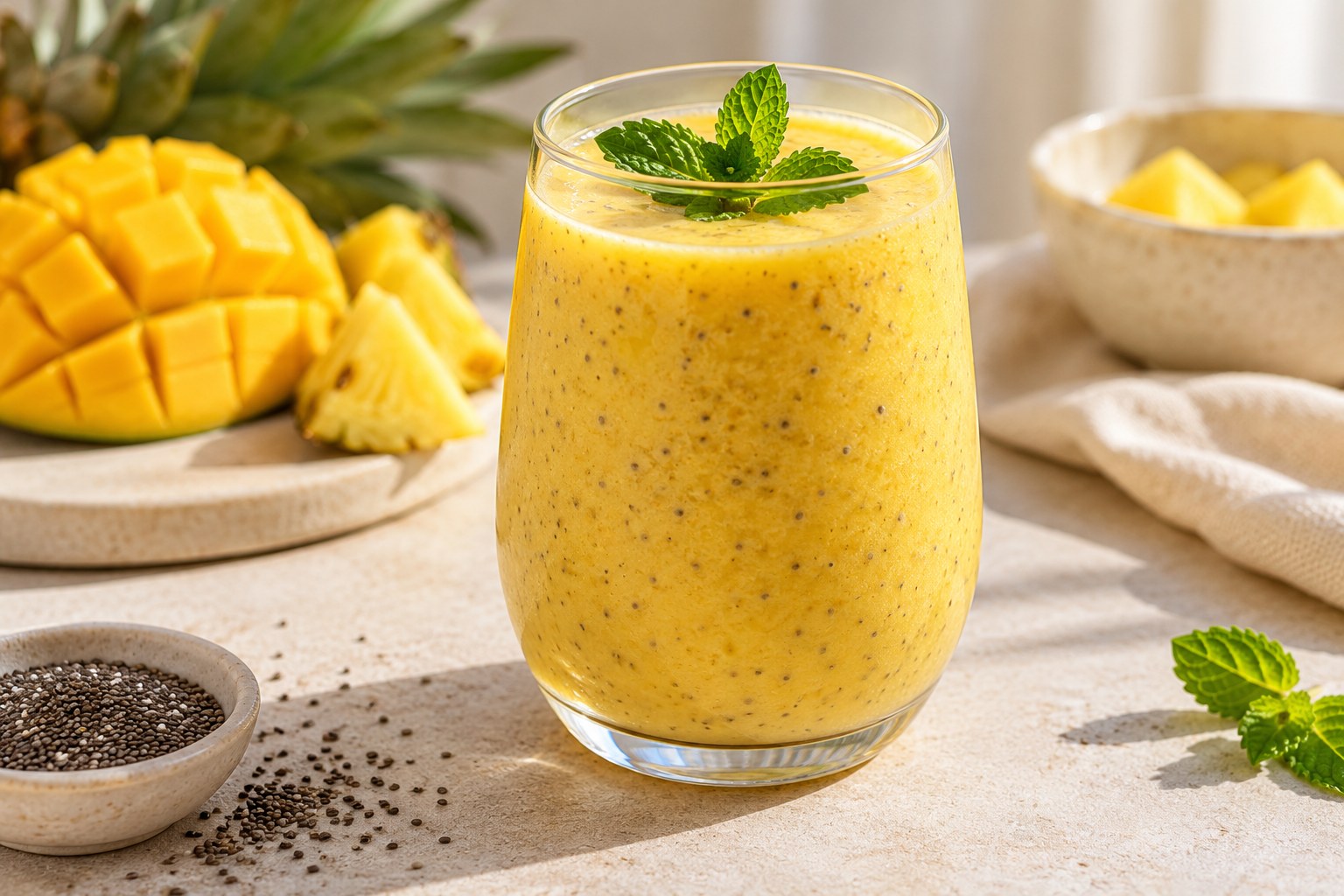
19. Tropical Chia Smoothie
Mango and pineapple meet chia and the thinner refrigerated type of coconut milk. Unlike the richer canned-milk Caribbean Dream, this version has a lighter liquid base. Give the chia enough time to disperse in the blender and remember that it can keep thickening after preparation.
Fruit and seasonal smoothies: From apple spice to summer melon
This group covers comforting apple and pumpkin-style flavours, tart cherries, and fresh melon combinations. Some recipes include oats or baked granola, so decide whether you want a drinkable breakfast, a spoonable snack, or an occasional dessert. A single smoothie cannot guarantee any particular health outcome.
20. Peaches and Cream Oatmeal Smoothie
Rolled oats, peaches, Greek yogurt, almond milk, banana and cinnamon make this more substantial than a simple fruit drink. It takes longer to feel silky when the oats are not fully blended. The published recipe contains dairy and may contain almonds depending on the milk chosen; read packaging if cooking for an allergy-sensitive household.

21. Apple Crisp Smoothie
Apples, rolled oats, yogurt and warming cinnamon and nutmeg evoke a baked apple dessert without actually baking it. Expect a slightly grainier texture if the oats remain coarse. Core the apples thoroughly and blend according to the recipe; a sprinkle of extra cinnamon is a flavour choice, not a health intervention.
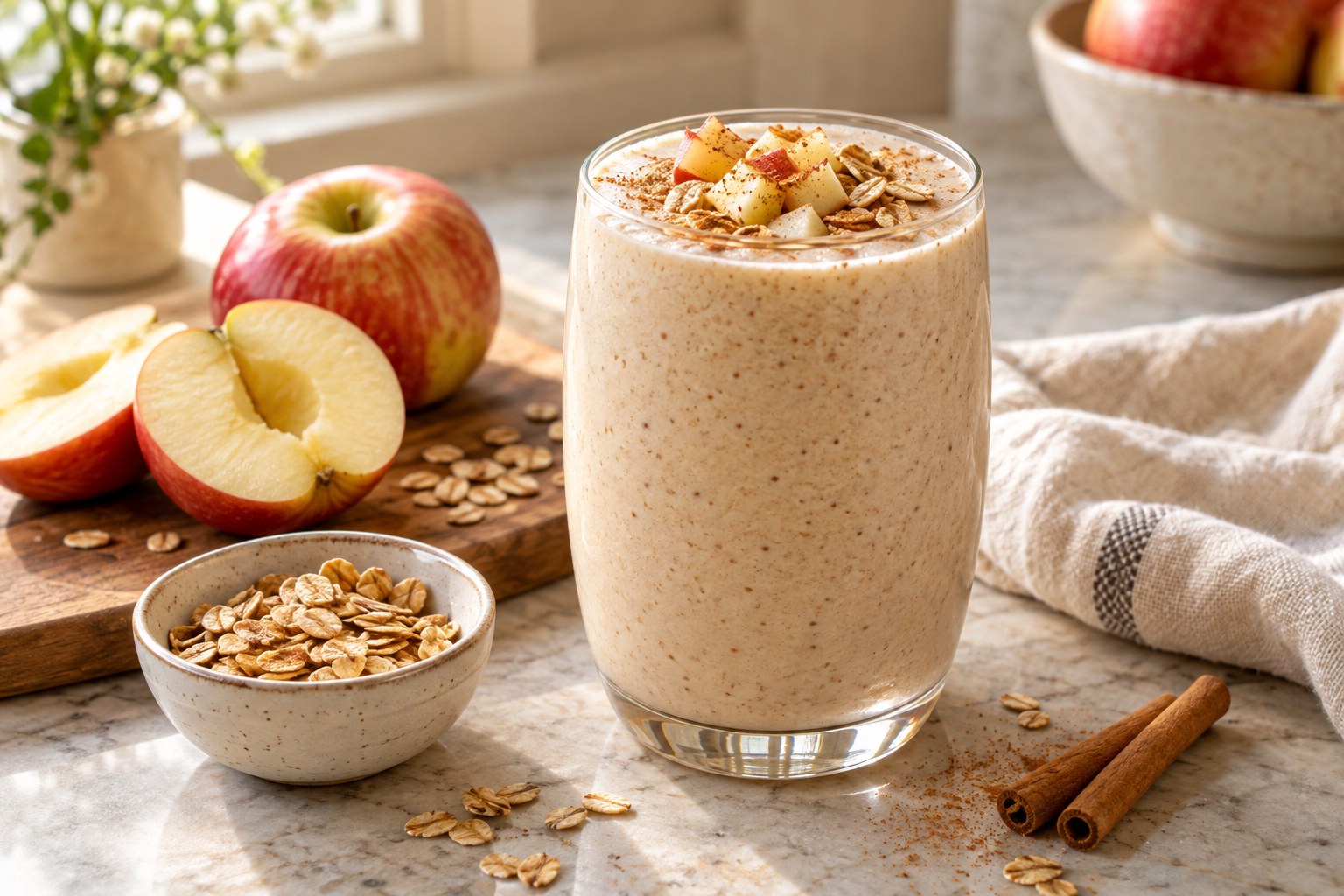
22. Paleo Apple Pie Smoothie
The apple-pie aroma comes from cinnamon, nutmeg, ginger and cloves. Full-fat coconut milk and almond butter give the blend considerable richness, so it is not automatically a light drink. The name uses “paleo” in the recipe’s own style; individual food choices should be based on the actual ingredient list rather than a diet label.
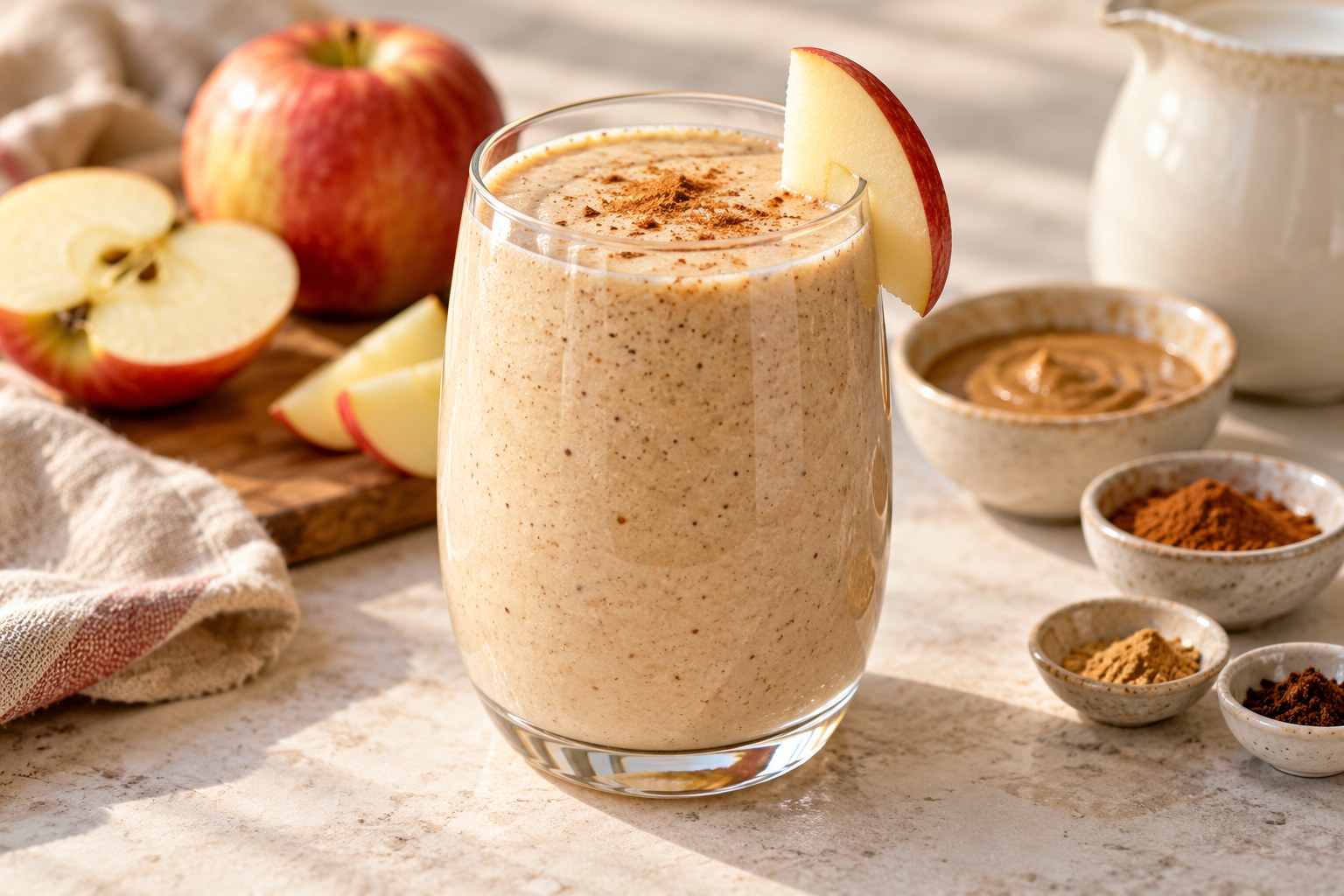
23. Pineapple Creamsicle Smoothie
Pineapple, vanilla yogurt, coconut milk and vanilla ice cream create a creamy dessert-style smoothie with a familiar creamsicle flavour. It should be labelled accordingly, not described as a watermelon wellness drink or a simple fruit-only blend.

24. Simple Cantaloupe Smoothie
Ripe cantaloupe, Greek yogurt, milk and a touch of vanilla are the stars here. The clean melon flavour works best when the fruit is fragrant and well chilled. Scrub the melon rind under cool running water before slicing, as Health Canada recommends, so surface contamination is not transferred by the knife, then handle cut melon as a perishable food.
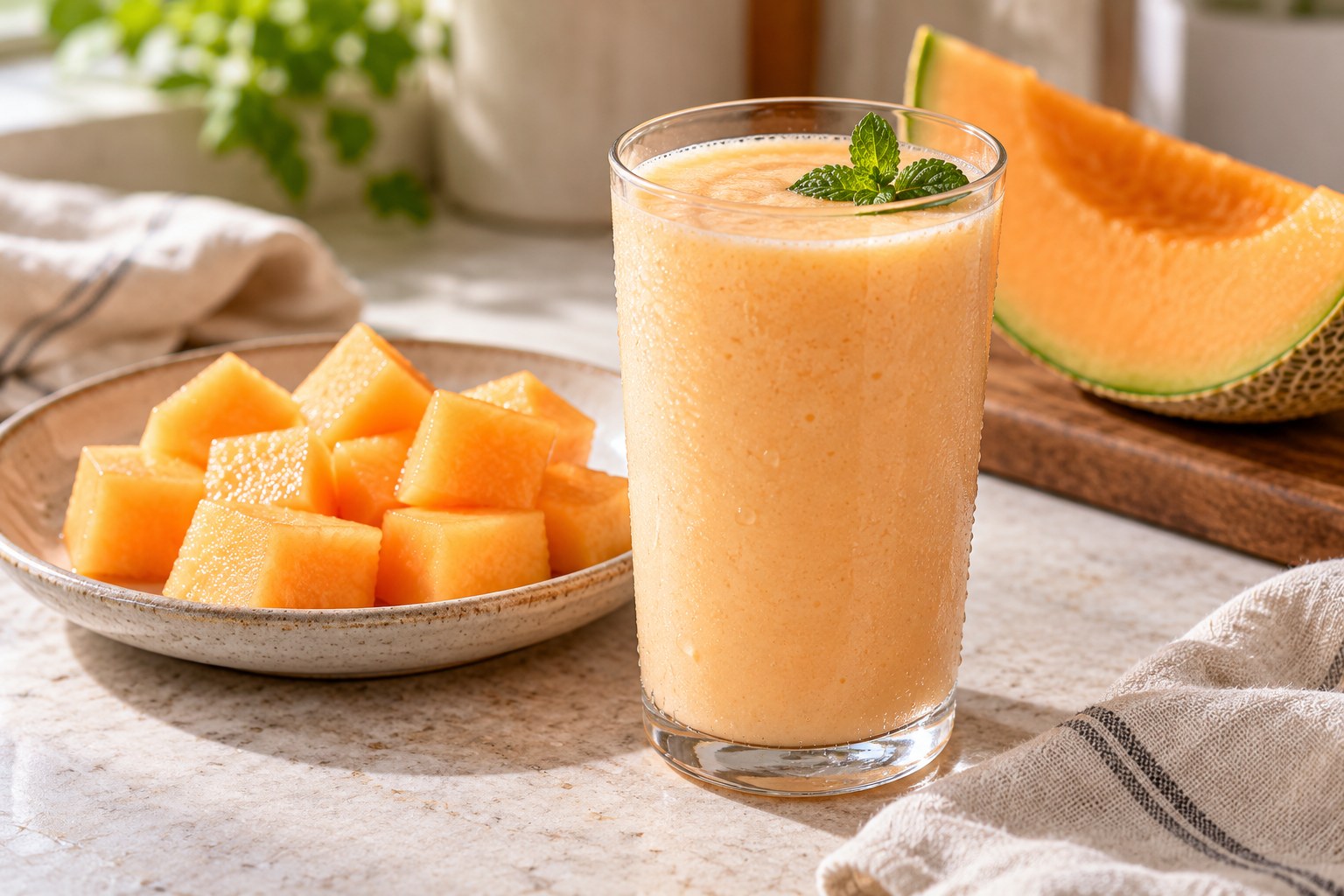
25. Creamy Orange Turmeric Smoothie
Oranges, frozen banana, yogurt, almond milk and a small amount of turmeric produce a sunny colour and mildly earthy aroma. Turmeric is used here as a flavouring; this smoothie is not a proven anti-inflammatory treatment or immune booster. Start with the stated quantity rather than adding concentrated powders indiscriminately.

26. Strawberry-Orange Sunburst Smoothie
Fresh strawberries, orange segments, banana and yogurt create a tart-sweet breakfast-style option. Remove orange peel and any seeds, then blend until the fruit is evenly incorporated. Because almond milk is one published option, the recipe needs ingredient checks before being served in a nut-restricted setting.

27. Orange Juice Goji Berries Smoothie
The published formula uses a generous measure of orange juice, soaked dried goji berries, banana and yogurt. The berries need their listed soak before blending. It is a tangy, juice-based smoothie rather than a universal source of “supercharged” nutrition; people taking medications or managing health conditions should assess whether goji products are suitable.

28. Mango Watermelon Smoothie
Mango and watermelon combine with yogurt and lime for a fresh summer flavour. Watermelon contributes liquid, so start with the recipe’s smaller amount of ice if the fruit is especially juicy. For an especially refreshing result, chill the melon thoroughly before blending and serve shortly after preparation.
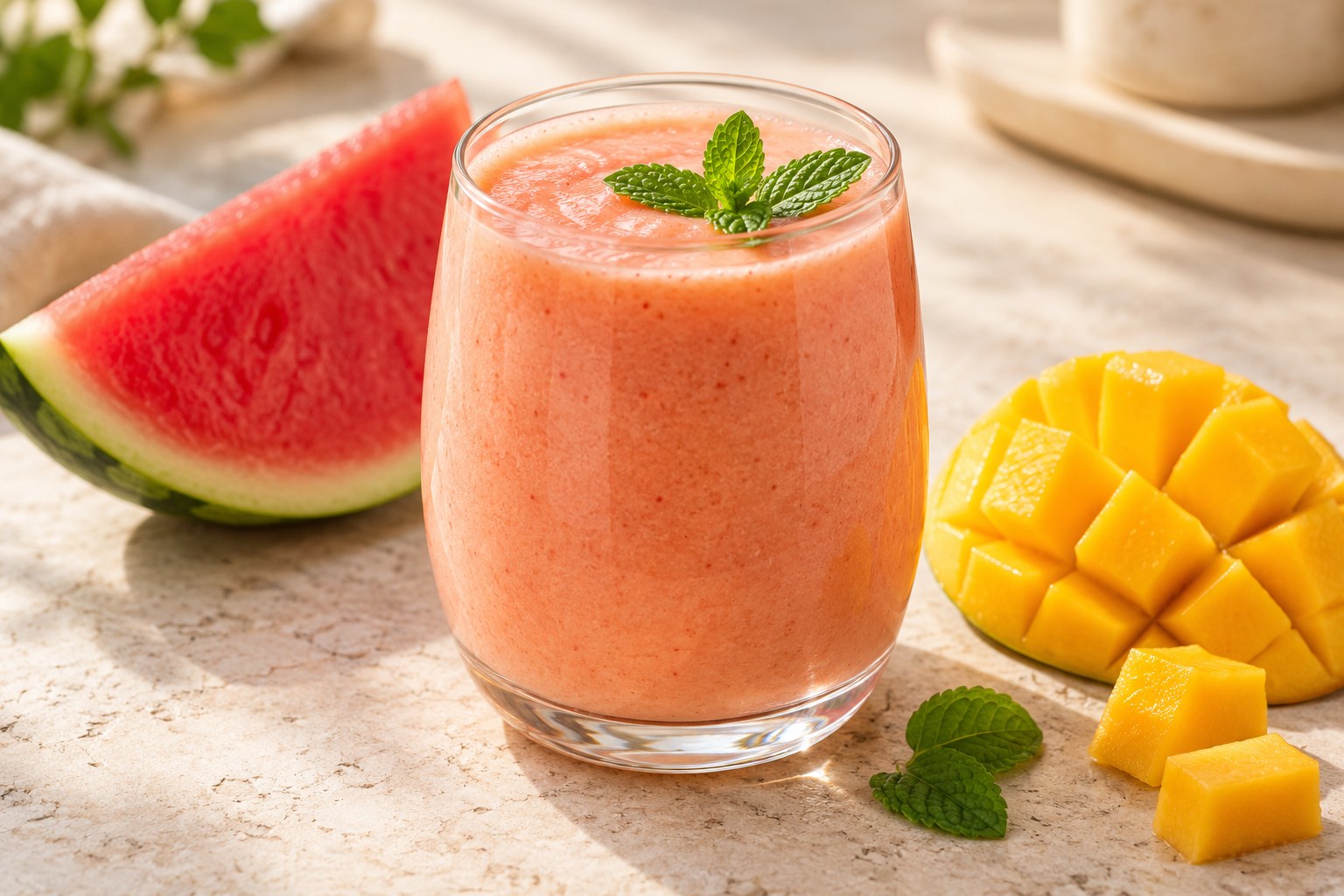
29. Mango Cherry Smoothie
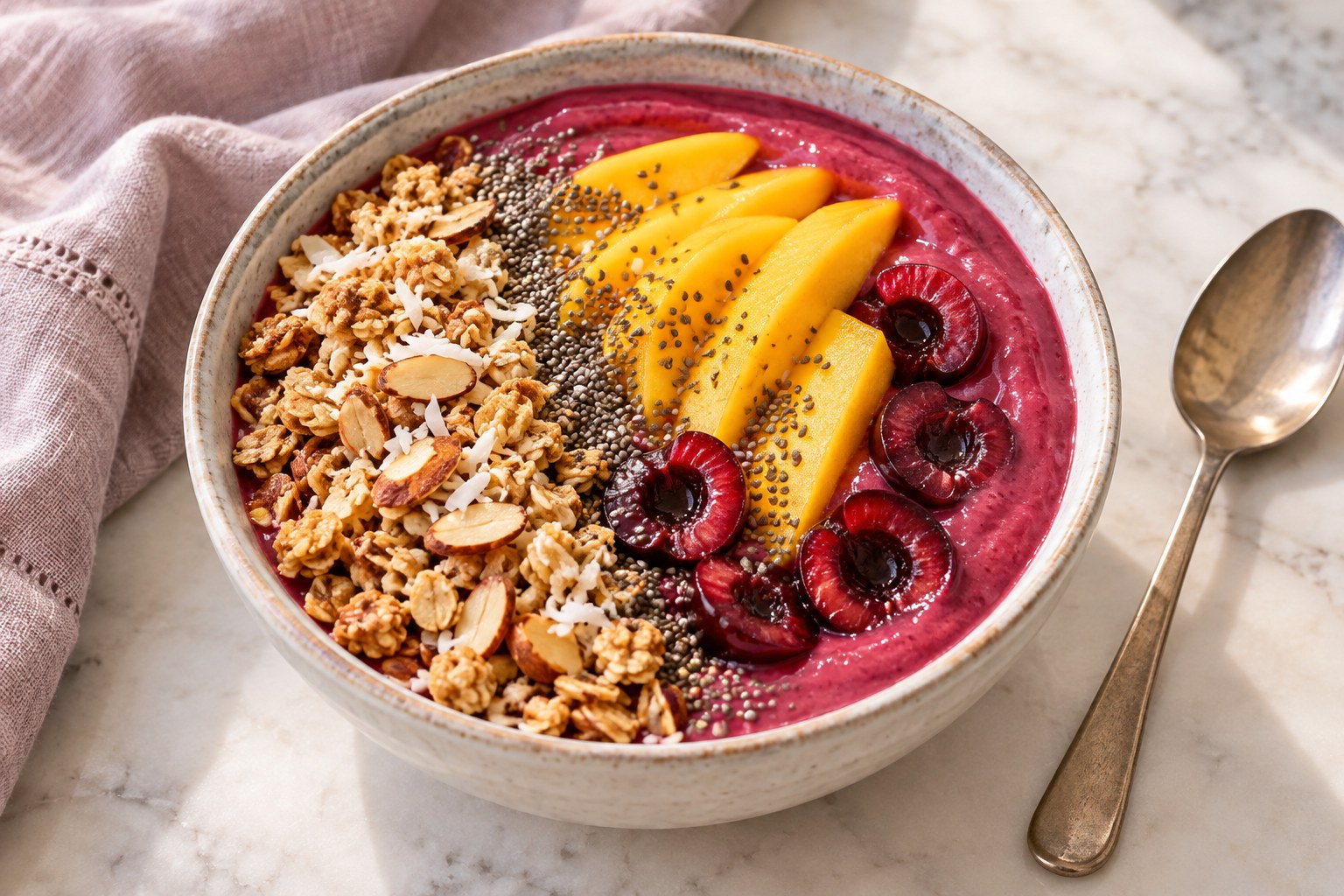
Frozen mango and pitted cherries make a tart, vividly coloured base, while the recipe also includes ingredients for a separately baked granola topping. If making the granola, plan more than blending time and check for almonds. Verify every cherry is pitted before it enters the blender.
30. Strawberry-Kiwi Smoothie
Strawberries, ripe kiwi, yogurt and milk make a sharply refreshing combination. Kiwi adds tang and tiny seeds, so the final drink may have more texture than a peeled-banana smoothie. Optional chia will thicken the mixture further. Taste first before reaching for honey, especially when both fruits are ripe.

31. Choco-Cherry Chill Smoothie
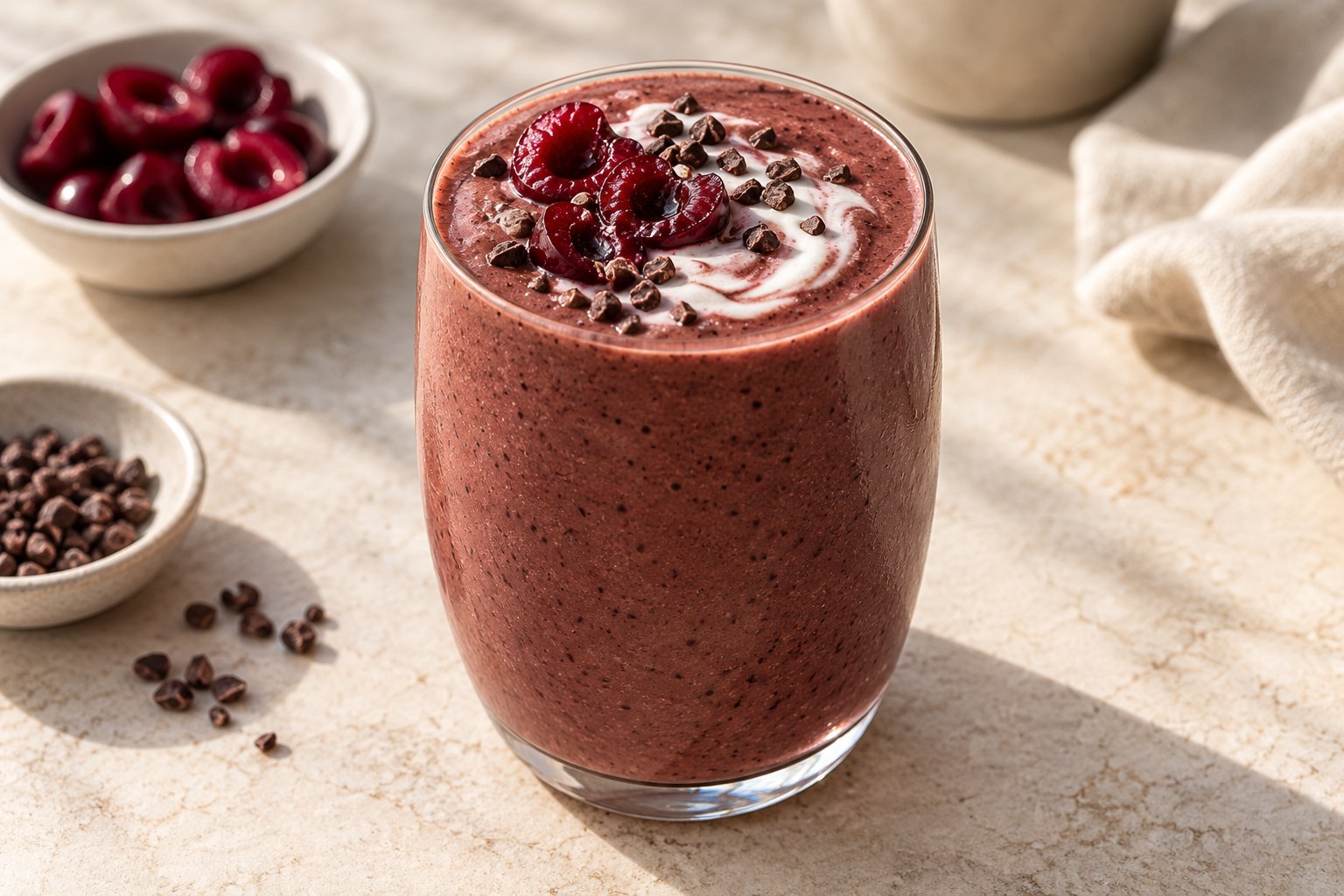
Cherries, banana, cacao, almond butter and yogurt make this closer to a chocolate-fruit dessert. Choose reliably pitted cherries and use cocoa or cacao as the published method specifies. It contains almonds unless the recipe is safely adapted; a chocolate flavour does not make a nut allergen disappear.
Green smoothie ideas: What is really in the glass?
“Green smoothie” can mean a drink containing leafy vegetables, a bright green kiwi blend, or—even in one of these published recipes—a tart green (unripe) mango drink with no spinach. Reading the ingredient list avoids misleading expectations and makes it easier to accommodate sensory preferences and allergies.
32. Green Kiwi Smoothie
Kiwi and frozen banana make fresh spinach easier to blend into a smooth green drink. The recipe includes almond milk and some Greek yogurt, with optional chia. Keep the colour and ingredients visible rather than claiming spinach is “hidden”; this is a simple way to offer the same vegetable in a new form.

33. Avocado and Strawberry Smoothie
Avocado adds creaminess to strawberries, yogurt and milk while changing the flavour less than you might expect. A ripe but not overripe avocado is useful for a silky result. This combination contains dairy and often almonds as published, so choose alternatives intentionally rather than assuming the fruit makes it allergy-free.

34. Creamy Kale Smoothie
Kale, banana, Greek yogurt and almond milk form a genuinely green smoothie. Remove tough stems and blend thoroughly to avoid leafy strands. The recipe includes honey and optional almond butter, so read it before making a reduced-sugar or nut-free claim. The banana softens kale’s stronger flavour without removing it.

35. Tropical Green Protein Smoothie
Mango, pineapple, banana and spinach meet a substantial portion of protein powder in this version. Check the powder and serving size rather than treating the word “protein” as a guaranteed nutrition claim. It is more ingredient-heavy than the simple spinach-banana choice below.

36. Green Goddess Smoothie
Spinach or kale, cucumber, green apple, avocado, yogurt and lemon offer a vegetable-forward flavour. The optional protein powder changes the recipe’s nutrition and texture, so treat it as an add-in rather than a necessary component. Remove apple cores and blend the vegetables well for a drinkable consistency.

37. Green Pineapple Coconut Smoothie
Pineapple and banana balance spinach in a rich coconut-milk base. The recipe specifically uses full-fat canned coconut milk, so it is notably creamier than a thin coconut-water blend. Lime keeps the flavour bright, and the optional chia or coconut garnish may alter texture after the smoothie sits.

38. Green Mango Tango Smoothie
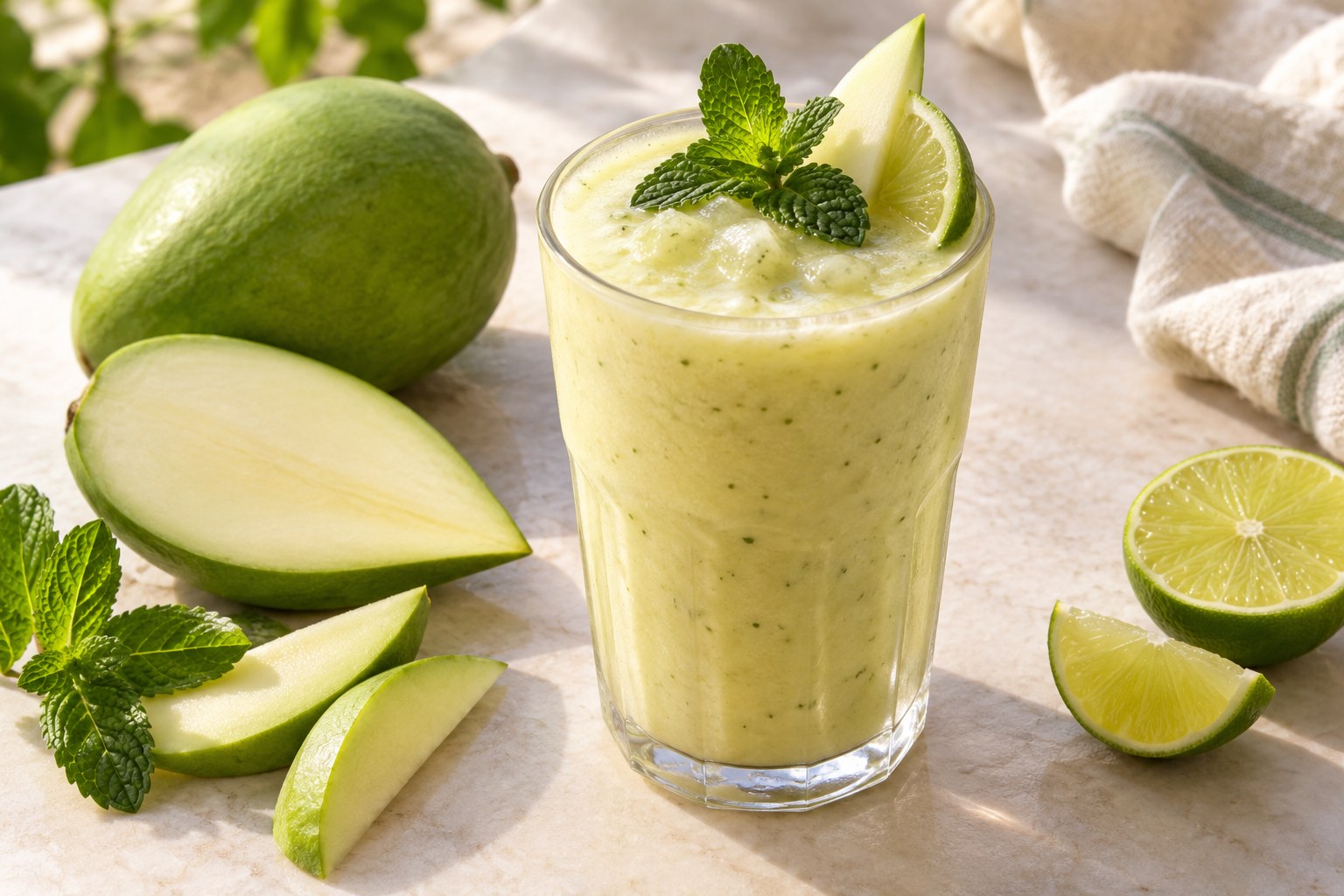
“Green” here describes unripe mango, not hidden spinach. The recipe combines green mango, coconut water, lime, mint and yogurt. Expect a tart, tangy drink rather than a leafy vegetable smoothie. Its tart flavour is quite different from a spinach-based green smoothie.
39. Spinach and Banana Power Smoothie
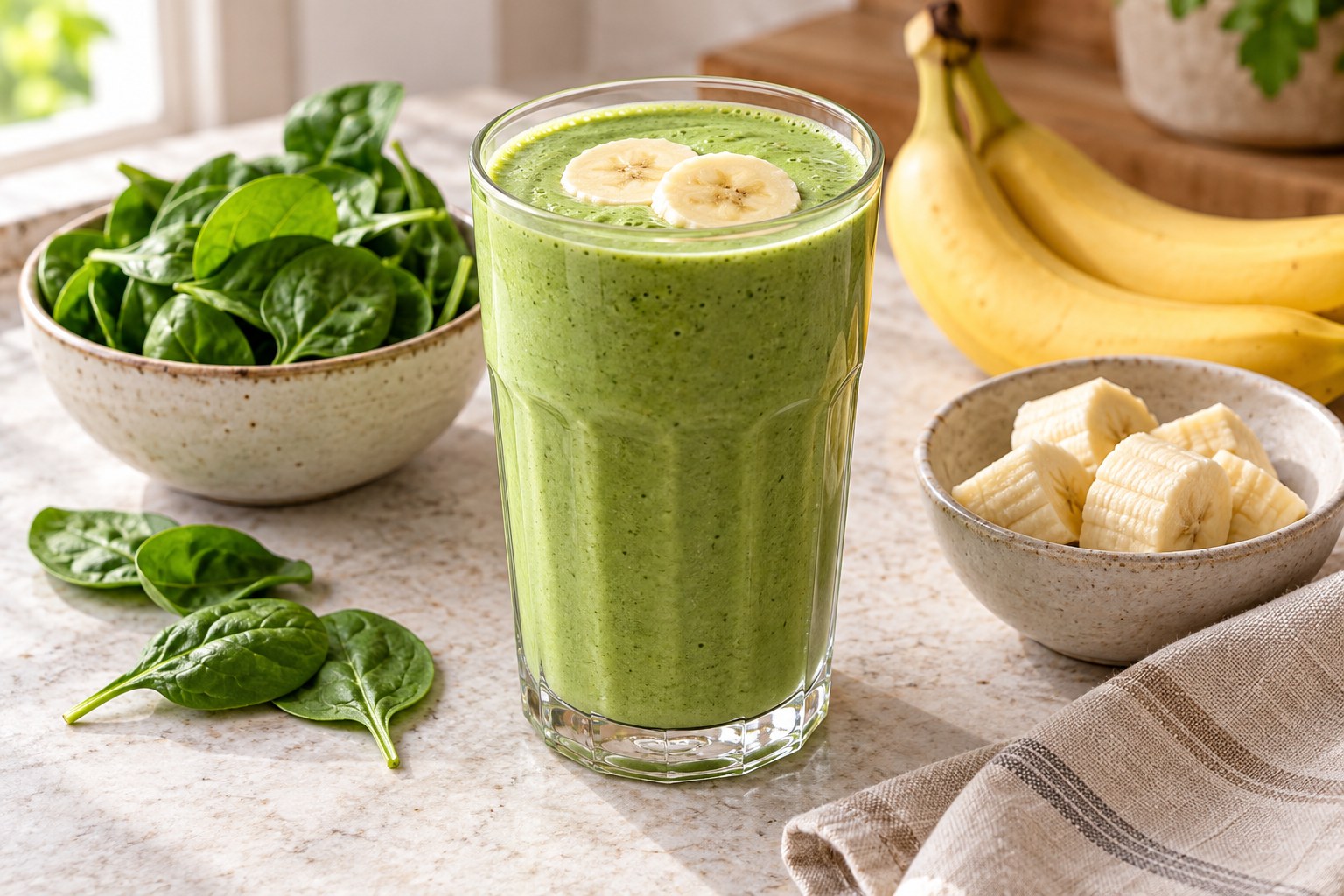
This is one of the easiest green introductions: frozen banana, fresh spinach and milk of choice, with optional flax and cinnamon. It does not need added protein powder or elaborate toppings. Wash the greens, blend until smooth and adjust the optional sweetener only after tasting.
Protein, nut and creamy fruit smoothies: Richer blends
Several recipes contain yogurt, nut butter or protein powder. The words “protein” and “power” are not nutrition labels; actual protein varies by brand and serving size. Treat peanut and almond ingredients as allergens and remember that a rich smoothie can be served as part of a meal rather than replacing one automatically.
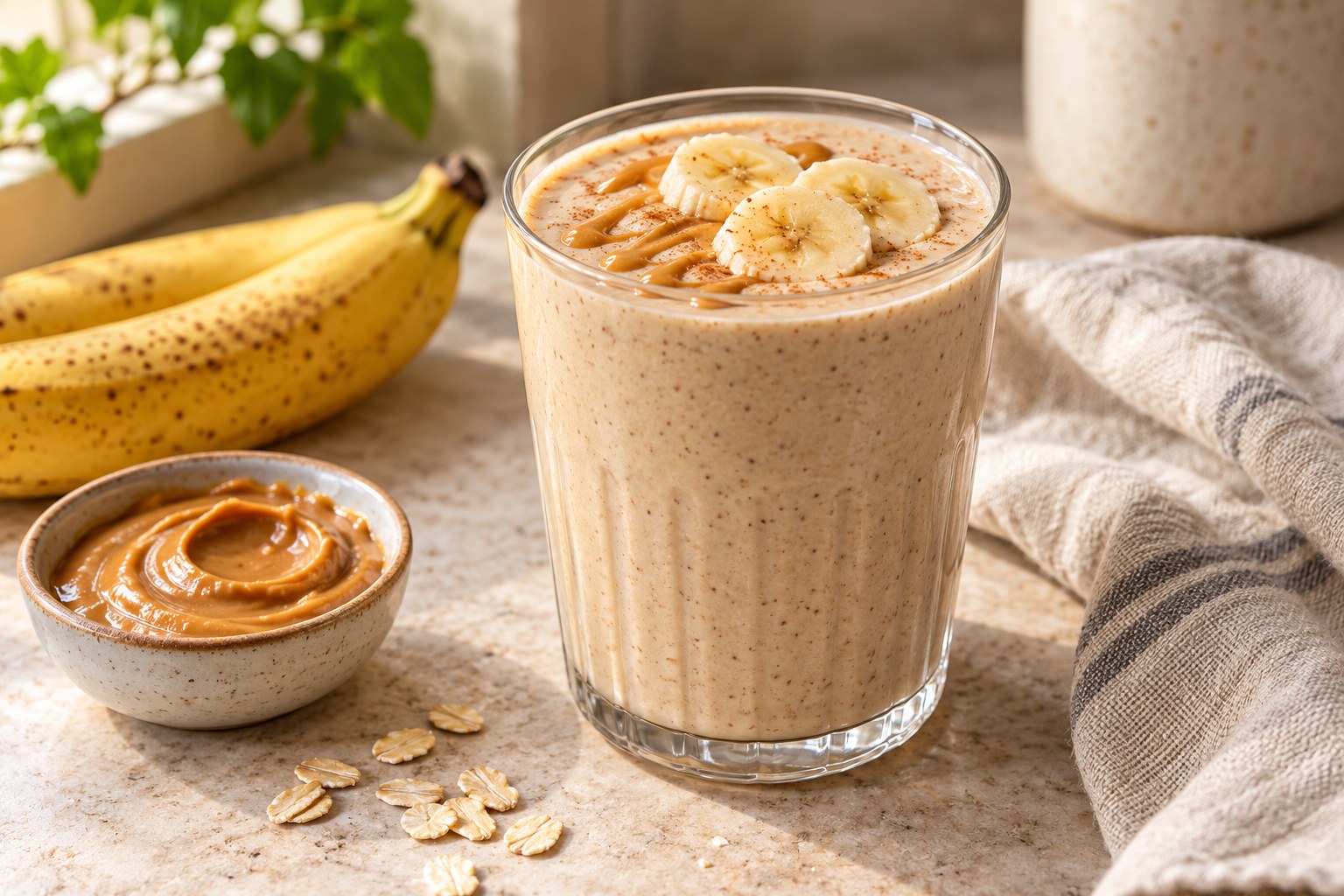
40. Peanut Butter Banana Smoothie
Banana, peanut butter, milk, yogurt and a little oats make a richer, more filling drink than fruit and water alone. It clearly contains peanuts, and the milk and yogurt may contain dairy. Use a reliably smooth peanut butter and make the allergy information visible when serving others.
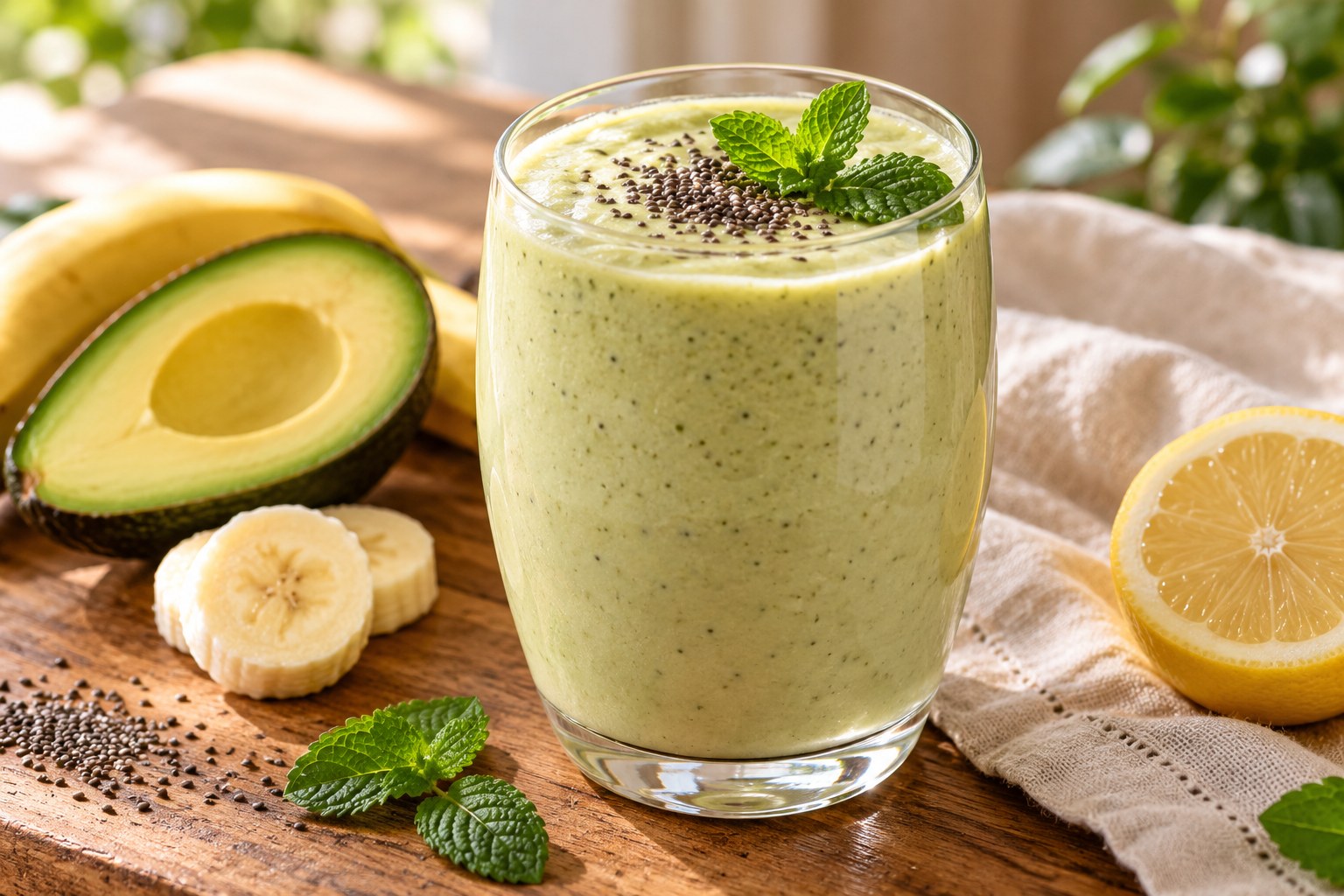
41. Banana Avocado Yogurt Smoothie
Banana and avocado create a dense, silky texture with Greek yogurt and milk. Chia may add further thickness if included. The recipe is not necessarily “high-protein” merely because yogurt appears; actual amounts depend on the type used and serving size. Serve in a suitable portion alongside other food as desired.

42. Avocado Smoothie
The recipe is not pure avocado alone. It also contains frozen banana, milk, yogurt, honey or maple syrup, vanilla and lemon. That combination balances the avocado’s mild grassy notes, but it may also produce a sweeter drink than expected. Adjust sweetness thoughtfully and choose dairy alternatives only after checking texture.
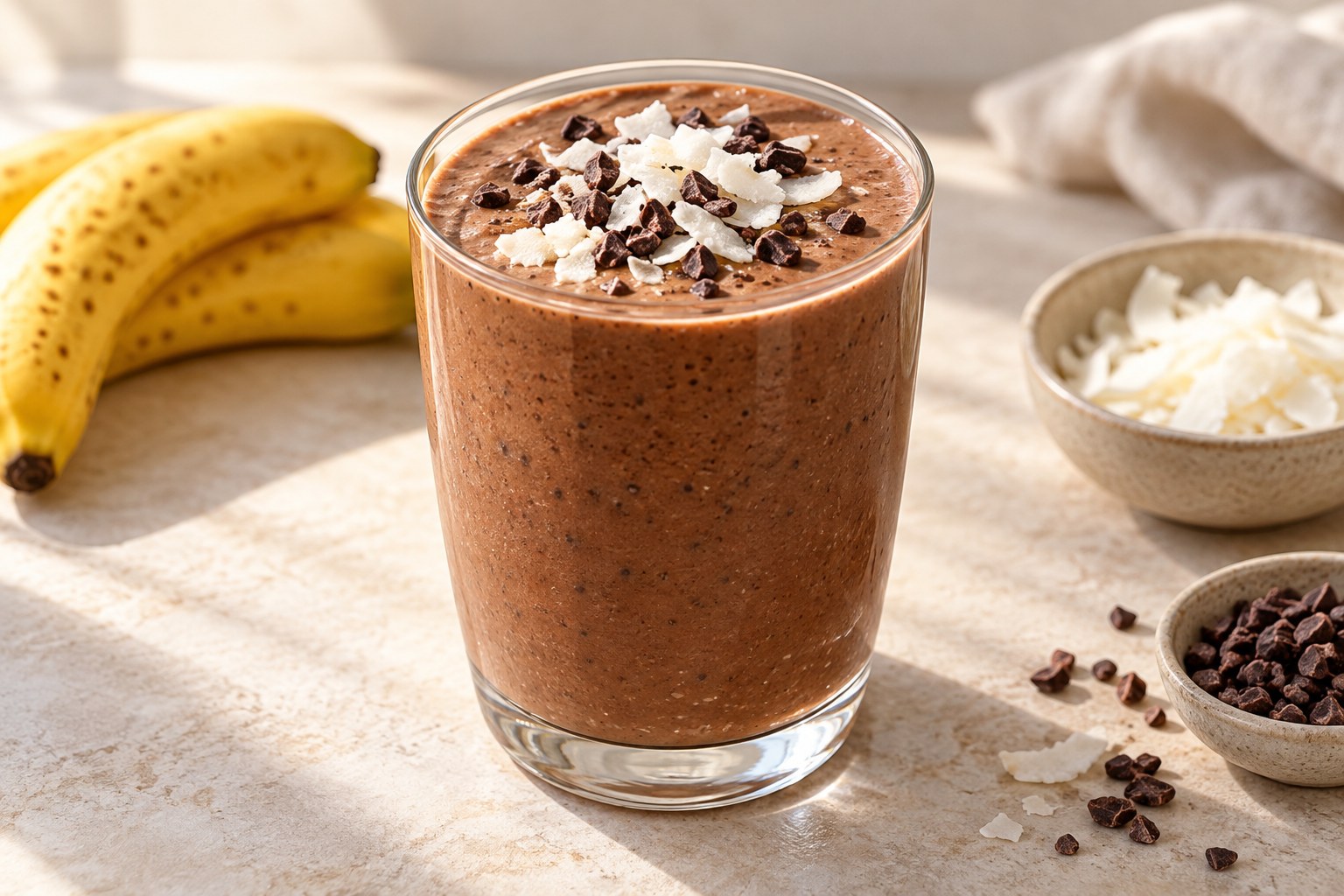
43. Choconananut Smoothie
Despite the playful name, the actual ingredient list focuses on chocolate, banana and coconut, with cocoa powder, coconut milk, coconut flakes and optional cacao nibs. Do not describe it as a nut-butter smoothie when none is required. It is best understood as a dessert-like chocolate-coconut drink.
44. Banana Almond Protein Smoothie
Almond milk, almond butter, Greek yogurt, banana and protein powder define this version. It contains tree nuts and possibly dairy, depending on the yogurt. A scoop of powder can change the nutrition substantially, so do not claim a fixed number of protein grams without calculating from the exact brands and portions.

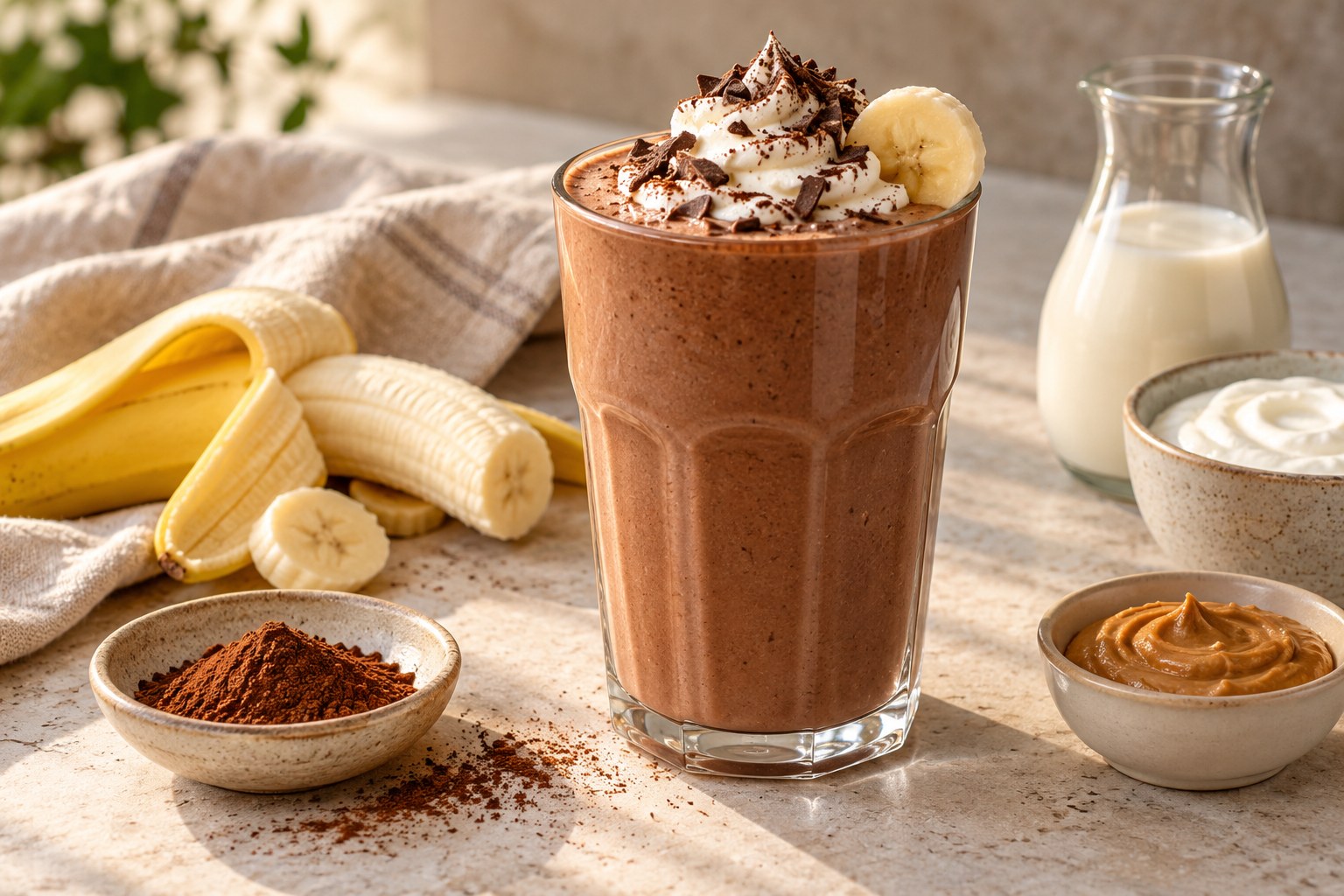
45. Chocolate Banana Smoothie
Frozen bananas and cocoa create chocolate flavour without needing a chocolate-flavoured spread. Yogurt, milk of choice and optional nut butter round it out. The published garnish may include whipped cream, making it more dessert-like when used. Nut-free and dairy-free versions require attention to every selected ingredient.
Dessert-inspired smoothies: Treats worth describing accurately
Dessert flavours can be delightful in a glass. The ingredients still matter: one published drink contains heavy cream, white chocolate and added sugar, while another is thickened with avocado and cacao. These choices are different from a fruit-only drink, and that distinction makes the collection more trustworthy.
46. Carrot Cake Smoothie
Carrots, banana, yogurt, oats, cinnamon and ginger capture part of the flavour of carrot cake. The recipe may include walnuts or pecans as an optional topping, which matters for guests with nut allergies. Chop or prepare carrots to suit the blender’s capabilities, and do not expect an identical texture to a baked cake.

47. Pumpkin Pie Smoothie
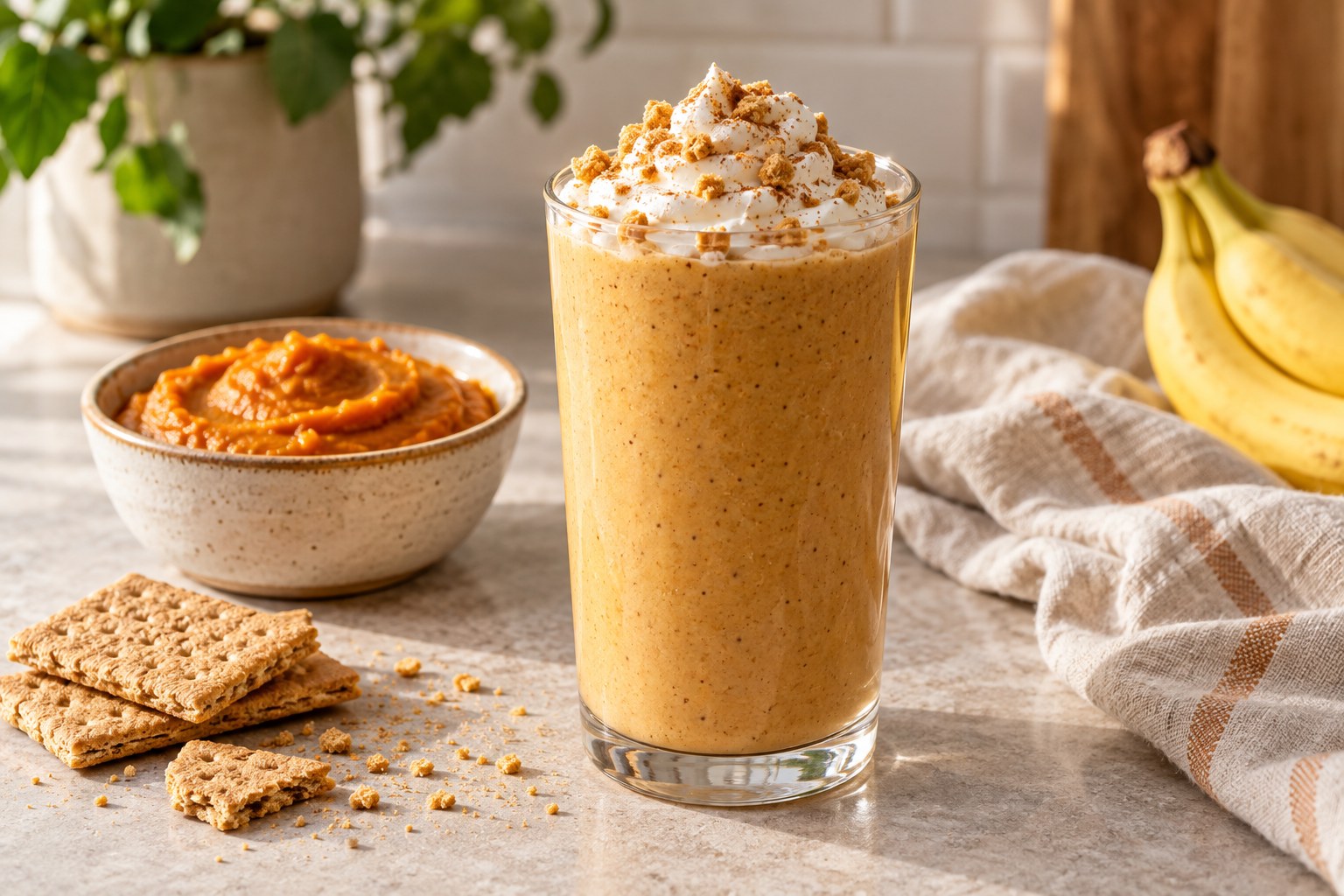
Use plain pumpkin purée, not sweetened pumpkin pie filling, as the recipe specifies. Banana, yogurt, milk and pumpkin spices give a creamy autumn drink; graham-cracker crumbs and whipped toppings are optional. The flavour is seasonal, but no smoothie is automatically a substitute for a complete balanced meal.
48. Chocolate Sapote Smoothie
Black sapote is the distinctive ingredient, joined by cacao, banana, almond milk and almond butter. Use ripe fruit as the recipe directs, and avoid assuming that the word “chocolate” means cocoa alone. Almond ingredients are central here, and optional sweetener should be adjusted to the actual fruit.

49. Strawberries and Creme Wannabe Frappuccino
The actual published drink includes strawberries, granulated sugar, heavy cream, milk and white chocolate chips. It is an indulgent, café-style dessert drink—not a healthful low-sugar substitute by default. Enjoy it as a sweet treat and label its dairy content clearly.

50. Superfood Chocolate Pudding Smoothie
Avocado, banana, cacao, almond butter and chia make this especially thick, almost like a spoonable pudding. It also contains maple syrup or honey. The word “superfood” is marketing language, not evidence of a special health outcome, and optional maca should not be added casually for children or other sensitive groups.

Matcha and other energizing flavours: Read beyond the name
Matcha contains caffeine, whether a drink is labelled “green tea,” “vanilla,” or “coconut.” Other recipes are named “power-packed,” “energy booster,” or “silky skin” for editorial appeal; the names should not be treated as evidence of a therapeutic effect. Those drinking choices depend on the individual, especially when supplements are added.
51. Matcha Vanilla Smoothie
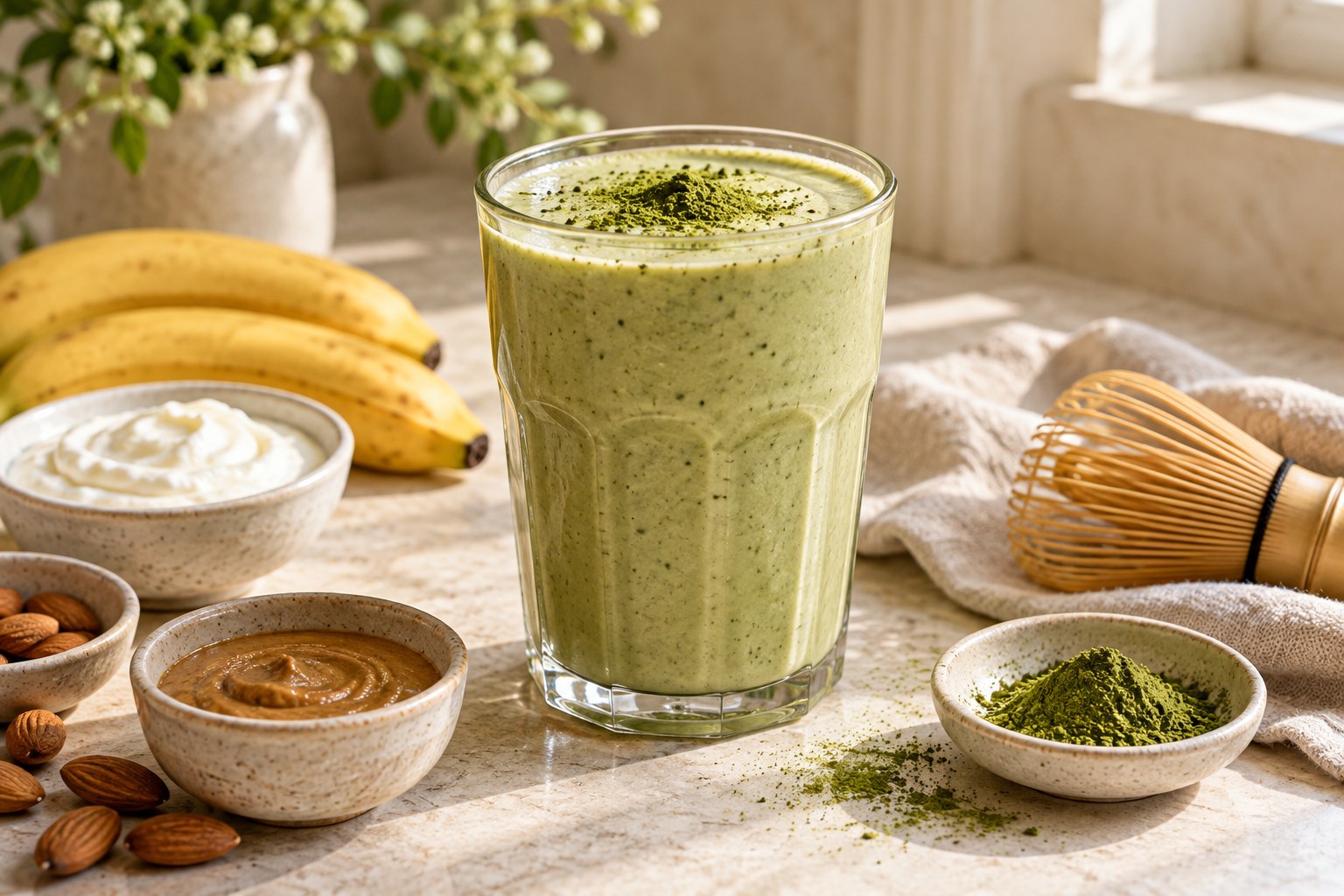
Matcha, banana, vanilla, almond milk and yogurt create a creamy green-tea flavour. Matcha contains caffeine; do not market it as appropriate for children or people advised to avoid caffeine. The recipe also lists a generous amount of vanilla extract and optional sweetener, so follow its quantities rather than assuming it is unsweetened.
52. Morning Energy Booster Smoothie
Banana, blueberries, spinach, protein powder, yogurt and chia give this a fuller ingredient list than a quick fruit drink. The “energy booster” name does not establish a medically meaningful increase in energy. Check the powder’s suitability and prepare the fruit before blending for a smoother result.

53. Coconut Matcha Shake
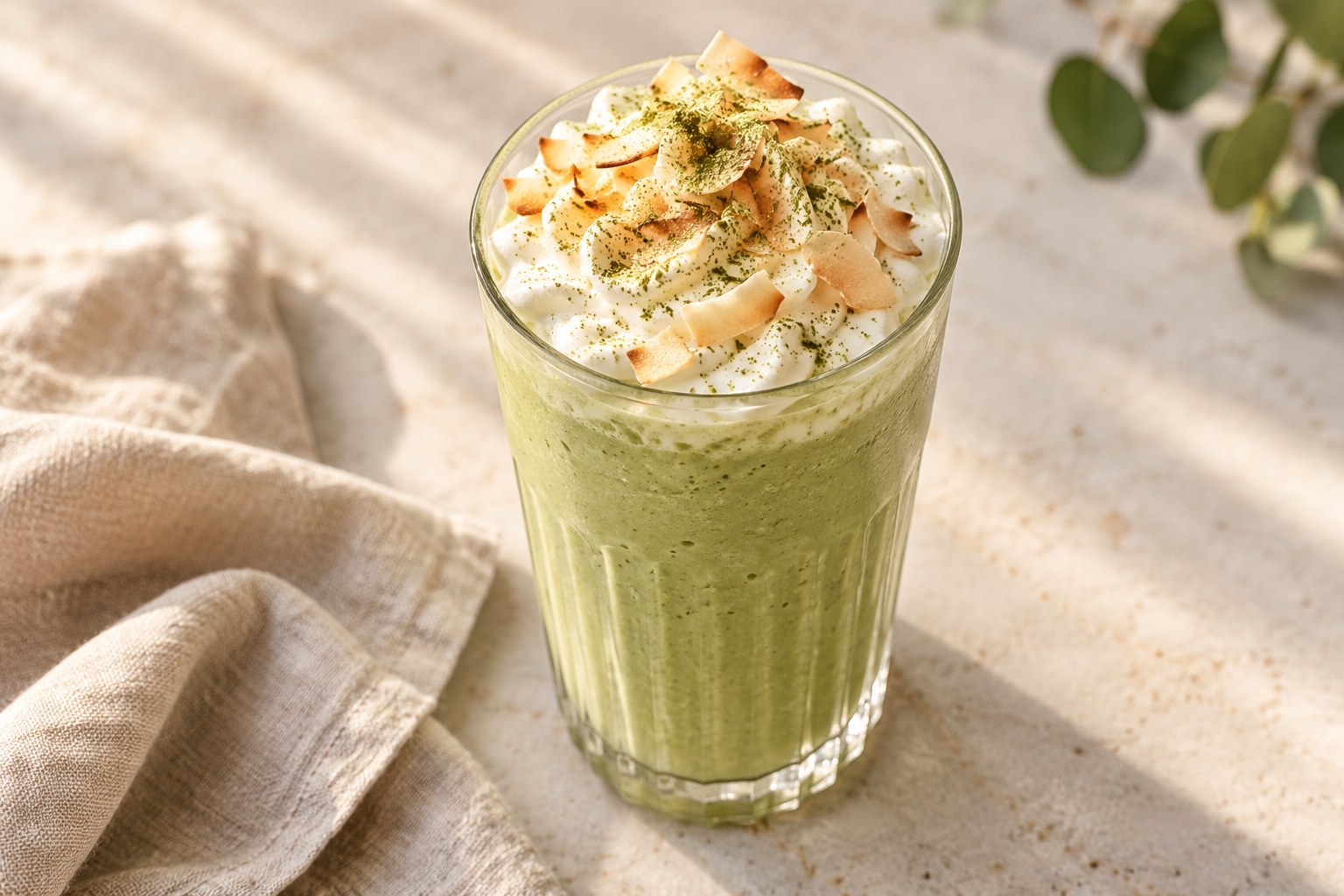
Matcha blends with rich coconut milk, coconut cream, banana, and sweetener. It is creamy and relatively rich, and its caffeine content depends on the specific matcha used. Coconut oil is optional in the recipe. Consider it a flavoured drink rather than a universal alertness or wellness intervention.
54. Green Tea, Blueberry, and Banana Smoothie
The actual formula uses matcha powder, not a steeped cup of ordinary green tea. It combines blueberry, banana and almond milk, with optional chia. Matcha contributes caffeine, so choose a caffeine-free smoothie when serving children or someone restricting stimulants.

55. Milk and Honey Smoothie
Milk, honey, banana, berries and yogurt produce a sweet, creamy drink. Honey is an ingredient, not an automatically healthier sugar substitute. Do not serve honey to infants under one year of age, and consider the dairy ingredients and age-appropriate serving size for other children.

56. Power-Packed Smoothie
This is an ingredient-heavy blend with fruit, avocado, spinach, plant milk, protein powder, nut butter, chia and flax. It may suit adults seeking a larger drink, but the recipe is not an individualized meal replacement. Check allergies and the product label of any added protein supplement.

57. Silky Skin Smoothie
Mixed berries, cucumber, yogurt, almond milk, chia and flax define the recipe. Optional collagen peptides do not establish that drinking it will produce “silky skin.” Present the name as the recipe’s creative title rather than promising a dermatologic benefit, and check supplements and allergens separately.

The seven questions that save the most smoothie mistakes
Why did my smoothie turn watery?
Too much liquid was added before the frozen fruit could break down, or the fruit thawed completely before blending. Begin with the quantity specified by the recipe, blend gradually, and use frozen ingredients where the formula calls for them. Smoothie bowls need considerably less liquid than drinks. Do not force a stalled blender; stop and follow its safety directions instead.
Why did my drink get thick and gel-like in the refrigerator?
Recipes containing chia seeds, oats or some protein powders can thicken as they sit. Stir and adjust using the original recipe’s liquid where safe, but do not assume that every mixture stores identically. Make thick smoothie bowls close to serving time when possible.
Why is my green smoothie bitter?
Kale, unripe mango, some citrus peel, and optional herbal ingredients may create bitterness. Read the actual recipe and prepare the ingredients correctly: remove tough kale stems, use specified ripe or unripe fruit, and avoid adding concentrated supplements to fix a flavour problem. A sweeter banana or a properly ripened fruit may balance the flavour in a recipe designed for it.
Why does the frozen fruit keep sticking above the blade?
The mixture may be too thick for the particular appliance. Stop the blender, unplug it where appropriate and use the manufacturer-recommended tamper or procedure. Never put a spoon or hand into a running blender. Add measured liquid gradually only if the recipe and equipment allow it.
Can I remove nut butter or dairy without changing anything?
Sometimes the substitution changes the flavour or texture dramatically. Almond butter thickens and enriches a blend; Greek yogurt adds creaminess and acidity. If avoiding allergens, choose a suitable published formula or test a safe alternative, read labels carefully and clean equipment to prevent cross-contact. A recipe title such as “fruit smoothie” does not establish that it is nut-free or dairy-free.
Are smoothies automatically good for children?
No. Age, portions, sugar, food allergies, and choking concerns all matter. Some recipes include caffeine-containing matcha; others include powders or herbs that should not be offered casually to children. Honey should never be given to infants younger than 12 months. For young children, discuss individual dietary needs with a qualified professional and prefer age-appropriate ingredients.
Do I need expensive “superfoods” to make a good smoothie?
Not at all. Simple combinations such as blueberries, banana and yogurt, or spinach and banana with milk of choice, can be enjoyable without specialty powders. Optional maca, ashwagandha, collagen peptides and protein powder have specific considerations and do not automatically make a drink more suitable for every person.
Build a realistic seven-day smoothie rotation
Use this rotation as inspiration, not a fixed nutrition plan. Monday: Classic Blueberry Smoothie for a straightforward berry drink. Tuesday: Pineapple-Cucumber Smoothie when you want a fresher taste. Wednesday: Spinach and Banana Power Smoothie for a simple leafy option.
Thursday: Peaches and Cream Oatmeal Smoothie if you want oats in the blend. Friday: Mango Madness Smoothie for a tropical favourite. Saturday: Mango Smoothie Bowl with Homemade Granola when you have time to prepare toppings. Sunday: Strawberry Shortcake Smoothie for a clearly labelled dessert-style treat.
A smoothie is not required every day. Swap days, repeat one you enjoy, or skip the rotation entirely. A meal plan is useful only if it works with the rest of your food, schedule and needs.
Shopping once for several blends
Frozen berries, frozen mango, bananas and a familiar milk or plant drink cover many recipes. Add yogurt only if you plan to make yogurt-based versions. A small amount of oats or chia seeds can serve several recipes without buying a different supplement for each. Choose one or two fresh flavour accents, such as lime or mint, rather than collecting every garnish in the original recipes.
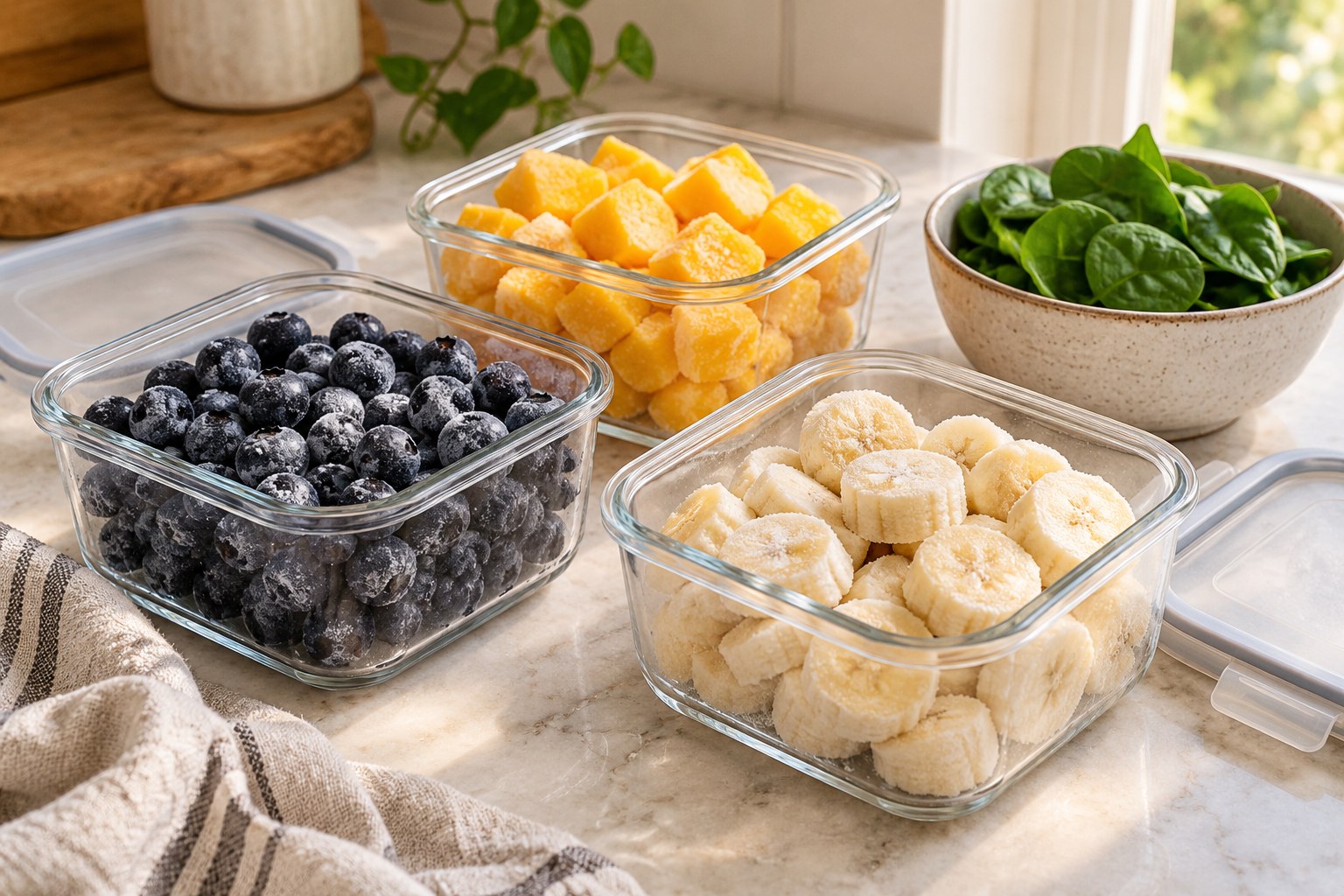
Read the exact ingredient list before shopping for protein powders, nut butters, coconut cream, and matcha. These ingredients are more specialised and can change the allergens, caffeine or richness of the drink. Consider a smaller first batch if you are unfamiliar with a new ingredient. Freeze ripe fruit in recipe-sized portions and label the bags so you can use older ingredients first.
Food safety, make-ahead prep and storage
Wash hands and clean blender parts thoroughly, especially after handling dairy, nut ingredients or raw produce. Refrigerate perishable fruit preparations and dairy-based blends promptly. Cut melon should be treated as perishable. Use Health Canada's produce safety guidance rather than relying on a blanket claim that every green smoothie is safe to keep for exactly 24 hours.
For advance preparation, freeze suitable fruit and vegetable components before blending, then add liquids and perishable yogurt close to serving. If a smoothie has been mixed in advance, keep it properly refrigerated and follow applicable food safety guidance; quality, separation and texture may change even when it has been stored safely. Do not leave dairy-rich smoothies in a warm car or on a sunny counter.
Use clean utensils for toppings. Granola containing nuts, yogurt containing dairy, matcha containing caffeine, or optional supplemental powders should be labelled clearly. Shared blenders can transfer allergens between drinks; clean them adequately or use dedicated equipment when necessary under an allergy management plan.
Read the full recipe card, not just the flavour name
Two drinks can share a dominant fruit while behaving very differently in the blender. A mango smoothie with yogurt and banana is not equivalent to a mango bowl served with baked granola; the bowl has extra ingredients, steps, potential allergens and a different texture. Likewise, a strawberry-banana shake with chocolate-hazelnut spread differs from a plain fruit blend. Before mixing, review the ingredients and the complete instructions on the linked recipe page.
Choose the recipe for the occasion. A basic blueberry drink may suit a weekday, a chia-rich bowl may be enjoyable with a spoon, and a pineapple creamsicle with ice cream may be a dessert. If you need to avoid dairy, nuts, caffeine or other ingredients, read the exact recipe and packaged-food labels rather than relying on the broad heading. This is more useful than attaching blanket health promises to every drink.
The listed recipes give you a starting point for flavour and technique, not a guarantee of weight loss, clearer skin, enhanced immunity or athletic recovery. Enjoy fruit and vegetable combinations for their taste and convenience, and use individually appropriate nutritional advice where needed.
Final thoughts: Find favourites, not miracles
A good smoothie collection should make it easier to choose a flavour, understand the ingredients and make the result you expected. This updated guide contains 57 distinct published recipes across berry drinks, tropical blends, green smoothies, creamy bowls, matcha drinks and desserts. Each link leads to its real recipe card, and the descriptions reflect what is actually in that recipe.
Start with one familiar blend, then try a more adventurous one when you have the time and ingredients. You do not need an endless stream of powders, a rigid schedule or dramatic health claims to enjoy fruit, vegetables and the occasional creamy treat in a glass.
IN PICTURES
From the baking notebook
FROM THE RECIPE BOX


