On this page
Nothing is more disappointing than spooning into a silky homemade custard and discovering a rubbery layer on top. Whether you are making vanilla pudding, pastry cream for éclairs, or a custard filling for a tart, that thin film can make an otherwise smooth dessert feel lumpy.
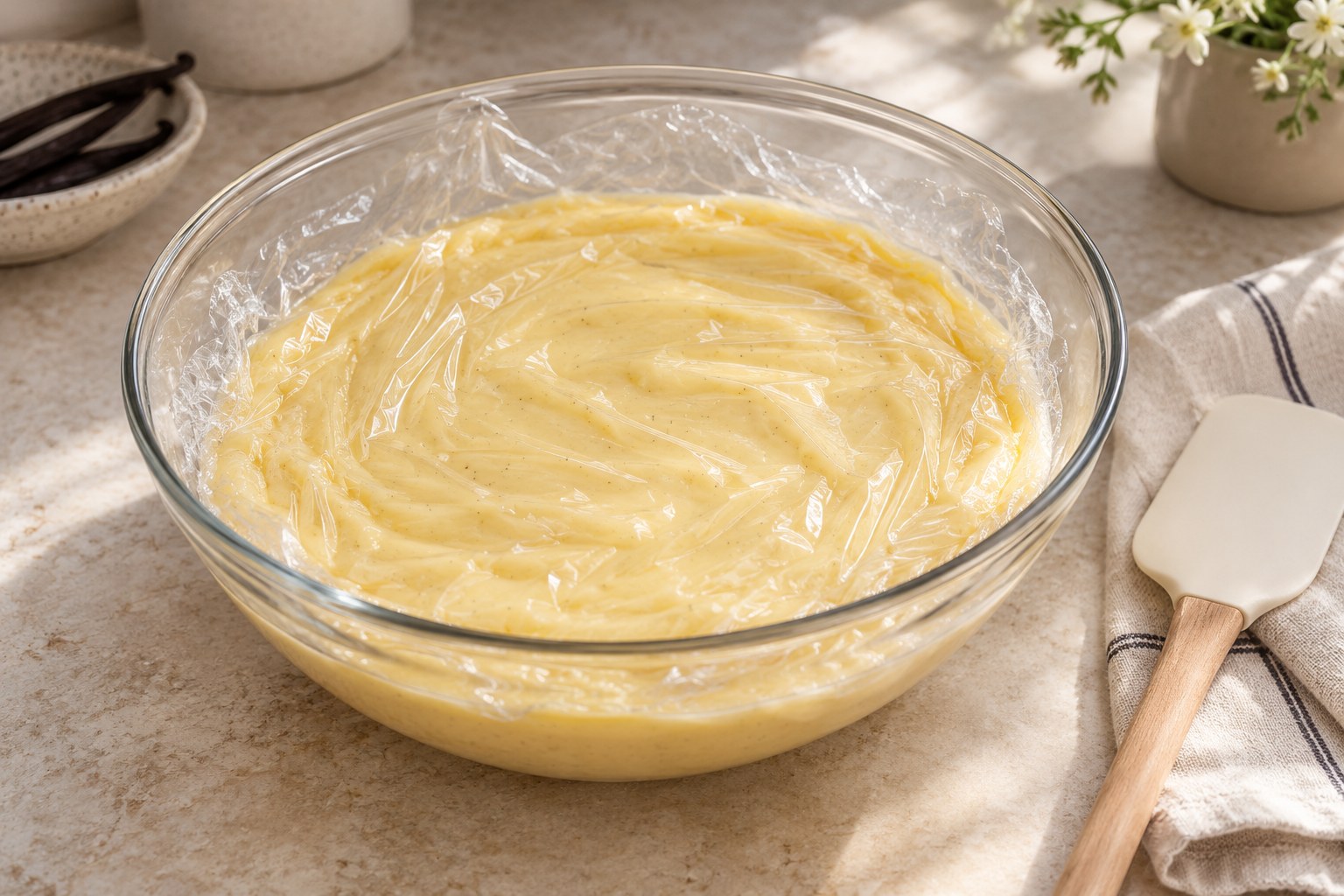
The good news: the easiest way to prevent custard skin is to cover the custard directly on its surface while it cools. A sheet of food-safe plastic wrap or baking parchment pressed against the entire surface keeps the top from drying out. A lid positioned above the custard is not the same thing; it still leaves a pocket of air touching the filling.
Here's why skin forms, how to prevent it without changing your recipe, and what to do if the custard has already developed one.
Why does custard form a skin?
A skin develops when the exposed surface of hot milk-based custard or pudding loses moisture as it cools. Milk proteins and other dissolved or suspended solids become concentrated at the top, creating a film that sets into a leathery layer. Starch-thickened pastry cream can develop an especially noticeable surface layer.
This is a surface problem, not necessarily a sign that you cooked the entire custard incorrectly. A smooth filling can form a skin simply because it was left uncovered in a bowl. Stirring as milk heats helps keep the surface moving, but once finished custard is sitting still, preventing contact with air is more reliable than hoping it will stay smooth on its own.
The easiest method: cover the surface, not just the bowl
For most stovetop custards, puddings, and pastry creams, direct-contact covering is the simplest, most dependable method.

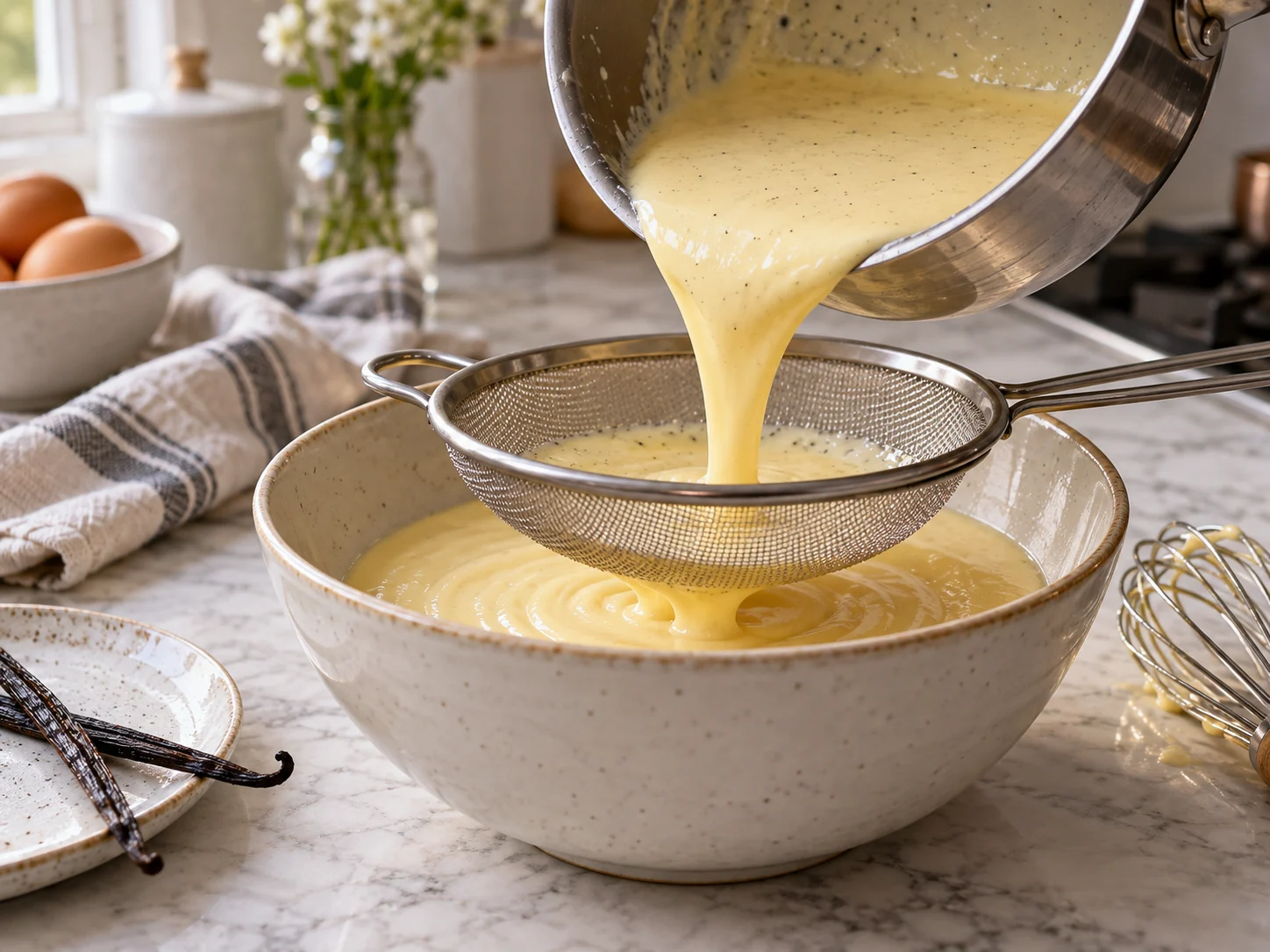
- Finish cooking according to your recipe. If the filling calls for straining, pour it through a fine-mesh sieve into a clean, heat-safe bowl. Straining removes bits of cooked egg or starch lumps; it does not replace a surface cover.
- Choose a shallow, heat-safe container. A broad container makes cooling faster and gives you easier access to the surface.
- Cut a piece of food-safe plastic wrap or baking parchment. Make it large enough to cover the custard all the way to the edges. Use wrap that is suitable for the temperatures involved; parchment is a useful alternative.
- Place it directly on the custard. Gently smooth it across the entire top so there are no large air pockets. Press near the sides, where skin often forms first.
- Refrigerate promptly. If you have a large, very hot batch, divide it into smaller shallow containers or use an ice bath to speed cooling. Keep the refrigerator at 40°F (4°C) or below.
- Remove the cover just before using. Peel slowly. If needed, briefly stir or whisk the chilled filling until smooth, following the recipe's instructions.
Quick takeaway: Wrapping the rim of the bowl while leaving an air gap over the pudding helps with storage, but it does not protect against skin as reliably as wrap that touches the pudding itself.
Can I use parchment instead of plastic wrap?
Yes. A piece of baking parchment placed directly against the surface is an alternative used in pastry-cream recipes. Trim it to fit the bowl or lay it flat across the filling, pressing gently from the middle toward the edges. The aim is the same: limit exposure to air during cooling.
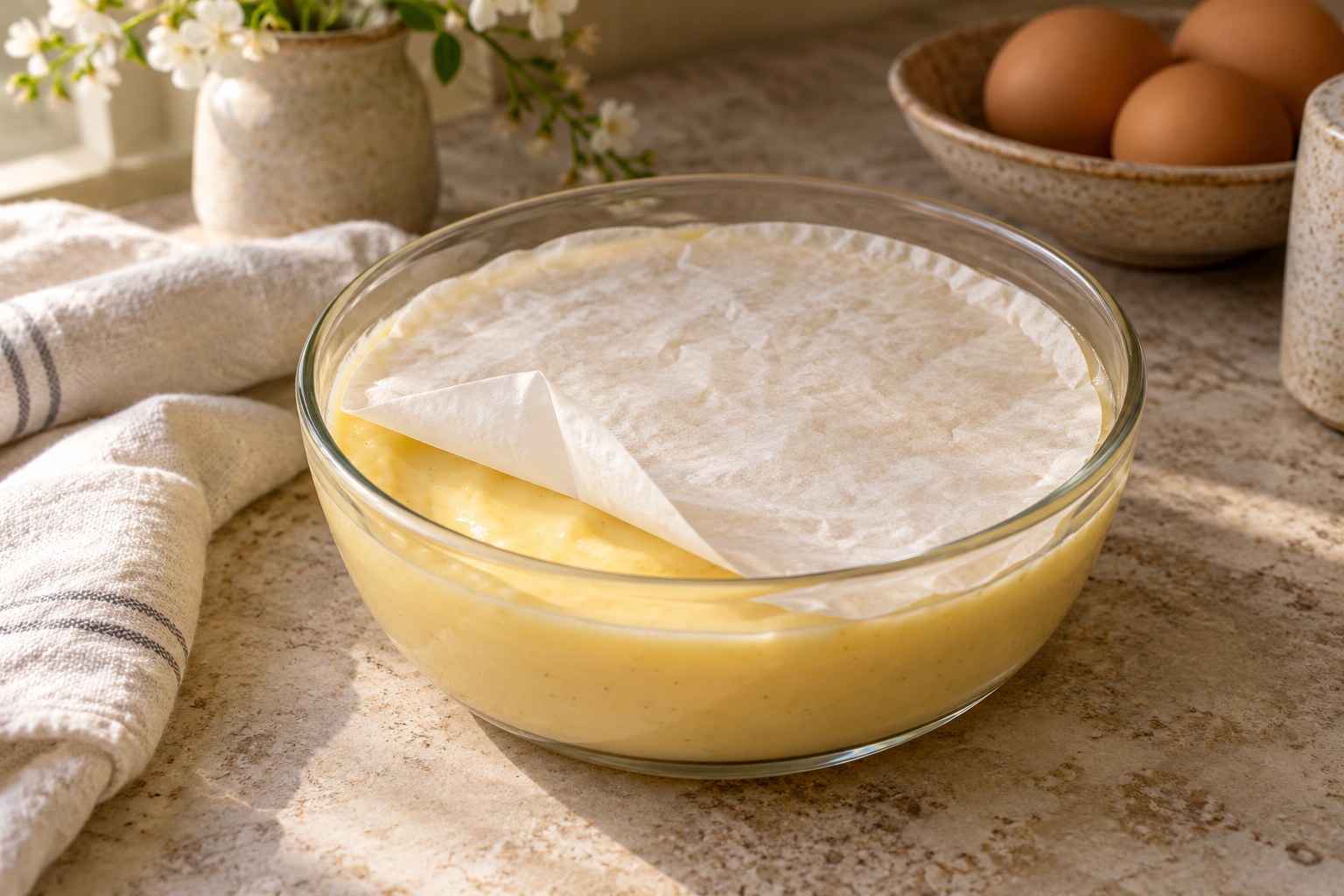
Avoid ordinary paper towels or napkins. They can absorb the liquid, tear, stick to the surface, and leave bits behind. A reusable lid can go over the container for additional refrigerator protection, but unless it touches the custard, it does not solve the skin issue by itself.
What if custard skin has already formed?
Don't automatically throw out the batch. If the custard has been cooked and chilled safely, a skin is usually a texture issue, not evidence of spoilage.
For a thin skin: Gently lift it off with a spoon or spatula, then whisk the remaining custard briefly to restore a smooth consistency.
For small bits of skin: If the filling is still warm enough to flow through a sieve, passing it through a clean fine-mesh strainer may remove the pieces. Don't force a cold, stiff pastry cream through a sieve if that would ruin its texture; loosen or whisk it only as the recipe permits.
For a thick, chewy skin: Removing it is often better than mixing it back in. Whisking can disperse the film into stubborn little lumps, especially in a delicate tart filling.
If the entire custard looks scrambled, grainy, or separated, the problem may be overheating or curdling rather than just a surface skin. The prevention technique won't fix an overcooked custard, so diagnose the underlying texture before trying to salvage it.
How to keep different types of custard smooth
Pastry cream for cakes and éclairs
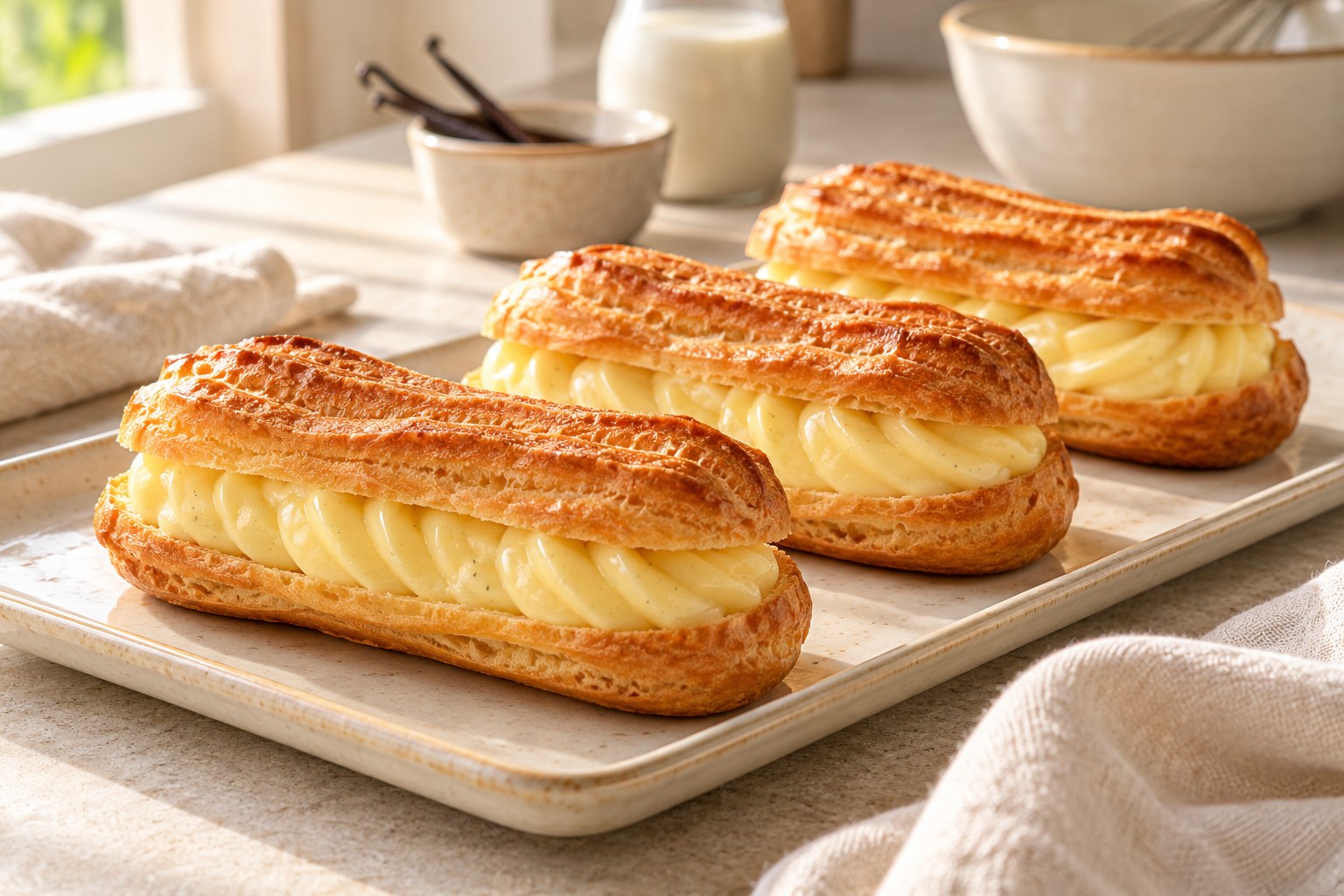
Pastry cream is typically thickened with starch and egg, making it especially prone to a set surface as it chills. Transfer it into a clean bowl, cover the entire surface directly, and refrigerate until fully cooled. When the recipe calls for it, whisk briefly before piping so the filling becomes smooth and spreadable again.
Homemade vanilla or chocolate pudding
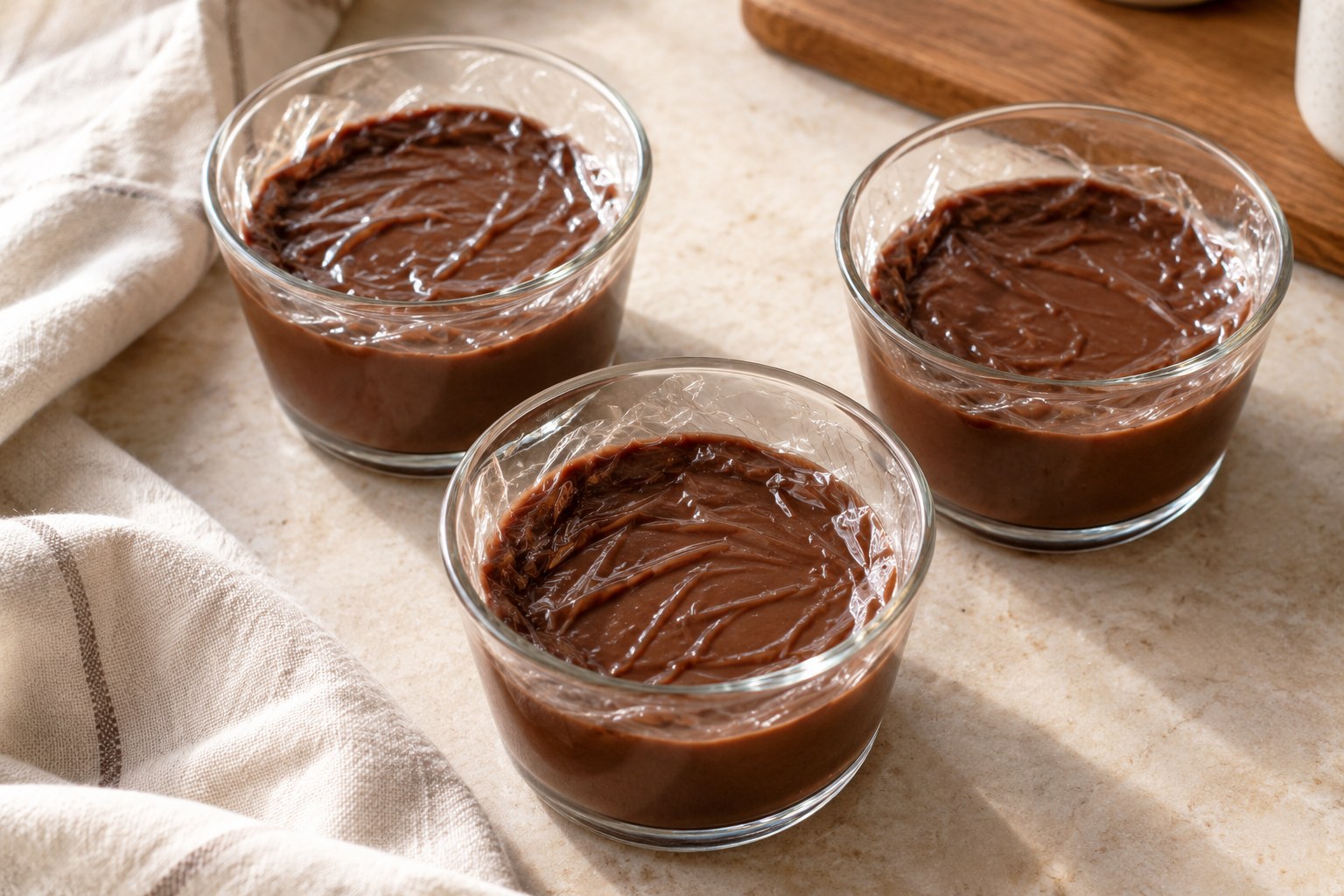
Portion the pudding into individual serving cups while it is still fluid. Cover each cup on the surface if you want a skin-free pudding, then chill. If you actually enjoy pudding skin, you can leave the top exposed while cooling safely—but that is a deliberate texture choice, not a requirement of the recipe.
Pouring custard and crème anglaise
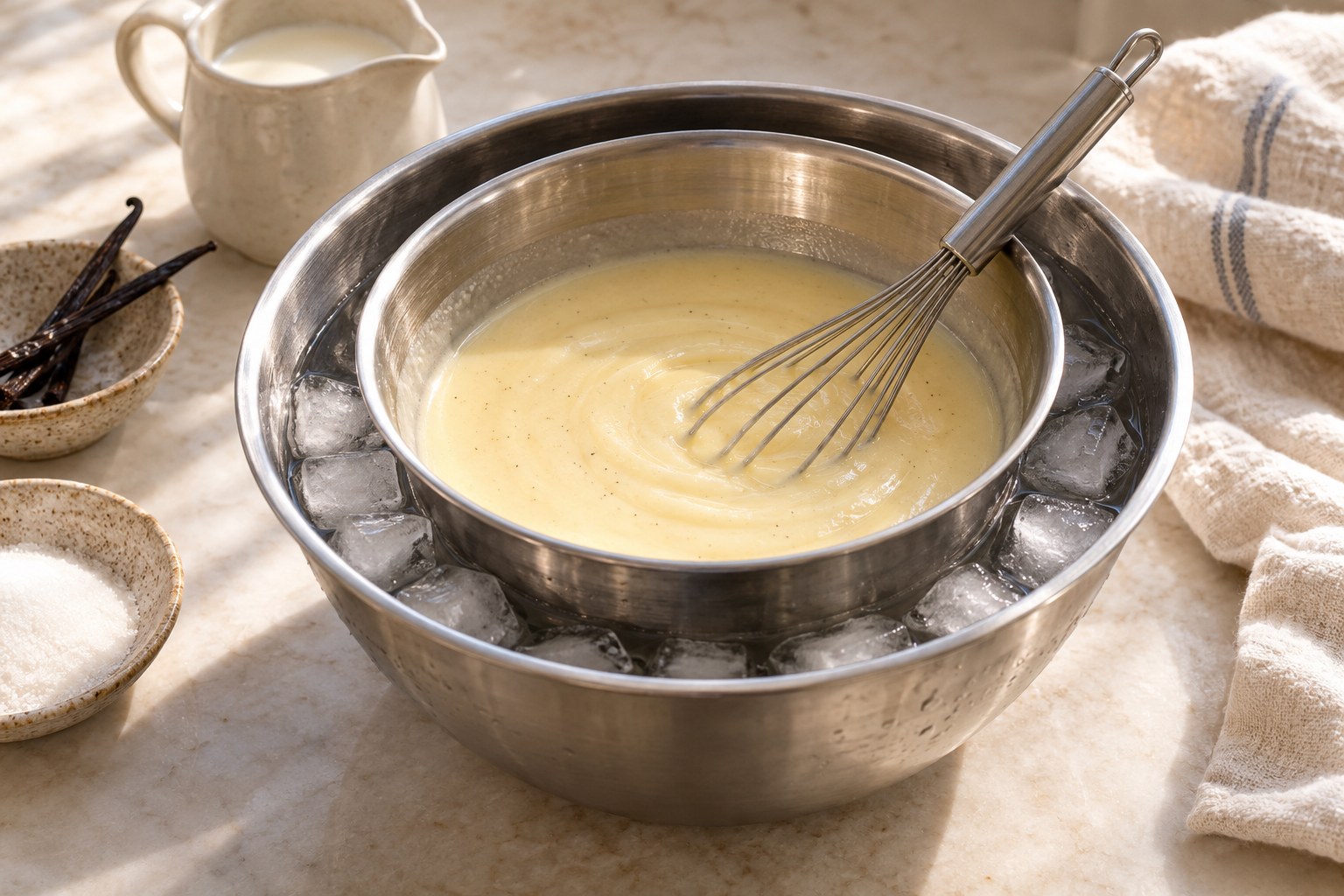
These are generally thinner than pastry cream. Follow the recipe's instructions for straining and rapid chilling, and cover during refrigeration. Gentle stirring while cooling in an ice bath helps release heat evenly. If the custard is meant to stay pourable, avoid cooking it longer simply to make it 'more set.'
Baked custards
Crème brûlée and some baked egg custards develop a surface that is part of their cooking or finishing method. That's different from the dry film on stovetop pudding. Do not press plastic wrap onto a hot baked custard just because this technique works for pastry cream. Follow the specific recipe's cooling and storage directions.
Common mistakes that cause a skin
- Covering only the bowl: The custard still contacts air under the lid.
- Leaving it on the counter uncovered: A film can begin forming long before the mixture is cold.
- Letting the plastic wrap hover above the custard: Even a small gap leaves patches exposed.
- Stirring a thick, cold skin back in: You may end up with chewy flecks instead of smooth custard.
- Cooling a deep, large batch slowly: Use smaller, shallow containers and a refrigerator or ice bath to cool food more efficiently.
- Confusing skin with curdling: A leathery top layer and grainy custard throughout require different fixes.
Food safety matters as much as texture

Custards and puddings commonly contain milk and eggs, so they need prompt refrigeration. The U.S. Food and Drug Administration recommends refrigerating perishable foods within two hours of preparation, or within one hour when the surroundings are above 90°F (32°C), and keeping the refrigerator at 40°F (4°C) or colder. Use shallow containers to speed cooling instead of leaving a large bowl out for hours.
A surface cover helps preserve texture, not food safety on its own. Always follow any more specific storage instructions in the recipe, and discard a batch that has spent too long at unsafe temperatures.
Frequently asked questions
Why does skin form even when the bowl has a lid?
A typical lid leaves air between the lid and the custard. Moisture can still leave the exposed surface, concentrating proteins and solids at the top. A direct-contact sheet is more effective.
Should I cover custard while it is still warm?
For stovetop pastry cream and pudding, many established recipes instruct you to apply a suitable food-safe cover directly to the surface before refrigerating. Follow the temperature guidance for your chosen covering material, and divide very hot batches into shallow containers when needed for quicker chilling.
Is a skin on pudding safe to eat?
A normal pudding skin is a texture change, not inherently a sign of spoiled food. Safety still depends on the ingredients, cooking, refrigeration, and how long the pudding has been stored.
Can I prevent skin without plastic wrap?
Yes. Baking parchment pressed against the surface is a practical alternative. You can also stir some dairy mixtures periodically while cooling, but that is less convenient and less reliable for a custard that needs to set undisturbed.
Will whisking custard after chilling make it smooth again?
Often, yes—especially for pastry cream designed to be whisked before use. First remove any firm skin, then stir only as much as the recipe recommends. Vigorous whisking can alter the texture of some delicate custards.
Why a skin forms even on well-made custard
A skin can appear when a cooked custard's exposed surface loses moisture and proteins or starches concentrate at the top. The custard beneath may remain perfectly smooth. This is why a smooth pan of pastry cream can develop a thin rubbery covering while cooling untouched. The phenomenon is related to exposure at the surface, not automatically to overcooking the entire custard.
For a thick pastry cream or pudding, placing suitable food-safe wrapping directly against the surface limits air exposure during cooling. Make sure the wrapping is approved for contact with the food at its actual temperature; some films are not intended to touch very hot preparations. Refrigerate promptly using safe cooling practices instead of leaving a large warm bowl on the countertop indefinitely.
How to cover pastry cream properly
Transfer the cooked custard to a clean, suitably sized shallow container if the recipe calls for it. A shallower layer can cool more efficiently than a deep pot. Smooth the surface with a clean spatula and apply appropriate food-safe wrap directly against the custard, working from the middle outward to minimize trapped air. Avoid leaving an uncovered pocket that can form a skin.
Use clean utensils and prevent contact with raw eggs or unwashed surfaces after cooking. Place the container under correct refrigeration as soon as appropriate for safe cooling. If preparing custard for a tart, make sure the filling is cooled to the stage the recipe specifies before spreading or piping it into a delicate pastry shell.
Custard, pastry cream and baked egg custard are not identical
Stirred pastry cream thickened with eggs and starch can be covered directly at its surface. A delicate baked custard, however, may be served in a ramekin or tart and intended to set without being stirred. Pressing plastic against the surface of a warm baked custard can spoil its appearance. Instead, follow its recipe for gradual cooling and refrigerated storage and use appropriate protection once the dish has cooled.
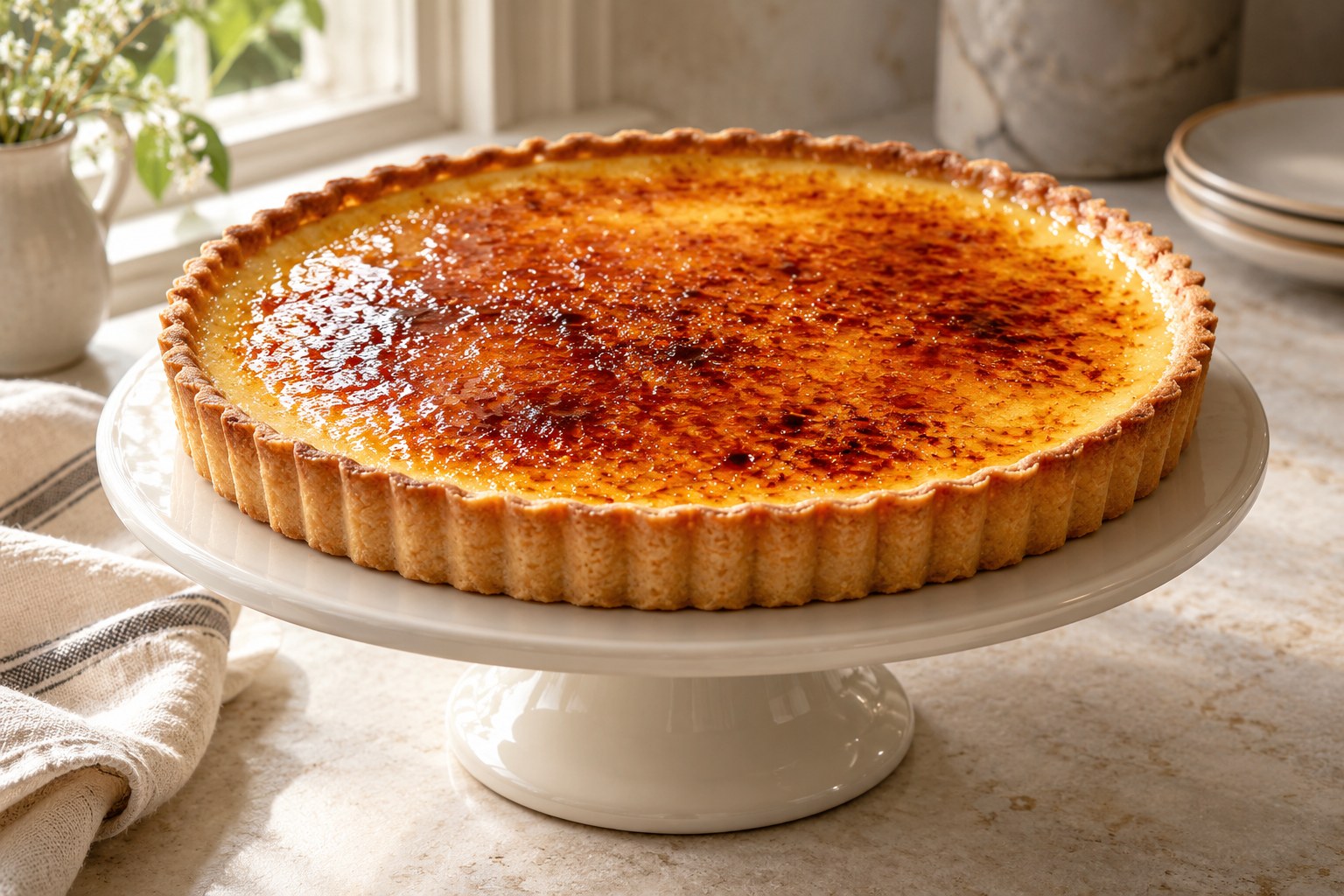
The Crème Brûlée Tart has a baked cream-and-egg custard and a caramelized sugar top. Its recipe specifies six egg yolks, cream and vanilla. A cover used for stirred pastry cream is not necessarily appropriate for its finished caramel layer, which can absorb moisture and lose crunch. This distinction matters when planning a dessert in advance.
How to avoid watery or lumpy pastry cream
Preventing skin is only one part of successful custard technique. Lumps can result from overheating eggs, inadequate whisking during cooking or incomplete incorporation of starch. Follow the recipe's controlled heat and stirring instructions rather than rapidly boiling a mixture whose eggs may curdle. Where a strained finish is appropriate, use a clean fine-mesh sieve as directed by the recipe.

If cooked pastry cream is thicker than expected, do not automatically thin it with unmeasured milk. That changes the filling's consistency and may prevent a tart from holding its shape. If it appears grainy, determine whether it is a cooked-egg problem, starch lumps or simply a skin before attempting a fix.
For a recipe that puts smooth pastry cream into practice, see our Strawberry Custard Tart. Its method includes covering the custard's surface as it cools before filling the tart shell.
A practical pastry-cream preparation schedule
Before cooking, measure the milk or cream, eggs, sugar and any starch required. Prepare a clean shallow container and the appropriate wrapping material before the custard becomes hot. Cook according to the recipe, then transfer and protect the surface promptly under suitable food-safety conditions. A hot saucepan left uncovered on the stove while you look for a lid increases the chance of surface drying.

Refrigerate for the time the recipe needs to set and use a clean utensil to remove the cover. If the cream will be piped, stir or whisk it only as much as the formula permits to restore a smooth texture. Baked custards and caramelized toppings may need a different schedule, so make them according to their specific instructions rather than borrowing the stirred-cream method.
What to do when a skin has already formed
If a thin skin forms on cooked pastry cream, a gentle whisk may disperse it in some recipes, while others benefit from careful removal or straining. The best choice depends on whether the custard is intended as a smooth filling or as a set dessert. Do not beat a baked egg custard vigorously just to remove a surface mark; that can destroy its texture.
Assess whether the custard was prepared and stored safely. Removing a skin does not correct a mixture that has been left at an unsafe temperature or contaminated. Freshly cooked custard contains perishable ingredients, and correct cooling and refrigeration remain essential.
Common custard-skin questions
Can parchment touch the surface instead of plastic?
Some techniques use parchment when it is suitable for the preparation, but it may not seal as closely as flexible wrap. Follow recipe instructions and ensure the material is appropriate for the temperature and food contact.
Can I stop skin by stirring every few minutes?
Occasional stirring can interrupt the surface film in some stirred custards, but it may be inconvenient and introduce handling while the mixture cools. Direct surface covering is generally simpler when supported by the recipe.
Will a skin make the custard unsafe?
The skin itself is usually a texture issue. The important safety questions concern cooking, cooling, refrigeration and cleanliness. Never rely on removing the surface to make poorly stored custard safe.
Choose the right covering for the type of custard
The simplest custard-skin solution is direct surface protection, but it is important to identify the dessert. Pastry cream that will be stirred and piped into éclairs can often be covered directly with food-safe wrap approved for contact at the custard's temperature. A baked custard tart has a delicate set surface and should be handled according to its own cooling instructions. Covering the surface of a finished brûléed sugar crust with plastic would defeat the purpose of the crisp caramel topping.
For cooked pastry cream, smooth the mixture into a shallow clean container as the recipe directs. Choose a suitable covering and place it close against the surface, without large pockets of exposed custard. Minimize handling while it cools. Transfer promptly to appropriate refrigeration in accordance with food-safety guidance; the goal is to keep the custard smooth while also keeping it safe.
For a pudding served in individual cups, think about when it will be decorated. If you want a smooth surface with whipped cream, the topping can often be added after the pudding has cooled, following the recipe. If you prefer a traditional set skin, direct contact wrapping may not be necessary. Texture is partly a matter of preference, but food safety is not optional.
How to prepare pastry cream for filling a cake
Make sure the bowls, whisk, spatula and cooling container are clean before the custard is cooked. Follow the source formula for eggs, starch, sugar and dairy. Cook and whisk as directed to activate the thickener and avoid scrambling the eggs. When the mixture is finished, move it to a suitable container, protect the surface with appropriate food-safe materials and cool safely.
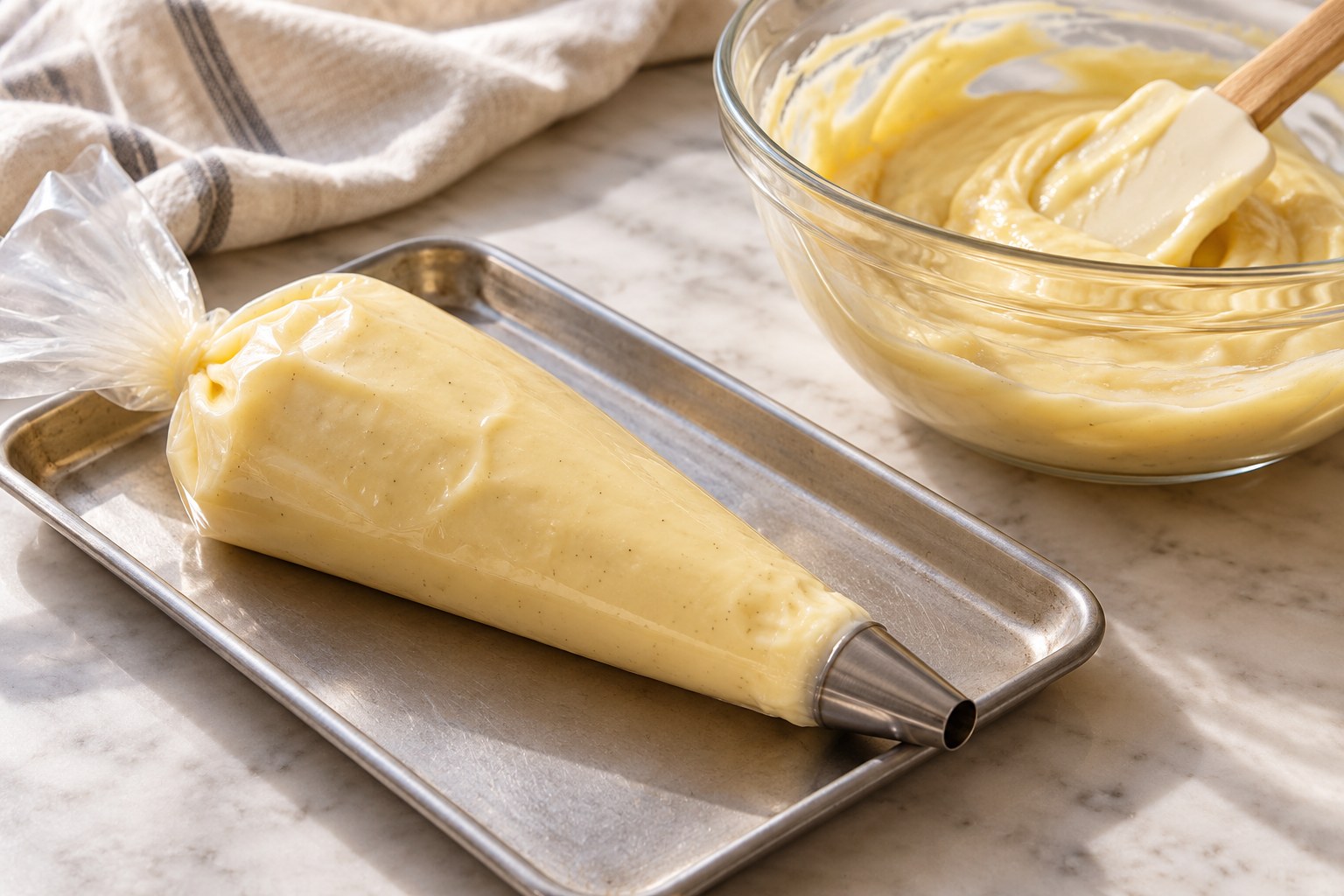
When the pastry cream is ready to use, remove the cover carefully and inspect the surface. If the mixture has set quite firm, some recipes ask you to whisk briefly to restore a smooth, pipeable texture. Others include butter or a folded cream component and have their own finishing method. Do not add unmeasured milk or cream to fix a thick custard before checking the intended texture.
Keep the finished pastry cream under suitable refrigeration. A custard filling between cake layers can make the completed cake more perishable than the unfrosted sponge. Plan the time between assembly and serving, and ensure that transport, display and leftovers meet the storage requirements of the actual filling.
How to prevent a skin when making pudding in individual cups
Portion the cooked pudding into clean cups, using a ladle or piping bag suitable for the temperature. A smooth surface is easier to cover than one with uneven peaks. If the recipe calls for direct-contact film, choose food-safe wrapping designed for that use. Cut the material to fit the cup without dropping its edges into the pudding or contaminating the surface with your hands.
A shallow small portion can cool differently from a single deep bowl. However, all cooked egg-and-dairy puddings require proper safe cooling and refrigeration. Do not leave finished cups on the counter overnight while waiting for a skin to disappear, and do not stack warm containers in a way that prevents effective cooling.
If using reusable lids, remember that a lid across the rim may leave an air gap above the pudding. That can be convenient for storage but may still allow skin development. If a smooth finish matters, protect the surface according to the tested recipe before securing the outer lid.
How to handle chocolate, vanilla and fruit custards differently
Chocolate pudding may conceal a thin skin visually because the surface is dark, but the texture can still become rubbery. Vanilla pastry cream is usually paler, making any unevenness obvious when piped into a tart. Fruit-flavoured custards can contain extra acidity and moisture, so the exact method needs to be taken from the recipe rather than adapted casually from a plain vanilla custard.
The What’s Baking? Crème Brûlée Tart uses six egg yolks, 500 ml cream and vanilla. It is a baked, set custard. Its caramelized topping is intended to crack when served; it is not a pastry-cream skin to be removed with a whisk. If preparing this tart ahead, follow its chill and finishing directions rather than borrowing all the instructions from stovetop pudding.
Some custards are made with cornstarch or flour as well as eggs. Those starches influence how thick the mixture becomes as it cooks and cools. Changing the thickener can change the finished texture substantially, and preventing surface skin cannot compensate for a mismeasured recipe.
What causes lumps, weeping and an uneven surface?
A rubbery surface film is different from lumps throughout the mixture. Lumps can be caused by uncontrolled heat, inadequate stirring or eggs that have coagulated in the wrong way. Follow the recipe's heating stages, and remove from heat at its specified point. If the source permits straining, use a fine-mesh sieve while the mixture remains workable.
Weeping or watery separation may indicate an issue with the recipe's starch balance, cooking, cooling or storage. Do not assume that pressing wrap onto the surface will solve a custard that is separating through its entire depth. A thick custard that becomes unexpectedly thin may require a recipe-specific correction rather than an extra layer of covering.
Condensation collecting under a container lid can drip onto the dessert and mark the surface. Safe cooling and suitable covering methods help minimize that outcome. Consider the container depth and whether the recipe directs a particular cooling method. The purpose is a creamy, properly set filling, not merely the absence of visible film.
Make-ahead custard preparation checklist
- Read the recipe and identify whether the custard is stirred or baked.
- Measure eggs, dairy, sugar and thickener before cooking.
- Prepare clean shallow containers and a suitable covering material.
- Cook and stir using the source recipe's method.
- Protect the surface where the recipe permits and cool safely.
- Refrigerate promptly under the appropriate food-safety conditions.
- Do not add delicate whipped cream or brûléed sugar before the intended stage.
- Use clean utensils when transferring or piping the cooled custard.
- Keep the assembled dessert under its required temperature conditions.
More custard-skin questions
Can I put a lid on the bowl instead of touching the custard surface?
A lid may leave an airspace where moisture can evaporate from the top layer. For stirred custard that needs an entirely smooth surface, direct-contact protection is often more effective when permitted by the recipe. Use suitable food-safe materials and safe cooling.
Will adding more butter prevent skin?
Do not add extra butter indiscriminately. Fat can influence texture, but a skin is linked to what happens at the exposed surface. Changing fat quantities can alter how the filling sets or pipes and may not solve the problem.
Why does my tart develop moisture beneath the topping?
Condensation, storage or moisture migration may be involved. Baked custards and caramelized sugar toppings have different handling needs from stirred pastry cream. Follow the tart recipe and add the final sugar topping at its intended stage.
Can a custard with skin still be used?
If it was cooked and stored safely, a thin surface film may be a texture issue rather than a reason to discard the entire mixture. Remove or gently smooth it in a way that suits the recipe. Discard custard whose storage safety is uncertain rather than assuming cosmetic repair makes it safe.
A custard-skin prevention routine worth repeating
Before cooking, choose the clean container where the finished custard will cool, and put the appropriate food-safe covering within reach. That way you do not have to leave hot pastry cream uncovered while searching through cupboards. When the custard has reached its recipe's specified cooking stage, transfer it promptly and apply the surface-covering method the recipe allows. Use a shallow container when appropriate to help with controlled cooling and move it to suitable refrigeration promptly.
When you need the filling later, remove the covering with clean hands and utensils. If the custard is a stirred pastry cream, follow any instructions for gently whisking it back to a pipeable consistency. Avoid adding random liquid or beating a baked custard that is meant to retain a delicate set structure. A smooth pastry cream and a baked crème brûlée tart are different desserts even when both include dairy, eggs and vanilla.
For a tart with a caramelized top, think carefully about the timing. The crisp sugar layer can soften when exposed to moisture or refrigerated after finishing. Follow the actual recipe's recommendations on when to caramelize and serve. The direct-contact-film approach that works for a pastry cream is not a substitute for keeping a finished brûléed topping crisp.
How to prepare custard for gifting or transporting
Custard desserts require more care in transport than dry biscuits. Keep the desserts appropriately chilled where required, protect them from movement and contamination, and arrange delivery or serving so they spend as little time as appropriate outside temperature control. A smooth surface does not guarantee a safe filling. If you cannot maintain suitable refrigeration during a long journey, choose a dessert better suited to the travel conditions.
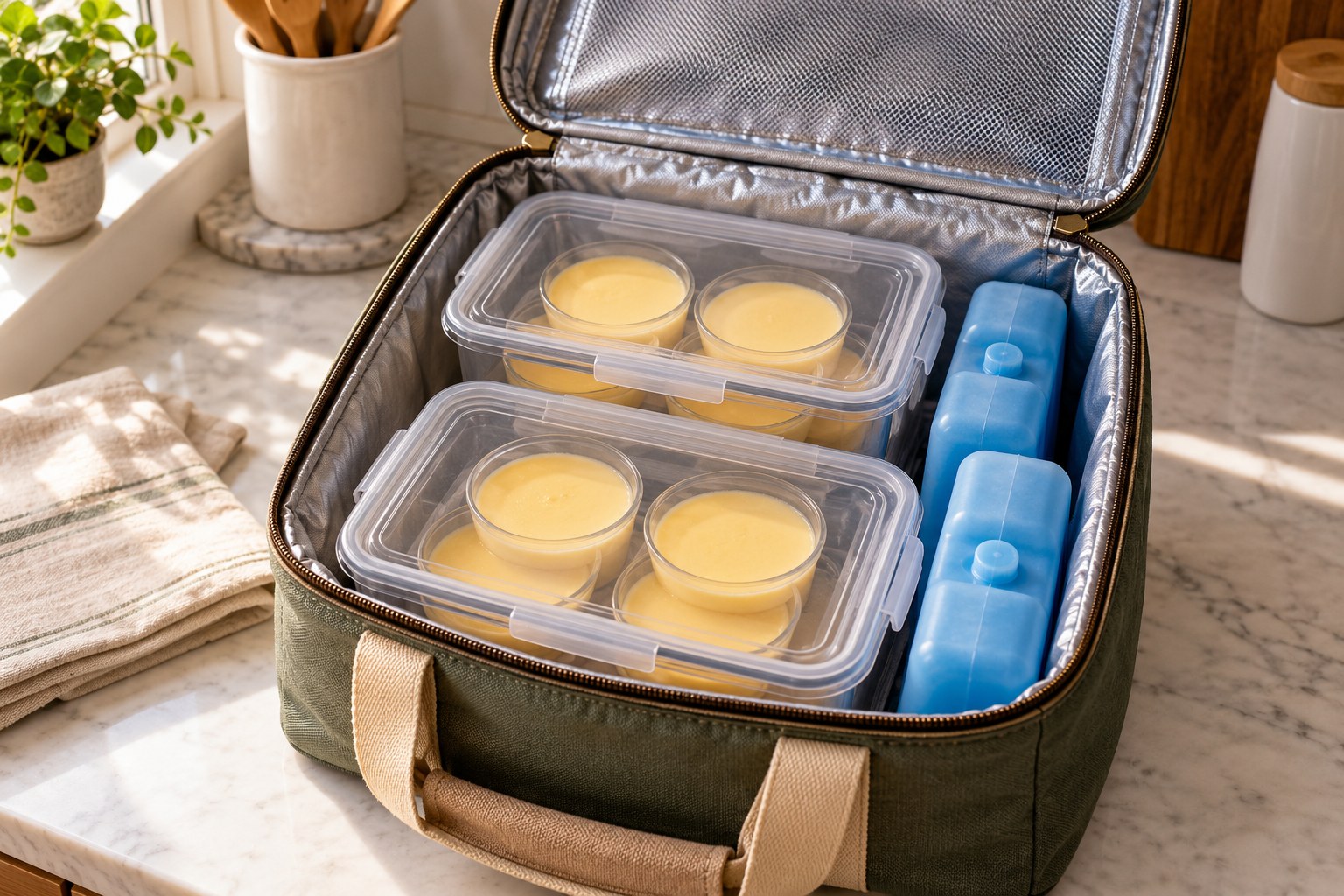
For large events, prepare the number of portions the recipe supports and use containers that allow safe cooling. Do not create an excessively deep vat of warm custard that takes too long to cool simply to save dishes. Food handling, chilling and storage windows must be planned alongside decorating and filling.
Custard skin troubleshooting recap
If the top develops a film, ask whether it was exposed directly to air. If there are lumps throughout, review the cooking and stirring method instead. If there is watery separation, investigate the formula, cooking and storage. If a baked custard appears wrinkled or curdled, the problem may be overheating rather than skin formation. Each symptom has a different cause, and protecting the surface only addresses one of them.
The bottom line
To prevent custard skin, minimize air exposure while the custard cools. Use food-safe wrap or parchment pressed directly against the surface, refrigerate promptly, and handle the filling gently when you're ready to use it. It is one small step that makes a big difference to the smooth finish of homemade pudding, pastry cream, and tart fillings.
IN PICTURES
From the baking notebook
FROM THE RECIPE BOX