Mango Watermelon Smoothie Recipe

A refreshing blend of juicy mangoes and sweet watermelon creates a vibrant, tropical smoothie with a silky texture and bright flavor profile.
Difficulty:
Beginner
Prep Time:
10 mins
Cook Time:
5 mins
Serves:
2 large smoothies
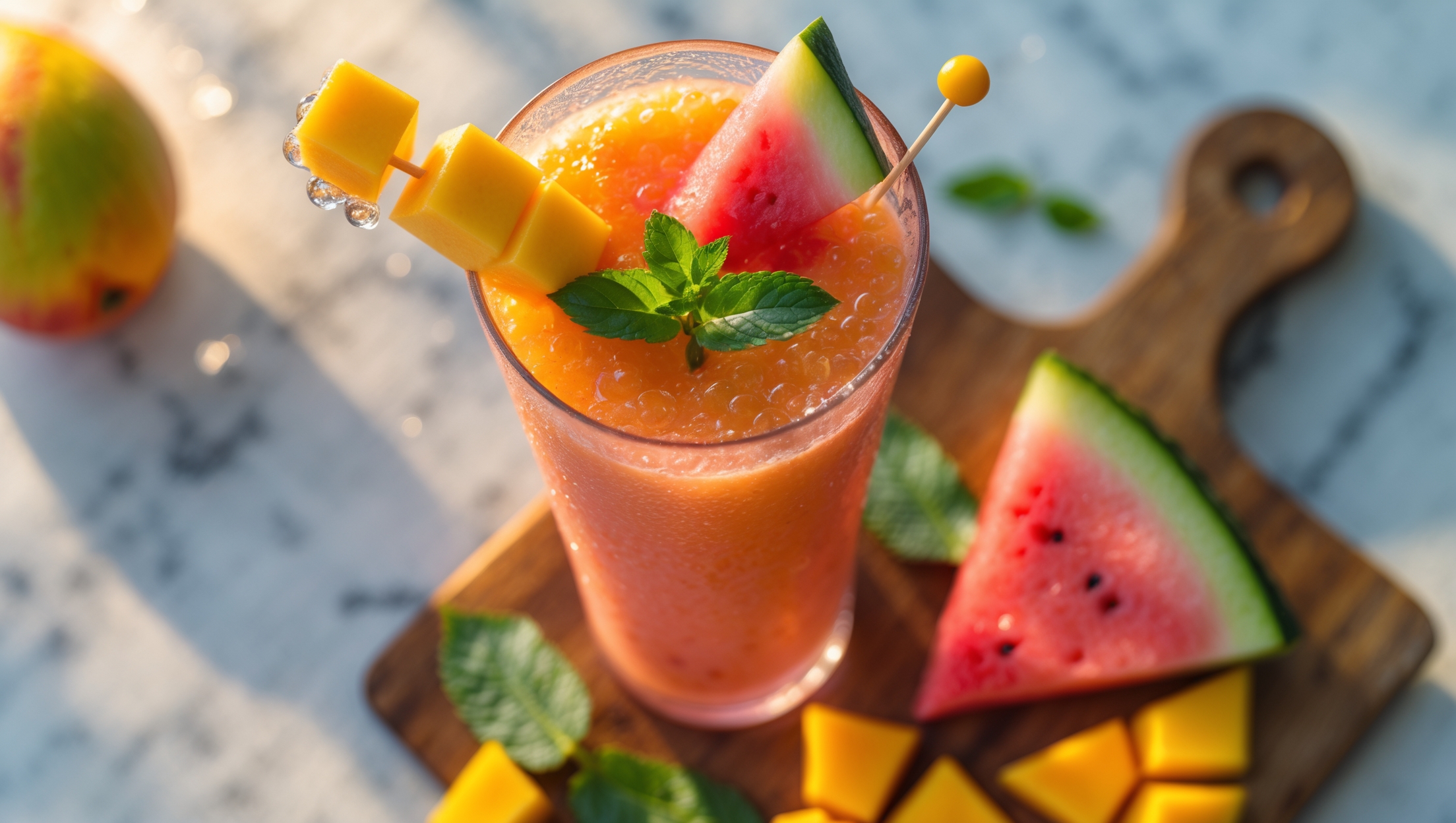
An overhead shot of a tall, clear glass filled with a vibrant orange-pink smoothie, showing the beautiful gradient where mango and watermelon colors meld together. Beads of condensation catch the soft morning light on the glass surface, suggesting refreshing coolness. The smoothie is topped with a small skewer of fresh mango cube and watermelon triangle, with a sprig of mint adding a pop of green. A rustic wooden board beneath features scattered fresh mango slices and watermelon chunks, with a few mint leaves strewn about. The background reveals a white marble counter catching golden summer light, emphasizing the drink's tropical vacation appeal.

Ingredients

<ul class="ingredients-main-list"><li class="ingredients-single-item">300g fresh ripe mango chunks (about 2 medium mangoes)</li><li class="ingredients-single-item">300g seedless watermelon chunks</li><li class="ingredients-single-item">120g Greek yogurt (or coconut yogurt for dairy-free)</li><li class="ingredients-single-item">15g honey or maple syrup (optional, depending on fruit sweetness)</li><li class="ingredients-single-item">1 tbsp lime juice</li><li class="ingredients-single-item">6 ice cubes</li><li class="ingredients-single-item">Fresh mint leaves, for garnish</li></ul>

Equipment

<ul class="equipment-main-list"><li class="equipment-single-item">Blender or food processor</li><li class="equipment-single-item">Sharp knife</li></ul>
BAKE SMARTER

Kitchen Converter

Quickly switch between common baking units without leaving the recipe.

Convert
Result—

Volume uses US cups, tablespoons, and teaspoons. Converting weight to volume depends on the ingredient.

Directions

<ol class="no-list-style"><li class="MethodStepper"><h4 class="step-title">Step 1</h4>Prep your fruit by peeling the mango and cutting it into 2cm chunks. Remove the rind from the watermelon and cut the flesh into similar-sized pieces. For an extra-cold smoothie, spread the fruit pieces on a baking sheet lined with parchment paper and freeze for at least 2 hours. Freezing the fruit creates a thicker texture without diluting the smoothie with too much ice.</li><li class="MethodStepper"><h4 class="step-title">Step 2</h4>Add the mango chunks to your blender first, as they're firmer and will help pull other ingredients toward the blades. If using frozen fruit, allow it to thaw slightly (about 5 minutes) for easier blending.</li><li class="MethodStepper"><h4 class="step-title">Step 3</h4>Add the watermelon chunks, Greek yogurt, lime juice, and honey or maple syrup if using. The yogurt adds creaminess and protein, while the acid in the lime juice brightens all the flavors and helps preserve the vibrant fruit colors.</li><li class="MethodStepper"><h4 class="step-title">Step 4</h4>Add the ice cubes last. If using frozen fruit, you can reduce the amount of ice or omit it entirely. Pulse a few times to break down the ice before blending continuously.</li><li class="MethodStepper"><h4 class="step-title">Step 5</h4>Blend on high speed for 1-2 minutes until completely smooth. Stop and scrape down the sides if necessary. The perfect smoothie should have a silky, pourable consistency with no visible fruit pieces or ice chunks.</li><li class="MethodStepper"><h4 class="step-title">Step 6</h4>Taste your smoothie and adjust sweetness if needed. Remember that mangoes vary in sweetness, so you might not need any additional sweetener if your fruit is perfectly ripe.</li><li class="MethodStepper"><h4 class="step-title">Step 7</h4>Pour immediately into chilled glasses for the best texture. Garnish with fresh mint leaves and small fruit chunks on skewers if desired. For an extra special touch, you can rim the glasses with a little lime juice and dip in sugar for a sweet-tart contrast.</li><li class="MethodStepper"><h4 class="step-title">Step 8</h4>Serve immediately while cold and fresh. The natural enzymes in fresh fruit begin breaking down quickly after blending, so this smoothie is best enjoyed right away. If you need to prepare ahead, blend all ingredients except ice, refrigerate in an airtight container, then add ice and quickly re-blend just before serving.</li></ol>
Nutrition Facts (per serving)

🍽️ Serving Size: 1 slice
🔥 Calories: 385 calories
🥑 Fat: 18 g
🧈 Saturated Fat: 10 g
🍞 Carbohydrates: 52 g
🍭 Sugar: 32 g
🍗 Protein: 3 g
🫀 Cholesterol: 75 mg
🧂 Sodium: 210 mg

Chef’s Notes

A few helpful details for making this recipe.

Can frozen fruit be used instead of fresh for fruit smoothies?

Absolutely! Using frozen fruit is actually recommended for smoothies as it creates a thicker, creamier texture without diluting flavours with excess ice. You can freeze fresh fruit yourself or use store-bought frozen mango and watermelon chunks for convenience and year-round availability.

What's the best way to thicken a smoothie without adding ice cream?

The secret to thick smoothies without ice cream is using frozen fruit, which provides body without dilution. Adding Greek yogurt increases protein and creaminess. For extra thickness, include a tablespoon of chia seeds or a small banana. Reduce liquid ingredients and use a high-powered blender for the silkiest results.

How can I make this tropical smoothie dairy-free?

Simply substitute the Greek yogurt with coconut yogurt or any plant-based alternative like almond or oat milk yogurt. The natural creaminess of mango helps maintain a luxurious texture even without dairy. For extra richness, you could also add a splash of coconut milk or a quarter of an avocado.

Want to try something else in ...

More recipes you might like

Keep exploring with more recipes from What's Baking.