Chocolate Sapote Smoothie Recipe

A velvety, indulgent smoothie that harnesses the natural caramel-chocolate flavor of sapote fruit blended with cacao for a nutritious yet decadent treat.
Difficulty:
Beginner
Prep Time:
10 mins
Cook Time:
0 mins
Serves:
2 smoothies
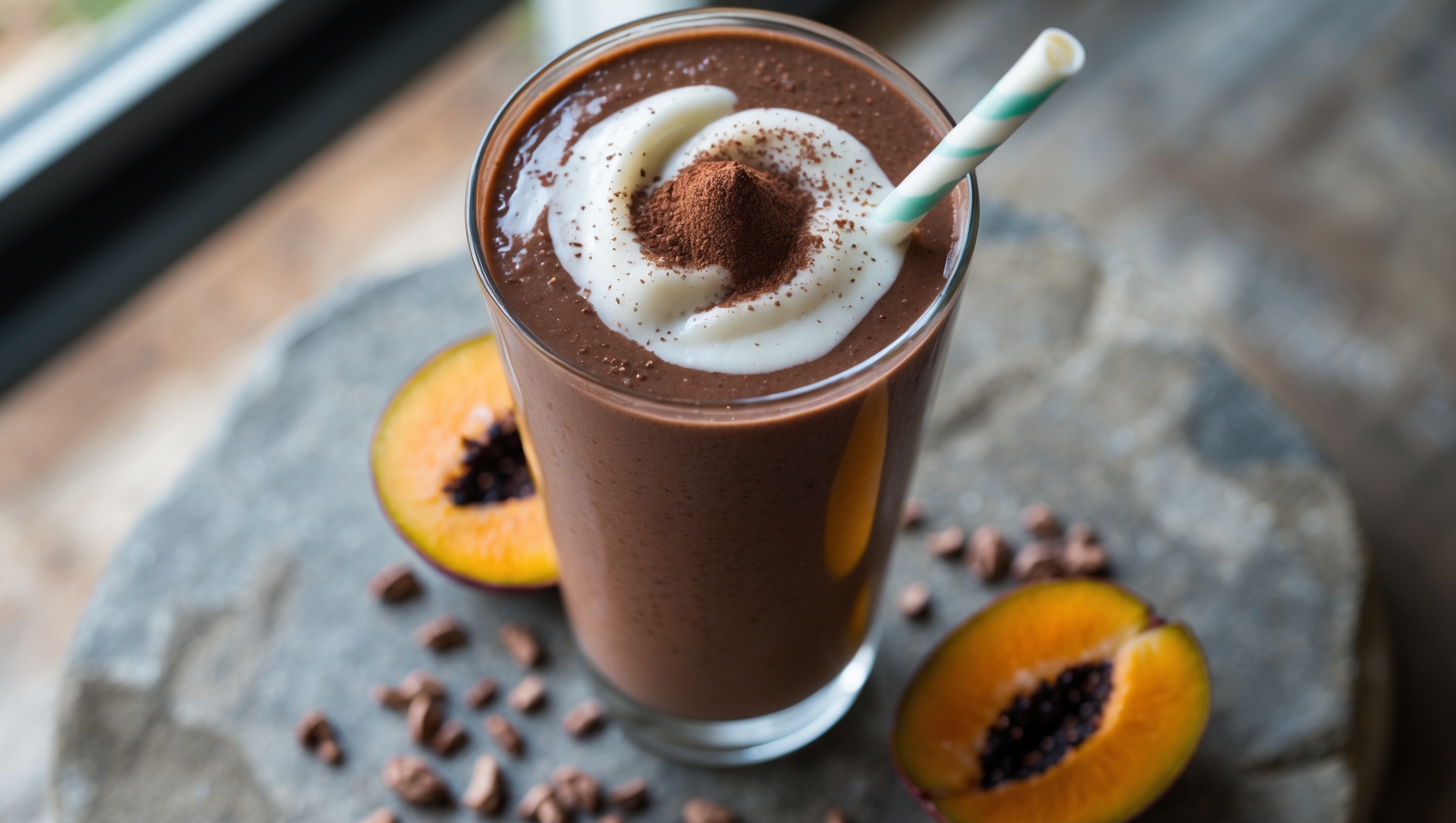
An overhead shot of a tall glass filled with a rich, chocolate-brown smoothie topped with swirls of coconut cream and a light dusting of cacao powder. The smoothie's silky texture is evident as it clings to the sides of the clear glass, catching the soft natural light streaming through a nearby window. Fresh sapote fruit slices and cacao nibs are artfully scattered around the base of the glass on a natural stone surface, while a reusable straw stands at attention, ready for sipping. The contrast between the dark smoothie, white cream, and the sapote's orange-brown flesh creates visual interest, showcasing the natural ingredients that give this beverage its distinctive color and flavor.

Ingredients

<ul class="ingredients-main-list"><li class="ingredients-single-item">2 ripe black sapotes (chocolate pudding fruit), flesh scooped out (about 200g)</li><li class="ingredients-single-item">240ml almond milk (or any plant-based milk)</li><li class="ingredients-single-item">1 frozen banana</li><li class="ingredients-single-item">20g unsweetened cacao powder</li><li class="ingredients-single-item">1 tablespoon almond butter</li><li class="ingredients-single-item">2 teaspoons maple syrup (optional, depending on sapote sweetness)</li><li class="ingredients-single-item">1/4 teaspoon vanilla extract</li><li class="ingredients-single-item">1/4 teaspoon ground cinnamon</li><li class="ingredients-single-item">Small pinch of sea salt</li><li class="ingredients-single-item">6 ice cubes</li><li class="ingredients-single-item">For garnish: coconut whipped cream and cacao nibs (optional)</li></ul>

Equipment

<ul class="equipment-main-list"><li class="equipment-single-item">High-powered blender</li><li class="equipment-single-item">Rubber spatula</li></ul>
BAKE SMARTER

Kitchen Converter

Quickly switch between common baking units without leaving the recipe.

Convert
Result

Volume uses US cups, tablespoons, and teaspoons. Converting weight to volume depends on the ingredient.

Directions

<ol class="no-list-style"><li class="MethodStepper"><h4 class="step-title">Step 1</h4>Prepare your black sapotes by cutting them in half and scooping out the soft, pudding-like flesh. Choose fruits that are fully ripened - they should feel very soft to the touch and have darkened to a deep brown-black color. The flesh inside should be dark and custard-like (this is when sapotes develop their characteristic chocolate flavor). Discard any seeds you find.</li><li class="MethodStepper"><h4 class="step-title">Step 2</h4>Add the sapote flesh to your blender along with the frozen banana chunks. The frozen banana will help thicken the smoothie and add natural sweetness that complements the sapote's caramel-chocolate notes. Using frozen rather than fresh banana creates a colder, thicker texture without diluting the flavors with ice.</li><li class="MethodStepper"><h4 class="step-title">Step 3</h4>Pour in the almond milk and add the cacao powder, almond butter, maple syrup (if using), vanilla extract, cinnamon, and salt. The cacao powder intensifies the chocolate profile, while the almond butter adds creaminess and healthy fats that will help your body absorb the fat-soluble nutrients in the cacao.</li><li class="MethodStepper"><h4 class="step-title">Step 4</h4>Add the ice cubes and blend everything on high speed until completely smooth and velvety, about 45-60 seconds. Stop and scrape down the sides of the blender with a rubber spatula if needed to ensure all ingredients are fully incorporated. The smoothie should have a rich, silky texture without any lumps.</li><li class="MethodStepper"><h4 class="step-title">Step 5</h4>Taste your smoothie and adjust sweetness if needed. Black sapotes vary in sweetness depending on ripeness - a perfectly ripe one may not require additional sweetener. If the smoothie tastes bitter, add a little more maple syrup and blend briefly again.</li><li class="MethodStepper"><h4 class="step-title">Step 6</h4>Pour the smoothie immediately into two tall glasses. For an extra special touch, top with a dollop of coconut whipped cream and sprinkle with cacao nibs for textural contrast. The smoothie is best enjoyed fresh, as the natural enzymes in the sapote can change the flavor if left to sit too long.</li><li class="MethodStepper"><h4 class="step-title">Step 7</h4>If you have leftover smoothie, pour it into popsicle molds and freeze for a delicious frozen treat that captures all the chocolate-caramel goodness of the sapote fruit. These popsicles make an excellent healthy alternative to traditional frozen chocolate desserts.</li></ol>
Nutrition Facts (per serving)

🍽️ Serving Size: 1 serving
🔥 Calories: 295 calories
🥑 Fat: 9 g
🧈 Saturated Fat: 2 g
🍞 Carbohydrates: 48 g
🍭 Sugar: 28 g
🍗 Protein: 7 g
🫀 Cholesterol: 0 mg
🧂 Sodium: 45 mg

Chef’s Notes

A few helpful details for making this recipe.

What does black sapote fruit taste like and why is it called "chocolate pudding fruit"?

When perfectly ripe, black sapote has a naturally sweet, mild chocolate-caramel flavour with custard-like consistency. It earned the nickname "chocolate pudding fruit" because its dark brown flesh has a remarkably similar taste and texture to chocolate pudding, despite containing no actual chocolate.

How can I tell when a black sapote is properly ripened for smoothie making?

A perfectly ripe black sapote will feel extremely soft to the touch (almost mushy), have darkened to a deep brown-black colour, and yield easily to gentle pressure. The flesh inside should be dark brown, custard-like and sweet—firm or pale flesh indicates it needs more ripening time.

Can I freeze black sapote pulp for future smoothies?

Absolutely! Scoop the ripe pulp into ice cube trays or freezer-safe containers, leaving slight room for expansion. Freeze for up to 3 months. These frozen sapote cubes work brilliantly in smoothies—no need to thaw first—and help create an extra thick, frosty texture.

Want to try something else in ...

More recipes you might like

Keep exploring with more recipes from What's Baking.