On this page
A useful family meal plan does not tell you to cook twenty-one different recipes, buy a dozen unusual ingredients, and hope everybody enjoys the result. It helps you answer a few ordinary questions before the week gets busy: What is already in the fridge? Which evenings leave room for cooking? What can be prepared once and used twice? And what will people actually want to eat when they are tired or short on time?
This guide turns recipe inspiration into a practical week of breakfasts, lunches, dinners, snacks and drinks. The examples draw on published What’s Baking? recipes, with their actual ingredients and preparation requirements checked. The goal is not to present one rigid diet, make unverified nutrition promises, or assume every family eats the same way. It is to build a repeatable system that leaves room for different tastes, school rules, food allergies, budgets and last-minute changes.
Canada’s Food Guide recommends planning meals around the foods you have, the time available, and ingredients that can work in more than one dish. Its four-step meal-planning guide follows a sensible sequence: decide what to eat, make a grocery list, shop, and cook. We will put those ideas into practice using recipes you can actually find.
Start with the week you have, not the week you wish you had
Before choosing any recipes, look at the calendar. Mark the evenings when work, school, appointments, sports or errands will make cooking difficult. Then mark one or two calmer periods when you can prepare something with more steps. A meal that needs an hour of active attention may be enjoyable on Saturday but frustrating on Tuesday. That difference matters more than whether the recipe looks spectacular in a photograph.
Write down who will be eating and where. A child may need a school lunch that travels in an insulated bag; someone else may eat at home; another person may need a portable breakfast. Ask whether the household has dietary requirements, food allergies or a school restriction on particular ingredients. Make those non-negotiable requirements visible on the plan instead of trying to remember them while packing in a hurry.
Next, make a quick inventory. Check the refrigerator for vegetables, yogurt, eggs and leftovers that should be used soon. Check the freezer for already cooked portions or fruit. Check the pantry for oats, rice, beans, pasta, flour, spices and unopened packages. Prioritize ingredients that will spoil before the weekend. Planning around those items can be more valuable than chasing a completely new recipe every day.

Finally, choose a realistic number of cooking projects. One breakfast batch, two dinner bases and two easy snack options can support several meals. A plan is a tool, not a promise to cook everything listed. If a family dinner turns into leftovers, a sandwich or a simple bowl, the plan has still served its purpose if you have ingredients and a safe way to use them.
A simple formula for building balanced family meals
A recipe is one part of a meal, not necessarily the whole meal. Pancakes alone, a cupcake alone, or a sweet snack bar alone may be enjoyable, but they do not automatically supply the range of foods someone needs across the day. Consider what will accompany each main item. Fresh or frozen fruit, vegetables, beans, eggs, dairy or appropriate plant-based options can often round out a plate without turning it into another elaborate recipe.
The Canada’s Food Guide plate offers a flexible visual reference: roughly half vegetables and fruits, a quarter whole grain foods and a quarter protein foods. It is not a rule that every muffin, smoothie or individual bite must follow those exact proportions. It helps you look at a day of eating and notice what might be missing. Portion needs also differ by age, appetite and activity.
For example, Greek Yogurt Pancakes can be served with berries, while an egg or yogurt adds another protein-containing choice if wanted. Hidden-Broccoli Mac & Cheese already includes broccoli, but a plate of raw vegetables or fruit can add variety. Vegan Shepherd’s Pie combines lentils, vegetables and potatoes, and a simple salad is an optional accompaniment rather than a requirement.
Avoid describing particular foods as magic, guilt-free or guaranteed to make children healthy. The Food Guide’s advice on planning what you eat is grounded in practical variety, time and household preferences. Everyday planning works better when meals are familiar enough to repeat, varied enough to be enjoyable and flexible enough to change.
Choose three anchors before filling in seven days
Start with a breakfast anchor: a recipe that can be made or prepared ahead and served more than once. High-Protein Overnight Oats are one example. The published recipe includes rolled oats, Greek yogurt, protein powder, chia, flaxseed, almond milk and optional toppings. Because it uses dairy, protein powder and potentially nuts, check the actual ingredients before treating it as suitable for every eater. You can also choose homemade muffins, pre-cooked egg bites or a simpler breakfast already enjoyed at home.
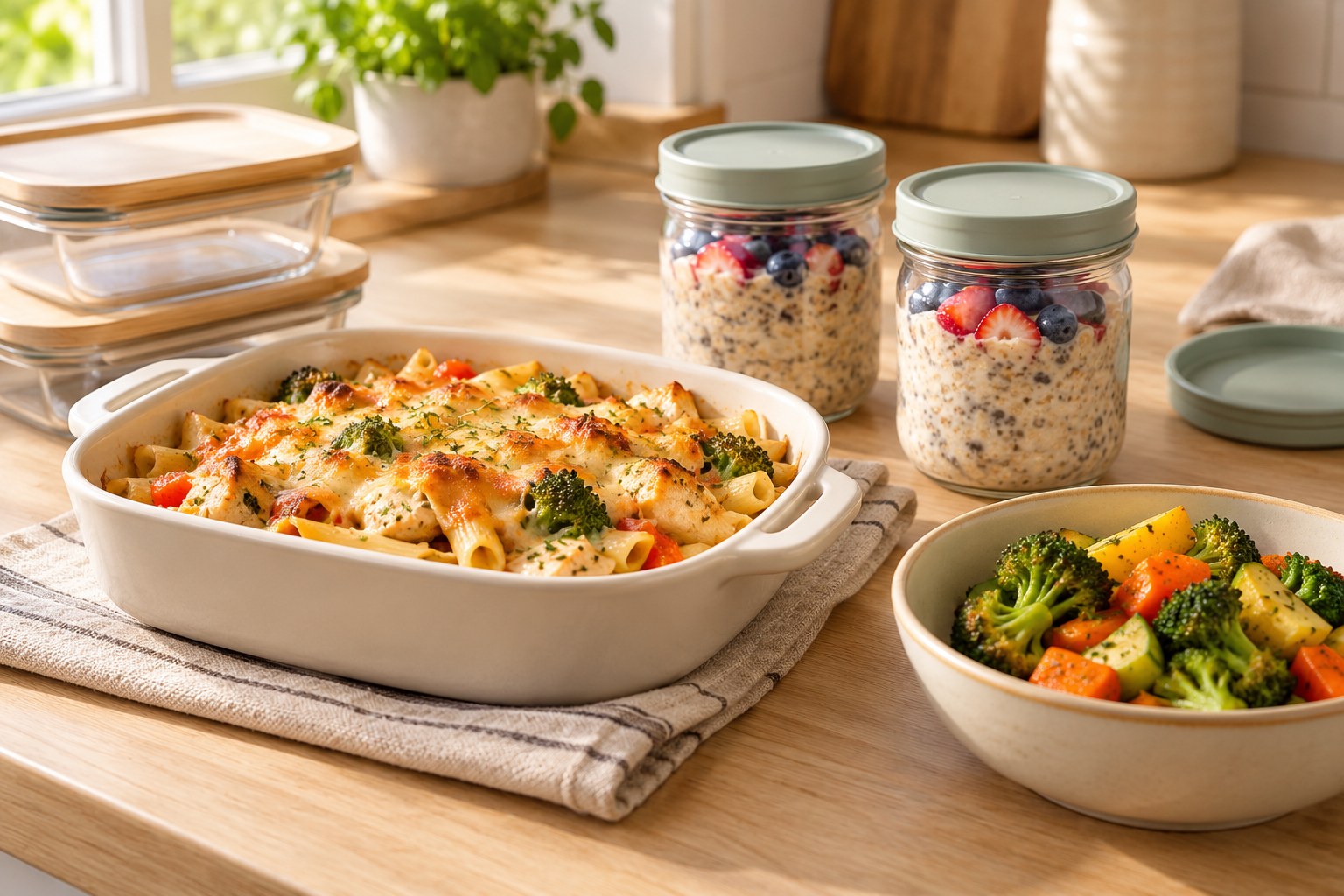
Pick a dinner anchor next: a main dish with leftovers that are useful in a clearly planned second meal. Chicken Pasta Bake contains chicken, pasta, vegetables and a dairy-based cheese sauce; it may work for a family that enjoys creamy casseroles. Vegan Shepherd’s Pie uses lentils, mushrooms, carrots, peas and a potato topping, making it a different option for plant-based meals. Neither should be presented as an instant dinner. Both require real preparation and cooking time.
The third anchor is a snack system, not fifteen competing snacks. Choose one shelf-stable option appropriate for your family and one fresh or chilled option. A batch of Mini No-Bake Power Bites may work at home, but the published recipe contains peanut or almond butter and chopped almonds, so it is not appropriate for a nut-restricted school without a properly evaluated alternative. Apple Sandwiches with Sunflower Seed Butter & Raisins offer a different choice, subject to checking school policies and safe age-appropriate serving.
Once those three anchors are selected, add simple fresh ingredients and a handful of flexible dinners. The result is not seven complicated cooking projects. It is a week in which each prepared component has a job.
Seven-day family meal plan: A flexible starting template
The plan below is an illustrative menu, not a claim that these recipes have been tested together as a meal plan or that they meet any particular calorie target. Follow the linked recipe cards for exact amounts and methods. Adjust for dietary needs, food allergies, appetite and the number of people eating. All dinners should be planned with food-safe storage in mind, and you can substitute one of your own family standards whenever that is easier.
Monday: Begin with the food you prepared on Sunday
Breakfast: High-Protein Overnight Oats, with berries or banana if desired. Make the oats in clean covered containers and refrigerate according to the recipe’s directions; they are a chilled breakfast, not a shelf-stable food.

Lunch: A sandwich or wrap with fresh fruit, raw vegetables and a filling that suits the person eating. If packing cream cheese, yogurt, eggs or meat, use appropriate cold storage. Dinner: Chicken Pasta Bake with extra vegetables on the side. Prepare enough only if you have a specific plan to cool, refrigerate and use the remaining portions safely. Snack: A sliced apple with an appropriate accompaniment, or a familiar snack from home.
Monday is not the day to add multiple new tasks. Its purpose is to see whether your planning system survives a genuinely busy evening. If the pasta bake feels too ambitious, move it to Tuesday and serve something quick that you already know how to make.
Tuesday: Make leftovers intentional
Breakfast: Protein-Packed Egg Bites plus fruit or toast. The published bites contain eggs, cottage cheese, Greek yogurt, cheddar and ham, so they are neither dairy-free nor vegetarian as written. Prepare them in advance only with safe refrigeration and reheating.

Lunch: A safely refrigerated portion of Monday’s pasta bake, reheated thoroughly, or a cold lunch if no microwave is available. Dinner: Build-Your-Own Burrito Bowls. The published version uses rice, chicken thighs (with tofu offered as an alternative), black beans, vegetables, cheese and sour cream. Put toppings in separate dishes so everyone can build a bowl suited to their preferences. Snack: Cut vegetables and hummus.
Plan whether leftover cooked rice or chicken will be used within recommended storage times before preparing extra. Keeping a written “cook date” on containers is far more dependable than guessing which day something was made.
Wednesday: Keep the middle of the week simple
Breakfast: Greek Yogurt Pancakes reheated from a suitable frozen or refrigerated batch, served with fruit. The published recipe uses wheat flour, eggs and dairy. Do not label it gluten-free or egg-free.

Lunch: A packed burrito bowl with components chilled and stored appropriately, or a sandwich using leftovers that are still safe. Dinner: Grilled Cheese alongside vegetable soup or cut vegetables. The sandwich recipe is a short cooking task using bread, butter and cheese; adding soup and fruit is a way to make the meal more varied. Snack: Yogurt and fruit, or another familiar option.
Midweek simplicity is deliberate. A fifteen-minute sandwich can be a better fit than a beautifully planned recipe that takes more energy than the family has. Planning is successful when it reduces friction, not when it creates an obligation to cook something complicated.
Thursday: Use a vegetable-forward main dish
Breakfast: Chocolate Veggie Muffins with an accompanying protein-containing choice and fruit. These muffins have zucchini and carrot, but they also contain wheat flour, sugar, oil, eggs and buttermilk. They are a baked treat, not a substitute for all the other food groups in a meal.

Lunch: Leftover vegetable soup, a grain bowl, or a safe packed lunch using ingredients already available. Dinner: Vegan Shepherd’s Pie, a more involved dinner based on lentils, vegetables and mashed potatoes. Make it Thursday only if the schedule allows; otherwise switch it with a calmer evening. Snack: Fresh fruit, whole-grain crackers or a simple snack plate.
This is a good day to take stock of produce. Are the spinach leaves ready to use? Are carrots still crisp? A small adjustment—using them in tonight’s side dish—can prevent waste without changing the entire menu.
Friday: Build in a family choice
Breakfast: Sweet Potato Waffles from a batch prepared earlier, with fruit. The recipe includes sweet potato, wheat flour, eggs and buttermilk. It is not a gluten-free or dairy-free waffle as published.

Lunch: A chilled lunchbox combination or leftovers that remain within safe limits. Dinner: A straightforward rice bowl assembled from freshly cooked components or properly handled leftovers. Use the Burrito Bowls recipe as inspiration if you have time, while recognizing that its published version includes ground beef, cheese and sour cream. Snack: Frozen Yogurt Bark with Fruit served at home rather than packed in an unrefrigerated lunch bag.
Friday is an opportunity to give everyone two workable choices. Choice does not require an elaborate buffet; it may mean deciding between a rice bowl and sandwiches, or choosing which vegetables appear on the plate.
Saturday: Make a slower breakfast and one family cooking project
Breakfast: Flourless Banana Pancakes with fruit and a side of yogurt or another protein-containing food. “Flourless” does not mean vegan—the published recipe includes eggs—and it does not guarantee suitability for every allergy.

Lunch: A quick sandwich or leftovers that remain safe. Dinner: Make-Your-Own Pizza Stations, provided you plan the dough time. Its recipe includes yeast dough with approximately two and a half hours of preparation time, plus baking; it is not an instant assembly meal from scratch. Prepare vegetables and toppings before inviting children to assemble their pizzas. Snack: Fresh fruit or Cucumber Sandwich Bites, which use cream cheese and should be kept cold.
If there is no time for homemade dough, this can become a different family project using an appropriate ready-made base. That is an adaptation, not the published recipe. The enjoyable part is inviting children to participate in a manageable step, not insisting on a perfect pizza.
Sunday: Reset without turning the day into a marathon
Breakfast: A choice of remaining breakfast components or a fresh simple breakfast. Lunch: Quinoa Salad Bowls with roasted vegetables, spinach and seeds. The published dressing uses honey, with maple syrup offered as a vegan alternative. Check seeds and other allergens before serving or packing. Dinner: A flexible meal built from groceries still on hand, or another portion of an appropriately frozen, thawed and reheated dinner. Snack: Fruit with yogurt, hummus or a household favourite.

Use Sunday to write next week’s plan, but limit prep to tasks that genuinely help. Washing a few vegetables, making one batch breakfast, and packing pantry staples where they are easy to reach may be enough. A refrigerator full of pre-cut food that nobody wants is not an improvement over a short plan and an accurate shopping list.
How to write a shopping list that prevents duplicate buying
Organize the list by how you shop, not in the order recipes appear on your screen. Start with produce: bananas, seasonal fruit, vegetables for bowls and salads, potatoes, peppers, carrots, broccoli and any herbs you truly plan to use. Next write refrigerated and frozen foods: milk or an appropriate alternative, yogurt, eggs, cheese, chicken or tofu, frozen fruit and any other ingredients named by the exact recipe cards.
The pantry section can include oats, rice, pasta, canned beans, lentils, bread or tortillas, cooking oil and a few common seasonings. Keep baking supplies separate: flour, baking powder, cinnamon, vanilla, cocoa powder and any specialty items genuinely required. A recipe that already needs a full bag of flour may not justify buying an entirely different flour for one untested adaptation.
Use real quantities from the selected recipe cards, then scale for your household. Do not buy the complete ingredient lists for all seven days if you plan to use half the recipes. For each ingredient, ask: Do I already have enough? Which two recipes will use it? Will the package be finished before it spoils? This simple check can reduce duplicate containers of yogurt, half-used herbs and forgotten fruit.
Keep a short “use first” note on the fridge. Examples are opened yogurt, a bag of spinach or cooked leftovers made on a known date. Buy frozen produce when fresh items are likely to sit unused. Canada's Food Guide explicitly encourages planning around overlapping ingredients and using fresh foods before they deteriorate.
The practical pantry: Helpful staples, not an endless checklist
Stocking a pantry does not mean buying everything at once. Start with foods you already use. Oats, rice, dry pasta, beans, canned tomatoes and a small range of spices can support many breakfasts and dinners. A jar of peanut butter may be useful at home, but it cannot be treated as a universal school snack. Sunflower seed butter can be another option, yet package labels and school restrictions still matter.

A refrigerator that supports flexible meals usually includes a few vegetables, a versatile protein food, and one or two breakfast options. For families who use dairy, eggs and plain yogurt may be helpful. For plant-based families, beans, tofu and suitable fortified alternatives can fill different roles. No single shopping list is right for everybody.
Avoid purchasing specialty baking ingredients solely because a recipe sounds healthy. One of the problems in the original article was linking completely unrelated recipes to generic pantry terms—for example, a sweet dessert when recommending a drink, or a baked dish when discussing fresh fruit. In this plan, a link points to an actual recipe so you can check whether it belongs on your menu.
If the pantry is already full, begin by planning two meals that use existing ingredients. That is meal planning too. You can add staples gradually after you know which ones the family reaches for repeatedly.
Batch preparation: What to do in 60 to 90 minutes
An efficient prep session follows dependencies. Begin with the task that takes the longest passive time, then use the waiting period for smaller jobs. Wash your hands and clean work surfaces; gather clean containers and labels. If you have an oven recipe planned, read the full instructions and start only if you have enough time to complete the baking and cool the food properly afterward.
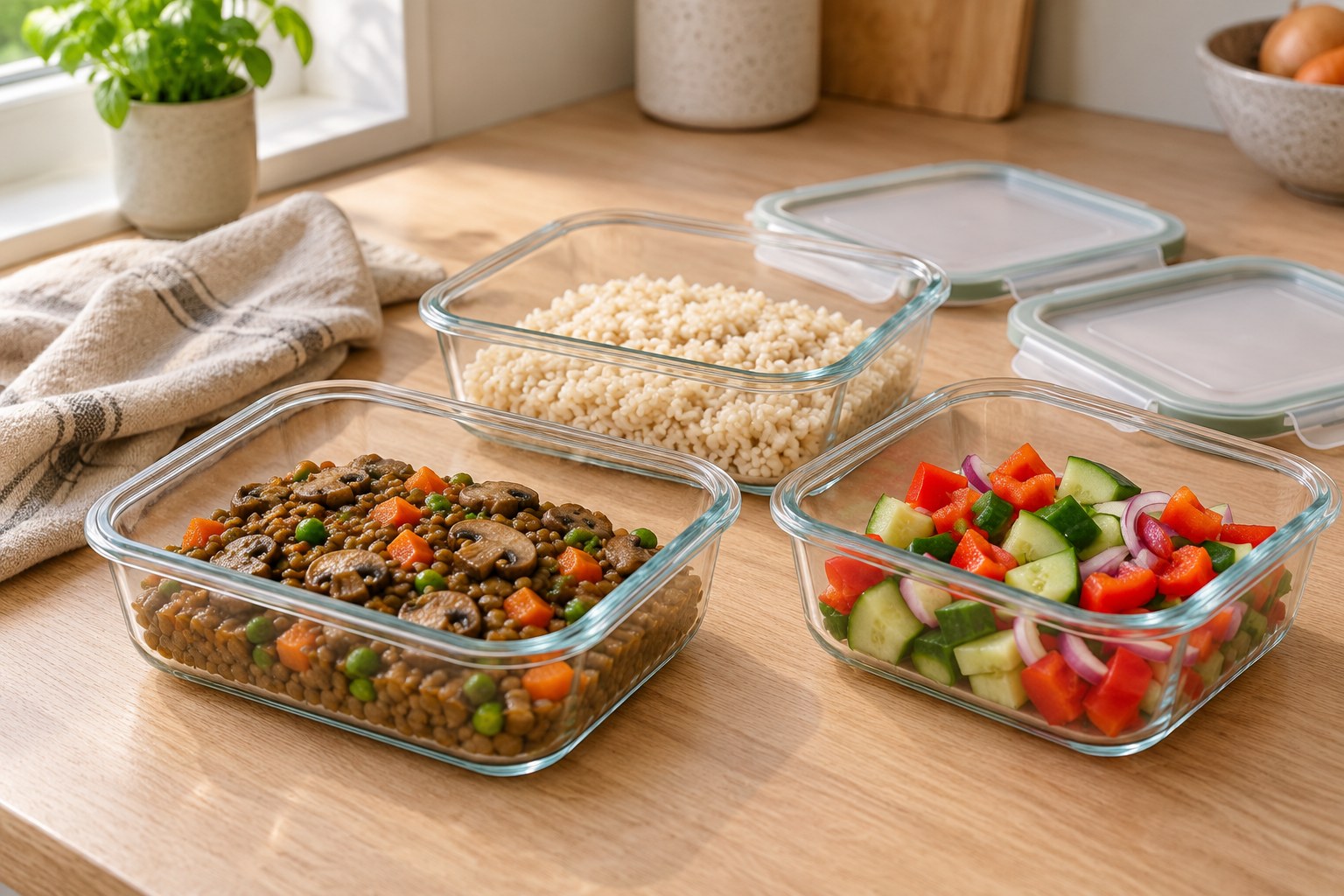
For a realistic prep session, select one of the following main jobs: make a breakfast batch, cook a dinner base, or portion dry pantry ingredients. Choosing all three may be fine for a household with help and equipment, but it should not be the expectation. While a breakfast bakes, wash vegetables and organize the shopping list. If preparing overnight oats, assemble and refrigerate them without adding unnecessary extra work. If cooking a lentil filling or a pot of rice, promptly cool what will be stored.
Label containers with the preparation date and the planned use. Do not place hot, overflowing pots straight into the refrigerator or leave food to cool for hours. Divide cooked foods into shallow containers for more rapid cooling. Refrigerate perishable foods promptly and keep the fridge at 4°C or colder, following Health Canada’s leftovers advice.
End by setting up one visible place for the week’s menu and another for the shopping list. If the family can see Wednesday is a sandwich night, it is easier to make decisions without a long conversation at dinner time. Meal planning is as much about communication as cooking.
What can you freeze, and what should stay fresh?
Freezing is useful for many cooked bakes and suitable batch-cooked dishes, but each recipe has its own texture and handling needs. Pancakes and waffles generally lend themselves to portioning and freezing once cooled; reheat according to a tested method and make sure they are heated appropriately. A casserole may be easier to freeze as individual meals than as one large tray. Creamy sauces can change texture when frozen and reheated, so test a small portion before committing a whole batch.

Fresh cucumber, dressed salad, avocado and assembled sandwiches tend to be better prepared close to serving. Frozen yogurt bark is meant to remain frozen; it can soften quickly when left at room temperature. Do not describe it as a lunchbox snack unless it can be kept at the required temperature until eaten.
Health Canada advises eating refrigerated leftovers within 2 to 3 days or freezing them for later, cooling them promptly, and reheating leftovers to 74°C / 165°F. Use clean containers, date them, and never assume a food is safe just because it smells fine. See the official food-safety tips for leftovers for details. For school lunches, use an insulated bag with ice packs for foods that need to remain cold, following safe school lunch guidance.
A safe plan leaves room to throw something out when necessary. Food-waste prevention is valuable, but it should never override temperature and storage guidance.
A snack rotation that does not become a second meal plan
Instead of scheduling a completely different homemade snack every afternoon, create four small categories: fresh, chilled, shelf-stable, and special treat. Fresh might mean sliced fruit or vegetables. Chilled might mean yogurt or Veggie Dip Cups, which use cream cheese and Greek yogurt. A shelf-stable item might be an appropriate packaged cracker or other snack that suits the child’s age and school rules. A special treat could be a chocolate-oat bar at home.

Choose two options from different categories at the start of each week. Alternate them rather than preparing seven separate recipes. A No-Bake Chocolate Oat Bar sounds oven-free, but the actual recipe heats butter and sugar on the stovetop and includes peanut butter; it is not a zero-cooking activity or a school-safe option for every classroom. Mini No-Bake Power Bites also contain nuts. Read the ingredient lists before choosing.
If the family gets bored with one option, change its pairing before replacing the entire system. Offer fruit with yogurt instead of fruit alone, or sliced vegetables with a different suitable dip. For selective eaters, keep familiar foods available and let children explore new foods without pressure to finish them. There is no need to promise that a single snack will be universally loved.
Plan drinks without confusing treats with everyday hydration
Water should remain an everyday drink choice, including in lunchboxes. A pitcher of plain chilled water with a few fruit slices is an optional way to make it more inviting; it is not the same recipe as a sweetened Raspberry Coconut Water Refresher, which includes coconut water, raspberries, lime juice, honey or maple syrup and sparkling water.

Smoothies can be an occasional way to use fruit and yogurt or milk, depending on the recipe and the family’s preferences. They are not necessary at every meal, and some include added sweeteners. Milkshakes, frozen hot chocolate and frosted lemonade are dessert-style drinks rather than alternatives to water throughout the day. The 12 Fun Drink Recipes That Go Beyond Juice Boxes guide helps distinguish those categories.
Do not prepare a week's worth of milk-based drinks and leave them in the refrigerator assuming all will remain safe and appealing. Fruit can separate, ice melts and dairy foods require refrigeration. Make what can be served promptly, or keep appropriate ingredients ready to blend closer to the time they are needed.
Families with different preferences: Create a shared base
If one child enjoys vegetables and another prefers plain pasta, cooking two completely separate dinners may be exhausting. Build around a shared base, such as cooked rice, potatoes, pasta or vegetables, and let each person choose among suitable toppings. Burrito bowls are a natural example because beans, rice, vegetables and proteins can be set out separately. Label ingredients when allergies are involved; do not assume that a topping bar automatically avoids cross-contact.
Try presenting a new ingredient alongside familiar ones without bargaining for bites. A child may choose to smell, touch or leave an unfamiliar food. Repeated low-pressure opportunities and family participation can be more productive than turning dinner into a test. Children also vary in their appetites from day to day. Offer a range of foods and leave space for individual hunger and fullness cues.
Where a medical dietary restriction, diagnosed allergy, growth concern or feeding difficulty is involved, an individualized plan from an appropriate healthcare professional is more suitable than a generic blog menu. This article is a household planning template, not a treatment plan.
How to cut the grocery bill without cutting variety
Pick two or three ingredients that can serve several roles. A bag of carrots can go beside sandwiches, into burrito bowls and into soup. A can of beans can support bowls, dips or a side dish. Frozen berries may be easier to use across breakfasts than fresh berries that spoil before Friday. Compare unit prices and consider packages only when you have a realistic plan to finish them.
Plan one “use what we have” dinner every week. That could be eggs and vegetables, a soup using suitable leftovers, or a rice bowl with stored ingredients. The exact dish matters less than avoiding a second grocery trip to replace perfectly usable food. A flexible freezer meal can also prevent expensive last-minute purchases, provided it has been stored safely and is clearly labelled.
Keep a grocery list that is corrected after each week. Cross out items that remained unused; write down the amount of milk or fruit the household actually consumed. Over time, this record becomes more valuable than a generic shopping list copied from a website.
Common meal-planning mistakes and how to correct them
Planning seven elaborate dinners: Begin with two cooking-intensive nights, a few easy meals and one flexible leftover evening. Repetition can be efficient.
Treating a linked recipe title as a complete description: Open the recipe card. “Flourless banana pancakes” still contain eggs, and the published overnight oats include Greek yogurt and protein powder. A name alone cannot establish whether a food is appropriate for an allergy, vegan diet or school policy.
Confusing prep time with total time: Pizza dough may need hours even though it bakes quickly. Frozen yogurt bark takes time to freeze. Use preparation, cooking, cooling and chilling time in your schedule rather than relying on a single number.
Preparing more leftovers than the fridge can safely hold: Estimate how many portions will truly be eaten within the safe storage window, freeze appropriate extras promptly and label them.
Using sweets to fill every snack slot: Snack bars, muffins and milkshakes can fit in a varied eating pattern, but fruit, vegetables, grains and protein foods deserve their own place as well.
Assuming one family member's preferences will never change: Keep an alternative that is simple and familiar. The plan should reduce pressure, not increase it.
Frequently asked questions about planning family meals
Do I need to plan every meal for an entire week?
No. Planning two or three days can work well, especially when schedules or appetites change. Some families benefit from a weekly outline; others prefer planning dinners and leaving breakfast flexible. Begin with the smallest amount of planning that makes the next few days easier.
What is the fastest breakfast to prepare in advance?
Choose a breakfast you already know your family enjoys. Overnight oats require short active assembly time but must stay chilled; muffins and egg bites take longer to cook but can be portioned afterward. Check the recipe card before assuming a food is quick, allergy-free or suitable to pack without refrigeration.
How can I avoid cooking different dinners for everyone?
Try shared bases and separate toppings. Rice bowls, customizable sandwiches and similar meals let people choose among familiar foods without requiring several completely different recipes. Keep known allergens separate with appropriate utensils and follow individual medical requirements.
Are homemade snacks always healthier than packaged snacks?
Not necessarily. Home preparation lets you know what went into the recipe, but homemade brownies and chocolate bars still contain ingredients worth considering. Compare foods based on the overall eating pattern and the actual ingredient list, rather than whether they came from a kitchen or a store.
Can I repeat breakfasts or dinners during the week?
Absolutely. Repeating a well-liked meal can make shopping easier. Add variety elsewhere across the week and keep storage requirements in mind. A simple rotation often works better than a menu full of new dishes nobody has time to make.
Is it safe to keep cooked meals in the fridge all week?
Not as a blanket rule. Health Canada recommends using refrigerated leftovers within two to three days or freezing them for later and reheating to 74°C. The exact food and circumstances matter. Label containers and do not guess from the smell or appearance of leftovers.
What should I do when someone refuses the planned meal?
Maintain a calm, predictable routine and include a familiar option when possible. Avoid pressure or bargaining. If refusal is persistent or affects eating and growth, seek individualized advice from a healthcare professional with relevant expertise.
How can I make meal planning work when I am exhausted?
Use a smaller plan. Decide on two dinners, keep ingredients for one simple backup meal, and buy enough basic breakfast and snack foods. Planning a low-effort evening is not failing to plan; it is recognizing how the week really works.
Final thoughts: Plan for real life and reuse what works
A family meal plan becomes useful when it helps people make decisions with less stress, not when it fills a beautiful page with recipes nobody follows. Start with the calendar, check what you already own, select three reliable anchors and leave room for changes. Use recipe cards for real quantities and ingredients. Plan storage and leftovers before cooking extra, and treat a new food as an invitation rather than a requirement.
For a broader library of ideas, browse 55+ Kid-Friendly Recipes That Are Actually Fun, Healthy & Easy to Make, the No-Bake Snack Ideas guide, and Lunchbox Baking Ideas for Back-to-School. Each guide serves a different purpose: exploring recipes, choosing snacks, or packing food that travels well. This article supplies the system that helps bring those choices together.
Your first plan does not need to be perfect. Keep what works, remove what does not, and begin the next week with one fewer decision to make.
IN PICTURES
From the baking notebook
FROM THE RECIPE BOX




