Directions
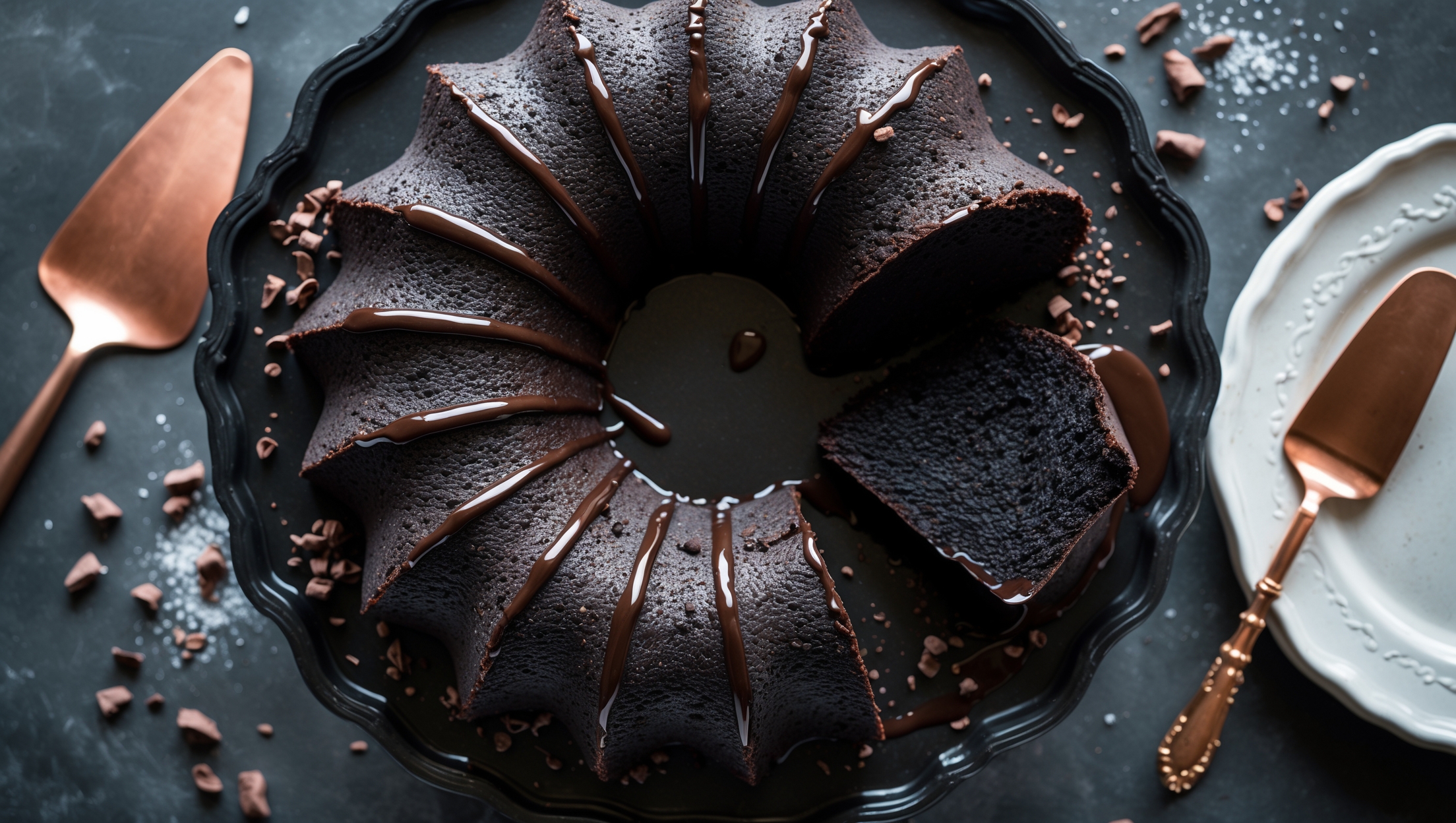
<ol class="no-list-style"><li class="MethodStepper"><h4 class="step-title">Step 1</h4>Preheat your oven to 170°C (340°F) with a rack positioned in the center. Thoroughly grease your Bundt pan with softened butter, making sure to get into all the crevices, then dust with cocoa powder (not flour, which would show on the dark cake). Tap out any excess cocoa. This meticulous preparation ensures your cake will release perfectly after baking.</li><li class="MethodStepper"><h4 class="step-title">Step 2</h4>If using espresso powder, dissolve it in the hot water and set aside to cool slightly. The espresso won't make your cake taste like coffee; rather, it enhances and deepens the chocolate flavor by activating similar flavor compounds.</li><li class="MethodStepper"><h4 class="step-title">Step 3</h4>In a medium bowl, sift together the flour, black cocoa powder, baking powder, baking soda, and salt. Sifting is crucial when working with cocoa powder, as it tends to form stubborn lumps that won't dissolve during mixing. Set this dry mixture aside.</li><li class="MethodStepper"><h4 class="step-title">Step 4</h4>In the bowl of your stand mixer fitted with the paddle attachment (or using an electric hand mixer), cream the butter on medium speed until smooth and creamy, about 1 minute. Add the sugar and beat on medium-high speed for 3-5 minutes until very light and fluffy. This extended creaming creates tiny air pockets that help give your cake structure and rise.</li><li class="MethodStepper"><h4 class="step-title">Step 5</h4>Add eggs one at a time, beating well after each addition and scraping down the sides of the bowl as needed. The mixture may look slightly curdled - that's normal. Beat in the vanilla extract until well combined.</li><li class="MethodStepper"><h4 class="step-title">Step 6</h4>With the mixer on low speed, add the dry ingredients in three additions, alternating with the buttermilk in two additions (beginning and ending with dry ingredients). Mix just until combined after each addition - overmixing develops gluten, resulting in a tough cake.</li><li class="MethodStepper"><h4 class="step-title">Step 7</h4>Finally, carefully pour in the hot water/espresso mixture and mix on low speed until just combined. The batter will be quite thin - this is correct! The hot water blooms the cocoa powder, intensifying its flavor and creating a uniquely tender crumb.</li><li class="MethodStepper"><h4 class="step-title">Step 8</h4>Pour the batter into the prepared Bundt pan, filling it no more than 3/4 full. Tap the pan gently on the counter a few times to release any large air bubbles. Smooth the top with a spatula.</li><li class="MethodStepper"><h4 class="step-title">Step 9</h4>Bake for 45-50 minutes, or until a wooden skewer inserted into the center comes out with just a few moist crumbs (not wet batter). The cake should also be starting to pull away slightly from the sides of the pan. Avoid opening the oven door during the first 30 minutes of baking, as temperature fluctuations can cause the cake to sink.</li><li class="MethodStepper"><h4 class="step-title">Step 10</h4>Allow the cake to cool in the pan on a wire rack for exactly 15 minutes - not more, not less. This timing is crucial: too short and the cake will fall apart, too long and it may stick to the pan. Then invert the pan onto the cooling rack and lift it off gently. Let the cake cool completely before glazing, at least 2 hours.</li><li class="MethodStepper"><h4 class="step-title">Step 11</h4>For the ganache, place the chopped chocolate in a heatproof bowl. Heat the cream in a small saucepan until it just begins to simmer around the edges (do not boil). Pour the hot cream over the chocolate and let it sit undisturbed for 2-3 minutes to melt the chocolate. Then whisk gently until completely smooth. Whisk in the butter and corn syrup (if using) until glossy.</li><li class="MethodStepper"><h4 class="step-title">Step 12</h4>Allow the ganache to cool for about 10-15 minutes until it thickens slightly but remains pourable. Place your cooled cake (still on the wire rack) over a baking sheet to catch drips. Pour the ganache evenly over the top of the cake, allowing it to drip down the sides naturally. For the most professional finish, pour in stages, allowing each layer to set slightly before adding more.</li><li class="MethodStepper"><h4 class="step-title">Step 13</h4>Let the ganache set for at least 30 minutes before transferring the cake to a serving plate. This cake actually improves with time - for the best flavor and moisture, consider making it a day ahead. Store at room temperature in a cake keeper or loosely covered with foil for up to 4 days.</li></ol>