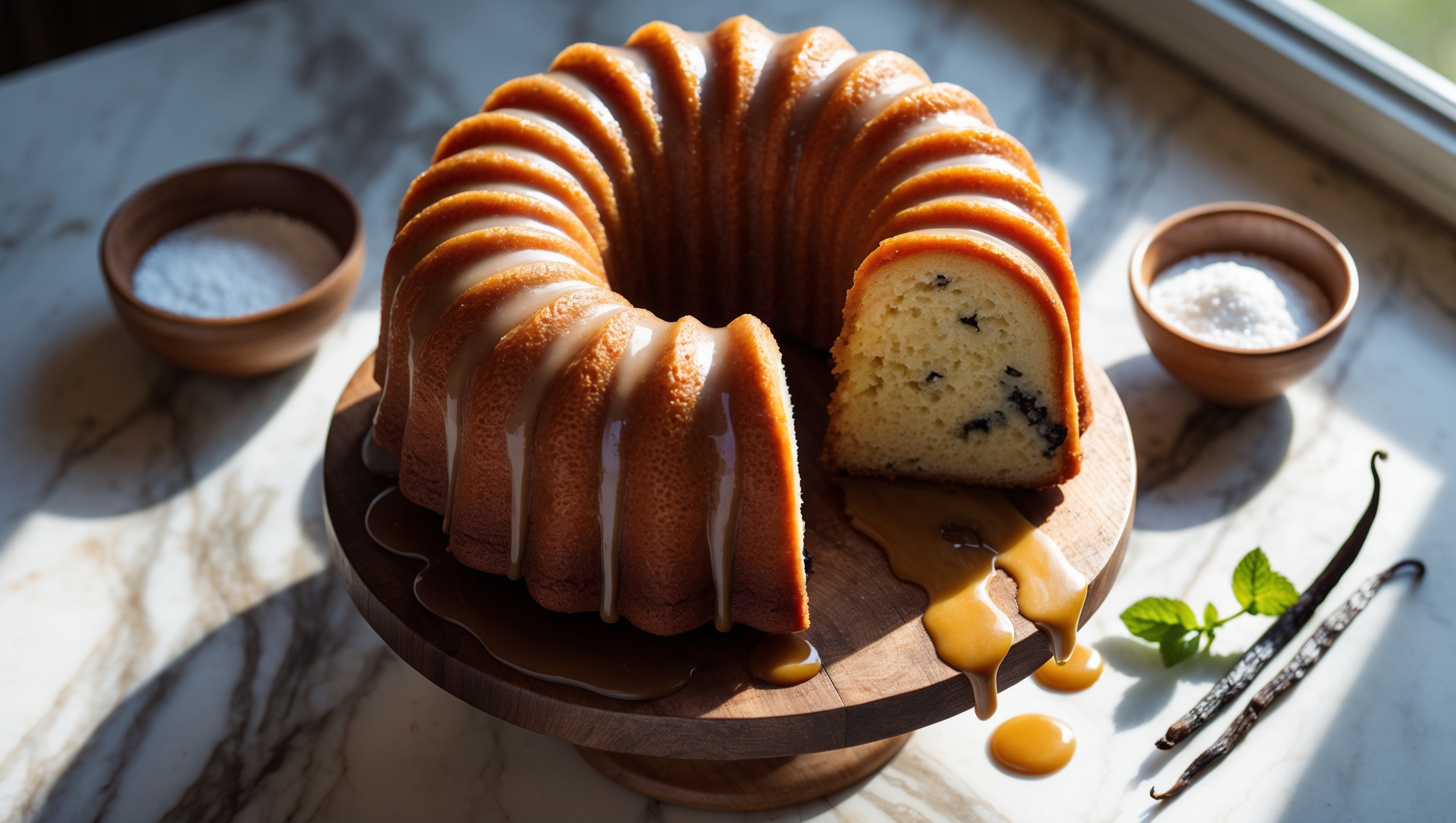
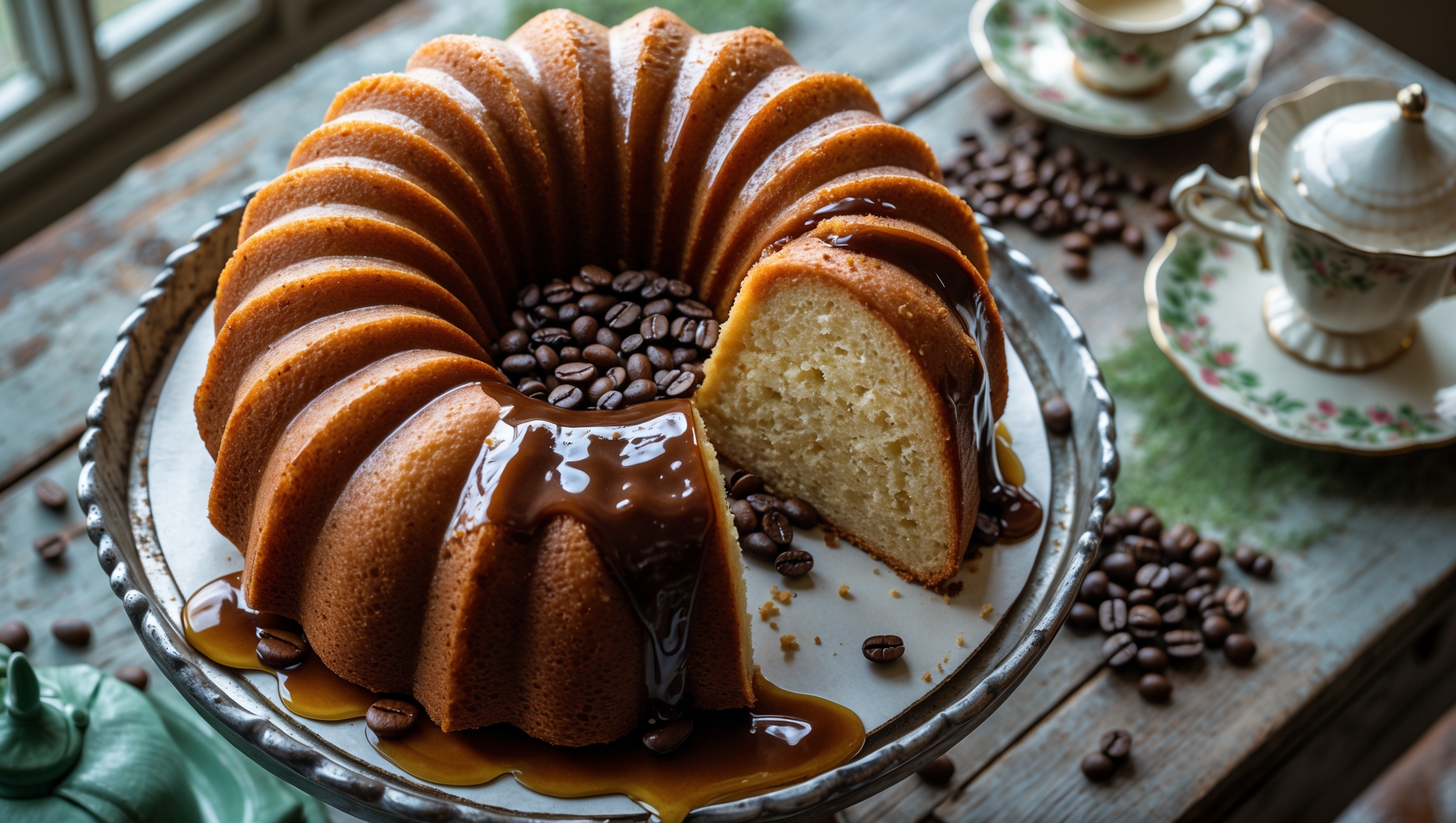
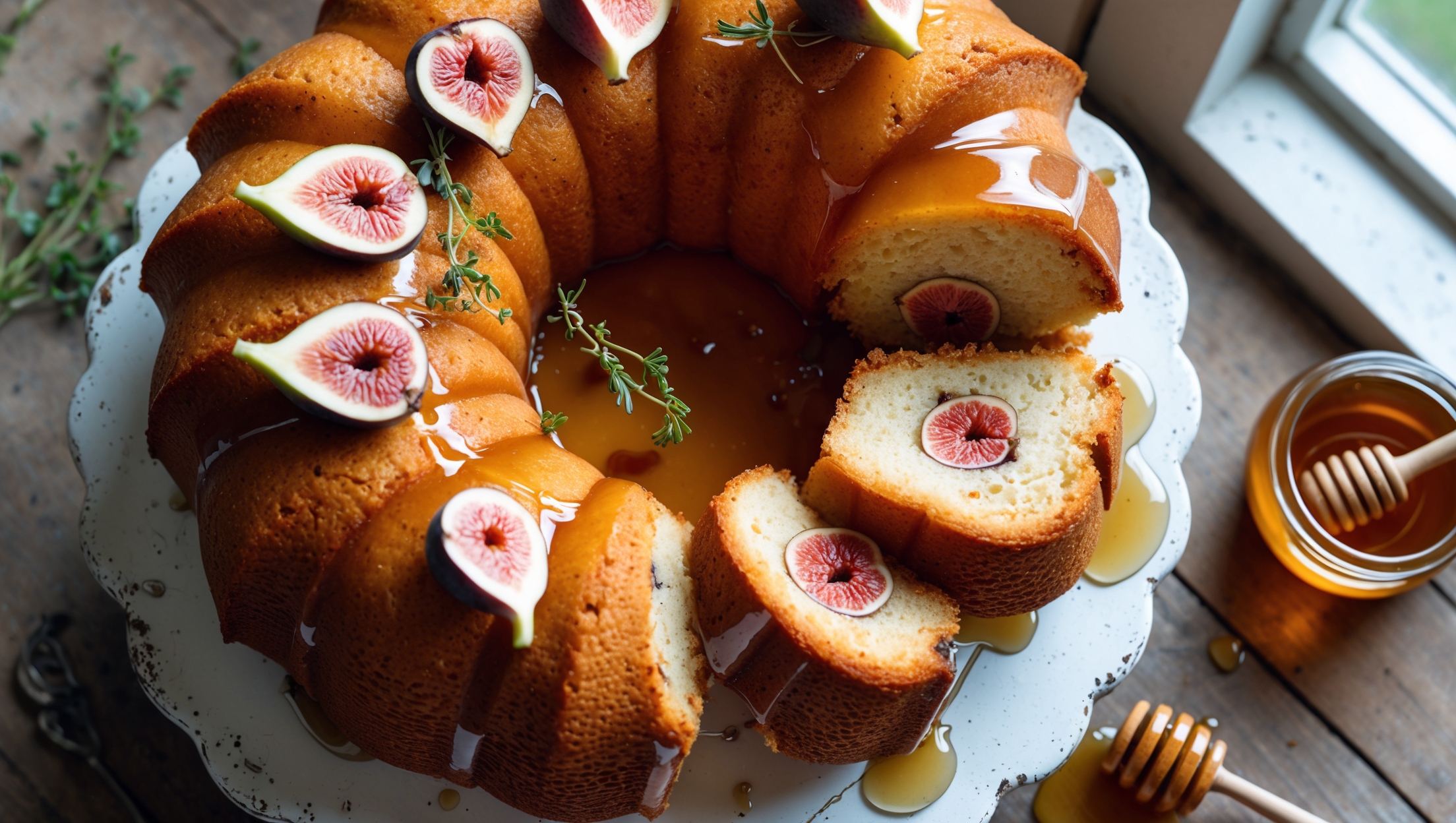
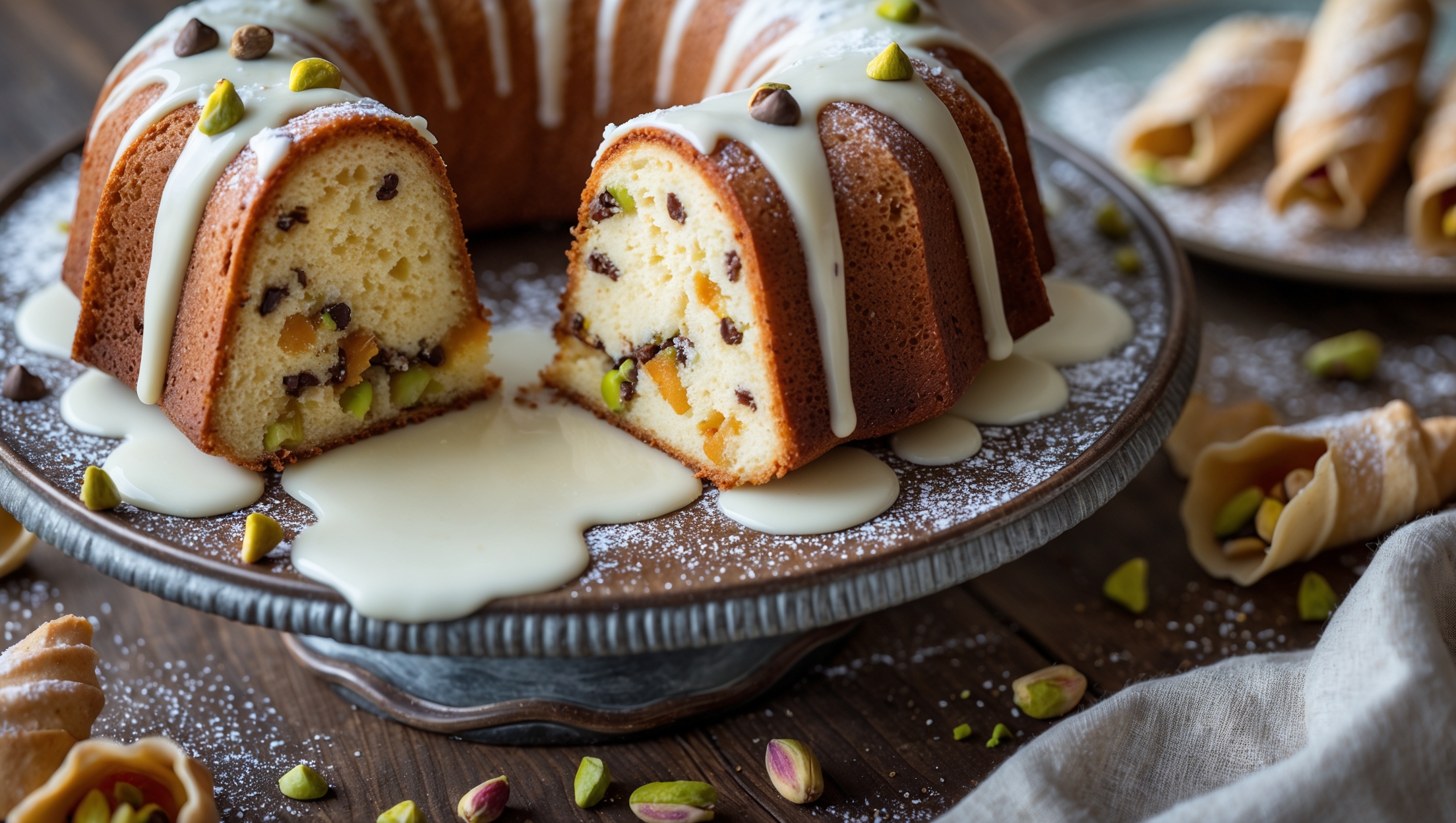
Directions
<ol class="no-list-style"><li class="MethodStepper"><h4 class="step-title">Step 1</h4>Preheat your oven to 165°C. Thoroughly grease and flour a 12-cup bundt pan, being sure to reach all the nooks and crevices – this is crucial for easy release after baking.</li><li class="MethodStepper"><h4 class="step-title">Step 2</h4>Brown the butter: In a medium light-colored saucepan, melt the butter over medium heat. Continue cooking, swirling occasionally (don't stir), as the butter foams and then begins to sputter. Watch carefully as the milk solids turn golden and then amber brown and develop a nutty aroma, about 8-10 minutes. Immediately transfer to a heat-proof bowl to stop the cooking process. Allow to cool slightly but not solidify – you want it warm but not hot (about 10 minutes).</li><li class="MethodStepper"><h4 class="step-title">Step 3</h4>While the butter cools, combine flour, baking powder, baking soda, and salt in a medium bowl, whisking well to eliminate any lumps and create an evenly distributed mixture.</li><li class="MethodStepper"><h4 class="step-title">Step 4</h4>In the bowl of your stand mixer fitted with the paddle attachment, pour the browned butter (making sure to scrape in all the browned bits – they contain immense flavor). Add both sugars and beat on medium-high speed for 2-3 minutes. The mixture won't become as light and fluffy as with solid butter, but this extended beating helps incorporate air for a better rise.</li><li class="MethodStepper"><h4 class="step-title">Step 5</h4>Add eggs one at a time, beating for 30 seconds after each addition. Scrape down the sides of the bowl. Add the vanilla bean seeds and vanilla extract, beating until well incorporated. The vanilla beans will appear as tiny black specks throughout your batter – these are treasure pockets of flavor.</li><li class="MethodStepper"><h4 class="step-title">Step 6</h4>Reduce mixer speed to low. Add the flour mixture in three additions, alternating with the buttermilk in two additions (beginning and ending with flour). Mix only until just combined after each addition – overmixing will develop gluten and make your cake tough.</li><li class="MethodStepper"><h4 class="step-title">Step 7</h4>Pour the batter into your prepared bundt pan, tapping it gently on the counter a few times to remove air bubbles. Smooth the top with a spatula. The thick batter should be about 2.5cm from the top of the pan.</li><li class="MethodStepper"><h4 class="step-title">Step 8</h4>Bake in the preheated oven for 50-55 minutes, or until a wooden skewer inserted into the center comes out clean or with a few moist crumbs (not wet batter). The cake will pull slightly away from the pan edges when done, and the top will spring back when lightly touched.</li><li class="MethodStepper"><h4 class="step-title">Step 9</h4>Allow the cake to cool in the pan on a wire rack for exactly 15 minutes – this timing is important. Too short and the cake will fall apart; too long and it may stick. Place the wire rack on top of the bundt pan and carefully invert. If the cake doesn't release immediately, tap the pan firmly a few times. Cool completely before glazing.</li><li class="MethodStepper"><h4 class="step-title">Step 10</h4>For the glaze: In a medium bowl, whisk together the powdered sugar, 3 tablespoons of heavy cream, vanilla bean seeds, and a pinch of salt until smooth. Add more cream, a teaspoon at a time, until you reach the desired consistency – it should be thick enough to cling to the cake but thin enough to drizzle. The vanilla bean seeds will create beautiful flecks throughout the white glaze.</li><li class="MethodStepper"><h4 class="step-title">Step 11</h4>Place the cooled cake on a serving platter and drizzle the glaze over the top, allowing it to cascade down the sides naturally. Let the glaze set for about 15 minutes before serving. For the cleanest slices, use a sharp knife dipped in hot water and wiped clean between cuts.</li></ol>