On this page
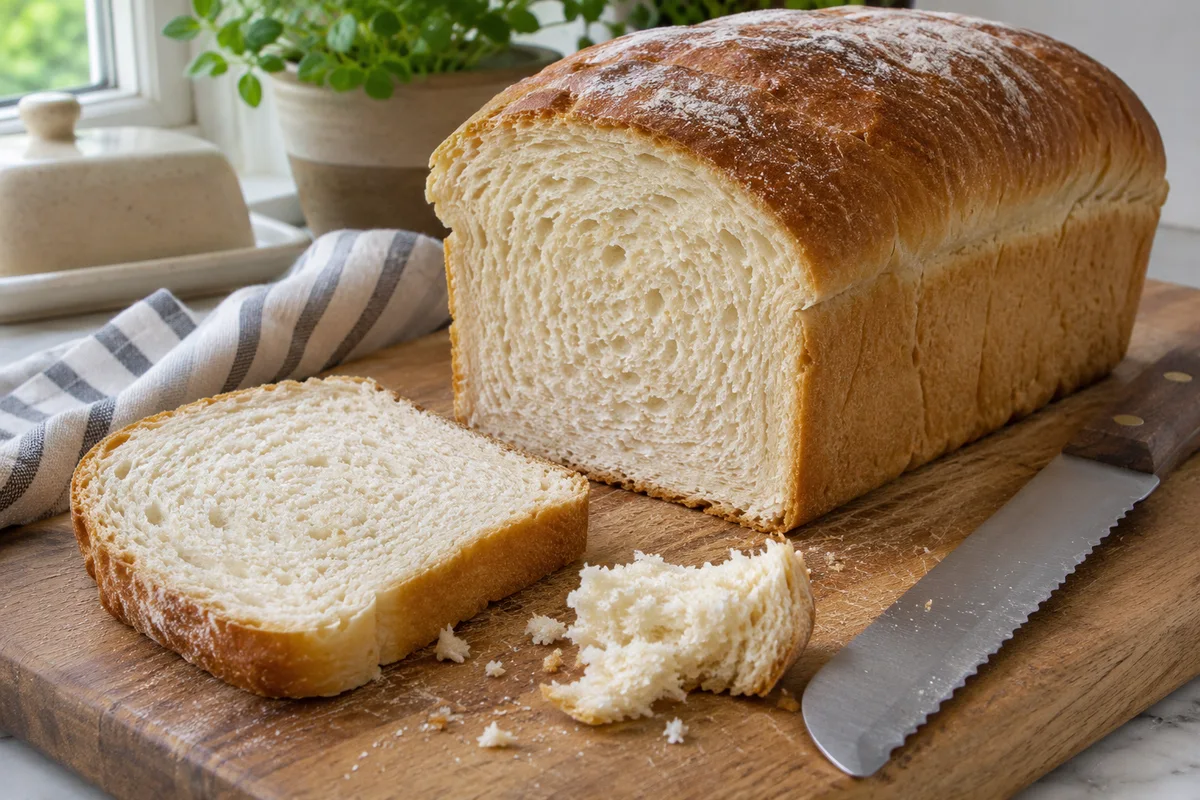
Let the loaf cool, then cut a slice from the middle with a serrated knife. Fine dry crumbs across the whole board suggest a different problem from a single torn patch beneath the crust. Check the flour measurement, the dough and the cooling time before changing all three.
What crumbling reveals
A loaf that shatters into dry pieces may lack moisture or have staled; one that tears apart around gummy patches may be underbaked or sliced too soon. A weak fluffy loaf can crumble because its gluten structure did not develop or fermentation progressed improperly. Examine the crumb after complete cooling instead of assuming all crumbling has the same cause.
Water-to-flour ratio matters
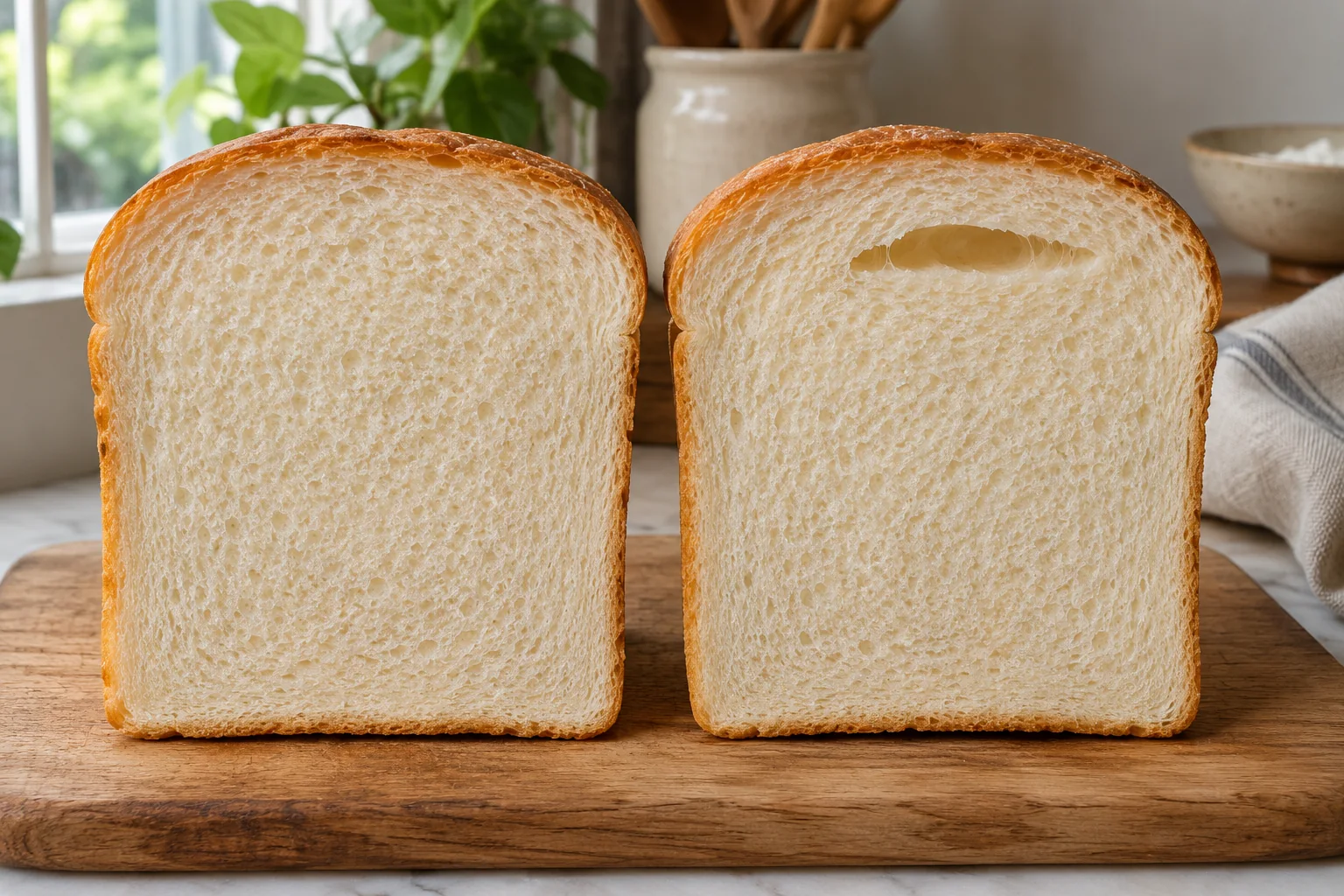
Flour needs adequate water to hydrate and develop structure. A stiff dough made with too little water may produce a tight, dry loaf that breaks when cut. Whole wheat and other high-fibre flours often need different hydration from white flour. Follow the recipe's specified weight ratios and resist adding large amounts of bench flour during kneading just to remove every hint of stickiness.
Use the flour and liquid amounts in Classic White Sandwich Bread as a starting point for comparison.
How extra flour creeps in
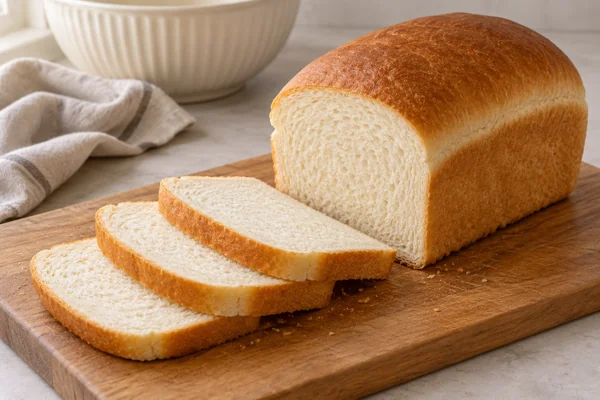
Scooping flour densely from the bag can raise the true flour weight beyond the recipe's assumption. Adding more during shaping gradually lowers effective hydration. The result may feel easy to handle yet bake dry. Use a scale and a scraper rather than a heavily floured counter when the formula supports it. Record any flour you add during mixing.
For the next loaf, weigh a small dish of bench flour before and after shaping. The difference shows how much flour left the dish. Seeing that number makes it easier to repeat a successful dough without quietly drying it out.
Gluten strength supports slices
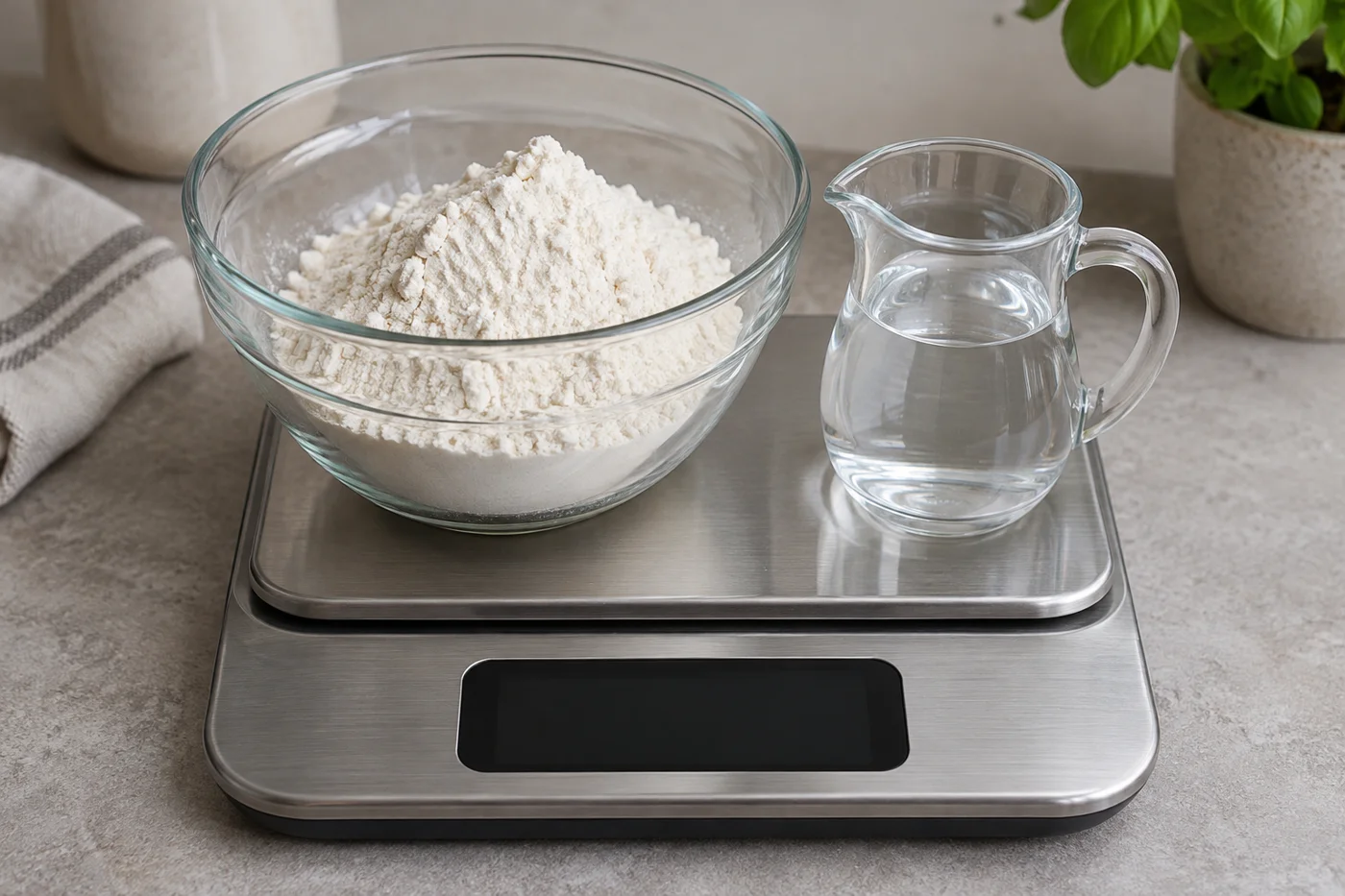
In wheat bread, hydrated gluten proteins form a network that supports gas bubbles and helps the crumb remain cohesive. A dough that was insufficiently developed may rise but produce weak slices. Kneading or fold sets should reach the recipe's intended strength. Extra yeast cannot substitute for a network that doesn't hold together.
Inspect the dough texture described in Buttermilk Sandwich Bread before adding extra bench flour.

The windowpane has limits
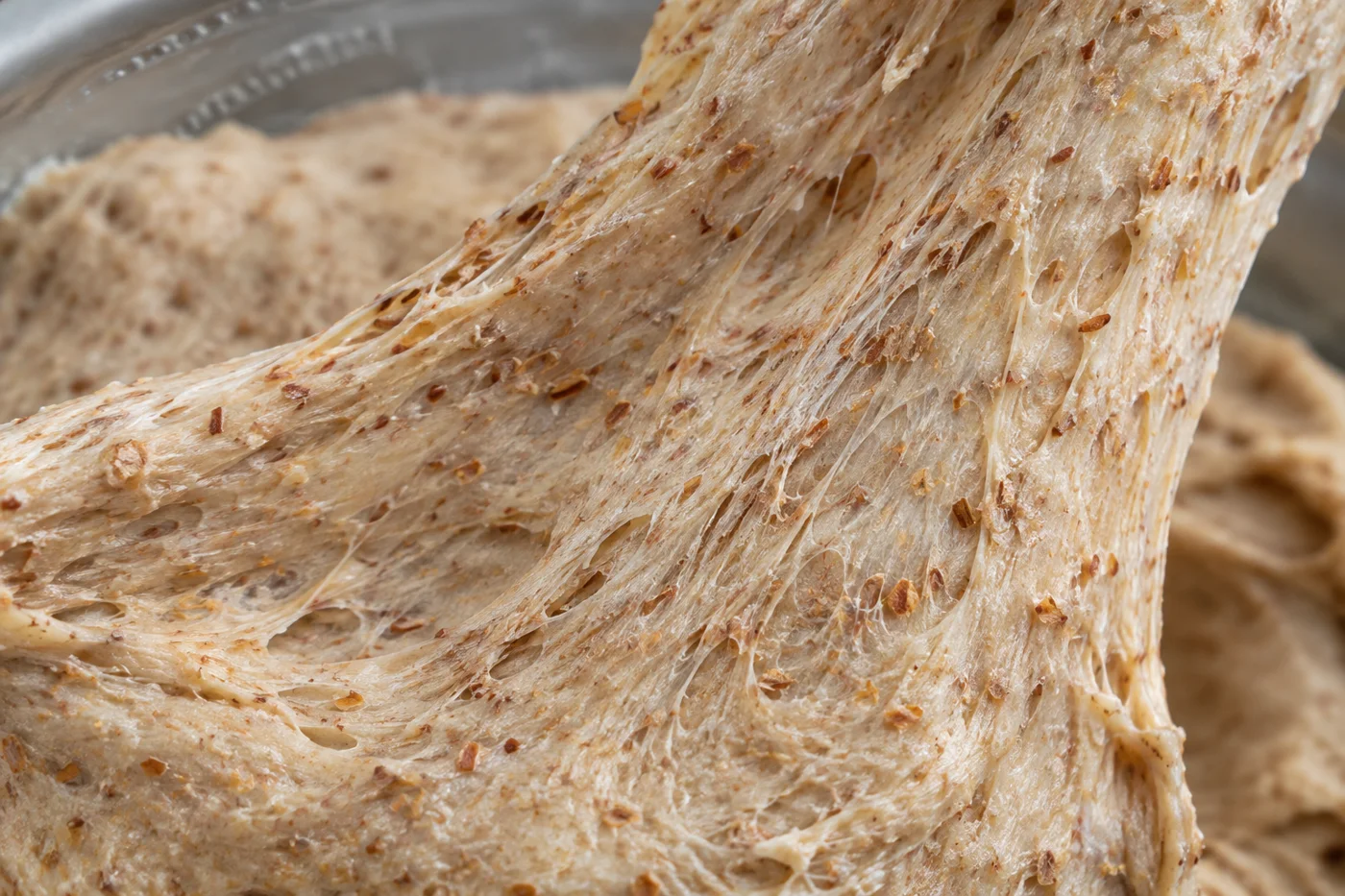
A properly developed white bread dough may stretch into a thin membrane when tested gently. Whole wheat dough can tear sooner because of bran, while rye-rich dough follows a different structural system. Don't knead a high-rye loaf indefinitely hoping for a classic wheat windowpane. Use the formula's development and handling cues rather than an unrelated test.
Why overmixing may also harm dough
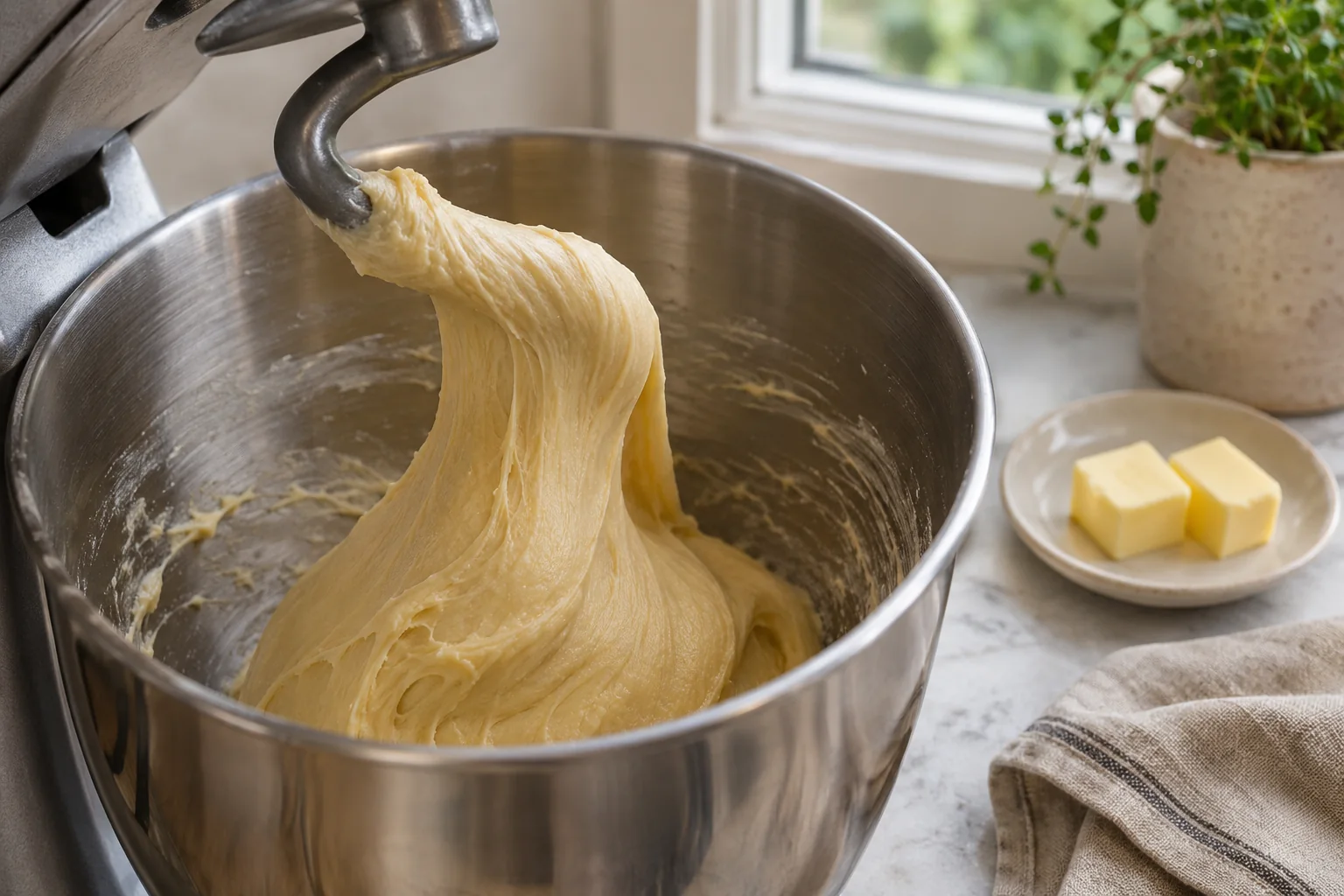
Very intensive machine kneading can heat dough and eventually weaken structure after it was initially strong. This is more likely with powerful mixers than gentle hand kneading. A dough that becomes loose and sticky after extended high-speed mixing may need a different schedule. Stop at sufficient development rather than running the machine as long as possible.
Underfermentation affects the crumb
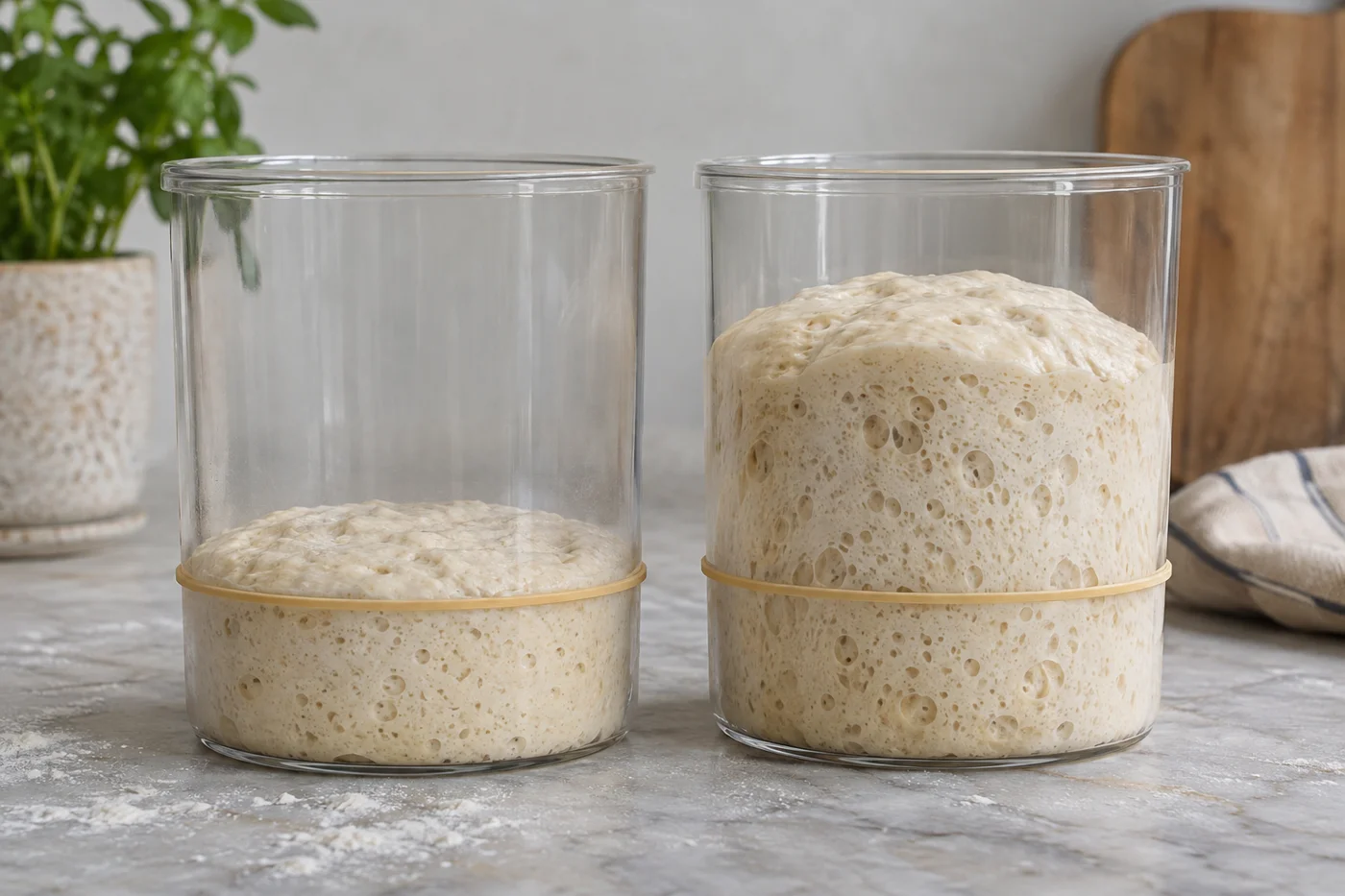
If yeast dough hasn't fermented sufficiently, it may bake tight, heavy and prone to tearing rather than into cohesive airy slices. Temperature affects the timing, so one hour in a cool kitchen differs from one hour in summer heat. Follow rise, feel and gas-bubble cues. Baking merely because the recipe's shortest time passed may leave an underdeveloped crumb.
Overfermentation weakens structure
Dough held too long or too warm can lose gas-retaining strength and collapse. A baked loaf might have a weak, irregular crumb that crumbles under the knife. The problem isn't automatically insufficient water. Note how the dough looked before shaping and whether it spread rather than holding tension. Adjust the fermentation schedule rather than adding another cup of flour.
Shaping makes a difference
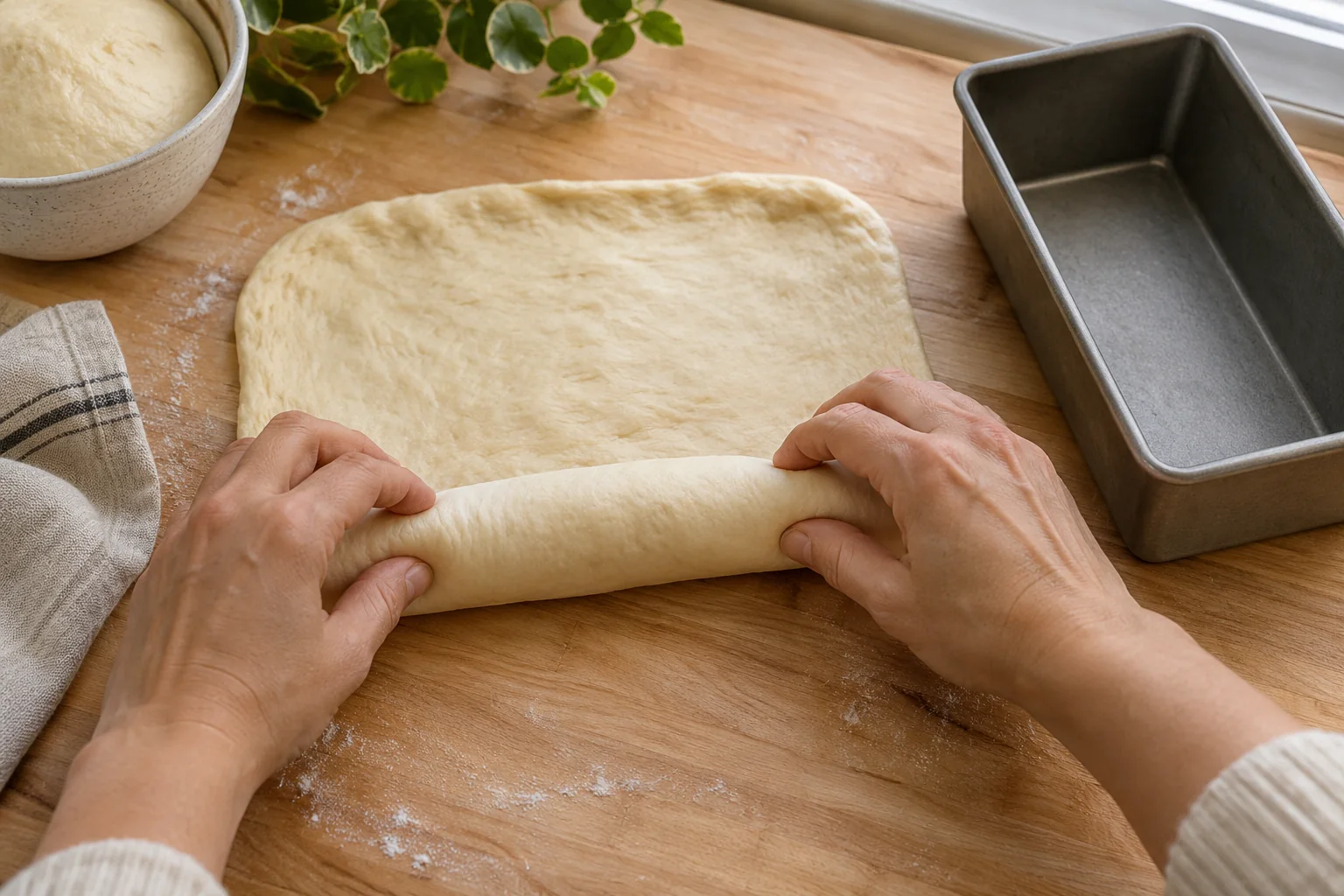
A sandwich loaf formed into a loose uneven roll may develop large tunnels or poorly bonded internal layers. The slice can separate along those spaces. Shape the rectangle evenly, roll snugly and seal the seam as the recipe directs. Excess flour trapped between folded layers may interfere with adhesion. A weak shaped seam can resemble crumbly dough after baking.
Bread type changes expectations
A dense whole-rye or seed-packed loaf may not slice like a fluffy supermarket sandwich bread. Seeds and inclusions interrupt the crumb, while rye starch and fibre influence binding differently from wheat gluten. Use an appropriate recipe and slice thickness. A bread meant for hearty open-faced sandwiches may need thicker cuts than a refined wheat loaf.
Follow the structure-building method in Gluten-Free Sandwich Bread when using a gluten-free blend.

The bran effect in whole wheat
Whole grain flour includes bran and germ, changing water absorption and continuity of gluten. A recipe designed for whole wheat may use a longer hydration rest, different mixing or tenderizing methods. Replacing all white flour with whole wheat without modifying the formula can produce an unexpectedly dry fragile loaf. Choose a tested high-whole-grain recipe rather than relying on extra kneading alone.
For a bran-rich dough, compare the flour blend in Honey Whole Wheat Sandwich Bread with your own.

Seeds and nuts add interruptions
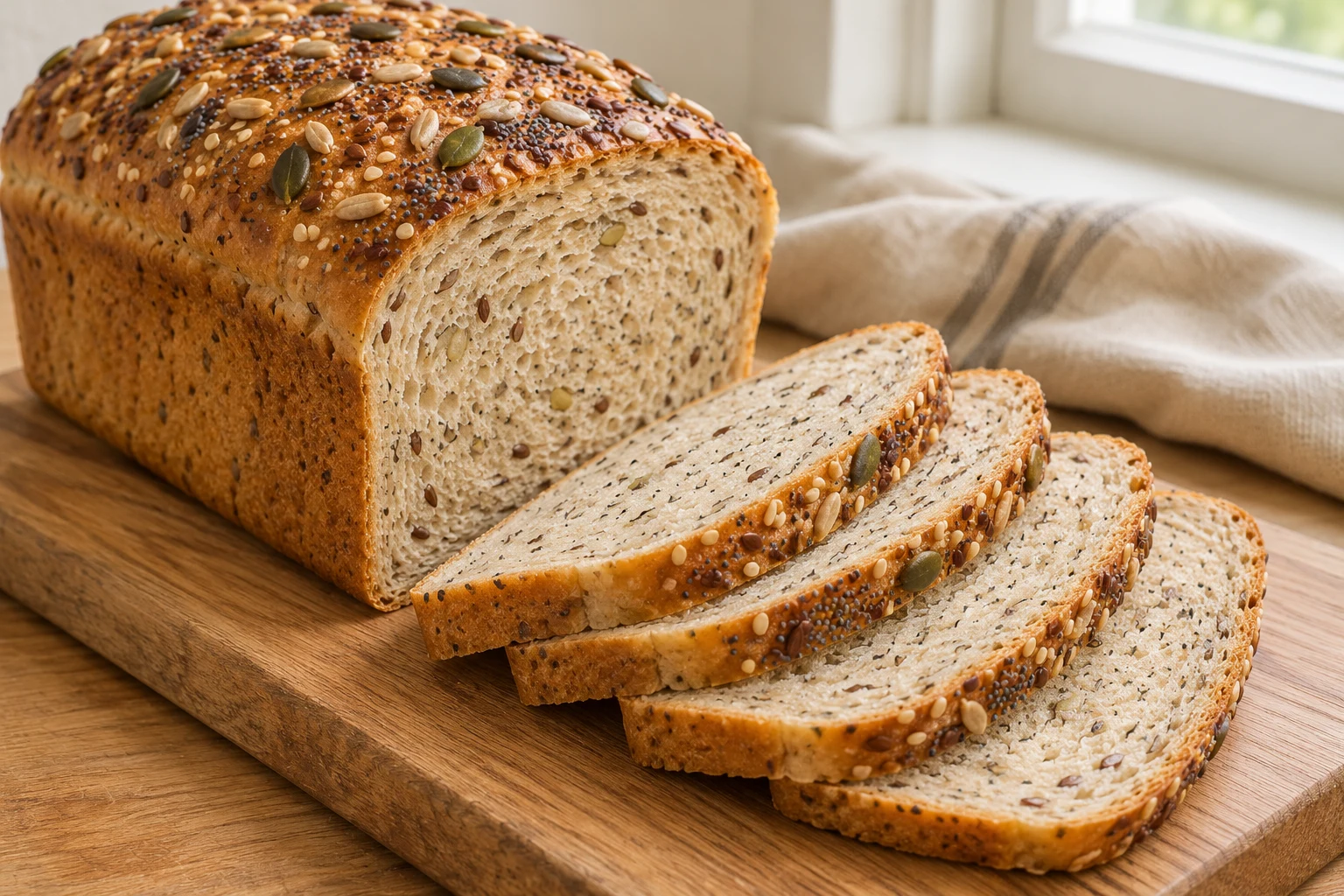
Large sunflower seeds, whole nuts and dried fruit can create gaps and localized weak spots. Their hydration and distribution matter. Some formulas soak seeds before mixing; others add them late to avoid tearing gluten. Follow the inclusion method and avoid doubling the seed quantity without compensating for structure. A heavily seeded loaf may need a thicker slice to stay intact.
A slice of Multi-Seed Sandwich Bread shows how inclusions interrupt the crumb.
Underbaking and gummy crumb
A bread that has not baked through may tear or smear rather than slice cleanly. Dark crust color is not conclusive because enriched and whole grain loaves brown differently. Use the recipe's internal doneness guidance, an appropriate thermometer when advised and adequate oven time. Do not simply toast a raw dense loaf and assume it was correctly baked.
Cooling is part of bread structure
Fresh hot bread continues undergoing moisture redistribution and starch setting as it cools. Slicing too early can compress or tear the crumb, making it seem gummy and weak. Cool on a rack for the interval the recipe recommends; large rye loaves may need a particularly long rest. A short wait can improve clean slicing without any ingredient changes.
Knife choice and technique
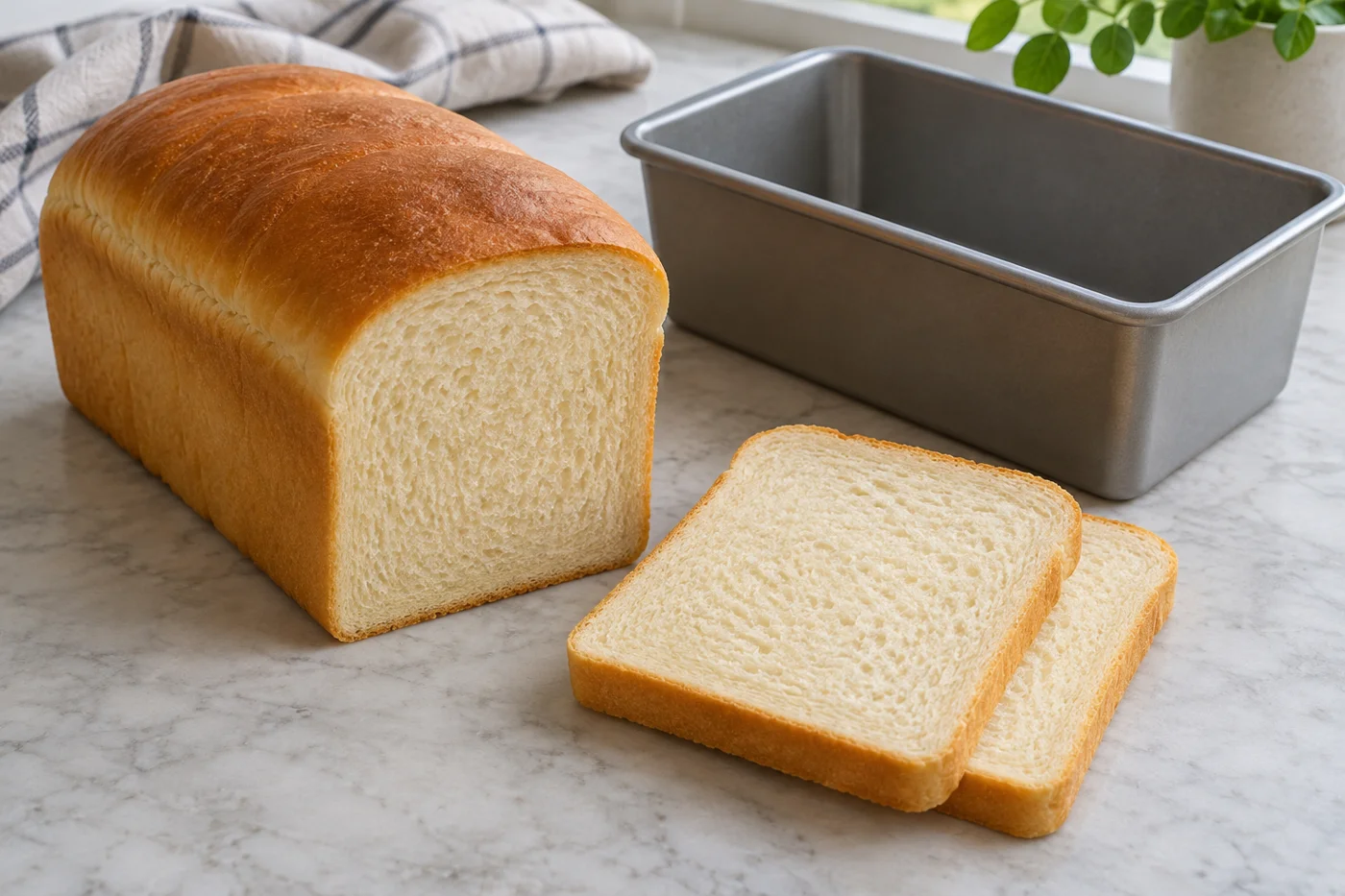
A sharp serrated bread knife with a gentle sawing motion is more suitable for many loaves than pressing a dull straight blade downward. Support the loaf and use consistent slices. A very warm tender sandwich loaf may crush under excessive pressure. Let it cool and avoid forcing a thin slice through a crusty boule that would hold better when cut thicker.
Staling and storage
Bread becomes stale through starch retrogradation as well as moisture changes. A loaf left exposed may dry and crumble more with each day. Cool fully, wrap appropriately and freeze portions you won't use soon. Refrigeration can accelerate staling in ordinary lean bread, although perishable sandwich fillings require cold storage. Choose storage for the actual bread.
What fat and sugar do
Some enriched sandwich loaves use butter, oil, milk or sugar to encourage tenderness and extend pleasant texture. Adding large amounts to a lean artisan recipe alters its structure and flavor. If you want a soft flexible sandwich loaf, select a formula designed for that result. A lean crusty sourdough isn't defective merely because it lacks brioche softness.
A crumbly sourdough diagnosis
Check starter activity, total hydration, bulk fermentation, shaping and baking completion. A highly acidic overfermented dough can weaken; an underfermented one may stay tight. The starter alone doesn't determine texture. Record temperature and rise cues rather than relying on clock time. A tall ear or glossy crust doesn't necessarily prove an excellent crumb.
Use the fermentation cues in Sourdough Country Loaf to assess a sourdough loaf before changing its hydration.

A practical test plan
Bake the same reliable loaf using weighed flour and water, and record dough temperature, mixing endpoint and final proof. Cool it fully before slicing with a suitable knife. If crumbling remains, change only one variable based on the observed texture. For a whole wheat loaf, compare against a recipe designed for that flour rather than a white flour conversion.
IN PICTURES
From the baking notebook
FROM THE RECIPE BOX


