On this page
Whole wheat dough can feel sticky just after mixing and surprisingly firm a little later. Before adding more flour, tear off a small piece and look closely: the brown specks are bran, and they change both how the dough takes up water and how it stretches. A fine, flexible sandwich slice is as useful a goal as an open country crumb.
What whole wheat flour contains
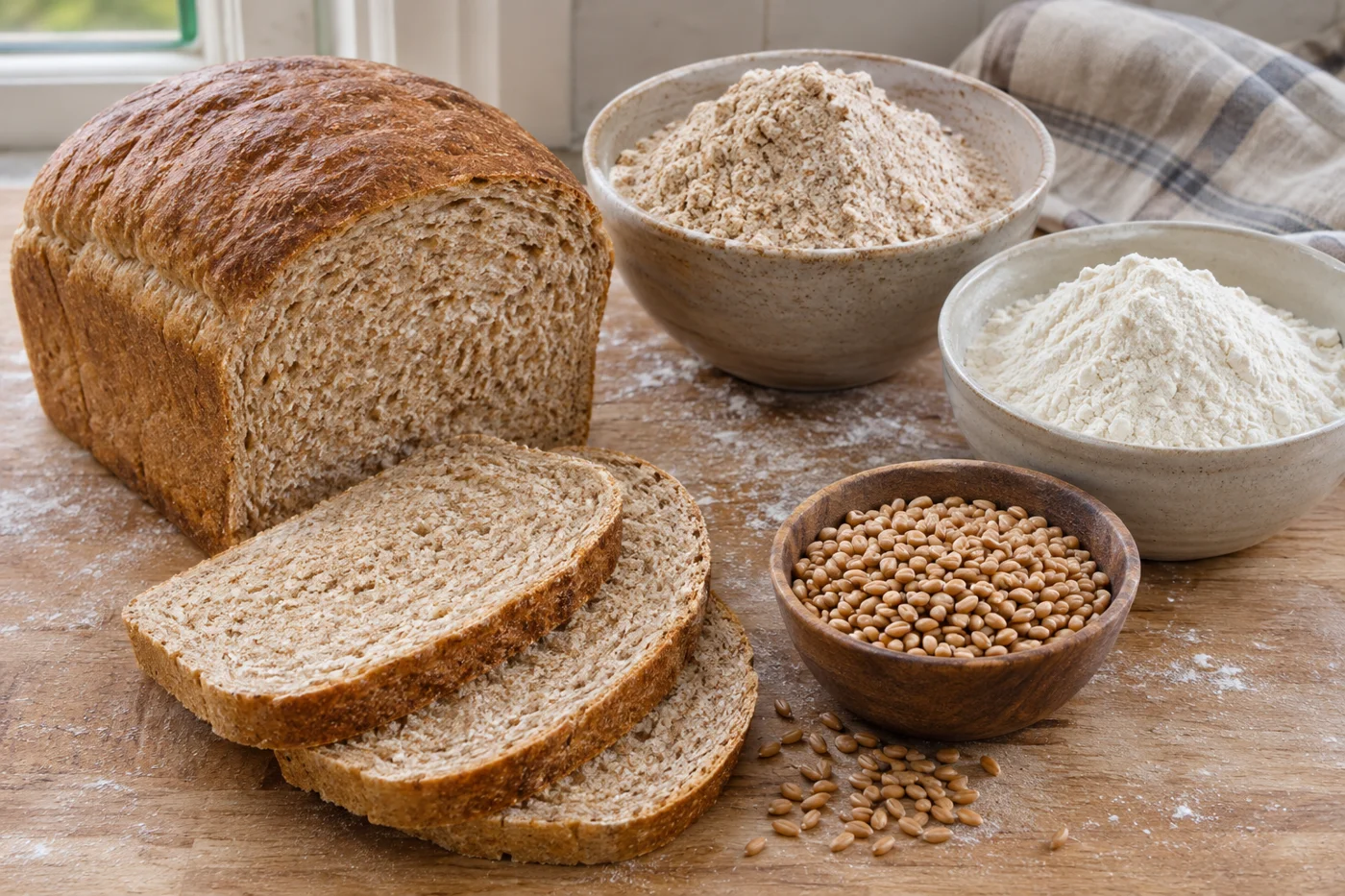
Wheat kernels contain endosperm, bran and germ. Whole-grain wheat flour retains these in their original proportions. In Canada, flour labelled whole wheat can have up to 5% of the kernel removed during milling, including some germ. Check the bag when comparing flours across brands or countries.
Start with Classic Whole Wheat Bread to see whole wheat flour used in a dough designed around its bran and germ.
Why dough absorbs more water
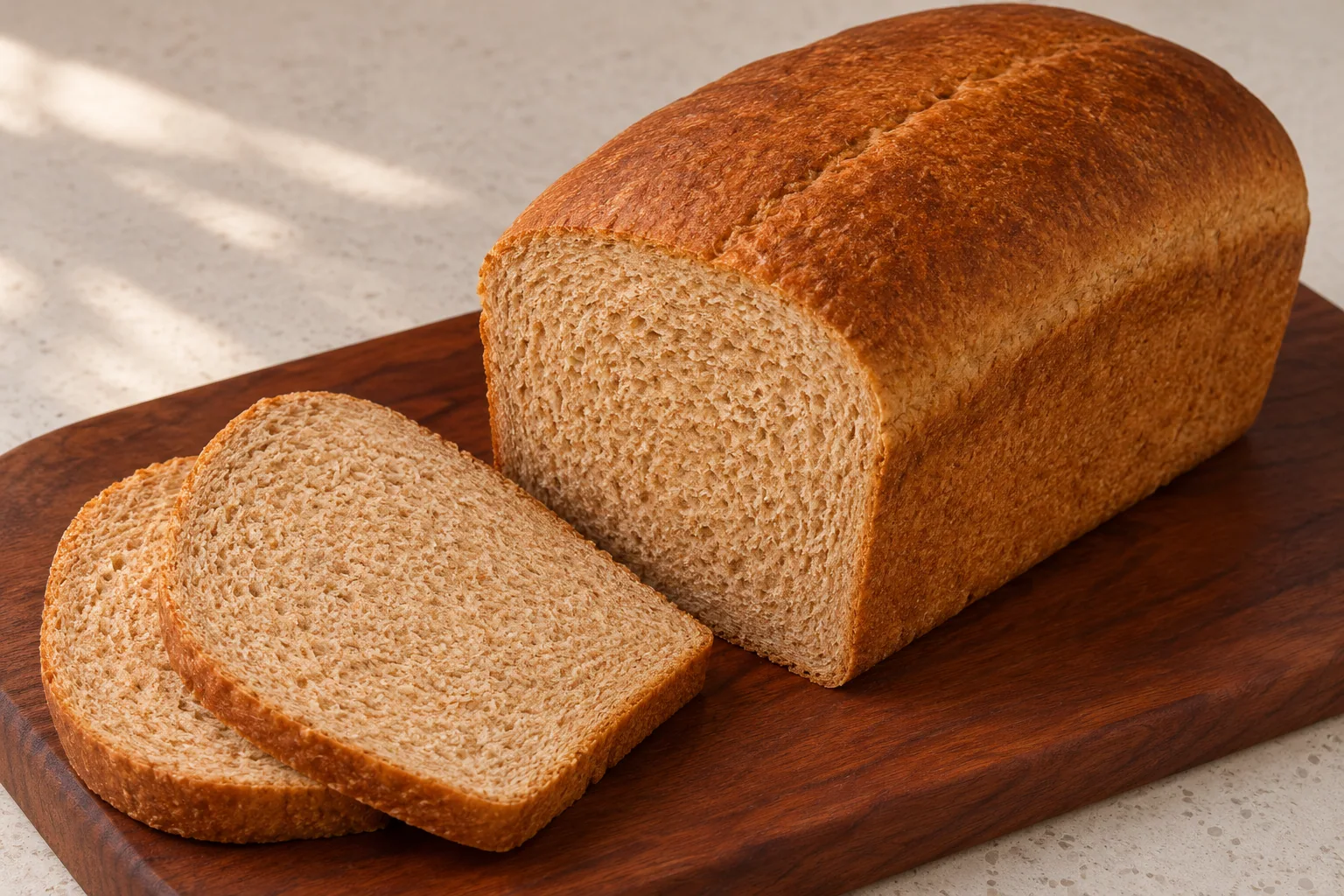
Bran and other whole grain components bind substantial water. A dough made with the same water quantity as white flour may feel stiff and dry when a high proportion of whole wheat is used. The difference isn't the same across every flour: hard red whole wheat, white whole wheat and finely milled commercial flours can behave differently. A recipe developed for whole wheat gives a better starting point than blindly increasing water in any white-loaf formula.
In Whole Grain Buttermilk Bread, the buttermilk supplies part of the dough’s liquid. Measure it before deciding the dough needs more water.
Hydration is not a single fixed number
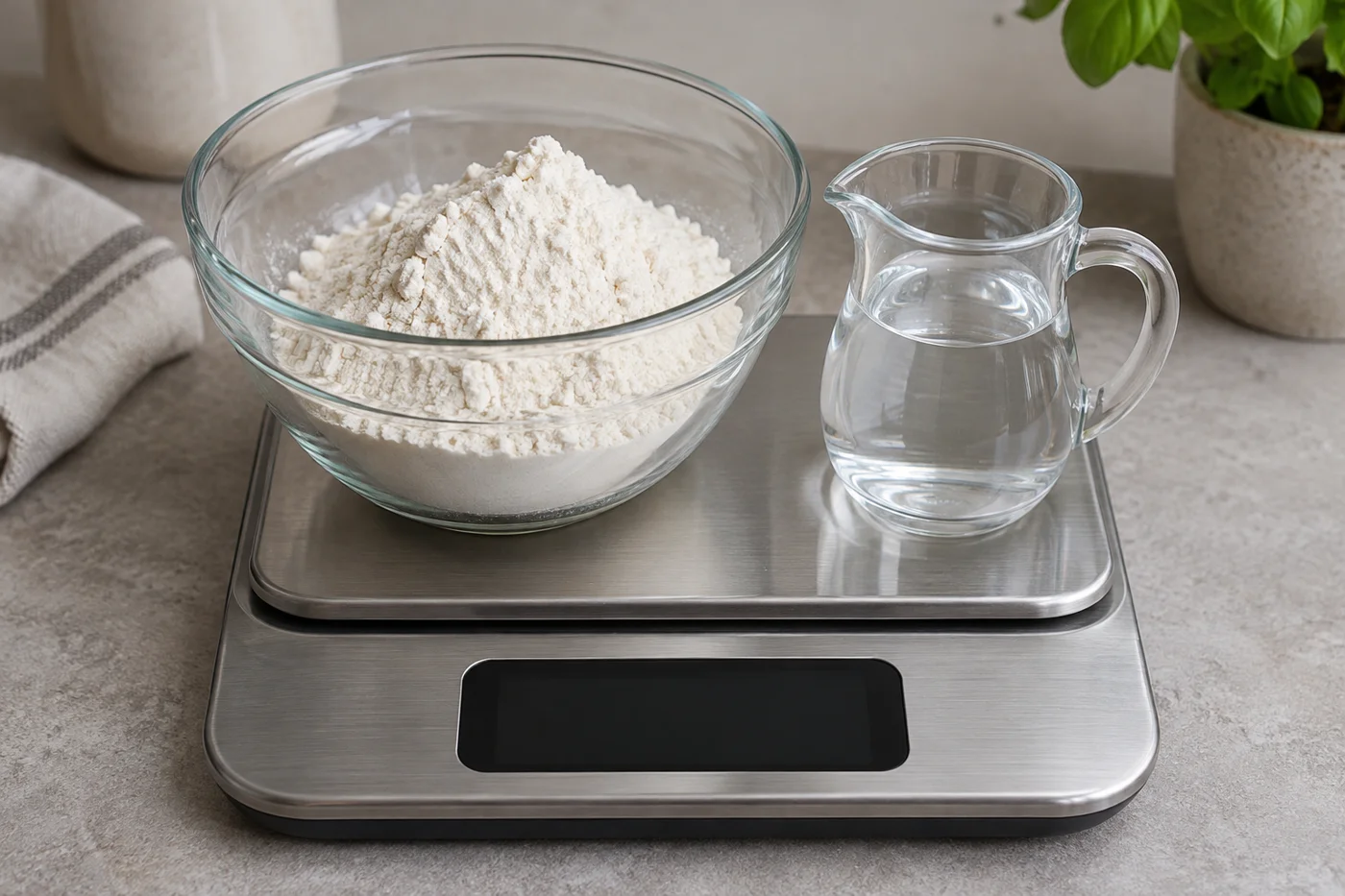
Overall hydration is the weight of water divided by the weight of flour, multiplied by 100. Count the flour and water already in any starter or preferment. A dough with 500 g total flour and 350 g total water is at 70%, even when part of each came from the starter. How soft it feels depends on the flour.
What bran does to gluten
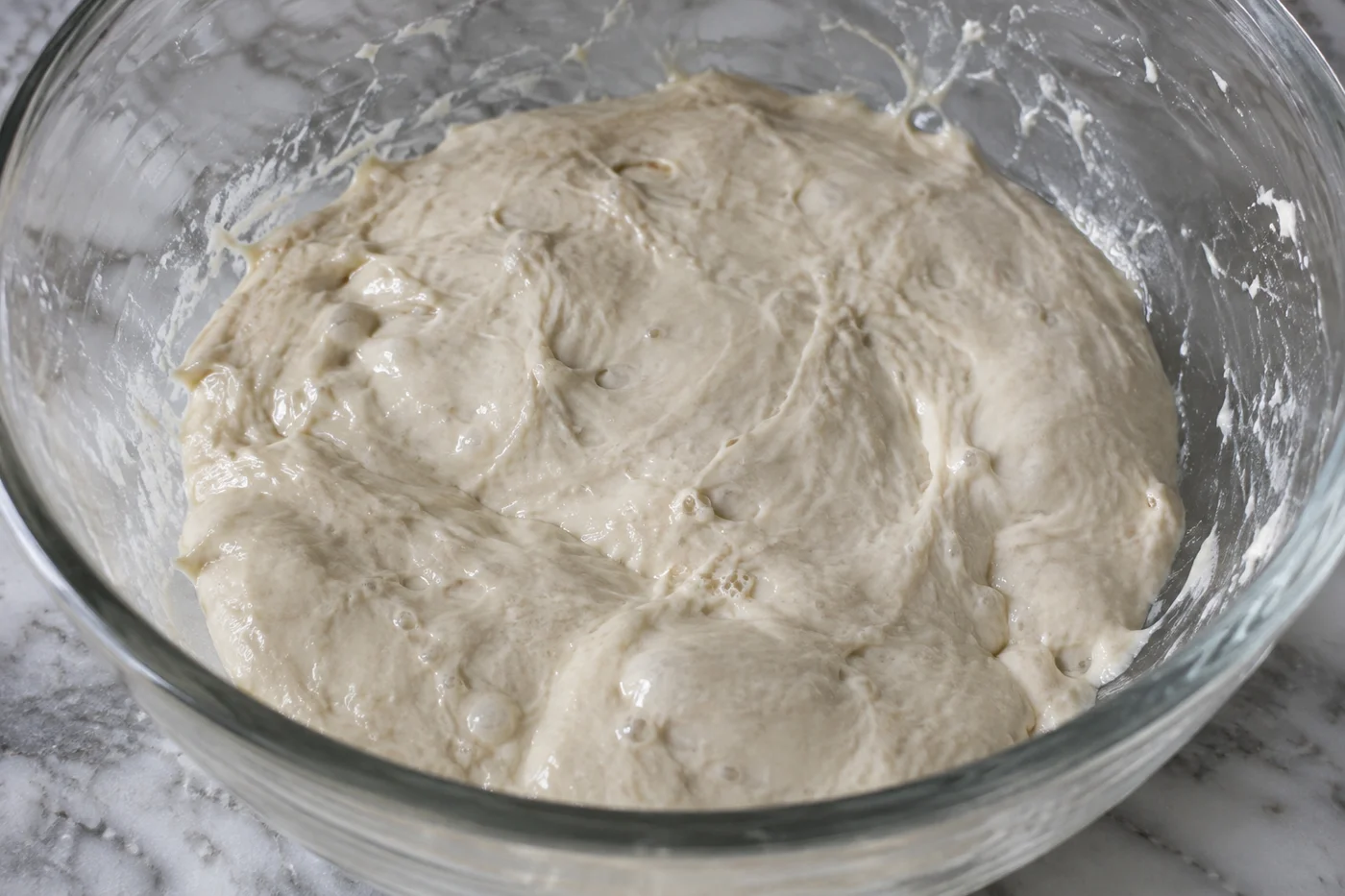
Gluten networks form from wheat proteins as flour hydrates and is mixed. Bran particles interfere with a continuous flexible network and can contribute to a less extensible dough. It is an oversimplification to say bran always physically cuts gluten like a knife; flour chemistry and hydration are also involved. The practical result is that a 100% whole wheat loaf may retain gas less efficiently than a comparable white-flour loaf.
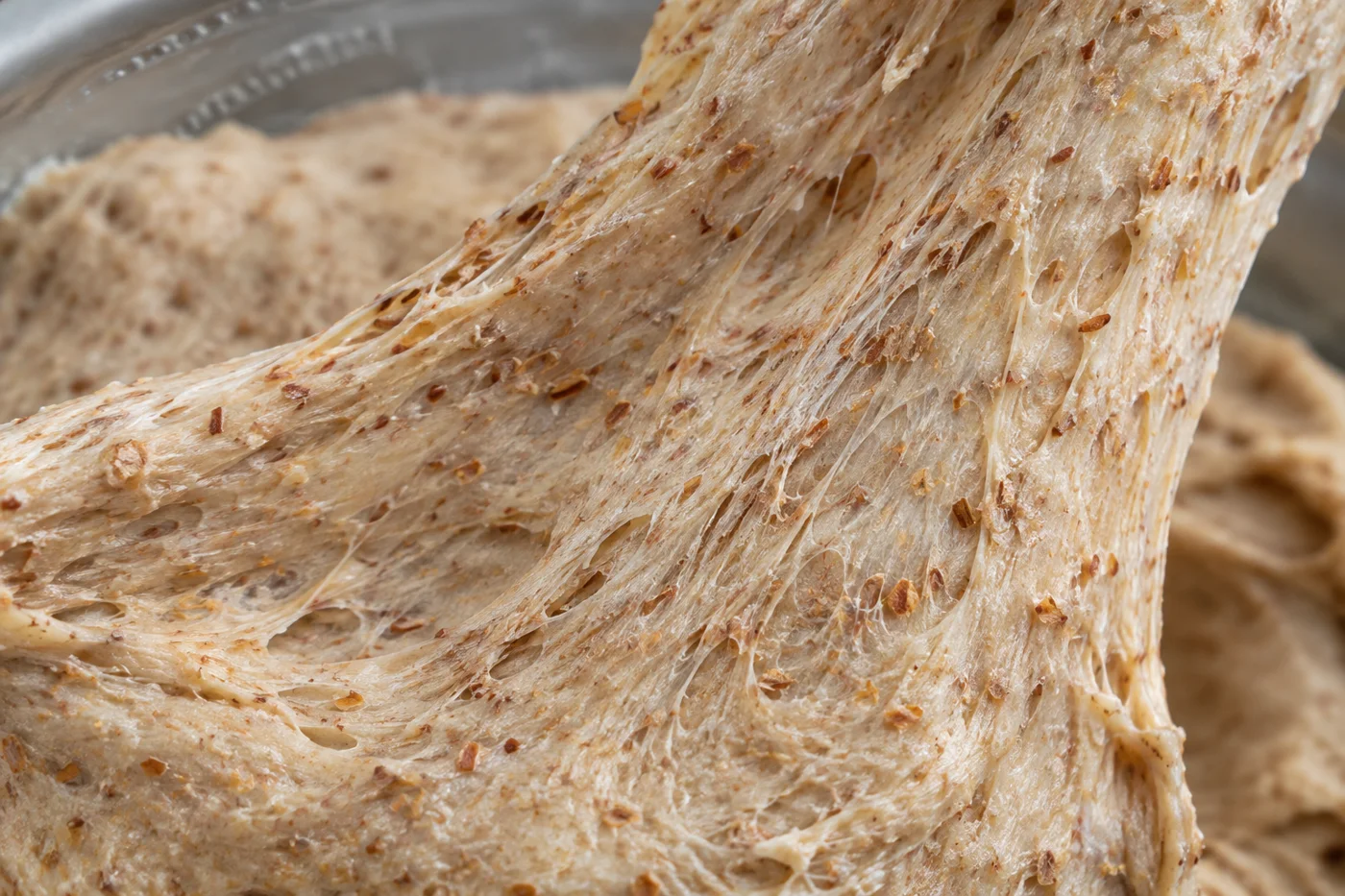
The importance of a rest
An initial rest after mixing flour and water can give whole wheat time to hydrate before intensive kneading or folds. Some methods call this an autolyse; others include salt or starter and are more broadly termed a rest. A longer rest isn't automatically better because fermentation and enzymes continue changing dough. Follow a tested whole-wheat formula's timing and look for dough that becomes more cohesive and less grainy.
The rests in No-Knead Whole Wheat Bread give the flour time to take up water while the dough develops strength.
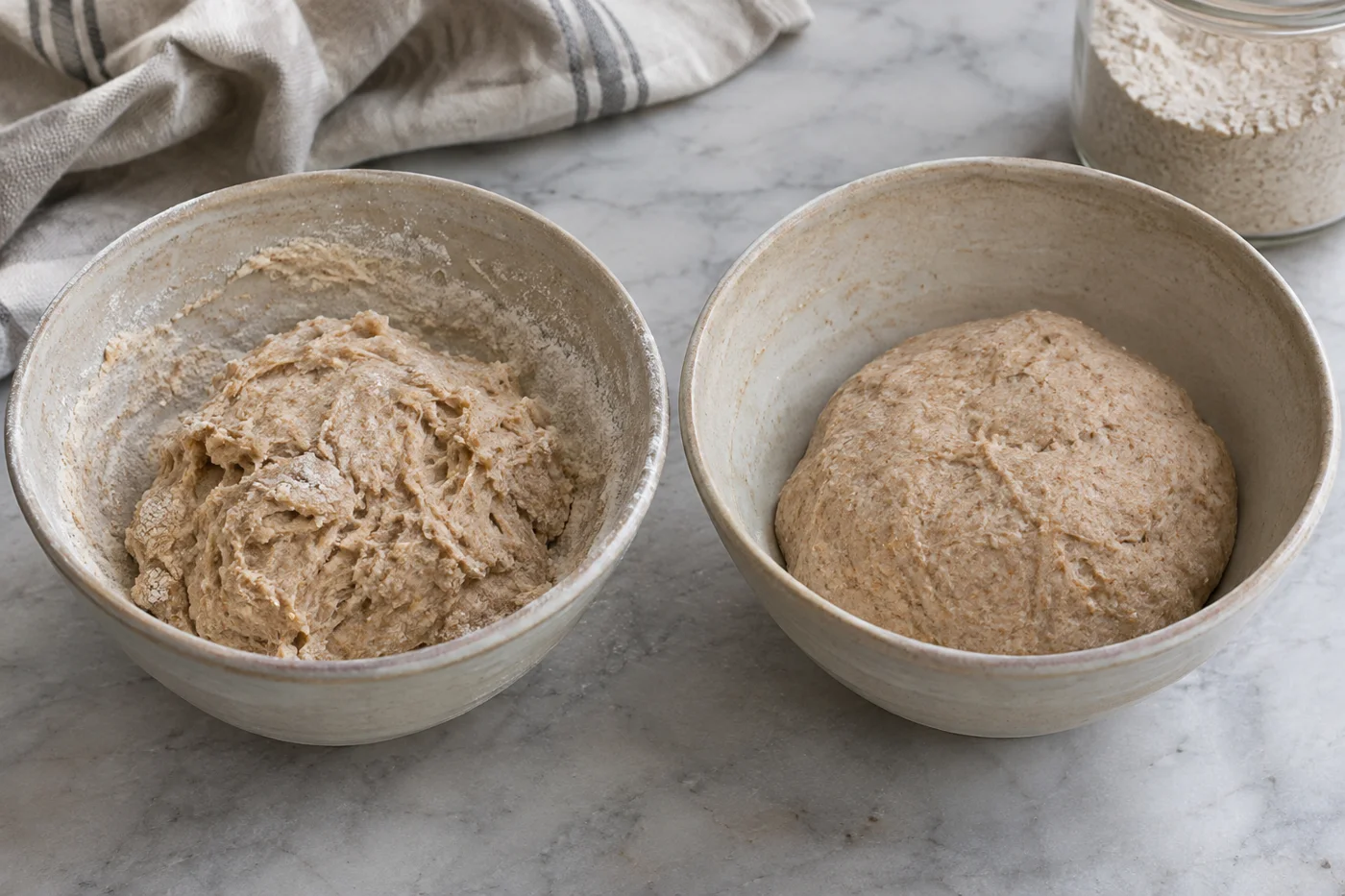
How mixing changes
A whole-grain dough may feel sticky yet tear before achieving the long thin windowpane of a strong white bread. More kneading does not always solve this. Use the recipe's mixing schedule and observe improved smoothness, elasticity and strength. An enriched sandwich loaf may benefit from more thorough kneading than a rustic high-hydration dough developed with folds. Adapt technique to bread style rather than chasing an identical windowpane.
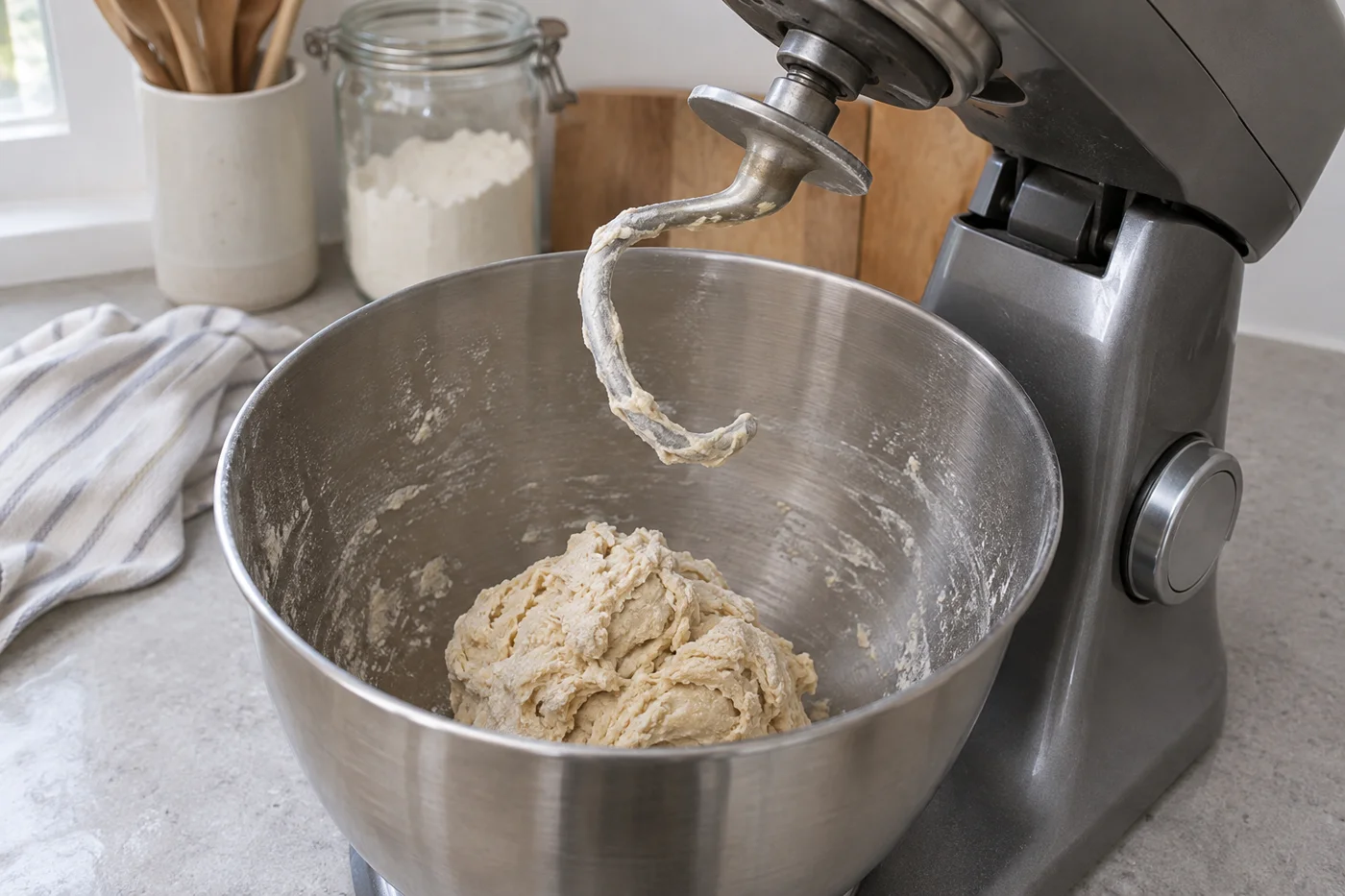
Why 100% whole wheat can be dense
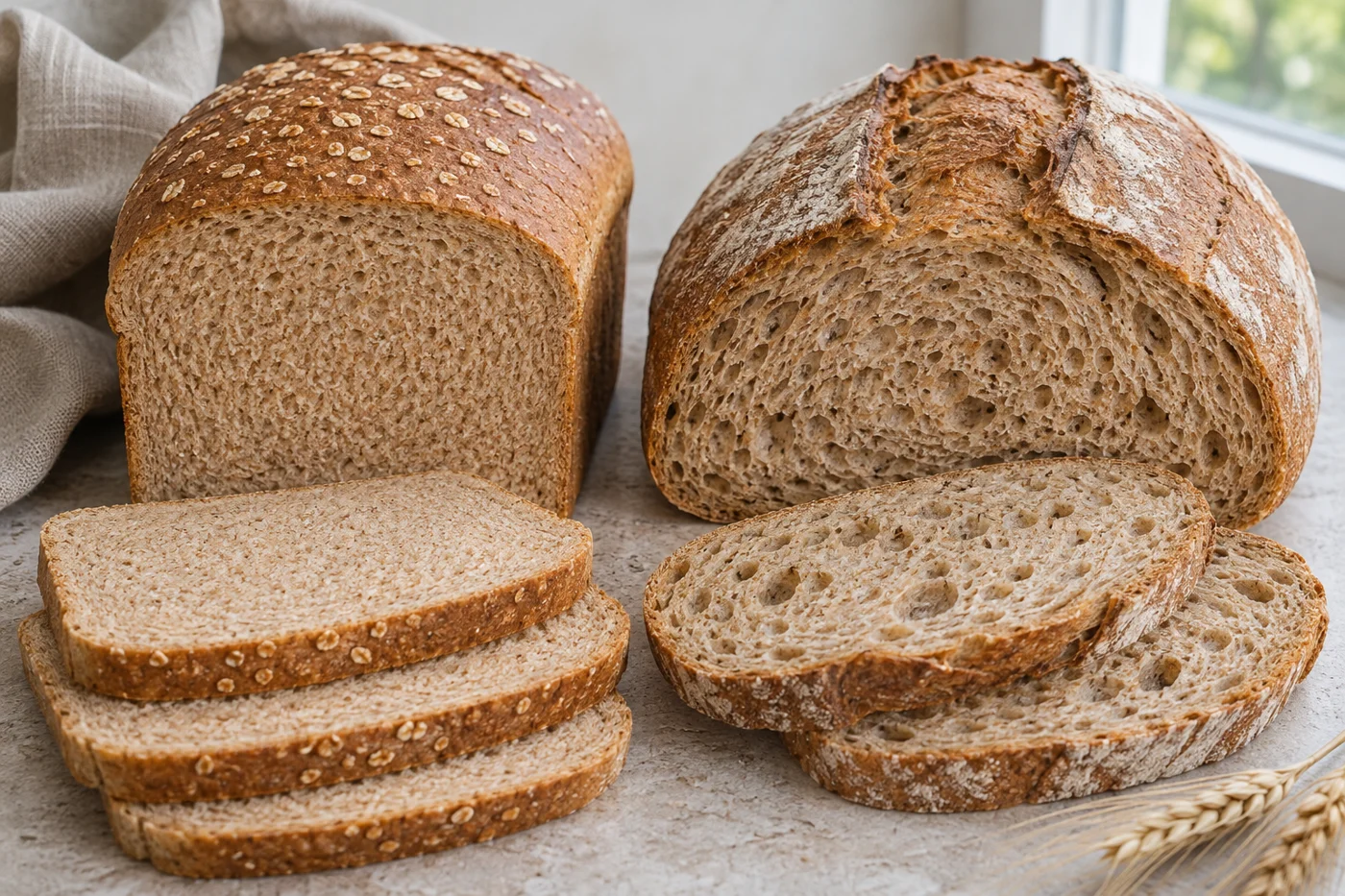
Bran, a less continuous gluten network, loaf shaping and hydration all influence gas retention. Dense bread can also result from insufficient fermentation or underbaking. A 100% whole wheat dough is not doomed to be heavy; well-formulated recipes use sufficient hydration, appropriate mixing and proofing to create a pleasant crumb. Avoid measuring success solely by whether it grows as tall as an all-white commercial loaf.
A gradual substitution approach
When experimenting with a tested white bread, some bakers begin by replacing roughly a quarter of the flour with whole wheat by weight, noting changes before increasing further. This is an experiment, not a universal conversion. Dough may require a little more liquid and a different mixing or fermentation schedule. For a reliable first whole-grain loaf, a dedicated whole wheat recipe is simpler than extensive adjustments.
A blend such as 9-Grain Sandwich Bread offers a different starting point. Check which part of the formula is flour and which part is added grain.
Whole wheat in sandwich bread
A soft sandwich loaf may include fat, milk, sweetener or other ingredients that promote tenderness. A well-tested whole wheat formula can balance these with enough gluten strength to slice neatly. Choose a suitable loaf pan and proofing endpoint. Extra sweetener isn't the primary remedy for a tough dough, and too much additional water can make the centre gummy. Follow the full enriched-dough formulation.
Look at the even slices in Honey Whole Wheat Sandwich Bread for a picture of the crumb a whole-grain pan loaf can have.

Whole wheat in artisan boules
Rustic whole-wheat boules often use a mix of strong white bread flour and whole wheat for flavour while maintaining a strong open structure. Higher whole grain percentages may produce a closer crumb. Folding, bulk fermentation and shaping help the dough retain gas. A dramatic open crumb isn't the only definition of good bread; a balanced flavorful grain loaf can have smaller uniform holes.
In Whole Wheat Focaccia, the pan supports a wider, flatter dough than a freestanding boule.

White whole wheat flour
White whole wheat flour comes from a lighter-coloured wheat variety and can be milled to different extraction rates. Its flavour is often milder than conventional red whole wheat, which some families prefer. It isn't interchangeable with refined white flour in hydration and dough development simply because of its name. Read the packaging and use recipes developed for whole-grain characteristics.
Freshly milled flour
Fresh milling may produce a different particle-size distribution and more pronounced aroma. Whole grain oils can also affect storage because germ oils can become rancid over time. A freshly milled flour may absorb water differently from a commercial product. If switching flour source, start with a controlled recipe and note dough texture rather than copying hydration from someone else's mill.
Fermentation may appear different
Whole wheat contributes minerals and nutrients that can influence yeast and sourdough activity. Some whole-grain doughs ferment more rapidly under comparable conditions, but temperature, yeast dose, dough strength and starter maturity matter too. Watch for expansion, bubbles and dough feel instead of judging by elapsed time alone. Overfermented whole wheat can lose strength and collapse even if it initially rose vigorously.
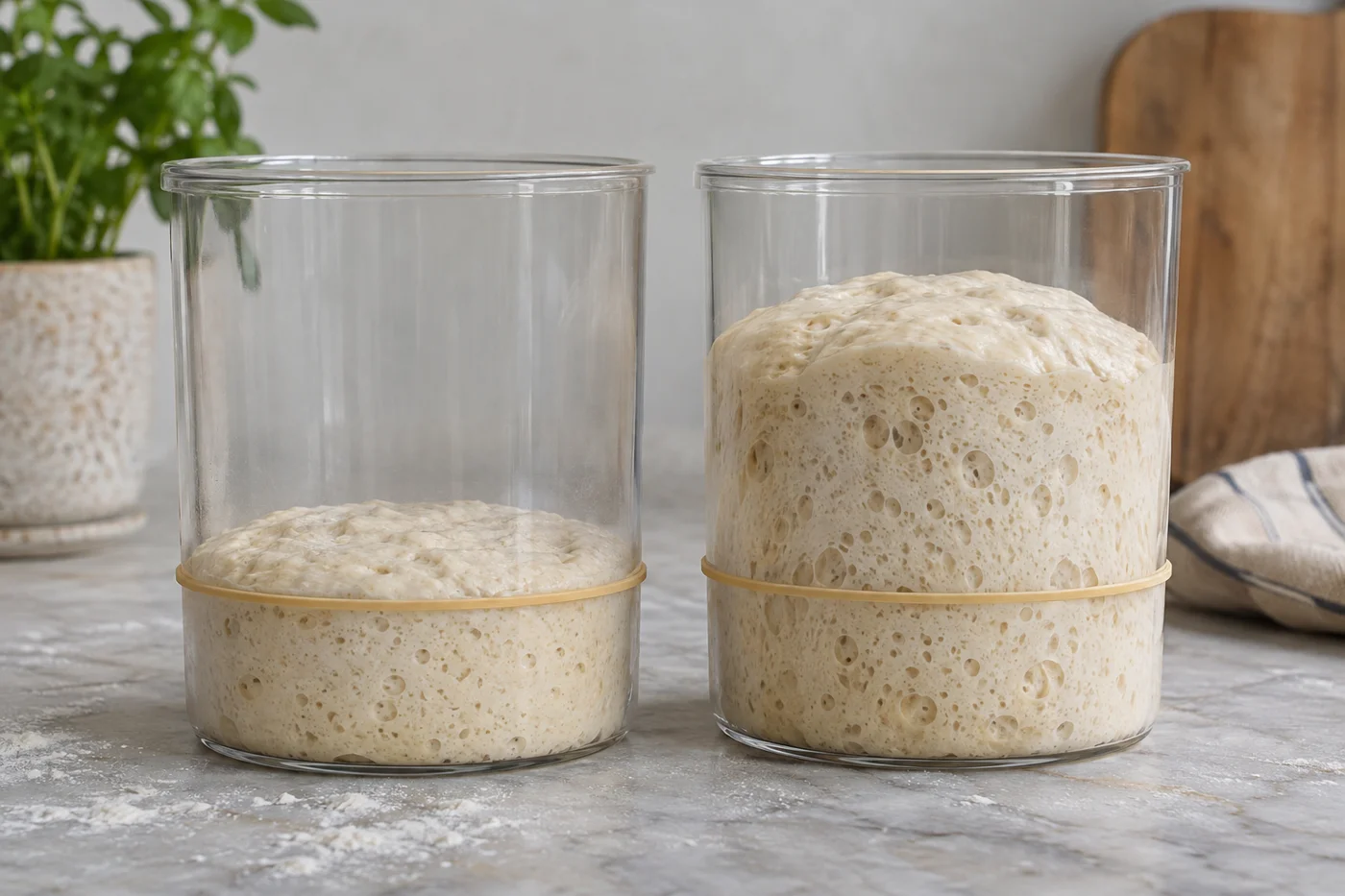
Proofing a whole-wheat loaf
A loaf ready for the oven should meet recipe-specific rise and poke-test cues. Whole wheat may not double in exactly the way a white-flour loaf does. If the dough spreads before baking, it may be overproofed, too wet or insufficiently strengthened. If it tears dramatically at the side, proofing or shaping may need adjustment. Use multiple observations rather than a single clock time.
Shaping for gas retention
Shape a whole-wheat sandwich loaf into a taut, even cylinder without crushing every gas pocket. A rustic boule needs surface tension but shouldn't be torn by aggressive pulling. Light dusting helps handling, while too much extra flour can create dry seams. Proper shaping can improve loaf height, but it cannot substitute for an appropriate water-to-flour ratio and developed structure.
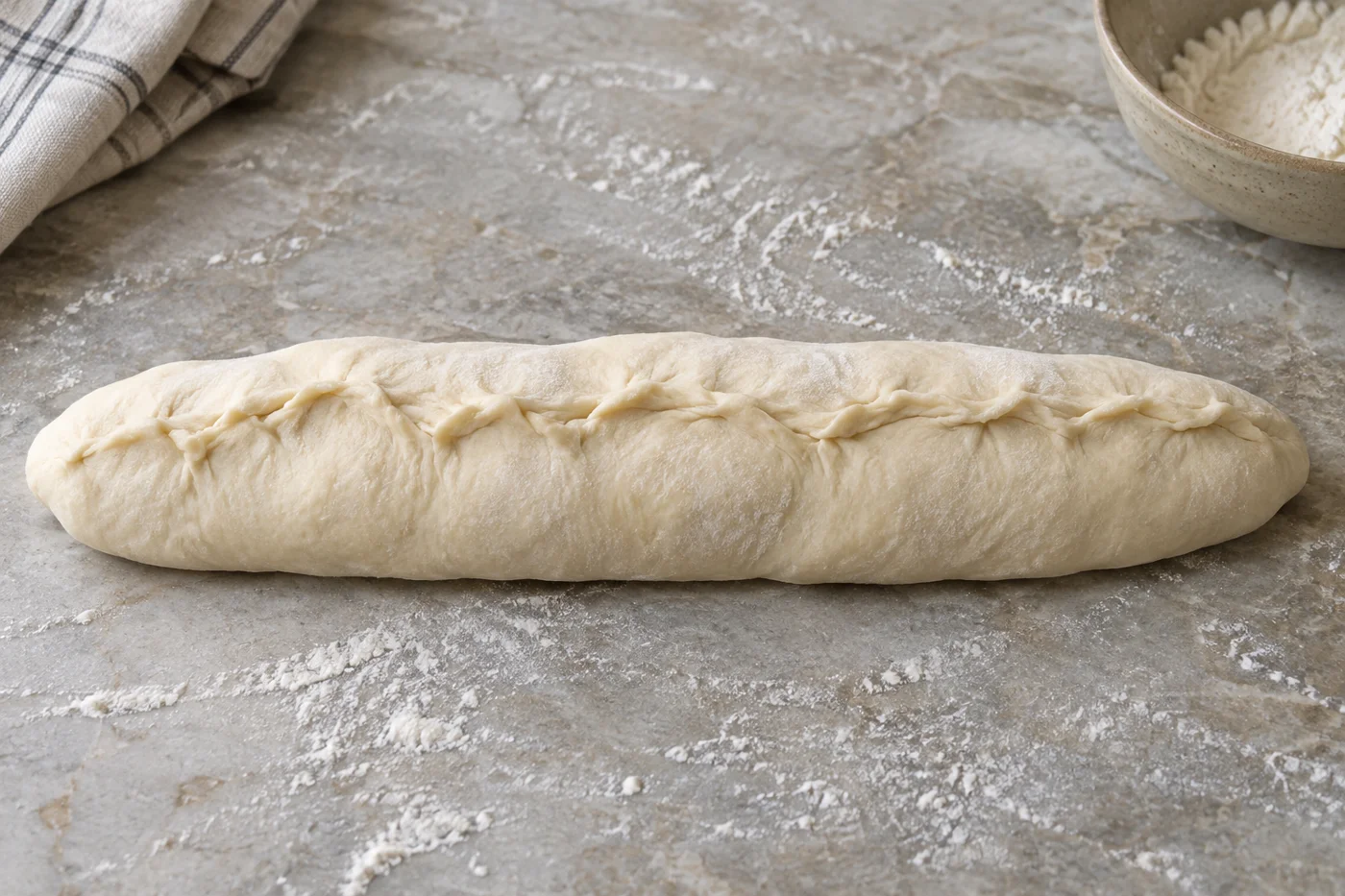
Baking until the centre is done
The crust may brown early because whole grain components and added sweeteners affect browning. Use recipe-specific doneness cues and an appropriate thermometer if recommended. A dark exterior with a sticky raw centre means the loaf may not be finished. Let bread cool sufficiently before slicing so starches set and the crumb stabilizes; cutting very hot bread can make it appear gummy.
How to make a softer crumb
For a sandwich-style loaf, look for recipes that use the right hydration, careful gluten development and perhaps a tangzhong, scald or appropriate fat. These methods modify water handling and tenderness. Adding random extra oil or honey is not guaranteed to fix a dry loaf and may shift fermentation and browning. Pick the texture target before changing the formula.
For a tender pull-apart example, follow the enrichment and portion sizes in Whole Wheat Dinner Rolls.

Storage of whole-grain bread
Whole-grain flavour compounds and oils can change over time, and bread stales regardless of whether it contains bran. Cool fully before wrapping and freeze portions you're unlikely to eat soon according to the recipe. Avoid refrigerating ordinary lean bread solely to keep it fresh, since cold storage may accelerate starch retrogradation; perishable fillings require different rules.
Troubleshooting a crumbly slice
Bread that falls apart may be underhydrated, underdeveloped, underfermented or sliced before cooling. Too much dry whole-grain material without sufficient water can also contribute. Check your flour weight and recipe design before increasing yeast. A slice that shatters after several days may simply be stale, requiring a different storage plan rather than a new dough formula.
With Whole Wheat Cinnamon Raisin Bread, distinguish a tear around a raisin from dryness throughout the slice.

A first whole-wheat experiment
Bake a reliable sandwich loaf using its intended whole wheat proportion, record water weight, dough feel after resting and proofing time, and slice only after cooling. On a second attempt, adjust one variable if needed. The goal is delicious dependable bread with recognizable grain flavour, not matching the volume of an unrelated white loaf at any cost.
IN PICTURES
From the baking notebook
FROM THE RECIPE BOX


