
On this page
Hand pies and turnovers are delightful because the filling arrives neatly inside a crisp pastry pocket. Unfortunately, wet fruit can bubble through the edge, cheese can spill onto the baking sheet, and pastry seams may pop open as steam builds. The solution is a combination of properly thickened filling, cold dough, clean contact surfaces and adequate venting. A decorative fork pattern alone cannot secure an overfilled pastry whose edges are coated in jam.
Why pastries burst
As pastry heats, water in the dough and filling turns to steam. The pocket expands, and pressure follows the weakest point if no deliberate vent is provided. An overfilled pastry leaves little room for expansion; a sticky wet seam doesn't bond well. Unevenly thick dough can also create thin weak areas. Think of the pastry as a small sealed envelope that needs both a strong join and a planned escape route for steam.
Choose dough made for folding
Rough puff, classic puff and certain pie doughs can all be used for turnovers, but they handle differently. Puff pastry needs clean cut layers and relatively cool butter to rise. A shortcrust hand pie may rely more on tenderness than lofty layers. Select a tested recipe whose dough can bend without cracking or stretching excessively. Very delicate tart dough may crumble when folded.
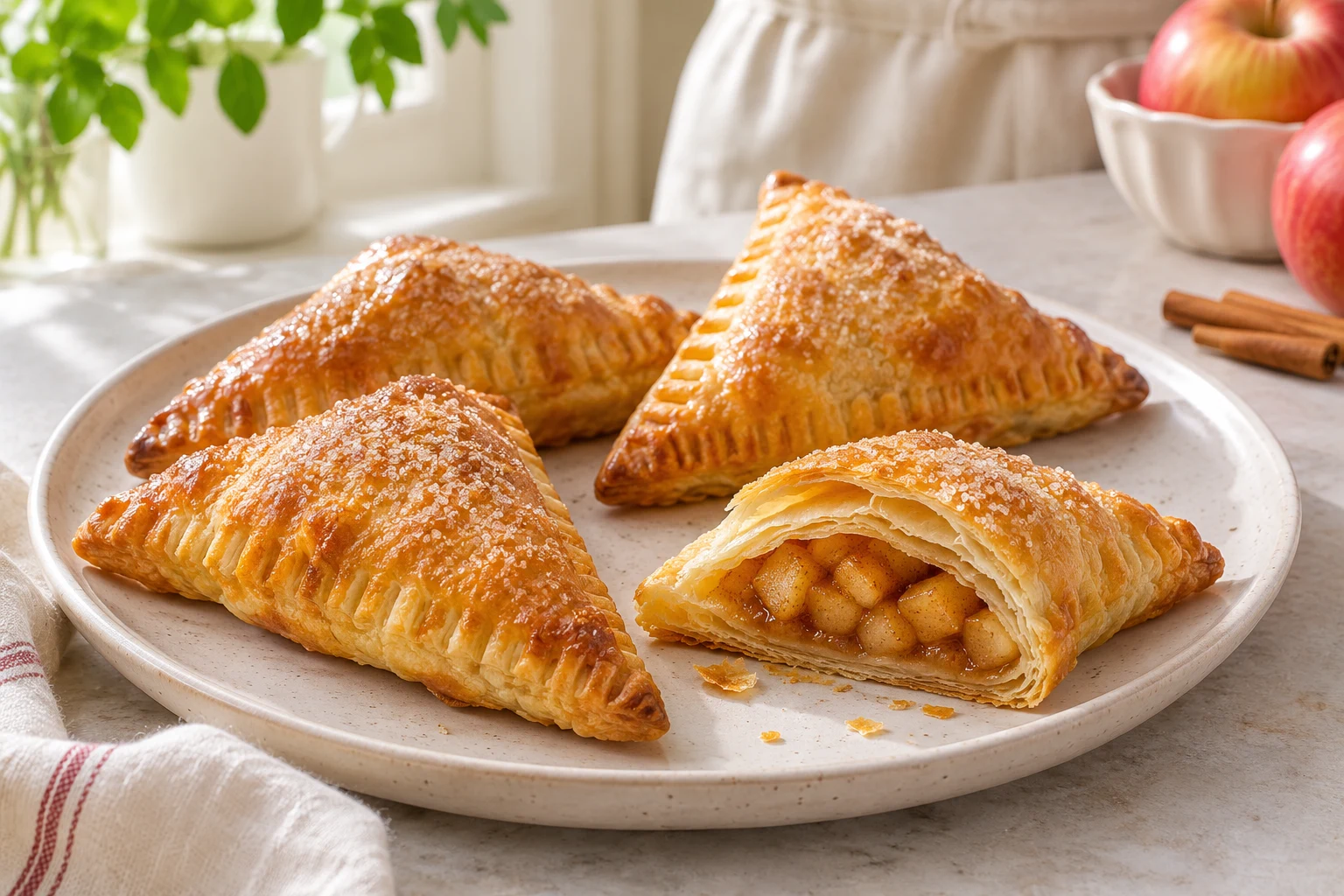
The square-to-triangle fold in Apple Turnovers gives you two straight edges to line up before you seal.
Keep fillings thick
Apple, berry or cherry filling must be thick enough to stay inside the pastry and cook at the recipe's intended rate. Precook fruit or use starch only where the formula specifies. Thin uncooked juice can reach the edge and prevent adhesion. For savoury turnovers, drain wet spinach or mushrooms and cool fillings before assembly. An overly hot filling melts the fat and softens the dough before sealing.
For Mushroom Hand Pies, look for liquid in the pan after cooking the mushrooms. Excess moisture makes a neat seam harder to keep.

Measure filling portions
Use a spoon or small scoop and follow the recipe's amount per pastry. A turnover should close without forcing the dough over a large mound. The desire for extra filling is understandable, but overflowing seams lose both food and presentation quality. If you have extra filling, reserve it for a separately cooked recipe rather than attempting to hide it inside the final pastry.
With Pear Ginger Hand Pies, watch how far the pear filling spreads when the first pastry is folded. Adjust the next portion if the rim gets wet.

Keep a clear border
Leave a strip of bare dough around the filling. The width depends on turnover size and the type of pastry, but the contact area should be enough to press together securely. Wipe away fruit juice or butter if it reaches the seam. Flour dusted heavily between dough layers can also weaken adhesion. Clean, unbroken dough edges make the most dependable seal.
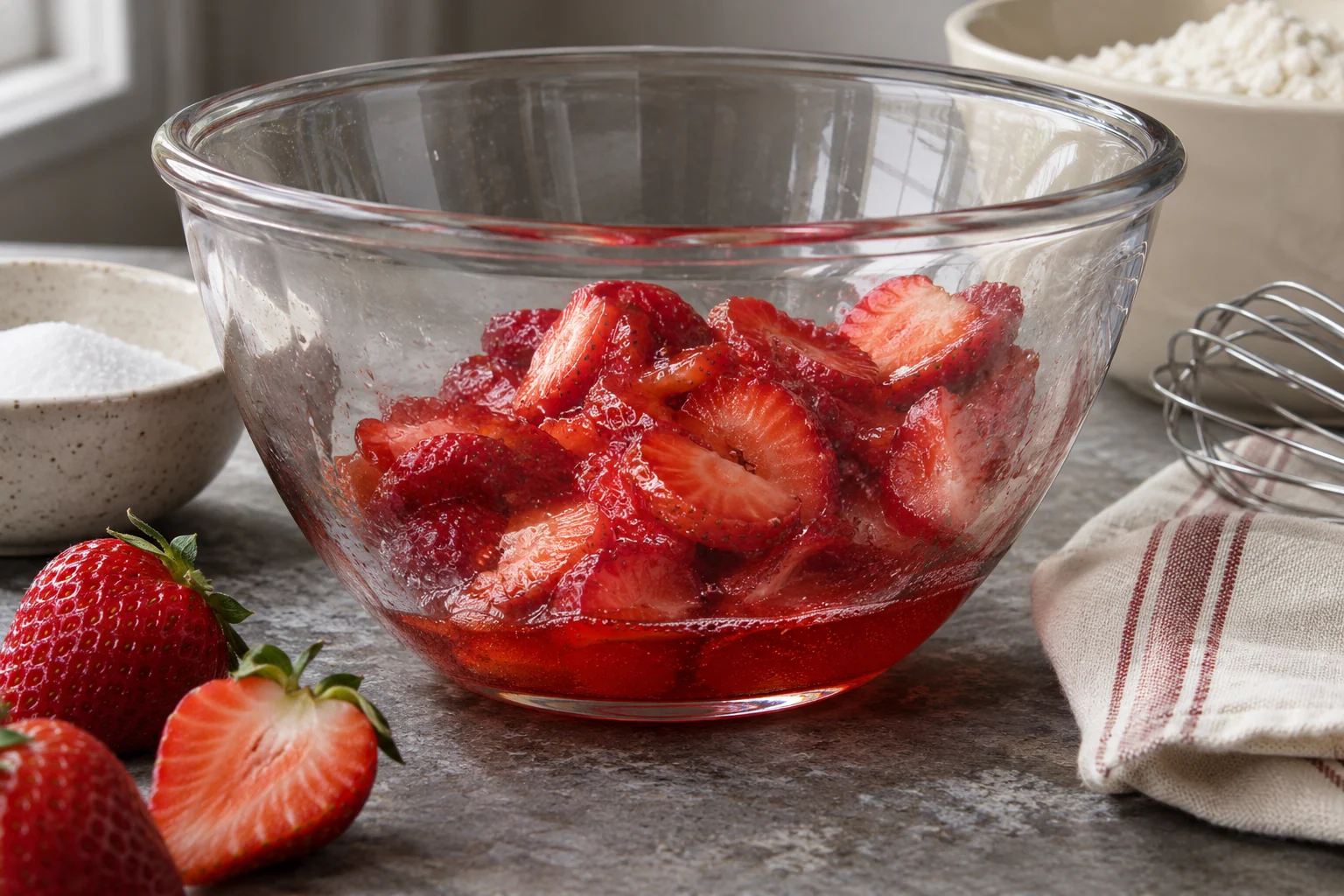
Keep a cloth nearby when assembling Strawberry Hand Pies. Removing even a small streak of berry juice gives the edges a better grip.

When water helps
Some pie and puff pastry methods call for a tiny amount of water brushed along the edge to help the dough bond. Apply only the amount prescribed—too much makes a slippery seam. With certain doughs, plain pressure and clean pastry work well without added liquid. Follow the recipe rather than assuming every pastry needs water and egg together.
Leave a clean border around each spoonful of filling. Brush the edge only as the recipe directs, fold the dough over and press the layers together before crimping.
When egg wash helps
A thin application of egg wash to the contact border may help selected hand-pie formulas. Avoid heavy pooling because it can run into the filling or glue laminated outer edges. Use only where the method specifies. Egg wash on top may improve colour, but it is separate from the seam-sealing function and should not be relied on to hold an overfilled pastry closed.
Press out excess trapped air
Large air pockets expand in the oven and may push open seams. As you fold pastry over the filling, gently guide air outward without pressing the filling through the dough. Work gradually from near the filling toward the edge. Don't flatten the pocket completely; a small amount of room for expansion and a steam vent remain important.

Fold without stretching
Pastry that's stretched tightly over filling may shrink during baking, pulling the seal apart. Choose a pastry square or circle large enough to cover the portion comfortably. Lift and lower dough rather than tugging until the corners meet. If it is brittle from excessive chilling, let it become suitably pliable before folding. If it is sticky and warm, return it to the refrigerator briefly.
If the lid on Apple Cheddar Hand Pies needs pulling to reach the far edge, lift it back up and reduce the filling.

Press the seam closed before crimping
Use the pads of your fingers to press the contacting edges together evenly before adding a decorative crimp. Concentrate on a continuous join with no gaps. Avoid cutting through pastry with fingernails. A good basic press is more important than an elaborate pattern, because the decorative stage cannot rescue poorly aligned dough sheets.
Fork-crimp technique
After pressing, use fork tines to make small even indentations around the border without puncturing through the filled area. Apply enough pressure to reinforce the seam but not so much that the edge becomes paper-thin and tears. If a fork sticks, wipe it clean. Keep a small margin of dough outside the filling so the tines don't burst the pocket.
A fork crimp on Blueberry Hand Pies works best after the edges have already been pressed together.

Fold-over crimp
For some hand pies, folding the raw edge over itself and crimping creates a reinforced border. This needs enough dough allowance and may result in a thicker edge that takes longer to bake. Use the folding pattern in the tested recipe. A rolled rope-like border can look rustic, but uneven thickness may bake poorly if one side becomes a large doughy lump.
Why venting matters
One or more small slits let steam escape without forcing a seam to burst. The exact location and size depend on the pastry and filling; some very small pastries need a different approach. Use a suitable sharp tool under adult control and cut cleanly through the top without slicing open the bottom. A vent isn't a license to overfill or use a runny filling.
The vents in Cranberry Orange Hand Pies give the bubbling fruit somewhere to release steam.

Cold pastry helps hold shape
Chilling assembled turnovers can firm the fat and seams before baking where the recipe specifies. Warm pastry may slump or leak before it begins to set. But an extremely cold or frozen filling changes baking time. Follow the recipe's temperature and rest guidance; don't put an unapproved frozen glass dish onto a hot baking surface.

Cut puff pastry cleanly
A dull blade may compress the laminated layers, restricting lift at cut edges. A sharp straight cut preserves clearer separation and reduces jagged seams. Avoid coating cut sides heavily with egg wash. The outer crust should have room to puff even while the pressed border remains securely attached.
How baking temperature affects leaks
A fully preheated oven helps pastry set and lift according to the recipe. An oven that's too cool can let butter melt and filling warm slowly before the edges establish structure. An excessively hot oven may brown pastry before the filling cooks. Follow the original temperature schedule and check both pastry colour and the recipe's filling endpoint.
Savoury filling food safety
Turnovers with meat, eggs or certain dairy fillings need complete cooking and appropriate cold storage after baking. Use a tested recipe with safe cooking instructions rather than relying on golden pastry alone. A chicken filling should be fully cooked at the proper stage. Keep raw fillings away from ready-to-eat pastry work surfaces to prevent cross-contamination.
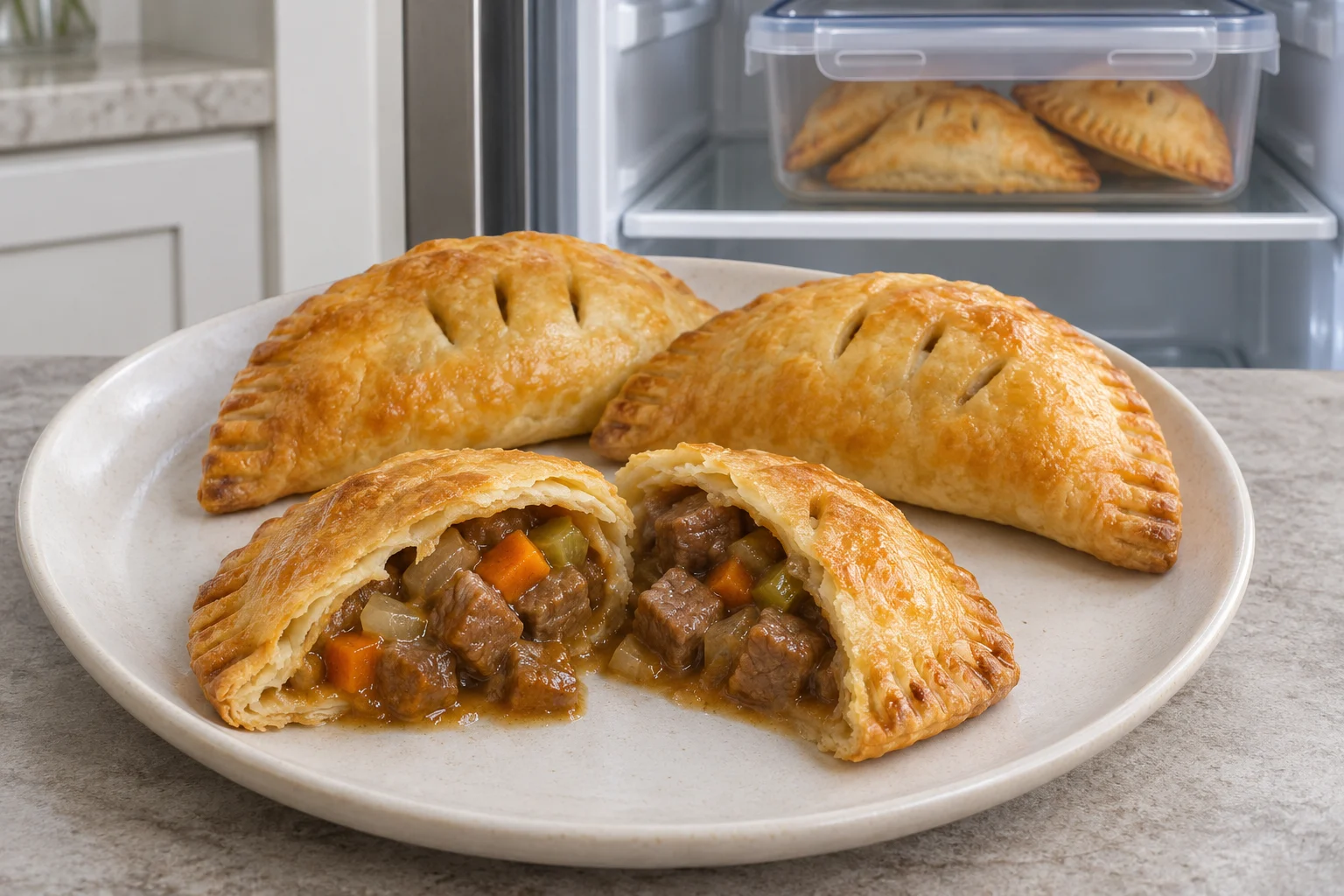
With Beef Hand Pies, use the recipe’s handling and cooking directions for the beef as well as the visual cues for the crust.
Fruit filling troubleshooting
If jam or berry sauce bubbles through the seam, review filling thickness, portion size, seal cleanliness and venting. If fruit pieces puncture the top, cut them more uniformly next time. A small leak doesn't always ruin the pastry, but burned syrup on the pan can create bitter edges. Use parchment or another suitable liner to simplify cleanup without blocking bottom heat.
For Cherry Hand Pies, lift fruit with a spoon and check how quickly juice runs away from it before filling the dough.
What to do when edges pop open
Notice whether the opening occurred along the full side, at a corner or beside a vent. A full-side split suggests poor adhesion or excessive pressure; a corner may have insufficient overlap. A rupture beside a steam vent can reflect very wet filling or a weak thin area. Record the cause and adjust one variable rather than using more wash everywhere.

Preparing turnovers ahead
Some tested recipes permit refrigerating assembled raw turnovers briefly or freezing them unbaked. Follow the method's packaging and baking instructions; a frozen filling may require longer cooking. Prepare perishable ingredients safely and don't leave raw meat or dairy pastry filling on the counter during a lengthy party. A staged workflow can reduce last-minute folding pressure.
IN PICTURES
From the baking notebook
FROM THE RECIPE BOX


