
On this page
Pastry rolled thick at the centre and thin at the edges will not bake evenly. The thin parts may scorch or leak while the centre stays doughy. A uniform thickness helps puff pastry rise consistently, tart shells hold their shape and hand pies seal without weak spots. Achieving it is less about enormous rolling force and more about dough temperature, surface preparation, frequent rotation and deliberate measurement.
Choose the recipe's target
Pie crust, rough puff, biscuits and sugar cookies use different thicknesses. A number that suits a cutout cookie may be too thin for a juicy fruit pie or too thick for a delicate tart shell. Follow the recipe's stated measurement. If none is given, use a reliable published formula before improvising. A universal one-eighth-inch target cannot suit every pastry style.
Start with even dough shape
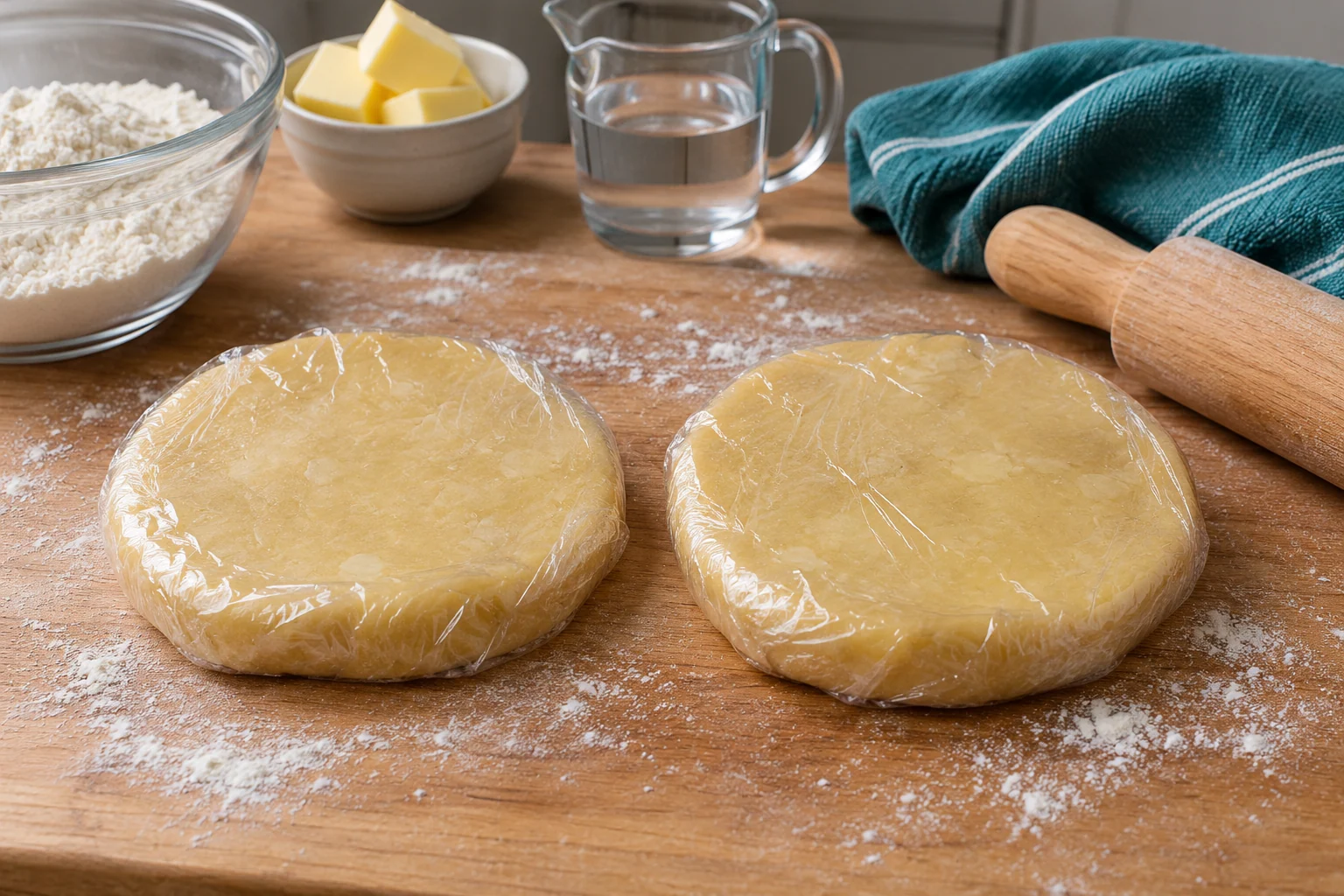
Form mixed pastry into a flat disk for round pies or a rectangle for folding before chilling. An irregular ball needs heavy rolling pressure and often develops thin corners. Press gently into shape without kneading all fat into the flour. The starting shape sets the direction of rolling and makes a uniform final sheet more likely.
Control dough temperature
Very cold dough may crack before it can stretch, while overly warm dough becomes sticky or greasy. Let chilled dough become pliable according to the method and return it to refrigeration if butter softens. A slightly cool flexible dough is easier to roll smoothly than a frozen block or a warm smear. Keep other dough portions cold while one is on the counter.
Use a clean smooth surface
A stable countertop or food-safe pastry mat lets you rotate dough and feel sticking. Dust lightly with flour and keep a scraper nearby. Rough wooden boards or cluttered surfaces can snag pastry. Parchment may help for some doughs but can slide around unless secured. Choose a method you can control rather than the most specialized equipment.
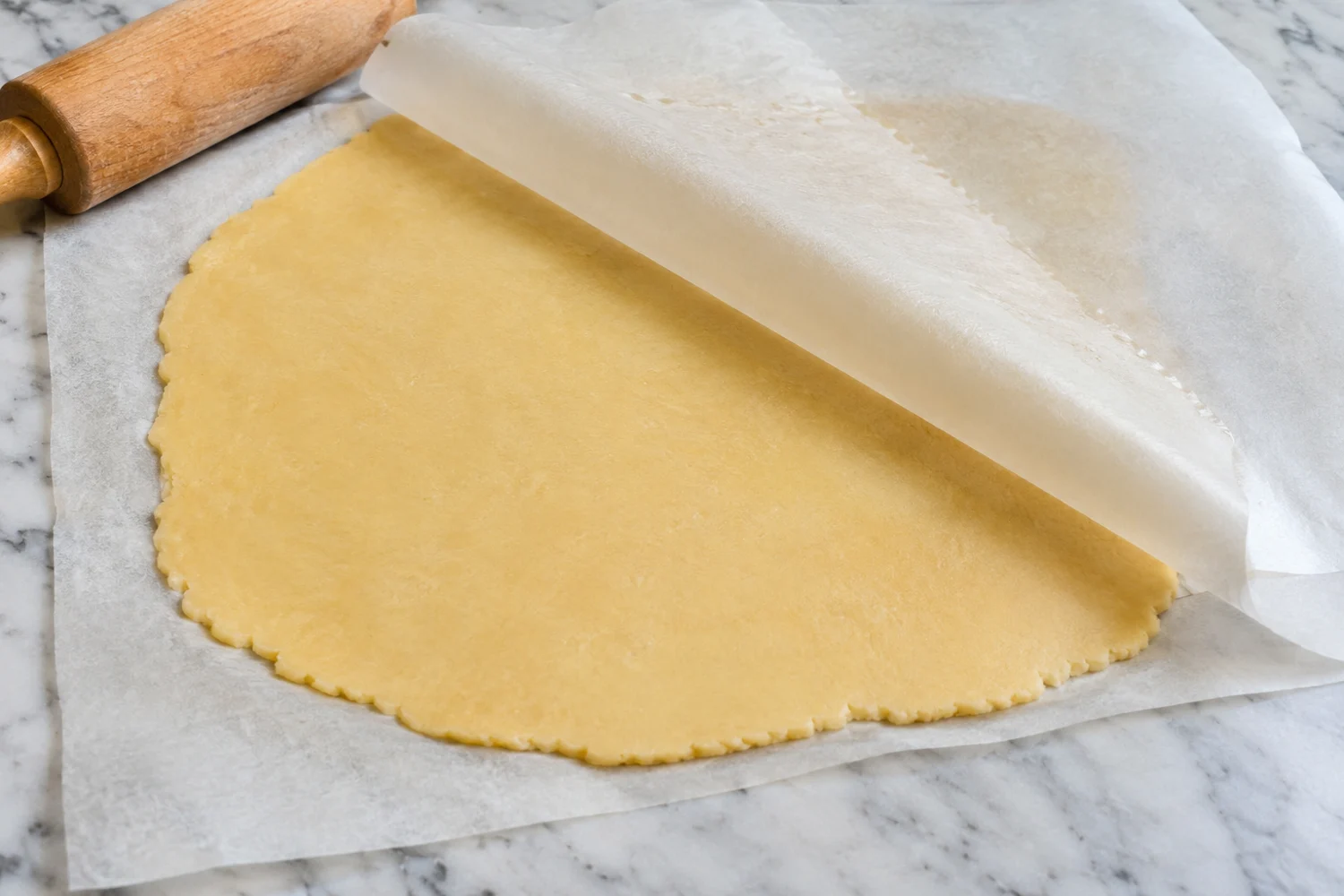
Before cutting Strawberry Hand Pies, loosen the sheet from the surface so the circles lift without stretching.
Flour sparingly
Dust enough flour to prevent sticking, then remove excess before folding or transferring. Heavy bench flour changes the dough's surface hydration and can make edges dry or prevent seams from bonding. If a dough repeatedly sticks, check its temperature before adding more flour. Overly soft butter may be the main cause.

Roll from the centre outward
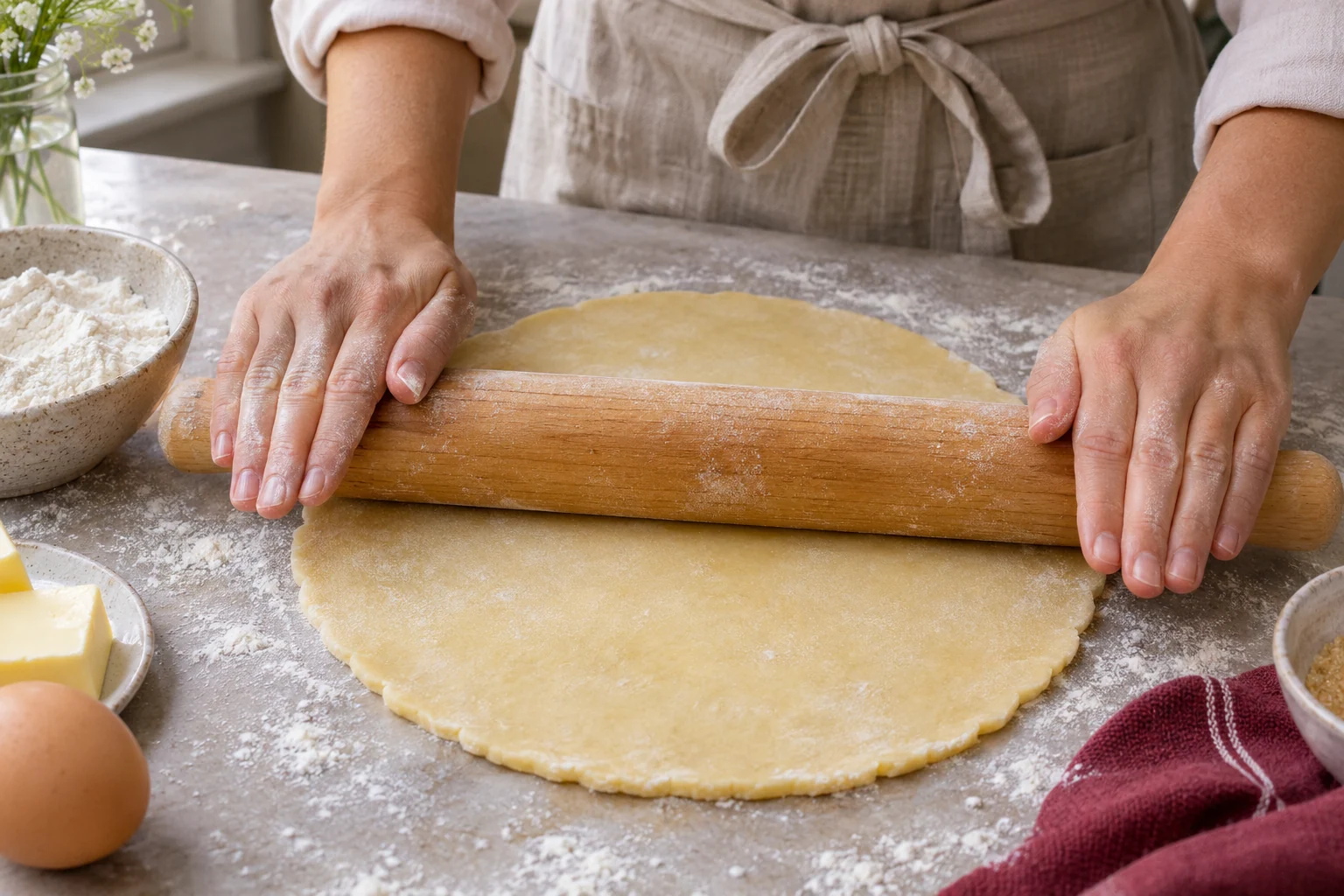
Use even strokes from the centre toward the perimeter without pressing aggressively over the outermost edge. Rotate the dough a little after several strokes to maintain its shape. Rolling only in one direction may produce a long thin tongue with thick ends. The pressure should be firm enough to move dough, not so hard that butter breaks through the surface.
For Berry Galette, roll towards several points around the rim. The folded border stays more even when no wedge is paper-thin.
Quarter-turn technique
After each short series of rolls, lift or rotate the sheet roughly a quarter-turn if the recipe allows. This reveals whether the dough is stuck and distributes pressure across directions. If it clings to the worktop, loosen carefully with a bench scraper rather than tearing it upward. Rotation is especially useful for round pie crusts.

Check the middle as well as the edges
A ruler, food-safe thickness guide or rolling-pin rings can provide a helpful reference. Measure centre, near the edges and the corners of rectangles. Do not rely solely on the rolling pin being level, because the work surface and dough may be uneven. A visibly thicker patch can be gently rolled from that region toward the surrounding area.
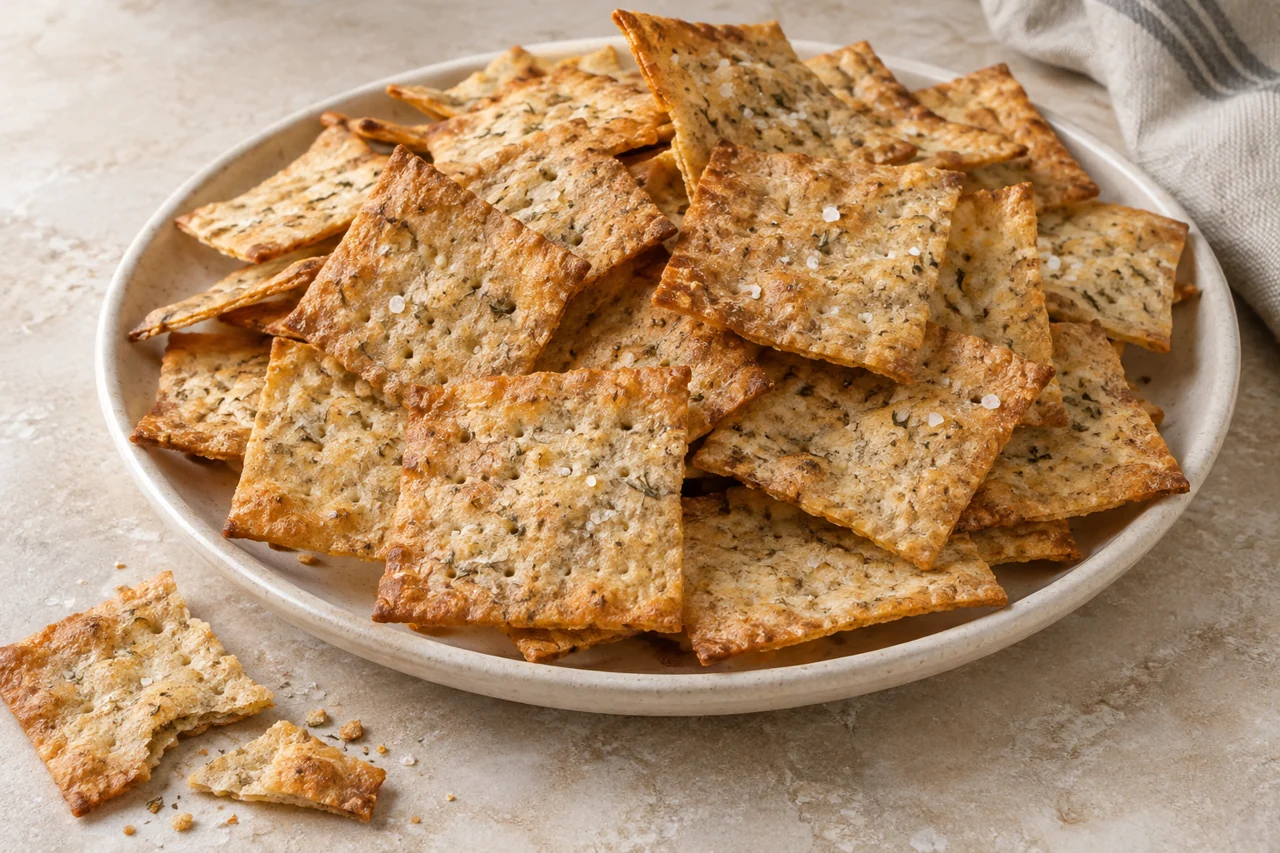
Roll a sheet for Sourdough Crackers and compare thickness at the edges with the centre before making the first cuts.
Rolling-pin guides: useful, not mandatory
Rings attached to the pin or parallel spacer rods help maintain a minimum gap, especially for cookie or tart dough. They work best when the guides rest on a flat surface and the dough is broad enough. A thick middle may still need a few targeted passes. Guides are a consistency tool, not a substitute for rotating dough and managing butter temperature.
For rolled sandwich cookies, matching the thickness makes it easier to pair the baked rounds. Try the dough in Sugar Cookie with Buttercream Sandwich Cookies.
Prevent thin edges
Repeatedly pushing the rolling pin off the outer perimeter compresses edges more than the centre. Stop each stroke before the pin slides completely over the edge, then rotate. If edges grow too thin, aim pressure at the thicker centre rather than trimming away all thin dough. This matters for pie crusts because a thin rim can burn while the base remains pale.
Roll rectangles for laminated pastry
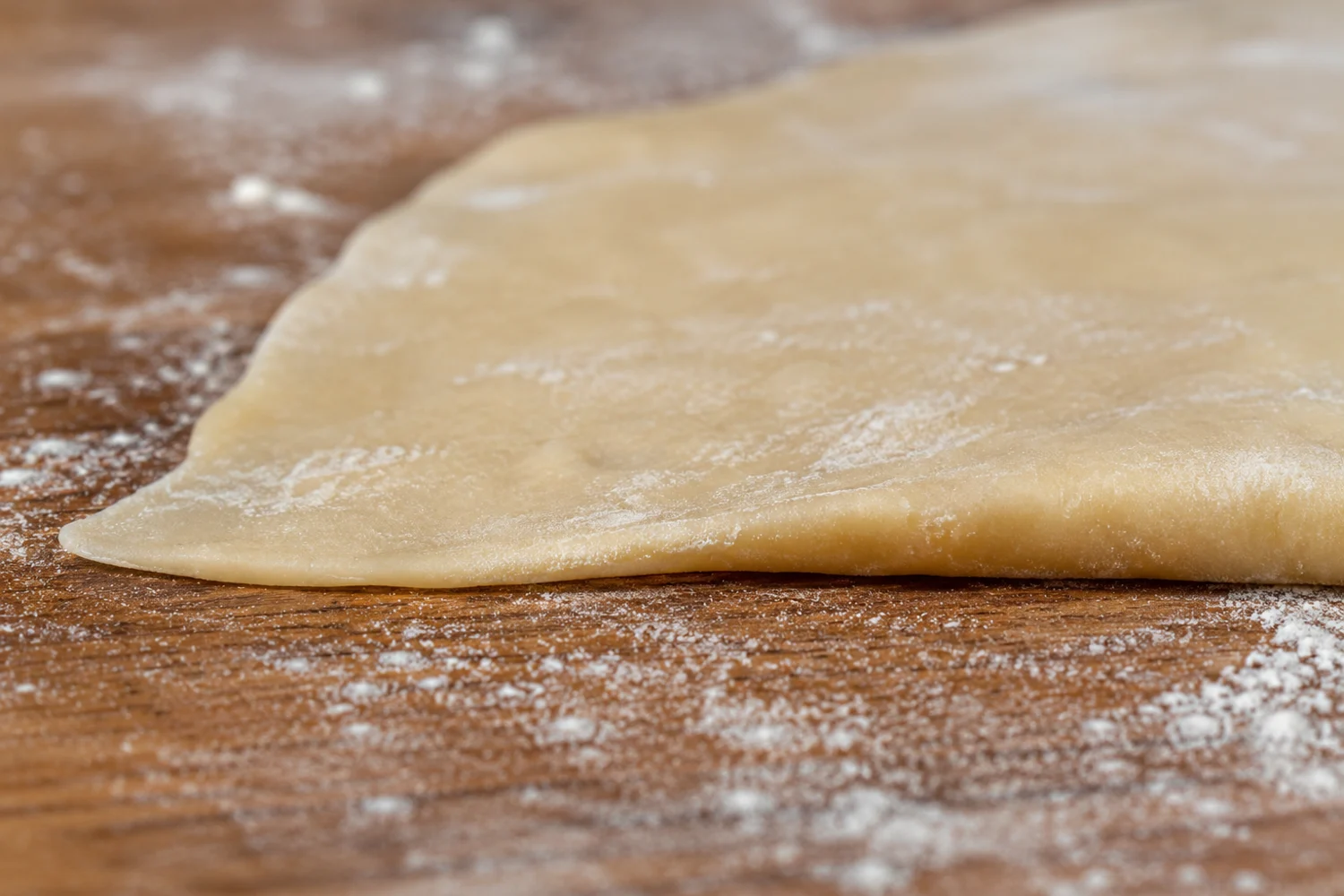
Rough puff and classic puff require rolling toward specified rectangle dimensions before folding. Keep edges reasonably straight with gentle corrections; aggressively pulling corners stretches gluten and can tear butter layers. Measure the long and short sides rather than eyeballing a very elongated sheet. A rectangle that folds neatly often performs better than an oversize irregular one.
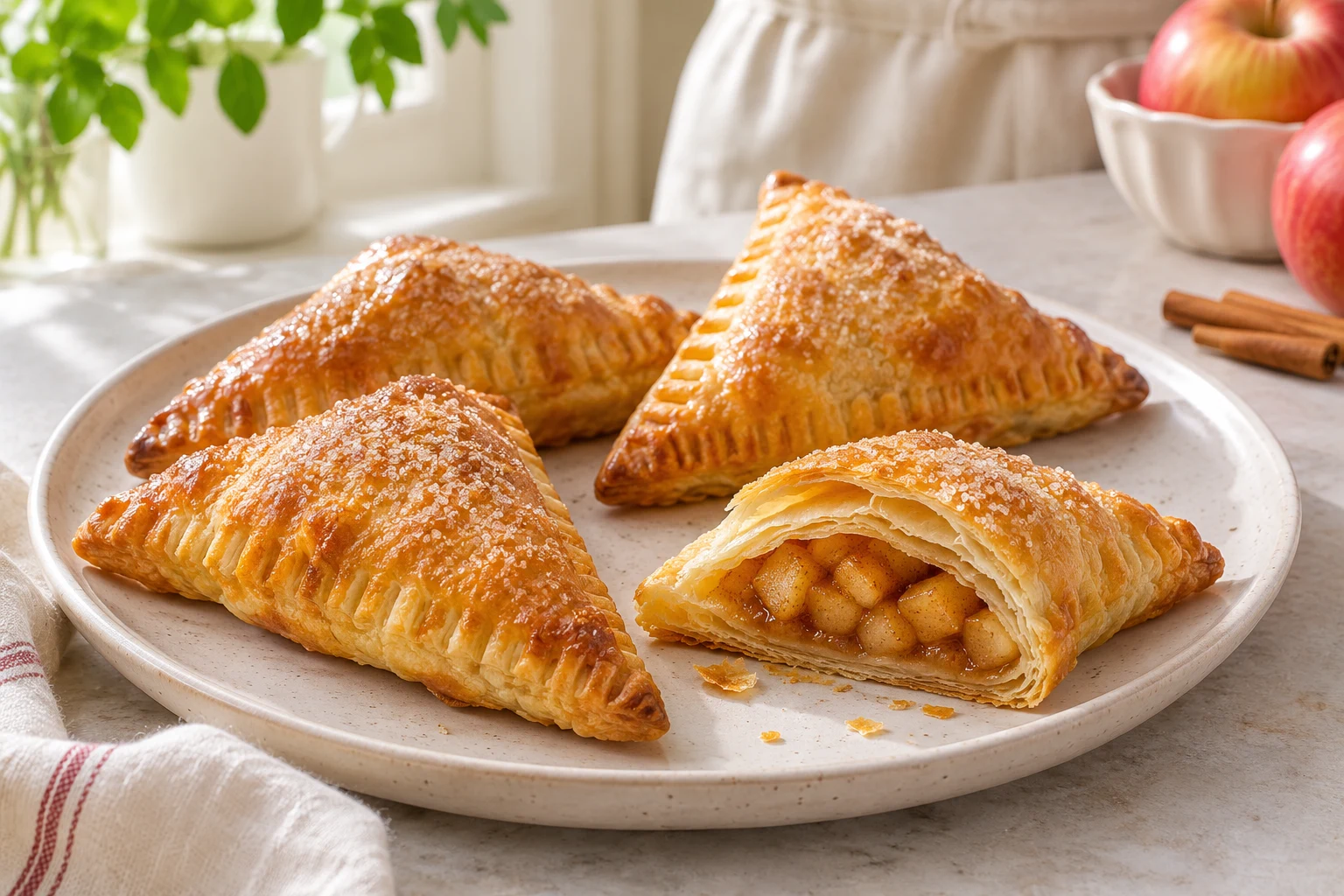
For Apple Turnovers, roll towards the corners of the rectangle so the final squares are of similar thickness.
Why puff pastry resists rolling
Gluten develops as dough is mixed and stretched. If it hasn't relaxed, a sheet may spring back as soon as you roll it. Stop, wrap and chill for the recipe's resting interval. Forcing resistant dough thinner can rupture the butter layers and produce uneven rise. This is especially important during repeated laminating turns.
With Classic Croissants, if the sheet shrinks back as soon as the pin passes, rest it as directed before trying to extend it.

Rolling pie dough for a pan
The sheet must be larger than the interior of the pie pan, leaving enough to reach the base, sides and a crimpable edge. Measure diameter plus depth and overhang using the recipe's guidance. Don't stretch it to reach; lift and gently lower it into the pan. Stretched pastry may shrink in the oven and expose part of the filling.
For Classic Apple Pie, allow dough for the sides and overhang as well as the diameter of the plate.
How to use parchment
Rolling between sheets of parchment can reduce bench flour and help transfer fragile dough, particularly some cookie and tart formulas. Remove a sheet carefully if it sticks, and chill dough briefly rather than peeling warm pastry apart forcefully. Not every laminated pastry method works well entirely between paper, so follow the recipe. Avoid baking on non-oven-rated wraps.
Handle tears gently
Small cracks can be pressed together using a modest matching patch. Avoid kneading the entire sheet again, which can toughen it and smear butter. For large rips during lamination, chill and follow a recipe-specific repair rather than adding random water. A slightly imperfect outer edge can be trimmed later, but a thin hole under wet pie filling should be repaired before baking.
Transfer without stretching
Lift the pastry on a rolling pin, scraper or parchment as the method permits. Support the weight evenly instead of grabbing one corner. For a tart shell, ease the dough down into sharp corners and let it sit without tension. For a turnover, cut even squares first so filling amounts and seals can be consistent.
When lining the pan for Classic Fruit Tart, lower the dough into the corners before trimming the rim.

How thickness affects bake time
Thicker pastry may take longer to cook through; thinner sheets brown faster and can dry out. If a recipe specifically uses a given thickness, adjusting it can make the stated oven time unreliable. A pastry browned on top but still soft inside may be too thick, underbaked or affected by wet filling. Diagnose thickness alongside oven temperature and pan material.
Rolling for cutout cookies
Uniform cookie sheets produce more consistent baking times and a neater set of shapes. Chill the sheet as directed before cutting when dough becomes soft, and keep small scraps from being repeatedly kneaded. A thick cookie and a delicate thin biscuit need different bake cues even when cut with the same cutter.
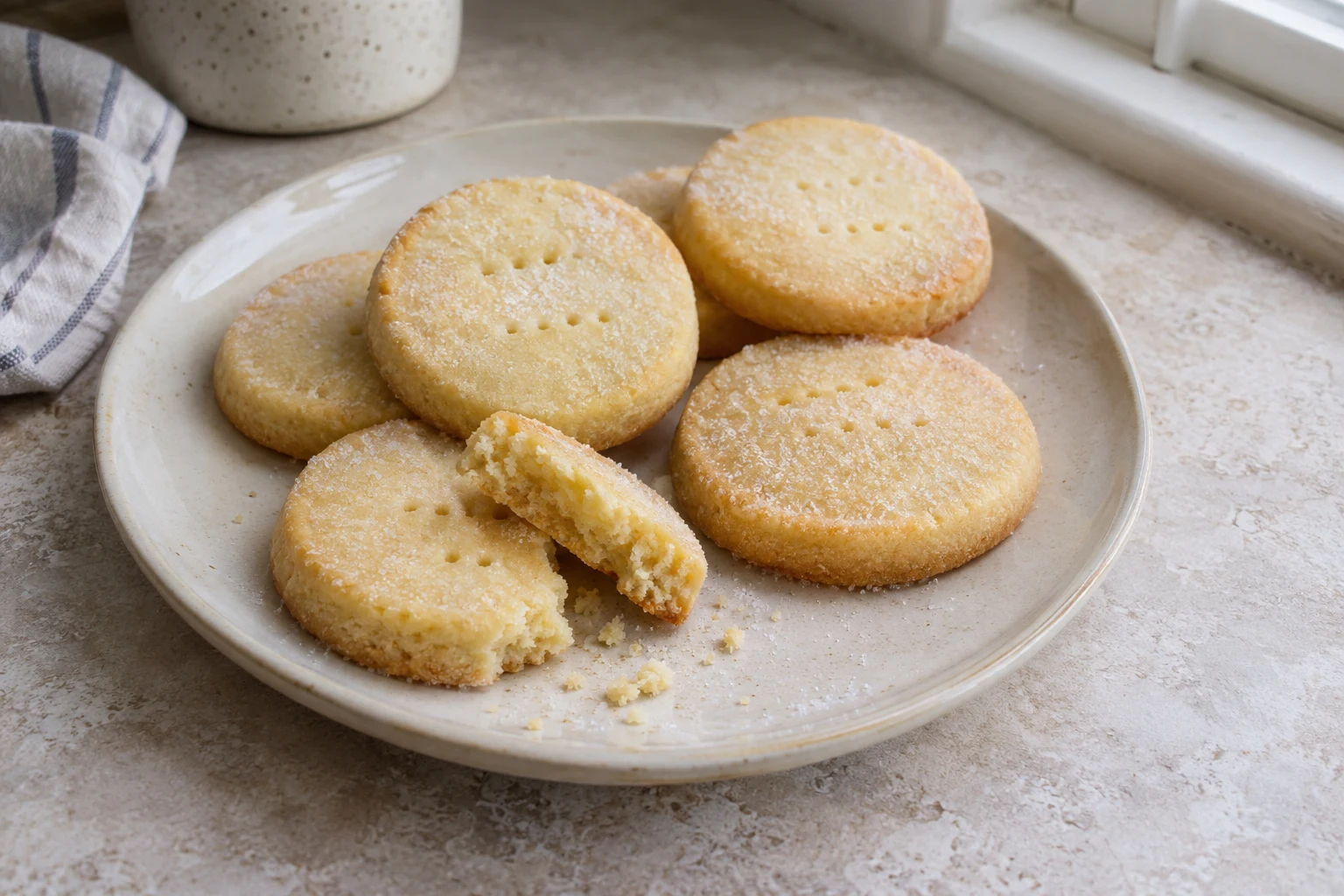
Cut a row of Vegan Shortbread Cookies from the centre and the edge of the same sheet. Matching thickness helps them colour at a similar rate.
Rolling for hand pies
Even square or round pieces help filling cook at the same rate and ensure the seam has enough dough to hold. Roll to the recipe's thickness, not paper-thin. A weak thin spot under a juicy apple filling may leak even when the rest is well-crimped. Keep the pastry cool while cutting, filling and folding.
The matching rounds for Apple Hand Pies are a useful test. Stack two briefly and feel whether one edge is noticeably thicker.

Troubleshooting an oval pie crust
An oval shape often results from repeatedly rolling in one direction. Rotate the sheet and work gently from the centre in multiple directions. You don't need a geometrically perfect circle, but avoid stretching one narrow edge to fill the pan. A brief rest can reduce spring-back.

Troubleshooting shrinkage
A dough that was stretched, rolled aggressively or insufficiently rested may retract during baking. Ease it into the pan, allow prescribed chilling and avoid pulling it taut during transfer. Extra flour and repeated kneading may increase toughness rather than prevent shrinkage. Pan preparation and weights during blind baking also matter.
IN PICTURES
From the baking notebook
FROM THE RECIPE BOX


