
On this page
A bowl of pie dough can look like loose rubble a moment before it is ready. Pick up a handful from the middle, including both butter and floury crumbs, and squeeze gently. If it holds together and breaks cleanly when bent, pause before pouring in any more water.
Why pie dough needs any water
Water hydrates wheat flour proteins and starches, allowing the pieces to join into a workable mass. Without enough moisture, flour may remain loose even with abundant butter. With excessive moisture and mixing, gluten develops and can make a pastry tough or prone to shrinking. The goal is just enough water for cohesion while preserving distinct pieces of cold fat that help create flakiness during baking.
Why recipes give a range
Flour brand, how the flour was measured, the fat and the way you cut it in all affect how much water a dough needs. Measure the amount or range specified into a small jug. Begin with the lower amount when the recipe gives a range, keeping the remainder available.
Look at the stated water and how it is added for Pear Ginger Pie before deciding how much to pour.
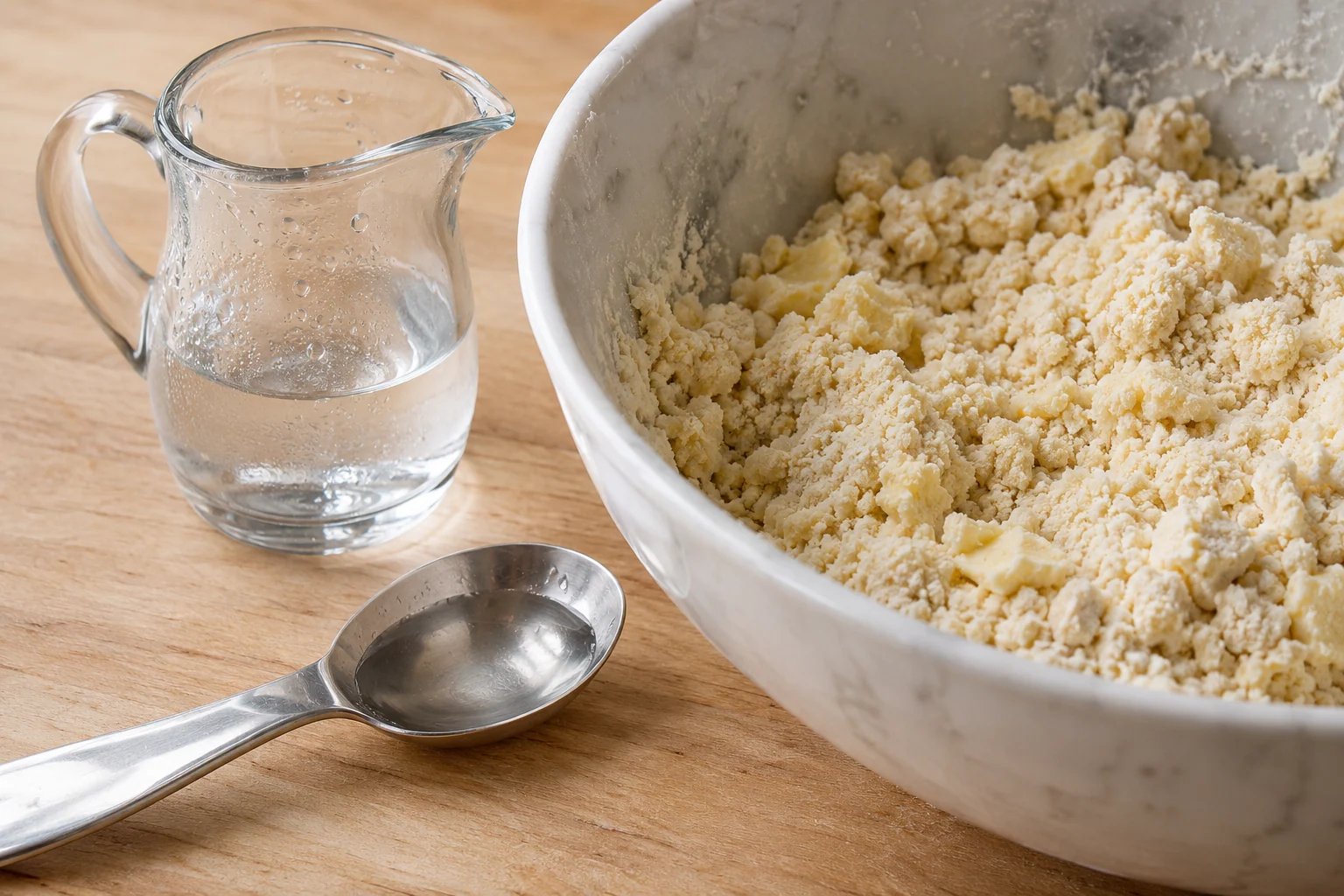
Begin by weighing the flour
Accurate flour measurement makes the water decision much easier. If you scoop a tightly packed cup from a bag, you may unintentionally use more flour than the author expected and need extra water. Weigh grams when given, and use the specified all-purpose or pastry flour. Don't replace flour types casually; their protein and absorption differences can change how quickly the dough holds together.
Weigh the flour in Classic Apple Pie first. A heavy cup can turn its measured water into what feels like an inadequate amount.

Use cold water when specified
Cold water helps limit warming of the butter or other solid fat as the dough is mixed. Some bakers chill water with ice, then measure only the actual water used rather than adding floating ice pieces. The purpose is maintaining a workable cool dough, not shocking flour with freezing temperatures. Follow the recipe's directions; cold ingredients cannot compensate for prolonged vigorous mixing.
Add water gradually
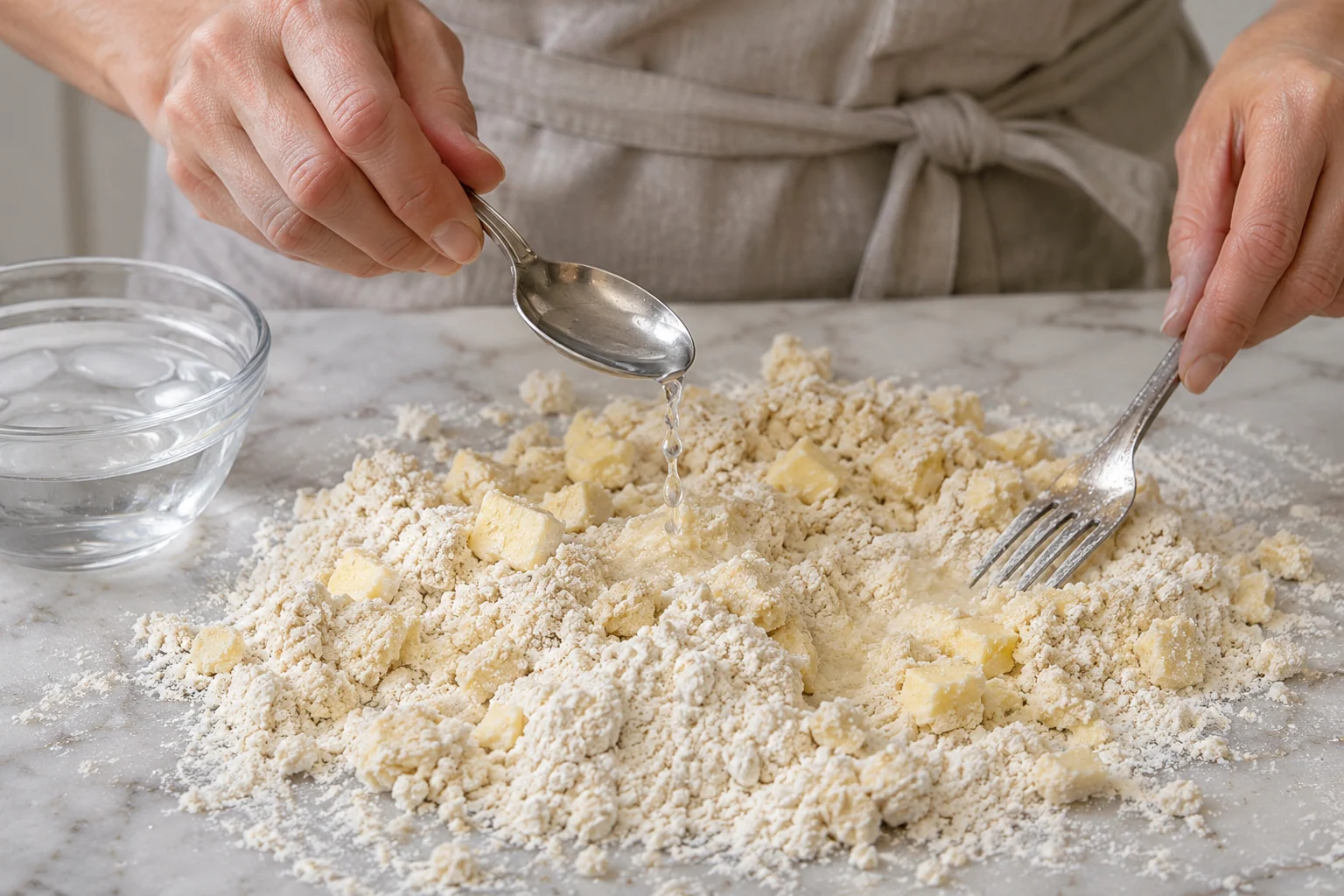
Drizzle over a broad area and toss the crumbs up from the bottom with a fork or your fingertips. Take a second sample before adding more. This catches the common case of a wet patch on one side and untouched flour on the other.
Add water to the dough for Apple Hand Pies in small increments and turn the dry crumbs up from the bottom between additions.
The squeeze test
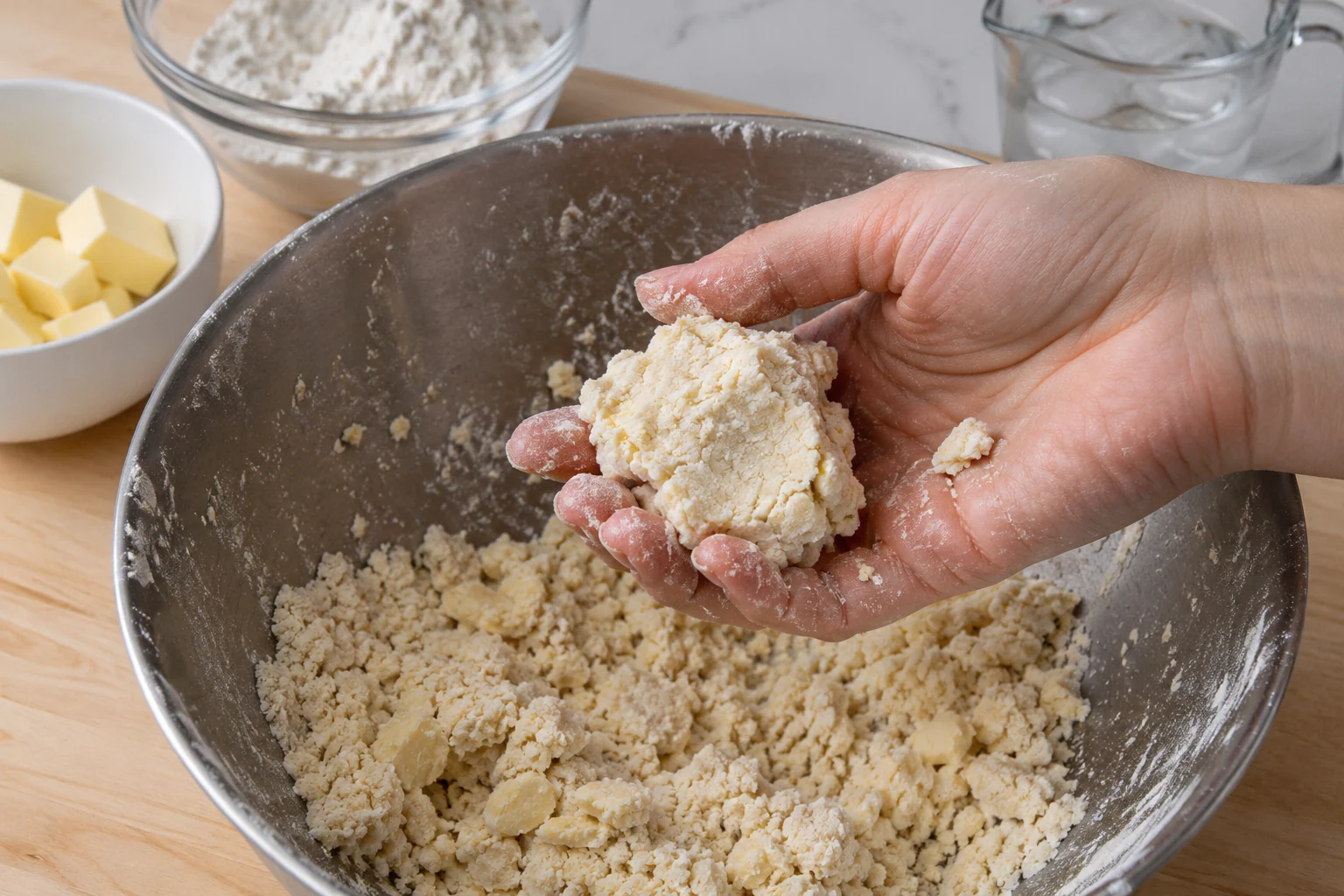
A handful should hold under light pressure without feeling slick or leaving wet paste on your fingers. Break it open. If it separates into a few rough pieces, gather the bowl gently. If it falls straight back into dusty grains, add a small measured splash and check again.
Squeeze a representative handful of dough for Blueberry Lemon Hand Pies. A piece taken only from the wettest corner gives a misleading result.
What 'shaggy' means
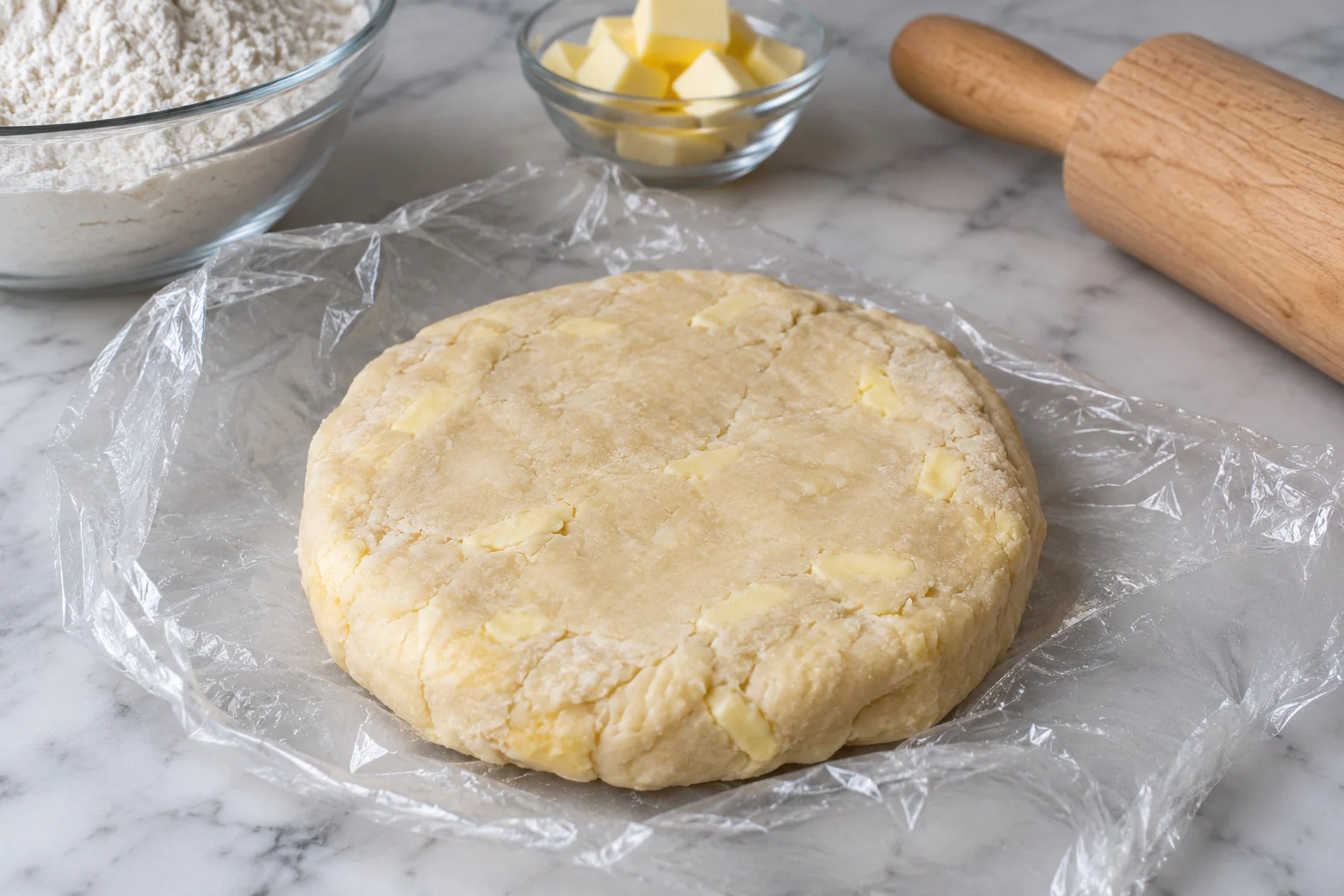
A correctly hydrated pie dough may look rough and uneven rather than smooth like bread dough. Small dry-looking crumbs can join when gathered gently, especially after resting. Trying to knead until no cracks or specks remain may overdevelop gluten and smear fat. The goal is a mass that coheres with modest pressure, not a perfectly elastic ball.
Compare the crumbly mass for Blueberry Pie before gathering with the smooth sheet you roll after chilling.

Why large chunks of butter are intentional
Cold butter pieces can remain visible after mixing and rolling, producing flaky layers as water inside the butter turns to steam. If you mix until fat completely disappears, the dough may become more uniformly sandy and less flaky. Some recipes aim for a combination of pea-sized and flatter pieces; others use a finer meal-like texture. Follow the formula, since fat particle size changes the amount of water the flour appears to need.
Check the butter pieces in Cherry Pie before adding more water. A visible piece of solid butter is part of the intended dough.

Butter versus shortening affects hydration
Butter brings some water of its own, while conventional shortening is mostly or entirely fat. That difference affects the dough, but it cannot tell you how many spoonfuls to add. Use the quantities and the handling cues for the particular fat and flour in front of you.
The role of vinegar or vodka
Some pastry formulas replace a portion of water with vinegar, vodka or other liquids for particular texture goals. They are not universal secrets, and alcohol-containing doughs may be inappropriate for certain households. The total hydration and mixing process still matter. If a recipe specifies an alternative liquid, follow the exact amount rather than adding it on top of the full water quantity.
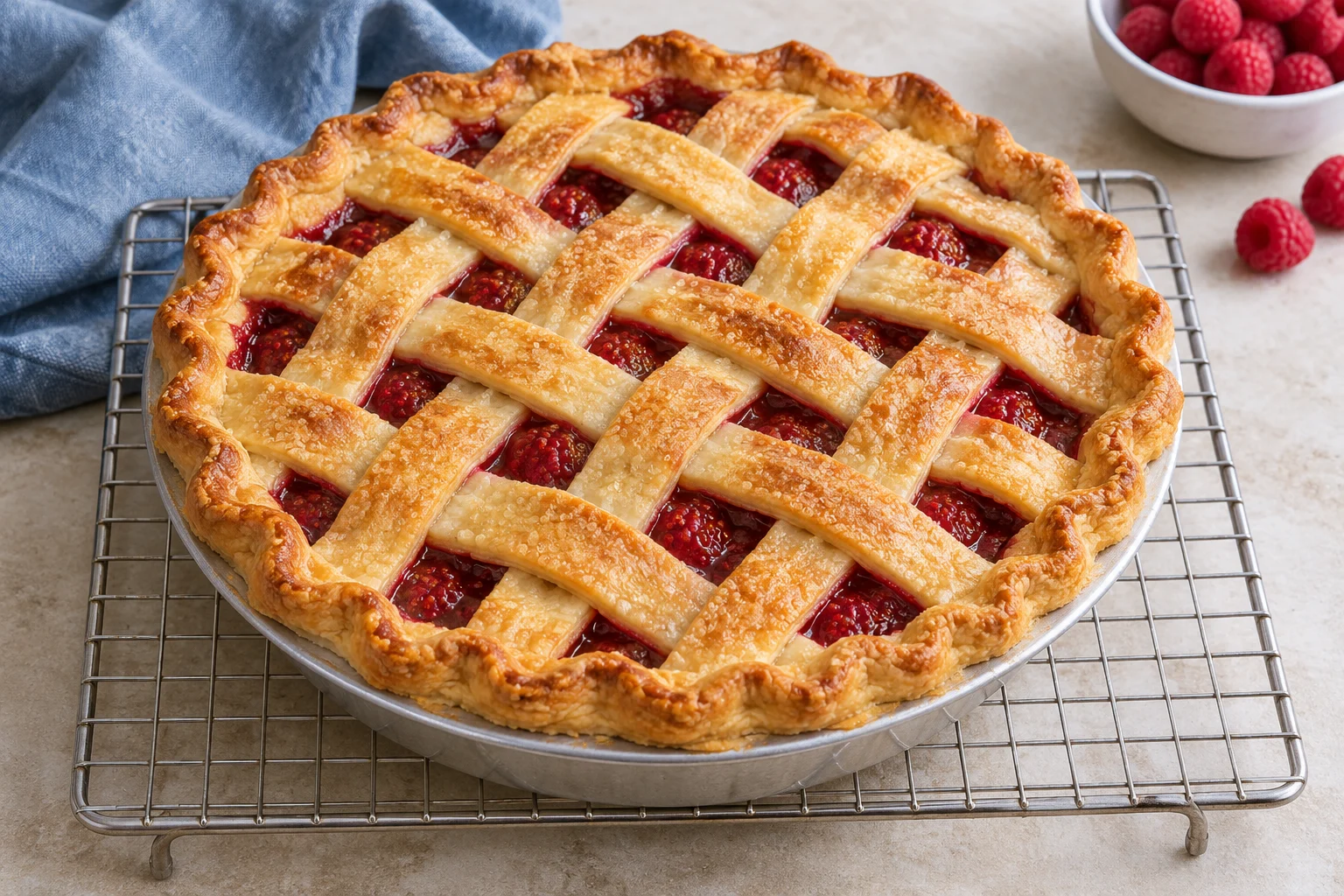
The vinegar listed in Raspberry Pie is already part of the liquid step. Measure it separately before you judge the feel of the dough.
What happens when there's too little water
The mixture may refuse to gather into a disk, crumble after chilling or crack extensively during rolling. Dry patches can remain because some flour never hydrated. A little water added gradually during initial mixing is easier than trying to repair a rolled sheet later. If the dough is already overworked or contains melted fat, more water may not recover its intended texture.
If the disk for Nectarine Pie breaks into dry granules under a gentle squeeze, locate the dry portion before adding a little more water.

What happens when there's too much water
A wet sticky dough may tempt you to add increasing amounts of bench flour, creating an inconsistent crust. Too much hydration and mixing can develop gluten, making pastry tough or elastic. A dough that sticks badly may also simply be too warm; check fat temperature before blaming water alone. Use a tested ratio and record the amount you actually needed.
If the pastry for Apricot Pie sticks to every surface, chill it briefly before assuming that extra flour is the answer.

Why resting changes dough feel
Wrap the gathered disk so the exposed edges do not dry. During the rest, moisture spreads through the flour and the fat firms. A cool disk can feel hard straight from the refrigerator even when it has enough water; let its edge become pliable before trying to roll it.
Different flours need different amounts
All-purpose, pastry and whole-wheat flours have different protein levels, milling profiles and absorption capacities. Whole-wheat flour often includes bran that changes hydration and texture. A gluten-free pie pastry is an entirely different system involving binders and alternative starches. Use a recipe designed for the flour you own rather than transferring one hydration number between unrelated doughs.
The flours and binding ingredients in Vegan Gluten-Free Pie Crust have their own hydration needs. A squeeze test from wheat dough is only part of the picture.

Food-processor dough can be deceptive
A food processor combines ingredients quickly, but it can also cut fat into very small pieces or overmix once liquid enters. Use short pulses as directed and stop when the mixture has the intended texture. The dough may appear loose in the processor yet hold together under a squeeze. Adding water until it forms a smooth spinning ball can overshoot the proper endpoint for flaky pastry.
Stop to check the crumbs for Apple Cranberry Pie with your fingers if you use a processor. The blade can gather wet clumps quickly.
Hand-mixed dough gives tactile cues
When mixing by hand, a pastry cutter or fingers can incorporate cold fat while leaving some pieces larger than others. Use cool hands and work briskly. Sprinkle water evenly, tossing with a fork or fingers without kneading aggressively. The squeeze test becomes especially helpful here because you can feel whether damp flour clumps without being sticky.
Feel the change as the crumbs for Blackberry Pie gather with a light squeeze, then stop before kneading the butter smooth.
What to do with a dry dough after chilling
If a rested dough still crumbles after it has become pliable, open up the driest areas and moisten them very lightly. Press together and rest again. Wetting the surface of an icy disk can disguise a simple temperature problem.
The pastry for Blackberry Hand Pies must fold and seal. Once the rested dough is pliable, pinch a small edge to check whether it still crumbles before adding moisture.

Troubleshooting a sticky dough
Check whether the dough was overwet or whether butter melted because the kitchen was warm. Brief chilling may restore workability if warmth is the main issue. Additional bench flour may be needed sparingly for rolling, but it shouldn't become the primary correction. If excess water was added before mixing ended, a fresh small batch may be more reliable for a special pie than an improvised heavy dough.
A useful water-recording exercise
Write down the flour brand and weight, how much water went into the bowl and what a squeezed handful felt like. Add one more note after rolling: did the edge bend, crack or stick? That pair of observations is more useful than treating one day’s water quantity as a permanent rule.
Note the amount of water actually used for Plum Pie alongside the flour brand and how its edge rolled after resting.
Frequently asked questions
Is ice water always essential? Follow the recipe; cool water helps keep fat firm. Should the dough look smooth? Often not before resting. Can too little water cause cracking? Yes. Does more water make pastry flakier? Not automatically. Why does a food processor dough need less visible liquid? Mixing and particle size influence its appearance. Can I add flour to fix a wet dough? Some bench flour may help, but major imbalance is difficult to repair.
Use just enough water for cohesion
Measure flour accurately, keep fat appropriately cold, add liquid gradually and stop when a squeezed handful holds together. Let the dough rest before judging rolling texture. This restrained approach makes the difference between a tender flaky crust and a pastry that's either dry rubble or tough bread-like dough.
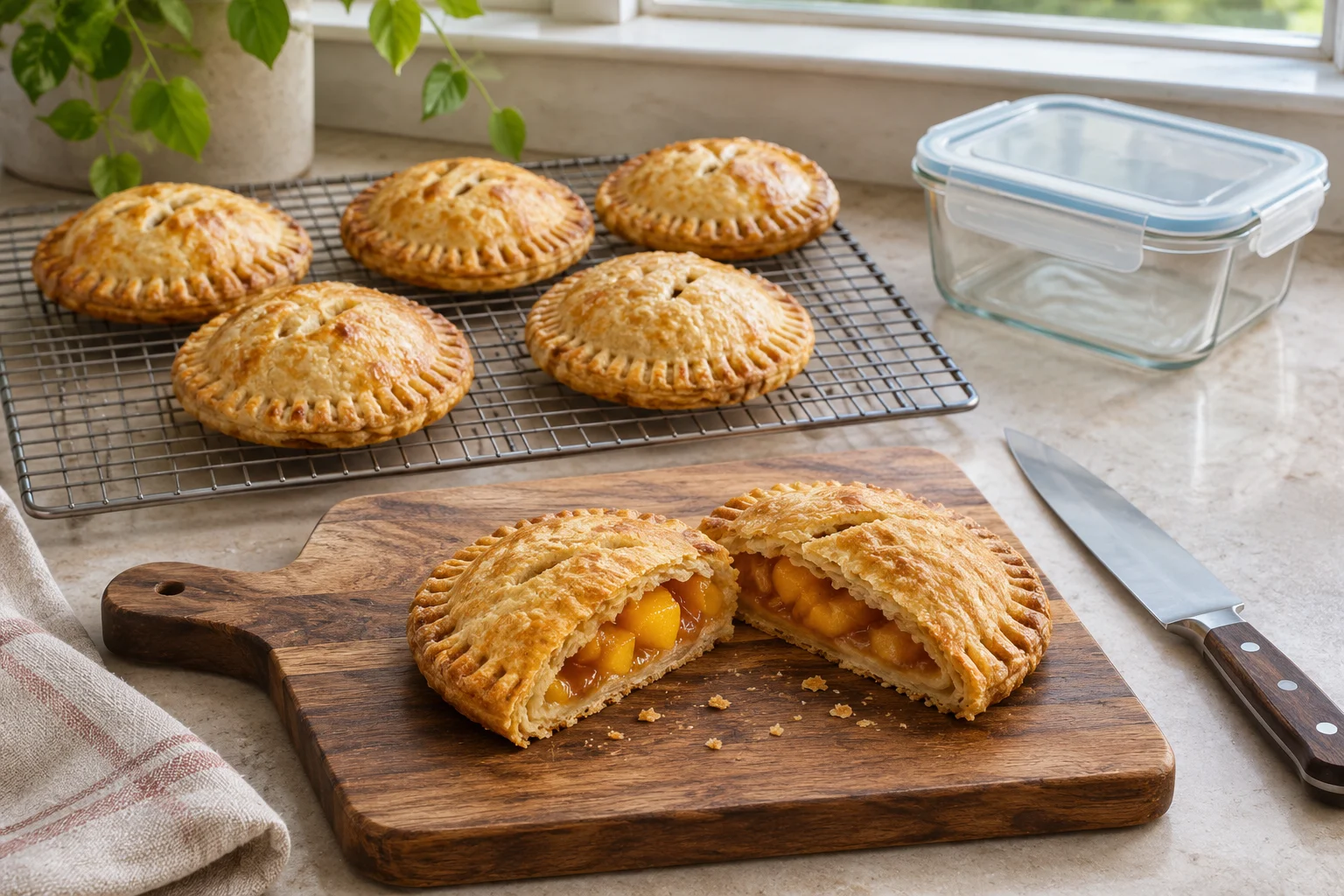
Try the dough for Peach Bourbon Hand Pies with a light squeeze and stop when the crumbs hold. A pastry that will fold over fruit still needs to roll without sticking.
IN PICTURES
From the baking notebook
FROM THE RECIPE BOX


