On this page
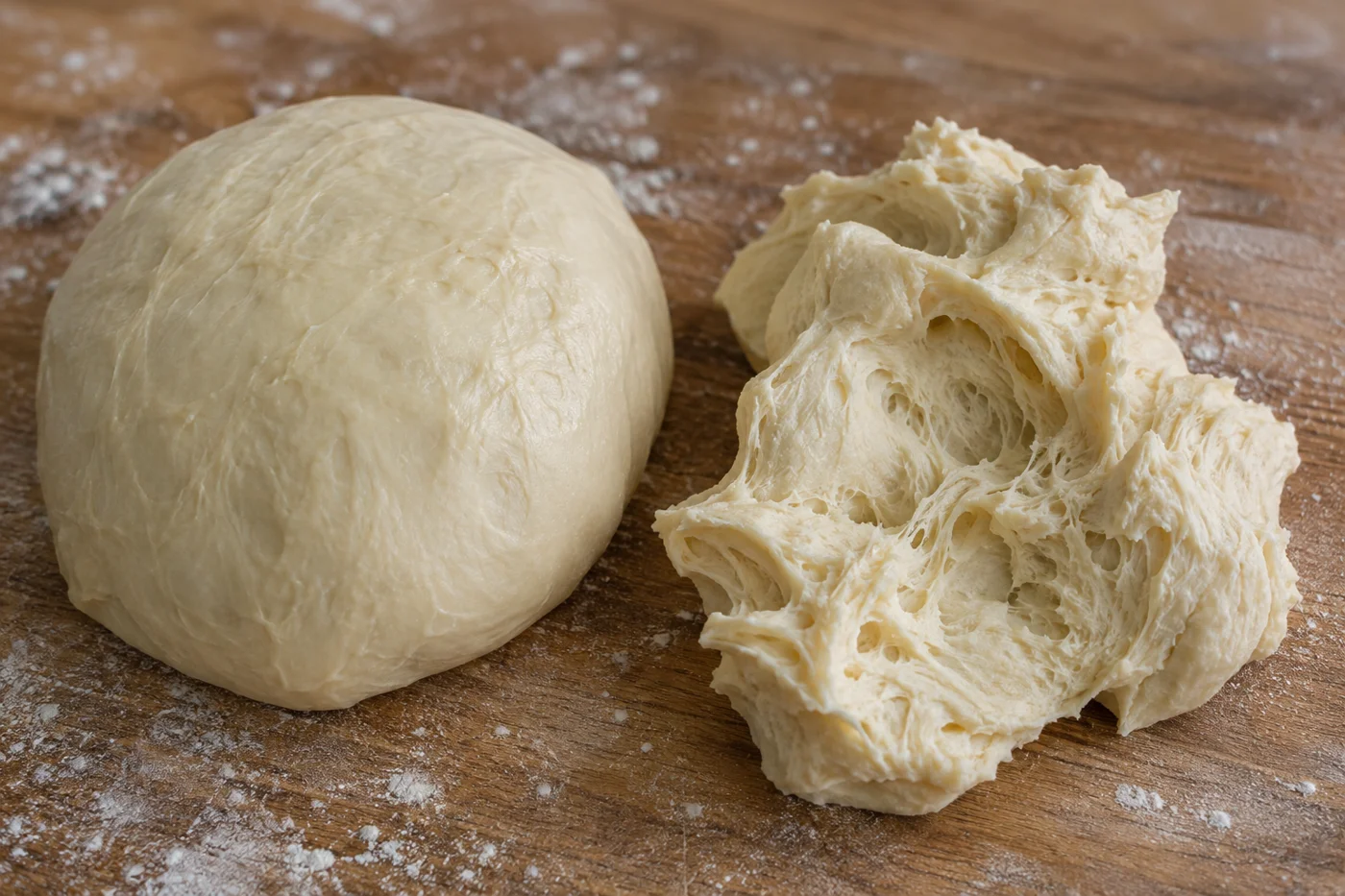
Sticky dough alone tells you very little about over-kneading. A just-mixed dough may be sticky because it has barely developed; a dough that used to hold together and now smears around a warm mixer bowl tells a different story. Stop the machine before inspecting it and compare what you feel with what the dough did a few minutes earlier.
What kneading actually develops
As flour hydrates, gluten-forming proteins interact and form a flexible network. Stretching and folding dough help align and strengthen that network, allowing gas bubbles to be retained during proofing. Kneading also distributes yeast, salt and ingredients. The desired development depends on bread style: a soft sandwich loaf often needs more complete development than a high-hydration artisan loaf strengthened during fermentation.
The shaggy early stage
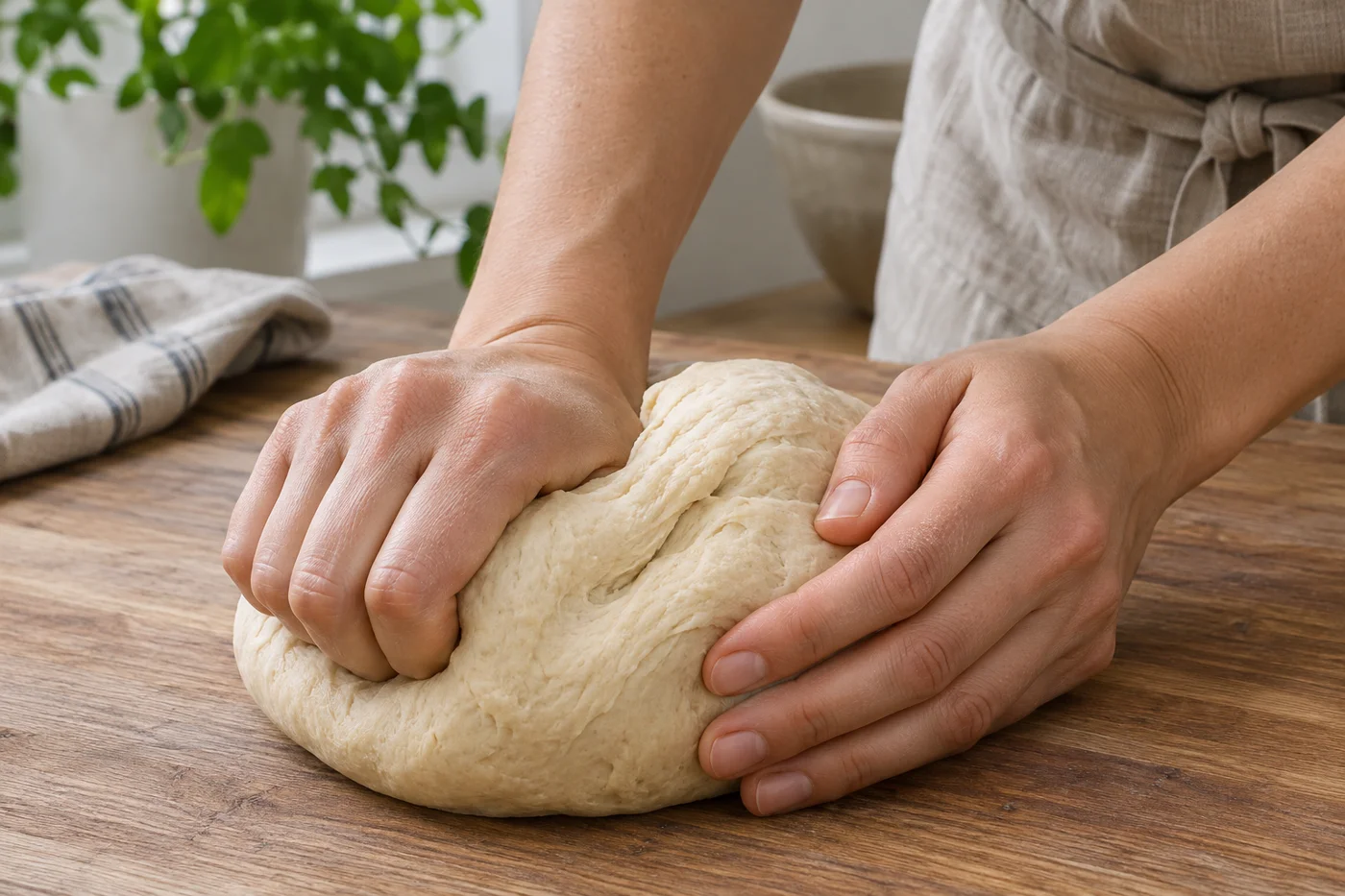
Immediately after combining flour and water, dough may be rough, sticky and inconsistent. This does not mean it has been kneaded too much. During the next minutes, water hydrates flour and mixing improves cohesion. A short rest can make subsequent kneading easier. Check that all dry flour is incorporated before deciding the dough needs several extra tablespoons of water or flour.
Use the early mixing stage of Classic White Sandwich Bread as a reference before deciding a rough dough needs more flour.
The developing stage
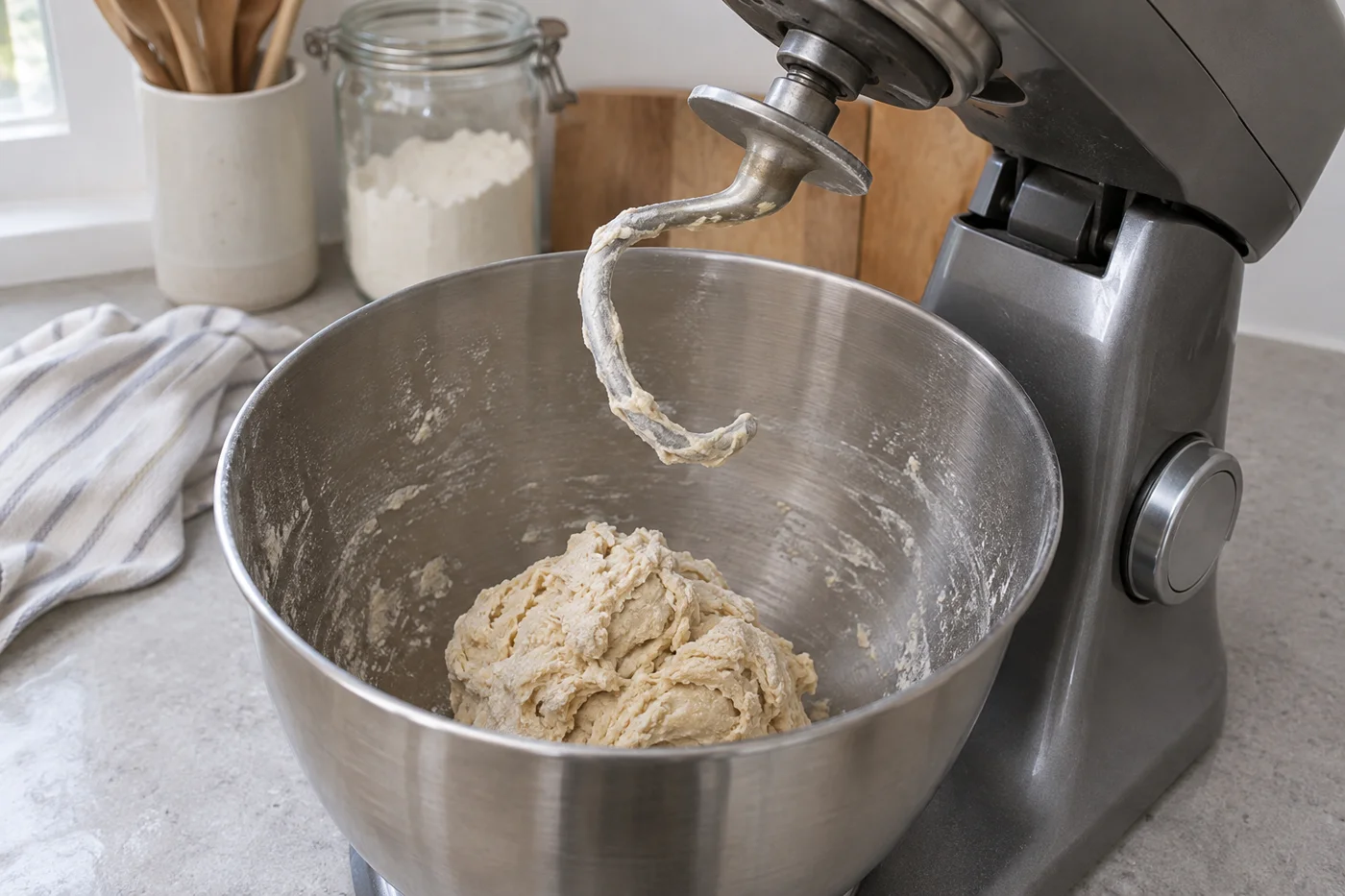
After initial mixing, the dough usually begins holding together and stretching more easily. It may still tear when pulled thin, especially with whole wheat flour or high hydration. Don't judge development only by whether it leaves the sides of the mixer bowl; dough formula and mixer shape affect that appearance. Watch for changes in elasticity and smoothness relative to the recipe.
The fully developed stage
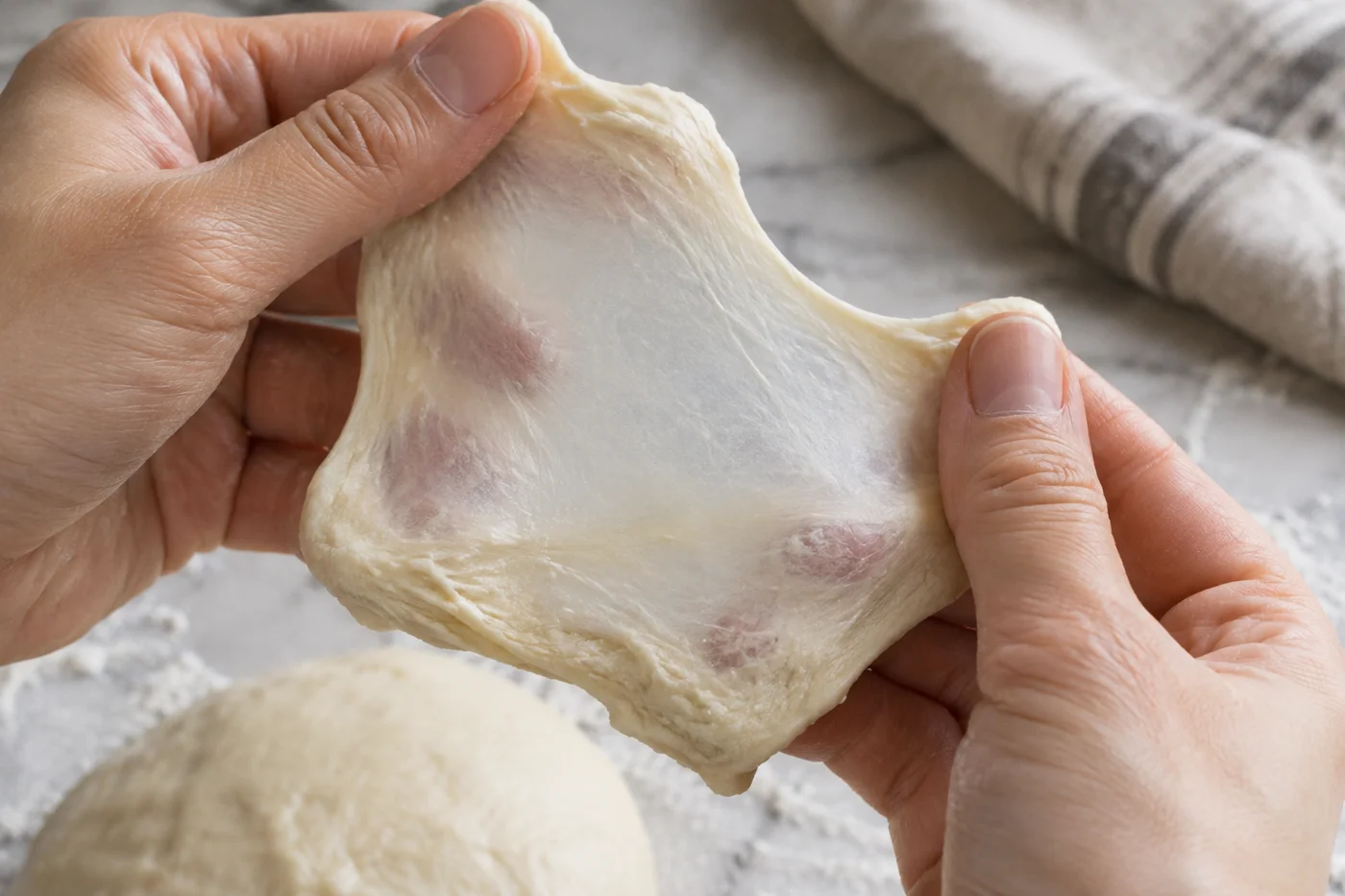
In many white bread recipes, sufficiently mixed dough feels smooth, elastic and resilient, and may stretch into a thin translucent sheet in a windowpane test. The windowpane should be interpreted for the flour and formula; whole-grain or high-hydration doughs may show different strength. The ideal endpoint is enough structure for the bread's planned shaping and fermentation, not maximum toughness.
What over-kneading looks like
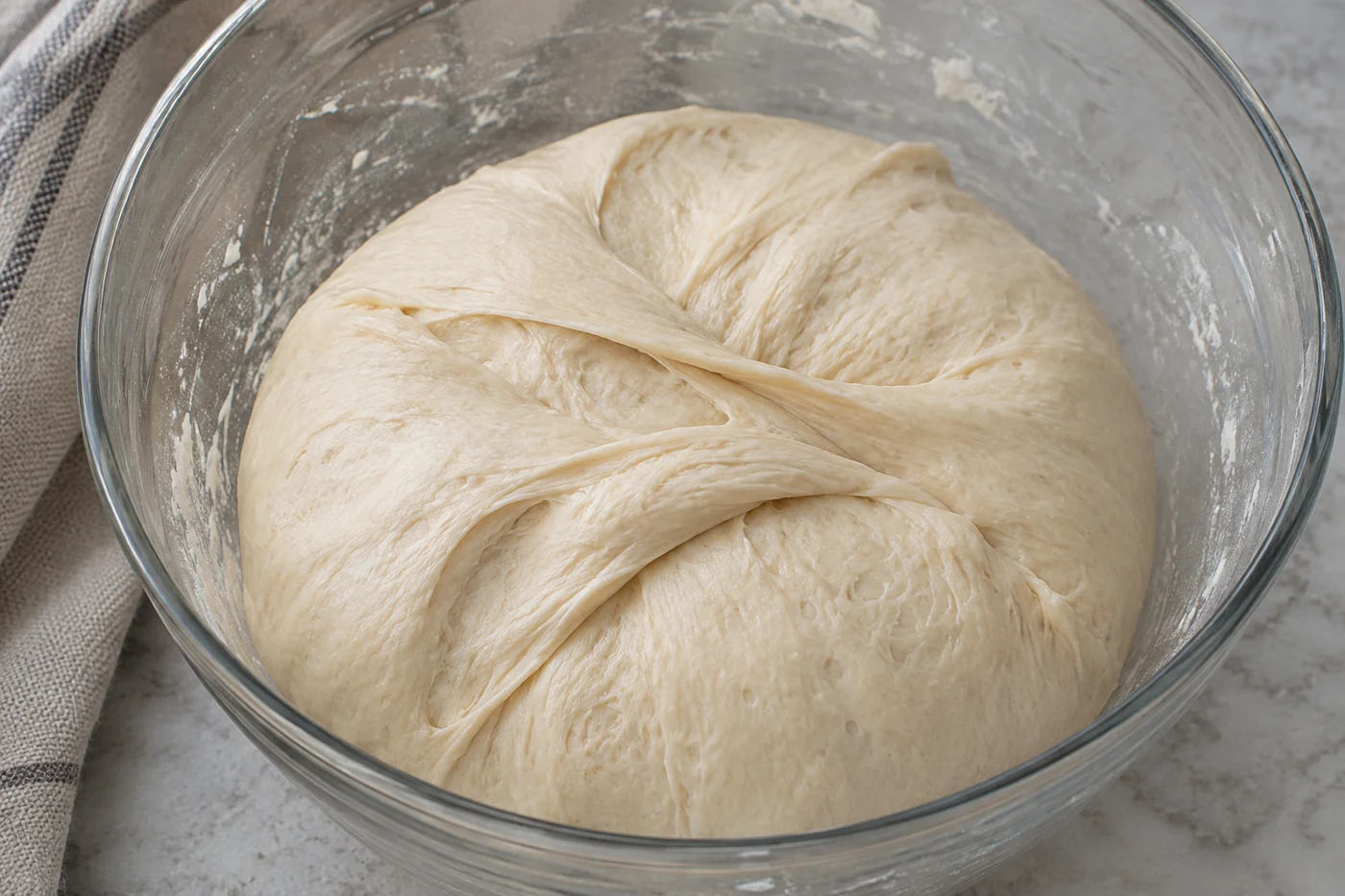
A dough that's been excessively mixed by a machine may become unusually loose, glossy, sticky or prone to tearing after previously showing strength. Instead of tightening with more mixing, it can lose structure as the network deteriorates. Some doughs also become warm from mechanical friction. Watch the direction of change: a dough that was strong and then deteriorated is more suspicious than one that started sticky.
A tender loaf like Buttermilk Sandwich Bread still needs enough strength to support the sides once it comes out of the pan.
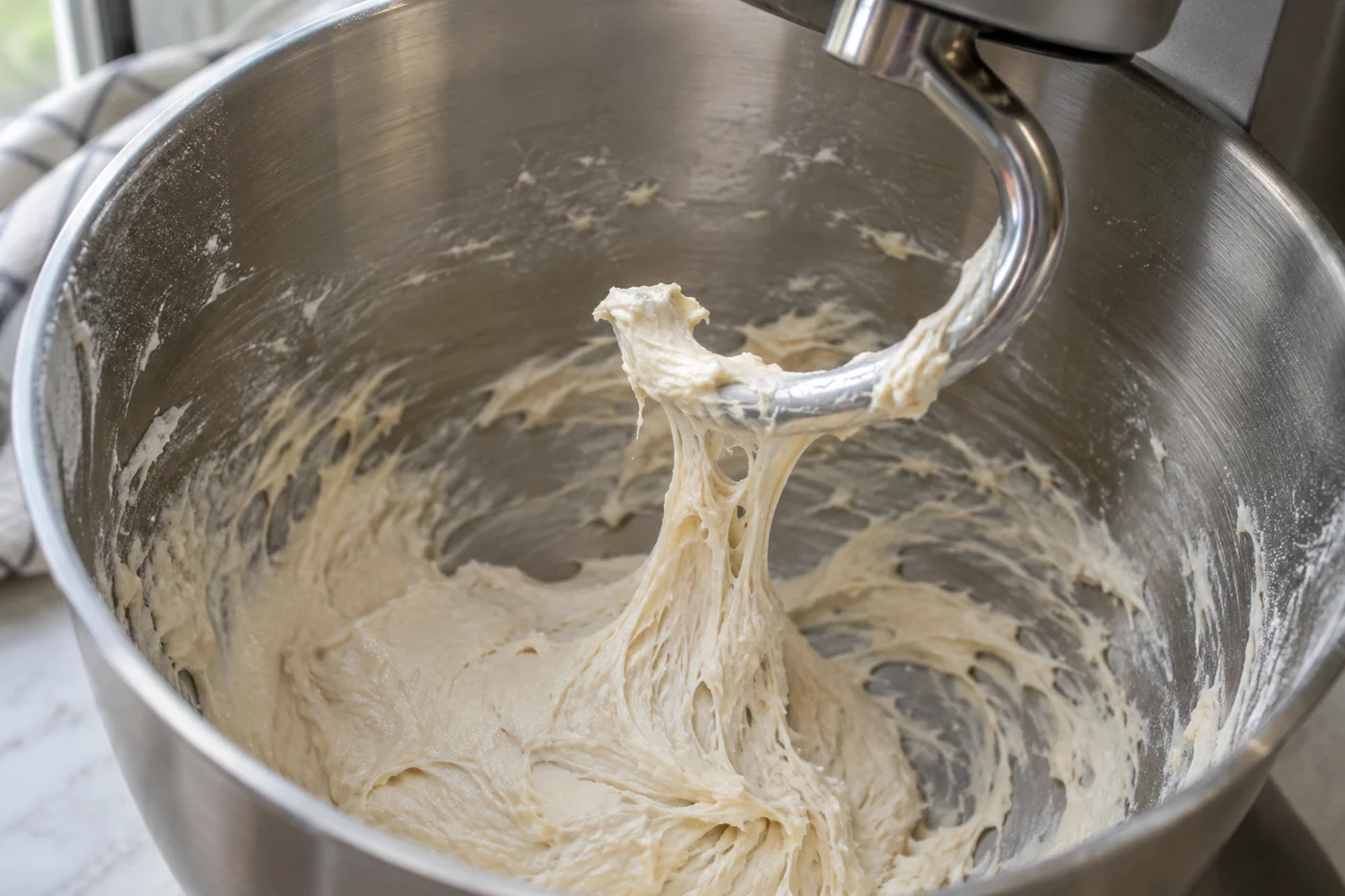
Hand kneading rarely reaches the same extreme
Hand kneading is usually slower and less intensive than long high-speed mixer work, making severe mechanical over-kneading less common. Fatigue often stops the process earlier. That doesn't make every prolonged hand-kneaded dough perfect; too much handling can warm fat in enriched dough or make the baker add excess bench flour. Follow method-specific guidance regardless of tools.
For Whole Wheat Dinner Rolls, keep portions covered while shaping so dry skin does not get mistaken for a dough-strength problem.
Stand mixers increase the risk
A powerful mixer running at high speed can develop dough quickly, but also raises temperature and stresses the network. Use the manufacturer's dough-hook speed limits and the recipe's mixing schedule. Some mixers specifically discourage high-speed dough kneading because of motor strain. A dough that takes ten minutes by hand may need a different time by machine; there is no universal exchange rate.
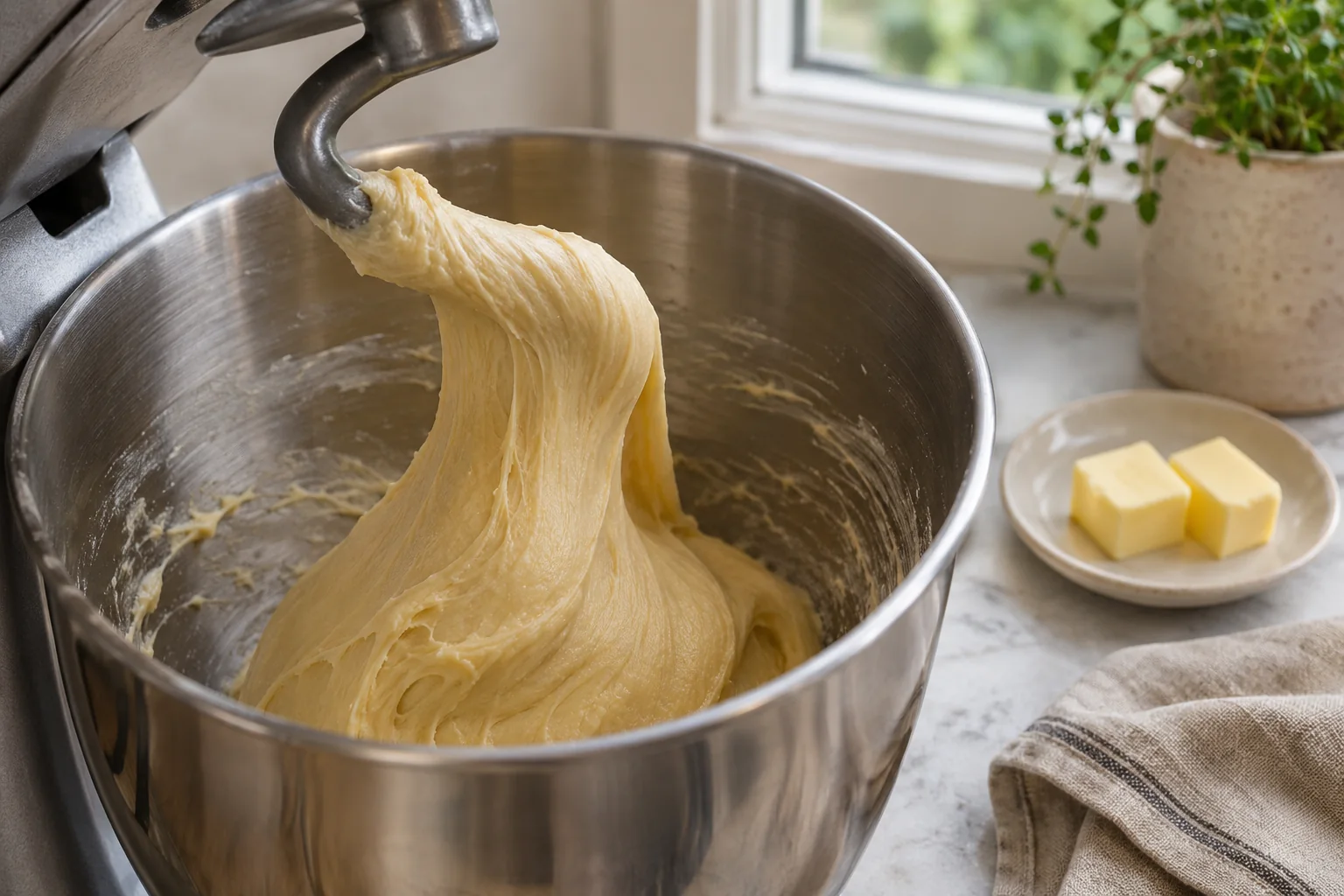
Mechanical heat matters
Kneading converts motor energy into frictional heat. Dough temperature affects yeast activity and the consistency of butter or other fats. A very warm dough may become sticky and ferment faster than intended, which can resemble poor gluten development. Measure temperature when precision matters rather than assuming more kneading will correct a soft warm dough.
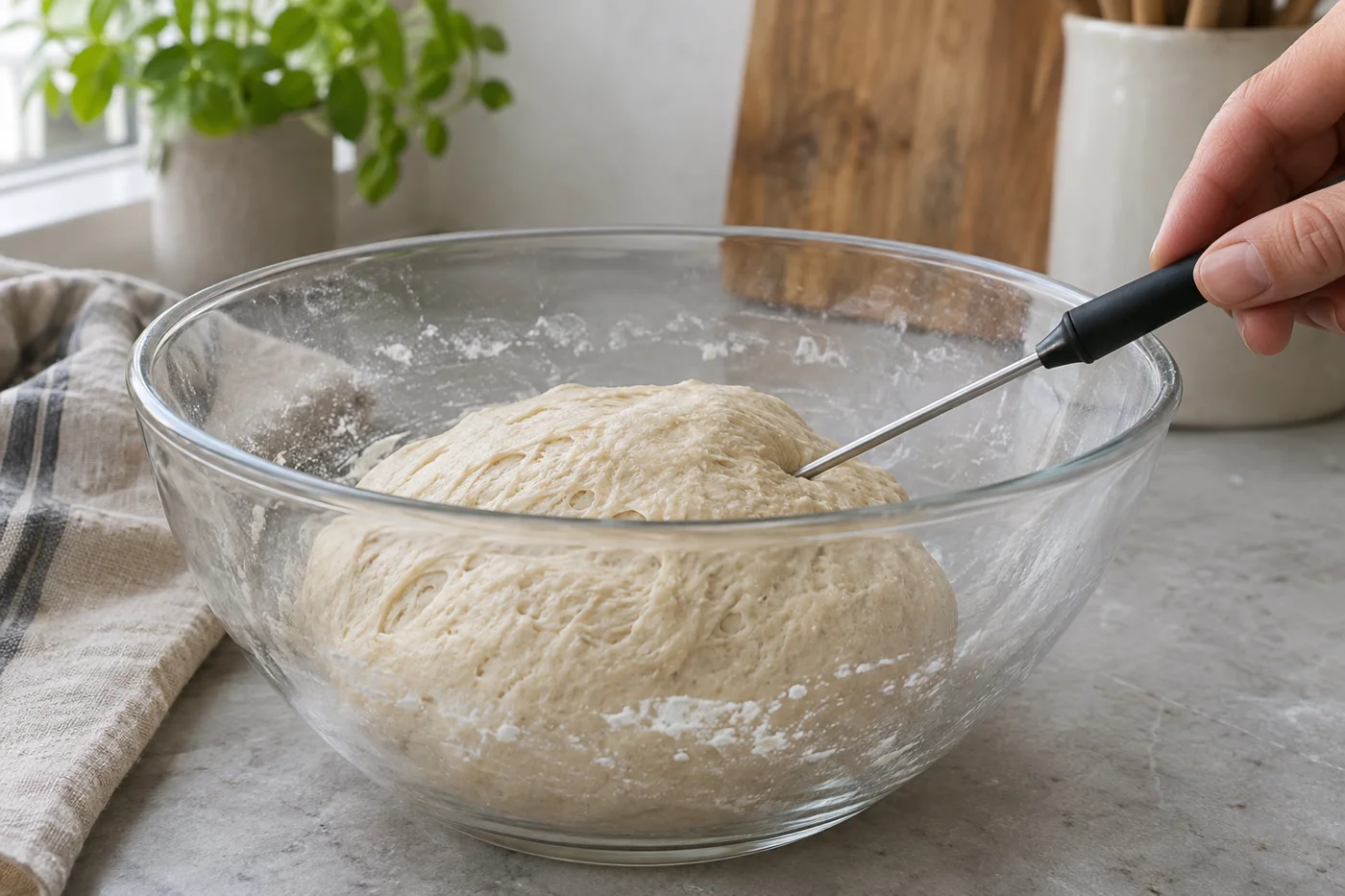
Over-kneading versus over-fermentation
Over-fermented dough can become weak, sticky and collapse after excessive yeast activity or enzyme action, even if it was mixed properly. Over-kneaded dough breaks down through excessive mechanical work. The timing of the symptoms matters: did it deteriorate during mixing, or after a long warm bulk rise? Different causes need different prevention strategies. Adding more flour indiscriminately can obscure the real issue.
With Milk and Honey Sourdough Sandwich Bread, note whether the dough lost its shape during mixing or much later in fermentation.
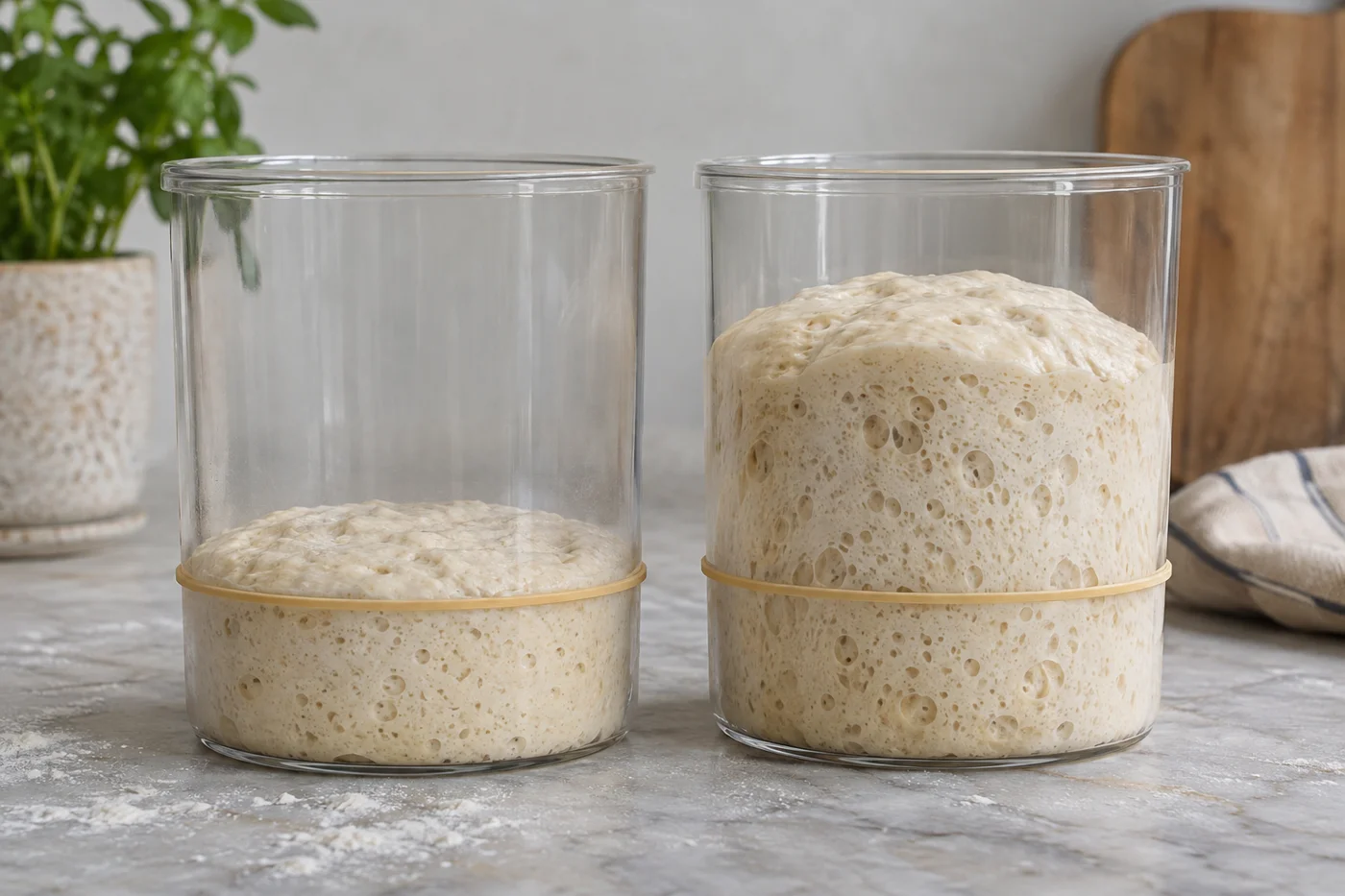
Over-kneading versus underhydration
A dry stiff dough may tear because it lacks enough water, not because it has been overmixed. An excessively wet dough may never clear the bowl but can still have strong gluten if properly developed. Assess formula hydration and flour type before making a diagnosis. A small squeeze or stretch test and a short rest often reveal more than watching the mixer bowl alone.
The windowpane test in context
Stretch a small piece gently until a thin membrane forms, avoiding jerky pulling. A dough that tears immediately may need more mixing, rest or hydration depending on its style. Whole wheat bran can interfere with an uninterrupted translucent sheet. Overworking a dough simply to achieve a picture-perfect windowpane may be counterproductive if the formula aims for moderate development followed by folds.
A rest can improve strength
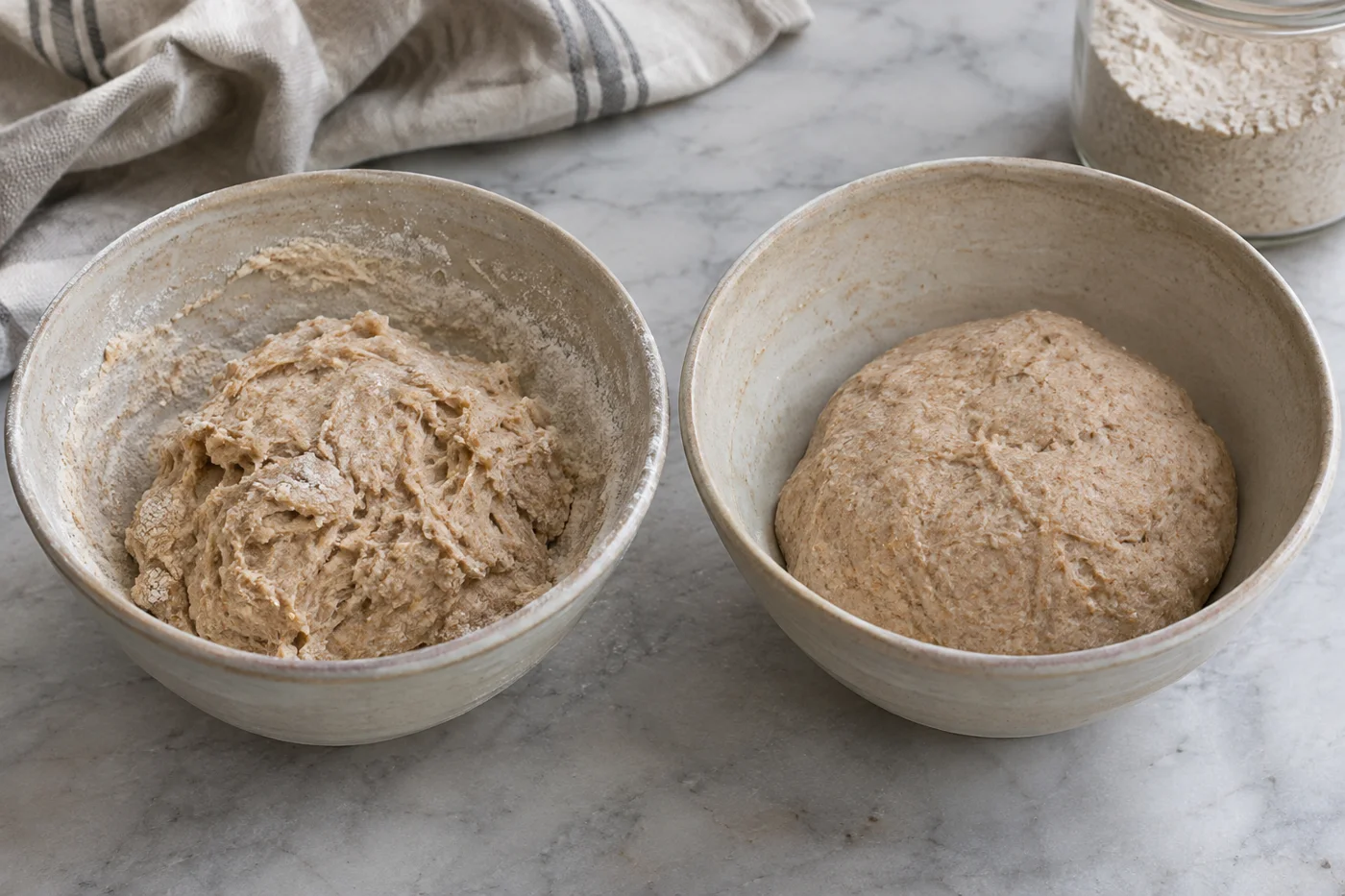
An autolyse or initial rest allows flour to hydrate and gluten interactions to begin with less mechanical mixing. Later folds can strengthen dough through bulk fermentation. These techniques reduce the need for intensive kneading in many artisan breads. But not every enriched sandwich dough should receive a long unsalted rest; fermentation and enzyme activity also matter. Use a proven method for the specific dough.
Stretch-and-fold as an alternative
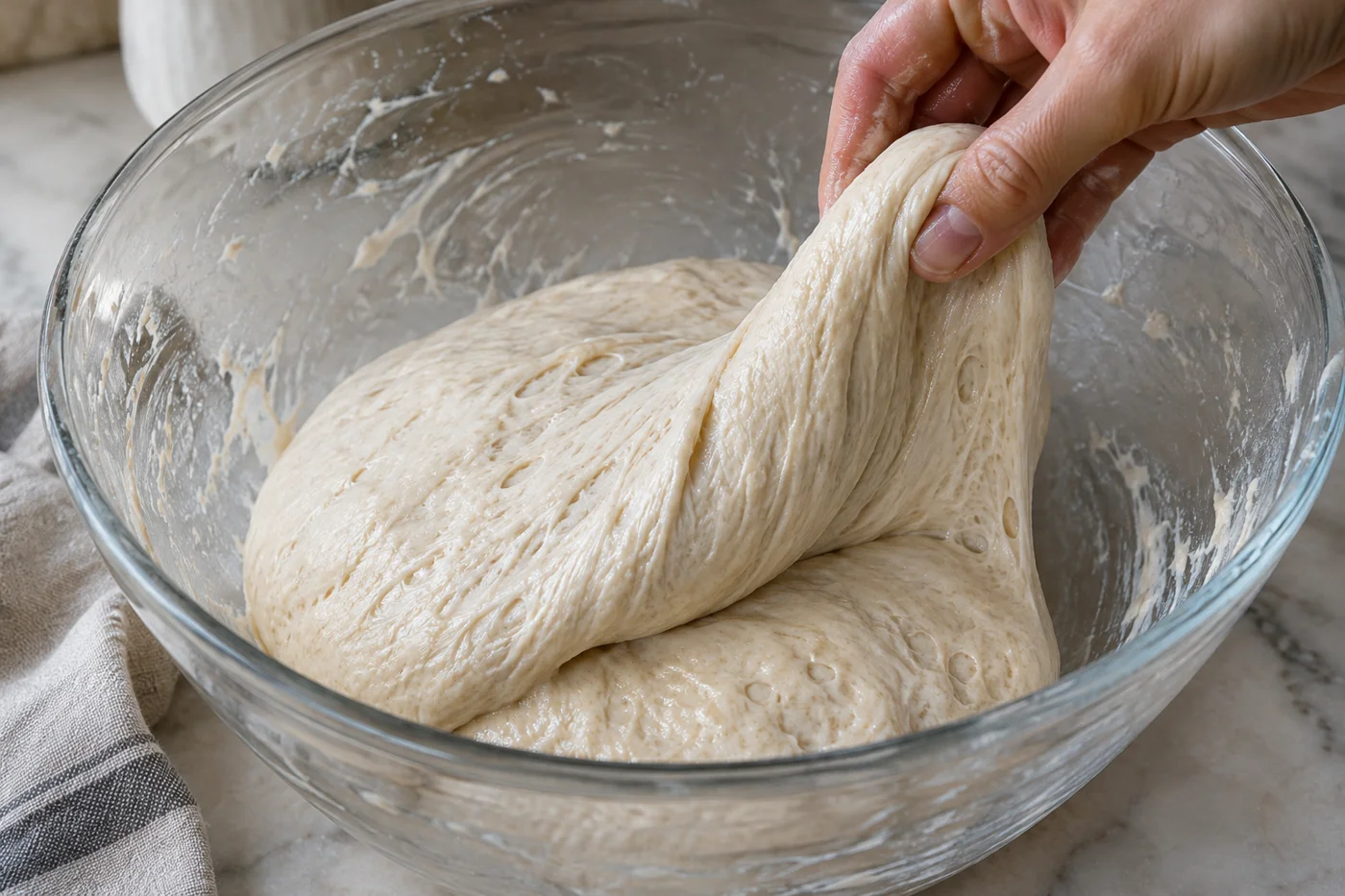
High-hydration artisan doughs often build strength with periodic stretch-and-fold sets. This can create enough structure without prolonged machine kneading and provides natural pauses for relaxation. The result depends on dough hydration and the number of folds required by the recipe. A very stiff dough may be easier with conventional kneading, while a wet dough can benefit from gentler handling.
Compare the handling sequence in Sourdough Country Loaf with a continuously kneaded pan loaf.
Enriched dough develops differently
Brioche and other butter-rich doughs may involve mixing gluten before adding much of the butter, then continuing until the fat is incorporated. The dough can temporarily look greasy or broken during that transition without being ruined. Follow the staged mixing method rather than assuming every moment of softness proves over-kneading. Temperature control is especially important because butter softens quickly.
In Brioche Sandwich Loaf, look at when butter is added before deciding the dough has become too soft.

Whole wheat changes the indicators
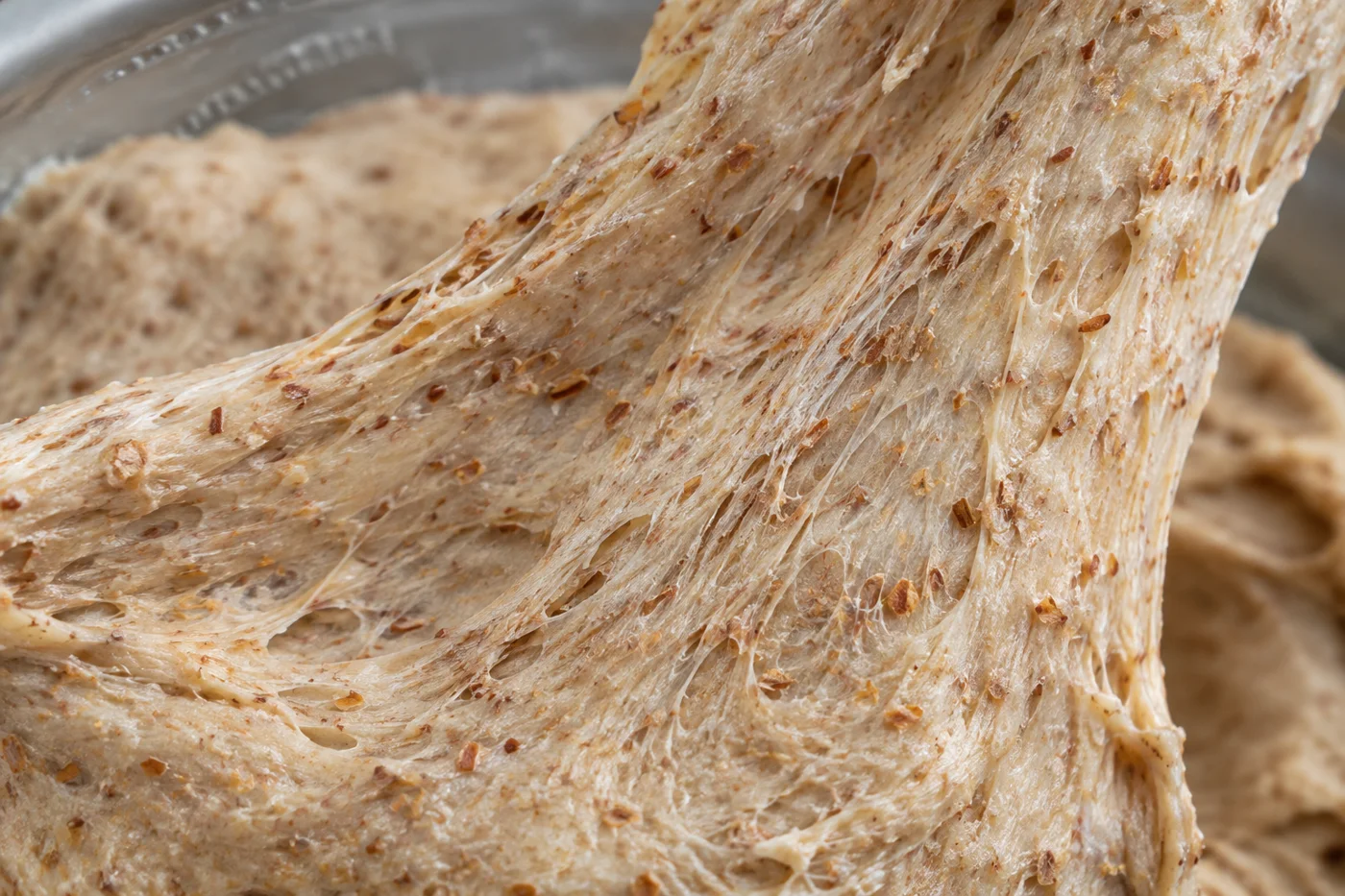
Bran and germ affect hydration and gluten network behaviour. A whole-wheat dough may not show the same smoothness or high windowpane stretch as a white-flour formula, even when properly mixed. Increasing mixer speed indefinitely won't remove the effect of bran. Use a whole-grain recipe with suitable hydration and mixing instructions.
Expect the stretched surface of Classic Whole Wheat Bread to show bran flecks. Its windowpane will look different from white dough.
Can severely over-kneaded dough be saved?
A mildly warm or tight dough may improve after a rest, but a severely broken-down gluten network isn't reliably restored by adding more flour or kneading harder. Some bakers may repurpose the dough in a flatter style when it remains food-safe, but the result isn't guaranteed. For a special loaf, a fresh properly mixed batch may be more predictable. Diagnose the issue before making more changes.
What to do with dough that seems too warm
Stop the mixer and check temperature against the recipe's intended range. A short covered rest or controlled cooling may help when the dough is still structurally sound, but it doesn't reverse serious mechanical damage. Avoid adding handfuls of cold flour to disguise stickiness, since that changes hydration. Reassess after the dough relaxes rather than constantly testing it while warm.
A practical mixer routine
Use the recommended dough hook, start at the specified low speed, pause to scrape the bowl where appropriate and check development before the full maximum time. Note dough temperature at the end of mixing. Stop when the recipe's endpoint is reached. A small test batch is an excellent way to learn how quickly your mixer develops the flour you typically buy.
Troubleshooting bread that's dense
Density can come from insufficient kneading, weak fermentation, underproofing, low hydration or a restrictive flour blend. A dense baked loaf doesn't automatically prove over-kneading. Look at the dough history: was it elastic before proofing, did it hold shape, and did it rise appropriately? Change one factor at a time on the next batch instead of assuming more mixer time fixes every loaf.
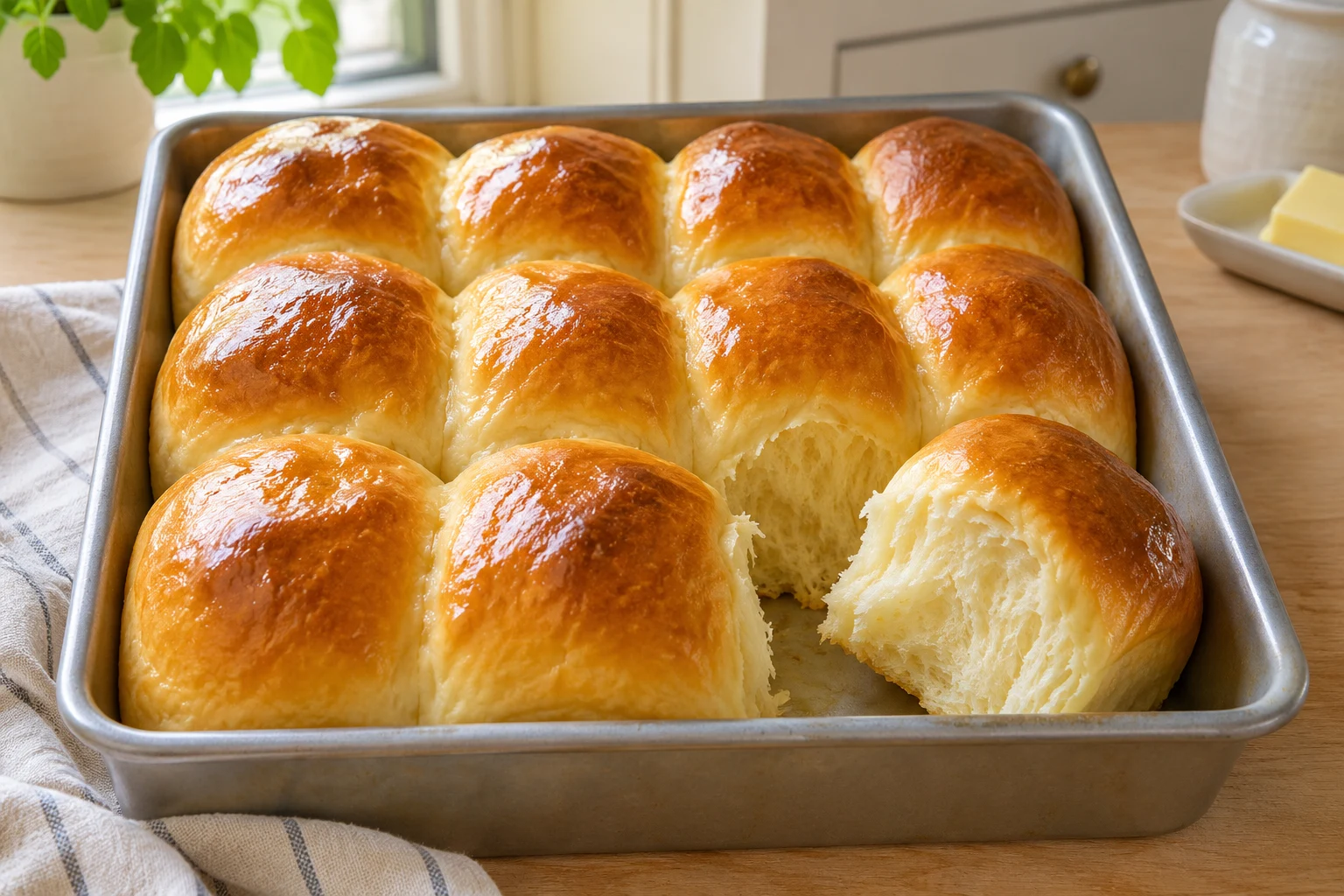
If Classic Dinner Rolls turn out heavy, review proofing and shaping as well as the mixing stage.
Troubleshooting sticky dough
Sticky dough may be appropriately high hydration, warm, underdeveloped or genuinely overmixed. Allow a short rest, check water weight, then compare elasticity with the expected dough style. Don't keep adding flour until a deliberately wet artisan dough resembles stiff pizza dough. Stickiness is a symptom to interpret, not a diagnosis by itself.
IN PICTURES
From the baking notebook
FROM THE RECIPE BOX


