On this page
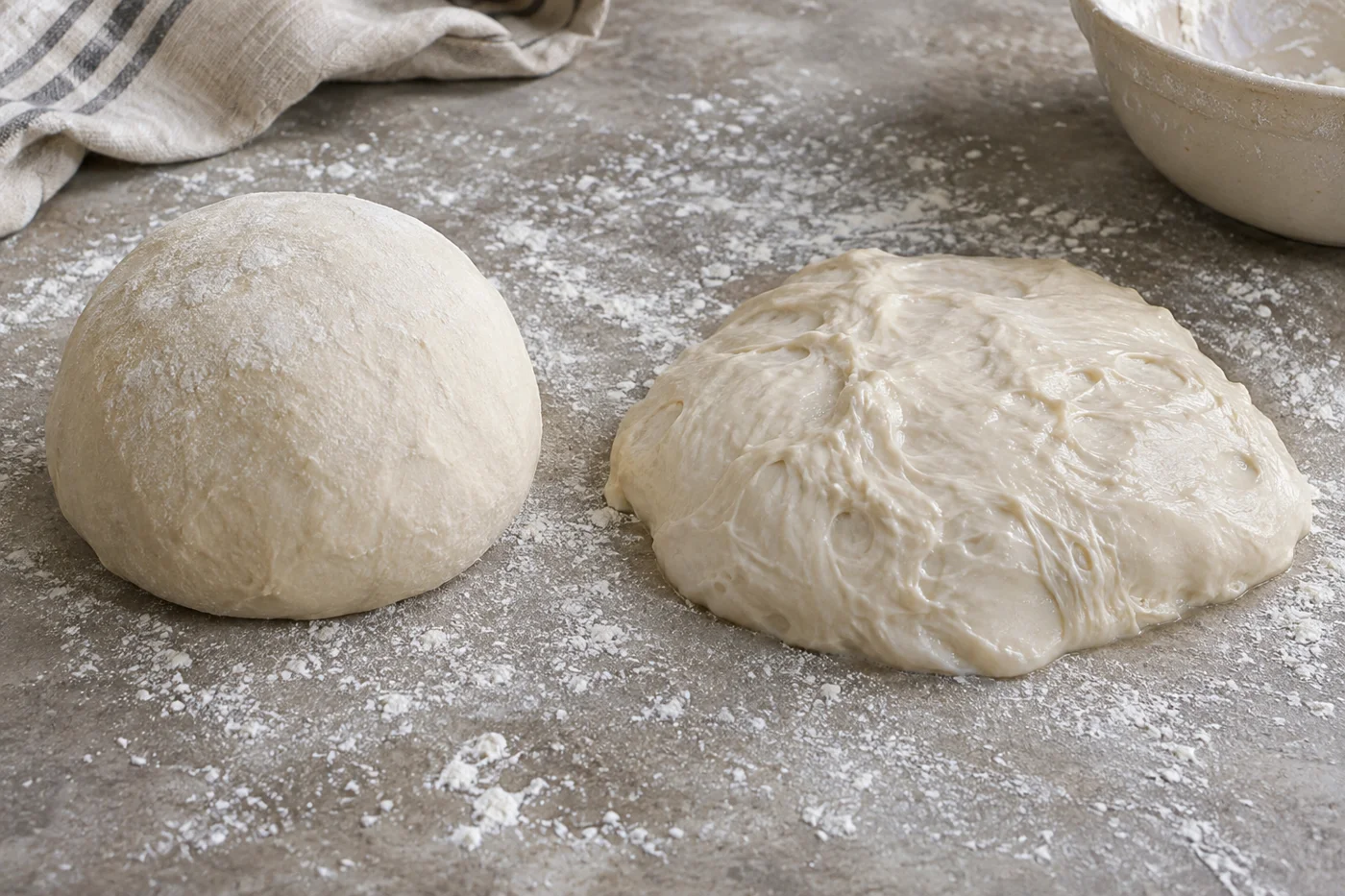
Two bakers can mix dough at 70% hydration and get quite different results. The percentage describes a weight ratio: 350 grams of water for every 500 grams of flour. It does not identify the flour, the mixing method or how much gas the dough retained. Start with the arithmetic, then look at what is actually in the bowl.
The basic formula
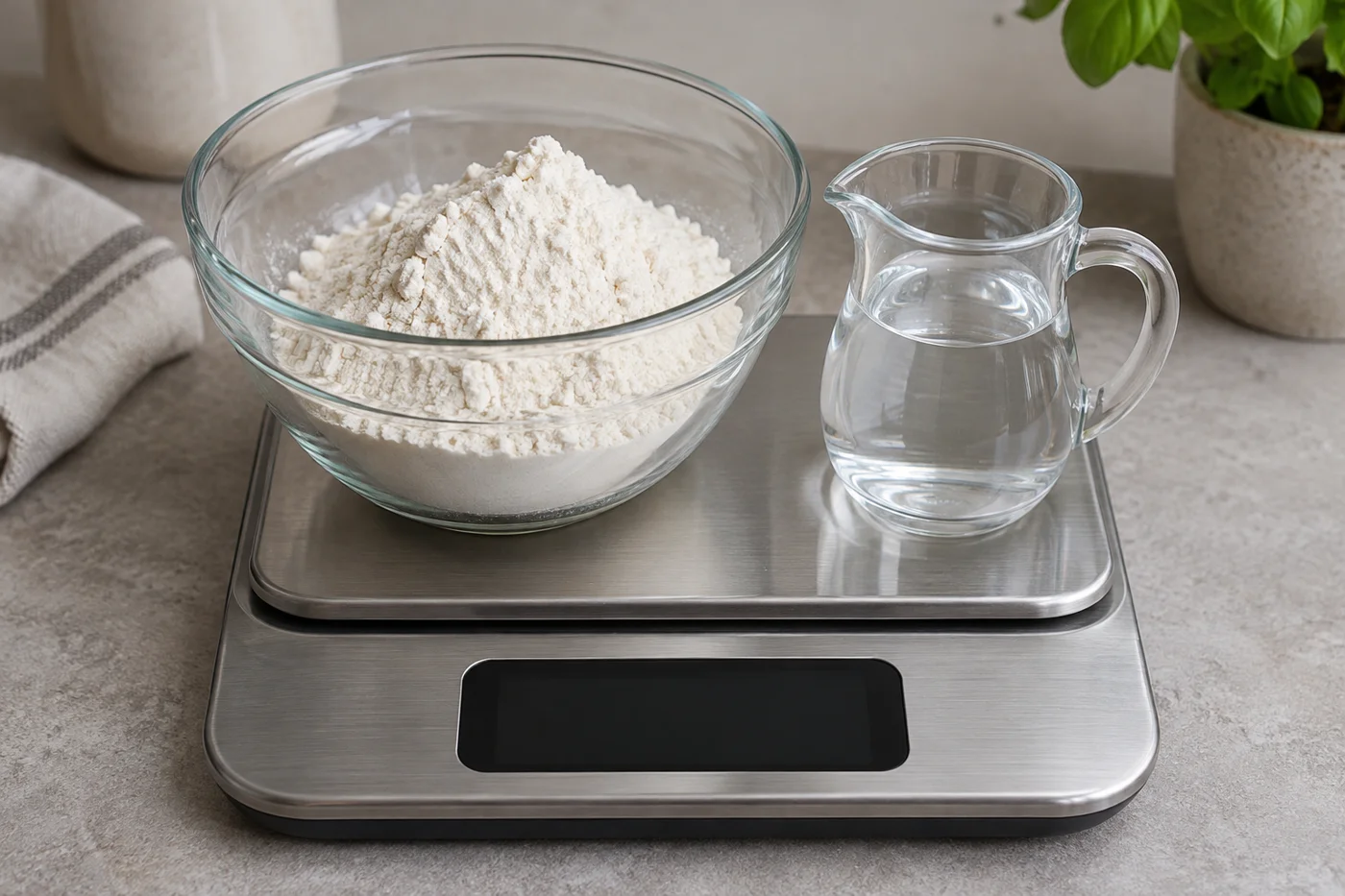
Hydration percentage is the total water weight divided by total flour weight, multiplied by 100. If a formula uses 500 g flour and 350 g water, hydration is 70%. The ingredients need to be measured by weight rather than volume because a cup of flour varies in mass. This is one application of baker's percentages, where total flour is always treated as 100%.
Use the flour weight in Classic White Sandwich Bread as the denominator when practising baker’s percentages.
A simple 65% example
A dough made with 500 g flour and 325 g water has 65% hydration because 325 divided by 500 equals 0.65. It may feel moderately firm with a typical white flour, making it suitable for certain sandwich loaves or other shaped breads. Actual feel depends on flour strength, additives and mixing. The number communicates the water-to-flour ratio, not a guarantee of a particular crumb.
A simple 75% example
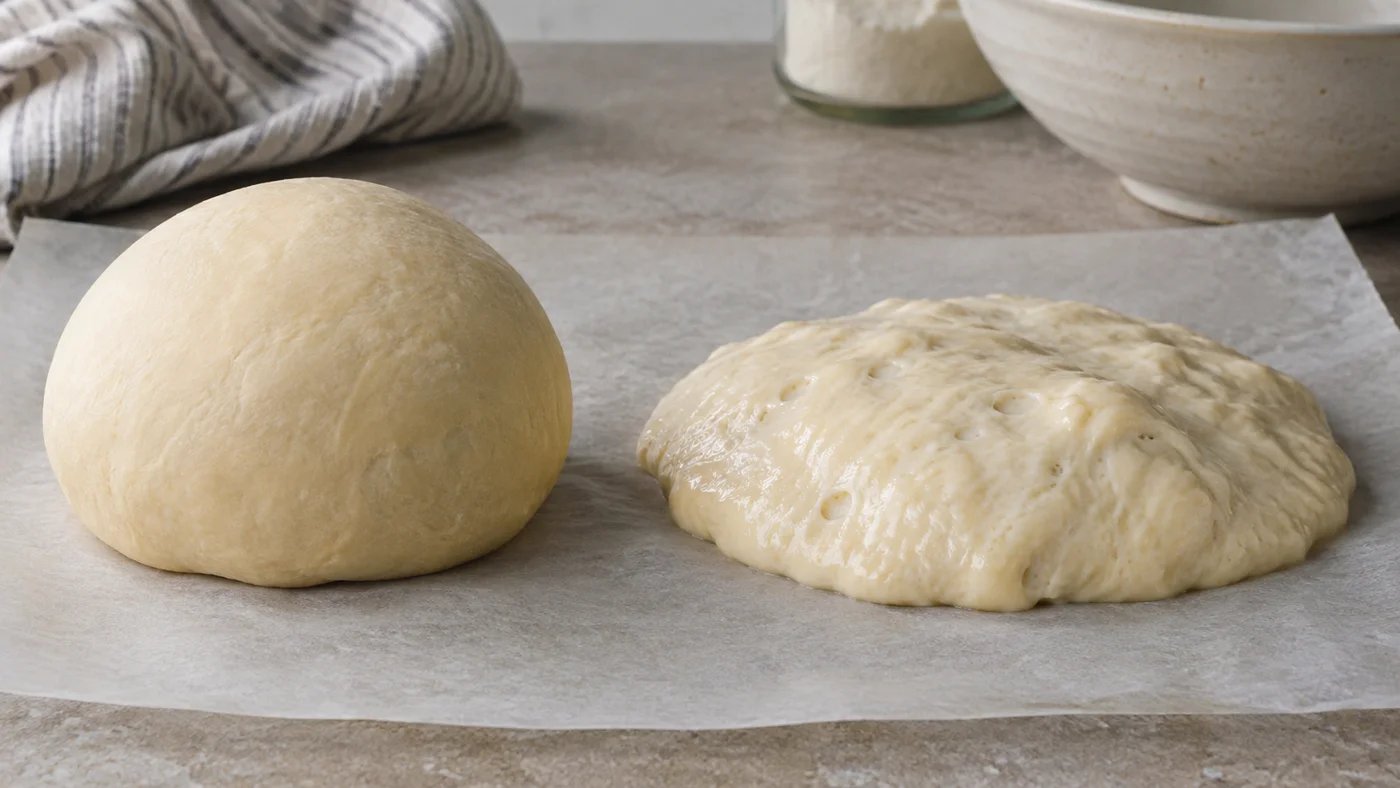
With 500 g flour and 375 g water, hydration is 75%. This dough may feel wetter and more extensible than the 65% version when made with the same flour. It may require different mixing, folding or shaping techniques. But a very strong high-protein flour can absorb this water more easily than a weaker flour, and whole-grain flour may behave differently again.
What 100% hydration means
At 100% hydration, a formula contains equal weights of flour and water. A typical liquid sourdough starter is often maintained at this ratio, though not every starter follows it. Certain very high-hydration bread formulas also use as much water as flour. This doesn't imply the dough is a drink; flour absorbs water and develops structure, but handling requires a suitable recipe and technique.
What counts as flour
Baker's percentage calculations generally use the weight of actual milled flour in the dough, including the flour in preferments and sourdough starter. Whole wheat, bread flour and rye flour all contribute to that total. Cocoa powder, dry milk and certain flavouring powders absorb water but may be treated differently in conventional baker's math. Follow the recipe's accounting method when comparing formulas.
What counts as water
Water added directly to the mixing bowl is straightforward. Milk, beer, tea and juice are often treated as hydration liquids for practical recipe comparisons, though they contain varying solids. Egg and butter contain water too, but conventional baker's calculations frequently treat them separately from the named hydration percentage. This is why an enriched brioche can feel soft even when its stated water percentage appears low.
For Soft Milk Bread, note milk separately from plain water if you want to compare formulas consistently.
Don't count oil as hydration
Oil is a liquid at room temperature but is not primarily water and does not hydrate gluten-forming flour proteins the way water does. Adding 50 g olive oil to a dough does not increase its conventional hydration percentage by 10 points. Oil changes tenderness, lubrication and handling, so it still matters to the finished loaf. Distinguish total liquid-looking ingredients from actual water-bearing ingredients.
In Rosemary Focaccia, keep the olive oil in its own column. It changes handling without contributing water.

Sourdough starter changes the calculation
If a recipe contains starter, include both the flour and water already inside it. A 100% hydration starter consists of equal weights flour and water. For example, 100 g of this starter contains about 50 g flour and 50 g water. If you overlook that contribution, the dough's calculated hydration will be misleading.
In Sourdough Country Loaf, include the flour and water supplied by the starter when you calculate the overall ratio.
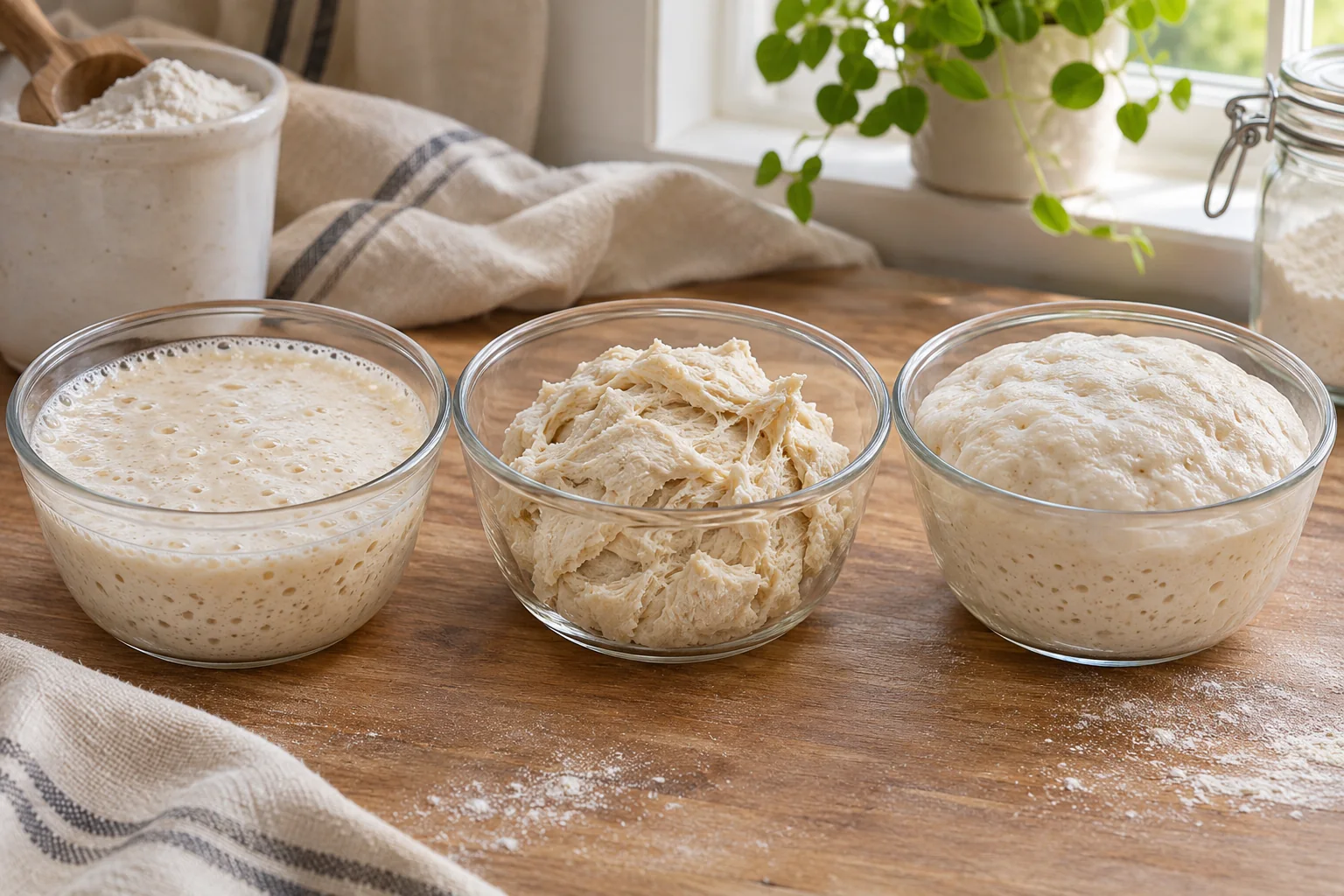
Full sourdough calculation example
Suppose a formula uses 450 g flour, 300 g added water and 100 g of 100% hydration starter. Total flour is 500 g and total water is 350 g, giving 70% overall hydration. The salt and other ingredients may be calculated against the same 500 g total flour. This method lets you compare sourdough and commercial-yeast doughs fairly.
What if the starter is stiff?
A starter with 50% hydration has one part water for every two parts flour by weight. Thus 150 g starter at 50% hydration contains about 100 g flour and 50 g water. A 100% starter of the same total weight contains 75 g flour and 75 g water. Changing starter hydration without accounting for these differences changes the final dough calculation.
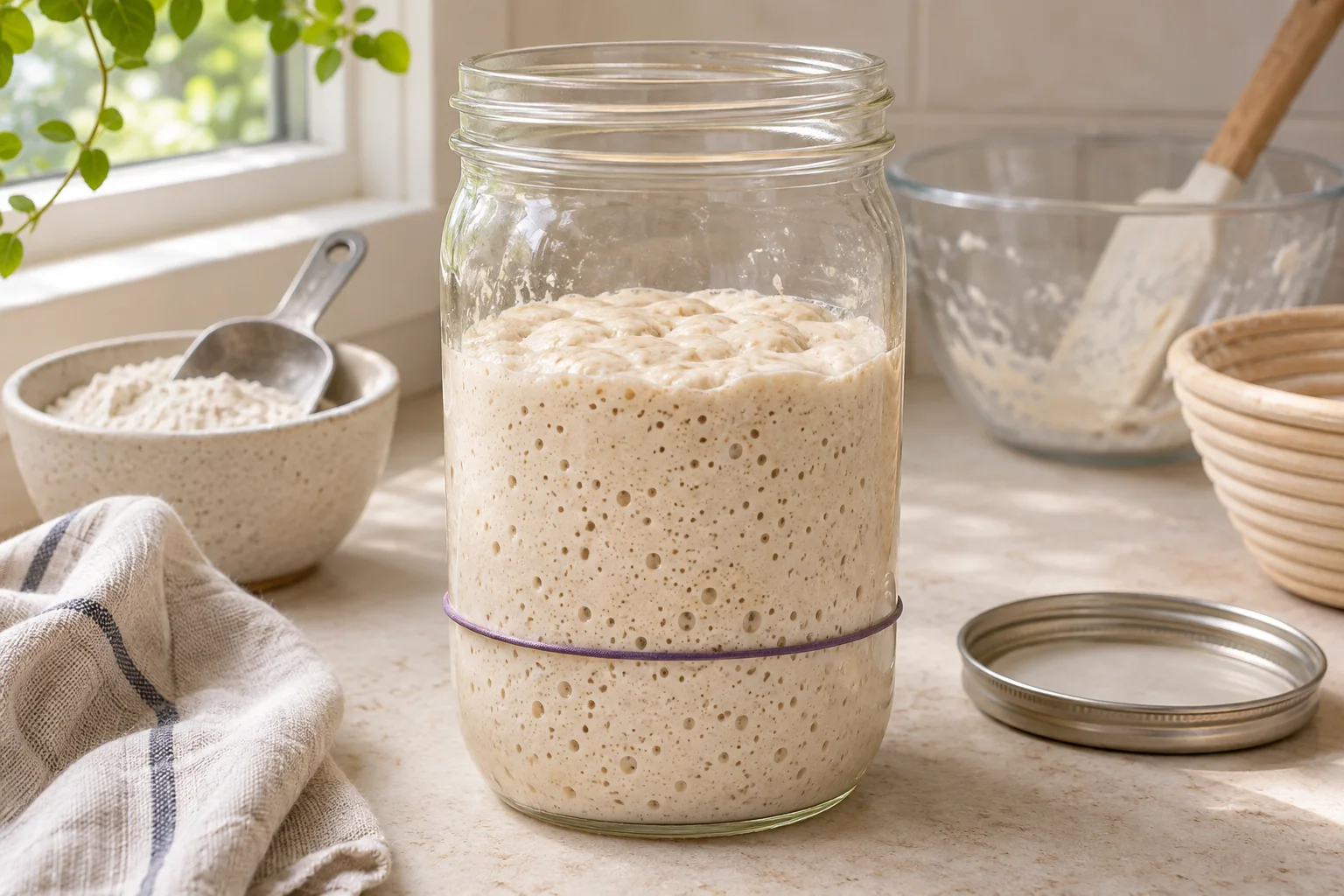
Hydration versus dough stickiness
A higher percentage often makes a white wheat dough stickier, but stickiness also depends on flour quality, gluten development, temperature and fermentation maturity. An underdeveloped 68% dough can stick badly, while a strong 78% dough may become manageable after folds. Avoid increasing bench flour automatically whenever dough is sticky; that silently lowers hydration and changes the formula.
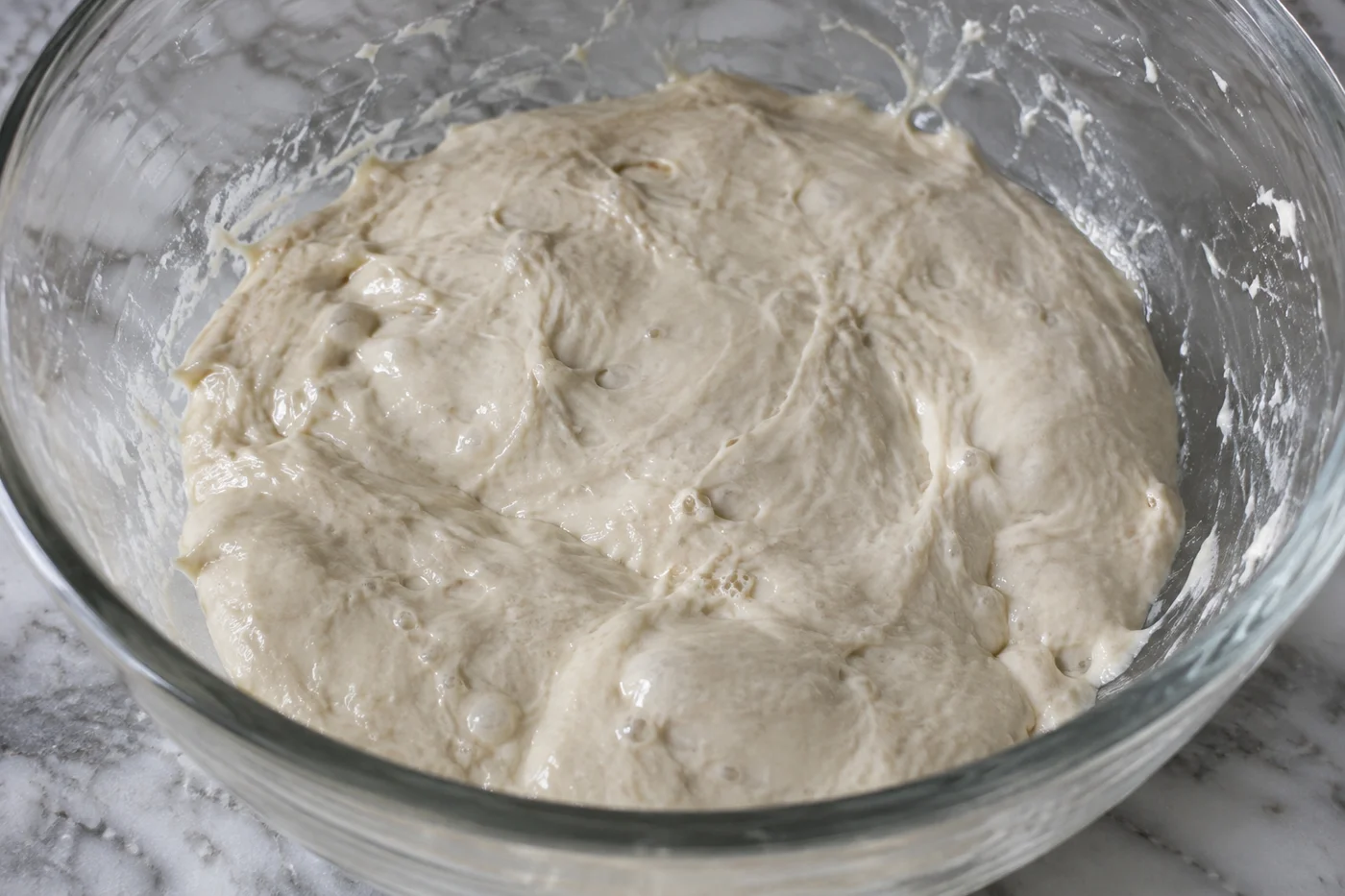
Whole wheat needs different interpretation
Bran absorbs water, so a whole wheat dough can feel firmer than a white dough at the same overall hydration. A whole-grain label indicates the entire grain in its original proportions. Canadian whole wheat flour may have up to 5% of the kernel removed, including some germ. Compare the labels as well as the percentages.
Compare the feel of Classic Whole Wheat Bread with a white dough at a similar percentage. Bran changes how the water is taken up.
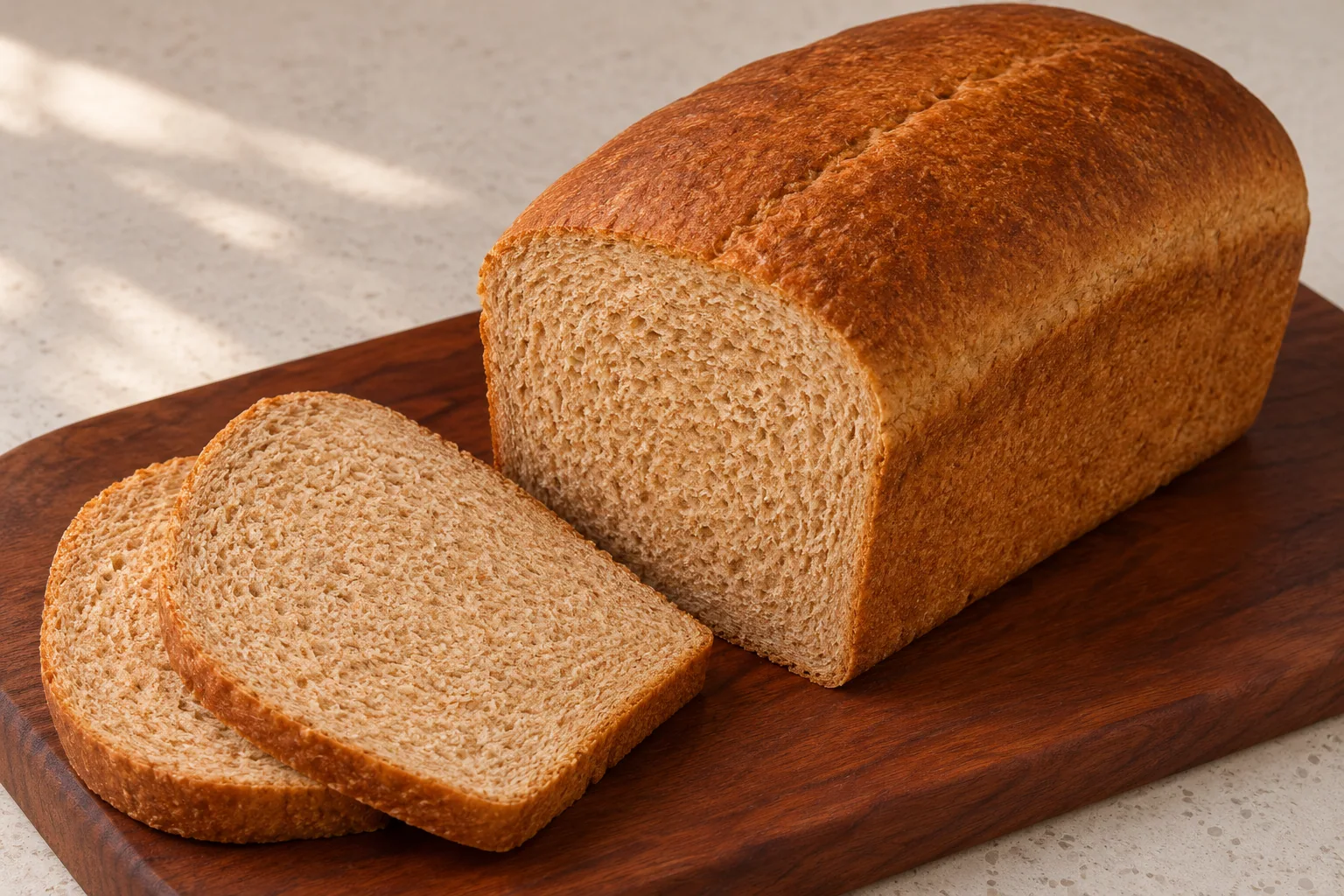
Rye behaves differently
Rye flour contains different structural components and often produces a stickier less elastic dough than wheat flour at similar hydration. The gluten-based windowpane test may not be useful for high-rye breads. Rye's absorption and baking methods require dedicated recipes. A 90% rye dough is not simply a wetter version of a 90% white baguette formula.
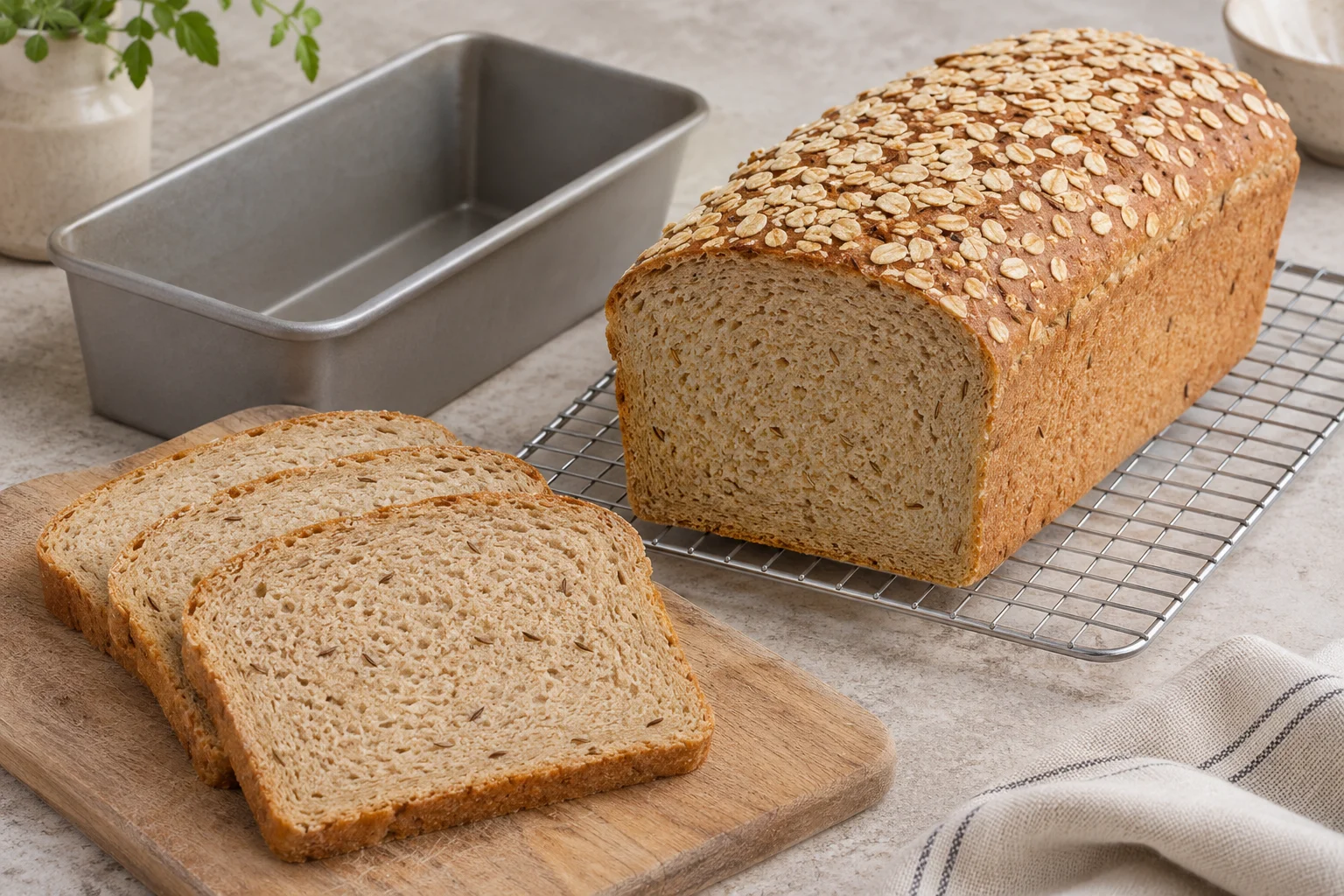
The texture of Soft Rye Sandwich Bread shows why the same calculated hydration can feel different with rye.
High hydration and open crumb
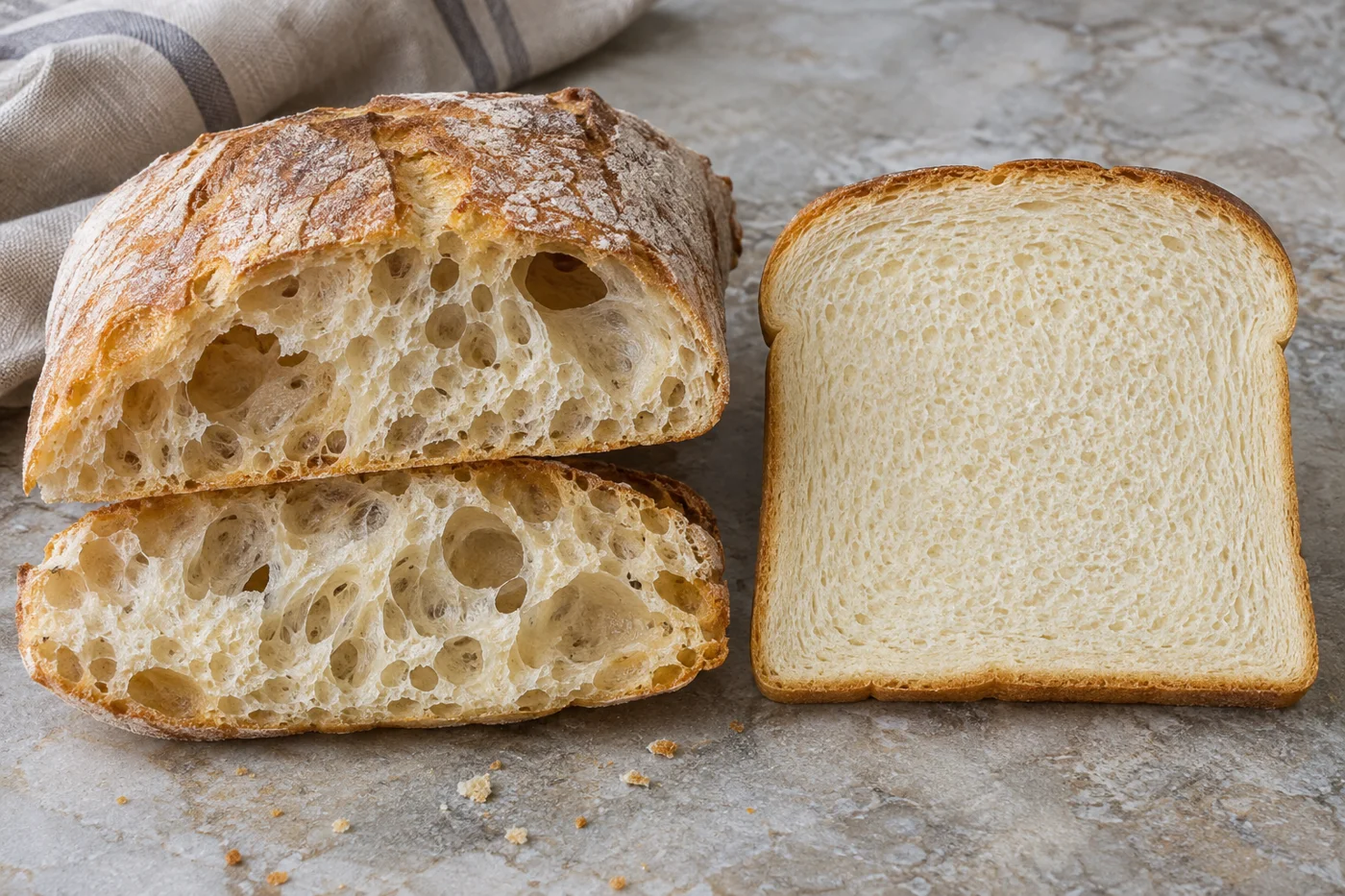
More water can encourage greater extensibility and, in some formulas, a more open crumb. But large holes aren't guaranteed: fermentation, gluten strength, shaping and oven spring all matter. Excess water can cause spreading and a gummy interior when the flour or technique cannot support it. Choose hydration based on bread style, not on the idea that the highest number proves baking skill.
The large holes in Sourdough Ciabatta reflect fermentation and handling as well as the water level.
Low hydration and firm dough
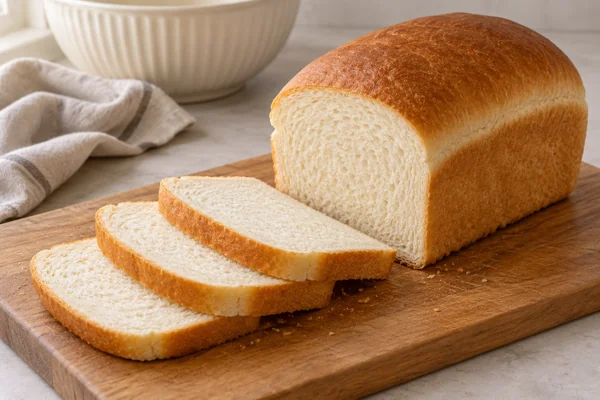
A lower-hydration wheat dough often feels more resistant during kneading and can be easier to shape tightly. Bagels and some sandwich breads use relatively firm dough for their intended chew and structure. Too little water for the selected flour may create cracking or weak gluten development. Hydration should suit the formula rather than an arbitrary target of dryness.
How mixing technique changes
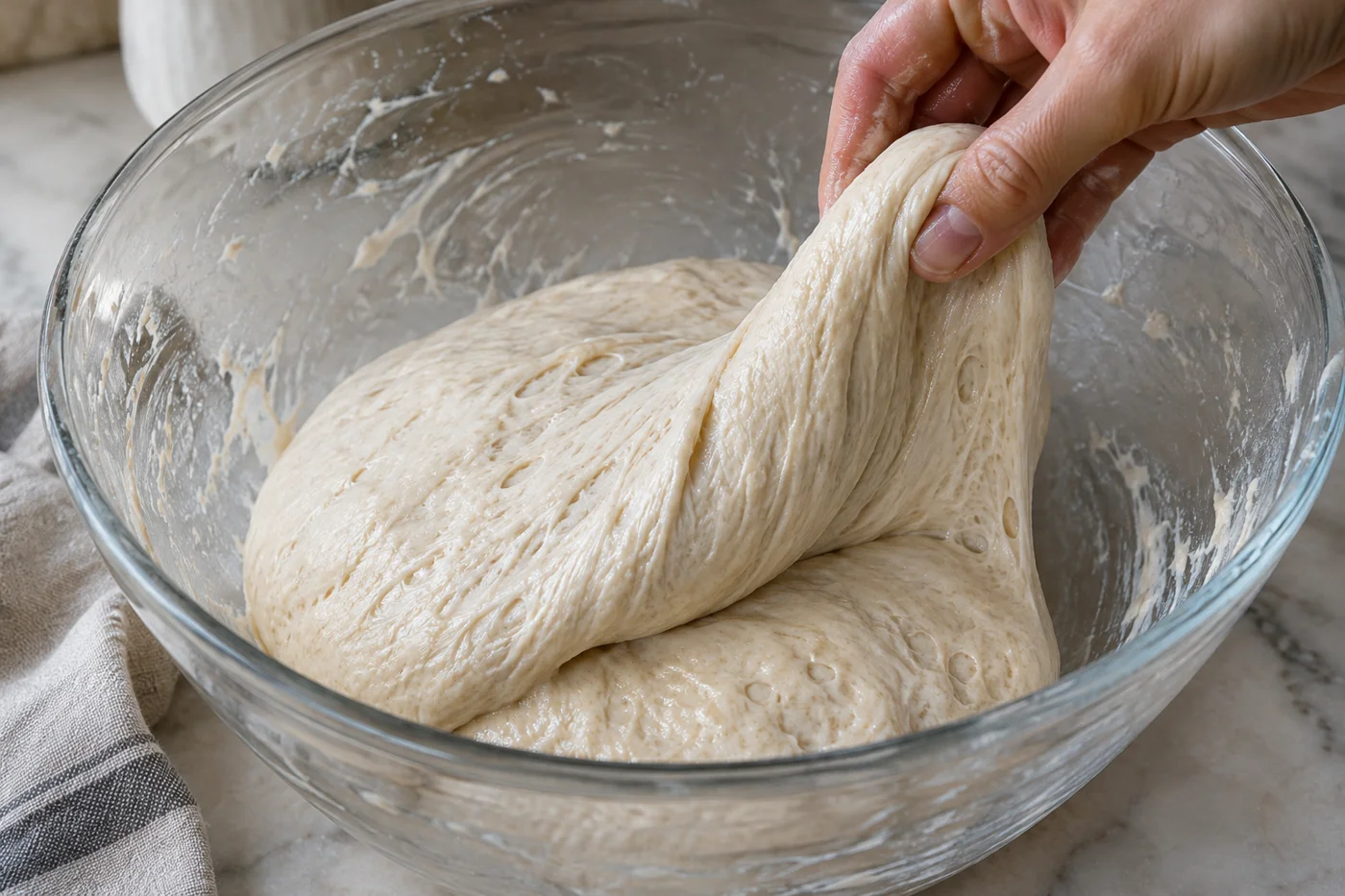
Wetter doughs are often strengthened through a series of stretch-and-fold or coil-fold sets, while firmer doughs may be kneaded more effectively by hand or mixer. Both methods develop gluten. The exact choice depends on flour and fermentation plan. A wet dough doesn't require adding enough flour to knead it like stiff bagel dough if the recipe was designed for folds.
For Sourdough Focaccia, follow the folding and pan instructions alongside the ingredient weights.
Temperature changes the feel
Warm dough generally feels softer and can ferment faster, while cooler dough may be firmer and slower to expand. A sticky batch may be warm rather than simply overhydrated. Measure dough temperature and follow the recipe's resting schedule before reducing water. High hydration also makes shaping-sensitive work more demanding if fermentation has progressed too far.
How to adjust water safely
When using a new flour, an experienced baker may hold back a small portion of water and add it gradually based on absorption, a practice called bassinage in some methods. This is not suitable for every recipe, and changes should stay within tested guidance. Record actual water additions so you can repeat the result. Don't pour extra water into a nearly finished dough without a method for incorporating it evenly.
Scaling a recipe with baker's math
If a formula lists flour 100%, water 72%, salt 2% and yeast 0.5%, then with 1,000 g flour it uses 720 g water, 20 g salt and 5 g yeast. If making half the batch, halve every weight to preserve percentages. When preferments are involved, calculate total flour and water correctly rather than scaling only the final mixing bowl ingredients.
What hydration doesn't tell you
It doesn't directly reveal flour strength, amount of fat, fermentation schedule, dough temperature or whether the final bread will be soft or crisp. Two breads at 70% can have completely different crumb and crust because of ingredient choices and mixing. Hydration is a useful starting coordinate, not a recipe summary sufficient to reproduce a loaf.
Troubleshooting dough that's too wet
First verify ingredient weights and whether preferment water was counted. Then check flour type, fermentation maturity and whether the prescribed rests or folds were completed. A naturally slack dough may become stronger over time. If it pools completely after proper development, a different hydration or flour might be needed next time. Avoid fixing every problem by adding handfuls of bench flour late.
Troubleshooting dough that's too stiff
Check whether extra flour was added by scooping or heavy surface dusting. Whole wheat and strong flour may absorb more water than expected. A rest may improve a tight dough, and a recipe-supported small water adjustment can help early in mixing. Do not assume kneading harder will compensate for serious underhydration.
IN PICTURES
From the baking notebook
FROM THE RECIPE BOX


