
On this page
Let a properly baked loaf cool, then cut through the middle and look closely. A sticky smear that clings to the knife, a dark streak that follows a banana piece and a dense band across the bottom point to different problems. Remember where you saw the mark before changing the recipe.
What does gummy banana bread look like?
Gumminess may appear as a darker, slightly translucent band near the bottom, a sticky centre that clings to the knife or a dense compressed layer beneath an otherwise normal crumb. Genuine raw batter looks shiny and wet and lacks a properly set cake structure. A rich banana loaf can be naturally dense, so compare the texture with the recipe's intended result before declaring it a failure.
Compare your cooled centre with a slice of Classic Banana Bread before changing several ingredients.

First: distinguish moisture from underbaking
A tender crumb pulls apart into small pieces. Wet, pasty batter smears across the knife and can collect in a single continuous strip in the centre. Do not taste raw batter to decide which you have. Check a neighbouring piece of crumb away from a chocolate swirl or fruit.
1. Too much mashed banana
Peel and mash the bananas before measuring the quantity the recipe gives. Weigh them if a weight is available. A particularly large banana can add enough water and fruit pulp to slow the setting of the centre even while the outside is already brown.
See how Protein Banana Oat Muffins specifies the banana for its own batter before borrowing an extra banana for a loaf.

Why banana count is unreliable
Three bananas can mean vastly different weights depending on fruit size. Mash the fruit and measure its weight or volume exactly as the formula requires. If a recipe gives both a gram value and an approximate fruit count, use the precise measurement. Save the surplus for pancakes, smoothies or a separate batch.
Portion the fruit for Air Fryer Banana Bread before mixing. Size differences between bananas matter even in a small batch.

2. The middle was not fully baked
The top and edges heat earlier than the centre of a deep loaf. A crust can become dark and pleasantly cracked before the middle has set. Use the tested recipe's doneness method and check the true centre with a long skewer, thin knife or thermometer as specified. Avoid reading the temperature of a melted chocolate chip or the pan itself.
The centre of Sourdough Banana Bread is the last place to check. An outside edge can be ready while the middle still holds batter.
A thermometer helps, but follow the recipe
Insert a thin skewer into more than one spot near the thickest part. A thermometer can provide another check if your recipe gives an endpoint for that kind of loaf. Use it in the crumb, away from the metal pan and melted fillings, and look at the result alongside the skewer.

3. The loaf pan was too small
Putting a large batch in a narrower or deeper pan creates a thicker column of batter. The outside may brown while the centre stays wet. Verify the actual pan size, including depth, against the recipe. Switching between 8½ × 4½ and 9 × 5-inch pans is not necessarily neutral.
4. The oven was hotter than you thought
An inaccurate oven can brown the loaf early while leaving the centre behind. If the crust is very dark but the middle is wet, confirm the actual temperature with a suitable oven thermometer. Use the proper rack position and avoid setting a significantly higher temperature just to make the loaf finish sooner.

5. The oven was too cool
The opposite problem can also occur. A consistently cool oven may produce a prolonged bake with inadequate structure and an uneven rise. Loaves can lose moisture at the edges while their centres slowly heat. Check that the oven is fully preheated and that the displayed setting matches reality.
6. Too little flour
Flour's starch and proteins help the batter develop a cohesive crumb. Accidentally using less than the recipe specifies can leave insufficient structure to balance bananas and liquid. Weigh flour where possible; if using cups, follow the developer's method. Do not judge flour quantity by whether the batter looks thick enough.
Look at the flour called for in Whole Grain Apple Bread before deciding whether a scoop of whole-grain flour is a fair comparison.
7. Too much flour also causes problems
Excess flour commonly gives a heavy, tough or dry loaf rather than a wet centre, but it can coexist with other issues. For example, a heavily overmixed, flour-rich batter may become rubbery. If the loaf is tough rather than pasty, consider both measurement and mixing before treating it as a moisture problem.
8. The batter was overmixed
When the wet and dry mixtures meet, fold from the bottom and stop once the last flour pockets disappear. Hard beating can toughen wheat-based batter. A sticky centre by itself does not prove overmixing. Check the fruit quantity, pan depth and central bake as well.
Follow the point where mixing stops in Zucchini Bread to practise folding a wet quick-bread batter.

9. Ingredients were not fully distributed
Inadequate mixing can leave dense banana pockets, flour streaks or pools of fat. A large pocket of mashed banana may appear as a soggy patch after baking. Scrape the bowl and combine ingredients evenly before adding flour, then fold only as long as the method requires.
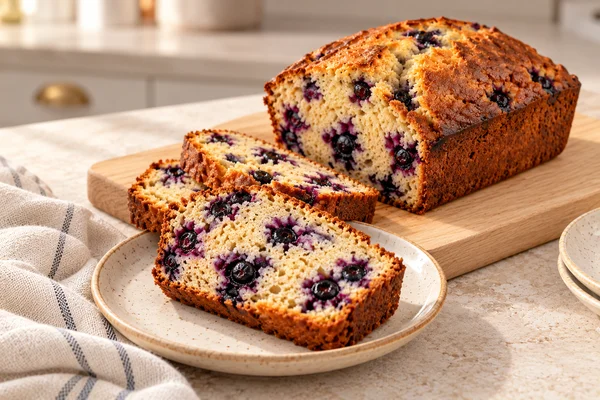
Slice Blueberry Bread across a berry and then between berries. Moisture that follows the fruit has a different pattern from a wet seam across the base.
10. Baking soda or powder was measured incorrectly
Too much leavener can cause the loaf to rise quickly and collapse before the crumb sets, creating a dense middle. Too little may produce a heavy loaf with inadequate lift. Measure the exact type and amount; baking soda and baking powder are not direct substitutes, particularly in a formula with acidic ingredients.
11. Oil, butter or yogurt was changed
Different fats and dairy products affect the batter's liquid, fat and acidity balance. A large untested addition of yogurt or sour cream may make the loaf wetter; replacing butter with oil changes the composition. Choose a recipe designed for the ingredient you want rather than modifying a trusted formula extensively.
The yogurt and oat flour in Oat Flour Banana Bread belong to the same formula. Changing one can change how the middle sets.
12. Too much sugar or a major reduction
Sugar influences moisture retention, browning and structure. A significant untested increase can alter the crumb and delay setting; a substantial reduction changes tenderness in a different way. If your banana bread came out gummy after modifying the sweetness, return to the original recipe before testing a measured variation.
13. Chocolate or fruit swirls created wet pockets
Cut beside the suspected mark. A swirl follows a curved path and darkens just part of a slice. A broad glossy band in the unflavoured crumb is a reason to check the bake itself. Test away from chocolate when the loaf is still in the oven.
A skewer through the swirl in Banana Nutella Bread can carry chocolate even when the surrounding crumb has baked.

14. Too many chocolate chips or nuts
Large quantities of add-ins can interrupt the crumb and make the loaf break or appear uneven. Melted chocolate can coat a tester and look like raw batter. Weigh additions according to the formula and check the surrounding cake crumb, not a chocolate pocket, when assessing doneness.
A melted chip leaves a similar mark in Sweet Potato Chocolate Chip Muffins. Testing in two places helps locate it.
15. The loaf was cut too soon
Banana bread continues to firm as it cools. Cutting very hot quick bread can smear its soft crumb and make a correctly baked centre seem wetter than it will when cool. Follow the cooling schedule before judging the final texture. However, cooling does not turn raw flour-and-egg batter into properly baked bread.
Let Lemon Poppy Seed Bread cool before slicing to practise judging a uniform crumb without a stripe of fruit through it.

16. It stayed in the hot pan too long
Many recipes ask for a short rest in the pan, then transfer to a wire rack. Leaving a loaf against hot metal longer than directed can affect its crust, and trapped steam may soften the sides or bottom. Follow the recipe rather than storing the loaf in its baking pan while warm.
17. The wrapped loaf trapped steam
Wrapping or sealing a loaf before it has cooled sufficiently can cause condensation. The resulting soggy surface or bottom is different from a raw gummy centre, but both can disappoint. Allow the proper cooling period before wrapping for storage, and observe safety requirements for perishable fillings.

18. The recipe was designed for a different flour
Whole-wheat, oat, almond and gluten-free flours absorb liquids and provide structure differently from ordinary all-purpose wheat flour. A one-to-one substitution may make banana bread dense or gummy. When using alternative flours, choose a recipe formulated for them and its recommended binders and resting steps.
Use Vegan Gluten-Free Banana Bread when you want a gluten-free version. Its flour and binding ingredients were chosen together.

Why the bottom is gummy but the top is fine
A dense bottom layer may point to poor mixing, ingredient separation, excess banana settling, or an oven-and-pan heat problem. The pattern is not exclusive to one cause. Check whether fat and liquid were uniformly incorporated before folding the flour, and whether the pan was set on the correct oven rack.
Compare moisture near the bottom of Superfood Carrot Zucchini Bread with the crumb higher up before blaming every damp spot on the oven.
Why the centre looks dark
Bananas, brown sugar and other ingredients can darken during baking. A dark patch is not automatically raw, and a pale patch is not automatically fully baked. Look for the crumb's structure and use appropriate testing. Off-odours, mold or spoiled fruit are separate food-safety reasons not to serve the loaf.
The orange crumb of Pumpkin Bread is a reminder that ingredients affect colour. In a banana loaf, look for wet paste on the tester as well as a dark patch.

Can you save a gummy banana bread?
If you discover wet batter while the loaf is still hot and you have just taken it from the oven, return it promptly and check the centre again. Discard a cooled or stored loaf with a raw centre. Toasting works for a fully baked dense slice, and it cannot make an underbaked loaf reliably safe.
Don't try to fix everything at once
Suppose the loaf was gummy after you added an extra banana, used a smaller pan and substituted yogurt for butter. You won't know which variable mattered most. Return to the tested ingredient amounts, pan size and method on the next attempt. Then adjust only one element at a time.
A quick diagnostic checklist
Wet centre, dark crust: inspect doneness, pan depth and oven accuracy. Heavy crumb throughout: check banana quantity, flour, leavening and mixing. Sticky bottom after storage: consider trapped steam. Rubbery, tunnelled texture: check overmixing. Only spots around a swirl: evaluate the filling.
In Banana Coconut Oat Loaf, oats and coconut interrupt the crumb. Examine the bread between them before treating every patch of texture as a wet spot.

Frequently asked questions
Does extra banana cause gumminess? It can when the recipe isn't balanced for it. Is gummy bread always underbaked? No; moisture balance, mixing and cooling can contribute. Will chilling fix a wet middle? It can firm the crumb but cannot make raw batter safely baked. Can I use a thermometer? Yes, following the recipe's specific endpoint. Why was it better the next day? Cooling and moisture redistribution can improve a properly baked loaf's slicing texture.
The bottom line
For the next batch, weigh the banana, measure the flour carefully and record the inside dimensions of the pan. Test in two central spots and allow the loaf to cool before you slice. Change one thing between batches so the next slice gives you an answer you can use.
IN PICTURES
From the baking notebook
FROM THE RECIPE BOX


