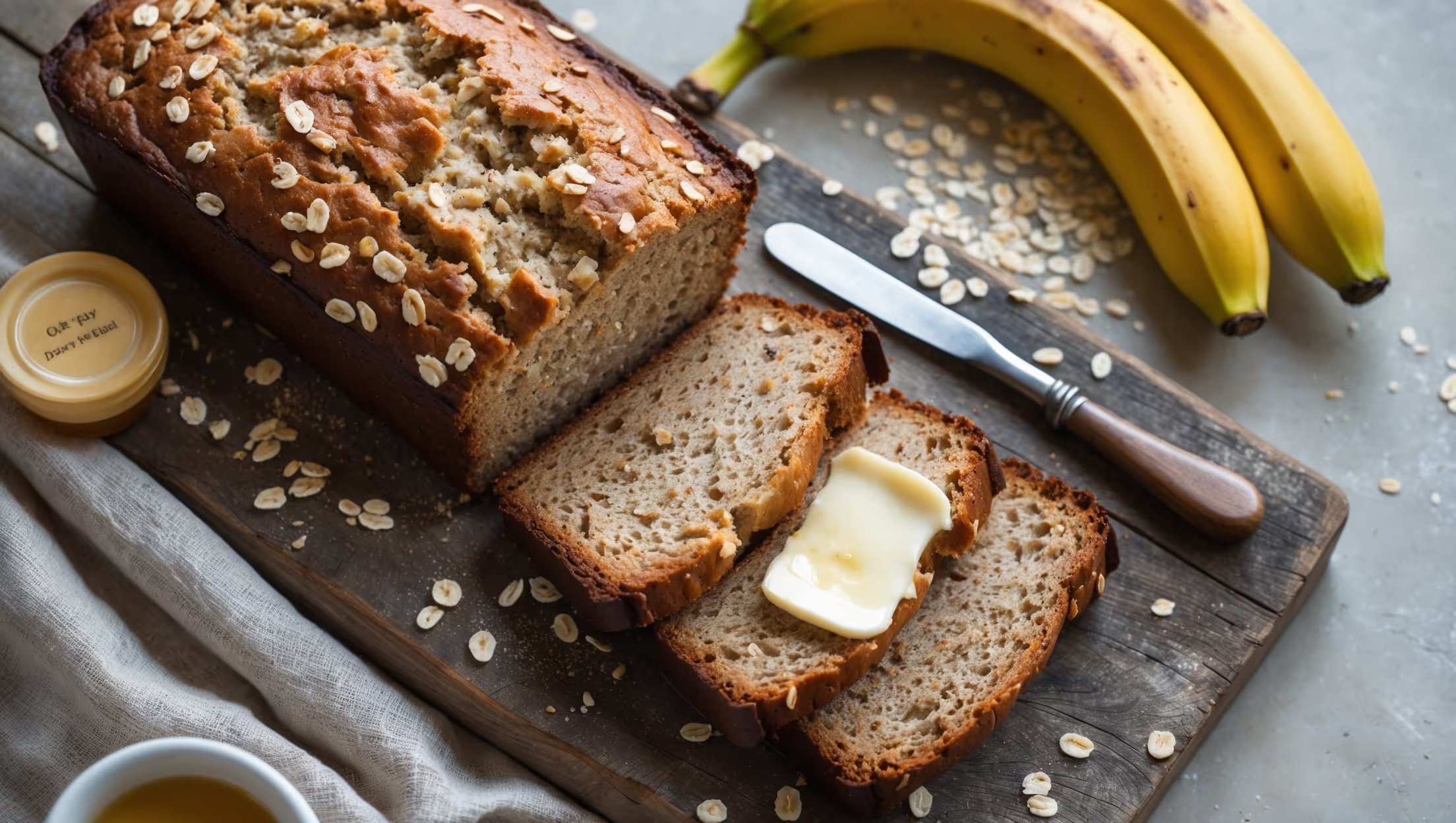
Directions
<ol class="no-list-style"><li class="MethodStepper"><h4 class="step-title">Step 1</h4>Preheat your oven to 175°C (350°F). Line your loaf pan with parchment paper, allowing some overhang on the sides to easily lift the bread out later. This prevents the bread from sticking and makes for easy cleanup.</li><li class="MethodStepper"><h4 class="step-title">Step 2</h4>If making your own oat flour, place rolled oats in a food processor or high-powered blender and process until you have a fine flour consistency. This usually takes 1-2 minutes. Measure out 300g of the flour after blending (oats yield slightly less flour than their whole weight).</li><li class="MethodStepper"><h4 class="step-title">Step 3</h4>In a large bowl, mash the bananas thoroughly with a fork until smooth. The riper your bananas, the sweeter your bread will be and the easier they'll incorporate into the batter. You want them very soft with plenty of brown spots.</li><li class="MethodStepper"><h4 class="step-title">Step 4</h4>Add the eggs, maple syrup, oil, yogurt, and vanilla to the mashed bananas. Whisk together until well combined. The yogurt adds moisture and its acidity will react with the baking soda to help the bread rise properly.</li><li class="MethodStepper"><h4 class="step-title">Step 5</h4>In a separate bowl, whisk together the oat flour, baking soda, baking powder, salt, cinnamon, and nutmeg until evenly distributed. Oat flour lacks gluten which means your bread won't develop the same structure as traditional wheat flour breads, but this also makes it impossible to overmix!</li><li class="MethodStepper"><h4 class="step-title">Step 6</h4>Add the dry ingredients to the wet ingredients and fold gently with a spatula until just combined. Don't overmix; a few small lumps are perfectly fine. The batter will be thicker than traditional banana bread batter due to the oat flour's absorbent nature.</li><li class="MethodStepper"><h4 class="step-title">Step 7</h4>If using nuts, gently fold them into the batter now. They add wonderful texture and nutritional value to complement the oats.</li><li class="MethodStepper"><h4 class="step-title">Step 8</h4>Pour the batter into the prepared loaf pan, spreading it evenly with your spatula. For an attractive finish, sprinkle a few rolled oats or additional chopped nuts on top.</li><li class="MethodStepper"><h4 class="step-title">Step 9</h4>Bake in the preheated oven for 50-55 minutes, or until a skewer inserted into the center comes out clean with just a few moist crumbs attached. If the top begins to brown too quickly, tent with aluminum foil after about 30 minutes of baking.</li><li class="MethodStepper"><h4 class="step-title">Step 10</h4>Allow the bread to cool in the pan for about 10 minutes, then use the parchment paper handles to lift it out onto a wire rack to cool completely. Oat flour bread tends to be more delicate than wheat flour bread, especially when warm, so this cooling period is essential for proper texture development.</li><li class="MethodStepper"><h4 class="step-title">Step 11</h4>Once completely cool (waiting at least an hour is ideal), slice with a serrated knife using a gentle sawing motion to prevent squishing. Enjoy as is or lightly toasted with a spread of butter, nut butter, or a drizzle of honey for added decadence.</li></ol>