
On this page
A flaky crust starts in the bowl, when you can still see the fat, and survives the trip into the dish if you handle the pastry gently. Before measuring anything, decide how the shell will finish: baked with fruit, partially baked for custard, or fully baked for a cold filling.
What makes pastry flaky?
Flakiness develops when thin layers or pockets of solid fat remain within the dough. As the pastry heats, the fat melts and moisture becomes steam, encouraging separation. Flour proteins provide enough structure to support the layers. If the fat is rubbed completely into a uniform paste or the dough is kneaded like bread, the result may become more tender or tough rather than distinctly flaky. Good technique preserves irregular but intentional texture.
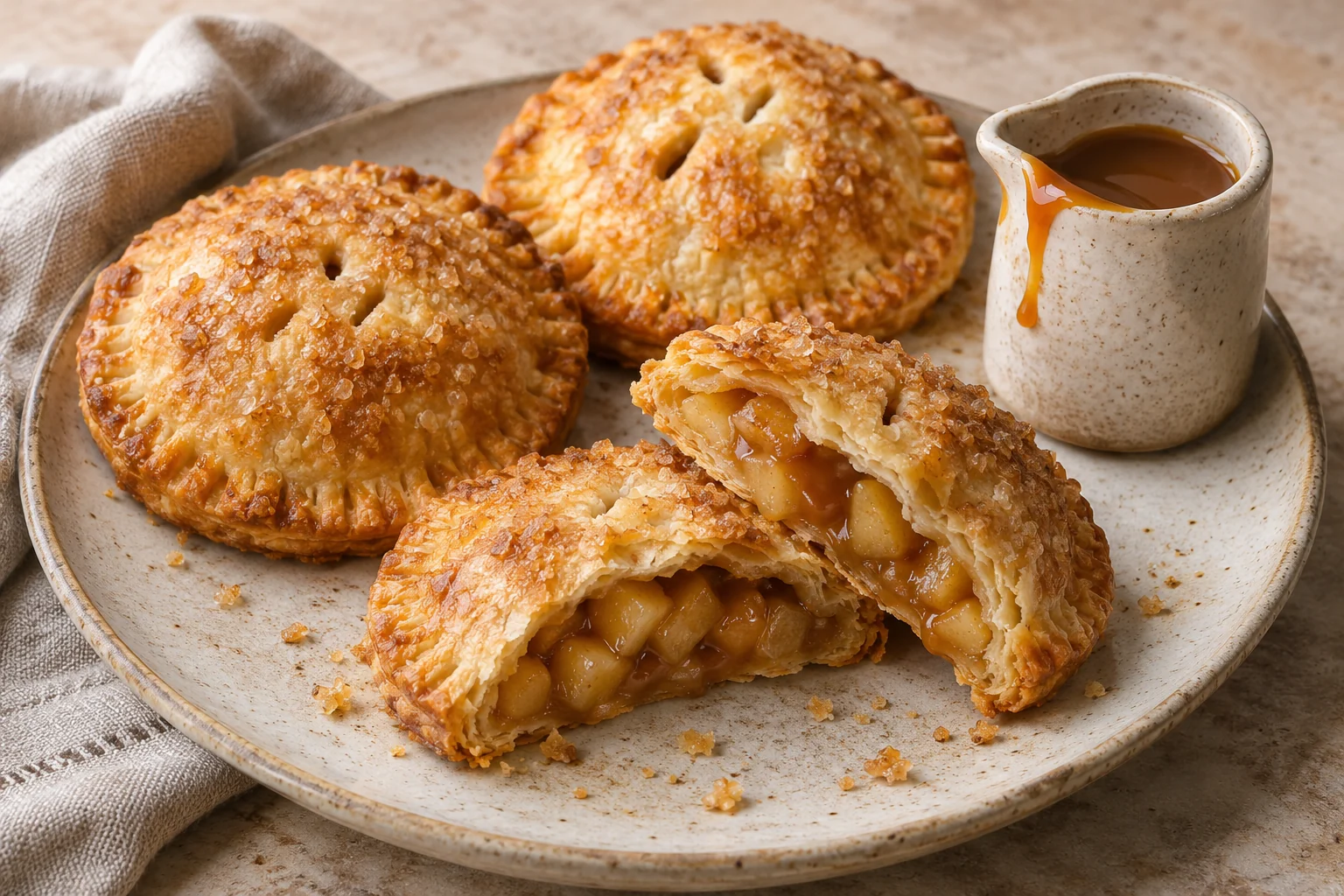
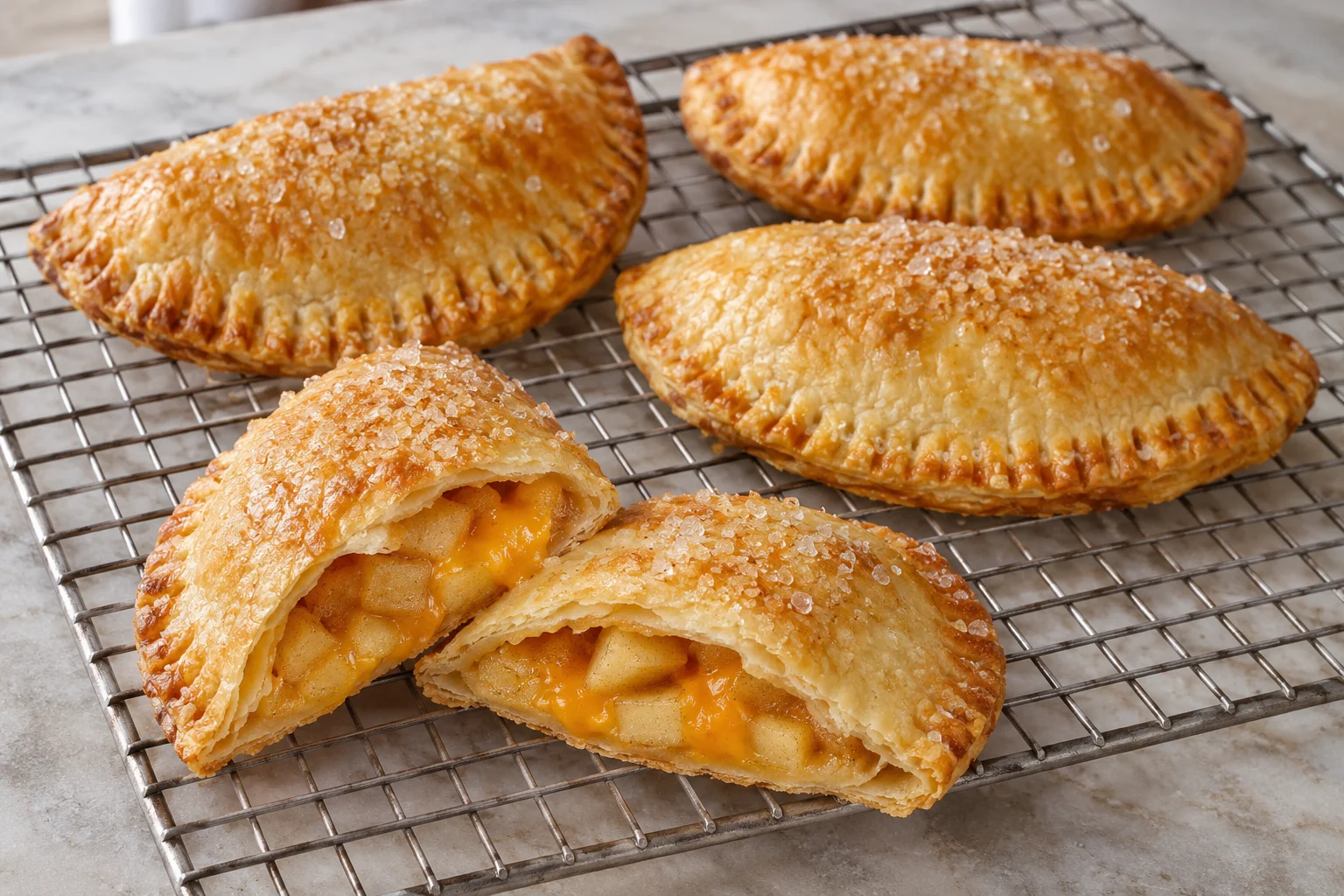
Break open the cool edge of Caramel Apple Hand Pies to see the pastry apart from the softer layer against the apple.
Start with a complete crust formula
Choose a complete pie-crust recipe matched to the intended pan and filling. Its flour, fat, salt and water quantities work together; do not combine the ratio from one formula with the folds or baking method from another. The recipes linked below provide specific amounts and steps for their own pies.
Equipment to gather
A digital scale, large bowl, pastry cutter or suitable food processor, rolling pin, bench scraper, parchment and an appropriate pie plate cover most needs. A ruler or rolling guides are helpful but not essential. Keep all equipment clean and dry. Prepare the intended pan and refrigerator space before starting so the dough doesn't warm while you search for tools or rearrange the kitchen.

Choose the flour
All-purpose wheat flour is a common starting choice for flaky pie crust because it provides manageable structure. Pastry flour can yield a different tenderness and water absorption, while whole-wheat flour includes bran that changes hydration. Don't assume they exchange cup-for-cup. Gluten-free dough requires a separate tested formulation with appropriate binders and often different rolling behavior. Begin with the flour specified by the recipe rather than improvising.
Butter should be cold and pliable later
Cut cold butter into the size your recipe specifies and keep it cool while you weigh the flour. During mixing you want visible pieces that can flatten under the pin. Later, after chilling, the dough itself needs to yield slightly at the edge before it can roll without splitting.
Keep the butter for Classic Apple Pie cold during mixing, then allow the chilled disk just enough time to roll.

Salt and optional sugar
Salt sharpens butter flavour and prevents bland pastry. A little sugar may support browning or complement sweet fillings in recipes that include it, but a savoury quiche crust may omit it. Don't add several extra tablespoons of sugar to a formula at random, as it can change browning and tenderness. Use the recipe's seasoning amounts and remember that salted butter may require an adjustment.
Cut the fat into flour
Use fingertips, a pastry cutter or short processor pulses to work the fat into the flour. Stop at the texture described by the recipe. For a flaky butter crust that often means a mix of fine crumbs and some larger flat pieces, all still cool.
Check the size of the remaining butter pieces in Cherry Pie as you work. They should still be visible when the water goes in.

Add cold water gradually
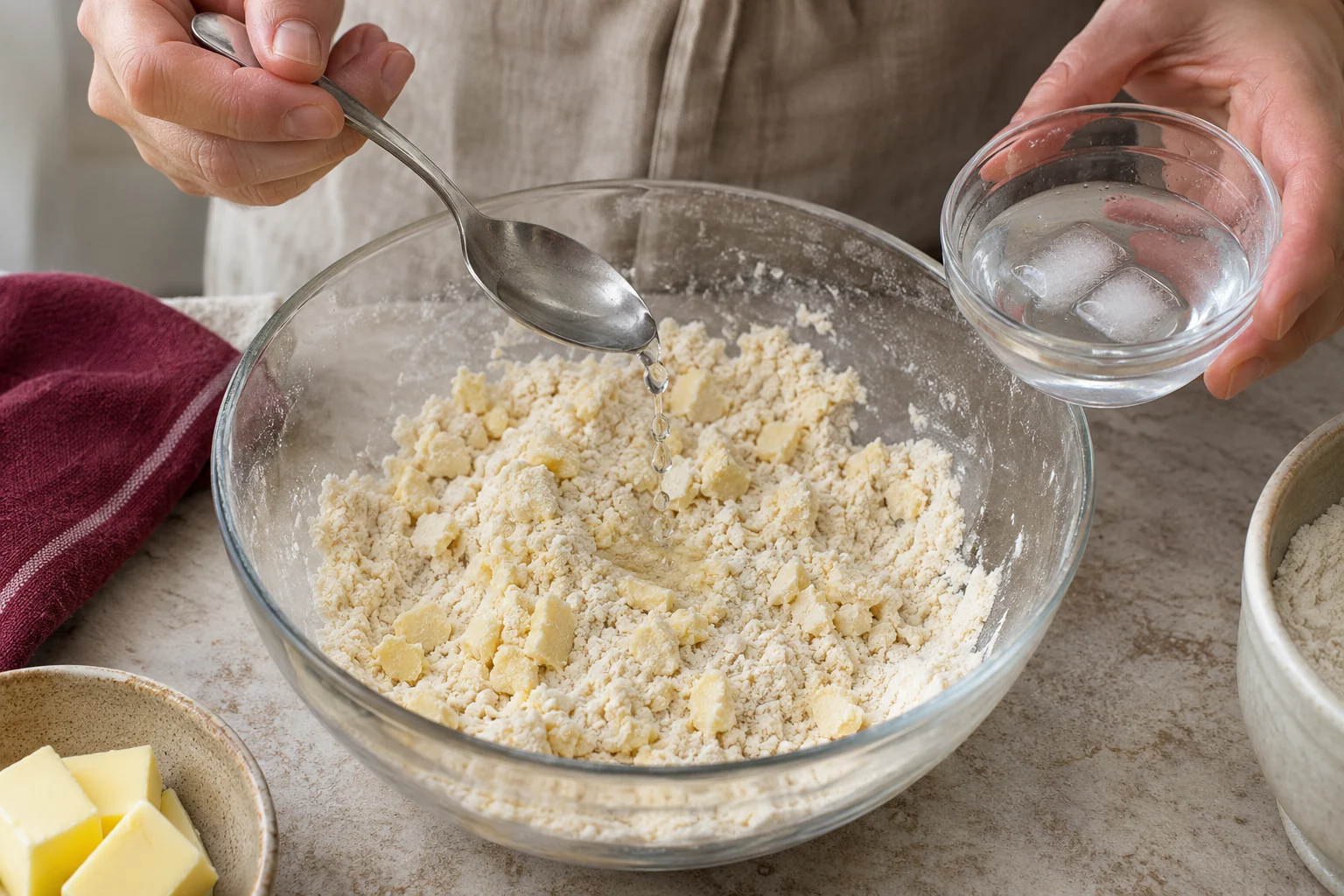
Sprinkle part of the measured water over the flour-and-butter mix, tossing gently. Add small additional amounts until a squeezed portion holds together without feeling wet or sticky. The final amount varies with flour, fat and humidity. Dumping in the full upper range at once can create a tough dough. Resist the urge to continue mixing until the bowl becomes perfectly smooth; a shaggy mass may be exactly right.
Drizzle the water for Pear Ginger Pie gradually and turn over the crumbs so it reaches the dry flour under the butter.
The squeeze test
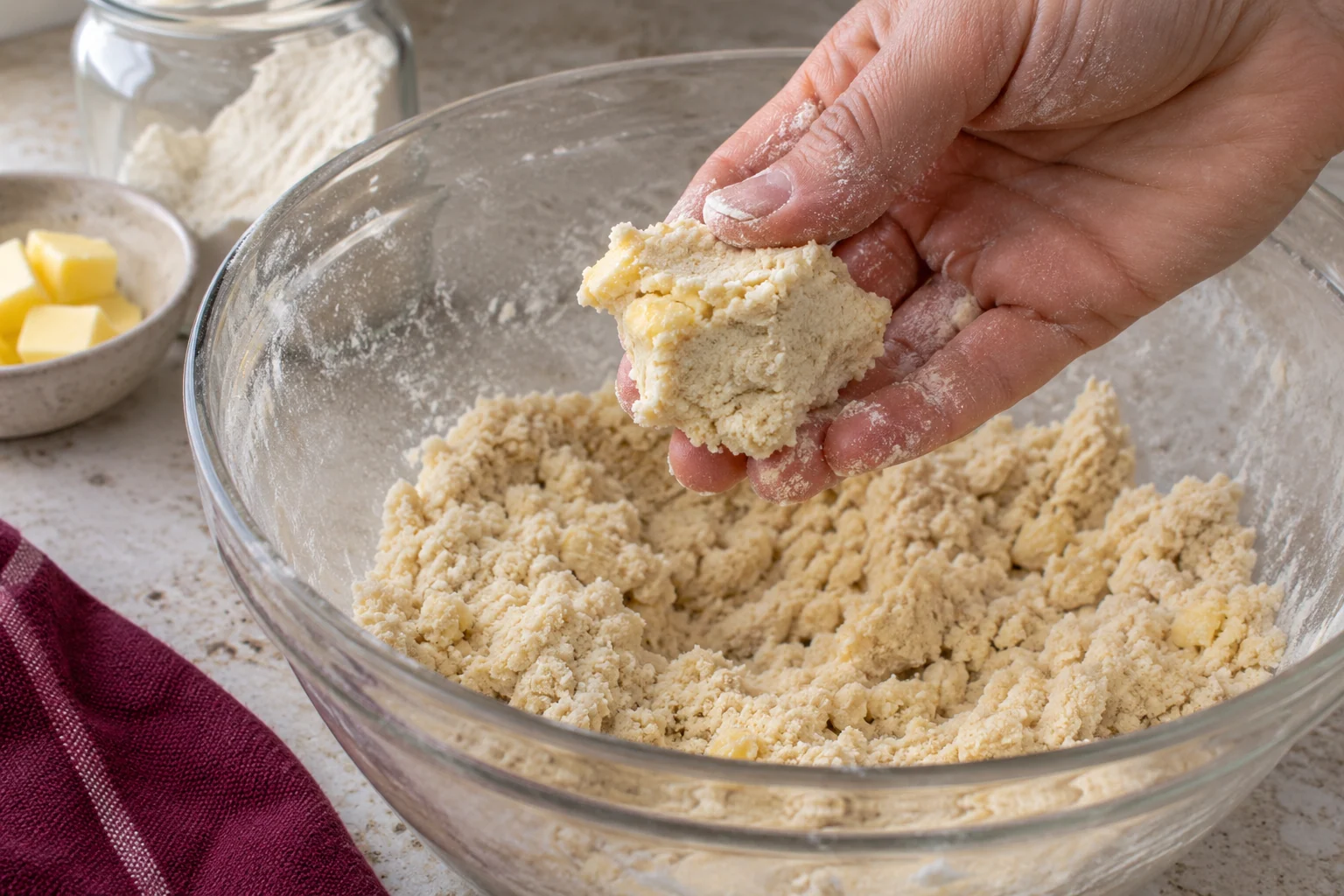
Squeeze a small handful from several parts of the bowl. It should hold together under light pressure. If the top clumps and the bottom stays dusty, toss the mixture before adding water. The dough can look rough when it is ready to gather.
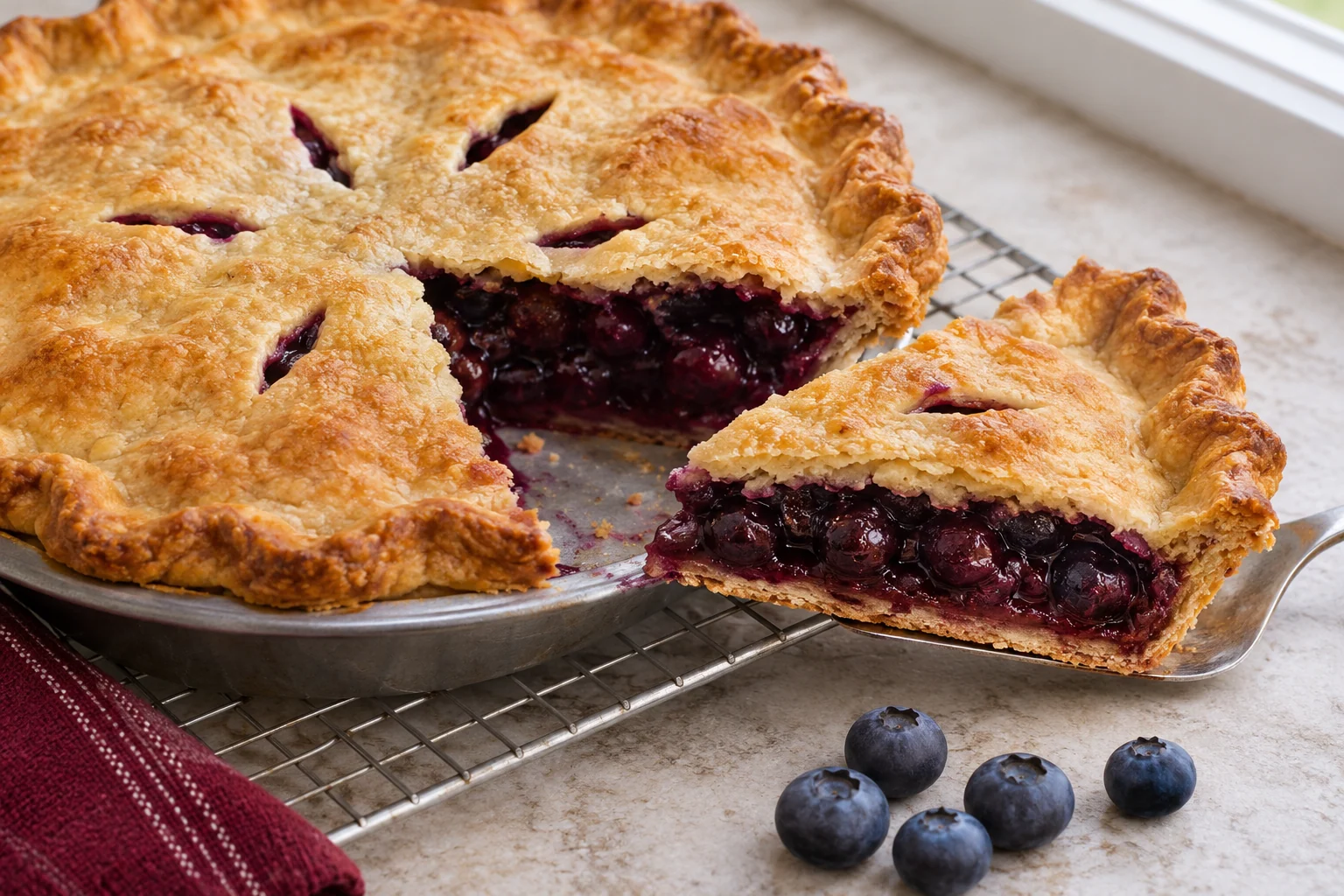
Test the dough for Blueberry Pie with a small squeeze before gathering the whole bowl into a disk.
Gather without kneading
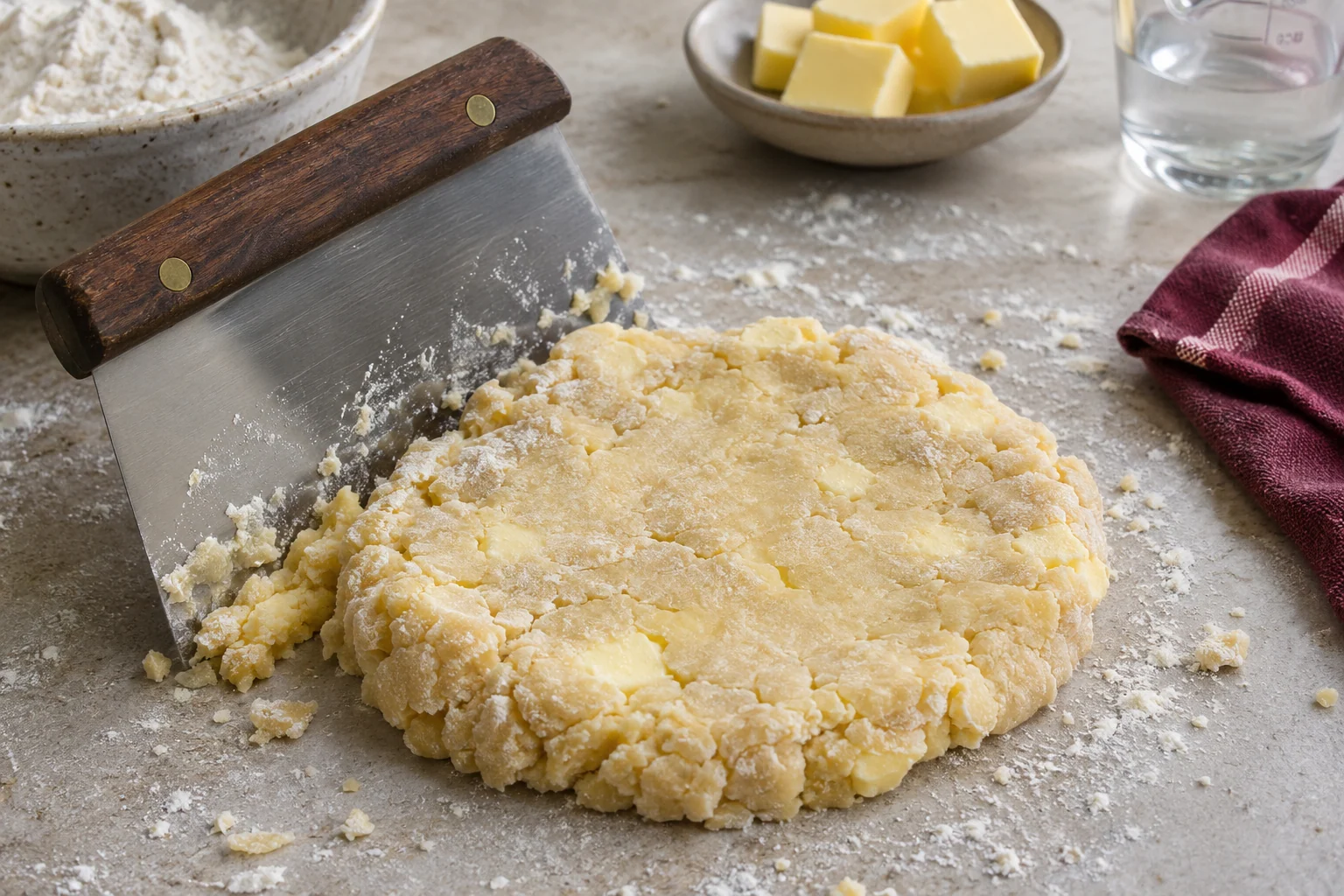
Bring the dough together gently using a scraper or hands, pressing loose areas into the mass. Avoid kneading until elastic as you would bread; overworking encourages gluten development and can smear butter. Divide for a double crust according to the recipe, often leaving slightly more for the bottom if its overhang needs extra width. Shape into flat disks before chilling so they roll with less force later.
Gather the dough for Apple Pear Pie into portions that suit the lower and upper crusts before wrapping.
Chill and rest the dough
Pat the dough into a broad disk so it cools evenly. Wrap it well and refrigerate for the time in the recipe. Before rolling, press the edge. Let an icy disk soften just enough to bend, and return a greasy one to the refrigerator.
The rest in Cranberry Pie gives the dough a chance to hydrate before you judge the edge with a rolling pin.
Roll from the centre
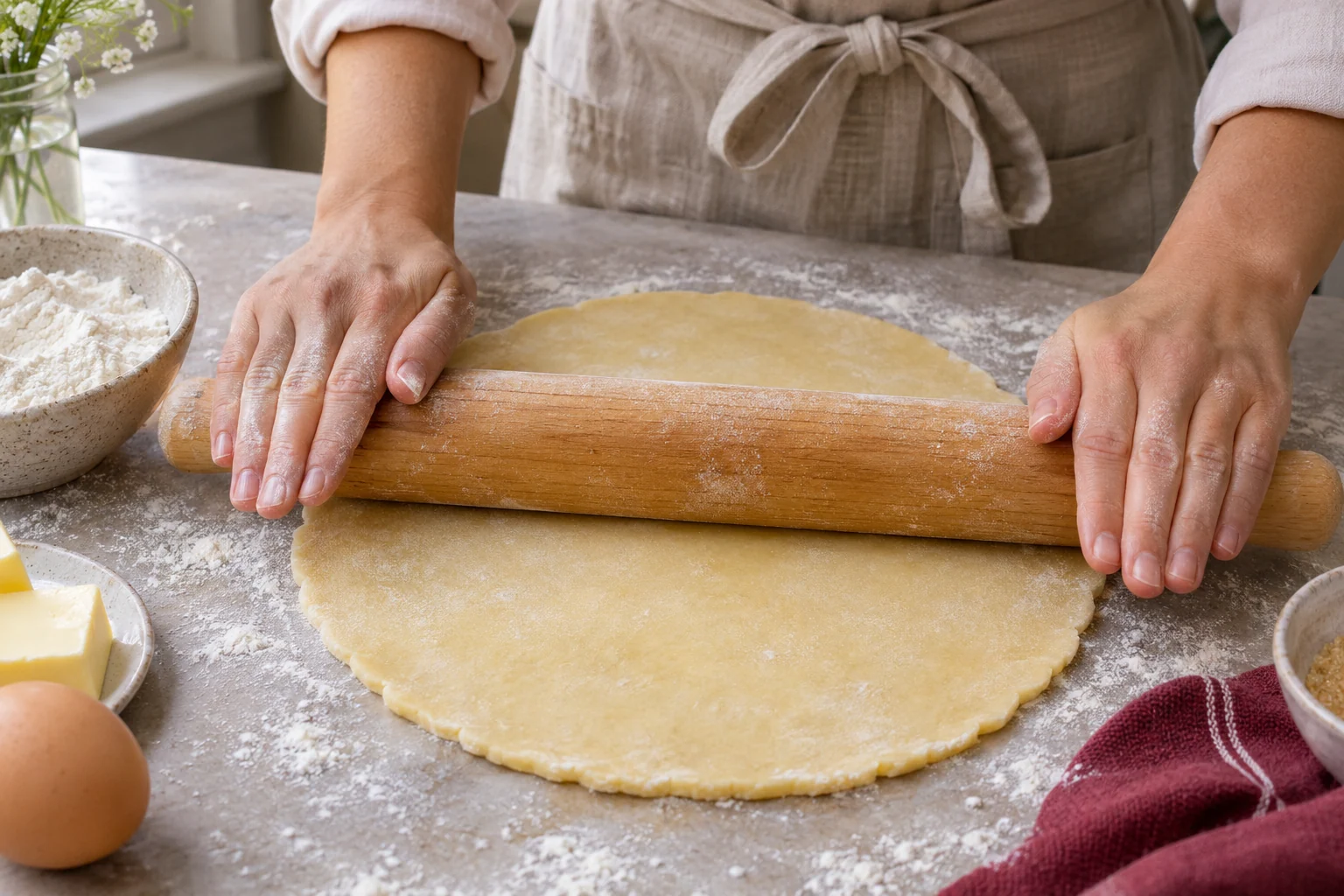
Let a very cold disk soften just enough to become workable, keeping it cool. Roll gently from the centre outward on a lightly floured surface, rotating the dough frequently to prevent sticking. Avoid excessive pressure at the edges, which can create thin spots and cracks. Use a ruler if needed to judge a relatively even thickness. Minimal bench flour protects the dough from becoming dry or tough.
Roll the dough for Cherry Almond Galette into a broad, even sheet so its outer folds bake at the same rate as the base.
Transfer into the pie plate
Carry the rolled dough on the pin or parchment and lower it into the plate. Lift the outer edge as you settle the lower corner. A crust stretched tightly across the pan can shrink away from the rim as soon as the oven heat reaches it.
Lower the pastry into the corners for Classic Quiche Lorraine without pulling. A little slack at the rim gives you something to ease down.
Add a fruit filling sensibly
Choose a fruit pie recipe designed for the raw or partly prepared pastry base. The filling needs enough thickener and baking time to set without soaking the crust. Fruit type, ripeness and frozen versus fresh state matter. Don't overfill the pan with wet fruit simply because you have extra. Keep the dough cool while assembling and seal any top crust appropriately.
Make a top crust or lattice
Roll the second disk using the same gentle technique. A solid top crust needs vents for steam, while a lattice provides openings naturally. Seal the edges securely and crimp without compressing the whole border into a heavy ridge. A light egg wash or another approved wash can help browning, but avoid applying so much liquid that it pools in the pastry folds.
Use the bright fruit under Strawberry Rhubarb Pie to check that each lattice strip alternates over and under its neighbours.
Blind baking for unbaked fillings
For a cold cream or pudding filling, bake the shell completely and cool it before assembly. A custard that will bake in the shell may need only a partial bake. Read the filling method before putting any weights into the oven so you know the intended endpoint.
The shell in Coconut Cream Pie needs to finish baking before its cooked filling goes in. Look for colour on the base as well as the rim.

Prevent a soggy bottom
A pie's bottom can remain wet if it doesn't receive enough oven heat or if filling releases too much juice. Use the pan, rack placement and temperature recommended by the recipe. Thin metal, glass and ceramic all behave differently. For some pies, a lower rack or a tested preheated metal sheet helps, but respect glass and ceramic cookware thermal-shock limits. Bake until the bottom crust and filling are both truly done.
Know the endpoint
For a shell baked empty, inspect the exposed base after the weights come out. For fruit pie, look for the specified bubbling near the centre as well as a browned crust. For a custard, use its own setting cue. The colour of the outer rim cannot answer all three questions.
Cool before slicing
Fruit pie filling thickens as it cools, and a hot pie can spill juice over even a good crust. Let it rest for the recipe's recommended interval before cutting. Custard and cream pies have their own chilling needs. A few hours of patient cooling may make the difference between a neat slice and a puddle without any change to ingredients.
Wait until the filling in Peach Pie has set enough to support a slice before judging the flakiness of the base.
Troubleshooting crumbly dough
Too little water, an overly cold disk or excess flour can cause cracking. Start by allowing the chilled dough to become pliable, then review initial hydration if it still crumbles throughout. Avoid splashing water onto the fully rolled sheet. If one batch remains unworkable, a new correctly measured dough may be more dependable for an important event than aggressive patching.
The pastry for Apple Cheddar Hand Pies calls for 60–75 ml of ice water, added gradually. Try its pinch test before adding more water to a crumbly edge.
Troubleshooting tough dough
Excess water, heavy kneading and too much bench flour can contribute to a dense or chewy crust. Use the squeeze test and gather gently during mixing. Rest the dough appropriately before rolling. Rolling harder won't make an overworked dough become flaky again; record the quantity and method so the next batch can be adjusted carefully.
Troubleshooting shrinkage
Pie pastry can pull away from pan edges when stretched during lining, insufficiently rested or baked under unsuitable conditions. Ease dough gently into the corners, avoid stretching and chill where specified. During blind baking, use appropriate weights and supports. A generous overhang isn't a substitute for good placement if the crust was taut from the beginning.
Ease the border of Strawberry Rhubarb Galette up around the fruit, leaving it relaxed. A free-form edge that was stretched tight can pull back as the pastry sets.

Troubleshooting a greasy or dense crust
Butter that becomes too warm before baking may smear into the flour, reducing the flaky separation. An unusually wet dough can also bake heavily. Keep fat cold during preparation and pause for refrigeration if rolling becomes sticky. Check oven temperature; an underheated oven can delay proper pastry setting. Adding extra sugar or powder doesn't repair the lost fat layering.
Making dough ahead
Many tested pie dough recipes permit refrigerator rest or freezing of wrapped unbaked disks for later use. Label each portion and follow the formula's safe timing and thawing instructions. Roll only when appropriately pliable. Avoid transferring frozen glass or ceramic pans directly into high oven heat unless approved by the cookware manufacturer. Make-ahead convenience should not create temperature hazards.
A first-pie timeline
Make and chill the dough first. Prepare the filling while it rests, allowing cooked fillings to cool as required. Roll and fit the pastry, follow the right baking sequence for that filling, then allow time for safe cooling or refrigeration before the first slice.
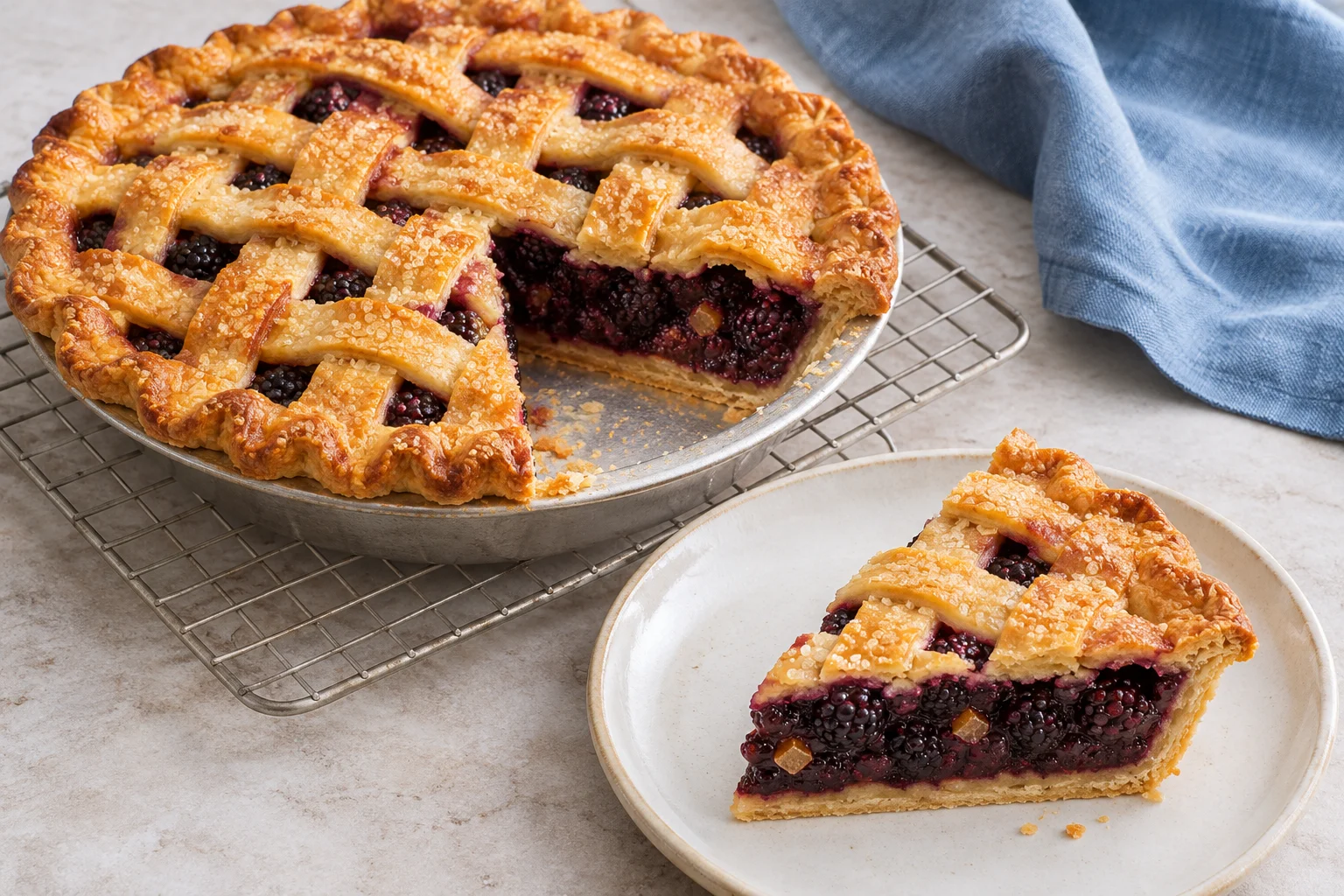
Read Blackberry Ginger Pie from the first dough step through cooling, then plan when to prepare the filling and roll the lid while the lower pastry stays cool.
Frequently asked questions
How much water does pie dough need? Enough for a squeezed portion to cohere, within the tested range. Should you knead pastry smooth? Usually not. Can you use salted butter? Only with suitable salt adjustment. Must all pies be blind-baked? No. Why is the bottom pale? Heat, pan and bake completion matter. Why does the edge shrink? Stretching or insufficient rest may contribute.
Flaky pastry comes from repeatable steps
Measure flour, keep butter appropriately cold, add water gradually, gather without overworking and allow a proper rest. Roll evenly, line the pan without stretching and bake according to the filling's needs. Master those basics before experimenting with unusual fats or elaborate lattice designs; a simple well-baked crust can make any pie special.
IN PICTURES
From the baking notebook
FROM THE RECIPE BOX


