On this page
Choose the box before you pipe the last border. You need clearance above the decorations, a board that cannot slide sideways and a level spot for the box. If the filling needs refrigeration, arrange cold transport and refrigerator space at the destination first.
Choose a transport-friendly cake design
A relatively low two-layer cake with a firm filling is easier to carry than a very tall cake with multiple soft layers. If the celebration requires an elaborate structure, plan supports and possibly separate tiers. Consider the weather, journey length and the available refrigerator. Don't choose whipped cream frosting for a warm outdoor venue simply because its appearance matches the theme.
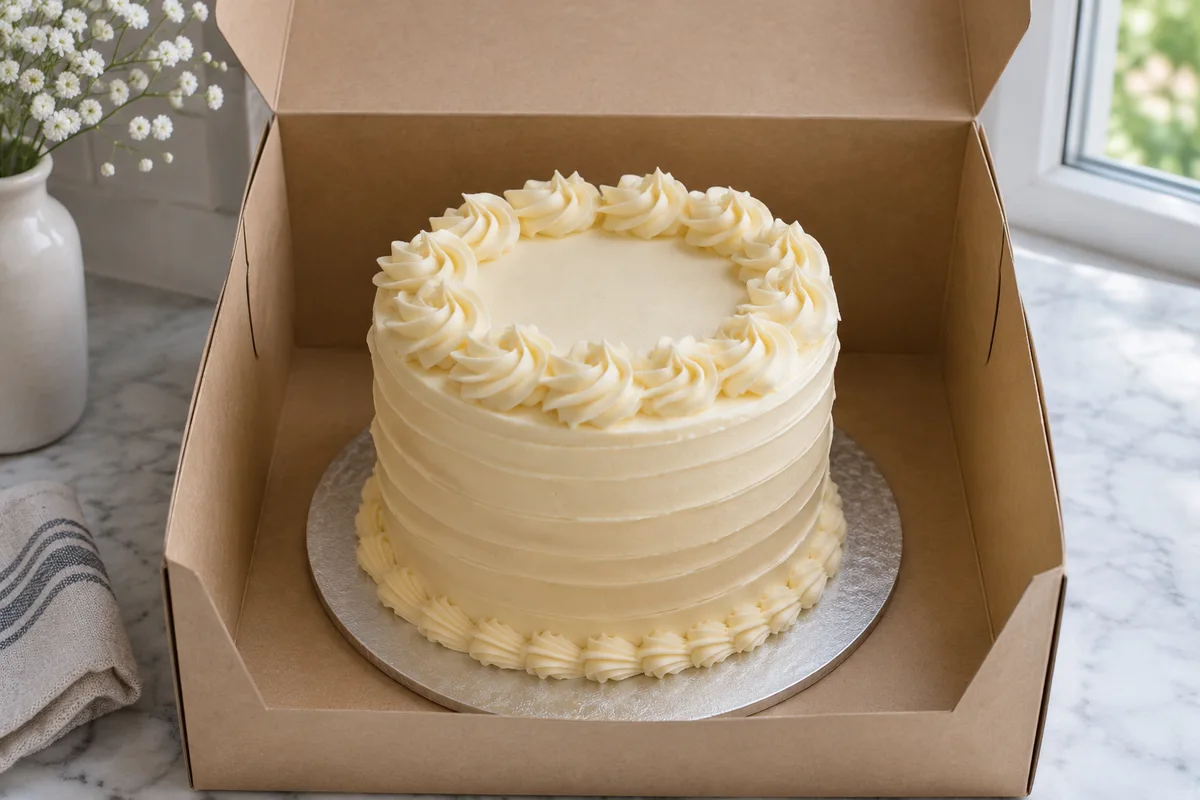
Use the assembled height of Classic Vanilla Layer Cake when choosing a box.

The importance of a rigid board
Place the cake on a food-safe rigid board larger than its base. The board supports its weight during lifting and helps keep it level. A thin flexible cardboard circle can bend under a heavy cake, cracking frosting or shifting the layers. For large cakes, use suitably strong boards and support systems as recommended by cake-decorating guidance.
Board size and box height
Measure the finished cake diameter and height, including piping, toppers and any tall decorations. The box needs space above and around the frosting so the lid never brushes the design. A cake that fits its base board may still be too high for the box. Check the dimensions before assembly rather than attempting to force a finished cake into a container.
Level layers before stacking
Domed cake layers can create a leaning stack even with attractive frosting. Allow layers to cool fully and trim only as directed, using a level surface and suitable serrated knife. Remove loose crumbs and keep layers aligned. A structurally level cake is far easier to transport than one whose center of gravity already sits to one side.
Level the layers of Chocolate Layer Cake before the final coat to reduce the chance of a lean.

Use a filling that can support the next layer
A thick buttercream or properly set ganache generally behaves differently from loose whipped cream or juicy curd. Choose the formula for the intended cake height and temperature. A buttercream dam may help contain softer filling, but it cannot compensate for excessive filling thickness or an unsupported tall stack. Follow the recipe's chilling and refrigeration requirements.
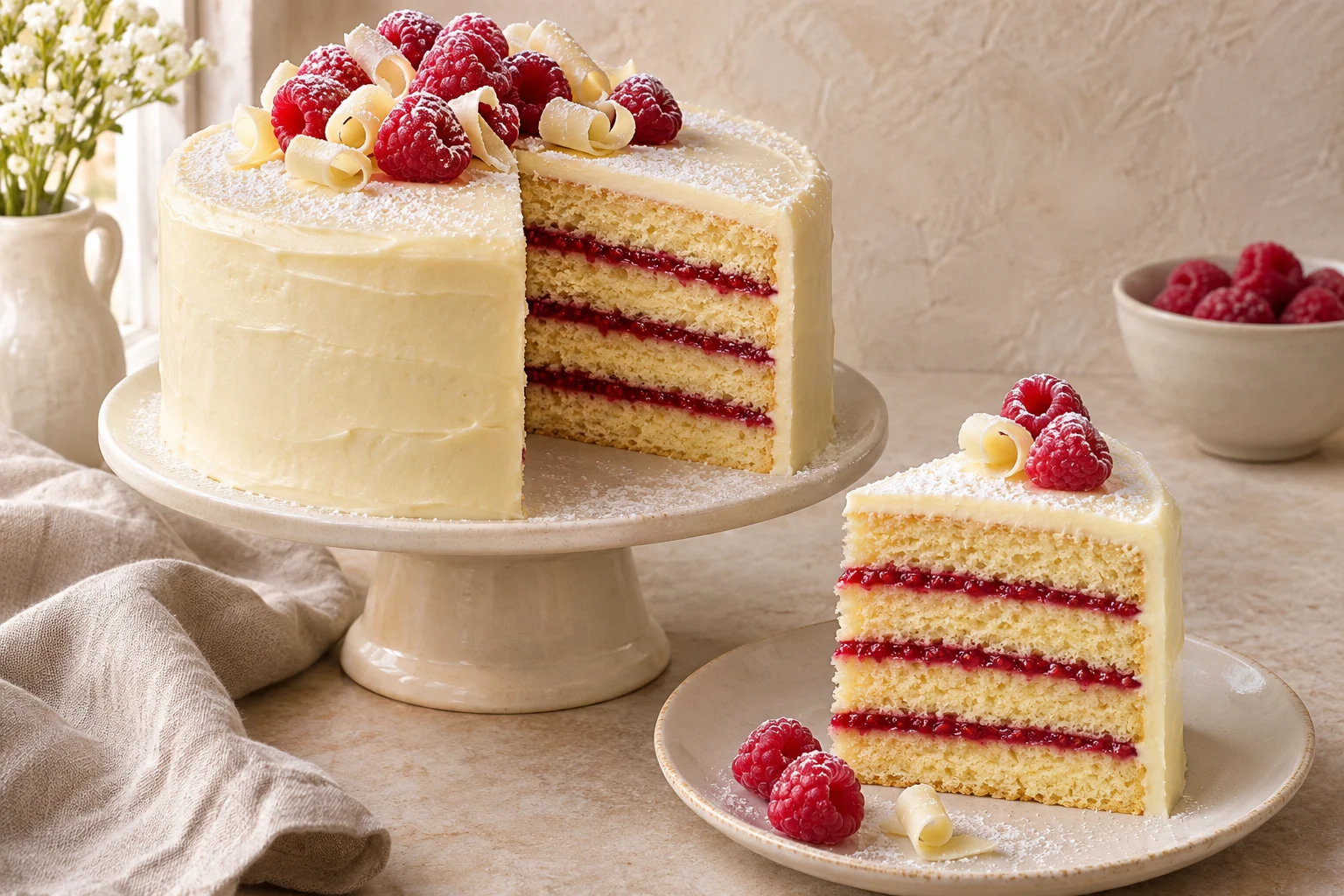
Look at the filling bands in Raspberry White Chocolate Layer Cake when judging how thick to spread a layer.
Crumb coat for a stable exterior
A thin crumb coat traps crumbs and creates a foundation for final frosting. Chilling until appropriately set can make handling and smoothing easier. A thick unstable smear doesn't become a stable support system merely because it is called a crumb coat. Apply final frosting only once the cake and its base are properly aligned.

When chilling helps
Compatible buttercream or ganache coatings may firm in the refrigerator, making them more resistant to minor movement. Chill according to the recipe before boxing. However, chilling doesn't eliminate the need for correct supports, and sudden temperature changes can cause condensation or affect certain decorations. Keep perishable fillings under suitable cold storage throughout the journey.
Cream and custard filling concerns
Pastry cream, cream cheese frosting, fresh cream and some fruit fillings are perishable. Maintain appropriate refrigeration, generally at or below 4°C (40°F), during storage and transport. An insulated cooler with adequate ice packs or a controlled refrigerated vehicle may be necessary for longer trips. A hard chocolate shell or thick frosting doesn't make the cream centre shelf-stable.
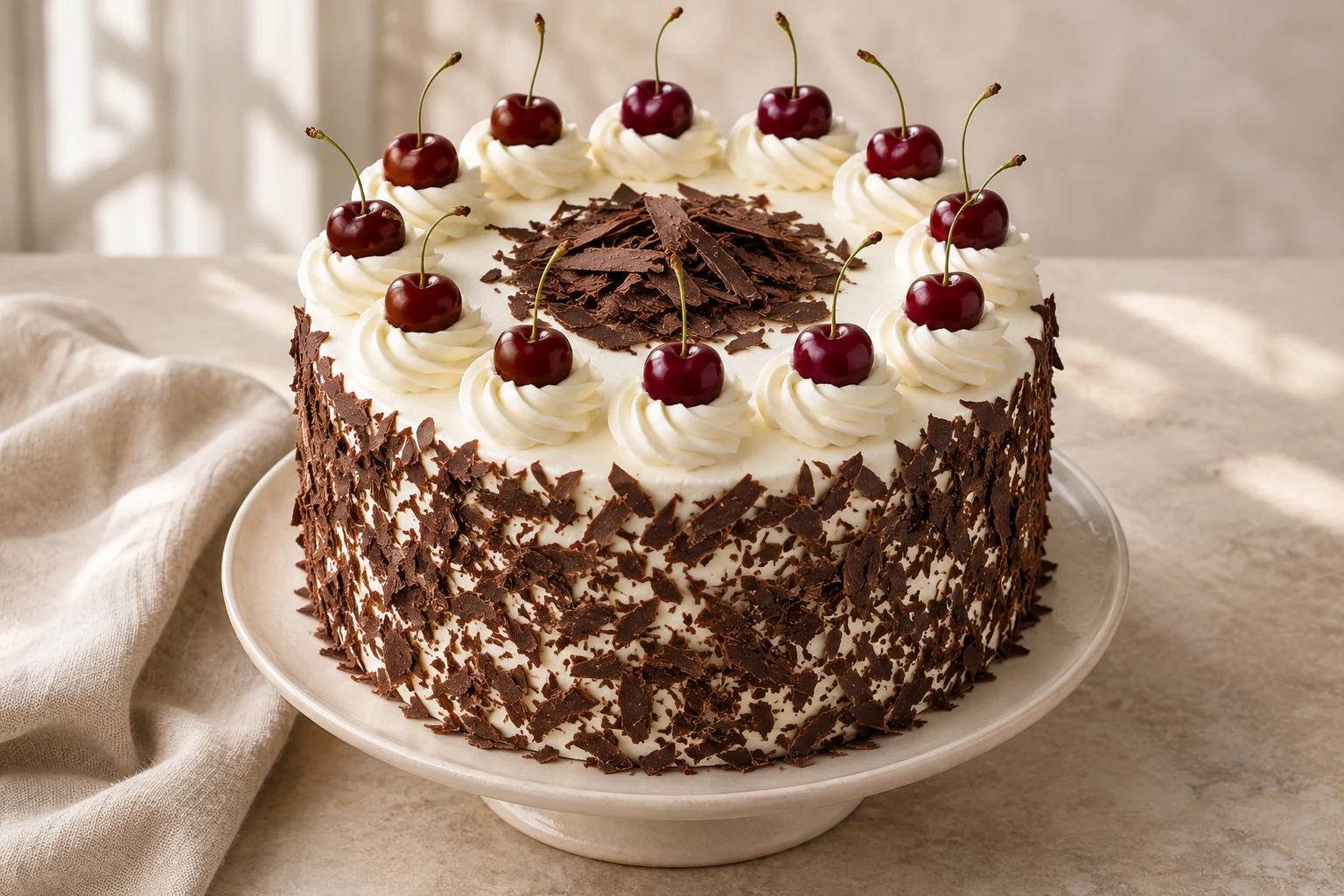
For Black Forest Layer Cake, plan cold storage around the filling and topping throughout the trip.
How to use internal supports
Tall tiered cakes often need dowels, straws or other food-safe structural supports beneath separate cake boards. Supports should be sized and placed to carry the weight above rather than piercing layers at random. Use recognized cake-assembly instructions, especially for wedding tiers. If unfamiliar with a complex structure, a smaller single-tier display or professional assistance may be safer.
Separate tiers for long journeys
For large stacked celebration cakes, transporting individual supported tiers and assembling at the venue may reduce risk. This requires clean space, proper tools and enough time for finishing. Never improvise a heavy tower on a crowded guest table. If the structure is beyond your experience, choose a simpler design or obtain assistance from someone trained in tiered cakes.
The flat vehicle surface
A car's seat often slopes toward the back and may tilt a cake. A clean flat cargo surface or footwell with sufficient space is generally easier to stabilize. Use a suitable non-slip mat under the carrier, avoiding interference with safe vehicle operation. Do not position the cake where it can slide into passengers or obstruct seatbelts, pedals or visibility.
Why a passenger's lap isn't ideal
A person holding a cake can unintentionally tilt the board during turns or sudden braking. Their movement and body heat can also affect a delicate cake. Place the secured carrier on a stable level surface instead. The vehicle driver should focus on safe driving rather than trying to prevent frosting damage at the expense of road safety.
Keep the car cool
Strong sunlight and a warm vehicle can soften frosting and chocolate decorations, even when the cake was chilled beforehand. Run air conditioning where appropriate and avoid leaving the cake in a parked car. The correct storage environment depends on the filling, not simply whether the frosting looks firm. In warm weather, a long delay can become a food-safety concern as well as a cosmetic one.
A short trip versus a long trip
For a few minutes across town, a well-chilled stable cake in a rigid box may travel straightforwardly. A ninety-minute trip with traffic and summer temperatures needs a more deliberate cold-chain and structural plan. Add loading and unloading time to the journey estimate. Your safe holding plan should account for delays, not only the fastest route predicted by a map.
For a cake with cream or custard, pre-chill the cake and use an insulated carrier with cold packs and a thermometer. Check that the carrier stays at or below 4°C (40°F) and transfer the boxed cake to a refrigerator when you arrive.
Prepare the path before lifting
Clear the doorway, car floor and arrival route, and make sure the person receiving the cake knows where it will go. Lift the board or rigid box from underneath with both hands; don't grasp the sides of a flexible lid. Avoid opening doors or navigating stairs while balancing a heavy cake alone. A second person may be useful for awkward or tall designs.
Unloading and placement
On arrival, set the box on a stable level surface before opening it. Check whether the cake needs immediate refrigeration and arrange space ahead of time. Keep it away from sunny windows, radiators and busy kitchen pathways. Move the cake as few times as possible; repeated handling increases the chance of damage.
Transporting decorations separately
Heavy toppers, tall sugar pieces and delicate chocolate sails may be safer to attach at the venue. Package them separately using food-safe protective materials where appropriate. Check that toppers have suitable supports and don't contaminate the dessert. Fresh flowers require particular care because many ornamental varieties aren't food-safe.
When transporting Lemon Layer Cake, pack loose garnish separately if it might touch the lid.

What if frosting is damaged?
Bring a small clean offset spatula, a little matching frosting in safe storage and suitable napkins for modest repairs. Let a chilled cake sit only for the time the recipe allows before smoothing. If the entire cake has shifted, inspect the internal structure before disguising the damage. A collapsed unsupported tier can't be made safe simply by covering a crack with extra flowers.
Reserve a little matching frosting when boxing Carrot Layer Cake so you can repair a small scuff.

What if a layer slides?
Stop moving the cake and return it to a safe temperature if the ingredients require refrigeration. A minor shift in a stable small cake may be repairable, but a leaning stack signals that filling, supports or levelness may be inadequate. Do not attempt to transport a dangerously tilted cake by wedging towels against its frosting. Rebuild or simplify it under appropriate food-safe conditions if necessary.

The arrival checklist
Confirm the table is level, refrigeration is available if needed, cutting tools are ready and there is a clear place for removing toppers. Keep supporting boards and internal dowels accounted for before guests receive slices. A handoff note should identify major allergens and storage instructions. Planning serving is part of transporting the dessert responsibly.
IN PICTURES
From the baking notebook
FROM THE RECIPE BOX


