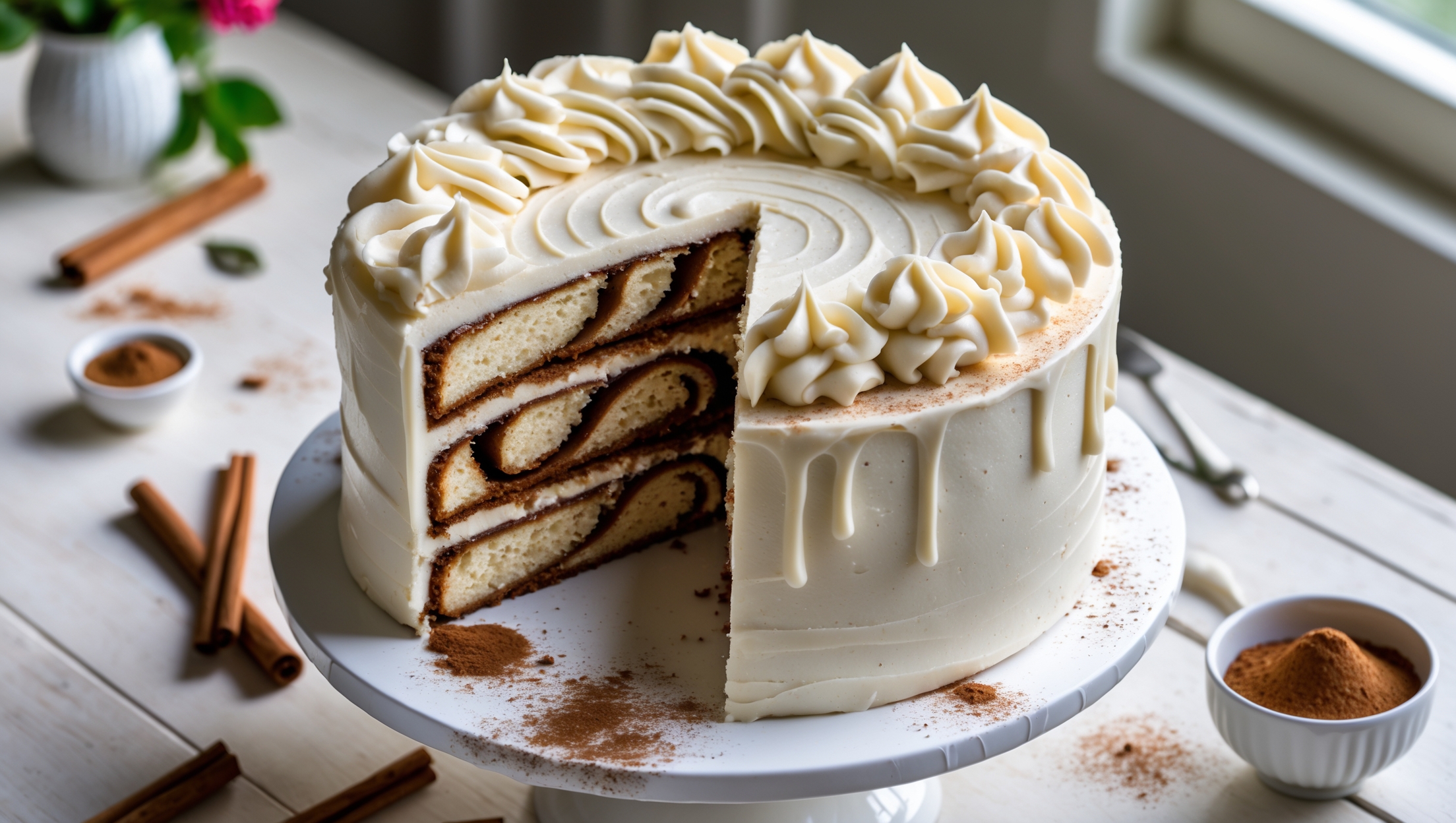
<ol class="no-list-style"><li class="MethodStepper"><h4 class="step-title">Step 1</h4>Prepare your cake pans by greasing them thoroughly, lining the bottoms with parchment paper circles, and dusting the sides with flour. This triple protection ensures your cakes will release perfectly. Preheat your oven to 175°C (350°F) with the rack in the center position.</li><li class="MethodStepper"><h4 class="step-title">Step 2</h4>In a medium bowl, whisk together the flour, baking powder, baking soda, and salt. This pre-mixing of dry ingredients ensures they'll incorporate evenly throughout the batter without overmixing, which could develop too much gluten and make your cake tough.</li><li class="MethodStepper"><h4 class="step-title">Step 3</h4>In the bowl of your stand mixer (or using a hand mixer), beat the softened butter on medium speed until creamy, about 1 minute. Add the granulated sugar and lemon zest, then increase to medium-high speed and cream for 4-5 minutes until very light and fluffy. This extended creaming is crucial as it creates air pockets that help the cake rise and achieve a tender crumb.</li><li class="MethodStepper"><h4 class="step-title">Step 4</h4>Add eggs one at a time, beating well after each addition and scraping down the bowl as needed. The mixture may look slightly curdled, but don't worry! Mix in the vanilla extract, ensuring everything is well combined.</li><li class="MethodStepper"><h4 class="step-title">Step 5</h4>Combine the lemon juice and buttermilk in a measuring cup. With the mixer on low speed, add the dry ingredients to the butter mixture in three additions, alternating with the buttermilk mixture (beginning and ending with dry ingredients). Mix just until each addition is incorporated, being careful not to overmix. The batter should be thick but pourable with a silky texture.</li><li class="MethodStepper"><h4 class="step-title">Step 6</h4>Divide the batter evenly between your prepared pans (about 500g per pan if you want to be precise). Smooth the tops with an offset spatula and tap the pans firmly on the counter a few times to remove any large air bubbles.</li><li class="MethodStepper"><h4 class="step-title">Step 7</h4>Bake at 175°C for 22-25 minutes, or until a toothpick inserted in the center comes out clean or with a few moist crumbs. The edges should be just starting to pull away from the sides and the tops should spring back when lightly touched. Be careful not to overbake, as this will result in a dry cake.</li><li class="MethodStepper"><h4 class="step-title">Step 8</h4>Allow the cakes to cool in the pans on a wire rack for 15 minutes before turning them out to cool completely. For easiest handling, wrap the cooled cakes in plastic wrap and refrigerate for at least an hour (or even overnight) before assembling.</li><li class="MethodStepper"><h4 class="step-title">Step 9</h4>For the lemon curd, whisk together the sugar, lemon zest, lemon juice, eggs, and egg yolks in a heatproof bowl. Set the bowl over a pot of simmering water (ensuring the bottom doesn't touch the water) and cook, whisking constantly, until the mixture thickens and reaches 75°C (170°F) on a thermometer, about 10-12 minutes. The curd should coat the back of a spoon and when you draw your finger through it, the line should hold.</li><li class="MethodStepper"><h4 class="step-title">Step 10</h4>Remove from heat and immediately whisk in the cold butter, a few cubes at a time, until fully incorporated and smooth. Stir in the salt. Strain through a fine-mesh sieve to remove any zest and potential egg bits, then press plastic wrap directly onto the surface of the curd to prevent a skin from forming. Refrigerate until completely chilled and set, at least 2 hours or overnight.</li><li class="MethodStepper"><h4 class="step-title">Step 11</h4>For the lemon buttercream, beat the softened butter in a stand mixer with the paddle attachment on medium-high speed until very pale and creamy, about 5 minutes. This extended beating incorporates air and creates an exceptionally light frosting base.</li><li class="MethodStepper"><h4 class="step-title">Step 12</h4>Reduce the speed to low and gradually add the sifted powdered sugar, about 100g at a time, beating well after each addition. Add the heavy cream, lemon juice, lemon zest, and salt, then increase speed to medium-high and beat until the frosting is light and fluffy, about 3-4 minutes. If the frosting seems too thin, add more powdered sugar; if too thick, add a splash more cream.</li><li class="MethodStepper"><h4 class="step-title">Step 13</h4>To assemble the cake, level the tops of your cake layers with a serrated knife if needed. Place the first layer on your serving plate or cake board. Pipe a dam of buttercream around the edge of the cake to prevent the lemon curd from seeping out. Spread half of the lemon curd (about 180g) inside this dam, leaving a small border.</li><li class="MethodStepper"><h4 class="step-title">Step 14</h4>Place the second cake layer on top and repeat with another buttercream dam and the remaining lemon curd. Top with the final cake layer, bottom side up (for a flat top). Apply a thin crumb coat of buttercream to the entire cake and refrigerate for 20-30 minutes to set.</li><li class="MethodStepper"><h4 class="step-title">Step 15</h4>After the crumb coat has set, apply the final layer of buttercream, creating a smooth finish or decorative swirls as desired. For a professional look, hold your offset spatula under hot water, dry it quickly, and then use it to smooth the frosting. The heat helps create that perfect finish.</li><li class="MethodStepper"><h4 class="step-title">Step 16</h4>Garnish the cake with thin lemon slices, candied lemon peel, or fresh lemon zest if desired. Refrigerate the cake for 30 minutes to set the frosting before serving. For the best flavor, remove from the refrigerator and let stand at room temperature for 30 minutes before serving.</li></ol>