
On this page
An apple pie and an apple custard pie can look almost identical under a pastry lid. Read the filling before you clear a spot on the counter. Eggs, cream, cream cheese, pudding and whipped toppings can make refrigeration essential even when fruit is what you see first.
Begin with the most perishable ingredient
Check three places: the filling, any layer underneath it and the finish on top. A smear of pastry cream beneath fresh berries matters just as much as a thick custard layer. If one component needs refrigeration, handle the assembled pie as a perishable dessert.
The cheesecake layer is the deciding ingredient in Pumpkin Cheesecake Pie. Make room in the refrigerator before you bake.
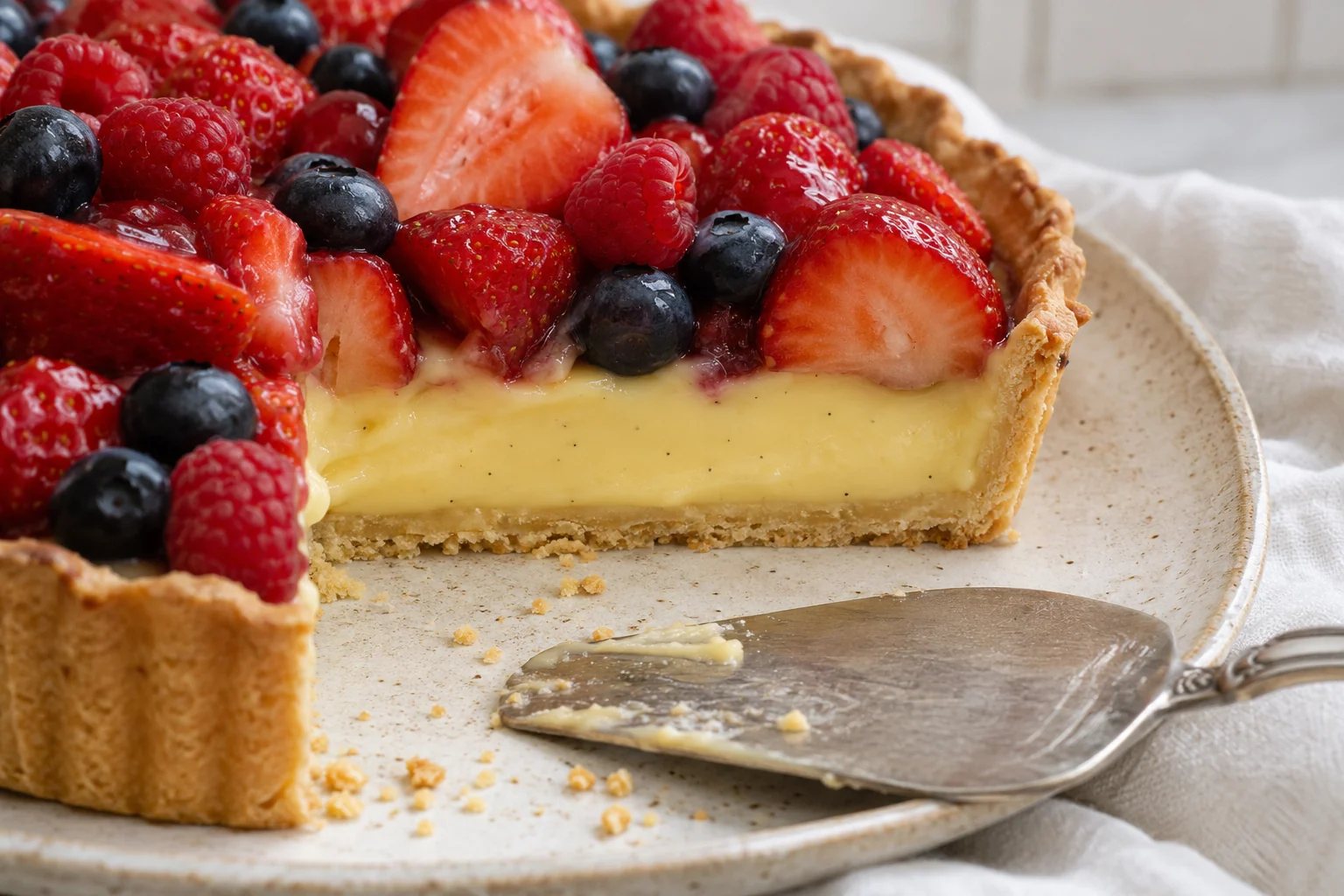
Baked fruit pies
A traditional fully baked fruit pie made with sugar and without a perishable filling or topping can generally stand, covered, at room temperature for up to two days. Refrigerate sooner if the room is warm. Choose refrigeration for reduced-sugar or sugar-substitute fruit pies and for recipes with custard, cream or cut fruit added after baking.
A conventional baked, sugar-sweetened fruit filling such as the one in Classic Apple Pie is a different storage case from an apple custard.

Apple and berry pies
Allow the pie to cool sufficiently so the filling thickens and hot steam can escape. Package according to the recipe's storage instructions and protect from contamination. Refrigeration may soften pastry over time, but safety takes precedence over a perfectly crisp base. If reheating is appropriate, use a method tested for the pie and avoid drying the filling. Never leave leftovers on a warm table all night because they 'contain fruit'.
Custard pies contain eggs
Pumpkin, sweet potato, egg custard and many chess pies contain eggs and often dairy. They should be refrigerated rather than treated as shelf-stable fruit pies. Allow safe initial cooling as directed, then refrigerate promptly at or below 4°C (40°F). Some commercially shelf-stable packaged products are formulated differently from homemade pies; their labeling doesn't justify leaving a homemade pumpkin pie on the countertop for days.
Even with apple visible on every slice, Apple Custard Pie belongs in the refrigerator because of its custard.

Pumpkin pie storage
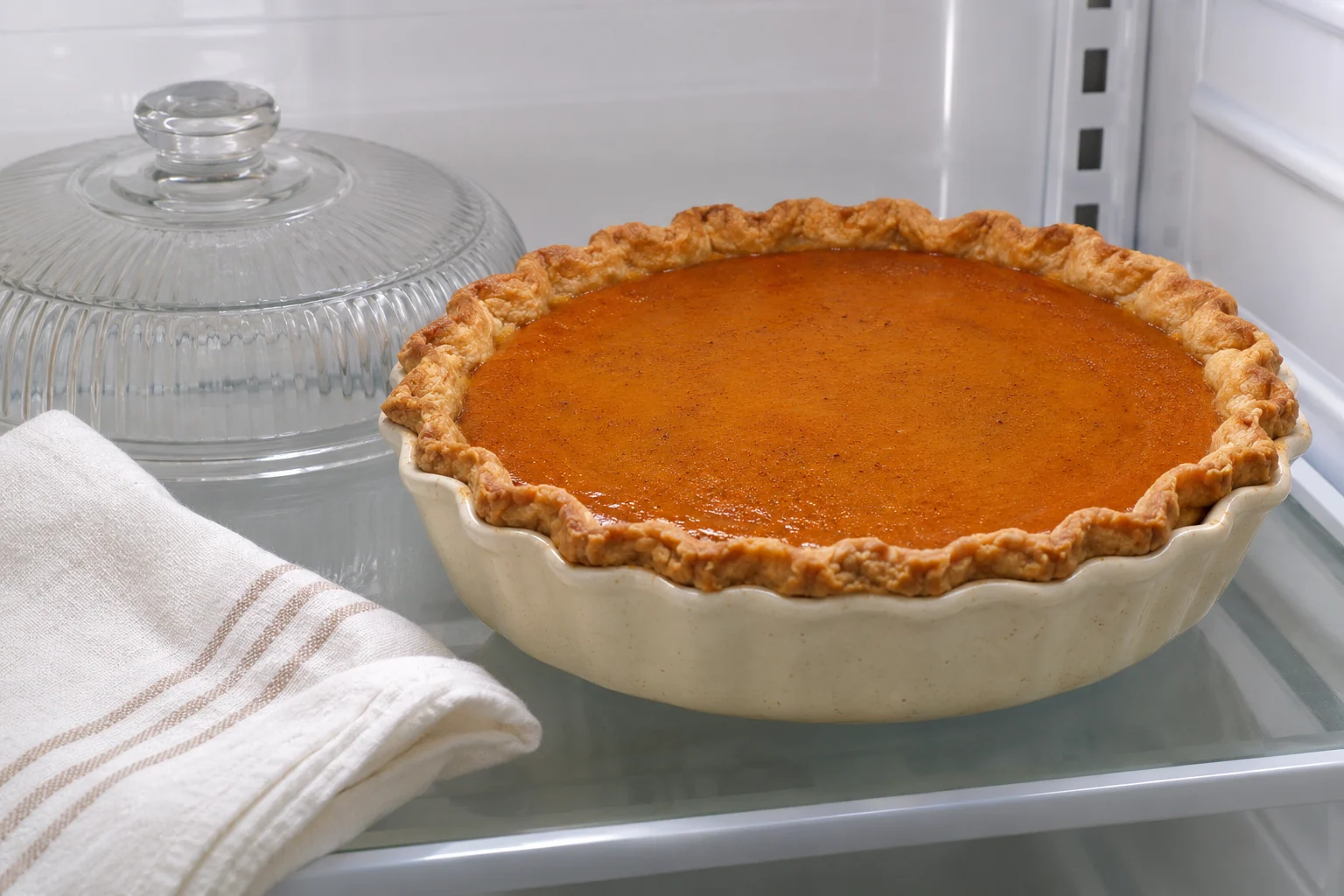
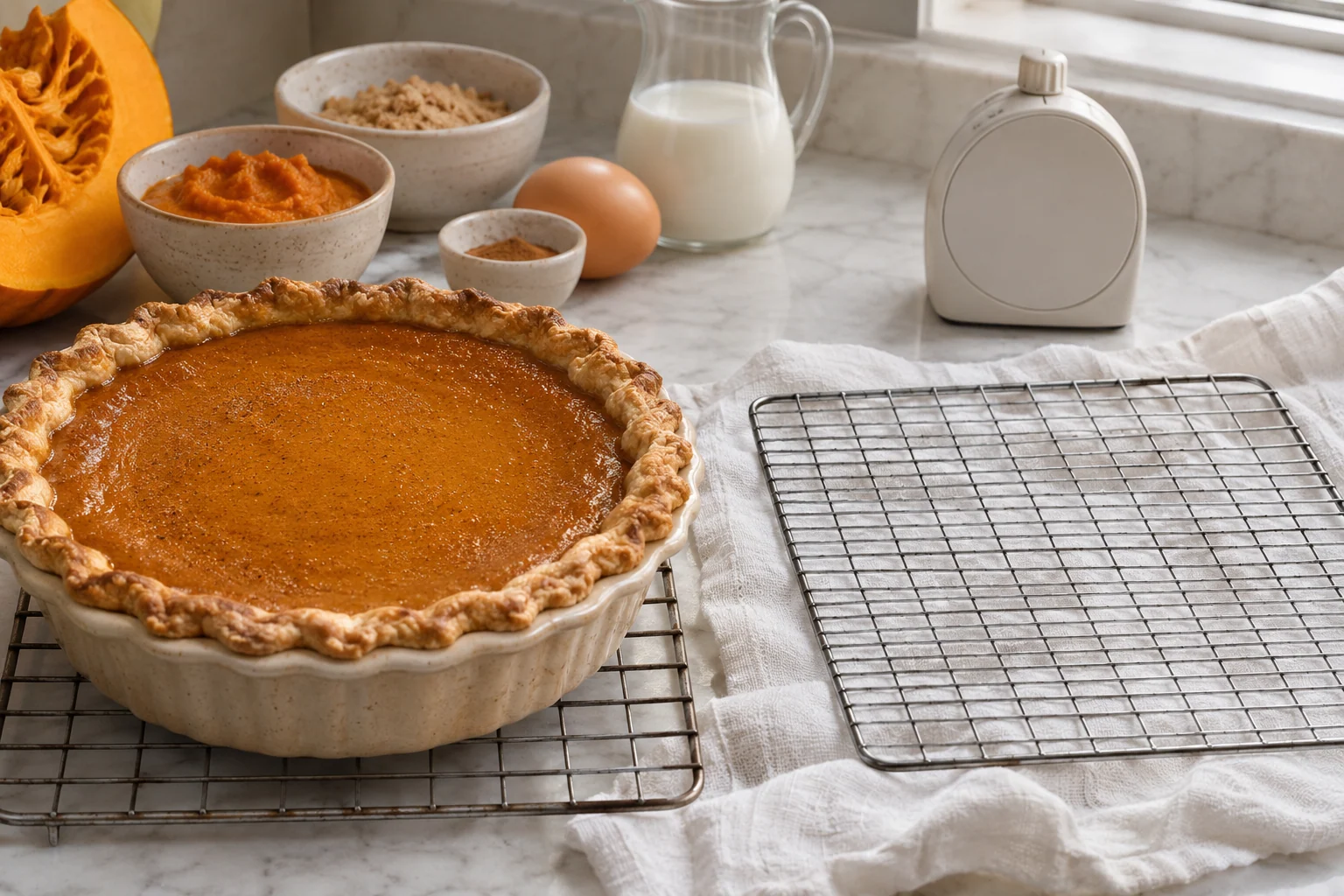
Homemade pumpkin pie is a custard. Let the initial steam escape on a rack and refrigerate it within two hours of baking, before it is completely cold if necessary. Keep it at 4°C (40°F) or colder and cover once chilled. A pie left on the counter overnight should be discarded.
Plan a cooling spot and a clear refrigerator shelf for Pumpkin Pie before it comes out of the oven.
Cream pies and pudding fillings
Chocolate cream, coconut cream and banana cream pies frequently include cooked custard, milk or cream and sometimes fresh fruit. They are highly perishable and should remain refrigerated. A pre-baked crust doesn't protect a dairy filling from unsafe temperatures. Assemble according to the recipe and chill sufficiently to set. Cut servings with a clean utensil, and don't leave the entire pie out during a long dessert buffet.
Whipped cream changes storage
Adding whipped cream to a baked fruit pie changes the handling needs of the finished dessert. The cream may deflate or weep, and it needs refrigeration. For better texture, keep the plain pie and whipped cream separate until serving when the recipe allows. Plant-based whipped toppings can also be perishable; the absence of dairy doesn't prove they are safe at room temperature.
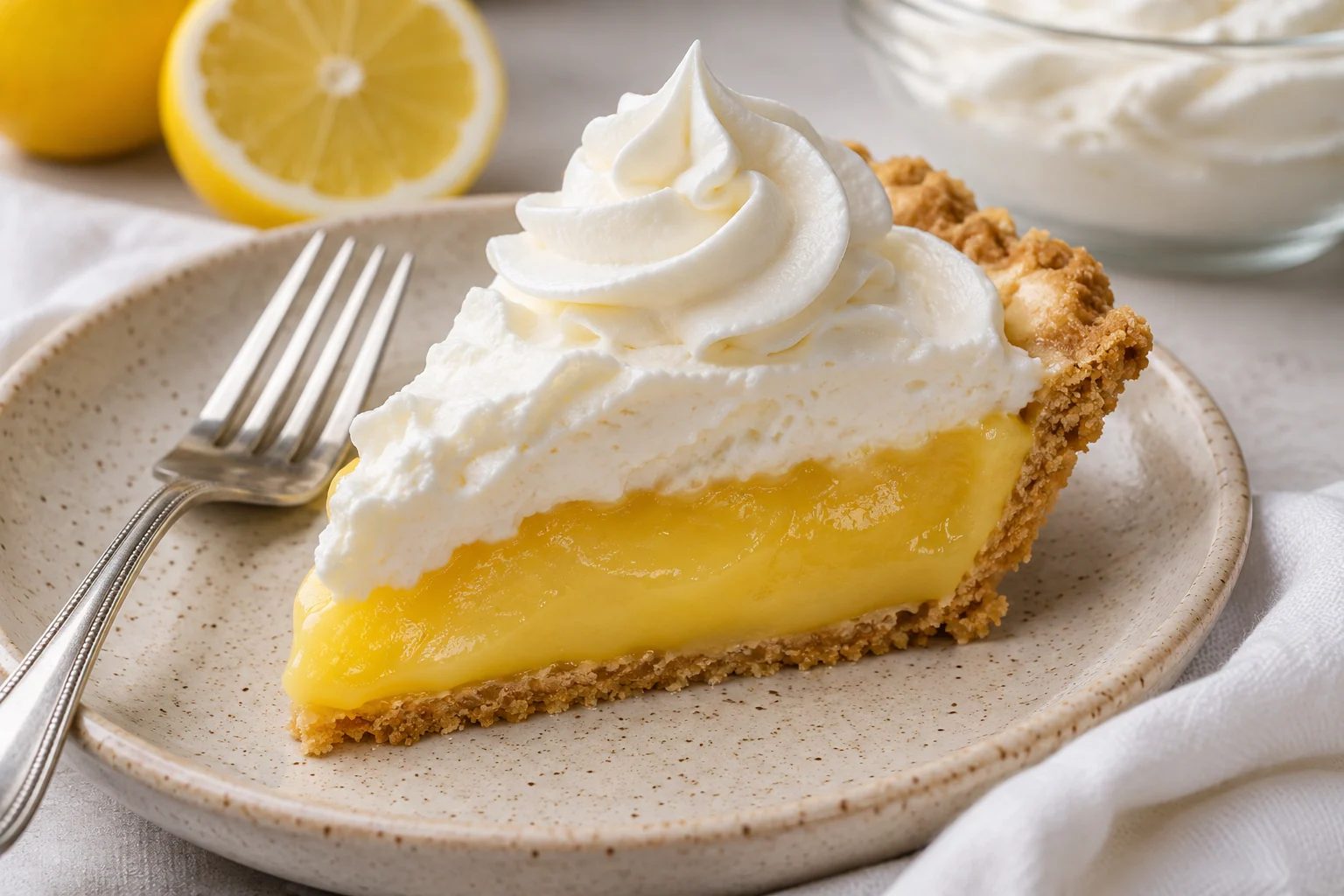
If serving Coconut Cream Pie in several rounds, bring out slices as you need them and return the rest to the refrigerator.
Fruit custard hybrids
A peach custard tart or apple pie with cream cheese combines fruit with egg or dairy ingredients. Such desserts need the more restrictive cold-storage rules of the custard or cheese component. Don't choose the fruit-pie category simply because apples are the most visible ingredient. The recipe's complete ingredient list and filling method determine how the dessert should be handled.
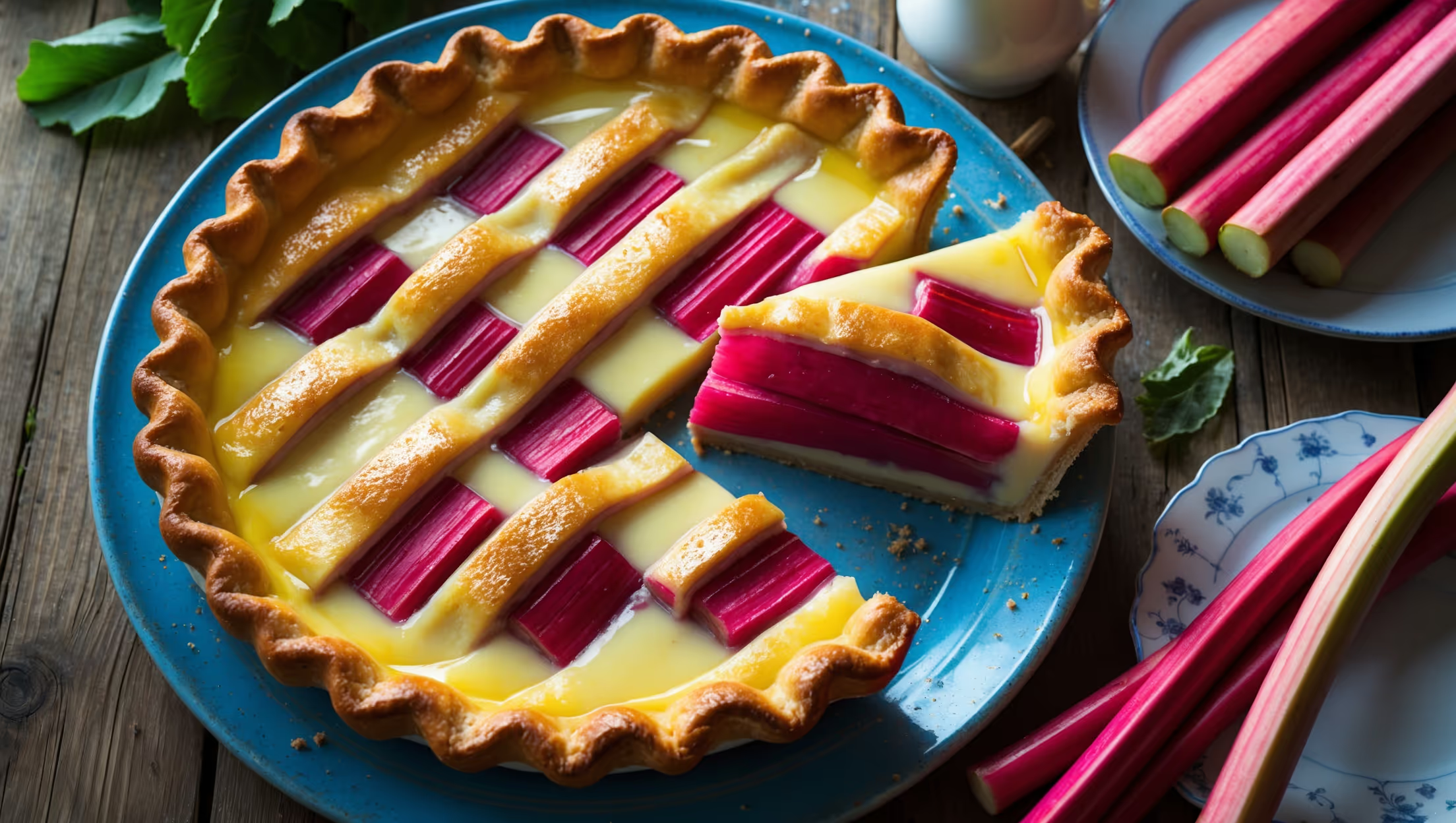
The fruit in Rhubarb Custard Pie does not change the storage needs of the egg filling. Handle the whole pie as a custard.
Cooling properly before storage
Clear space in the refrigerator before baking a perishable pie. After a short cooling period, place it level where cold air can circulate. Refrigerate within two hours, sooner on a hot day. Cover loosely while it cools, then more securely once the pie is cold.
For Sweet Potato Pie, allow steam to escape during its initial cooling and move it into the fridge within the perishable-food time limit.
A practical refrigeration temperature
Keep perishable pies at or below 4°C (40°F) in a properly functioning refrigerator. Check its thermometer rather than trusting a dial setting. Use clean covered containers or suitable wrap once the dessert has cooled appropriately. A cold garage, balcony or winter car is not reliable refrigeration because temperatures fluctuate and can expose food to contamination or freezing.
Keep Chocolate Cream Pie on a level refrigerator shelf so the filling and topping are supported as they chill.
Room-temperature display rules
Keep the total time a perishable pie spends out of cold storage to two hours, or one hour when the surroundings are hotter than 32°C (90°F). Count travel and serving time together. Bringing out a few slices at a time helps the rest stay cold.
If Strawberry Cream Pie is served at a party, include travel and buffet time in its total time out of refrigeration.
Freezing fruit pies
Many fruit pies freeze successfully when the specific recipe supports it, either baked or unbaked. Package well to protect against freezer burn and label the date. Some recipes recommend baking from frozen; others require thawing or different handling. Avoid moving frozen glass or ceramic pans into a hot oven unless the cookware manufacturer explicitly allows that temperature change. The correct method depends on crust, filling and pan.
Wrap Blueberry Pie once cool if you are freezing the baked pie. A label helps you identify the filling without opening the package.

Freezing custard and cream pies
Custards can separate or become watery after thawing, while whipped cream can lose texture. Some specially formulated pies freeze acceptably, but ordinary banana cream or pastry-cream pie often suffers. Follow a tested freezing plan if one is provided. Never assume that freezing extends a pie's room-temperature safety once thawed; cold-chain requirements resume.
Check the chill and finishing steps for Key Lime Pie before freezing it. The texture of a topping may change when it thaws.
Why the crust becomes soggy
Moist fillings migrate into baked pastry during storage, especially when a pie is held for several days or sealed while steaming. Fruit pies may soften in the refrigerator despite safe handling. A properly baked crust and suitable filling thickener help, as does keeping some cream toppings separate until serving. Reheating can restore some crispness in suitable baked fruit pies but is not appropriate for every chilled cream pie.
Notice how the shell of Maple Cream Pie softens as it stands under the filling. That change in crispness cannot tell you whether a pie is safe.

Reheating fruit pie
Use the recipe's recommended oven method and pan-safe temperature rather than microwaving an entire pie indiscriminately. The goal is to warm the filling without scorching the crust or creating a dangerously hot centre. Cream and custard pies usually follow different serving methods. Never heat a cream pie merely to repair a soggy crust if that would break the filling or contradict safe handling advice.
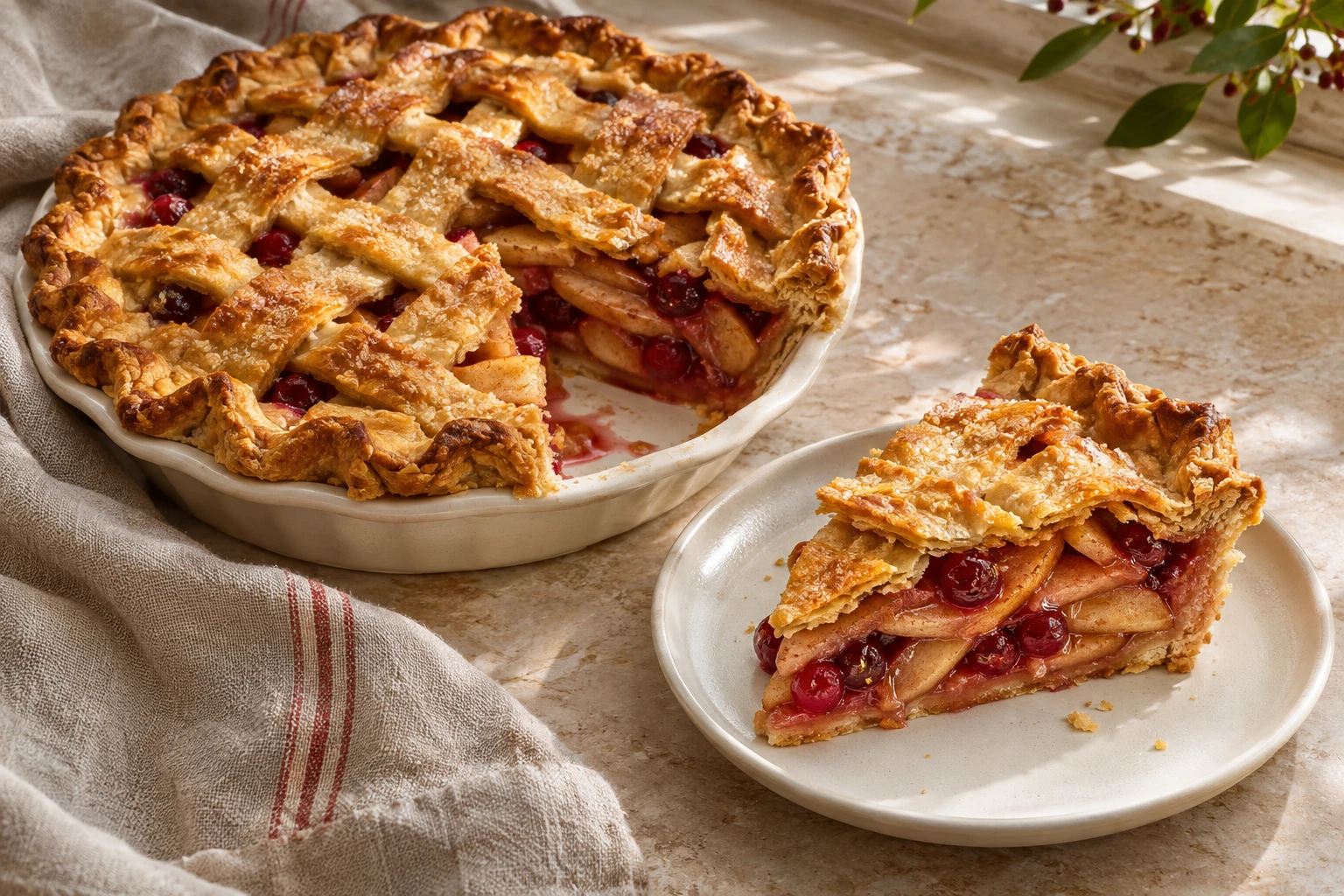
Warm individual pieces of Cranberry Apple Pie if you would like a crisper top, then add chilled whipped cream to the servings at the table.
Storage during transport
Chill cream or custard pies before departure. Use a rigid lidded carrier in an insulated cooler with enough ice packs to keep the pie at 4°C (40°F) or colder. Set it flat and return it to the fridge on arrival.
Transport Mixed Berry Cream Pie level in a cooler with ice packs and return it to refrigeration on arrival.

How to label a pie for gifting
Include the pie type, key ingredients and allergens, preparation date and accurate storage directions. State clearly if the pie contains eggs, dairy, cream cheese or fresh fruit. Do not invent an extended shelf life for a homemade custard pie simply because packaged supermarket products sometimes sit unrefrigerated. Ask whether the recipient has refrigerator space before delivering a large cream dessert.

How long are leftovers good?
For home-baked pumpkin and other egg custard pies, three to four days refrigerated is the usual upper window after prompt chilling. Follow a shorter limit when the recipe or filling calls for it. Date the container and count from preparation. Discard a perishable pie that has spent too long warm, whatever the date says.
Frequently asked questions
Can apple pie sit out? Some traditional baked fruit pies have limited room-temperature options, but check the full formula. Can pumpkin pie sit out overnight? No, treat it as refrigerated custard. Does vegan cream pie require refrigeration? Usually yes if it contains perishable plant-based cream or custard. Can custard pies be frozen? Some can, but texture often suffers. Is a cold balcony safe in winter? Not reliable food storage.
Keep safety distinct from quality
A crisp fruit pie might lose some flakiness in the refrigerator, while a cream pie can remain visually beautiful yet be unsafe after prolonged warmth. Prioritize the requirements of the entire filling, handle cooling and cold storage promptly, and serve modest portions. A well-stored pie is a better dessert than a perfectly crisp one held in unsafe conditions.
The pudding and banana in Banana Cream Pie need refrigeration even when the top looks fresh. A softer crust is a quality change and cannot tell you how long the pie was held warm.

A simple pie storage decision tree
Cream, custard or a perishable topping? Refrigerate within two hours. Conventional fully baked, sugar-sweetened fruit pie? Cover once cool and refrigerate by day two. When you cannot establish what is in the filling, choose cold storage promptly. Chilling later cannot undo a long stay on a warm table.
IN PICTURES
From the baking notebook
FROM THE RECIPE BOX


