On this page
Pastries are at their best when the outside is flaky and the inside is tender. Reheating them can be frustrating: a microwave often makes the pastry soft, while a very hot oven may brown the surface before the center warms through. The right approach depends on whether you're reheating an unfilled croissant, a fruit turnover or a pastry with a delicate custard filling.
This guide explains how to reheat pastries without making them soggy, including why steam is the main enemy of crisp layers, when an oven or toaster oven helps and which pastries shouldn't be reheated like ordinary bread.
Why Reheated Pastry Goes Soggy
Pastries contain layers, starch and fat that change as they cool. Some fillings also release moisture during storage. When a pastry is warmed in a sealed container or heated rapidly in a microwave, steam can condense against the crust and leave it soft.
Crispness returns only when enough surface moisture is driven off without burning the pastry. That is why dry circulating oven heat can work better for many plain baked pastries than a covered microwave container.

Start by Identifying the Filling
Plain croissants, puff pastry twists and many baked turnovers often tolerate gentle reheating when the recipe supports it. Cream-filled pastry, custard slices, whipped cream desserts and glazed or frosted pastries require more caution.
Keep perishable meat, custard and cream fillings refrigerated at 4°C or colder. Refrigerate within two hours. When reheating a cooked savoury leftover, check that the centre reaches 74°C with a food thermometer. Keep pastries intended for chilled service cold.
Treat Ham and Cheese Hand Pies as a perishable savoury leftover. Refrigerate promptly and check the centre with a food thermometer when reheating.

Reheating Plain Croissants
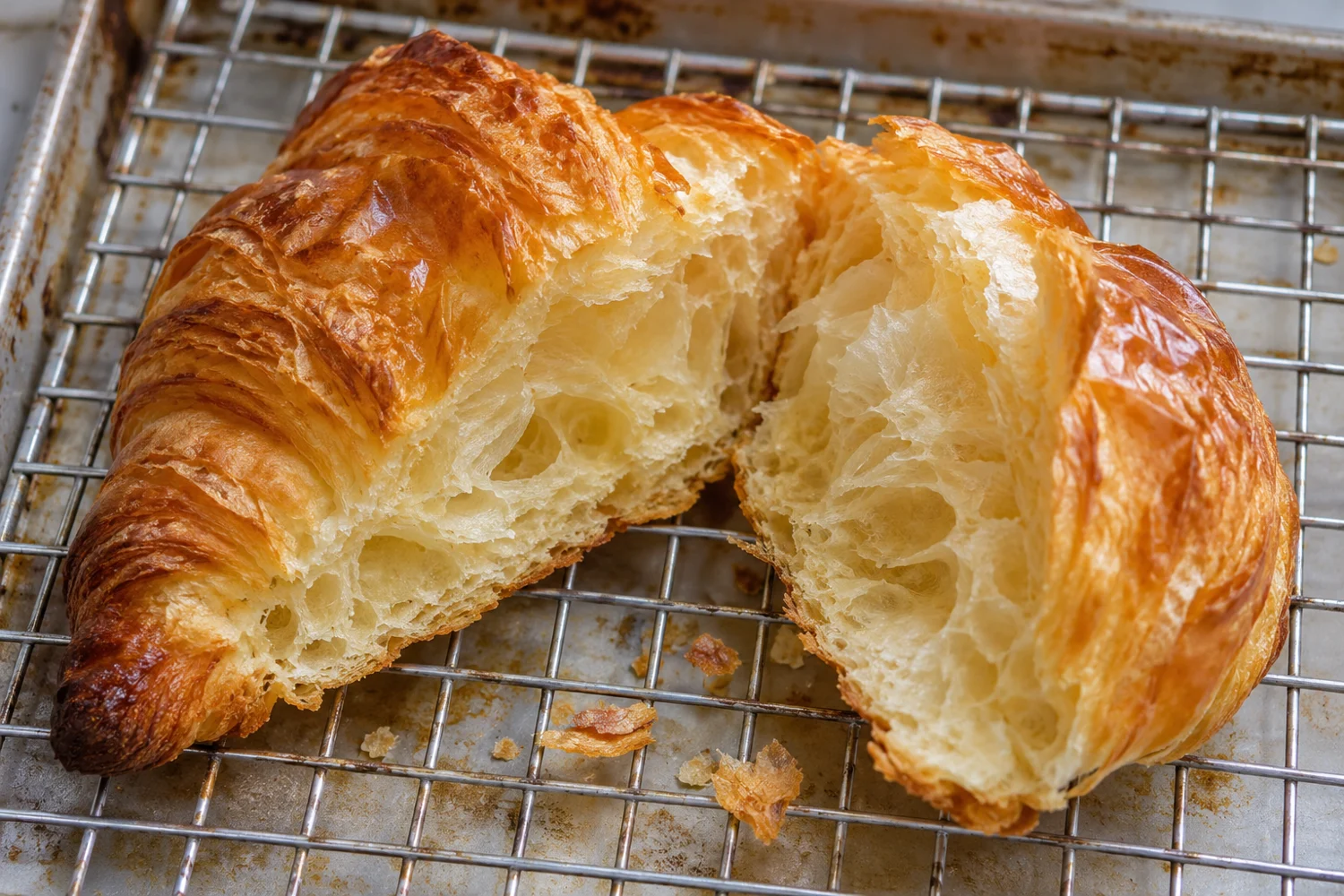
For one fully baked plain croissant at room temperature, preheat a conventional oven to 165°C (325°F). Set the croissant on a tray and start checking after 5 minutes. A larger one may take closer to 10. The shell should feel crisp and the middle warm when you pull it apart. Use the package directions if they differ.
Overheating can dry the crumb and darken the outside. Avoid wrapping the warm croissant tightly afterward, which traps steam. Let it rest briefly before eating.
A plain croissant from Classic Croissants makes a good first test. Break one open after warming and check whether the shell flakes while the middle still bends.

Reheating Fruit Turnovers
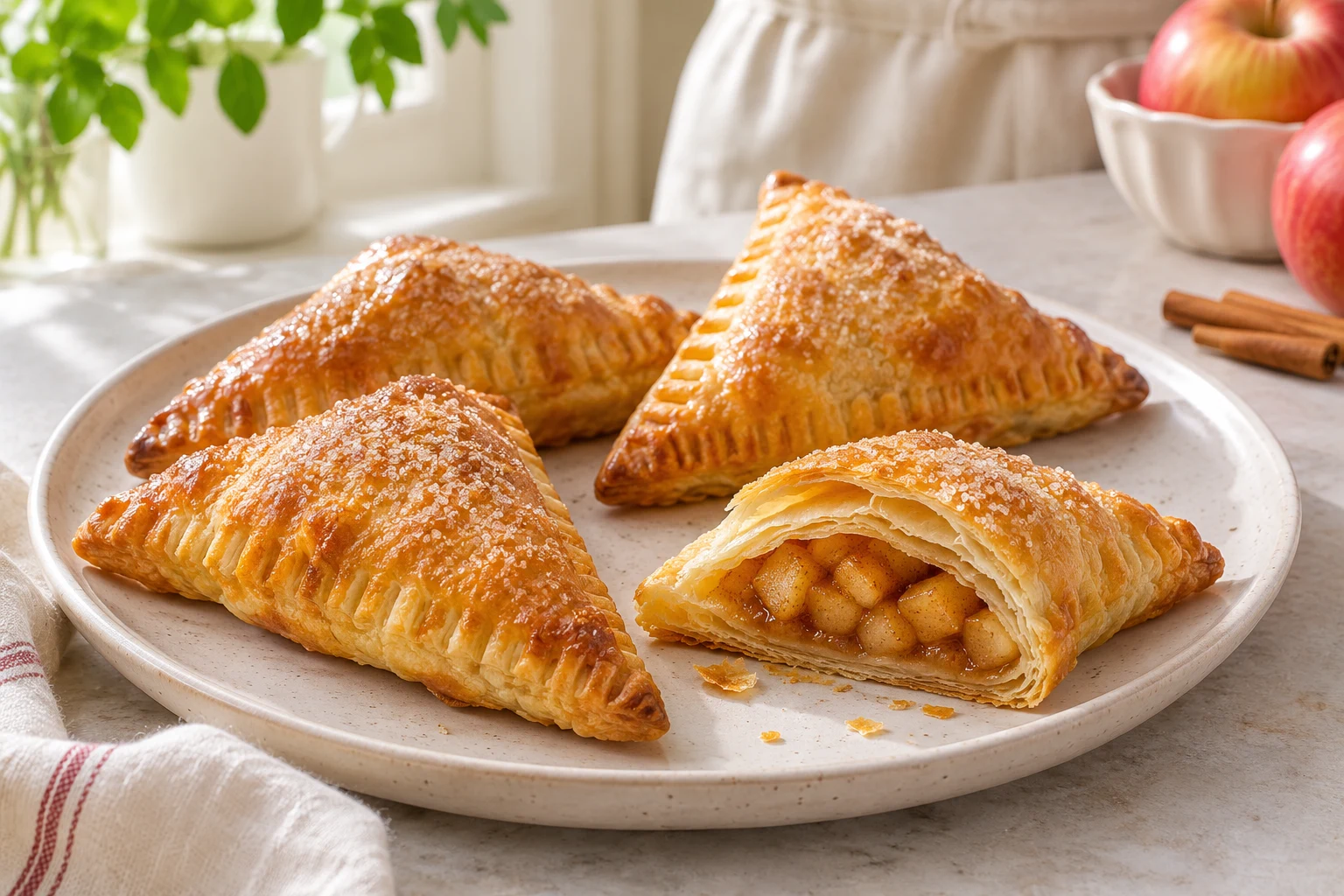
Baked fruit turnovers often benefit from an oven rather than a microwave. Use the original recipe's reheating instructions and arrange pastries with space between them so steam can escape.
The fruit filling may become extremely hot before the pastry feels piping hot. Cool briefly and bite carefully. If the filling leaks, a lined baking sheet may prevent burnt juices from sticking to the oven surface.
Look at the folded corners of Apple Turnovers. They can feel crisp even while the fruit in the middle is still very hot.
The same pause before the first bite is worthwhile with Cherry Turnovers, where the fruit gathers in the thickest part.
Reheating Puff Pastry Twists and Palmiers
Unfilled puff pastry shapes depend on dry, delicate layers. A short period of dry oven heat may restore some crispness if the pastry was stored properly. Overheating can scorch thin, sugary edges or caramelized surfaces.
Use a recipe-supported method and watch closely. For sugar-coated palmiers, do not assume the same temperature works as for a thick savoury turnover.
The thin, caramelised edges of Palmiers can colour much faster than the centre of a croissant. Check them early.
For a slender savoury shape, try Cheese Straws and arrange the twists in one layer.

Reheating Danishes
Danish pastries vary widely. A fruit-filled version may be suitable for gentle oven warming, while one topped with cream cheese, custard or glaze may need refrigeration or careful handling. Read the bakery's or recipe's reheating advice before proceeding.
If the topping is delicate, consider enjoying the pastry at its recommended serving temperature rather than sacrificing the filling to make the edges crisp.
With Cranberry Danish, keep the fruit facing up so loose filling stays inside the pastry.

Can You Use an Air Fryer?
An air fryer circulates hot air and may refresh some small pastries quickly. But strong airflow can darken thin pastry edges, move loose toppings or overheat fillings. Use the appliance manufacturer's guidance and a pastry-specific tested method, not a universal time for every pastry.
Arrange pastries in a single layer with proper airflow and check them frequently. Avoid putting loose parchment in an empty air fryer, where it may contact heating elements.
If you use a countertop basket, Air Fryer Apple Danish shows how much space a filled pastry needs around its edges.

What About the Microwave?
A microwave is convenient for warming a filling, but it typically doesn't restore crisp laminated layers. Rapid steam formation can soften the crust. It may be acceptable for a pastry intended to be soft, but it's generally less suitable for a flaky croissant or turnover.
If using a microwave for a product intended for microwave heating, follow the recipe or packaging instructions and beware of hot spots in sugary fillings.

Reheating from Frozen
First check whether the frozen pastry is raw or fully baked. The pale, frosted hand pies shown here still need their full bake. A cooked croissant is a different case: follow the instructions for refreshing it from frozen or let it thaw as directed before reheating.
Do not assume that an unbaked frozen pastry should use the same time as a previously baked pastry. Raw and cooked products need different baking and food-safety handling.

Prevent Sogginess During Storage
Reheating begins with correct storage. Allow plain baked pastries to cool before sealing according to their recipe. Keep refrigerated fillings cold, and don't trap steam under a lid while pastries are still warm.
For make-ahead preparation, consider freezing unfilled components where the recipe allows and filling near serving. A cream-filled pastry stored overnight may soften regardless of how carefully the crust is reheated.
Look at the exposed layers in Sourdough Croissants before wrapping any extras. Let the plain pastries cool so the bag stays dry.

How to Keep a Pastry Crisp After Reheating
Serve fairly soon after heating. If a pastry sits covered in a warm container, escaping steam will make the surface soft again. When practical, place it on a wire rack briefly after reheating rather than a flat plate where condensation gathers underneath.
Don't use an oven as a long-term warmer for delicate pastries. Extended heat can dry the interior and damage fillings even if the surface remains crisp.

Pastries Best Left Cold
Whipped-cream-filled éclairs, certain custard slices, fresh fruit tarts and pastries with delicate cream decorations are often designed for chilled service. Reheating can separate the filling, melt toppings or create unsafe handling if the product is not treated according to its recipe.
Keep these items refrigerated at 4°C (40°F) or colder when required and serve as instructed. The best texture sometimes comes from not reheating at all.
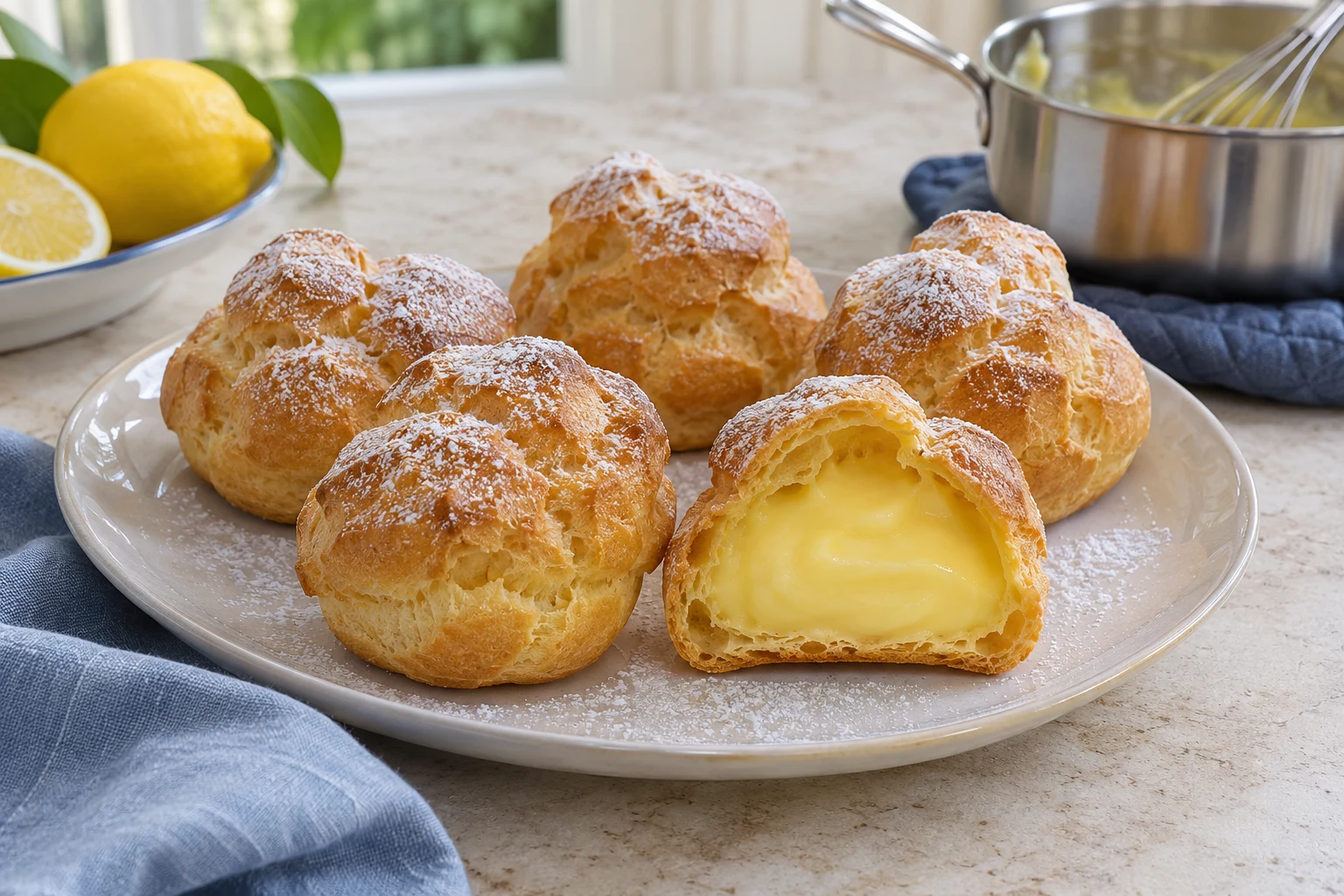
The shells and filling of Lemon Cream Puffs have different needs. Once filled, serve them chilled as directed.
Common Reheating Mistakes
Microwaving flaky pastry for too long: the crust becomes rubbery. Using very high oven heat: the outside burns before the middle warms. Covering pastries tightly after heating: steam softens the layers. Ignoring the filling: custard and cream require different handling. Stacking pastries: airflow is blocked and the bottom remains damp.

Frequently Asked Questions
What's the best way to reheat a croissant?
A gentle oven or toaster-oven method recommended for the specific croissant usually preserves flakiness better than microwaving.
Can I reheat pastries twice?
Warm only what you plan to serve. For a perishable filling, reheat leftovers once and discard any remaining reheated portion.
How do I reheat a turnover without a soggy bottom?
Use a recipe-approved oven method, give pastries space on the pan and avoid trapping steam afterward. Protect against leaking hot filling.
Can you reheat cream-filled pastry?
Many are intended to be served cold. Check the specific product's storage and serving directions; don't assume the pastry shell determines the method.
IN PICTURES
From the baking notebook
FROM THE RECIPE BOX


