On this page
A good banana loaf is soft enough to bend slightly as you lift a slice and set enough to leave the knife mostly clean. To keep that texture on day two, first look at what happened before the loaf went into its wrapper: how much banana you used, how deep the pan was and when you stopped baking.
What does moist banana bread really mean?
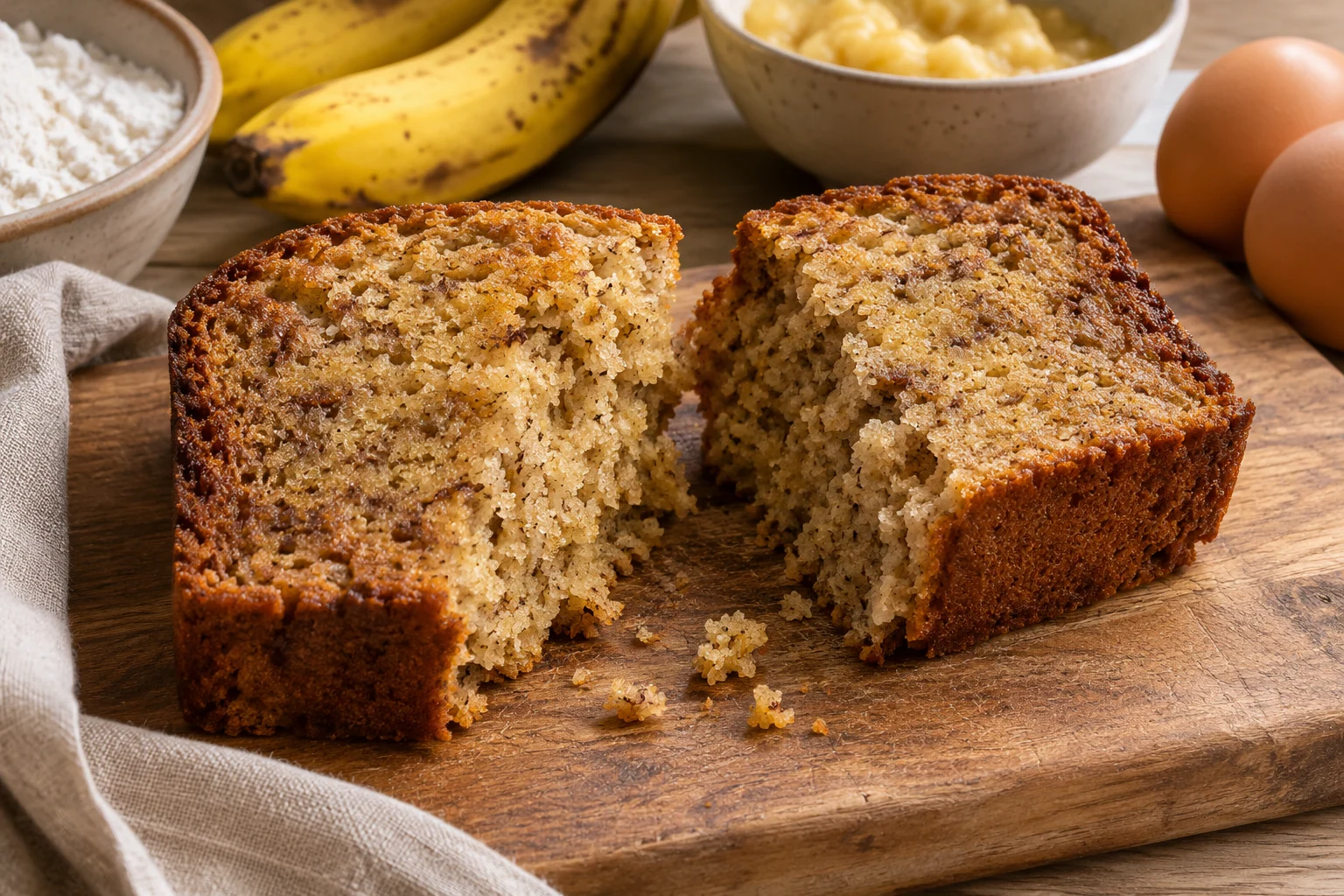
A properly moist loaf feels tender and cohesive, with no raw paste at its centre. It slices cleanly after cooling while retaining the soft texture supplied by bananas, sugar and fat. An underbaked loaf can feel damp but later become gummy or collapse; a carefully baked moist loaf maintains its structure.
Start with ripe bananas
As bananas ripen, starch breaks down and their sweetness and aroma become more pronounced. Soft bananas with plenty of brown spotting are often excellent for classic banana bread. Very green fruit is firmer, less sweet and harder to mash, while dark peels are not necessarily a problem unless the flesh shows signs of spoilage.
Choose the amount of ripe fruit in Air Fryer Banana Bread before filling the smaller pan used in that recipe.

Measure the mashed banana
Mash the peeled bananas in a separate bowl and measure the amount that actually goes into the batter. Freeze any extra for another batch. Guessing from the number of bananas can leave one loaf dry and the next one gummy even when the shopping list looks identical.
In Sourdough Banana Bread, about 350 g of peeled banana goes alongside 100 g of starter. Measure them separately so extra fruit cannot quietly change the balance.

Don't confuse very ripe with spoiled
Ripe fruit may have dark, soft peels and brown patches, but it should not have mold, a strongly fermented off-odour or signs of rot. The goal is sweet, fragrant fruit, not questionable fruit. Discard bananas that appear spoiled rather than relying on baking to make them safe.
Choose a recipe designed to stay tender
Reliable banana bread formulas balance flour, banana, eggs, sugar, fat and leavening. Some use oil for a soft crumb, others use melted butter for its flavour, and some combine ingredients differently. Follow a tested recipe with the texture you want rather than adding random sour cream or extra butter to a dry formula.
If you want a tender oat-based loaf, Oat Flour Banana Bread already balances the flour, banana and yogurt.

How oil contributes to softness
Many liquid oils remain fluid at room temperature, which can help the crumb feel tender after cooling. That doesn't make oil the only good fat for banana bread. Butter brings a distinct dairy flavour, and a carefully formulated butter loaf can be moist too. Use the fat and mixing method the recipe specifies.
The oil in Zucchini Bread is a second way to see how a quick bread feels once it has cooled.
Does yogurt or sour cream help?
Yogurt or sour cream can lend tenderness when the recipe allows for its water, fat and acidity. Use the style called for. Thick strained yogurt and a pourable variety do not deliver the same amount of liquid in a spoonful.
The yogurt in Banana Coconut Oat Loaf is accounted for alongside the mashed fruit. Adding the same spoonful to another batter changes its liquid balance.

Why sugar helps the crumb
Sugar affects water availability, browning and tenderness as well as sweetness. A substantial reduction can change the crumb and how the loaf keeps. For a less-sweet loaf, choose a complete reduced-sugar formula instead of making a large untested cut in another recipe.
Accurate flour measurement matters
Weigh flour when the recipe supplies grams. If using cups, loosen the flour, spoon it in lightly and level the top. Repeatedly dipping the cup into a packed bag can add enough extra flour to hide the softness you expected from the bananas.
Measure the flour specified for Whole Grain Apple Bread as written before deciding that a slightly firm crumb needs more fruit.

Mix just as much as required
Many banana quick breads follow a brief mixing method once flour is added. Overmixing can develop excess gluten and make the crumb rubbery; undermixing can leave dry flour pockets. Stir until the ingredients are distributed as directed, then stop. Some creamed-butter versions require a different sequence, so follow the complete method.
Use a folding motion with Vegan Zucchini Oat Bread and scrape the base of the bowl where the last dry flour tends to collect.

Choose the correct pan size
A recipe formulated for a 9 × 5-inch pan may overflow or remain underbaked in a smaller pan. A very large pan can make a short loaf that's easy to overbake. Check the dimensions before mixing and remember that different pan materials affect browning and heat transfer.
The pan measurement in Pumpkin Whole Wheat Bread gives you a concrete comparison if your own loaf keeps drying around its edges.
Check actual oven temperature
An oven that runs hot can brown and dry the edges before the centre sets. A too-cool oven can prolong baking and affect the rise. Preheat fully and use an oven thermometer if your loaves repeatedly come out dry or uneven. Baking times are useful estimates, not guarantees.
How to prevent overbaking
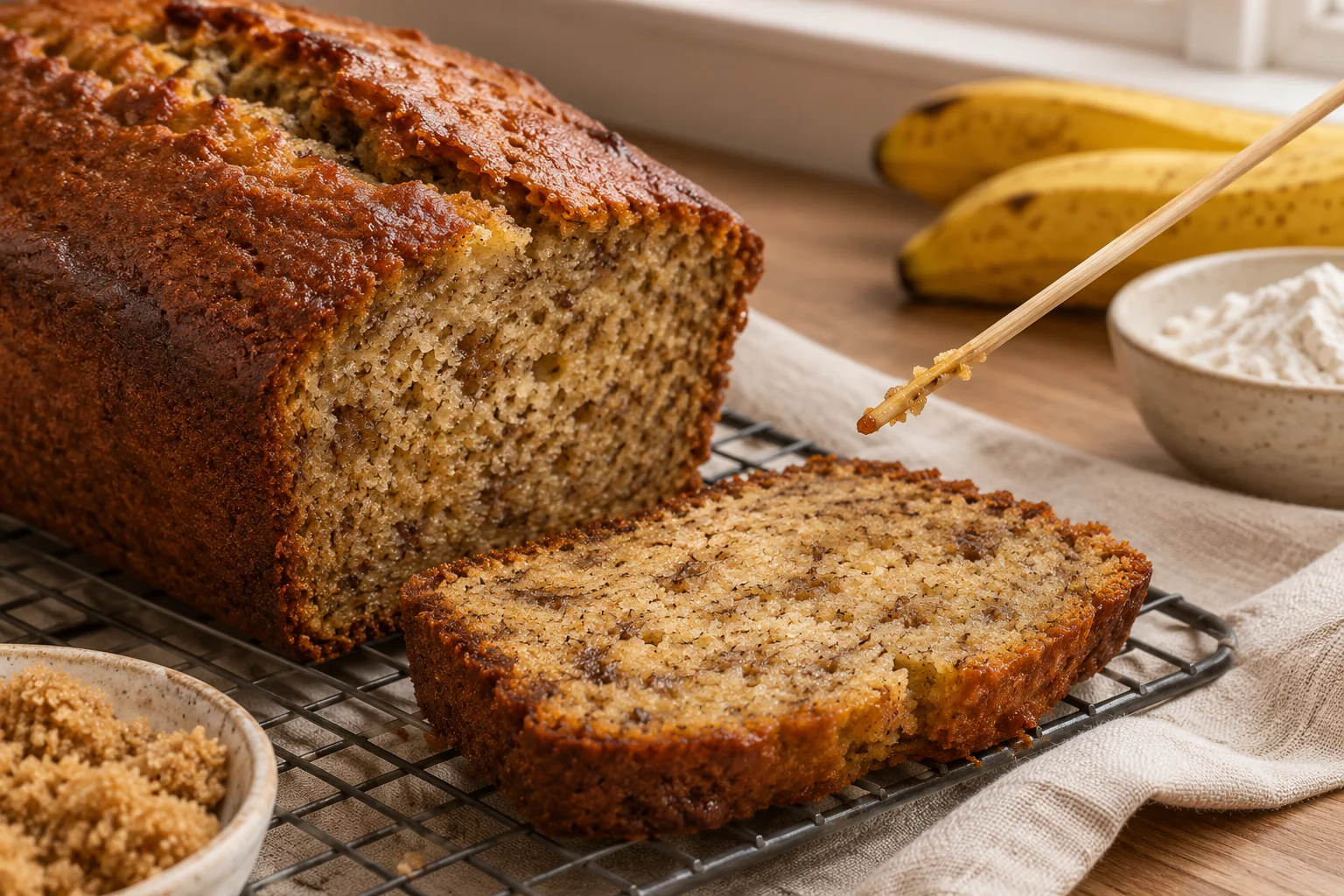
Start checking near the beginning of the recipe’s baking window. A skewer in the centre can carry a few tender crumbs. A glossy smear of batter calls for more baking. Probe beside a melted chocolate pocket before assuming the whole loaf needs extra time.
Probe the plain part of Banana Nutella Bread to keep a melted chocolate streak from sending a finished loaf back into the oven.
Why a golden top isn't enough
The crust forms and browns before heat reaches the deepest part of the loaf. A beautifully cracked top can conceal an uncooked middle, especially in a tall pan. A correct centre test lets you stop before the edges become overly dry without accidentally serving raw batter.
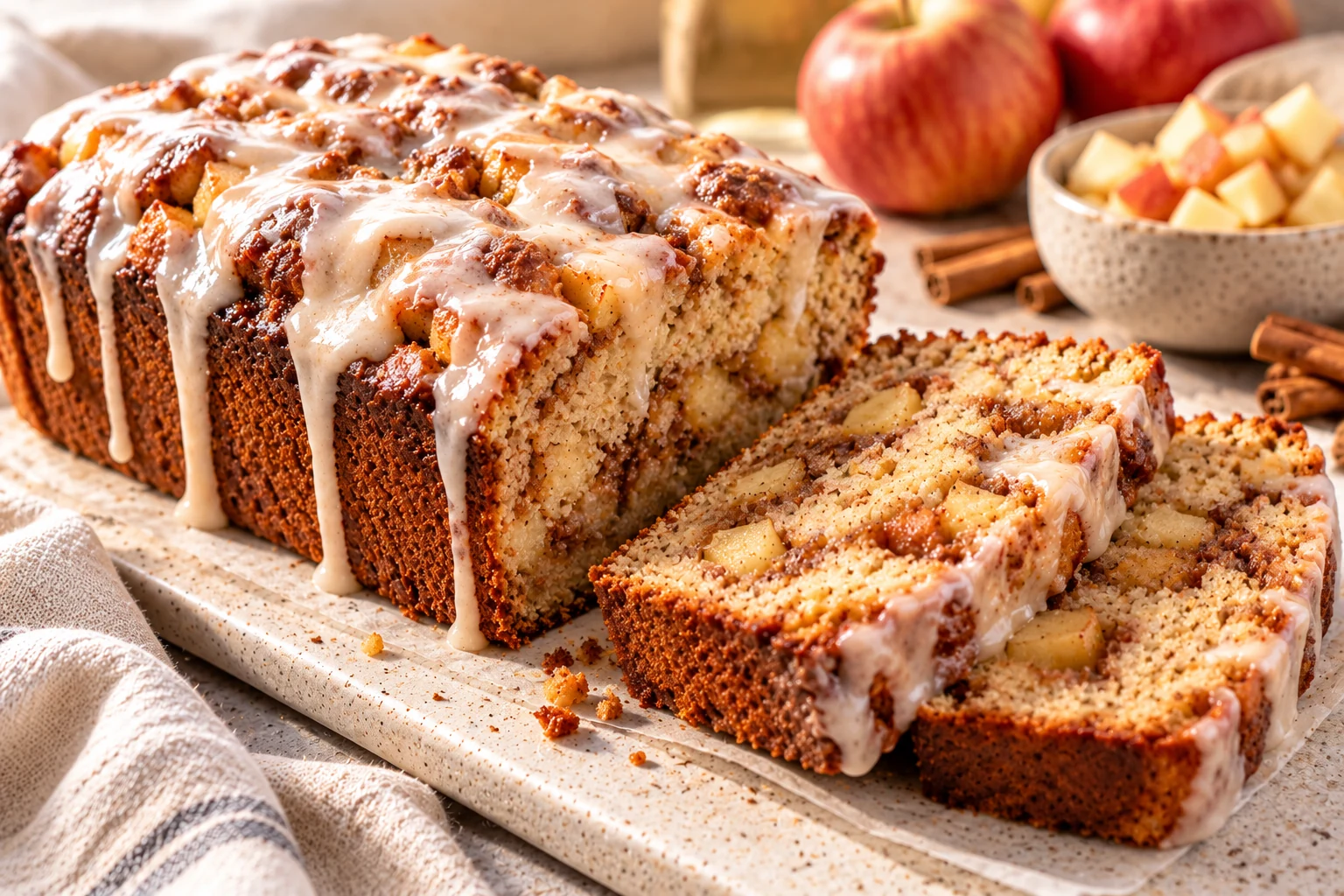
For Vegan Apple Fritter Loaf, look beneath the browned top and test alongside the apple pieces before you take it out.
When to use a loose foil tent
Certain banana bread recipes recommend tenting loosely with foil toward the end if the top is browning too quickly. This can limit further colour while the middle finishes. Do not cover tightly or apply a method at an arbitrary time; follow the recipe and handle the hot pan safely.

Let the loaf rest in the pan briefly
Most recipes specify a short rest in the pan after baking, giving the crumb time to firm before the loaf is moved. Leaving it in the hot pan far longer than directed can trap steam and continue heating the sides. Follow the stated timing, then transfer to a rack if the recipe requires it.
Cool completely before wrapping
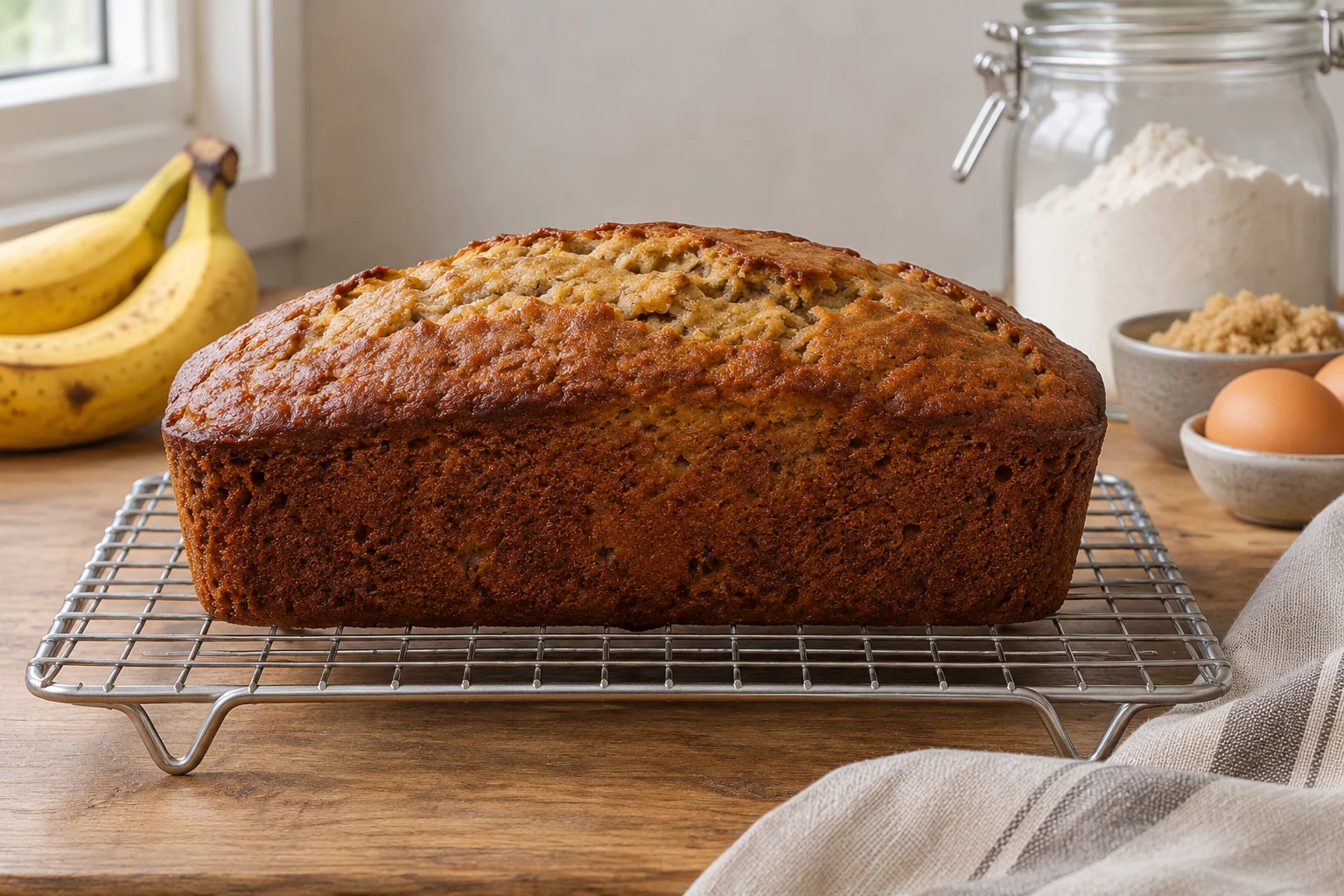
Release the loaf as the recipe directs and allow air beneath it on a rack. Wrap it when it is cool throughout. If moisture beads inside the wrapper after a few minutes, open it again and allow the last warmth to escape.
Let steam escape from Blueberry Bread on a rack before wrapping. The berry-studded crumb will also slice more cleanly.
Should you slice banana bread immediately?
Warm slices are tempting but can crumble or appear gummy because the crumb hasn't finished firming. For neat slices and reliable texture evaluation, let the loaf cool as directed. If serving a slightly warm slice, use a tested recipe's serving guidance and a gentle knife.
How to store banana bread at room temperature
For a plain banana loaf, follow the complete recipe’s storage directions and wrap it only after cooling. Cream cheese, custard, cream and other perishable additions can change the refrigeration requirement. Freeze suitable plain portions for longer storage rather than assuming every homemade loaf keeps for the same number of days. Discard mouldy bread.
When should it go in the fridge?
A plain, fully baked loaf and a loaf filled or topped with cream cheese need different storage. Refrigerate perishable versions within two hours and keep them at 4°C (40°F) or colder. For a plain loaf you will keep longer, tightly wrapped freezer portions protect the remaining slices.
Check the ingredients in the finish on Starbucks Copycat Iced Lemon Loaf when deciding whether to wrap a loaf plain or ice it just before serving.
Freezing for longer freshness
Banana bread can often be frozen successfully once fully cooled. Wrap the loaf or individual portions well, label the date and follow the original recipe's freezer guidance. Slice before freezing when you want easy portions for lunch or coffee. Thaw by the recipe's safe method and avoid repeated unnecessary thawing and refreezing.
Freeze individual slices of Vegan Gluten-Free Banana Bread with a little space or paper between them so one serving lifts free.

Should you add more banana to a dry recipe?
Not without testing. More mashed fruit adds moisture, sugar and solids, which can throw off the flour and egg balance and create a wet centre. If your loaf tastes dry, first inspect flour measurement, bake time and wrapping. A recipe with a different planned banana proportion may work better than an improvised addition.
Why banana bread is dry on day two
Overbaking, excess flour and poor wrapping can all contribute. Once the loaf has cooled, exposed surfaces gradually lose moisture. Wrap promptly according to the recipe and cut slices as needed rather than leaving a whole sliced loaf uncovered. Freezing suitable portions can preserve better eating quality than extending room-temperature storage.
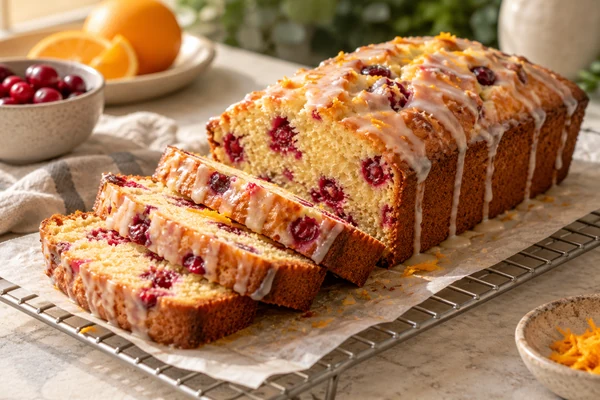
With Cranberry Orange Bread, keep the cut face well covered after slicing. If only that exposed face dries overnight, the wrapper is a more likely culprit than the batter.
Why a loaf becomes gummy in the middle
An underbaked centre, excessive fruit, an undersized pan or ingredient-ratio changes can all produce a dense wet stripe. That is not the same as the tender moisture you want. Check the recipe's precise mashed-banana quantity, pan size and centre doneness before modifying the fat.
A dependable moisture checklist
Use fully ripe but wholesome bananas; measure the mashed fruit and flour; follow the exact fat and sugar proportions; mix correctly; use the stated pan; check the deepest centre instead of crust colour; cool and wrap according to directions. Each step supports a moist crumb without sacrificing structure.
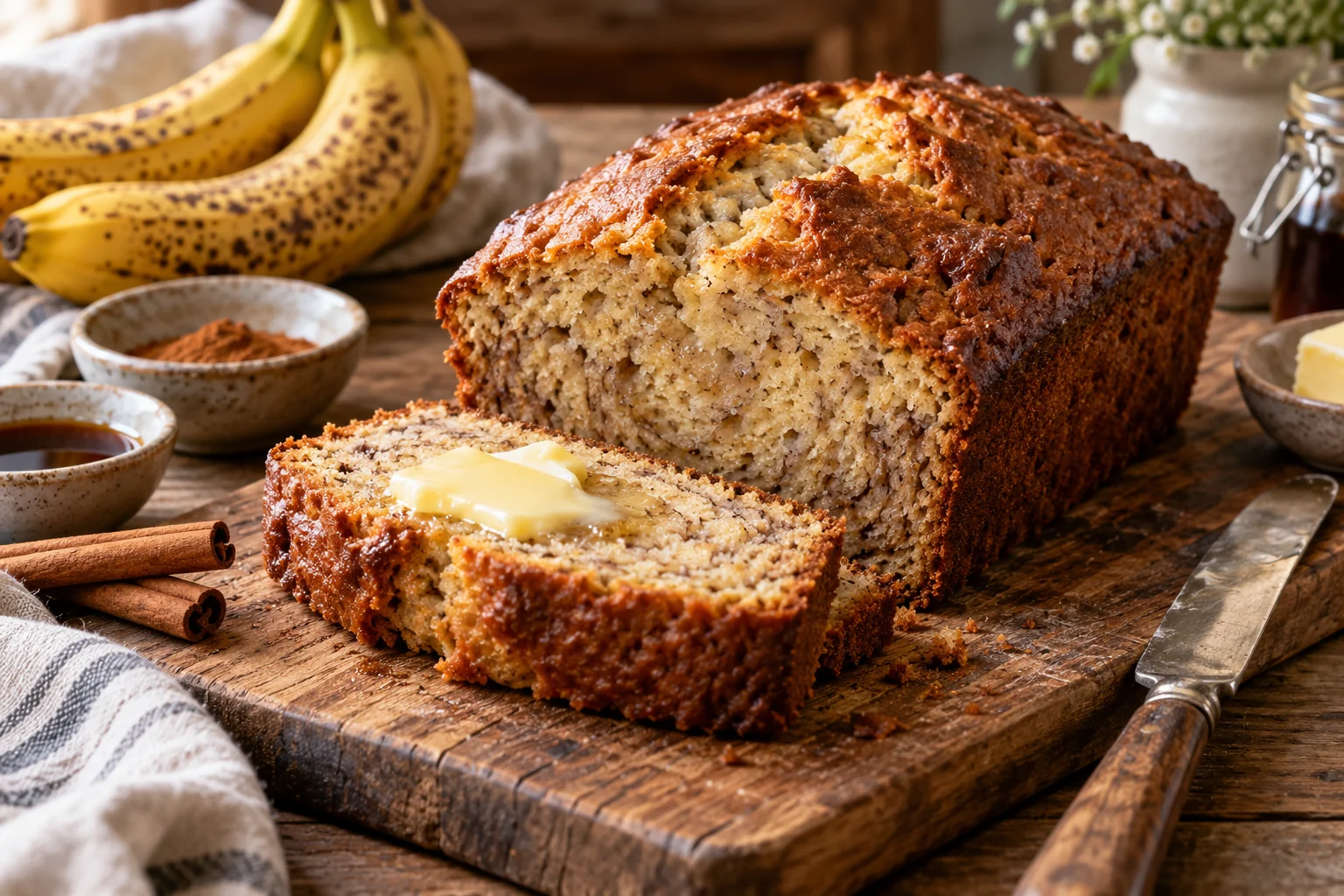
For a repeatable trial, Classic Banana Bread starts with 280 g of ripe banana. Note that weight and how the cooled slice feels before changing the recipe.
Frequently asked questions
Does more banana make banana bread moister? Not always; it can create gummy areas. Is oil better than butter? Oil often maintains softness, but tested butter recipes can be excellent. Should I refrigerate plain banana bread? Follow the recipe and conditions. Can I freeze it? Many formulas support freezing once cooled and wrapped. Why is mine crumbly? Excess flour, overbaking or slicing too early may contribute.
The goal is tender, not underbaked
The two decisions with the biggest payoff are measuring the mashed banana and checking the middle before the edges dry out. After cooling, wrap the part you will eat soon and freeze the rest in portions you can take out individually.
IN PICTURES
From the baking notebook
FROM THE RECIPE BOX


