
On this page
Croissants and puff pastry both build layers of dough and butter, yet their texture and flavour differ significantly. A croissant is a yeasted laminated bread-pastry hybrid: fermentation contributes gas, aroma and a soft honeycomb interior beneath the crisp exterior. Classic puff pastry is generally unleavened and depends largely on steam to separate many thin layers into a crisp light structure. Understanding the distinction helps you choose the right dough for breakfast crescents, pastry lids, tarts and turnovers.
What laminated means
Lamination arranges alternating sheets of dough and fat through repeated rolling and folding. During baking, water turns to steam and pushes layers apart while the dough structure sets. Both croissant dough and classic puff pastry use this principle. Their ingredient formulas, layer thickness, resting schedules and final handling differ, so they don't make interchangeable products despite a similar cross-section of butter and dough.
Yeast is the major difference
Croissant dough contains yeast, which ferments dough sugars and produces carbon dioxide before baking. The gas expands during proofing and contributes to the open airy crumb. Classic puff pastry generally contains no yeast and creates rise mainly from steam and layer separation. A folded pastry without yeast doesn't become a croissant simply because it is cut into a triangle.

Croissant dough is enriched
Croissant formulas usually contain sugar and may include milk and a relatively modest amount of butter or other fat in the base dough, in addition to the lamination butter. These ingredients affect flavour, browning and fermentation. Classic puff pastry dough is often simpler, with flour, water, salt and sometimes a small amount of fat in the base. Recipe variations exist, but the distinction explains why croissants taste more bread-like.
Compare the dough in Classic Danish Pastry with croissant dough before transferring any enrichment or proofing instructions between recipes.
The butter block
Classic puff and croissant lamination often involve shaping butter into a pliable sheet or block, enclosing it in dough and repeatedly rolling and folding. The butter needs to deform with the dough without shattering or leaking. Temperature control is critical in both. Rough puff is an easier related method because butter shards begin directly inside the flour instead of as one continuous enclosed block.
In 81-Layer Reverse Puff Pastry with Cultured Butter, the position of the butter mixture changes the lamination process. It is a useful comparison with an ordinary butter block.

The role of fermentation
In croissants, fermentation begins after mixing and continues through resting and final proofing. Time and temperature influence yeast activity and flavour. Puff pastry may rest for gluten relaxation and butter firmness, but it does not require yeast fermentation. Confusing a puff pastry chilling rest with a croissant proof can lead to disappointing pastries that look folded yet fail to develop the expected airy crumb.
The fermentation schedule in Sourdough Croissants makes time part of the dough preparation as well as the final rise.
Final proofing is essential for croissants
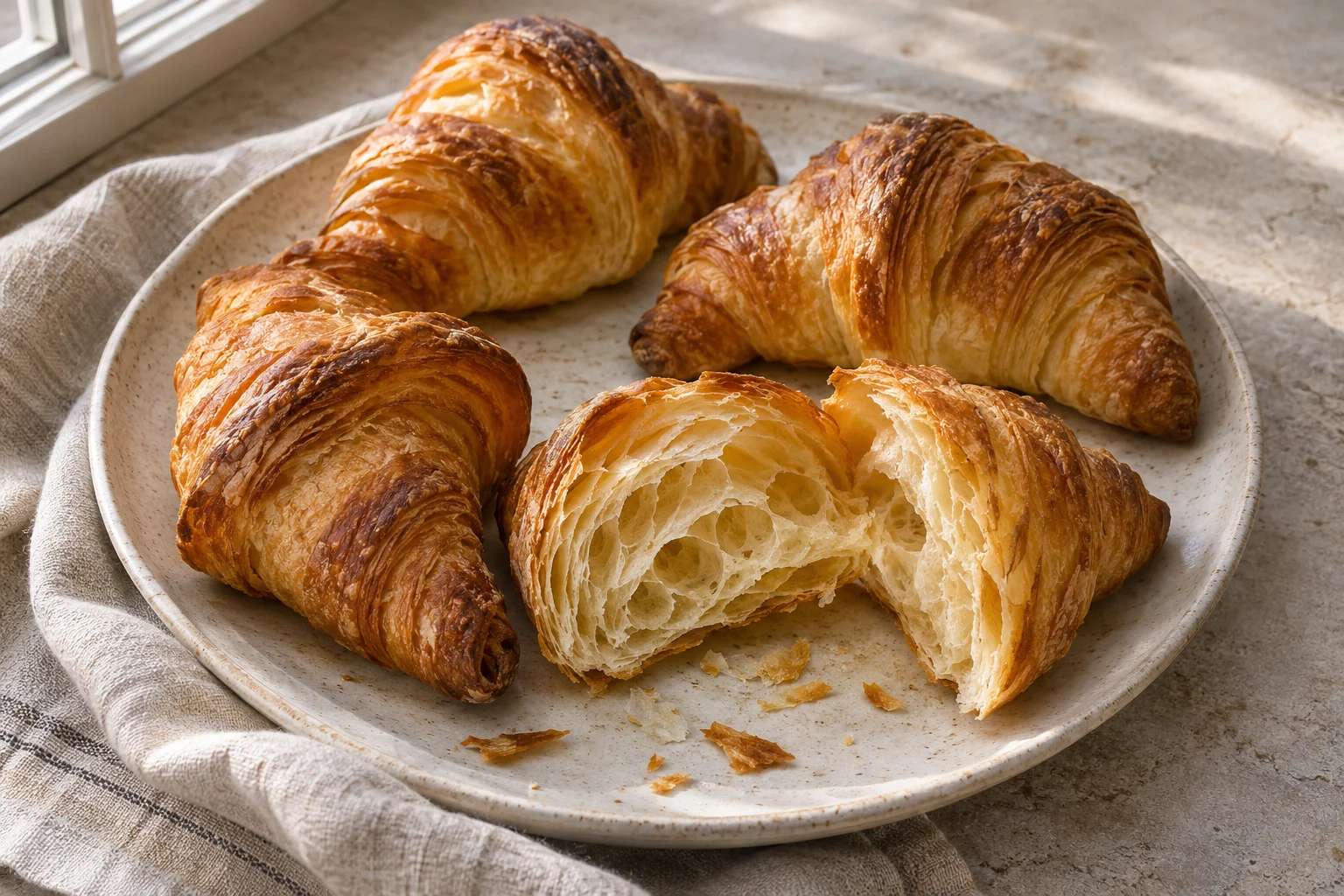
Shaped croissants normally need a controlled final rise before entering the oven. An underproofed croissant can tear, leak butter or form a dense middle. An overproofed one may collapse or lose definition. Butter must remain appropriately solid during proofing, so excessively warm conditions can damage layers. Follow the recipe's volume, wobble and temperature cues rather than relying on a fixed timer alone.
Watch the proofing cues in Classic Croissants before judging whether the shaped rolls are ready for the oven.

Puff pastry usually bakes without proofing
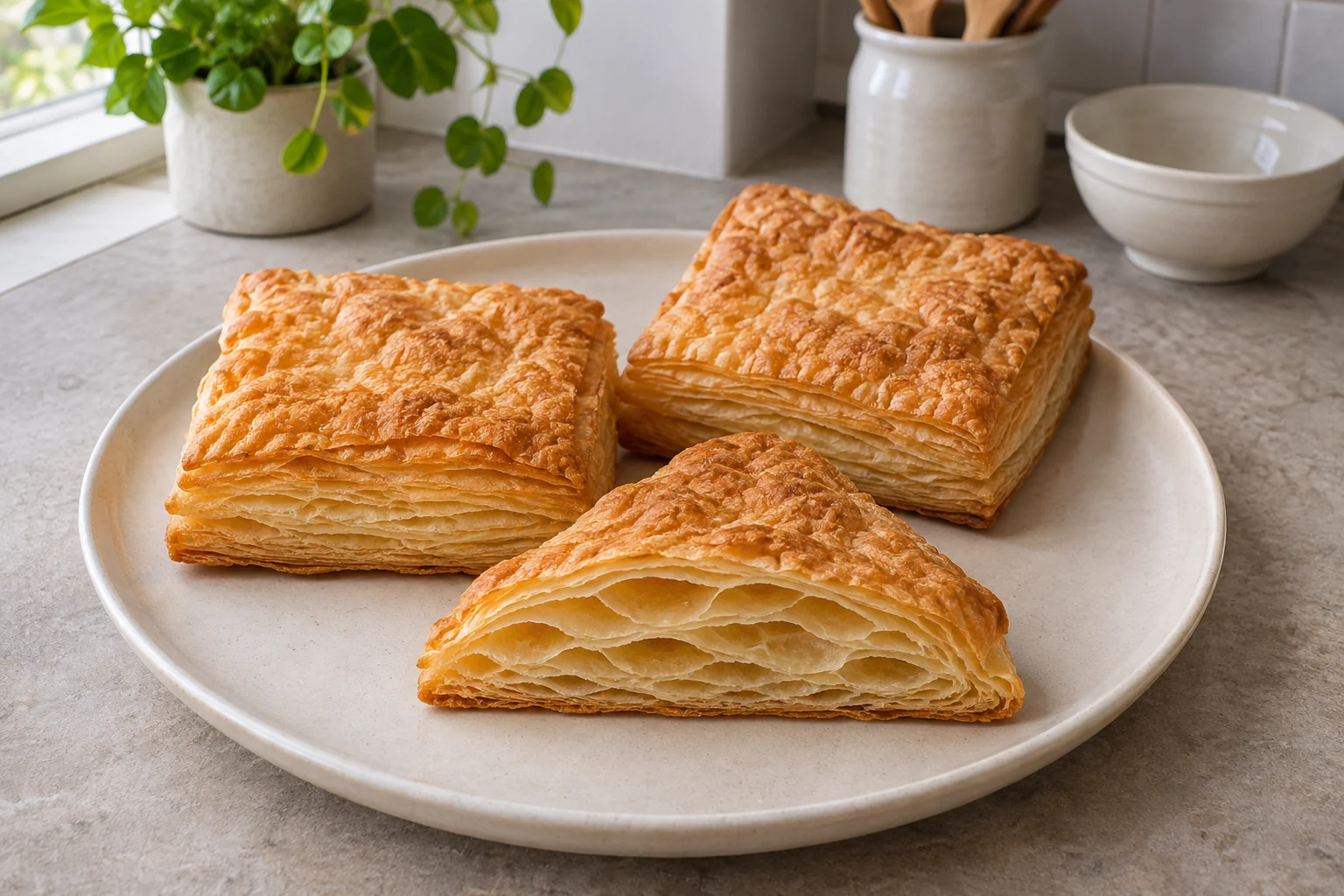
Once shaped and sufficiently chilled, classic puff pastry typically goes directly into a preheated oven. Waiting in a warm kitchen for it to 'rise' like bread can melt the butter and damage the layers. If a purchased product has unusual instructions, follow the package. Most standard puff pastry is intended to expand in the oven, not on the counter.
The tight spirals in Palmiers open as the sheets bake. Use the recipe’s chilling directions when preparing the slices.

Honeycomb crumb or crisp sheets?
A well-made croissant has an open honeycomb crumb with relatively thin walls and a tender slightly chewy bread-like bite. A puff pastry piece is typically crisp, light and shattering, with many discrete layers and less bread-like chew. Both can be flaky, but croissants contain fermented dough structure while puff pastry emphasizes laminated crispness.
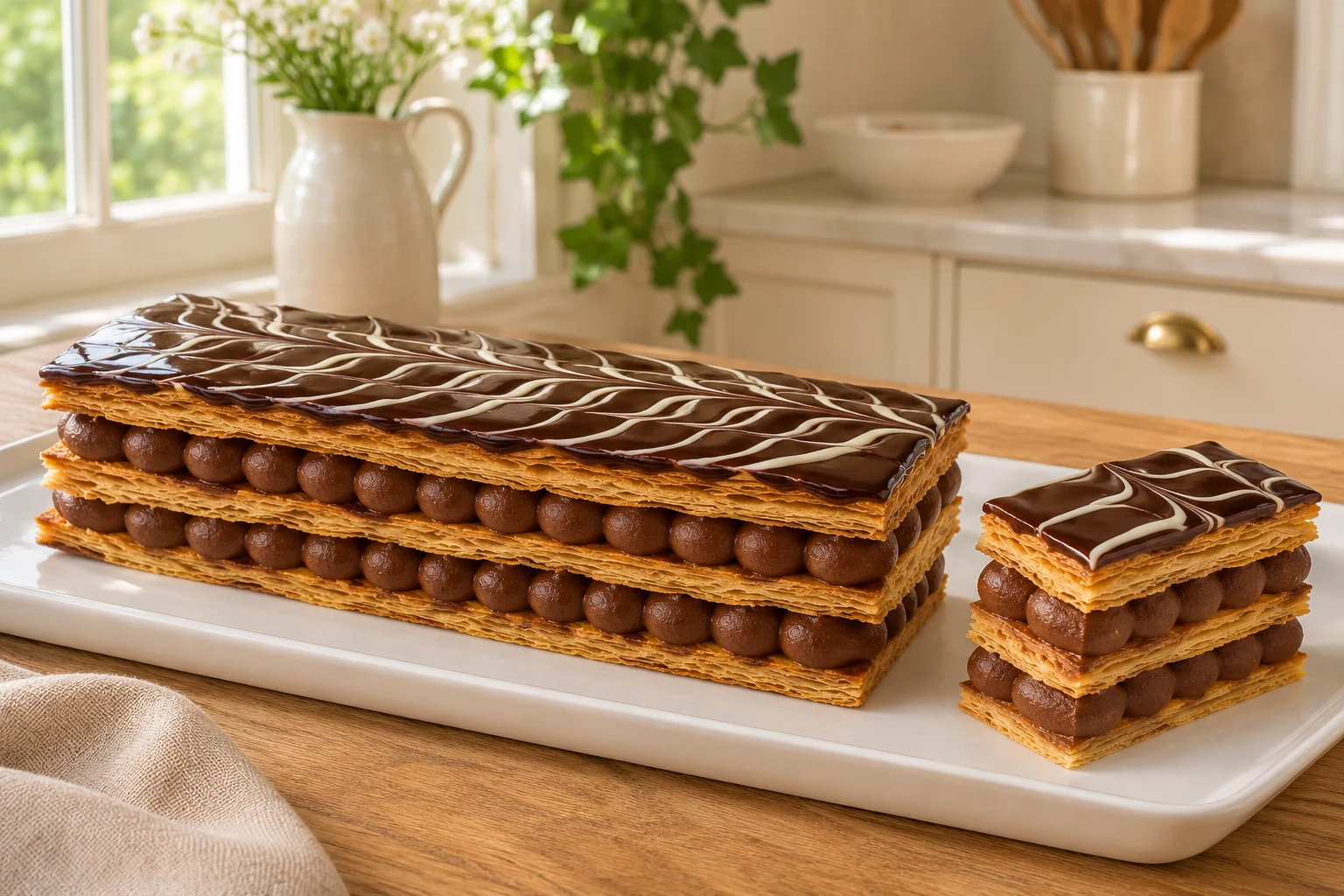
Look at the crisp stacked sheets of Chocolate Mille-Feuille and compare them with the joined crumb of a sliced croissant.
How flavour differs
Croissant dough develops fermentation-related aroma and contains sugar and often milk, creating a buttery, lightly sweet flavour. Puff pastry is more neutral and versatile in savoury dishes, though butter quality still matters. A cheese straw or mushroom tart may benefit from puff pastry's crisp clean layers. A breakfast croissant depends on both lamination and fermented richness.
How they brown
Enriched croissant dough may brown strongly because of sugar, milk and egg wash. Puff pastry can also become beautifully golden, especially with a suitable wash, but its base composition differs. A rich yolk wash can glue exposed laminated edges if brushed heavily. Follow the recipe and bake fully; a deeply golden croissant can still hide an underbaked doughy centre.

Butter temperature at rolling
Both doughs need butter and dough at compatible pliability during rolling. If butter is too cold it breaks into chunks and creates holes; if too warm it smears and leaks. Croissant dough also contains yeast, so temperature decisions affect fermentation. A croissant maker must control both gluten relaxation and yeast activity while protecting butter layers.
Why croissant timing takes longer
Croissant recipes often involve mixing, preliminary fermentation or chilling, enclosing butter, repeated folding, resting, shaping, final proofing and baking. Puff pastry omits the yeast-driven fermentation and proofing stages, though classic puff can still need many controlled rests. Rough puff reduces labour further but has more irregular layers. Compare full schedules rather than judging by hands-on minutes alone.

Classic puff for savoury baking
Puff pastry suits baked pastry lids, spinach turnovers, cheese straws and mushroom tartlets. It can create dramatic volume and a crisp shell without the pronounced sweet fermented flavour of a croissant. Thick wet fillings may prevent full rise, so control moisture and use recipe-specific pastry thickness and oven temperature. The finished centre must cook completely, especially with meat or eggs.
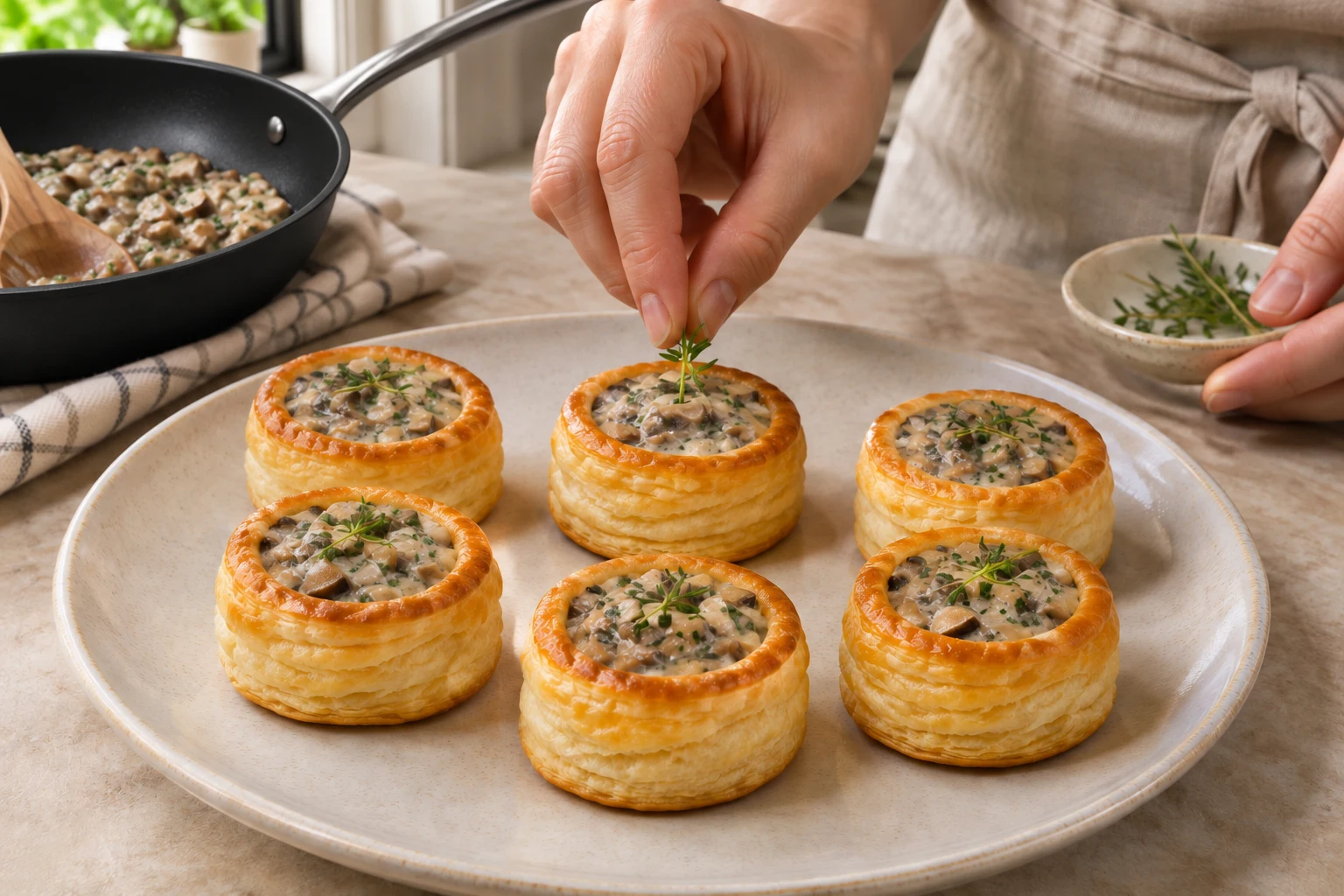
For Mushroom Vol-au-Vents, distinct upright walls make space for the filling after baking.
Croissant dough for filled pastries
Chocolate-filled croissants, almond croissants and savoury ham-and-cheese versions use the yeasted dough's balance of tender interior and crisp surface. Filled croissants require careful shaping and proofing so seams don't burst. Adding overly wet or heavy filling can impede expansion. Use a croissant recipe developed for the chosen filling rather than turning a random puff pastry turnover into a 'croissant' by name.
The shape of Cranberry Danish is another reason to read a recipe before buying dough. A Danish-style shape alone does not tell you which base the recipe uses.

Can puff pastry be substituted for croissants?
You can make a crescent-shaped snack from puff pastry, but it won't have the fermented interior or taste of a true croissant. This can be a sensible shortcut when you want a buttery crisp pastry rather than the specific croissant experience. Describe it accurately and follow puff pastry baking directions. The shape does not change the dough's structure.
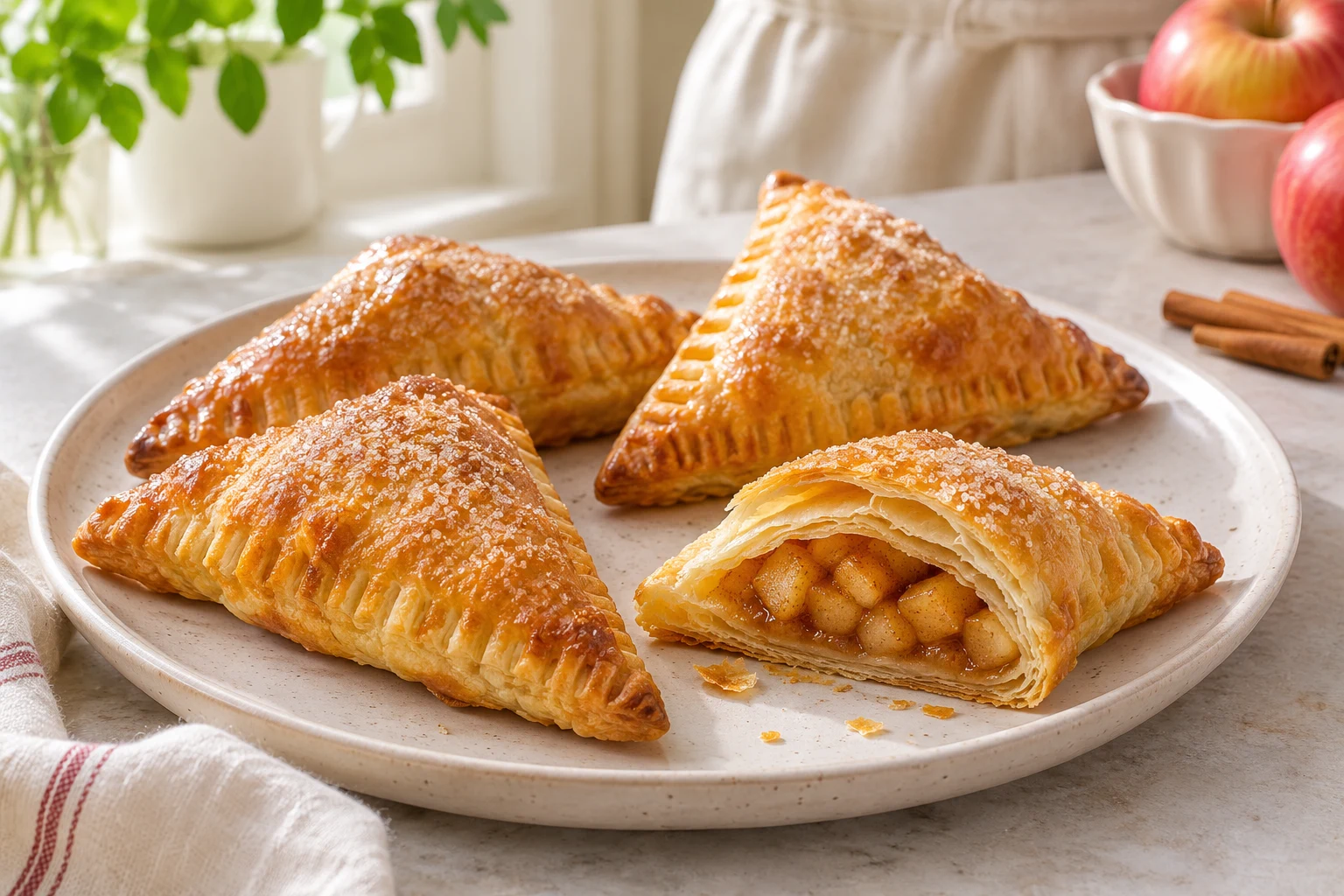
The triangular shape of Apple Turnovers takes advantage of the way cut sheets of puff pastry lift during baking.
Can croissant dough replace puff pastry?
Croissant dough generally isn't a direct substitute for a tall crispy puff pastry lid or delicate mille-feuille because the yeast structure and crumb differ. It may work in recipes specifically adapted for it, but baking and proofing steps change substantially. For a delicate tart that relies on crisp layers, use the pastry specified or find a tested alternative rather than making a one-for-one dough swap.
The difference between rough puff and both
Rough puff resembles classic puff in being usually unleavened and steam-risen, but its butter is introduced as pieces in the flour before folding. It is faster and more rustic. Croissants remain distinct because of yeast, enrichment and final proofing. These three methods make useful pastry families, each with appropriate uses.

Why croissants leak butter
Leaking can reflect butter too warm, poor lamination, underproofing or unsuitable oven conditions. Some butter loss is normal, but a large puddle beneath flat dense croissants is a warning. Review proofing temperature and dough firmness before increasing oven heat. Puff pastry butter leaks for related lamination reasons, but yeast proofing is not part of its usual diagnosis.
Why puff pastry rises unevenly
Compressed or sealed cut edges, warm butter, uneven rolling and inadequate baking heat can restrict puff pastry. Egg wash dripping down edges may glue layers together. A pastry that appears deeply coloured on top may still be wet in thick centre sections. Use a tested formula, clean cutting technique and proper oven conditions.
Thin Cheese Straws make uneven rolling easy to spot because one end of a twist can colour before the other.
Storage and make-ahead planning
Both doughs may be refrigerated or frozen under recipe-specific guidance, but yeast dough continues to respond to temperature differently from unleavened puff. Purchased products also have unique thawing directions. Keep raw meat and dairy fillings under safe cold conditions. Never assume a frozen dough can be held on the counter indefinitely simply because it remains firm.
IN PICTURES
From the baking notebook
FROM THE RECIPE BOX


