
On this page
A clear syrup can set hard enough to snap before it tastes much like caramel. An amber sauce can still pour from a spoon. The difference is easier to see if you ask two questions at the stove. How much water has boiled away? How far has the sugar browned? Candy stages answer the first question, while caramel colour helps answer the second.
Sugar concentration explains candy stages
As sugar and water boil, the escaping steam reduces the amount of water in the pot. Less water usually means the cooled syrup becomes firmer, even before meaningful browning occurs. Thermometer readings are a practical proxy for concentration under the recipe's specified conditions. These stages describe the behaviour of a sugar syrup, not the colour of every sauce containing dairy, chocolate or other ingredients.
Read the toffee and custard instructions in Toffee Custard Tart side by side. Each thickens for a different reason, so use its own endpoint.
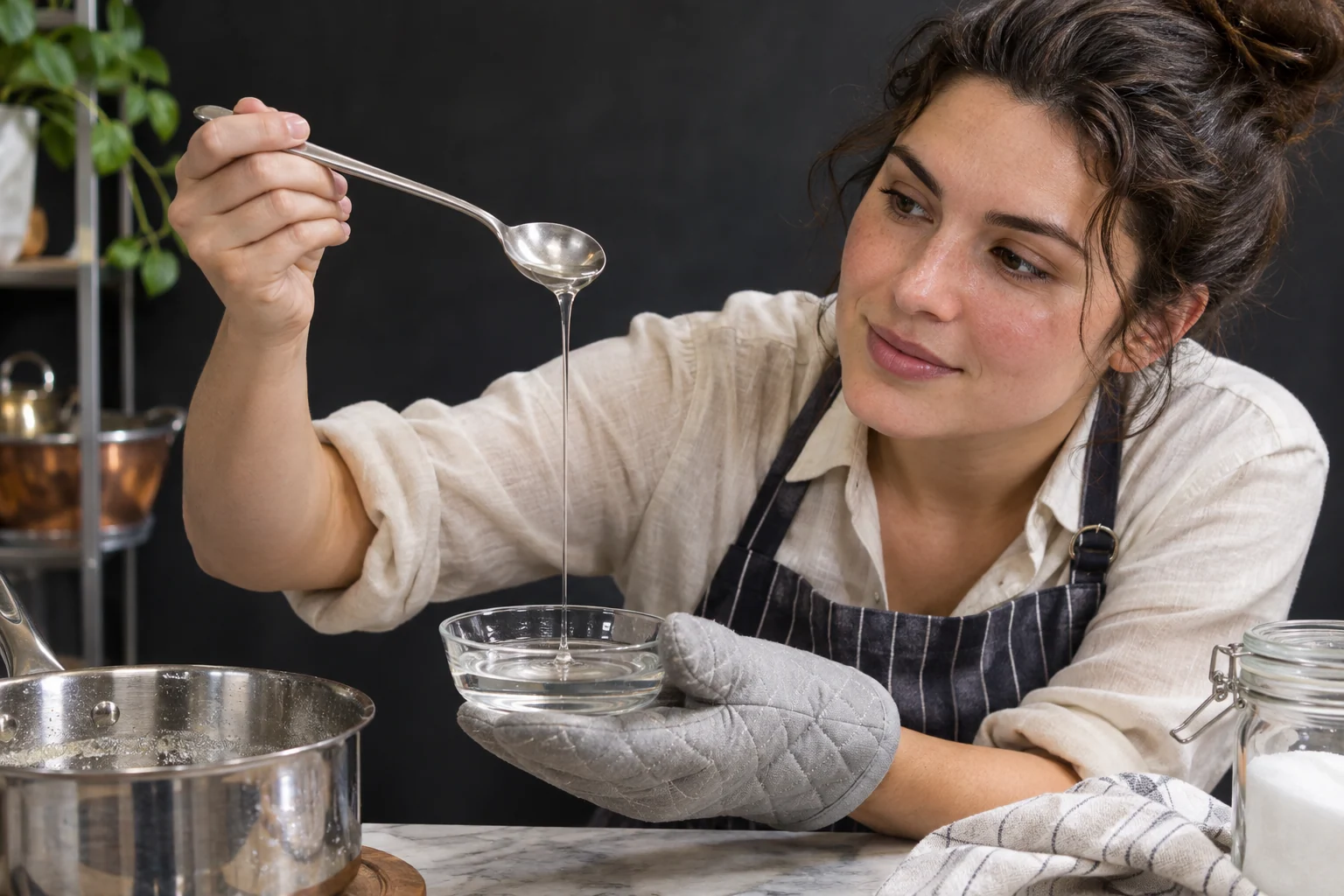
Thread stage: thin syrup
At thread stage a cooled sample draws into thin strands and will not gather into a ball. The syrup can still be nearly clear. If a tested recipe calls for this endpoint, use its thermometer target and a cooled sample as a cross-check. Colour is a poor guide to a clear syrup’s concentration.
The syrup for Caramel Apple Hand Pies passes through a clear stage on its way to amber. Pulling it here would leave the filling without its caramel flavour.
Soft-ball stage
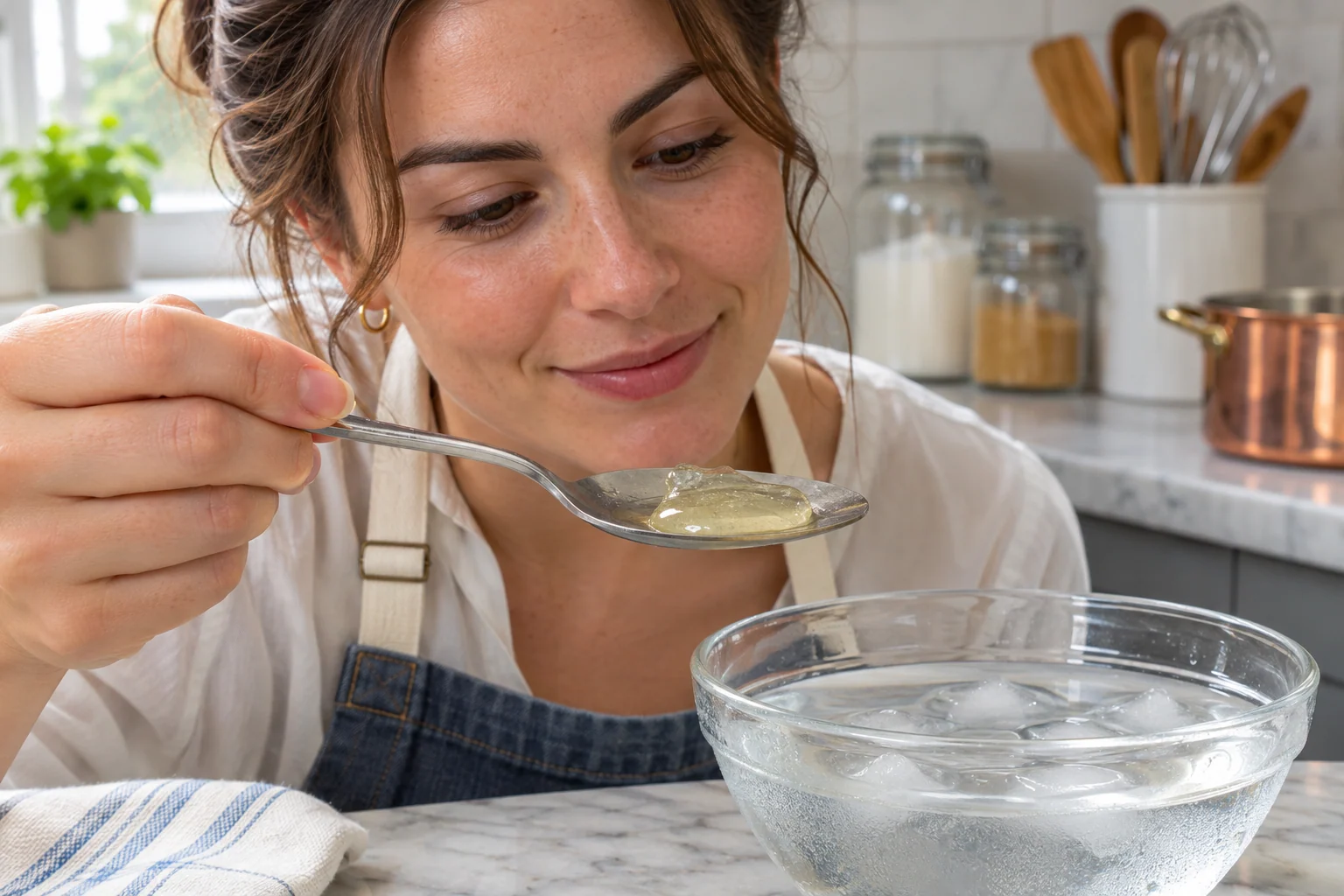
At sea level, a common soft-ball reference is 234–240°F (about 112–116°C). A small drop in cold water gathers into a ball that flattens readily once fully cool. This is a familiar stage in some cooked fudge and fondant recipes. Keep the sample away from the pan and give it time to cool all the way through.
The set in Keto Chocolate Fudge comes from its own chilled mixture. A confection called fudge does not necessarily include a soft-ball sugar stage.
Firm-ball stage
A firm-ball reference at sea level is 244–248°F (about 118–120°C). A thoroughly cooled sample holds its round shape yet still yields when pressed. Some chewy sweets finish in this neighbourhood. With a dairy caramel, use the target in the specific recipe because the mix of fat, sugar and water affects the final bite.

Hard-ball stage
For hard ball, a common sea-level reference is 250–260°F (about 121–127°C). The fully cooled sample forms a firmer ball that resists flattening. Check the formula before assigning a stage to a particular sweet. For example, the nuts in a crunchy praline call for a very different finish from a soft filling meant to bend.
The praline pecans on Caramel Chocolate Cheesecake with Praline Pecans should have a crisp coating. Stopping early because the syrup formed a firm ball would give a different texture.
Soft-crack stage
At soft crack, a sea-level reference is 270–284°F (about 132–140°C). A cooled drop draws into firm strands with a little flexibility. A syrup can move through the last few degrees quickly in a small pan. Stay beside it and clear the heatproof landing spot before it reaches the recipe’s endpoint.
The bits in Browned Butter Toffee Chocolate Chip Cookies are already toffee. When baking those cookies you fold them in as supplied, with no separate candy-stage test.
Hard-crack stage
At hard crack, a common sea-level reference is 300–308°F (about 149–153°C). Fully cooled threads break cleanly when bent. Brittles and fine sugar decorations rely on that brittle texture. A thread can appear hard before its interior has cooled, so test it only after the entire sample is cold.
The sugar cage on Tea-Smoked Chocolate Custard Tarts with Sugar Cage shows why a fine hard decoration must cool fully before it is lifted from its form.

Light caramel: colour develops
Once a sucrose syrup reaches the higher caramelization range, pale gold begins giving way to amber. A temperature near 320°F (160°C) is a frequently quoted landmark, but browning depends on ingredients and conditions. At this point, flavour changes from simply sweet toward toasted and complex. Visual cues become central for plain caramel sauce, while highly formulated candies can behave differently.
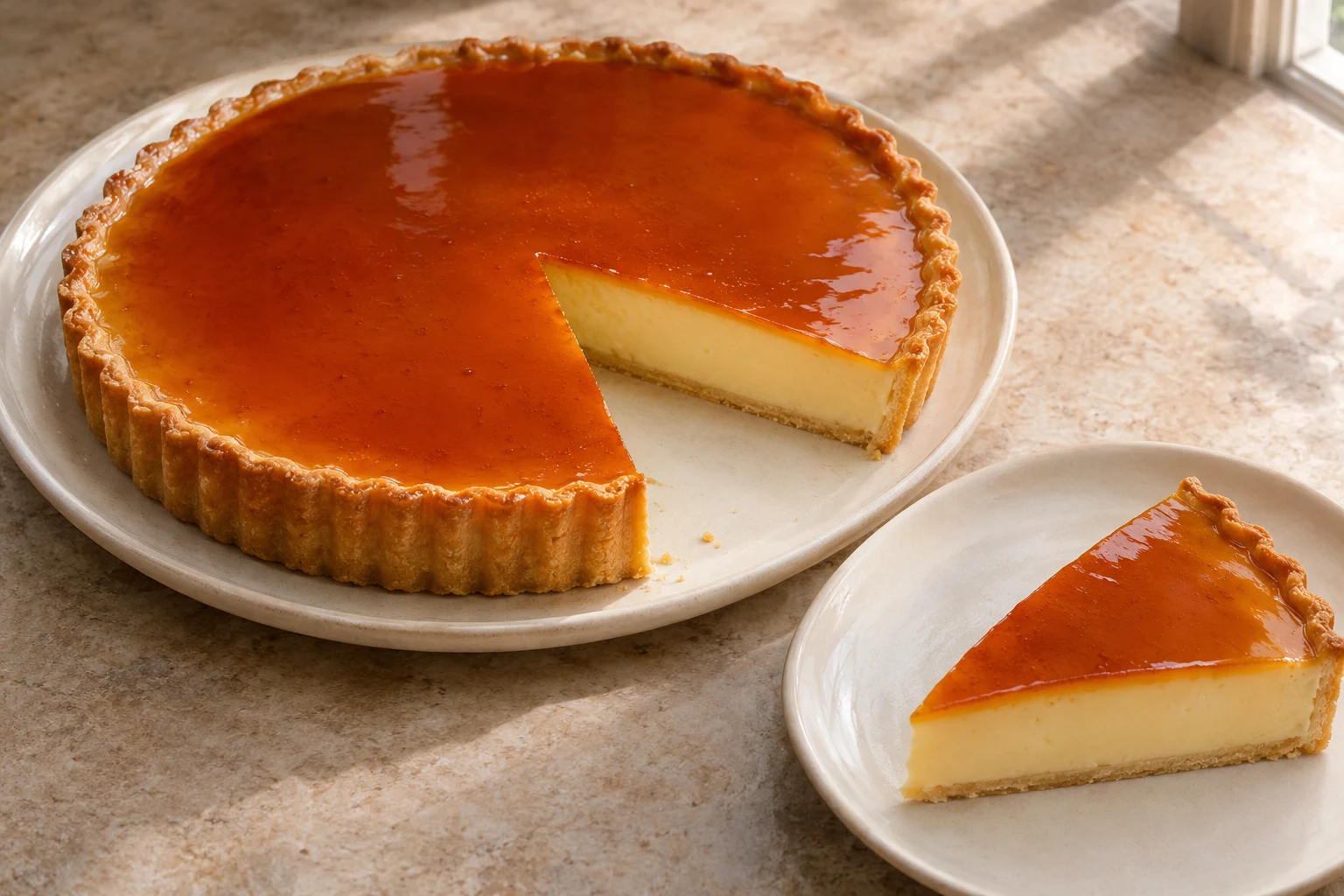
The thin sugar crust on Crème Brûlée Tart colours at the surface. Watch the whole top as you work because it browns in small patches.
Medium amber caramel
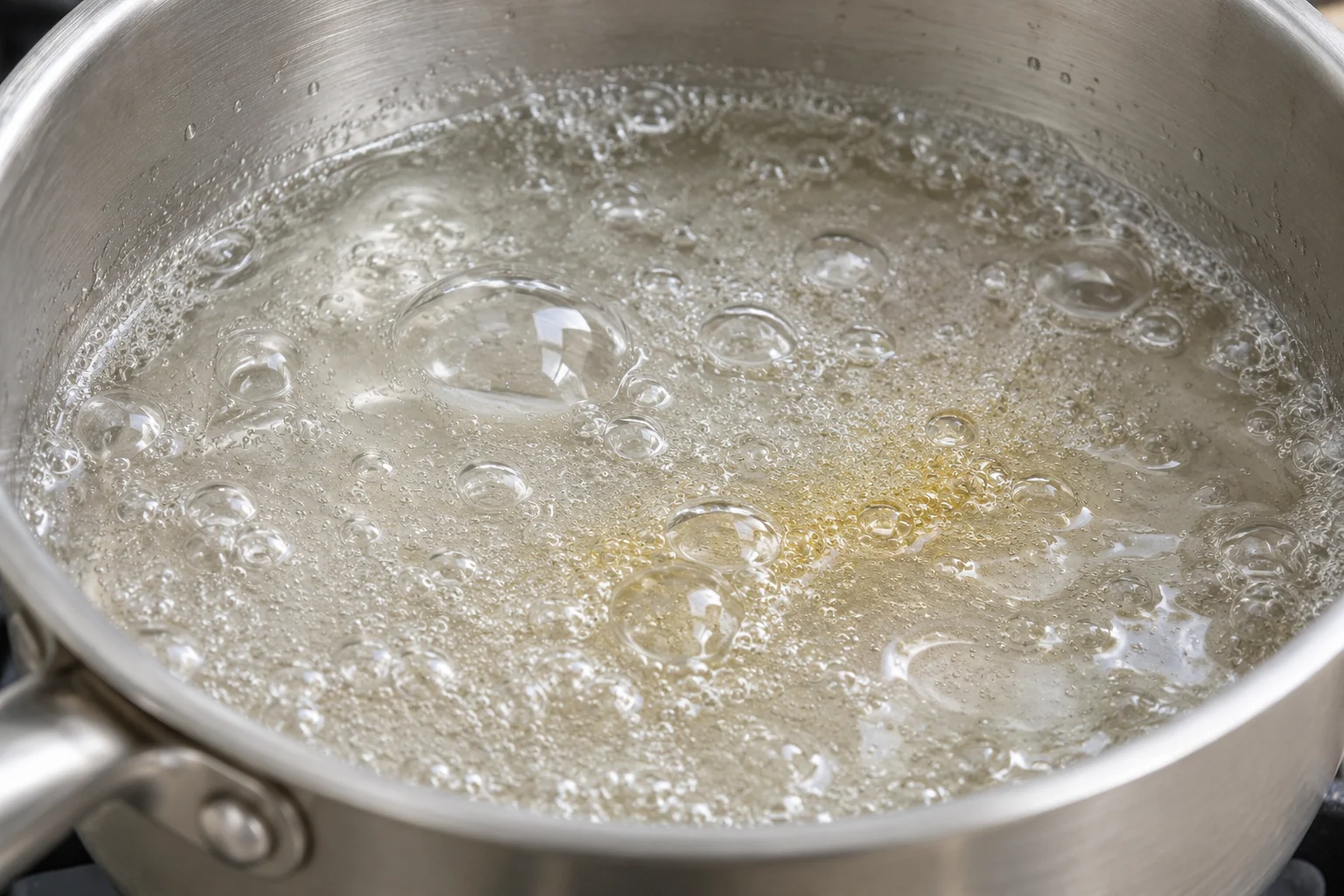
Medium amber is a useful target for many sauces because it balances sweetness with toasted flavour. A light-coloured heavy pan helps you see the colour accurately. The exact temperature is less universal than a candy-stage chart because colour and concentration respond to the composition and heating conditions. Remove from heat at the recipe's intended shade; residual heat may continue to darken the sugar.
Watch the topping for Caramel Custard Tart while it is still in the pan. The thin layer spread over the chilled custard looks paler than the deeper pool of caramel.
Deep amber caramel
Deep amber gives a more pronounced bittersweet edge, often desirable in assertive desserts. It also sits closer to burnt, acrid sugar. Colour can shift within seconds, especially in a small dry caramel batch. If the recipe calls for a deep amber shade, learn that appearance with a controlled small batch and remove from heat promptly. A darker colour is not automatically superior, especially when children or guests prefer a sweeter sauce.
Judge the caramel for Salted Caramel Mocha Bundt Cake in its own pan. On the dark mocha cake, the same sauce will be much harder to read by colour.

Dry caramel and wet caramel travel differently
Dry caramel begins with sugar only, so melting and browning may occur together unevenly if heat is too high. Wet caramel dissolves sugar in water first; the water boils away before significant browning. Both can reach comparable amber shades, but a wet caramel often gives beginners a little more time and control. Follow method-specific stirring instructions rather than treating the approaches as identical.
The drizzle for Caramel Apple Pinwheels begins with dry sugar. Here you see the first melted pools directly, without waiting for added water to evaporate.

Why chewy caramel needs a second temperature
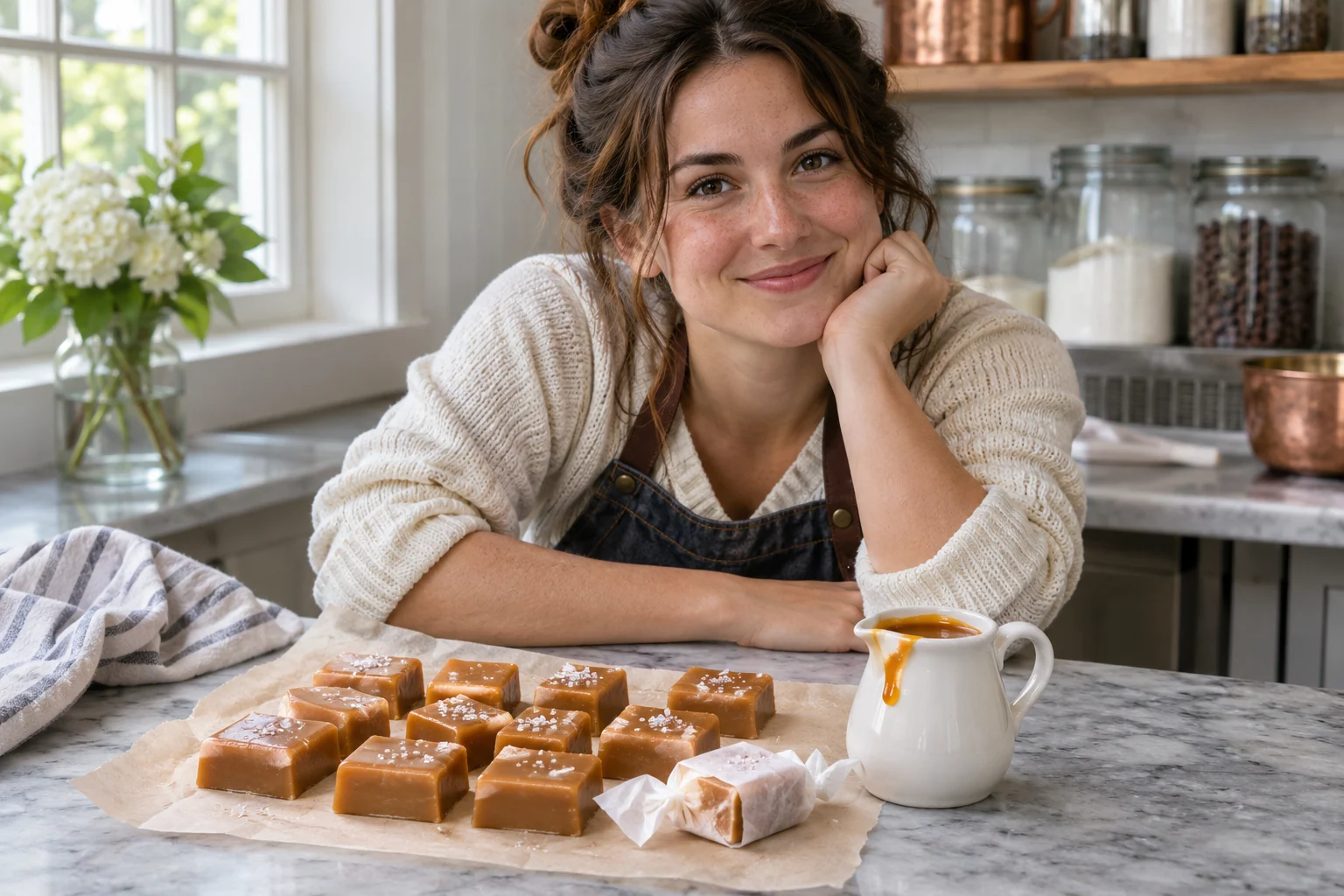
Some chewy caramels have two distinct endpoints. The first develops colour and flavour in the plain sugar. Adding cream changes the amount of water in the pan, and the mixture then cooks to the recipe’s final temperature for the intended chew. Have the additions ready and use a deep saucepan because dairy can make hot caramel foam up rapidly.
For Caramel Cream Pie, use the filling’s own directions once the dairy is present. Cooking it to the endpoint for a chewy wrapped sweet would give a different result.
Thermometers and calibration
To check a candy thermometer, measure freely boiling water with the probe immersed as its maker directs and clear of the pan bottom. At sea level the reference is 212°F (100°C). If your instrument reads boiling water 8°F below that, reduce a sea-level concentration target by 8°F when the recipe calls for a local boiling-point adjustment. Do not make a second adjustment to an already altitude-adjusted recipe. An amber colour cue is a separate observation.

How to perform a cold-water test safely
Set a bowl of cold water and a heatproof saucer beside the stove before heating the sugar. Take a tiny sample with a long-handled utensil and let it fall into the water. Wait until the sample is completely cold before retrieving it. Keep the wet utensil out of the hot pan. If there is any doubt about handling a sample, use the thermometer.
For Almond Praline Macarons, arrange the lined tray before cooking the nut praline so the hot pan need never pass above your cold-water test bowl.

What bubbles can tell you
As water evaporates, syrup bubbles may become thicker and slower to collapse, but appearance alone is an imperfect predictor of concentration. Pan size, quantity and added ingredients influence bubble behaviour. Watch a reliable thermometer for candy stages and use colour for plain caramelizing sugar where the recipe calls for it. A phone timer or a single bubble size should not replace multiple cues.
Colour can be misleading in a dark pan
Dark-coated cookware can conceal the difference between medium amber and nearly burnt caramel. A light-coloured stainless-steel pan and good overhead lighting help. If the syrup includes brown sugar or molasses, it may appear brown before reaching a classic caramelization endpoint. Follow the specific recipe's target and avoid trying to match photographs from a different sugar mixture.
For the caramel in Salted Caramel Custard Tart, a pale pan or a metal spoon against a pale background helps reveal the amber beneath the bubbles.

Managing the end of cooking
Set heatproof surfaces and any recipe-specified additions within reach before the syrup starts darkening. Once it approaches the intended stage, keep close attention and remove the pan as directed. When cream is added, the caramel can foam and steam vigorously. Use a deep saucepan, appropriate heatproof tools and long sleeves; children and bystanders should stay away from the pot.
Lay out the butter for Caramel Apple Pie before the sugar changes colour. Once the amber develops, there is little time to search the fridge.

Common mistakes
Relying only on colour to make chewy candy, assuming every chart uses the same temperature boundaries, stirring wet caramel at the wrong stage and failing to account for altitude are common issues. Another is treating burned sugar as a darker acceptable caramel. Bitter acrid notes cannot be removed by adding enough cream. A practice batch teaches more than trying to rescue a badly overcooked pot.
A basic temperature-reference mindset
Instead of memorizing one set of absolute numbers, connect each stage with its role: thread for liquid syrup, ball stages for increasingly firm cooled sugar, crack stages for brittle texture and amber stages for caramel flavours. Verify the recipe's published target because sugars, dairy and glucose syrups change the behaviour. Professional charts give useful reference ranges, not a one-size-fits-all guarantee.
Frequently asked questions
Can syrup be amber at soft-ball temperature? Plain sucrose-water syrup generally caramelizes at much higher temperatures; brown ingredients can make mixtures look coloured earlier. Can I use colour to make lollipops? Use the recipe's hard-crack endpoint. Why is my caramel sauce runny? The recipe's cream ratio or final concentration may differ. Is hard-crack candy safe to touch once bubbles stop? No, test only after full cooling.
The glaze on Pecan Praline Bundt Cake starts with brown sugar and butter. Its colour is already dark before the pan gets hot, so use the glaze instructions for doneness.
Use the right cue for the right confection
Read the recipe’s endpoint before you begin. For a clear candy, look for its temperature and the texture of a cooled sample. For a caramel sauce, look for the specified amber shade before the dairy goes in. For a two-stage chewy caramel, write both endpoints on the same card and leave it beside the pan.
IN PICTURES
From the baking notebook
FROM THE RECIPE BOX


