Directions
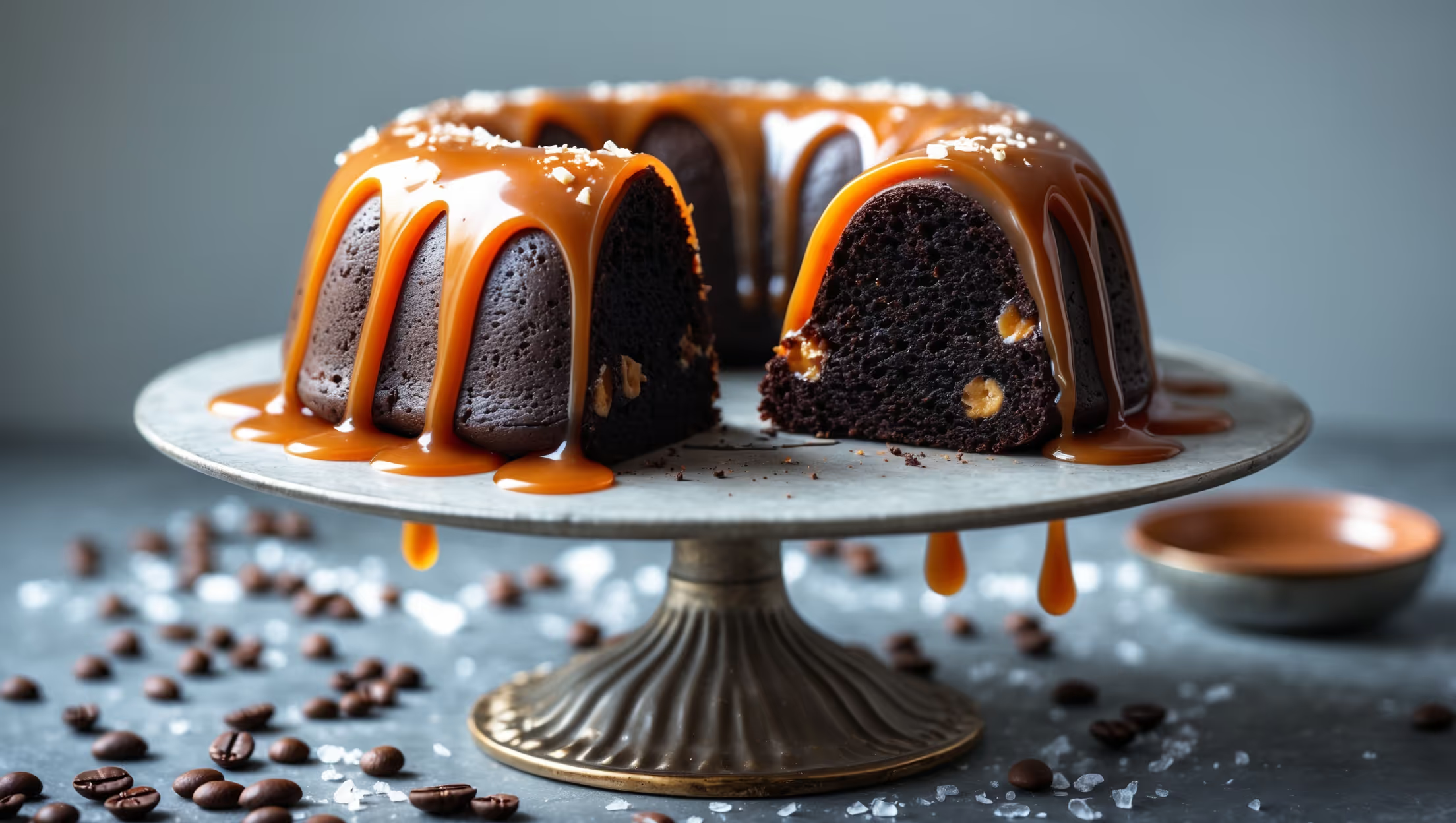
<ol class="no-list-style"><li class="MethodStepper"><h4 class="step-title">Step 1</h4>Preheat your oven to 175°C (350°F). Thoroughly grease and flour a 25cm bundt pan, ensuring you reach all the crevices and central tube. This meticulous preparation is crucial for a clean release later - bundt cakes are notorious for sticking if not properly prepared.</li><li class="MethodStepper"><h4 class="step-title">Step 2</h4>First, prepare the salted caramel so it can cool while you make the cake. In a heavy-bottomed saucepan, heat the 200g sugar over medium heat. Resist the temptation to stir! Instead, gently swirl the pan occasionally until the sugar melts completely and turns a deep amber color (around 170°C on a candy thermometer). This caramelization process creates complex flavors through the Maillard reaction.</li><li class="MethodStepper"><h4 class="step-title">Step 3</h4>Once the caramel reaches the perfect amber color, carefully add the cubed butter (stand back as it will bubble vigorously). Stir constantly until completely melted. Slowly pour in the heavy cream while continuing to stir. The mixture will bubble aggressively again - this is normal! Continue cooking for 1 minute, then remove from heat and stir in the sea salt. Transfer to a heat-proof container and allow to cool to room temperature. The caramel will thicken as it cools.</li><li class="MethodStepper"><h4 class="step-title">Step 4</h4>For the cake batter, begin by whisking together the flour, cocoa powder, baking powder, baking soda, and salt in a medium bowl. This pre-mixing ensures even distribution of leavening agents throughout the batter.</li><li class="MethodStepper"><h4 class="step-title">Step 5</h4>In the bowl of your stand mixer fitted with the paddle attachment, cream the butter and sugar on medium-high speed for a full 5 minutes until very light and fluffy. This extended creaming incorporates air into the fat-sugar matrix, which is essential for a tender, well-risen cake.</li><li class="MethodStepper"><h4 class="step-title">Step 6</h4>Add the eggs one at a time, beating well after each addition. Each egg needs to be fully incorporated before adding the next one to maintain the emulsion. Scrape down the sides of the bowl frequently. Add the vanilla extract and mix to combine.</li><li class="MethodStepper"><h4 class="step-title">Step 7</h4>Combine the cooled espresso and buttermilk in a measuring jug. With the mixer on low speed, add the dry ingredients to the butter mixture in three parts, alternating with the espresso-buttermilk mixture (beginning and ending with the dry ingredients). This alternating method prevents gluten development that would result in a tough cake.</li><li class="MethodStepper"><h4 class="step-title">Step 8</h4>Mix only until just combined after each addition - overmixing at this stage will develop gluten and result in a dense cake. The batter should look velvety and smooth with a medium consistency.</li><li class="MethodStepper"><h4 class="step-title">Step 9</h4>Pour one-third of the batter into the prepared bundt pan. Spoon about 3 tablespoons of the cooled salted caramel over the batter and use a knife to gently swirl it through. Add another third of the batter, more caramel, and swirl again. Top with the remaining batter. Reserve the remaining caramel for serving.</li><li class="MethodStepper"><h4 class="step-title">Step 10</h4>Bake in the preheated oven for 50-55 minutes, or until a thin knife inserted into the center comes out clean with a few moist crumbs. The cake will also start to pull away slightly from the sides of the pan when ready. Don't overbake or your cake will dry out!</li><li class="MethodStepper"><h4 class="step-title">Step 11</h4>Allow the cake to cool in the pan on a wire rack for exactly 15 minutes - this timing is important! If you try to remove the cake too soon, it may break; wait too long, and it could stick. After 15 minutes, invert the pan onto a cooling rack and gently lift it off. Let the cake cool completely.</li><li class="MethodStepper"><h4 class="step-title">Step 12</h4>While the cake cools, prepare the mocha ganache. Place the chopped chocolate in a heat-proof bowl. Heat the cream until just simmering, then stir in the espresso powder until dissolved. Pour the hot cream over the chocolate and let it sit for 1 minute without stirring to allow the chocolate to melt. Then, stir gently until smooth and glossy. Add the tablespoon of butter and stir until incorporated - this gives the ganache a beautiful sheen.</li><li class="MethodStepper"><h4 class="step-title">Step 13</h4>Once the cake has cooled completely, place it on your serving platter. Gently warm the remaining caramel if it has solidified. Pour the mocha ganache over the top of the cake, allowing it to drip dramatically down the sides. While the ganache is still wet, drizzle with some of the salted caramel and sprinkle with additional flaky sea salt.</li><li class="MethodStepper"><h4 class="step-title">Step 14</h4>Allow the ganache to set for at least 30 minutes before serving. When ready to serve, slice with a warm, clean knife for the neatest cuts. This cake stays fresh in an airtight container at room temperature for 3 days, or refrigerated for up to a week. Bring to room temperature before serving for the best flavor and texture.</li></ol>