On this page
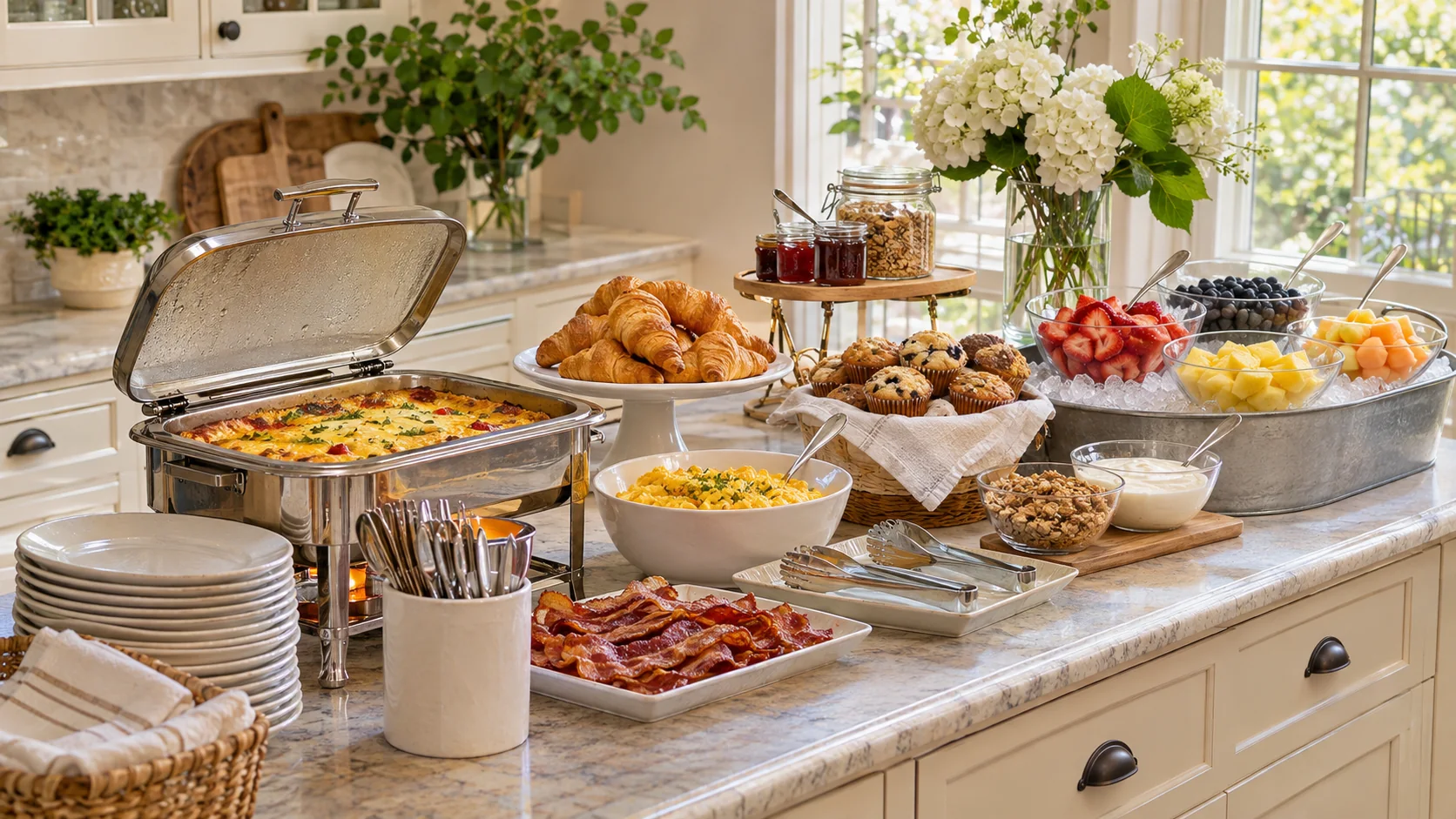
A beautiful table can become frustrating when guests have nowhere to put their plates, syrup drips into the pastry basket, or the eggs cool while everyone lines up for coffee. Buffet design is about movement, temperature and accessible food as much as decoration. A little planning lets people help themselves and gives the host time to enjoy the gathering. The best buffet is easy to navigate and simple to replenish, not necessarily the one with the most food.
Plan the menu before the layout
List every item, its serving vessel, the utensils needed and whether it must remain hot or cold. Mark anything assembled at the last minute, such as toast, pancakes or poached eggs. Only then choose where dishes go. A wide counter that looks generous may be too small once a coffee maker, trays and twenty plates occupy it. Your menu determines the station requirements.
For a buffet built around small, easy-to-lift portions, Breakfast Egg Muffins can take the place of a larger egg bake.
Choose a one-way traffic pattern
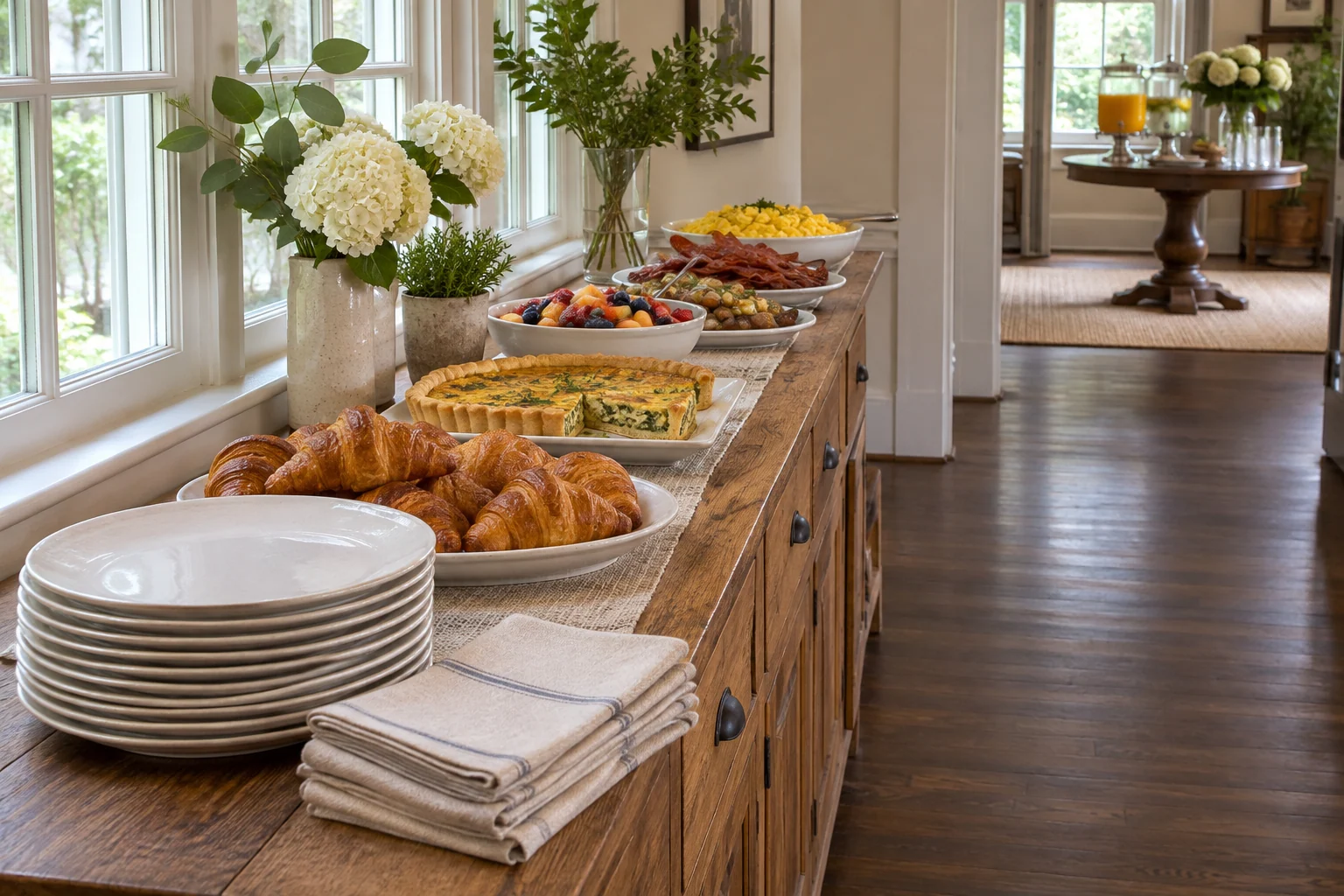
For a group larger than a few people, encourage guests to move in one direction from plates to food to cutlery and seating. A buffet against a wall can work if dishes are accessible from the front, while a central island may support two sides. Leave enough room for guests to step aside without blocking the kitchen. Arrange the path with real movement in mind rather than an abstract diagram.
Place plates at the beginning
A stack of sturdy plates should be the first thing guests reach. Keep a few extra nearby for people returning for seconds. If serving wet fruit, eggs and syrup-heavy waffles, choose plates with a slight rim. Tiny appetizer plates might look elegant but lead to multiple trips and accidental spills. Provide a separate small bowl for yogurt if useful.

Put cutlery near the exit
Guests often find it awkward to balance a plate, knife, fork and serving spoon while moving past hot dishes. Place napkins and cutlery near the end, once plates are full. If utensils are needed immediately to spread something, provide an appropriate small serving knife at that dish. Have extra napkins near sticky toppings without making the entire table crowded.
Group by temperature
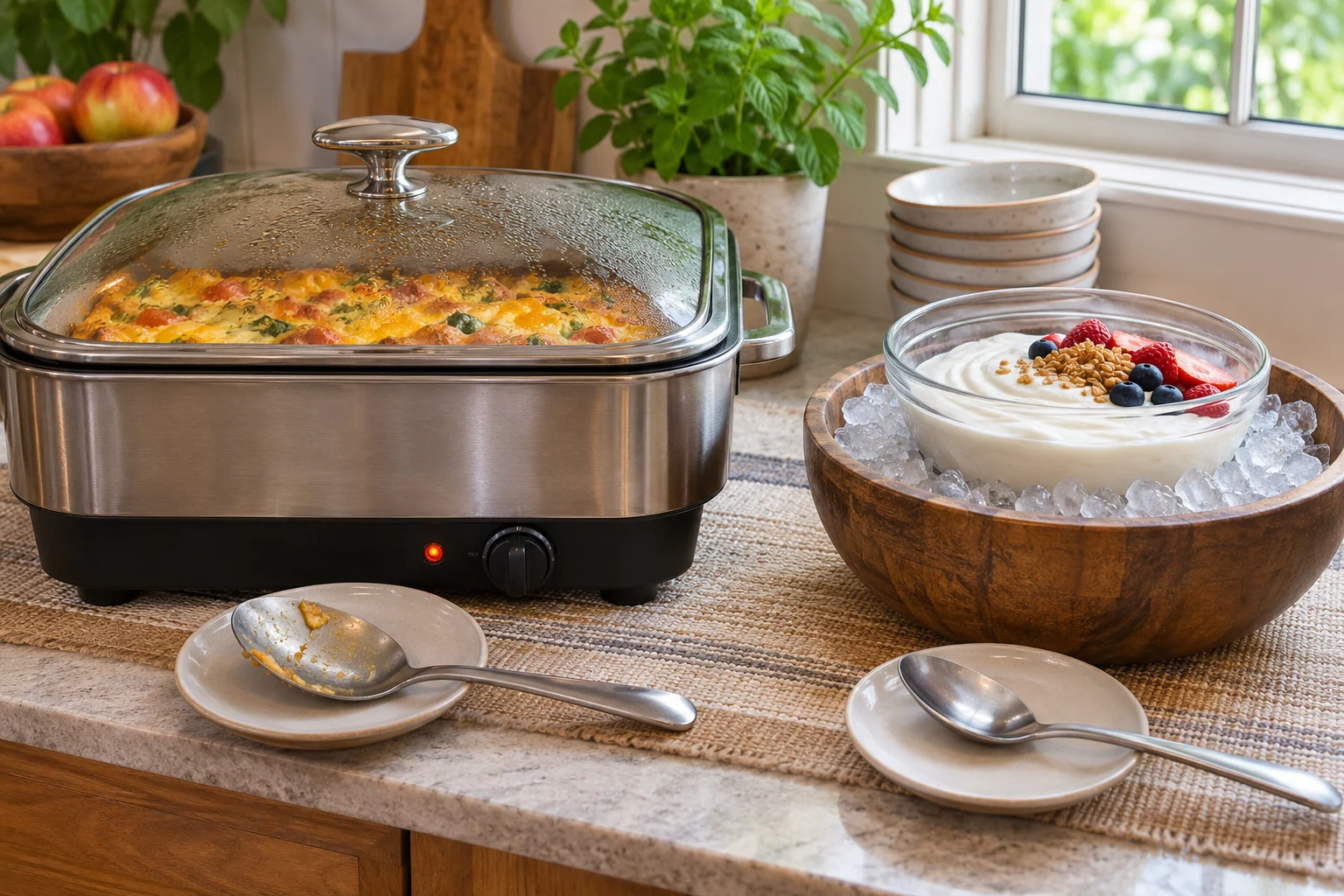
Hot casserole, scrambled eggs and breakfast potatoes belong near reliable warm holding or prompt service. Cold yogurt, cheese, smoked fish and cut fruit need appropriate chilled presentation and replenishment. Room-temperature croissants and muffins can sit between stations. Avoid putting a bowl of whipped cream directly beside a heated chafing unit just because the colors look pretty.
Treat a Greek Yogurt Parfait as a cold item when you decide where the ice or refrigerated serving space will go.
Think about safe hot and cold holding
Put the thermometer beside the serving tools. Keep hot perishable dishes at or above 60°C (140°F) and cold dishes at or below 4°C (40°F). For a short home brunch, set out small portions and replace the dishes from hot or cold storage. Discard perishable food that has sat at room temperature for more than two hours. Checking the food temperature tells you more than looking at the warmer.
The savory anchor
Start the buffet with substantial items, such as a baked egg casserole, breakfast potatoes, savory scones or a vegetarian frittata. Place these early so guests have room to build a balanced plate. Use a serving spoon or spatula appropriate to the item. If the dish contains meat or major allergens, place a clear label next to it rather than expecting the host to answer the same question twenty times.
For a crowd that prefers a rectangular bake, Breakfast Casserole is easy to serve from a pan with a wide spatula.

Give sweet foods a separate zone
Pancakes, waffles, cinnamon rolls and muffins make a natural group. Keep syrup, butter, honey and jam beside—not on top of—their bases. Syrup bottles should sit on a shallow tray to contain drips. A separate sweet station allows guests who only want savory food to bypass it without waiting behind someone carefully decorating a waffle.
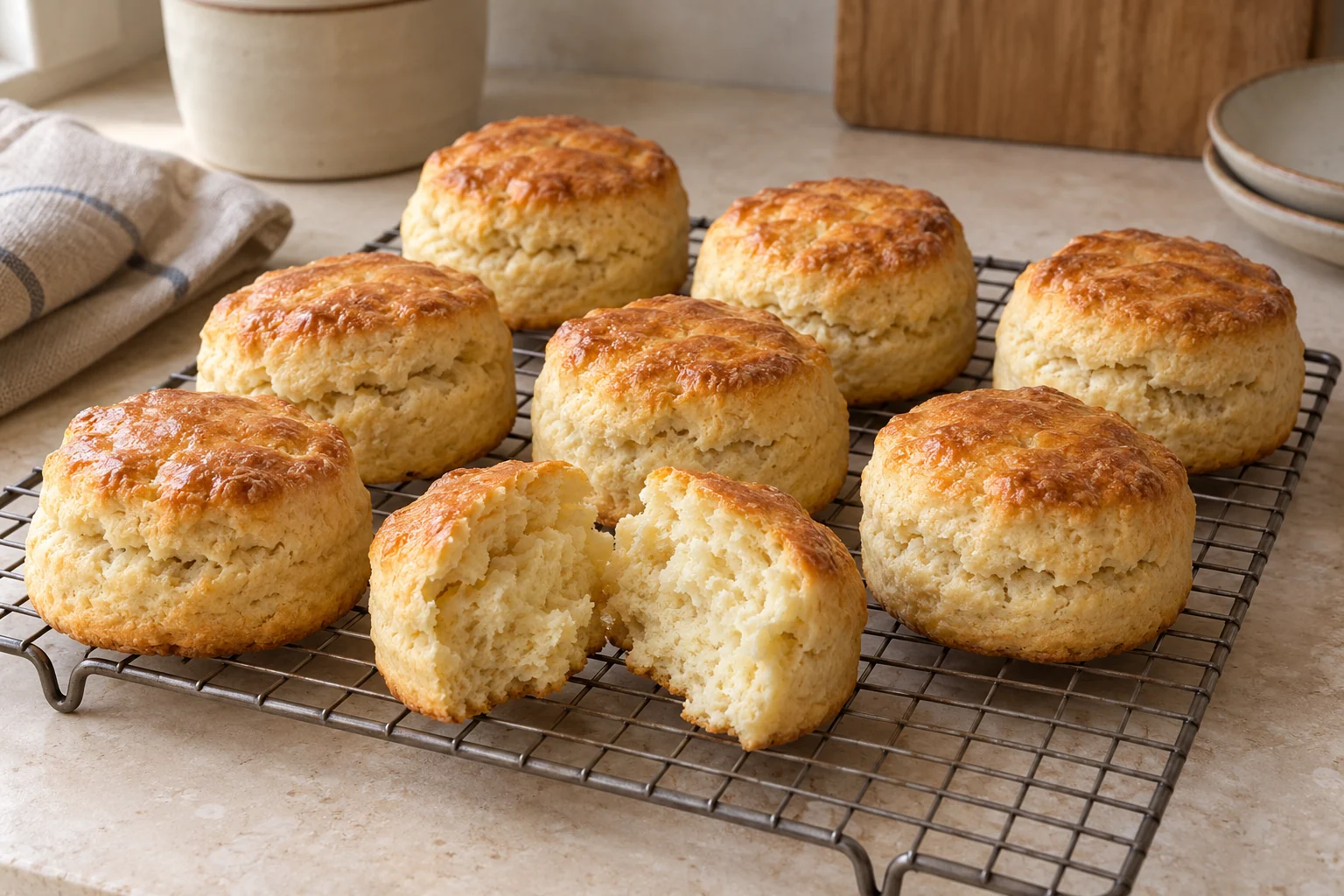
Basic Scones work well on the dry pastry table, with jam and butter in their own dishes.
Create a cold fruit and yogurt corner
Place fruit in bowls with serving spoons rather than scattering wet berries directly on the counter. Yogurt, granola and toppings can be arranged as a compact station. Keep granola separate to preserve crunch, and provide an unsweetened yogurt option when suitable. Perishable yogurt needs proper cold holding, particularly when guests arrive over an extended period.
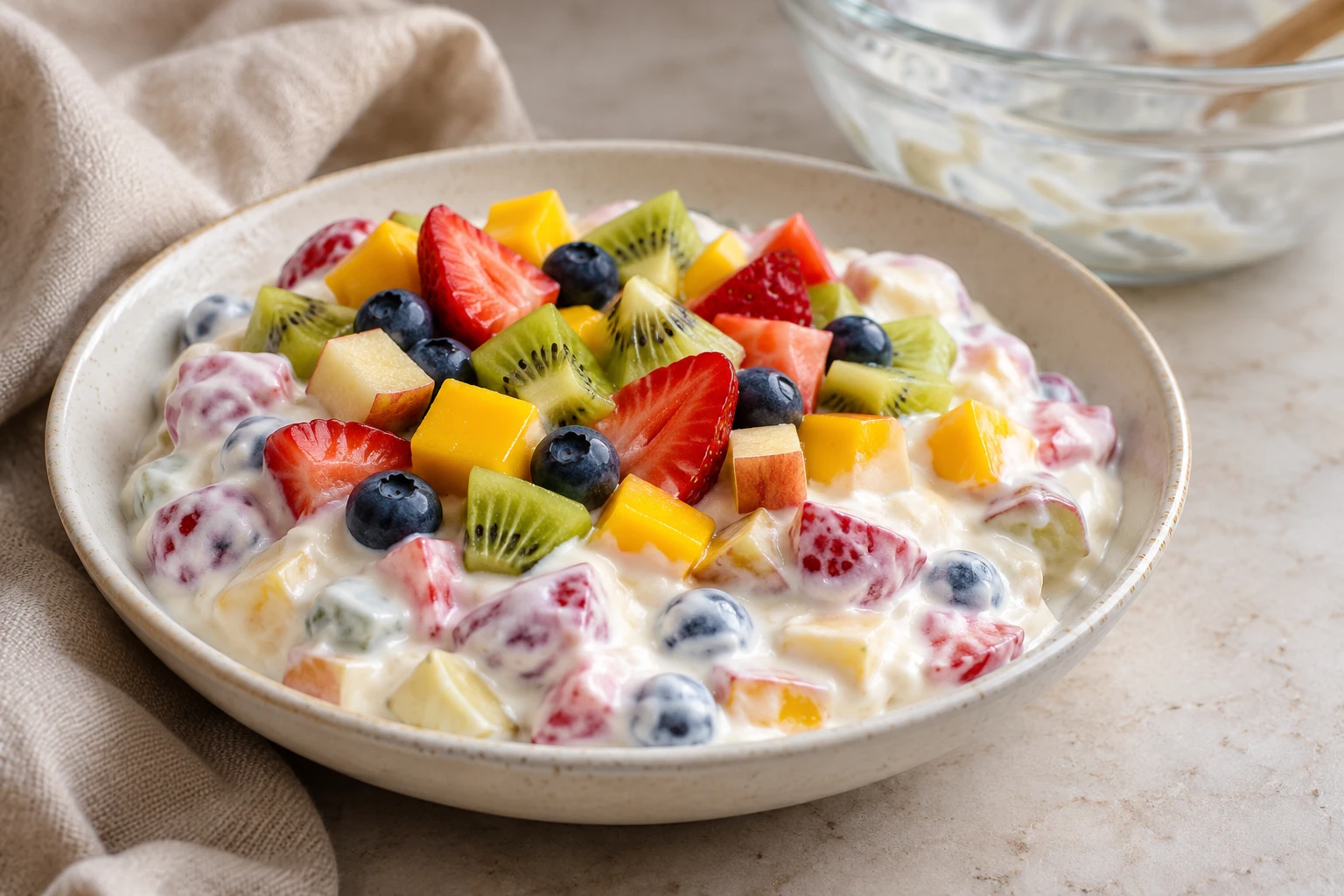
Spoon Fruit Yogurt Salad into a smaller chilled bowl so you can replace the whole bowl during service.
Move beverages away from the food line
Coffee makers, kettles and juice jugs create pauses that can block a buffet. A separate drink table often works better, with mugs, teaspoons, water and sweeteners nearby. Position electrical cords safely and keep hot water away from small children. Coffee can be replenished while guests browse food instead of stopping the entire queue.
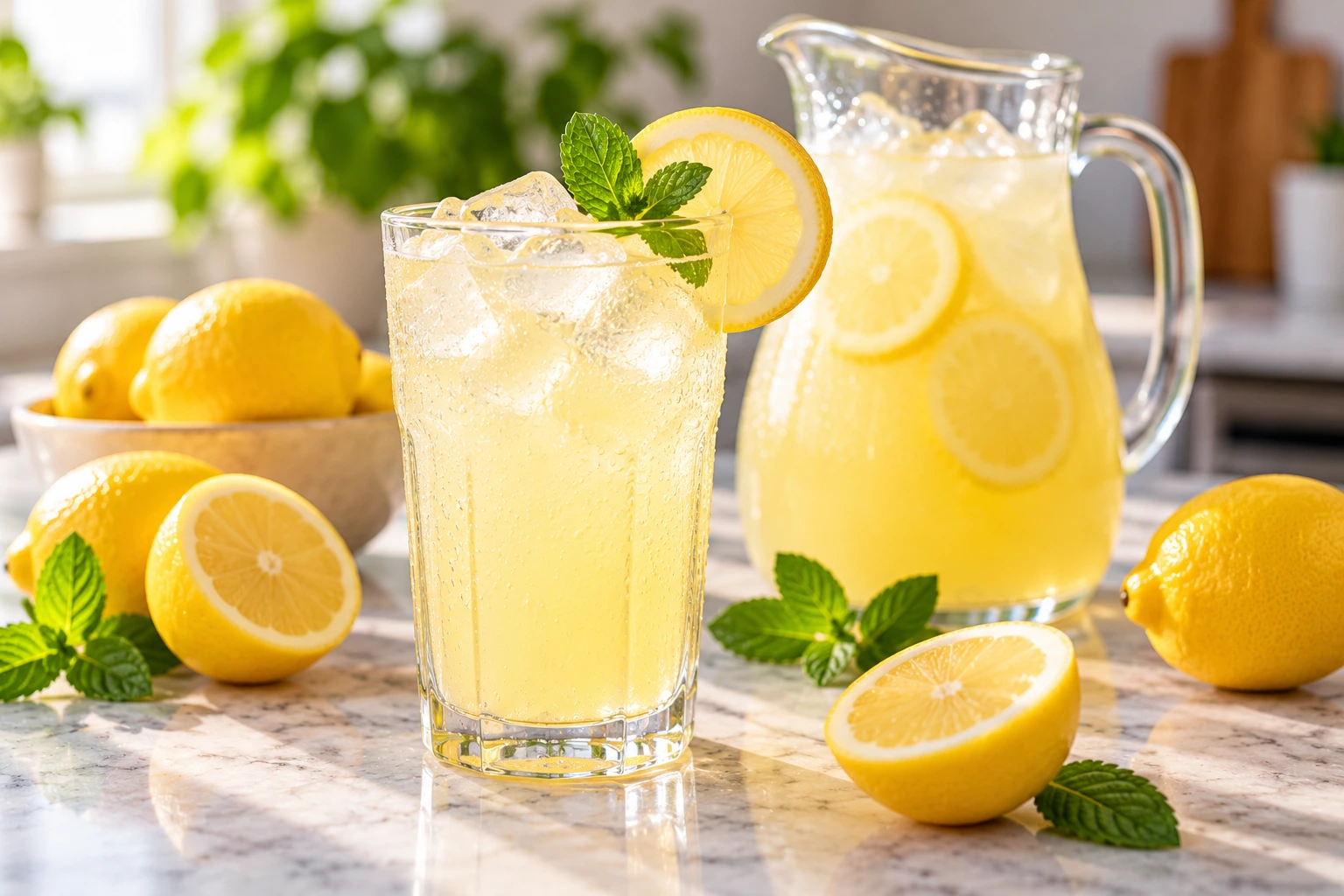
Set the Kid-Friendly Never Bitter Lemonade at the drinks station, where guests can pour a second glass without rejoining the food queue.
Make the station accessible
Keep heavy hot dishes within easy reach and avoid tall precarious tiered stands that require guests to reach over steam. A guest with limited mobility should be able to identify items and serve a plate without squeezing between chairs. Use large readable labels and good lighting. Accessibility makes the table easier for everyone, not only people with specific needs.
Labels reduce confusion
Short cards identifying dishes and major ingredients are often enough: mushroom frittata, cheddar biscuits, blueberry muffins. Mark vegetarian and other dietary characteristics only when verified; a pastry topped with nuts may also contain milk and eggs. Serious allergy management needs separate preparation and utensils, not just moving a label or promising a shared buffet is allergen-free.
Use one utensil per dish
A serving spoon left in a yogurt bowl may carry dairy into fruit or another dip when guests move it. Provide dedicated tongs, spatulas and ladles, with a clean backup for popular items. Use small plates beneath sticky utensils. Cross-contact prevention is especially important for guests with allergies, but it also improves hygiene and reduces mess.

What to prepare the evening before
Arrange clean serving dishes and labels, set out unopened shelf-stable supplies and decide where every item will go. Wash produce and prepare recipe-supported make-ahead components, storing perishable foods correctly. Don't leave uncooked egg mixture, cut fruit or cream at room temperature overnight just because you want the final table to look ready by morning.
Blueberry Muffins are a practical bake to finish and cool before you start the morning’s hot dishes.
The morning timeline
Start with the item needing the longest oven time, then prepare cold bowls and coffee. Finish easily cooled baked items earlier, and cook delicate pancakes or eggs closer to service. Use a written oven schedule so two casseroles don't compete for one rack at the same time. The host should not discover at 10:55 that three hot dishes all need thirty minutes in the oven.
Small-space layout
A narrow kitchen can use a short savory table and a separate pastry-and-drinks console in the dining room. Keep hot equipment on stable heat-resistant surfaces and leave room for cords. A pair of clearly defined smaller stations may be safer than piling everything onto one crowded countertop. Draw a quick layout if the space is unfamiliar.
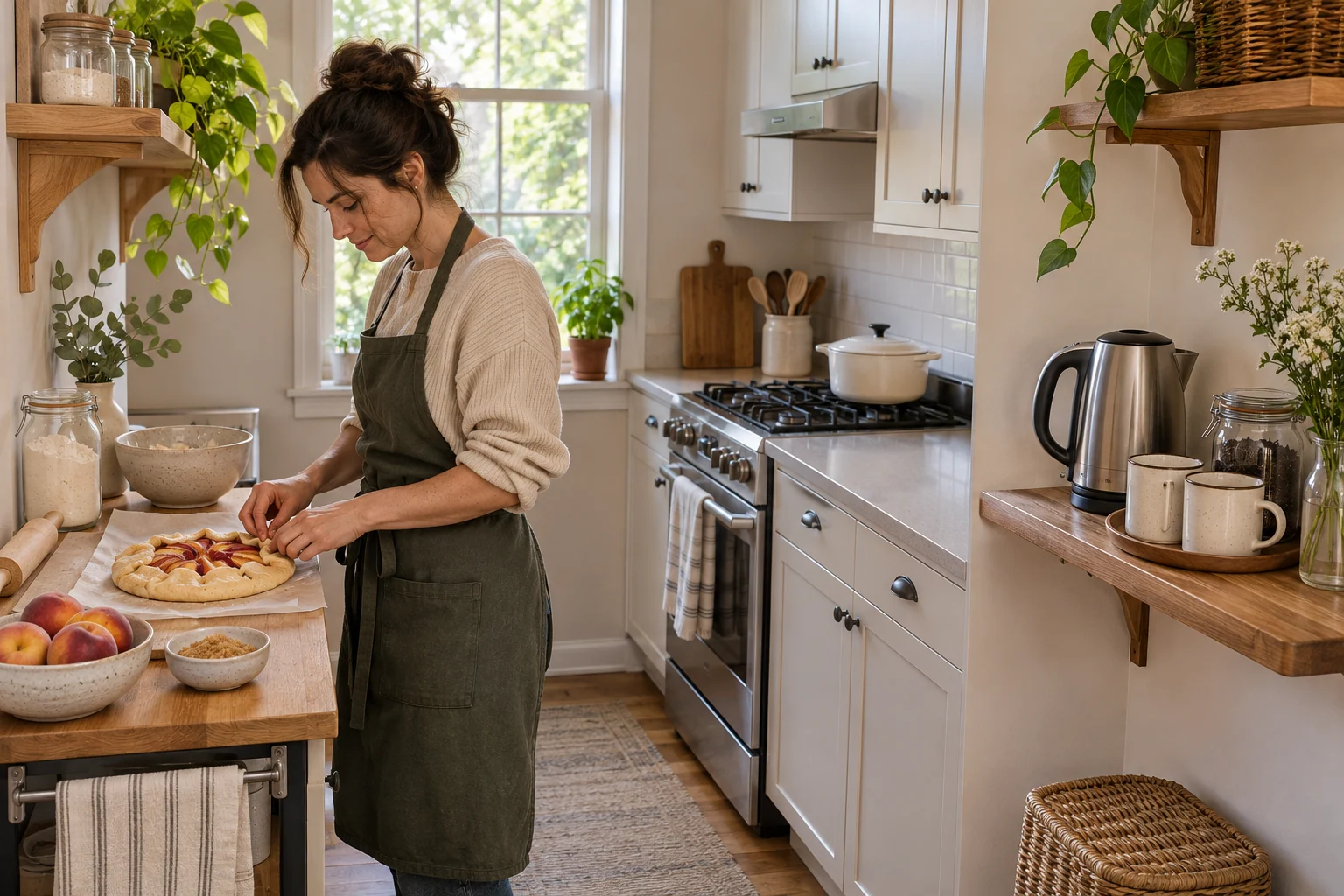
Air Fryer Hash Browns give a small kitchen another cooking option when the oven is occupied by the main.
Serving twelve guests
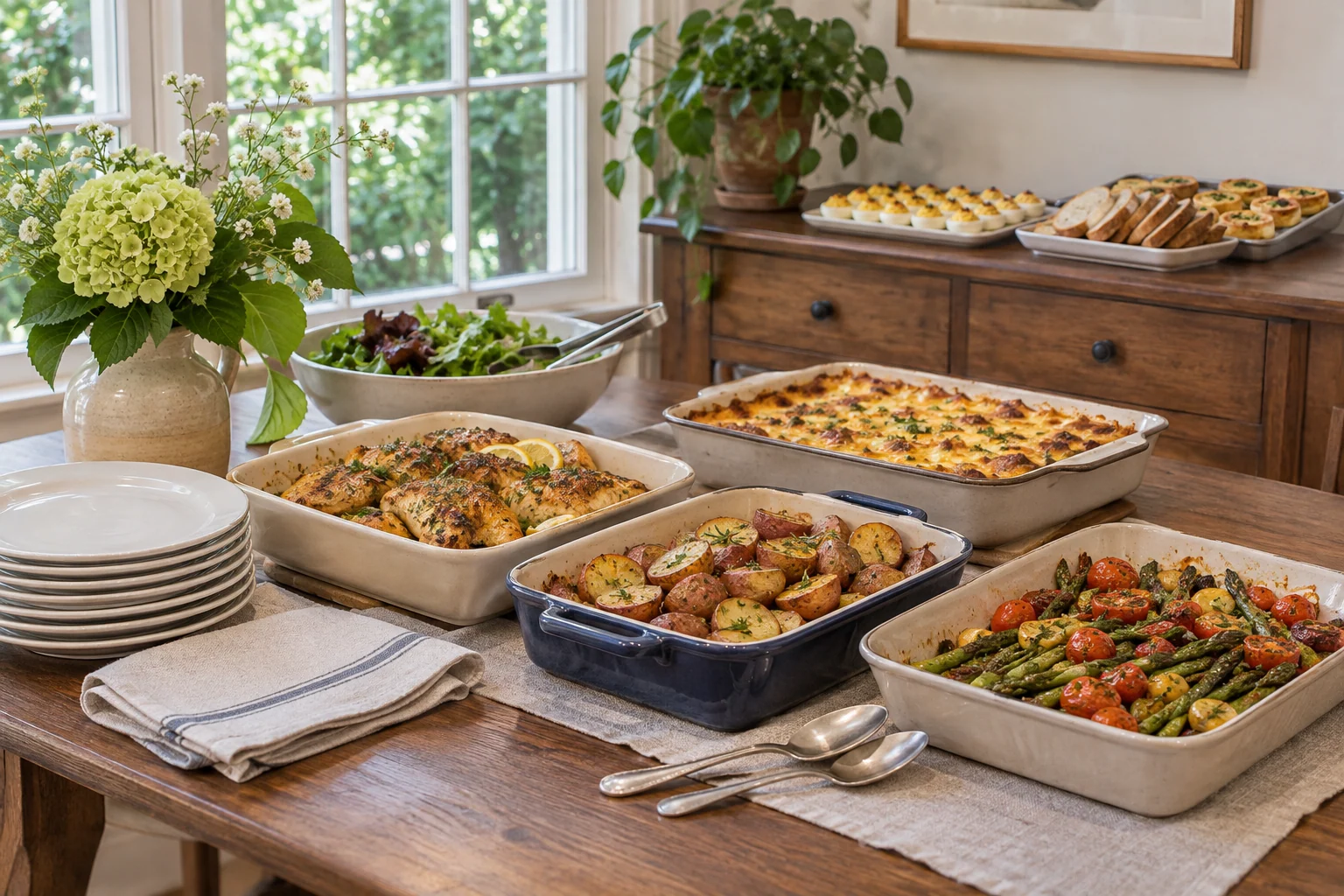
For twelve, create a straightforward line: plates, casserole or eggs, savory sides, fruit, sweet pastries, then cutlery. Place beverages elsewhere if possible. Two similar food lines may not be necessary, but provide access from both ends of a central island if room permits. Refill in manageable dishes rather than setting out all perishable food at once.
For a group that likes pancakes, cut Sheet Pan Pancakes into portions before taking the platter to the buffet.
Serving twenty guests
A group of twenty benefits from two access points or distinct stations. Duplicate the most popular anchors, such as fruit and bread, to shorten waiting. Assign a helper to replenish cold food, replace utensils and manage the beverage station. A buffet isn't a one-time display; it's a service process that changes as dishes empty.
For a separate cold drinks table, Kid-Friendly Easy Punch offers a single batch drink you can replenish between groups.
Keep baked goods appetizing
Crisp pastries can soften beside uncovered steam from hot dishes. Place flaky croissants away from chafing heat and wet toppings. Muffins can be arranged in baskets only after cooling, so trapped steam doesn't dampen them. A warm pancake tray should use its own recipe-approved holding method rather than resting beneath a tight buffet cover all morning.
Keep Classic Croissants away from the steam rising from hot dishes so their outer layers stay crisp.
Plan for spills and waste
Provide a place for used napkins, plates and cups away from the serving line. Keep a clean cloth and food-safe surface cleaner available for syrup drips. Trash containers should not stand directly beneath exposed food. A tidy station stays inviting longer and makes the final clean-up less overwhelming.
How to replenish without overloading
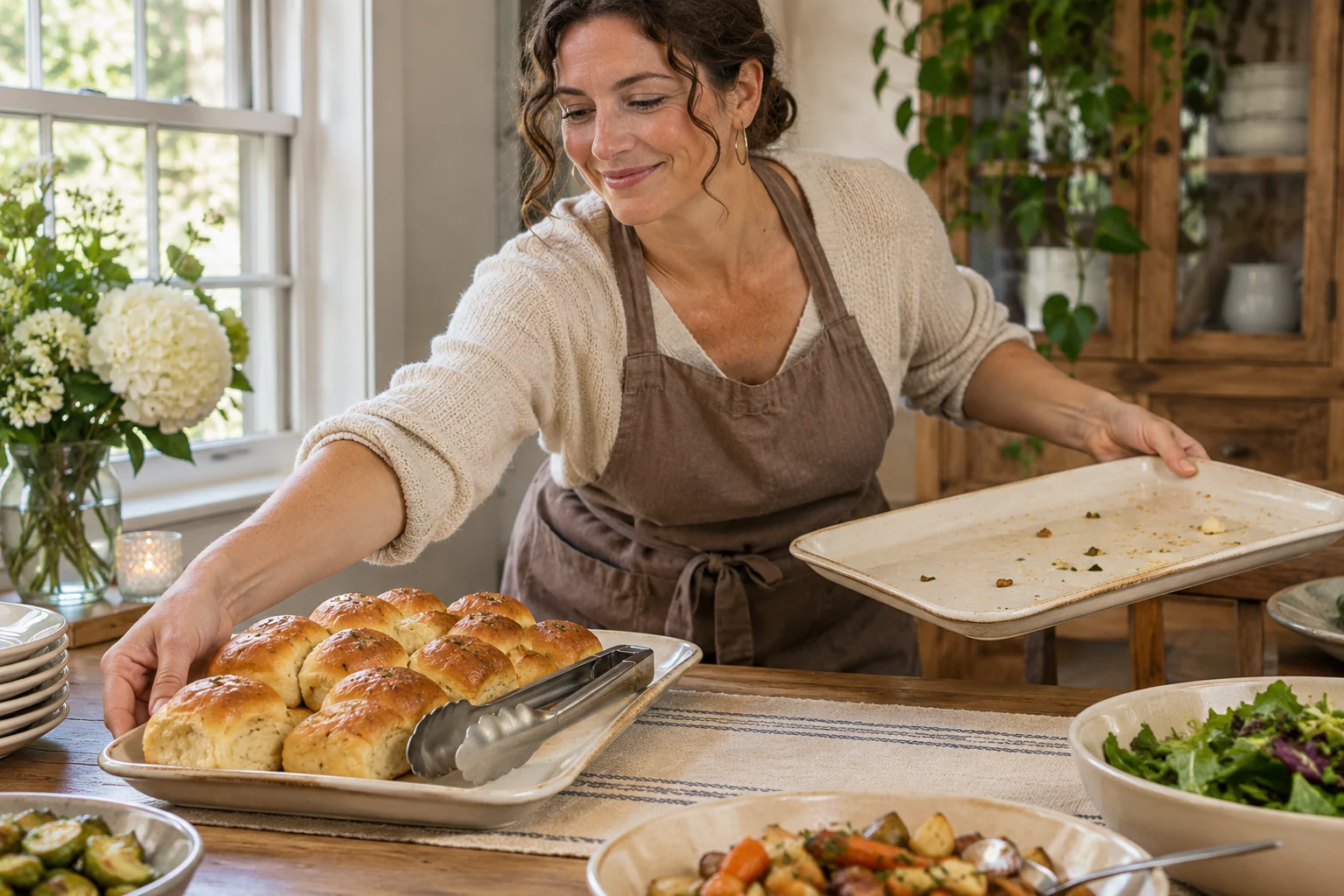
When the casserole pan is down to its final portions, bring a clean pan with its own spatula and retire the first one. Change the fruit bowl and tongs together, too. Keeping backup plates and utensils on a shelf below the table leaves the food area clear for guests carrying full plates.
Bring out Classic Dinner Rolls on a clean, smaller platter each time a basket runs low.
Frequently asked questions
Should cutlery come first? Often it is easier at the end. Can drinks share the food table? Yes for small groups, but a separate station helps traffic. Must everything be hot? No. Is one giant serving platter better? Usually not for twenty guests. Can labels manage allergies alone? No. Can food remain on a buffet for hours? Perishable foods require safe temperatures and handling limits.
An inviting buffet with less stress
Design the route, separate temperatures, label clearly, protect pastry texture and prepare refills. With a sensible sequence and enough serving space, a home brunch can feel generous and polished without turning the host into a full-time traffic controller.
IN PICTURES
From the baking notebook
FROM THE RECIPE BOX


