
On this page
Pinch a handful of the flour-and-butter mixture after the first addition of water. If it holds together and breaks cleanly, try gathering it before adding more water. A smooth, springy ball is already beyond the texture you want.
What flakiness really means
Flaky pastry contains thin sheets or pockets separated partly by fat. As the dough bakes, moisture turns to steam and the layers set apart. A mealy crumb-style crust is another valid texture and may be better for some wet fillings. Identify whether the recipe aims for rough flaky layers or a tender sandy structure before deciding it failed.
Cause one: excessive gluten development
Wheat flour forms a gluten network as it hydrates and is worked. More development creates elasticity useful in bread but potentially tough in pastry. Vigorous kneading after adding water can make a pie crust spring back during rolling and bake chewy. Mix until the dough holds together as directed rather than seeking the smooth elastic ball of yeast bread.
The role of flour type
All-purpose flour is common in pie dough, while pastry flour may provide a more tender result. Strong bread flour can create a tougher crust under certain methods. Flour protein and absorption vary by brand. Use the specified type and weight. Changing flour alone won't fix toughness caused by warm fat or repeated rerolling.

Cause two: too much water
Water lets dough form but also hydrates gluten proteins. If you pour in a generous quantity to make the dough smooth, the resulting pastry may become tough and sticky. Add the cold liquid gradually according to the method. A shaggy mass that holds together when pressed may be exactly right. The dough doesn't need to feel like soft cookie dough.
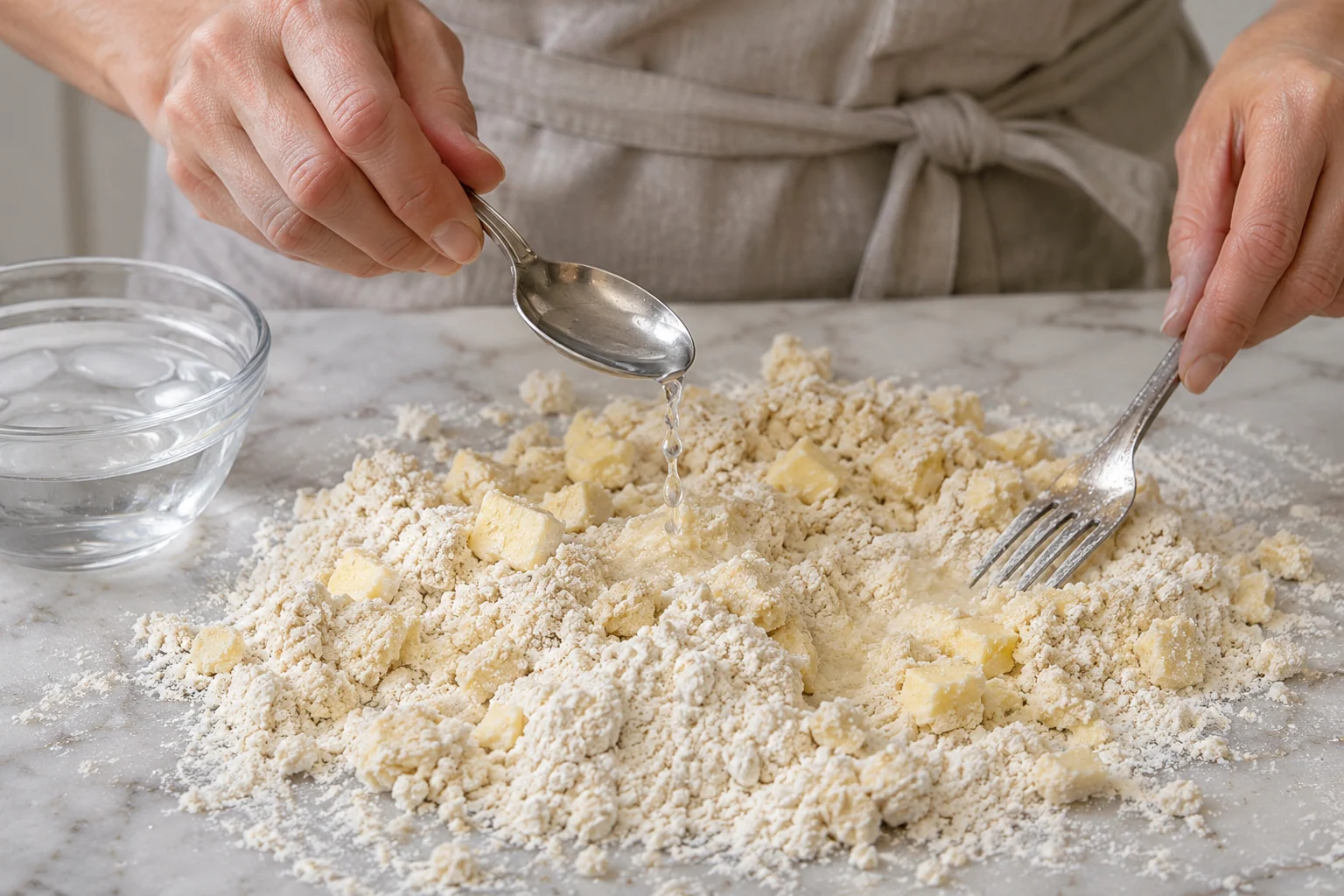
How to check hydration
Press a small handful of the mixture gently; if it holds together, the dough may have enough moisture even if it looks crumbly in the bowl. Some flours need slightly different amounts, so follow a tested visual cue rather than an arbitrary tablespoon count. Don't keep kneading dry flour into a hard wet ball in order to make it look more finished.
Follow the water additions in Classic Apple Pie and stop to check how the dough holds together.

Cause three: fat melted during mixing
Cold butter or another solid fat forms distinct pieces that create flaky separation. If it becomes fully smeared into flour, the pastry may lose some layered texture. Work efficiently with cool ingredients and follow the source's cutting-in method. Warm hands, a sunny countertop or prolonged food-processor pulses can change the fat distribution.
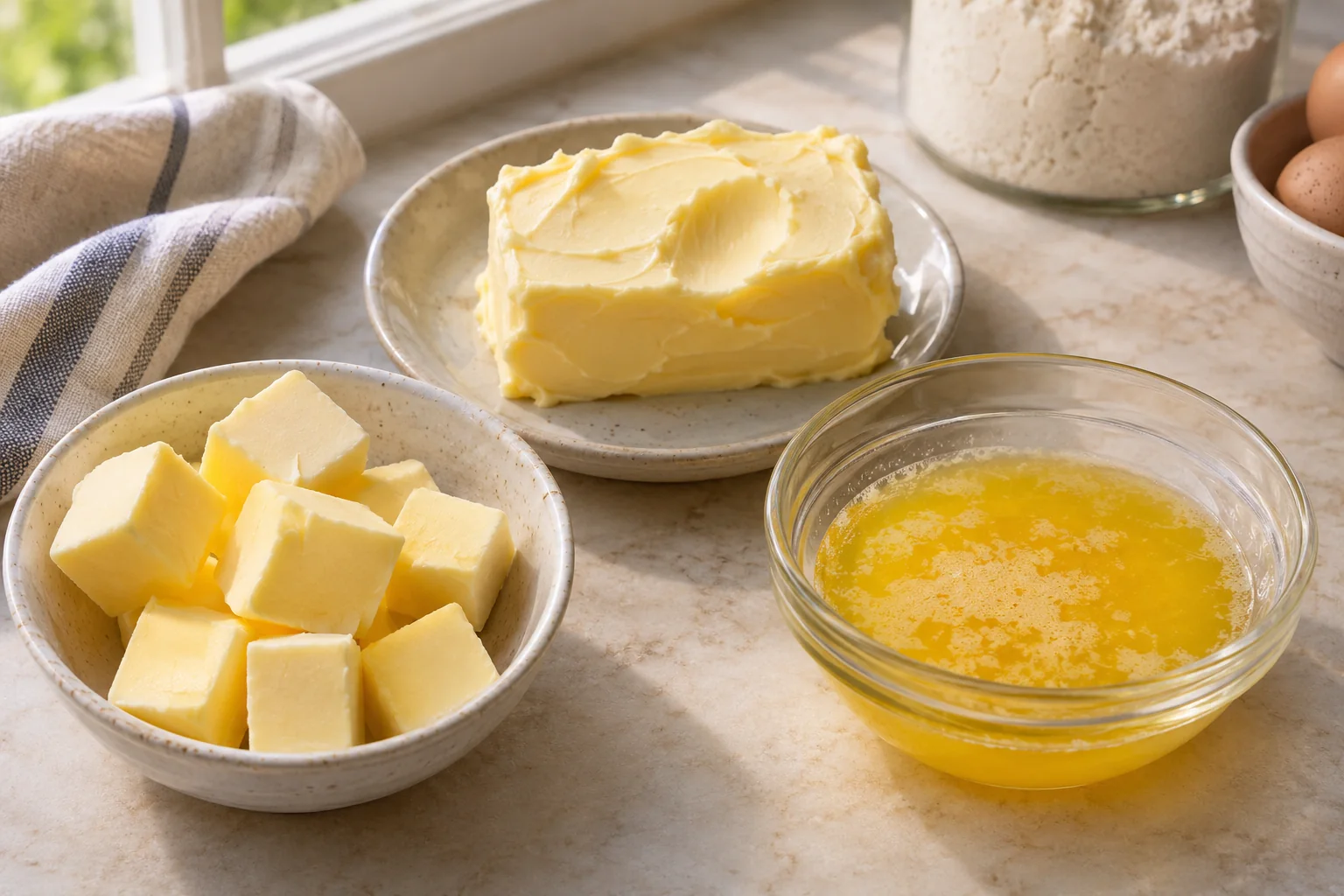
Why butter piece size matters
Some recipes call for pea-size butter pieces, while rough-flaky methods use larger flat flakes. These lead to different textures. A few oversized chunks may create leaks or holes, while finely blended butter makes a more mealy crust. Choose the target specified by your recipe rather than treating one particle size as universally correct.

Cause four: overprocessing
A food processor can be convenient, but long runs heat the mixture and break butter too finely. Pulse only as instructed and check the texture between pulses. A pastry cutter or two knives may provide more control for small batches. The best equipment is the one you can stop at the proper endpoint.
Cause five: insufficient resting
Pie dough may resist rolling when gluten remains tense. A covered refrigerated rest helps it relax and lets flour hydrate evenly. Rolling immediately after aggressive mixing can require extra force, making toughness worse. The correct rest depends on the recipe. Chilling isn't merely about keeping butter cold; it also helps manage elasticity.
Fit the lower crust for Cherry Pie without stretching it up the sides of the tin.
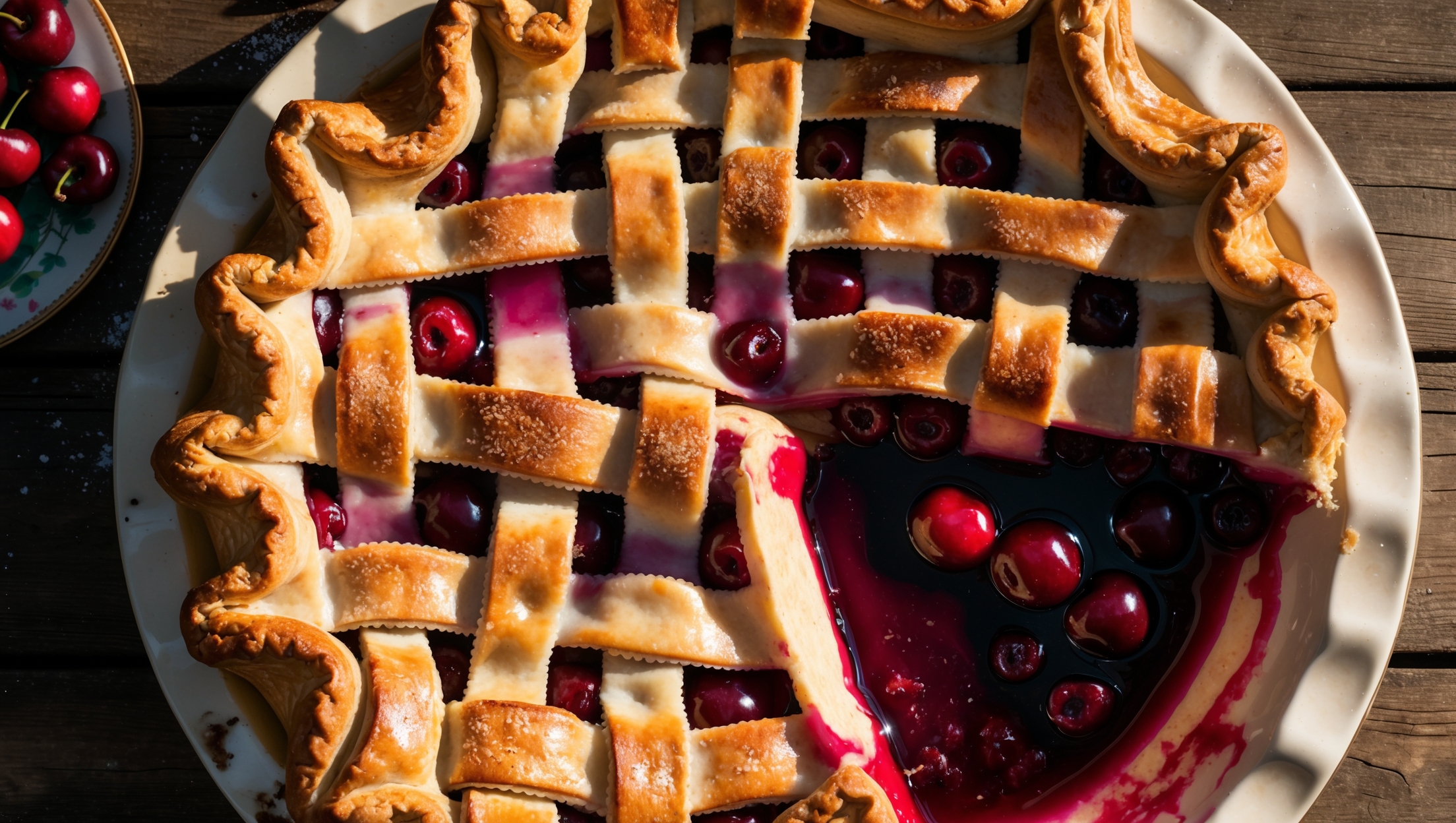
What shrinkage reveals
If a pastry shell pulls away from the pan edge during blind baking, dough tension, stretching into the dish or insufficient chilling may be involved. Excess handling can contribute. Fit the dough into the pan without tugging and leave the recipe's intended overhang. A shrinking crust isn't solved by pushing the dough harder into the corners.
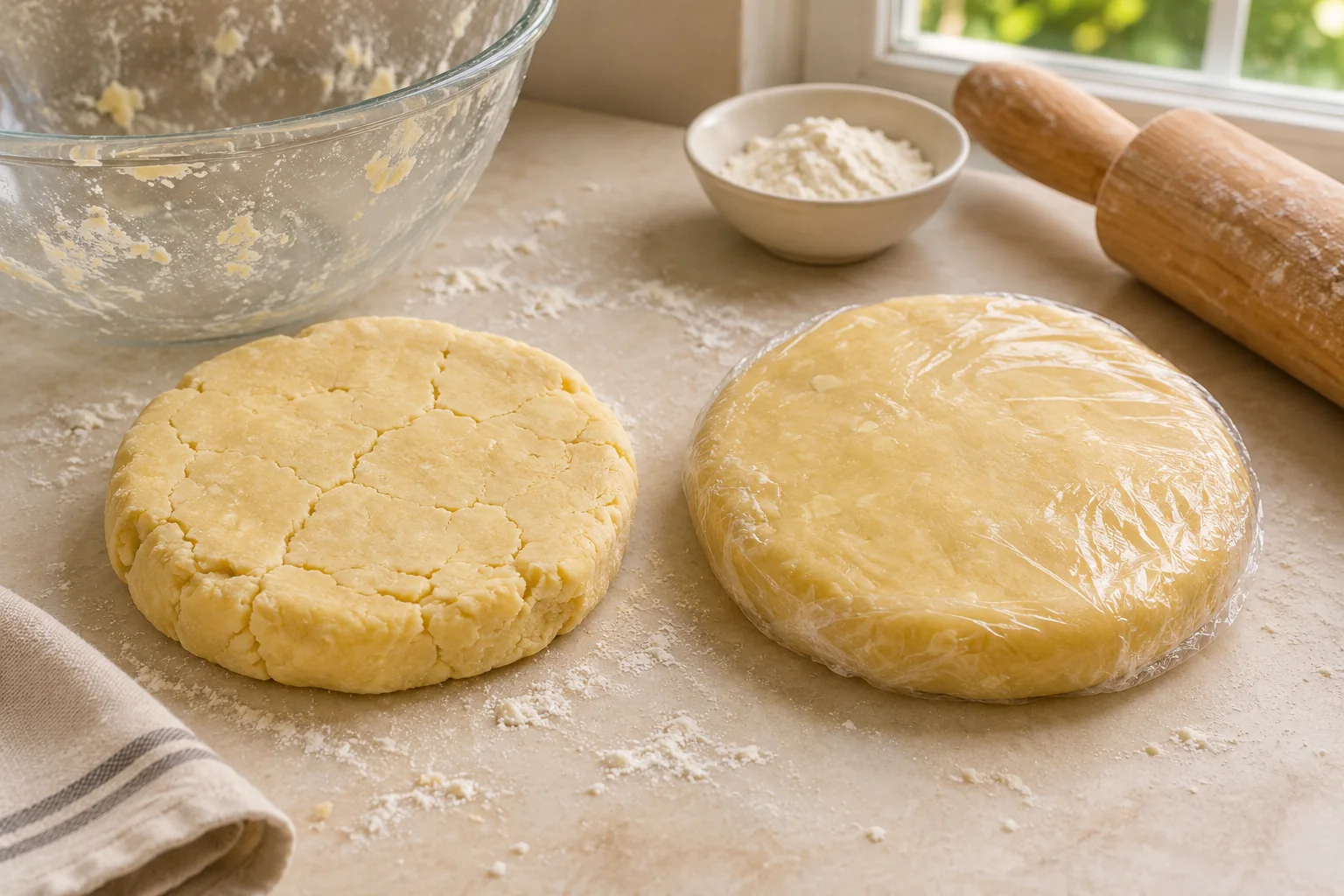
Cause six: too much rolling pressure
Repeated aggressive rolling develops dough and can smear fat. Use gentle even strokes from the center, turning the dough and dusting the surface lightly. A dough that repeatedly springs back may need another rest, not additional force. Roll to the specified thickness; an overly thin crust can become hard when baked dry.
Use light passes with the rolling pin when preparing the crust for Pear Cardamom Pie.
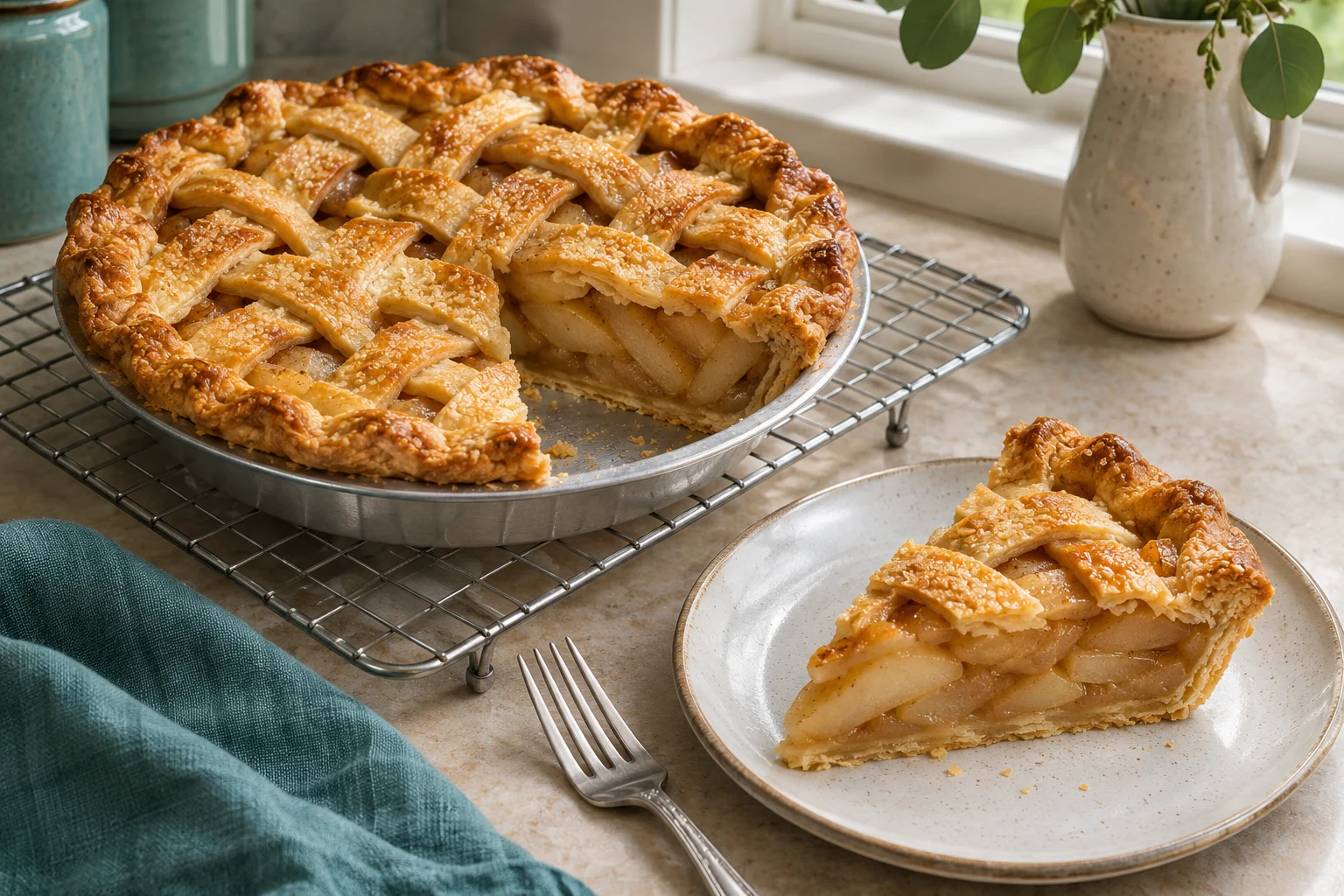
Bench flour can accumulate
Dusting the counter keeps pastry from sticking, but large repeated amounts become incorporated as the dough is rolled. That changes the flour-to-fat ratio and can dry the crust. Use just enough flour for handling and brush away excess when folding. Parchment can help with some methods, but follow the chosen recipe.

Rerolling scraps has a cost
Every time pastry trimmings are pressed together and rerolled, they experience more handling and potential gluten development. Second-roll pieces may shrink more or feel tougher. Gather scraps gently and use them for small decorations or pie-crust cookies under a suitable method. Don't knead them aggressively to recreate the first dough.
Cut the rounds for Apple Hand Pies close together to reduce scraps.

Cause seven: overbaking
A correctly mixed crust can become hard when baked too long or on an excessively hot dark pan. A fully baked pastry should be cooked through and appropriately browned, but deeply scorched edges aren't a sign of extra flakiness. Shield edges or follow staged baking when the recipe specifies it. Don't remove a wet raw bottom just to protect a dark upper rim.
Blind baking needs balance
An empty pie shell may be baked with weights to prevent bubbling, then uncovered to dry and brown its base. Stopping too early can create sogginess, while excessive time can overbrown edges. Use the timing and visual cues for partial versus full blind baking. A custard pie may require a different preliminary bake from a fresh-fruit tart shell.
Check the shell-baking instructions in Almond Cream Pie before adding the filling.

Pan materials affect heat
Glass, ceramic, aluminum and dark coated metal transfer and retain heat differently. A thick ceramic dish may have a pale bottom while its edge browns, especially with a wet filling. The remedy may involve a tested pan and rack adjustment rather than changing flour or butter. Respect cookware thermal-shock limitations.

How fat changes tenderness
Butter brings flavor and distinct solid pieces; shortening, lard and oil behave differently. An oil crust can be tender but follows a different structural method from flaky all-butter pastry. Don't replace cold butter with equal volume of vegetable oil in a rough-flaky recipe without a tested conversion. Fat's physical state matters.
Vinegar and other acids
Some pie recipes include a small amount of vinegar or another acid, but claims that acidity alone prevents all toughness are exaggerated. The final texture depends on flour, water, fat and handling. Adding extra vinegar at random also changes liquid balance. Use an established formula rather than treating an acid as a cure for overworked dough.
Egg-containing pie dough
Some sweet tart and pie recipes include egg or yolk, creating different structure and richness from simple flour-butter-water dough. That doesn't automatically make them more or less flaky. Follow the intended method. A sweet shortcrust for tartlets may be deliberately firm and cookie-like, while a double-crust fruit pie often aims for visible flaky layers.
Whole wheat and alternative flours
Whole wheat includes bran and absorbs water differently, which can change how easily dough rolls and flakes. Gluten-free crusts require their own structure-building ingredients and techniques. Replacing all white flour with another type by volume may make a brittle or gummy crust. Use a tested formulation suited to the dietary need.
A simple handling practice
Mix a small batch of trusted pie dough, noticing the butter pieces before water addition. Add liquid gradually, press together, chill, then roll evenly with minimal bench flour. Photograph the dough after mixing and after rolling. These observations help distinguish overhandling from a recipe that simply uses a different fat ratio.
For Apple Pear Pie, compare the first rolled crust with a small piece of rerolled scrap.
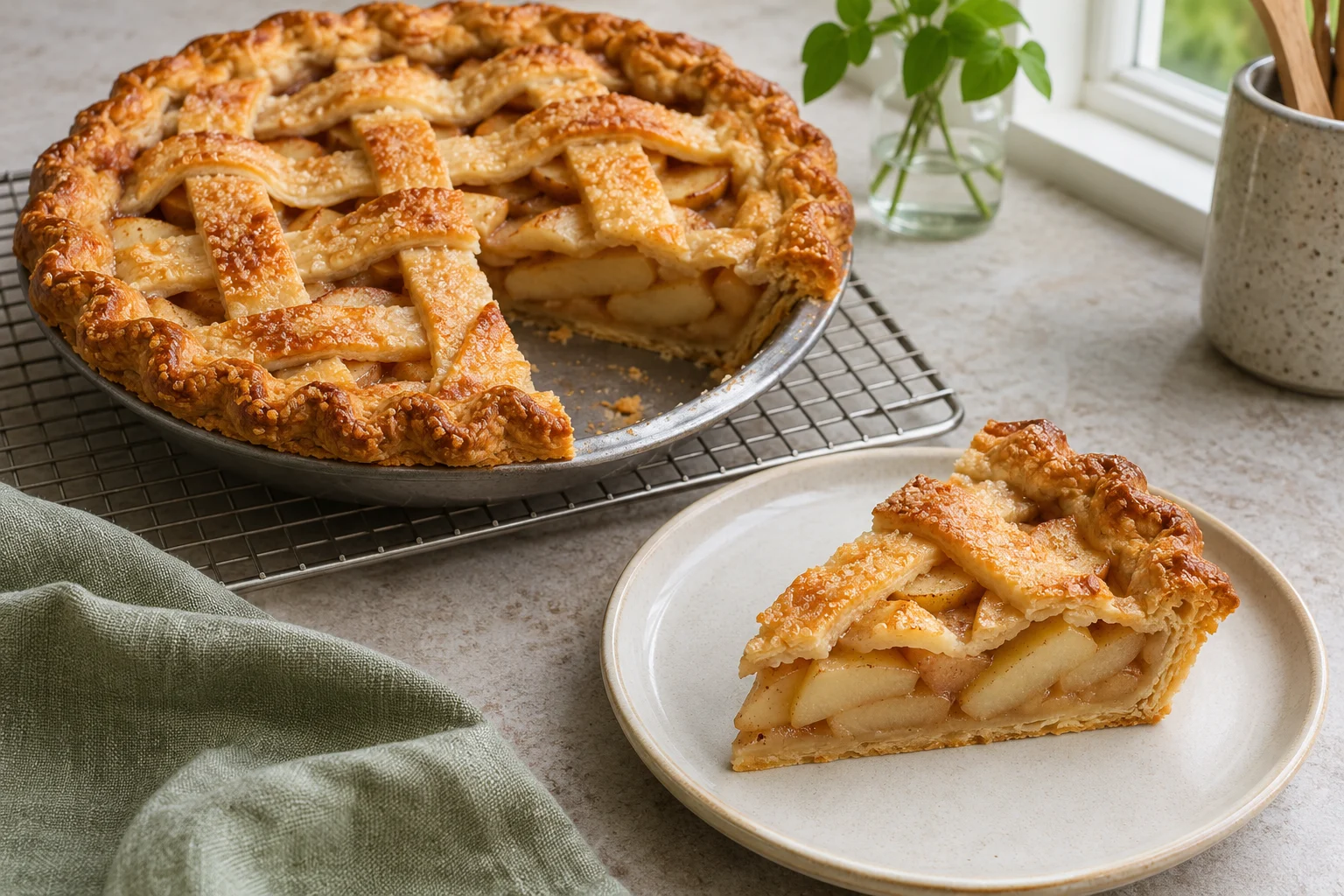
What if the dough already feels elastic?
Stop rolling and give it the recipe-supported rest so gluten tension can relax. Avoid continuing to knead or stretching it tightly into the pan. If butter has melted extensively, chilling may improve handling but cannot perfectly recreate lost layers. The next batch should prioritize temperature and gentle mixing from the beginning.
What to do with a tough baked crust
A fully cooked tough crust can sometimes be repurposed as crumbs in a dessert or served with a moist fruit filling. Reheating won't rebuild its missing layers, and extra syrup may make it soggy instead of flaky. If a bottom is raw, that's a different doneness problem. Use the experience to adjust the next dough.
IN PICTURES
From the baking notebook
FROM THE RECIPE BOX


