Directions
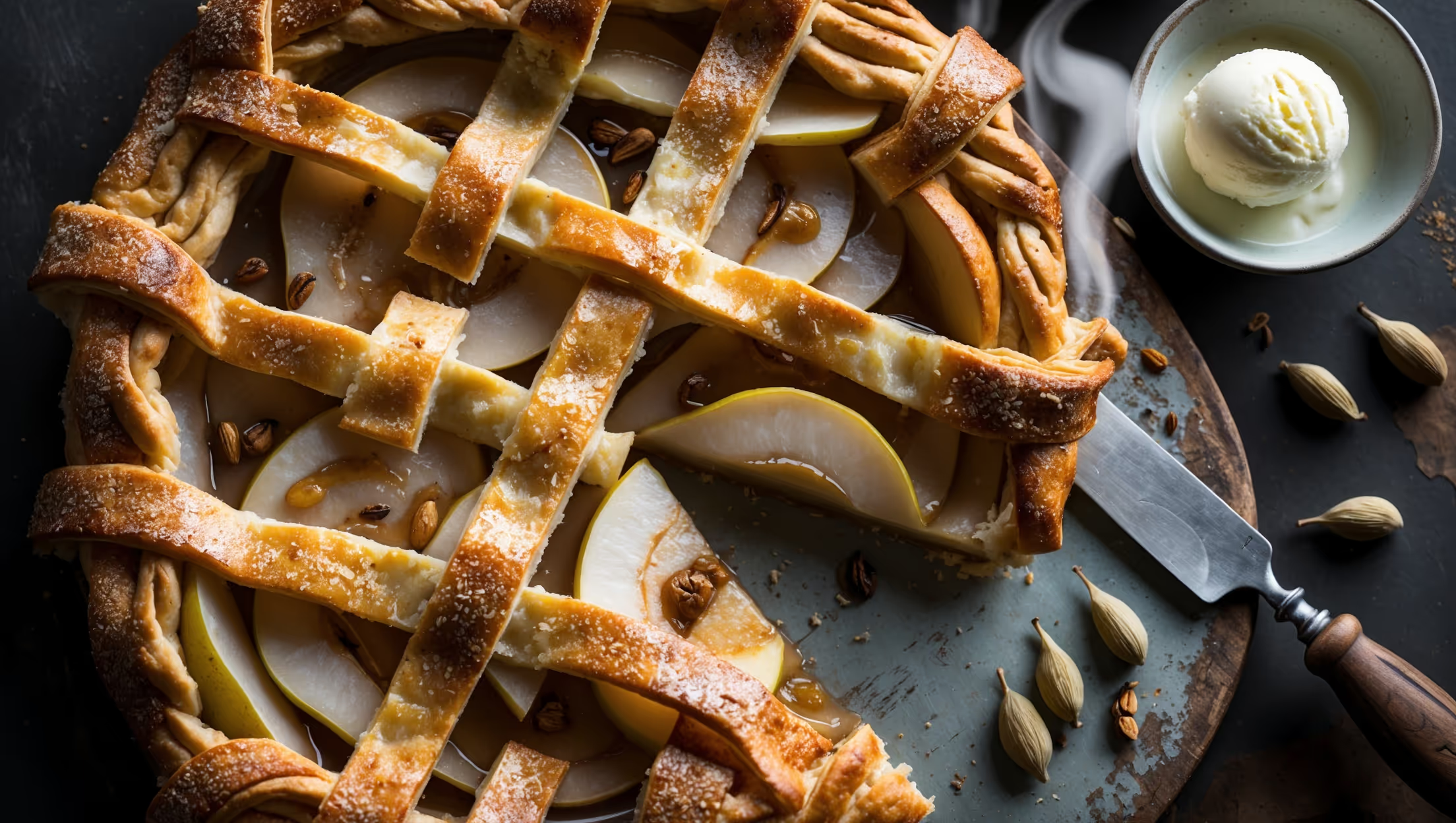
<ol class="no-list-style"><li class="MethodStepper"><h4 class="step-title">Step 1</h4>Start by making your pie dough. In a large bowl or food processor, combine the flour, salt, and sugar. Add the cold cubed butter and pulse or use a pastry cutter to work the butter into the flour until you have pea-sized pieces. The varying butter chunks create pockets of steam during baking, resulting in those desirable flaky layers.</li><li class="MethodStepper"><h4 class="step-title">Step 2</h4>Mix the ice water and apple cider vinegar together. Gradually add this liquid to the flour mixture, pulsing or stirring with a fork until the dough just begins to come together. It should look somewhat shaggy but hold together when squeezed. Resist the temptation to add more water, as a drier dough makes a flakier crust.</li><li class="MethodStepper"><h4 class="step-title">Step 3</h4>Divide the dough into two portions, one slightly larger (about 60%) for the bottom crust. Form each into a disk, wrap in cling film, and refrigerate for at least 1 hour or up to 2 days. This resting period allows the gluten to relax and the butter to firm up, ensuring a tender crust.</li><li class="MethodStepper"><h4 class="step-title">Step 4</h4>While the dough chills, prepare your filling. Peel, core, and slice the pears about 0.5cm thick. Firm pears work best as they maintain their shape during baking; overly ripe pears will break down too much and create a soggy pie.</li><li class="MethodStepper"><h4 class="step-title">Step 5</h4>In a large bowl, gently toss the pear slices with lemon juice and vanilla extract. In a separate bowl, whisk together both sugars, cornstarch, cardamom, cinnamon, nutmeg, and salt. The cornstarch is crucial as it will thicken the juices released by the pears during baking.</li><li class="MethodStepper"><h4 class="step-title">Step 6</h4>Sprinkle the sugar-spice mixture over the pears and toss gently until evenly coated. Set aside for 15-20 minutes to allow the pears to release some juices. This brief maceration helps prevent a gap forming between your filling and crust during baking.</li><li class="MethodStepper"><h4 class="step-title">Step 7</h4>Preheat your oven to 200°C (400°F) with a rack in the lower third of the oven. Place a baking sheet on the rack to preheat as well – this will help cook the bottom crust properly.</li><li class="MethodStepper"><h4 class="step-title">Step 8</h4>Remove the larger disk of dough from the refrigerator and let it sit for 5-10 minutes to slightly soften. On a floured surface, roll it out to a circle about 33cm (13 inches) in diameter and 3mm thick. Work quickly to keep the butter cold. Transfer the dough to your pie dish, gently pressing it into the corners without stretching it, and leave a slight overhang.</li><li class="MethodStepper"><h4 class="step-title">Step 9</h4>Strain the macerated pears, reserving 60ml of the released juices. Mix these juices back into the pears. This controlled amount of liquid ensures your filling will be juicy but not soggy. Arrange the pears in the pie shell, mounding them slightly higher in the center.</li><li class="MethodStepper"><h4 class="step-title">Step 10</h4>Roll out the second disk of dough to a similar thickness. For a lattice top, cut the dough into 2.5cm strips. Weave the strips over the filling in a lattice pattern, sealing and crimping the edges with the bottom crust. Alternatively, you can simply cover with the full crust, cut decorative vents, and seal the edges. Trim any excess dough and crimp or flute the edges as desired.</li><li class="MethodStepper"><h4 class="step-title">Step 11</h4>Brush the top crust with egg wash and sprinkle with coarse sugar. The egg wash creates a beautiful golden shine, while the sugar adds sparkle and crunch. If the dough has warmed significantly during this process, place the assembled pie in the refrigerator for 15-20 minutes to firm up the butter.</li><li class="MethodStepper"><h4 class="step-title">Step 12</h4>Place the pie on the preheated baking sheet and bake at 200°C for 20 minutes. This initial high heat helps set the crust structure. Then reduce the temperature to 175°C (350°F) and continue baking for 35-40 minutes until the crust is deeply golden and the filling is bubbling through the lattice. If the edges brown too quickly, shield them with foil or a pie crust shield.</li><li class="MethodStepper"><h4 class="step-title">Step 13</h4>Allow the pie to cool on a wire rack for at least 3 hours before slicing. This patience is rewarded—the cooling time allows the filling to set properly, ensuring clean slices rather than a runny filling. Serve slightly warm or at room temperature, perhaps with a scoop of vanilla ice cream or a dollop of whipped cream.</li></ol>