
On this page
First ask how the cheesecake was meant to set. Eggs give a baked filling structure as it heats. A no-bake recipe may depend on whipped cream, gelatin or chilled fat. Also note when you cut it. A warm baked custard and a fully chilled filling that flows onto the plate need different fixes.
Baked versus no-bake are different desserts
A baked cheesecake usually contains cream cheese, eggs, sugar and sometimes cream or sour cream. The egg proteins coagulate with gentle heat, forming a creamy custard that firms as it cools. No-bake cheesecake usually requires an ingredient system that sets under refrigeration without cooking eggs. A recipe that works for one cannot simply be placed in the fridge and expected to become the other.
Start with No-Bake Cheesecake to see how a chilled filling gets its shape without an oven.

Warm cheesecake is naturally soft
Freshly baked cheesecake may jiggle noticeably when removed from the oven. Many formulas intend a small controlled wobble in the center that firms after cooling and refrigeration. A hot custard isn't meant to slice like a cold cheesecake. Follow the recipe's exact endpoint and chilling period rather than deciding after ten minutes that the filling failed.
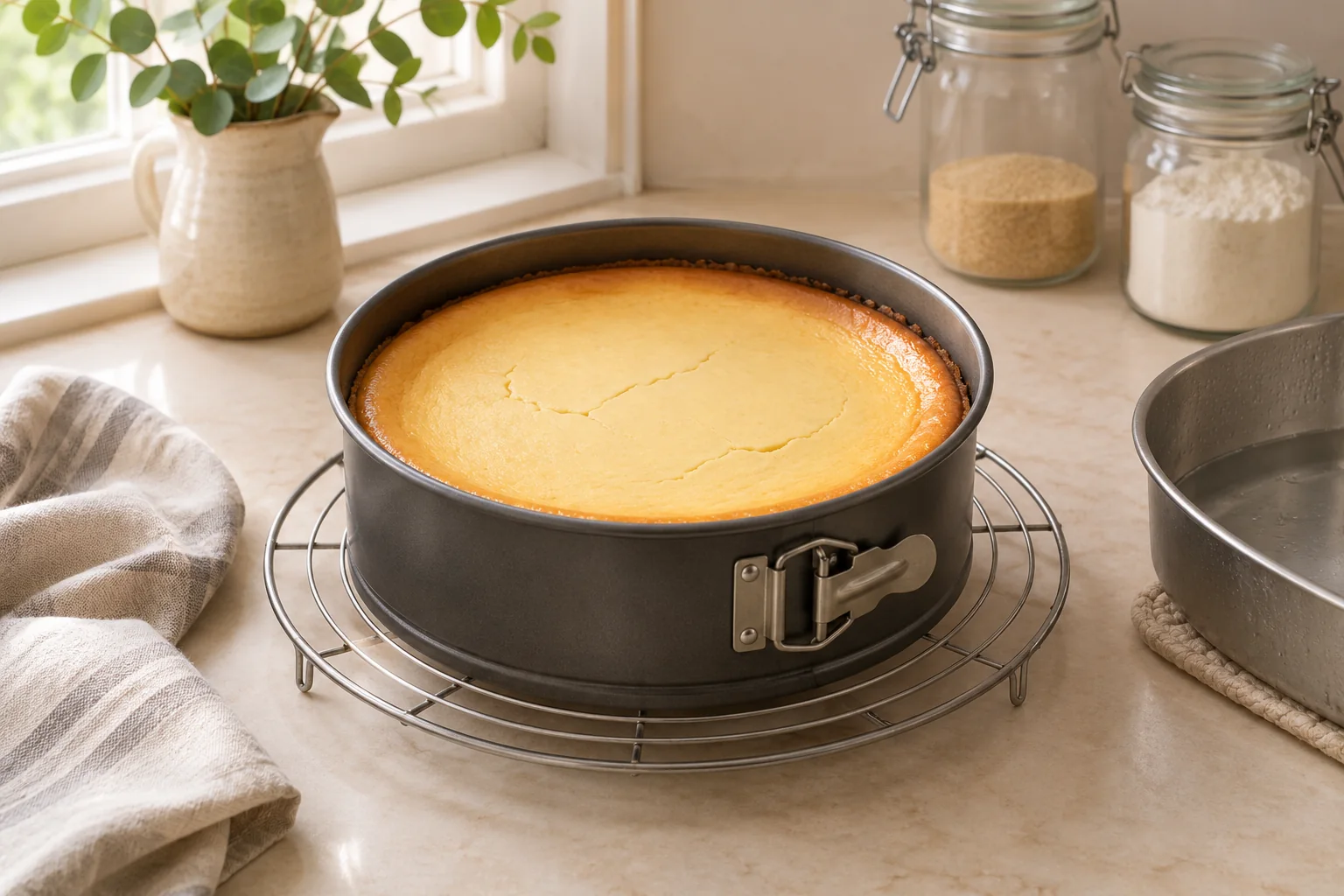
What a proper jiggle looks like
A baked cheesecake may have mostly set outer areas while a relatively small center moves gently as one unit. A wide liquid wave across the whole pan can indicate insufficient baking. Because cake size and formula affect the endpoint, rely on the source's visual cues and validated temperature advice where provided. Avoid repeatedly shaking a hot pan or placing your face near hot steam.
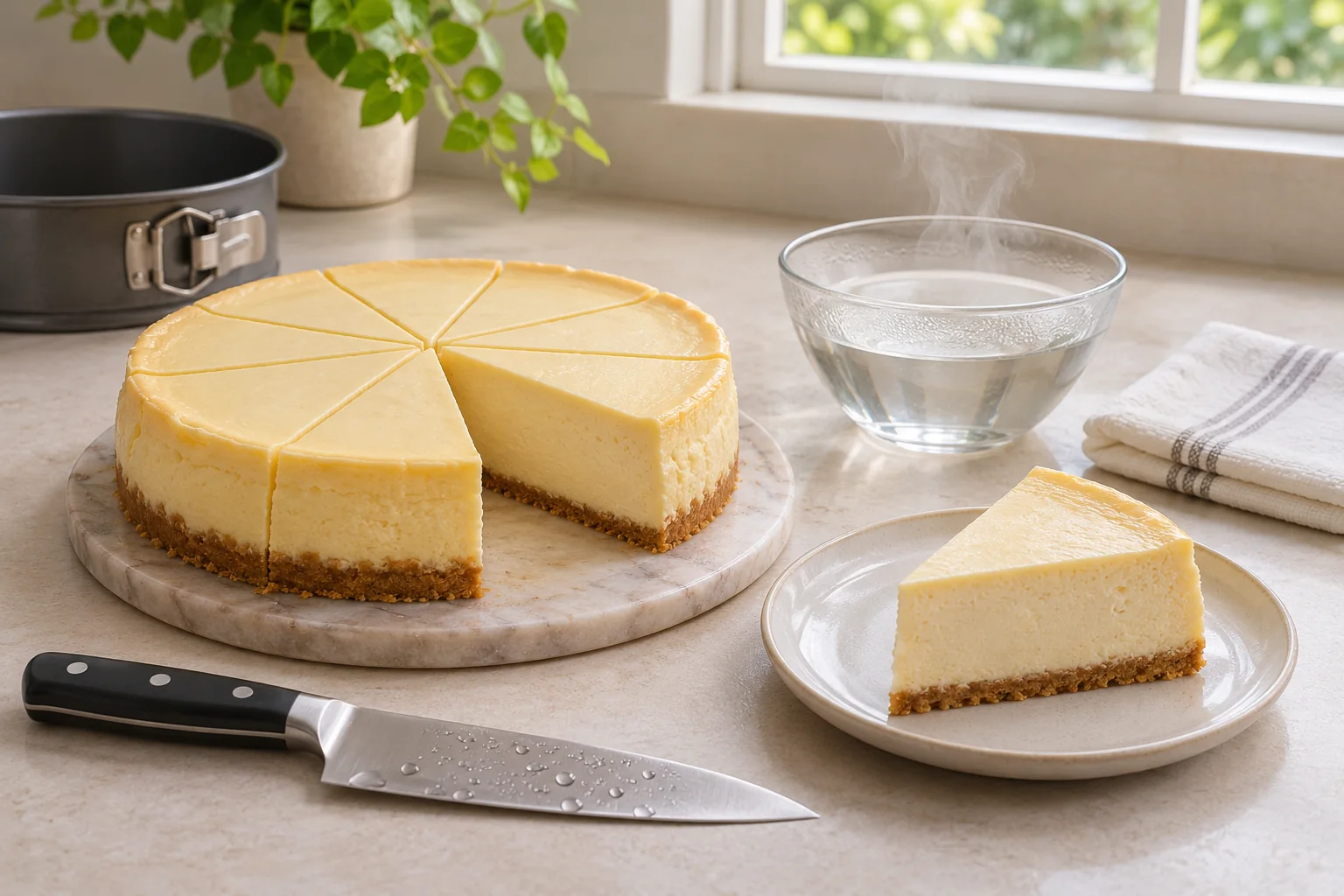
For Classic New York Cheesecake, follow the baking and cooling sequence before judging a slice.

Why temperature matters
Cheesecake is a custard and responds to both heat and time. Excessively high heat can set the outside before the center cooks and increase cracking, while insufficient heat leaves too much uncoagulated filling. Follow a tested oven schedule and check actual oven accuracy. Do not simply double baking time at a low setting if the recipe hasn't been designed for it.
Egg quantity and structure
Egg proteins give many baked cheesecakes their structure. Omitting an egg, using much smaller eggs or replacing eggs with yogurt can prevent the expected set. Adding more eggs indiscriminately may make the cheesecake firmer and more rubbery. Use the original recipe's sizes and mixing technique; cheesecake tenderness depends on carefully balanced custard structure.
Cream cheese formulation
Full-fat brick-style cream cheese differs from whipped tub spreads or low-fat products in moisture and stabilizer content. Some recipes are developed specifically for spreadable cream cheese, but many classic versions require blocks. Using an overly fluid product can change the set. Check packaging and recipe instructions before blaming the oven for a filling that started too thin.
Liquid additions
Extra lemon juice, heavy cream, fruit purée or coffee can dilute a filling if added beyond the formula. Even tasty substitutions change the balance of water, fat, proteins and thickeners. A cheesecake that never firms after a large untested fruit addition may be structurally unbalanced. Use a published fruit cheesecake recipe rather than pouring fruit purée into plain batter.
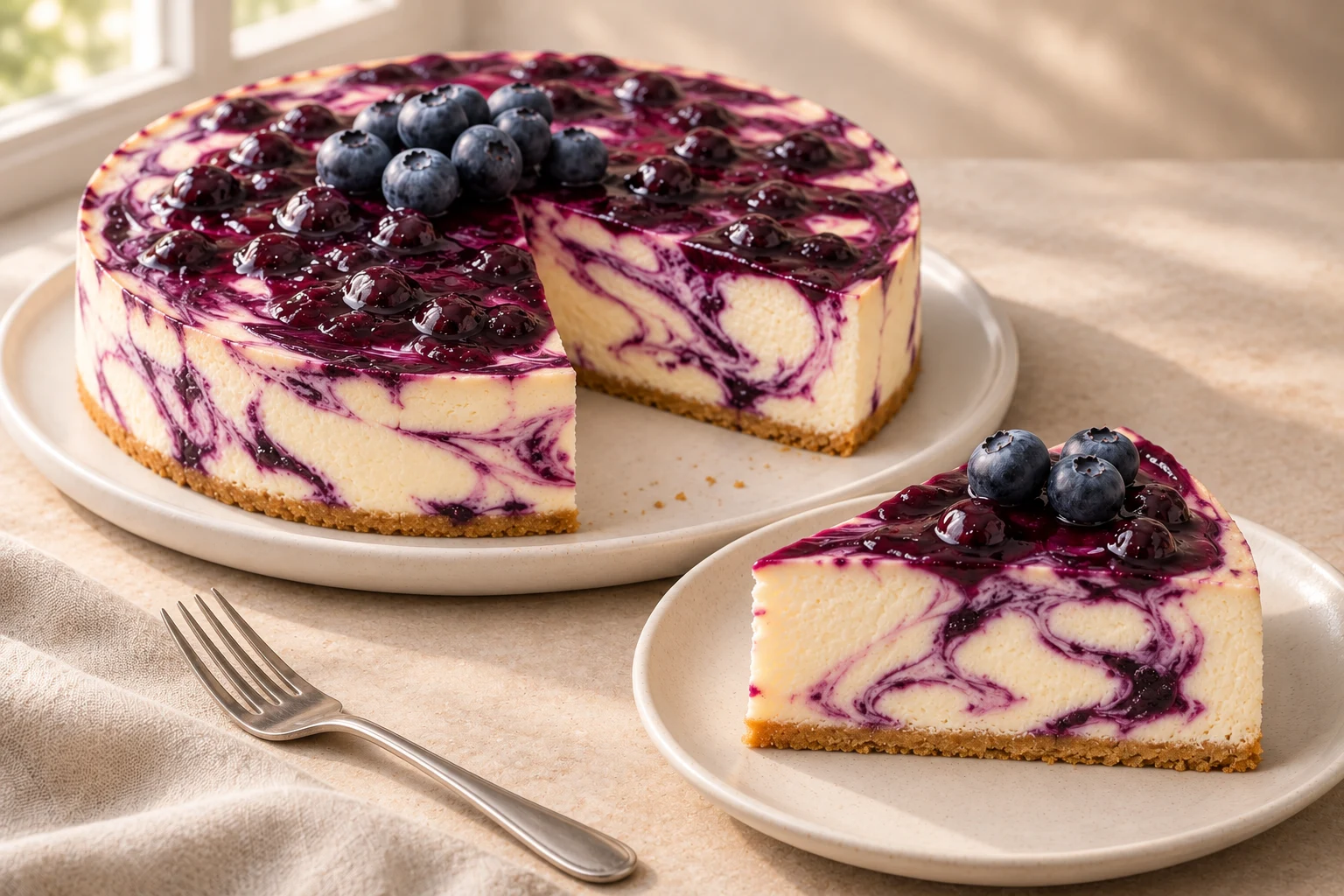
Use the fruit preparation in Blueberry Cheesecake when adding berries to a cheesecake.
Mixing affects bubbles and cracks
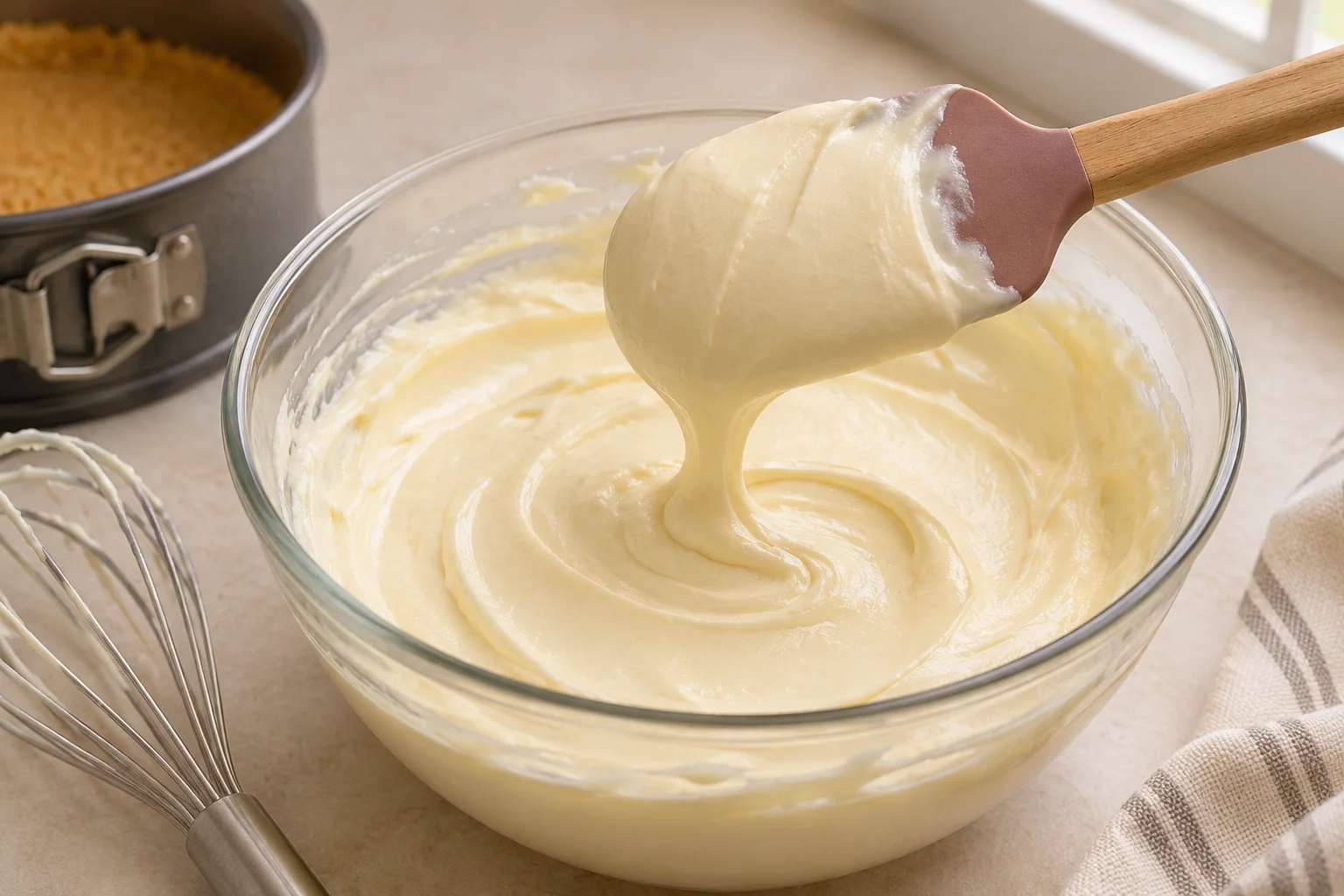
Overmixing eggs into baked cheesecake can incorporate unnecessary air. The batter may rise and then shrink or crack. But mixing time alone isn't usually the main cause of a filling that stays liquid. Separate structural issues from appearance. Scrape the bowl, use properly softened ingredients and mix at the specified speed without whipping a dense custard into foam.
Water baths and heat control
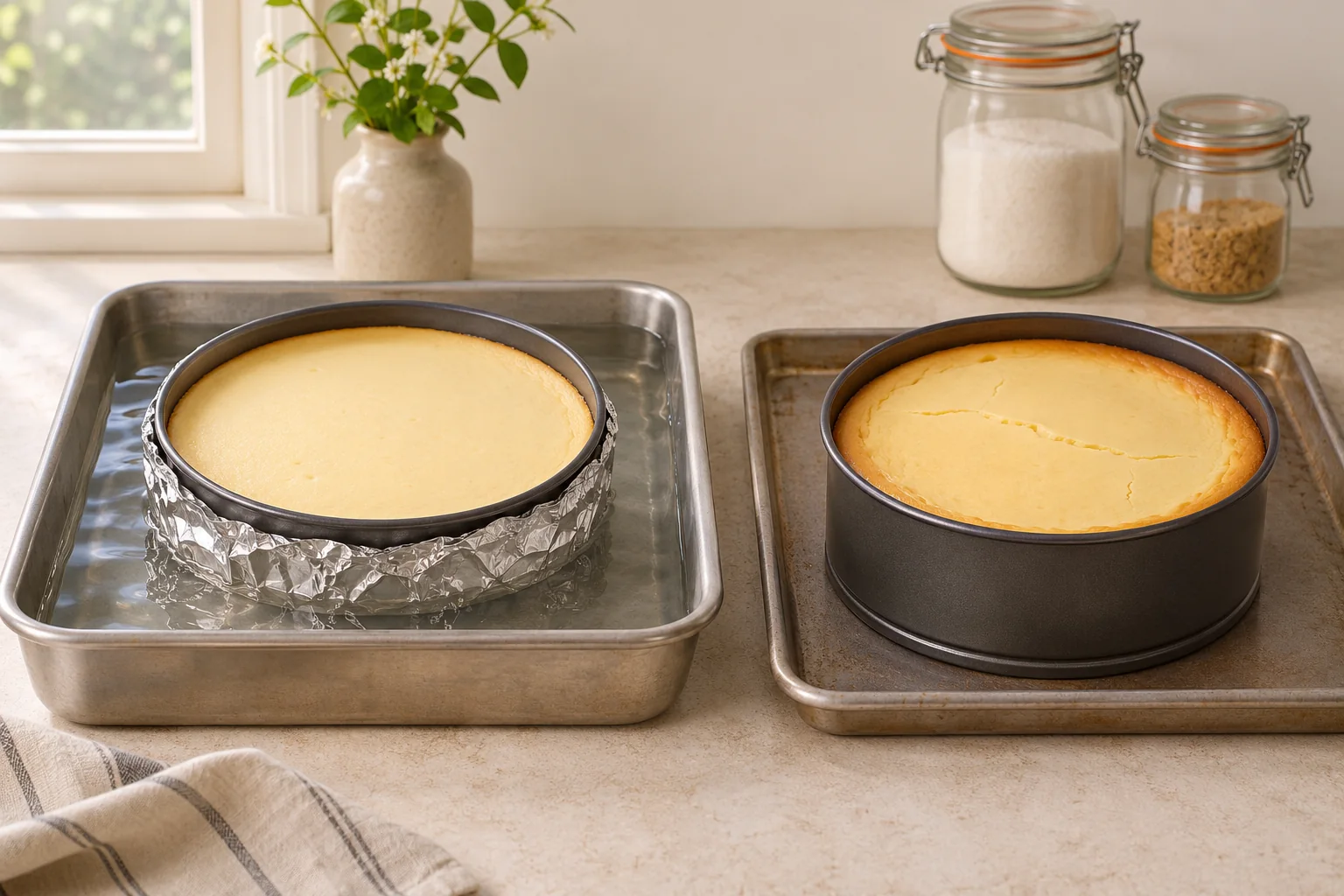
Some baked cheesecakes use a water bath to moderate oven heat and promote gentle cooking. Others are designed to bake dry or at staged temperatures. A leaky springform in a water bath can let water saturate the crust, making the bottom seem runny or soggy. Use an approved water-bath method and adequate pan protection instead of assuming foil wrapping is completely leakproof.
Follow the pan and baking setup specified for Chocolate Cheesecake when working with a dark filling.

How a wet crust differs
A soggy graham-cracker base doesn't necessarily mean the cheesecake custard failed to set. Water may have entered through the springform seam, or the crust may have absorbed too much butter or filling moisture. Check whether the softness is confined to the bottom. A completely set filling over a wet crust is a different problem from liquid filling throughout.
Refrigeration is part of the method
Baked cheesecake generally needs complete cooling and substantial refrigeration before neat slices, according to the recipe. A short chill may leave the center too soft even if it was appropriately baked. Keep the dessert cold at or below 4°C (40°F) and follow safe cooling timelines for dairy-and-egg custards. Do not leave the pan out overnight to avoid condensation.
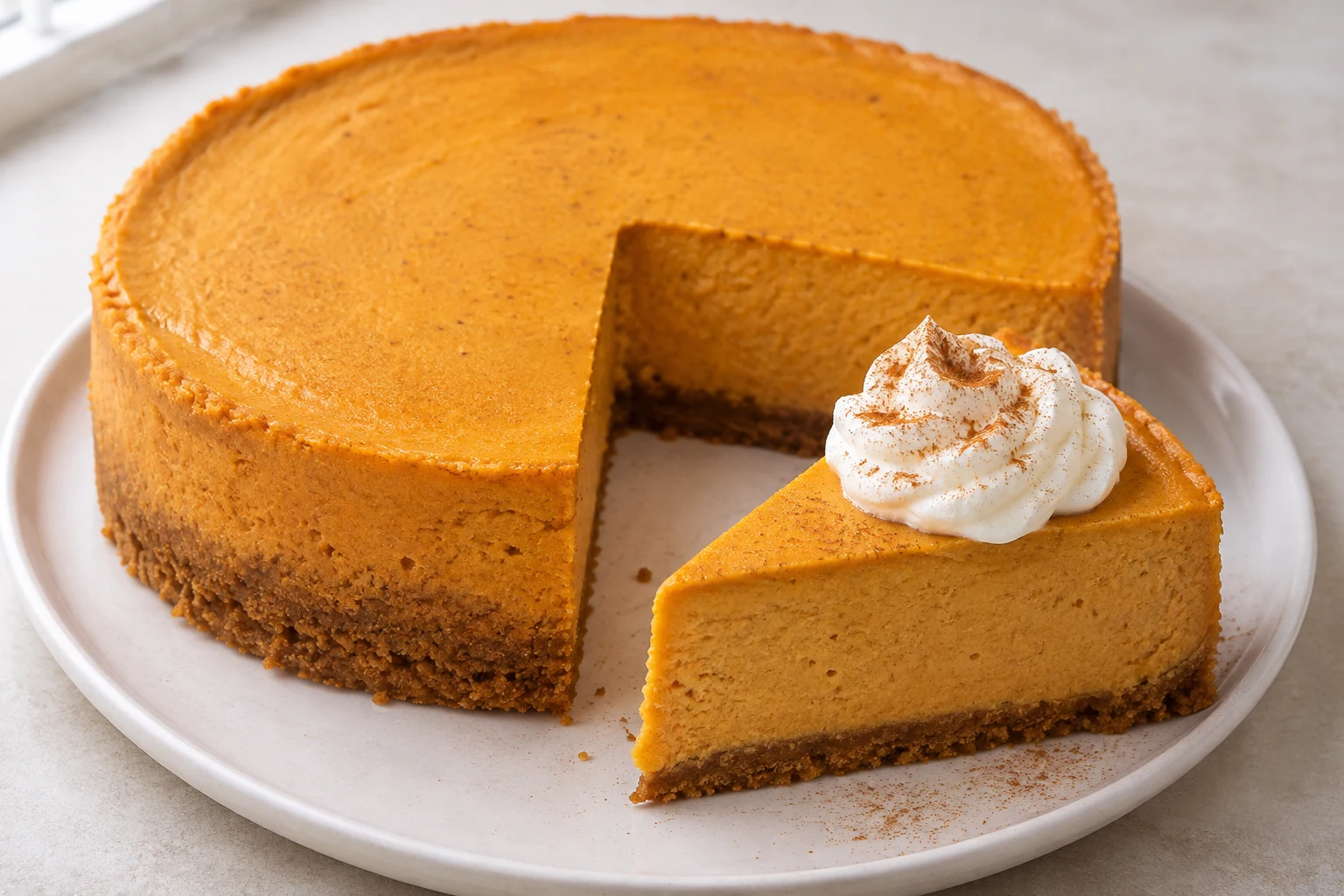
Allow Pumpkin Cheesecake its full chilling time before cutting through the spiced filling.
When no-bake cheesecake is runny
No-bake filling may be too loose because the cream wasn't whipped adequately, the cheese was overly soft, the gelatin was omitted or a setting chocolate mixture wasn't balanced. Different no-bake recipes rely on different mechanisms, so no single added ingredient fixes them all. Identify which component is responsible and whether the recipe's full chill time has elapsed.
Gelatin needs correct handling
Some no-bake cheesecakes use gelatin dissolved and incorporated at a suitable temperature. Too little gelatin may produce a soft filling; too much can feel rubbery. Incorrect blooming or incorporation can leave lumps and prevent even setting. Powdered gelatin and leaf gelatin require method-specific use. Follow the formula and its manufacturer instructions rather than adding dry powder to cold filling.
Whipped cream stability
Other no-bake versions rely on whipped cream folded into a sufficiently firm cream-cheese base. Whipped cream that's barely aerated or deflated during folding can leave the filling too soft. Use cold cream of the specified fat percentage and stop at the intended peak stage. A warm kitchen or excessive added liquid can also compromise structure.
White chocolate and other setters
Some no-bake fillings use melted white chocolate or another ingredient that firms as it cools. Chocolate composition and ratio matter, and confectionery coating isn't necessarily equivalent to real chocolate. Too warm a mixture may melt the whipped components; too cold can create lumps. Choose a tested white-chocolate cheesecake method rather than assuming a few extra chips will make any filling set.
The freezer isn't a permanent cure
Freezing may make a runny no-bake cheesecake temporarily sliceable, but it can slump after thawing if the original filling is poorly balanced. Freezing a potentially unsafe undercooked baked custard doesn't repair its cooking problem. Use an approved frozen cheesecake recipe if you want a frozen dessert, and follow its safe storage and service instructions.
What to do with an underbaked cheesecake
If the cake is clearly still liquid shortly after its intended baking window, consult the specific recipe's safe continued-baking guidance before cooling, since further heat may be appropriate. Once a dairy-and-egg cake has been cooled or held improperly, reheating isn't automatically a safe or effective rescue. Do not return a cheesecake left overnight at room temperature to the oven to make it safe.
When the center has a rubbery rim
An outer ring that is dry or rubbery while the center remains loose suggests uneven cooking. Higher heat is unlikely to improve the balance. Review pan size, water-bath use and oven calibration. A smaller deeper pan changes cooking dynamics compared with the author's shallow pan. Follow the appropriate vessel and endpoint.
Pan dimensions matter
A ten-inch cheesecake is shallower than an eight-inch version when given the same batter, affecting heating time and final texture. Deep pans require different schedules. A springform can also leak liquid batter or water. Use the specified pan dimensions and fill height; don't rely solely on how much batter fits without overflowing.
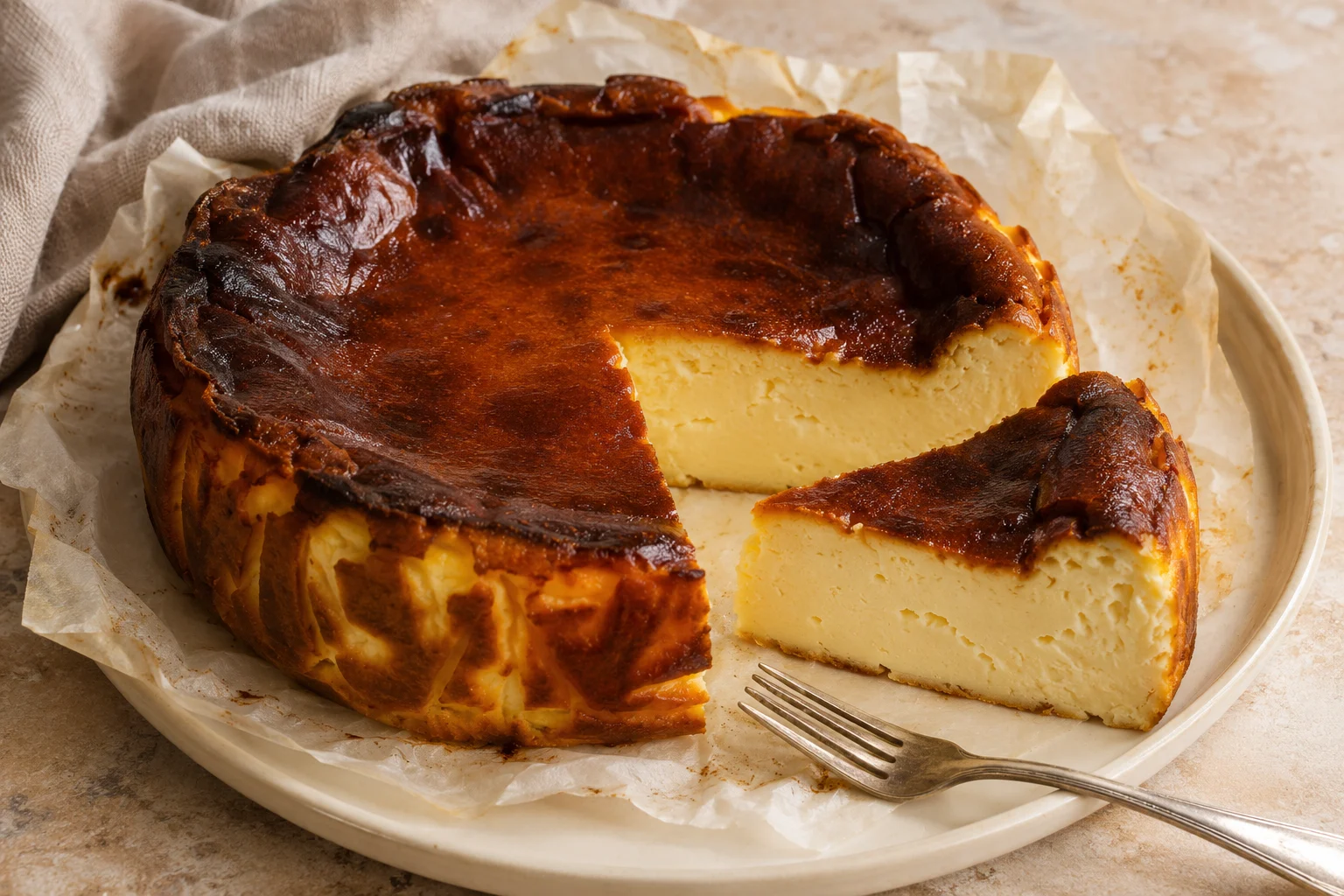
Use the specified tin for Basque Burnt Cheesecake. A change in depth alters how quickly the centre heats.
A safe testing workflow
Before an important event, bake a small version from a tested cheesecake formula using exact cream cheese, egg and liquid weights. Note the center jiggle at removal, the cooling method and the texture after full refrigeration. For a no-bake version, observe which ingredient creates the set. Compare like with like instead of trying to repair a warm custard using gelatin meant for cold fillings.
IN PICTURES
From the baking notebook
FROM THE RECIPE BOX


