Directions
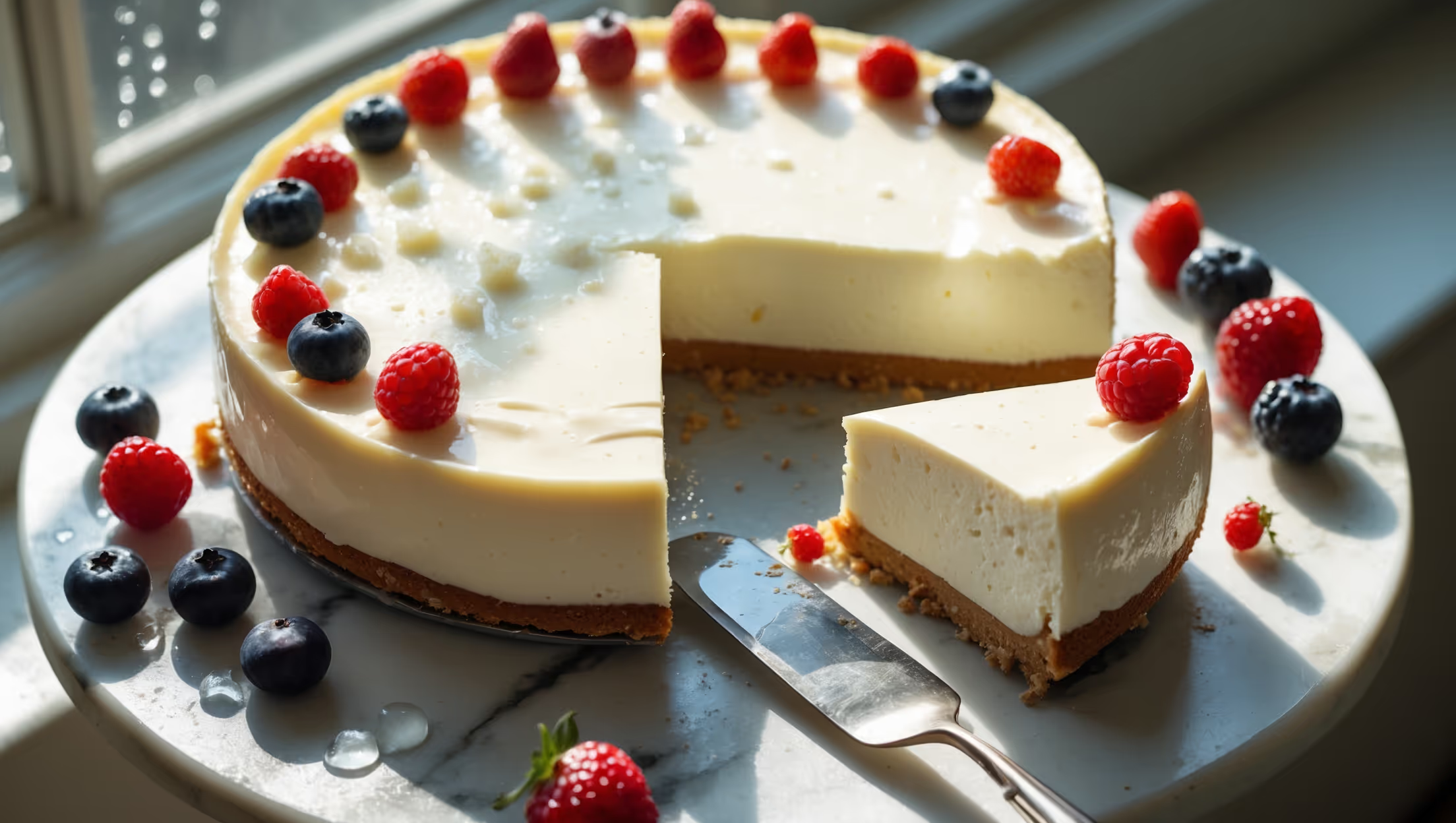
<ol class="no-list-style"><li class="MethodStepper"><h4 class="step-title">Step 1</h4>Begin by preparing your springform pan. Line the base with parchment paper and lightly grease the sides with butter. This will ensure your cheesecake releases perfectly when serving.</li><li class="MethodStepper"><h4 class="step-title">Step 2</h4>For the base, place your digestive biscuits in a food processor and pulse until you have fine crumbs. If you don't have a food processor, place the biscuits in a sealed plastic bag and crush with a rolling pin until fine. The texture of your crumbs will directly impact the firmness of your base, so aim for consistency.</li><li class="MethodStepper"><h4 class="step-title">Step 3</h4>Transfer the crumbs to a mixing bowl and stir in the sugar and salt. Pour in the melted butter and mix thoroughly until the mixture resembles wet sand. Every crumb should be coated in butter, which acts as the binding agent that helps your base hold together when chilled.</li><li class="MethodStepper"><h4 class="step-title">Step 4</h4>Press the mixture firmly and evenly into the base of your prepared pan. Use the back of a spoon or the bottom of a glass to compact it tightly – this compression is crucial for a solid base that won't crumble when sliced. Place in the refrigerator for at least 30 minutes to firm up while you prepare the filling.</li><li class="MethodStepper"><h4 class="step-title">Step 5</h4>In a large bowl, beat the room temperature cream cheese until smooth and creamy. Having your cream cheese at room temperature is essential for achieving a lump-free filling. Beat for about 2 minutes until completely smooth, scraping down the sides of the bowl as needed.</li><li class="MethodStepper"><h4 class="step-title">Step 6</h4>Add the sifted icing sugar, vanilla extract, lemon zest, and lemon juice to the cream cheese. The lemon provides a subtle brightness that balances the richness of the cream cheese without making it taste lemony. Beat until well combined and silky smooth.</li><li class="MethodStepper"><h4 class="step-title">Step 7</h4>In a separate bowl, whip the double cream until it reaches soft peak stage – when the whisk is lifted, the cream should form gentle peaks that slightly flop over. Be careful not to overwhip, as this can make your filling grainy rather than silky.</li><li class="MethodStepper"><h4 class="step-title">Step 8</h4>Gently fold the whipped cream into the cream cheese mixture using a large metal spoon or rubber spatula. Use a cutting and folding motion rather than stirring to maintain as much air as possible in the mixture. This incorporated air is what gives your cheesecake its light, mousse-like texture.</li><li class="MethodStepper"><h4 class="step-title">Step 9</h4>Retrieve your chilled base from the refrigerator and pour the filling over it. Smooth the top with an offset spatula, creating a level surface. Give the pan a gentle tap on the counter to remove any air bubbles that might be trapped in the filling.</li><li class="MethodStepper"><h4 class="step-title">Step 10</h4>Cover the cheesecake with plastic wrap, being careful not to touch the surface of the filling, and refrigerate for at least 6 hours, preferably overnight. This long chilling time allows the filling to firm up properly – rushing this step will result in a too-soft cheesecake.</li><li class="MethodStepper"><h4 class="step-title">Step 11</h4>When ready to serve, carefully run a thin knife around the edge of the cheesecake to loosen it from the pan, then release the springform clasp. For the cleanest slices, dip your knife in hot water and wipe dry between cuts.</li><li class="MethodStepper"><h4 class="step-title">Step 12</h4>If using the optional topping, arrange fresh berries on top of the cheesecake and brush with warmed jam for a beautiful glossy finish. Your no-bake cheesecake is now ready to delight everyone who tastes it!</li></ol>