On this page
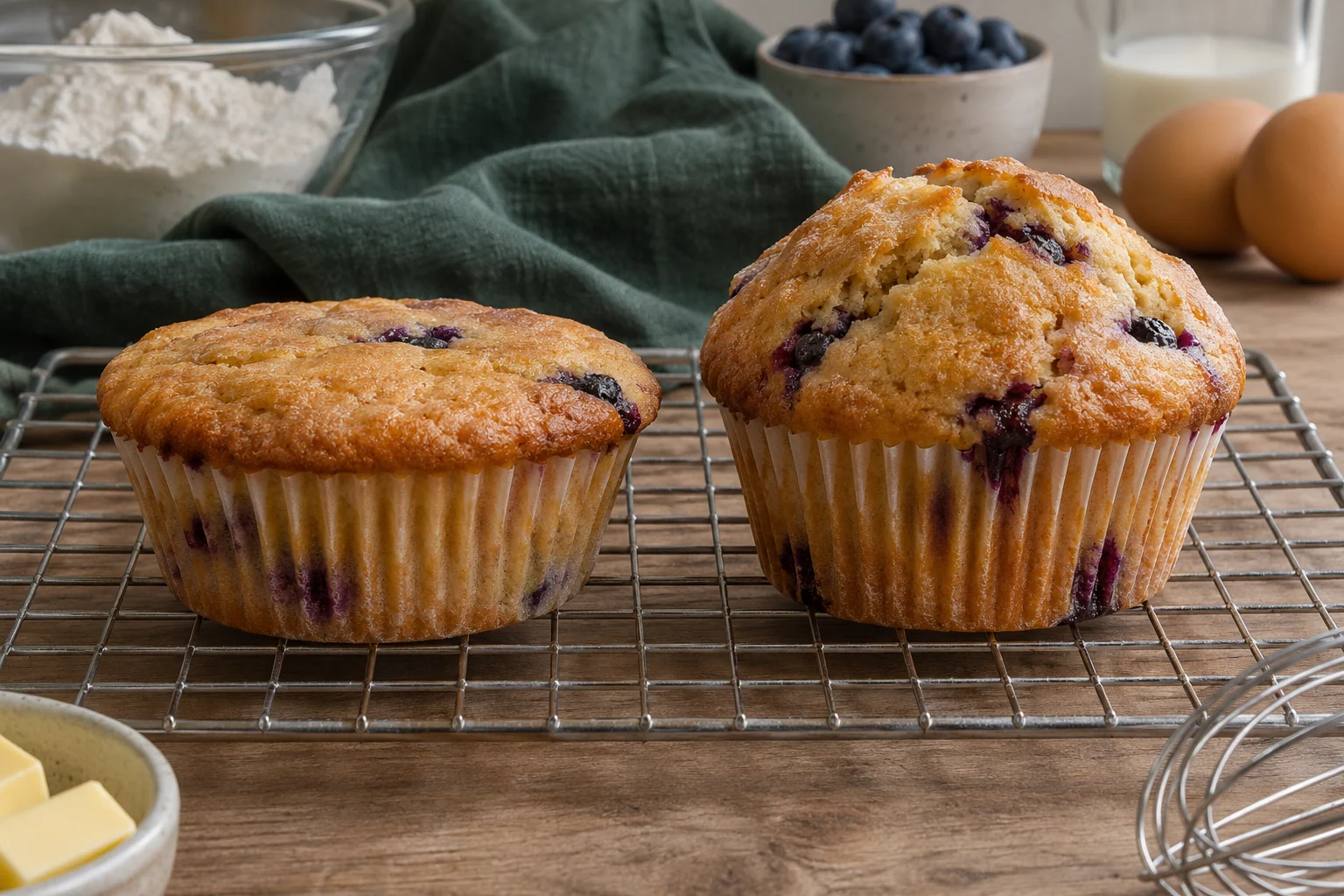
Did the muffins stay low from start to finish, or did a dome rise and then sink? Those are different clues. Break open a cooled muffin, look at the depth of batter you put in each well and note when you first saw the top change shape.
First, identify the kind of flat muffin
A short muffin with a set, tender centre may simply have had a small portion of batter. A crater above a wet seam suggests the middle did not support the rise. A wide shelf of batter over the lip points first to fill level or batter thickness. Start with the shape you actually see.
Look at the crumb of Blueberry Muffins as well as its dome before deciding whether a low muffin needs a different raising agent.

1. Check the baking powder
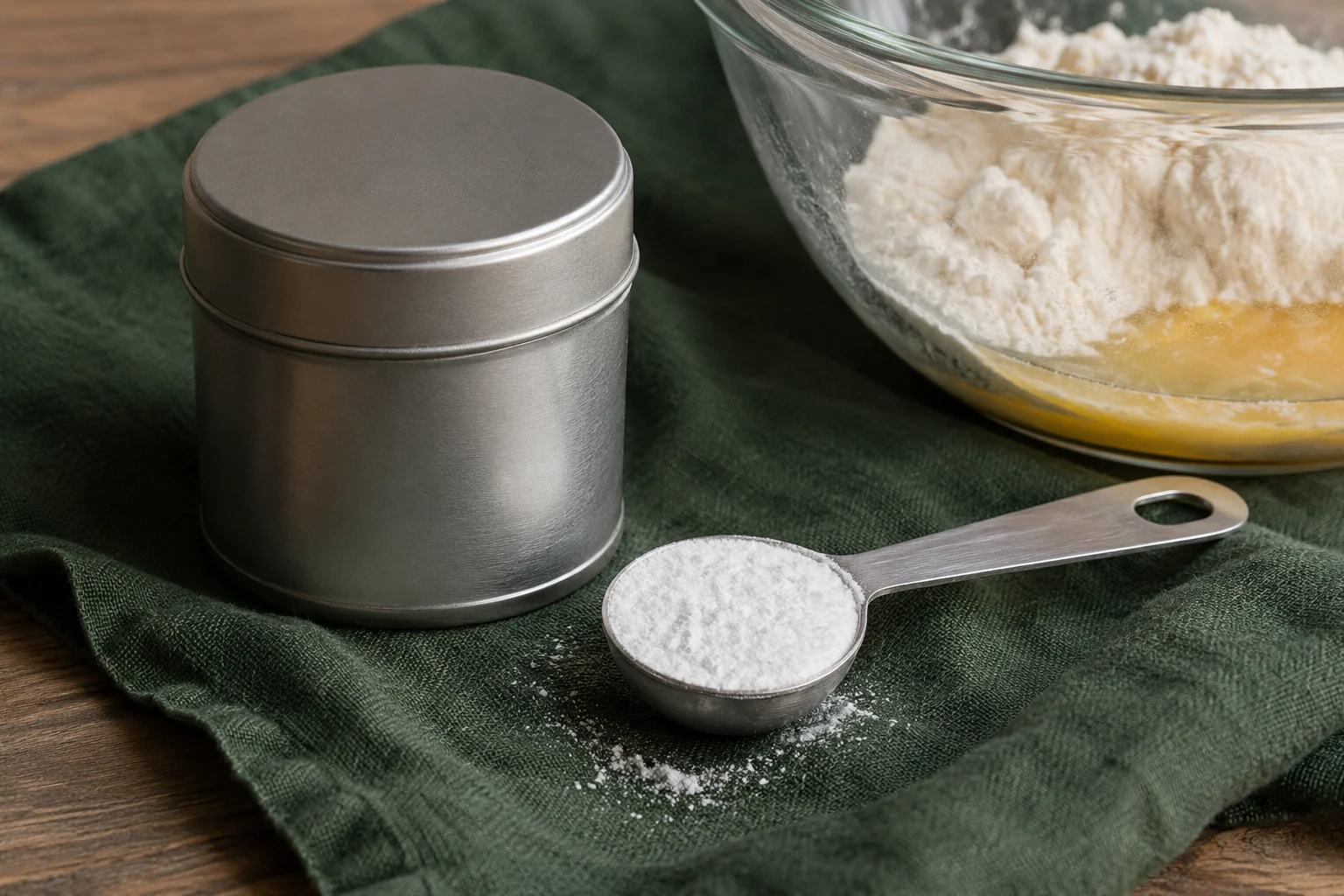
Baking powder supplies gas that helps many muffins expand. An expired or poorly stored product may lose effectiveness, making muffins dense or short. Verify that you used the exact amount and that the product has been kept dry and within its intended useful period. Don't double the amount to compensate for uncertain freshness.
Compare the measured leavening in Chocolate Chip Muffins with what went into your bowl before increasing it.
2. Baking soda is not interchangeable
Baking soda needs enough acid in the mixture to do its work. Baking powder carries its own acid. Use the type and quantity the formula gives. Swapping the same spoonful of one for the other changes both the rise and the taste.
The acid and leavening specified in Vegan Chocolate Muffins belong together. Replacing one without checking the other changes the batter.
3. The cups weren't full enough
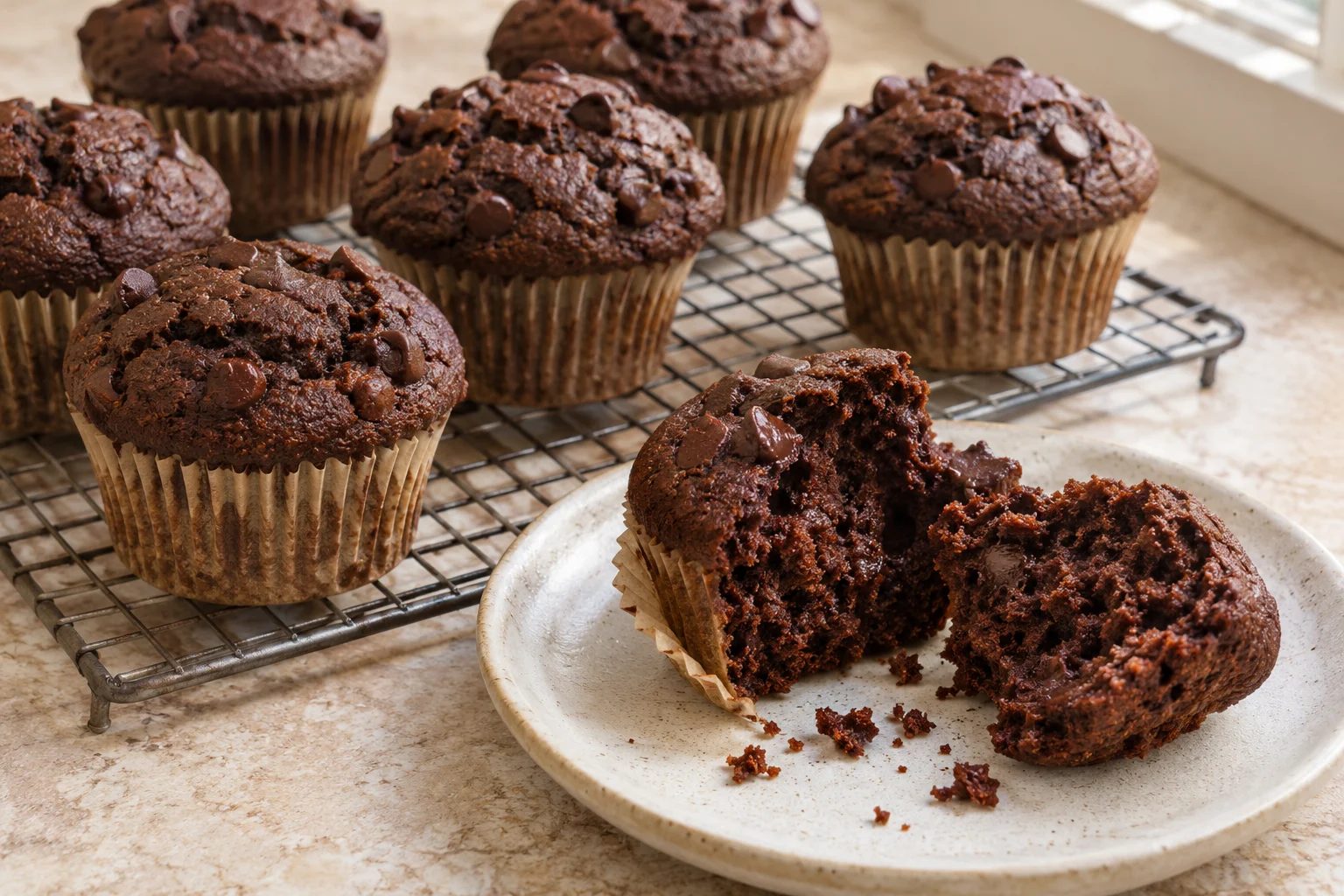
If you spread a twelve-muffin batter among eighteen wells, the same rise may produce short muffins simply because each started with less batter. Follow the stated yield and the recipe's two-thirds, three-quarters or other fill instruction. Don't use an oversized pan without recalculating portion sizes.
The shallow portions in Mini Muffins (Banana, Zucchini, or Apple) show how strongly muffin height depends on the size of the wells.

4. The oven wasn't fully preheated
Many muffin formulas depend on prompt heat to develop their rise and set a tender crumb. A lukewarm oven can delay the process and produce a flatter top. Preheat fully and avoid loading muffins as soon as an unreliable preheat light first changes if the appliance has not yet stabilized.
5. The oven temperature is inaccurate
An oven running too cool can contribute to weak lift or a pale surface, while an excessively hot oven may brown the outside before the middle sets. Use a separate oven thermometer if the same recipe repeatedly disappoints. Note whether the problem affects the whole pan or only one side.

6. Mixing the batter too much
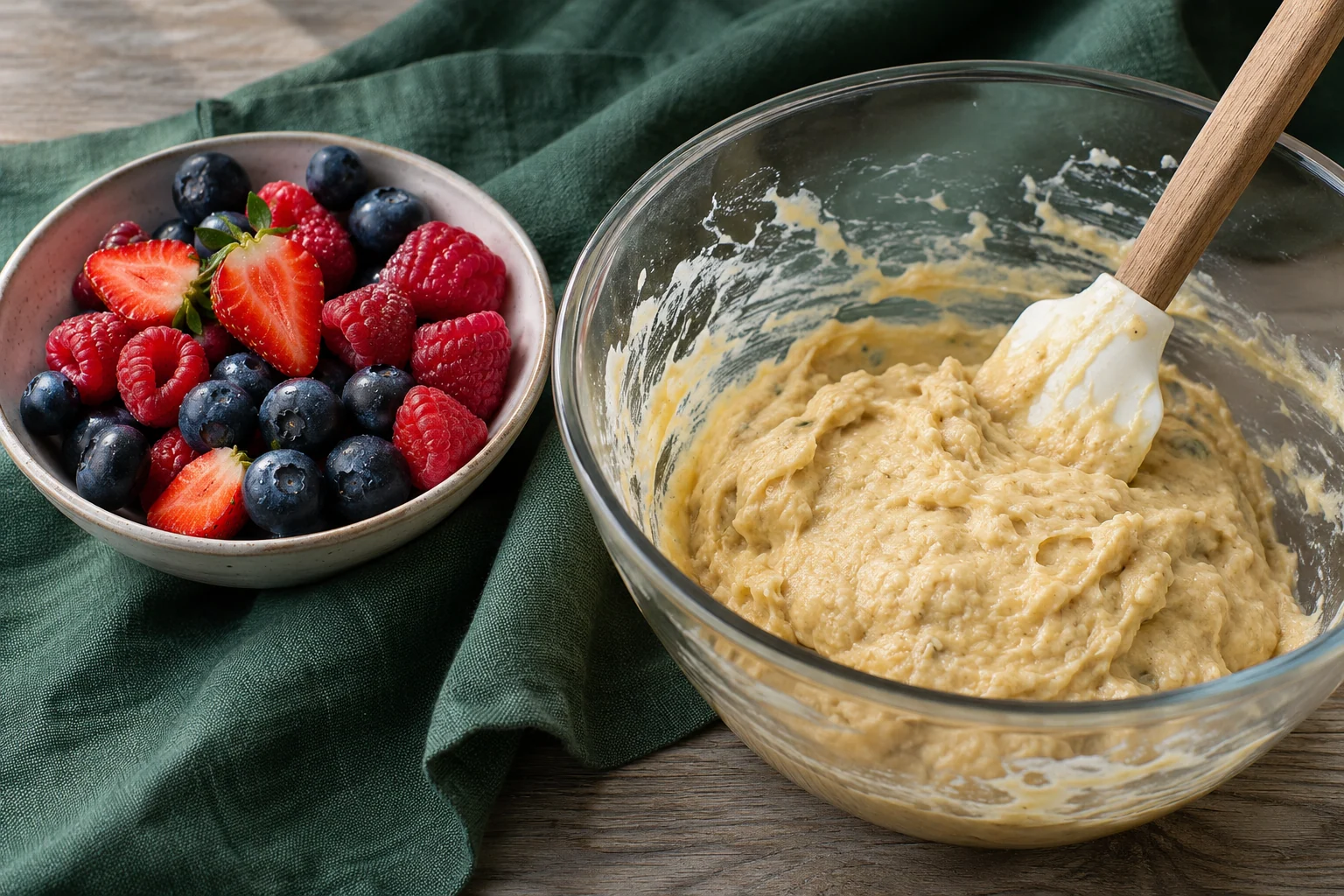
Scrape along the bottom of the bowl, lift the batter over itself and stop once no dry flour remains. A few soft lumps are fine in an ordinary muffin batter. Beating to a smooth shine can develop enough gluten to make a tough crumb with long tunnels.
Fold Blackberry Cornmeal Muffins from the bottom of the bowl so you can distribute the cornmeal without repeatedly beating the berries.

7. Under-mixing can also cause trouble
Stopping so early that large pockets of dry flour, baking powder or wet ingredients remain can create an uneven rise. The goal is not a fixed number of stirs but reasonably combined ingredients with minimal unnecessary beating. Scrape around the bowl's bottom to avoid hidden flour pockets.
8. Excess liquid or fruit
An overly wet batter may expand but fail to set before cooling. Extra banana, pumpkin, grated zucchini or frozen berries can introduce more moisture than the formula can support. Weigh moist add-ins and avoid increasing them for flavour without reformulating the recipe.
Check how Zucchini Muffins measures the zucchini before adding extra grated vegetables to a batch that already spreads.
9. Too much leavening can cause collapse
More leavener can inflate the batter faster than the crumb can set. The top may look promising in the oven and fall as it cools. Level measuring spoons, check the units and repeat the recipe before adding extra powder to a flat batch.
10. The muffins were underbaked
Check the thickest muffin in its centre. A skewer through melted chocolate or a burst berry can look wet even when the crumb around it is baked. A second test in plain batter helps you decide whether the batch needs longer.
Test the crumb of the Pumpkin Muffins below their browned topping if your muffins rise first and then sink.

11. The wrong flour
All-purpose flour, cake flour, oat flour and gluten-free blends do not create identical structure. Replacing wheat flour directly with a low-protein or gluten-free ingredient can reduce the batter's ability to hold its rise. Choose a muffin formula designed for the flour you want rather than assuming it can be swapped one-for-one.
For an alternative flour, use Quinoa Flour Muffins to see how the liquid and flour are paired in a recipe written for that grain.

12. Ingredient temperature changed the mixing
A recipe using creamed butter may need softened, pliable fat to incorporate air. Very cold ingredients can disrupt that process, while nearly melted butter won't hold the same structure. In a basic oil-based muffin method, ingredient temperatures may be less critical. Follow the specific formula.
13. Batter waited too long
Some chemical leaveners begin releasing gas once liquid is added. Leaving an ordinary muffin-method batter on the counter far beyond the recipe's schedule may use up some of the intended lift before baking. Other muffin recipes deliberately recommend an overnight chilled rest. Follow the author rather than imposing a universal no-rest rule.
Follow the mixing and baking sequence for Sourdough Discard Muffins instead of treating discard muffin batter like a long-fermented bread dough.
14. Muffin tins are different sizes
A jumbo pan needs more batter per well and usually longer baking, while a mini pan makes smaller crowns. Oversized decorative liners in standard wells can also make the finished muffin look low relative to the tall paper. Compare the batter amount with the actual well capacity.
Compare your tin with the size used for Bakery-Style Jumbo Muffins before borrowing its portion or timing.

15. Too much sugar or fat
Sugar and fat are important for tenderness and flavour, but changing their proportions can affect how a muffin rises and sets. An untested increase in oil or a large sugar reduction can create disappointing results. Use the exact recipe before attempting adjustments for a different sweetness or moisture level.
16. Muffin tops that spread sideways
When batter flows well over the pan rim and connects to its neighbours, the problem may be overfilling, an overly thin batter or excessive leavening. This is different from a muffin that never rises. Don't treat a sideways spread as proof you need more baking powder.
For Blueberry Streusel Muffins, look at the baked edge under the streusel to see whether batter actually flowed over the rim.
17. Why blueberry muffins may be low
A high proportion of berries adds weight and moisture. Frozen fruit can also cool the batter, changing its baking time. Use the quantity and frozen-berry handling method specified by your recipe. Extra fruit is not a shortcut to a moist muffin when the crumb cannot support it.
Notice how the fruit is added in Tim Hortons Copycat Blueberry Muffins and compare the amount with the batch whose tops sank.
18. Why banana muffins may sink
Banana brings sugars and significant water. A large banana can weigh much more than the quantity the developer intended. Weigh mashed banana, avoid overfilling and check the centre. Banana muffins with a low, gummy middle often need a recipe-balance or doneness correction rather than a decorative topping.
Measure the banana in Protein Banana Oat Muffins before adjusting the leavener to compensate for a wet centre.
19. What an actually good muffin looks like
Not every successful muffin has a towering cap. Some tender, whole-grain or fruit-heavy muffins intentionally bake with a modest rounded top. Evaluate the recipe's expected appearance, crumb and flavour before deciding it failed. A flat but fully cooked muffin may be a style outcome rather than a defect.
Split one of the Vegan Matcha Muffins to inspect the set crumb beneath its green dome. Its texture tells you more about the result than height alone.

20. A quick diagnostic flow
If a flat muffin is light and tender, compare the portion and pan first. If it is wet inside, check the baking window and the moisture from fruit. If it is rubbery with long holes, look at mixing. One clue may have several causes, so change one thing per batch.
Have the oven ready before mixing Vegan Lemon Lavender Muffins. If every muffin stays low, compare the fill and oven heat before changing the amount of leavener.

21. A controlled comparison batch
Use a dependable muffin recipe and keep all ingredients identical. Confirm baking powder freshness and oven temperature; fill each cup evenly and mix as directed. If you must test a change, alter only one factor at a time and record the result. A controlled approach is much faster than adding extra flour, leavener and oven heat all at once.
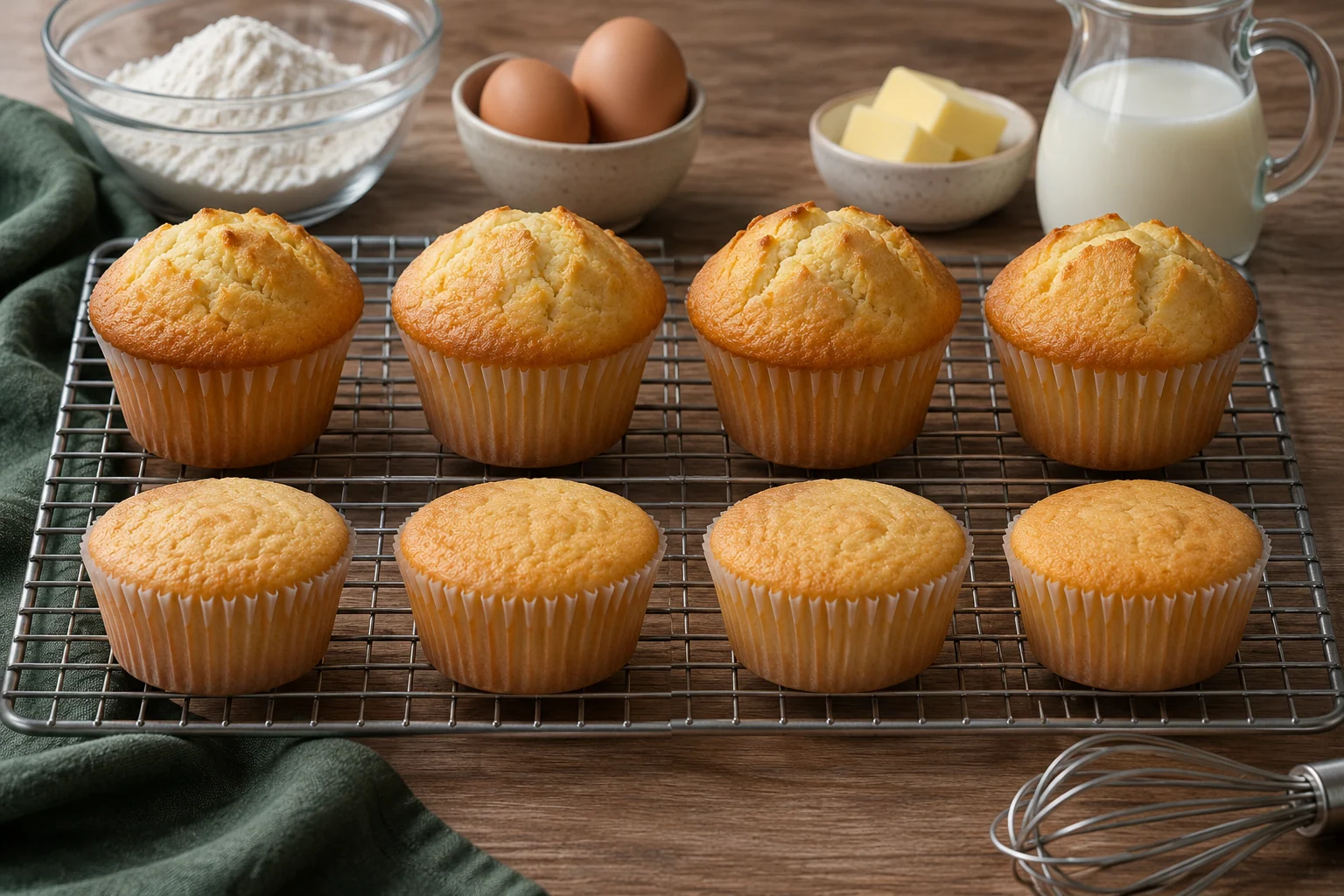
22. How to get bakery-style domes
A tall dome begins with a batter and portion designed to hold one. Follow the recipe’s temperature sequence if it gives one. Turning every oven up for the first few minutes can brown a small muffin before its centre has had time to bake.
Frequently asked questions
Why are muffins flat even with fresh powder? Portioning, oven heat, mixing or excess moisture may be responsible. Can old baking soda cause it? Ineffective or incorrectly used leavener can contribute. Should I increase oven temperature? Only if a trusted formula supports that schedule. Are flat muffins safe? Shape alone isn't the issue; make sure the centres are properly baked.
Final takeaway
A high muffin top is the result of balanced leavening, correct batter consistency, adequate portioning and oven heat—not one magic ingredient. Decide whether your muffins failed to rise or rose and fell, then inspect the simplest likely cause first. A dependable formula and careful baking habits will give you more reliable crowns than improvised fixes.
IN PICTURES
From the baking notebook
FROM THE RECIPE BOX


