On this page
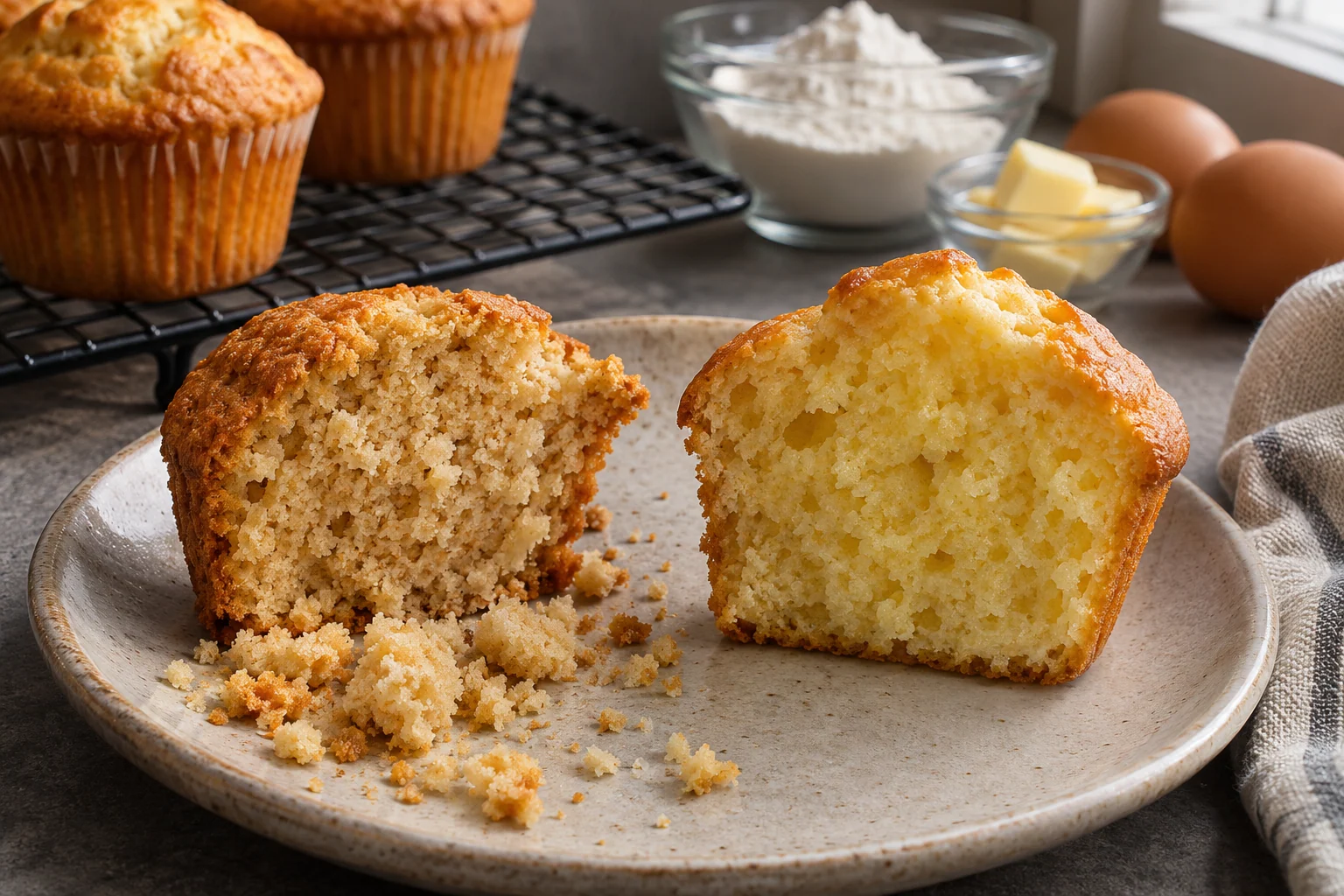
Break a cooled muffin across the middle. A dry one may shed crumbs and feel rough on the tongue. A tough one can be surprisingly moist yet resist the bite. Where the problem appears, at the edge, in a flour pocket or throughout the centre, helps you choose the next change.
First decide whether it is dry or simply firm
A dry muffin feels crumbly, sometimes sandy, and may need a drink alongside it. A tough muffin resists the bite and may feel rubbery; this can be linked to mixing or an ingredient imbalance. A muffin that's gummy in the centre is yet another problem. Naming the texture correctly matters, because adding more milk to a tough or underbaked muffin may make it worse.
Expect a little grain from the cornmeal in Blackberry Cornmeal Muffins. Judge dryness by whether the baked crumb holds together when you break it.

1. Too much flour is a common cause
Use the weight of flour in the recipe when available. With cups, loosen the flour, spoon it into the cup and level it. If the batter has become stiffer over several otherwise identical batches, weigh the amount your usual scooping method delivers.
Measure the flour for Blueberry Muffins before adding the berries so you can compare the finished crumb between batches.

2. The muffins baked too long
Begin checking at the early end of the baking window, especially with a dark pan or small portions. Test through the middle of the thickest muffin, away from fruit and chocolate. Stop once the crumb is set as the recipe describes.
The short baking window in Air Fryer Muffins shows why even a few extra minutes matter for small muffins.

3. The oven is running hot
Oven dials are not always accurate. An oven that's hotter than expected can dry the exterior before the middle is set, leaving a crusty edge and crumbly interior. Verify the temperature with a suitable oven thermometer when several batches fail. Check rack placement and avoid baking directly against a severe heat source.
4. The pan material changed the result
Dark nonstick metal can brown the bottoms and sides differently from a light aluminium pan. Silicone may produce another pattern. If you switch pans, use any adjustment recommended by the recipe or manufacturer and observe the first batch carefully. For troubleshooting, returning to the pan the recipe was tested in can remove one major variable.
5. The batter had too little liquid
Measure the milk, yogurt or other liquid before combining the bowls. A spoonful of thick strained yogurt can hold its shape where the same volume of a thinner yogurt would flow. If the batter looks different from last time, check the specific product as well as the amount.
Keep the yogurt and liquid quantities in Quinoa Flour Muffins together when investigating a dry centre.

6. Butter and oil behave differently
Liquid oil usually remains fluid at room temperature, often helping a cooled muffin feel soft. Butter contributes flavour, water and milk solids and has a different physical structure. Replacing oil with the same measured amount of butter, or reducing fat substantially, can change texture. Use a recipe-tested substitution rather than improvising.
Taste Lemon Poppy Seed Muffins after cooling before comparing a butter-based crumb with one from an oil-based recipe.

7. Cutting sugar can reduce tenderness
Sugar affects more than sweetness. It influences moisture retention, browning and the finished crumb. A large, untested reduction can produce muffins that taste less rich and feel drier or firmer. For a less-sweet breakfast muffin, choose a formula developed with the desired sugar level rather than removing half the sugar from a favourite recipe.
Read the sweeteners in Vegan Gingerbread Muffins before trimming them back. They affect softness as well as the flavour of the spices.

8. Overmixing can create a tough texture
Overworking wheat batter can make a muffin springy and tough even when it contains plenty of moisture. Look for long tunnels and a tight bite. If it falls into dry sand-like crumbs instead, check the flour amount and baking time first.

9. Undermixing can leave dry pockets
Stopping too early isn't a virtue if there are large streaks of flour at the bottom of the bowl. Those areas may bake into dry, chalky patches. Scrape the bowl and fold until the flour is adequately incorporated, while allowing the small lumps the recipe permits.
10. Wrong flour substitutions can upset moisture
Whole-wheat, oat, coconut and gluten-free flours absorb liquids and supply structure differently from all-purpose flour. Coconut flour in particular can be highly absorbent. Substituting the full quantity without a tested conversion can produce a dry or crumbly muffin. Use a formula designed for the flour you want.
Use Spiced Pumpkin Buckwheat Muffins for a buckwheat batter whose liquid already accounts for that flour.
11. Large muffins may need a different bake
Jumbo muffins have deeper centres and often remain in the oven longer. That can dry the crust while the middle finishes. A mini muffin has more exposed surface relative to its small volume and can overbake quickly. Use a time and temperature developed for the portion size rather than transferring a standard-muffin schedule without adjustment.
Judge Bakery-Style Jumbo Muffins on their own timing. Applying a jumbo bake time to standard muffins can give them dry rims.
12. Too little banana or fruit purée
If a banana muffin recipe expects a measured quantity of mashed banana, using much less can reduce flavour and moisture. Too much, however, can create a gummy centre. Weigh the fruit rather than judging by the number of bananas or spoonfuls of pumpkin.
The batter for Sweet Potato Chocolate Chip Muffins starts with 250 g of cooked, mashed sweet potato. Measuring the purée is more repeatable than adding a splash after mixing.
13. Frozen berries can confuse doneness
Burst berries leave juice on a skewer and can make a finished muffin appear underbaked. Probe beside the fruit and compare that mark with the first. Extra oven time to dry every berry can take moisture from the crumb around it.
Test the crumb alongside a berry in Vegan Raspberry Muffins so juice does not send a fully baked batch back into the oven.

14. Dry crumb can follow weak emulsification
Muffin recipes using melted butter, eggs and cold milk can develop little fat lumps if the temperatures are badly mismatched. Some recipes are robust, while others may not blend evenly. Prepare ingredients as the formula specifies; changing ingredient temperature isn't a universal fix, but it can improve consistency.
15. The cups were underfilled
Small portions can bake too quickly when you use the full time intended for generously filled wells. Follow the recipe's yield and approximate fill level. If twelve muffins worth of batter are stretched into eighteen cups, start checking earlier or use the intended portion size.
The small portions in Mini Muffins (Banana, Zucchini, or Apple) set quickly. Begin checking at the early end of their own baking window.
16. Cooling in the pan too long
Many recipes call for a short rest in the hot muffin pan, followed by transfer to a rack. Leaving muffins against hot metal for much longer than directed can continue heating the bottoms and sides. The resulting crust may become firmer. Follow the cooling instructions rather than using the pan as a long-term storage tray.

17. Wrapping warm muffins is not the answer
A warm muffin sealed immediately in a container releases steam, making its surface sticky or soggy. That is a different defect from dryness, not a dependable solution. Cool as directed, then wrap the muffins to reduce moisture loss during storage.
18. Muffins can dry out overnight
Exposed crumb loses moisture after baking. If you leave muffins unwrapped on a plate, they may taste noticeably drier the next morning even when baked correctly. Follow the recipe's storage guidance and use a suitable closed container once fully cool. Freeze portions when the recipe supports longer storage.
From a batch of Chocolate Chip Muffins, cover one once cool and taste it the following day. Compare it with the texture you remember from the rack.

19. Overbaking versus underbaking
A very dark exterior with a dry, crumbly interior often points toward excess heat or time. A wet, dense stripe beneath a brown top points toward underbaking or excess moisture. Both problems can occur in the same batch if the oven is too hot and the portions too deep, so inspect the centre as well as the edge.
The soft filling in Vegan Chocolate Lava Muffins is intentional. Look at the surrounding baked crumb when using a filled muffin as a comparison.
20. How to rescue baked dry muffins
For a fully baked muffin that is a little dry, split and toast it gently, then serve with butter, jam or fruit. This works best on a firm base. Discard raw or spoiled muffins. Toasting is a way to improve the eating texture of a baked muffin.

21. Can a simple syrup fix them?
Some cake and pastry recipes use a measured syrup to add moisture, but a conventional breakfast muffin may become sticky or overly sweet if drenched. If using a syrup, follow a tested method and store the finished product appropriately. For the next batch, fixing the actual recipe or baking time is more reliable.
22. What to record after a dry batch
Write down flour weight, pan material, number of muffins, oven setting, actual baking time and whether the recipe was altered. Also note whether the muffins tasted dry immediately or only after storage. That last detail helps distinguish an oven problem from poor wrapping.
For Vegan Carrot Muffins, record the weight of flour and the measured carrot along with the baking time. You can then repeat the batch with just one adjustment.

A better routine for tender muffins
For a repeatable batch, weigh flour, portion evenly and check one thick muffin before the timer runs out. Cool as directed, then cover the plain muffins or freeze individual portions. Perishable fillings and toppings belong in the refrigerator within two hours.
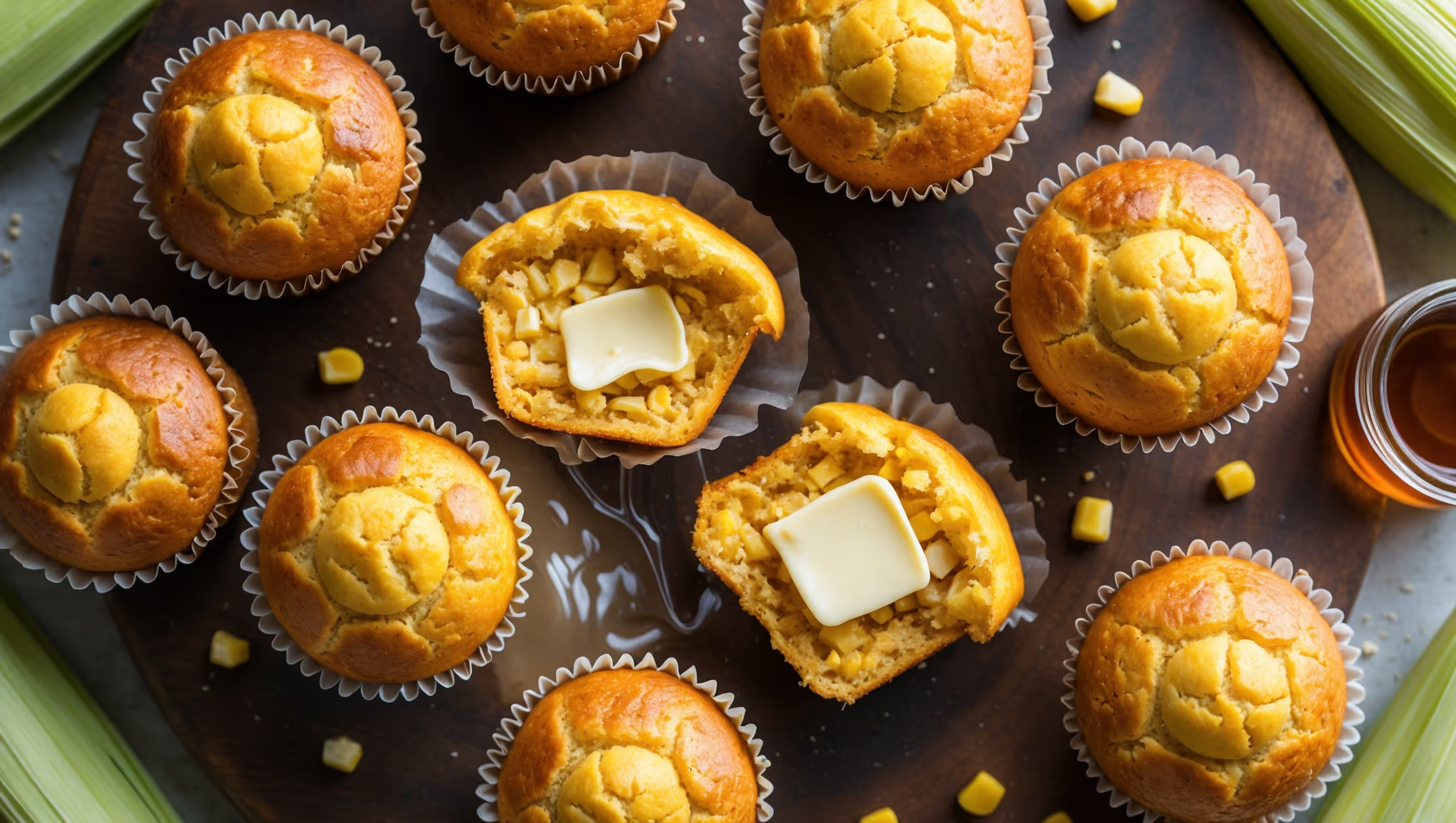
With Vegan Corn Muffins, compare a muffin from the outside of the pan with one from the middle. A dry outer edge can give you a clue about pan position and heat.
Frequently asked questions
Why are my muffins dry but not overbaked? Flour measurement, low liquid, changed fat or sugar, mixing and storage could be responsible. Can I add more milk? Only in a controlled recipe-supported adjustment. Does oil make muffins moist? It can support a soft crumb, but overbaking still dries them. Why are just the bottoms dry? Pan material, rack position or a hot pan may contribute.
The final takeaway
A moist muffin is not made by adding the maximum amount of liquid. It's the result of a well-balanced batter baked just until set and stored properly. Fix the most likely issue one at a time, and your next batch will be far closer to the tender, soft-centred muffin you intended.
IN PICTURES
From the baking notebook
FROM THE RECIPE BOX


