On this page
Start with the table where the cake will be served. If one person needs to carry, cut and plate thirty pieces quickly, a rectangular cake in its pan has a practical advantage. If each serving should show several bands of cake and filling, work backwards from a stacked slice instead.
What is a sheet cake?
A sheet cake is generally baked as one relatively shallow layer in a rectangular pan, although pan dimensions and terminology vary. It may be served directly from the pan, transferred to a board or stacked into layers using cut sections. Classic sheet cakes are efficient for serving many guests. They often require less leveling and structural assembly than a traditional tall round cake.
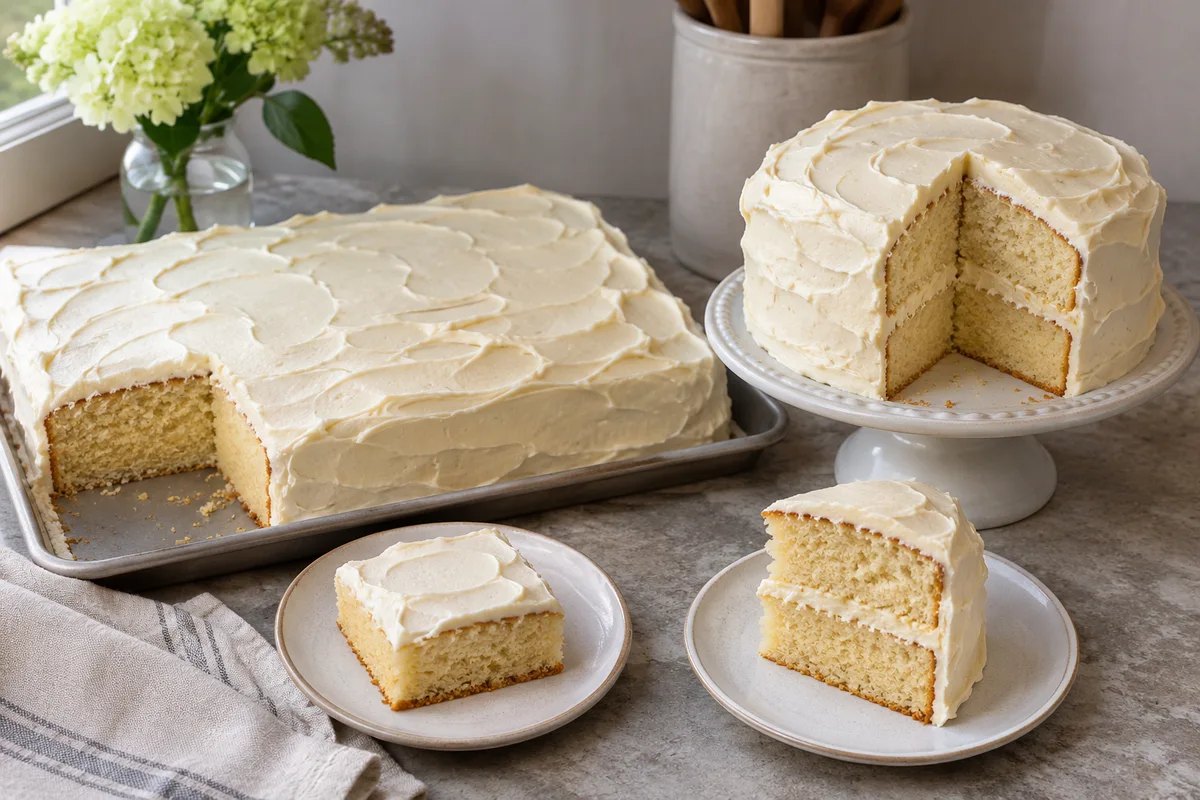
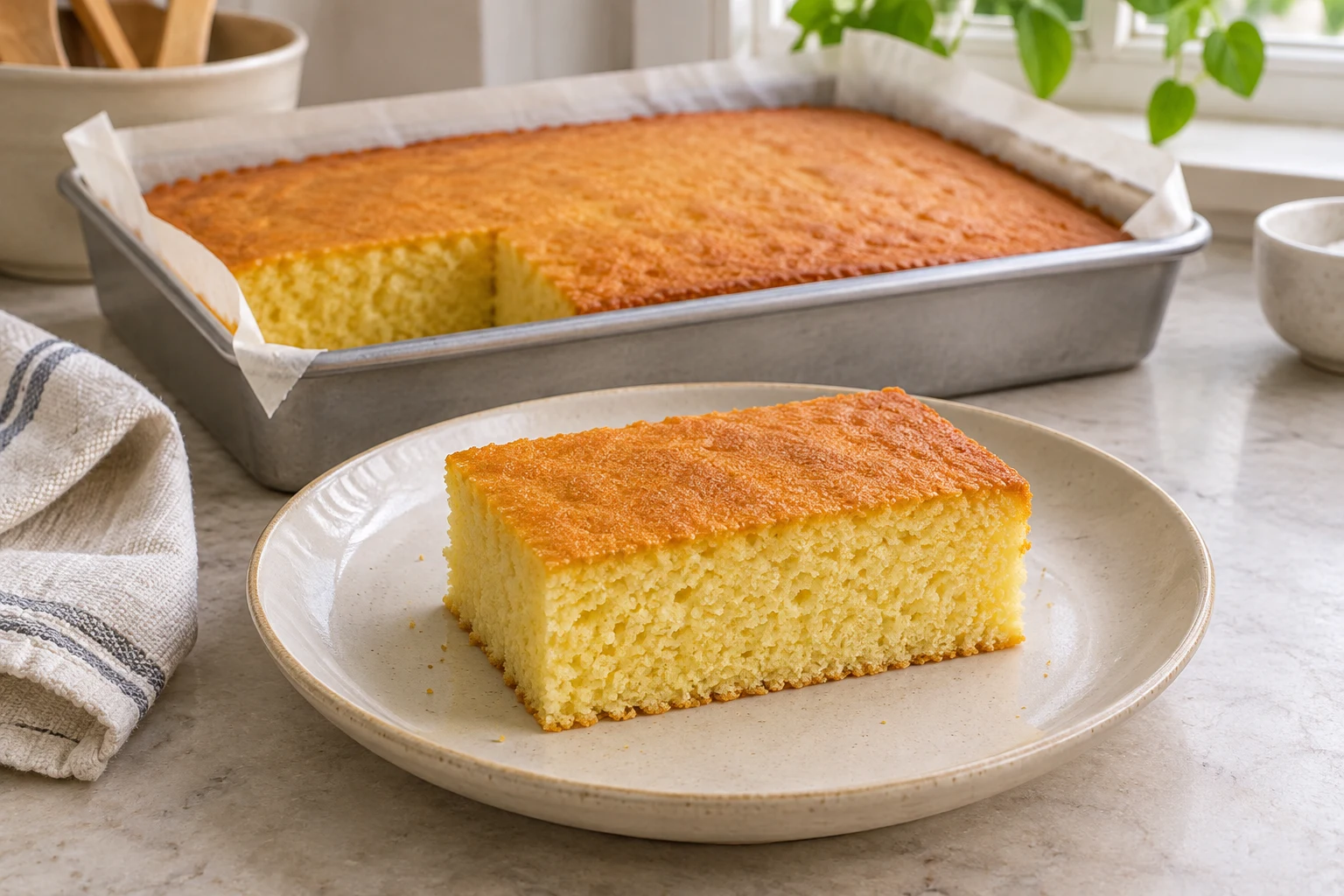
The shallow profile of Classic Yellow Sheet Cake makes it easy to cut an even grid.
What is a layer cake?
A layer cake consists of two or more baked cake sections stacked with frosting or another suitable filling between them. It can be round, square or rectangular. The height creates a striking presentation and allows flavor combinations such as vanilla cake with lemon curd or chocolate cake with ganache. Filling stability and cake support become more important as the number and height of layers increase.
Cut a wedge from Classic Vanilla Layer Cake to see how much of each serving is cake and how much is filling.

Compare servings by real dimensions
An eight-inch round cake and a nine-by-thirteen-inch sheet cake offer different cutting patterns and yields. Actual portions depend on cake height and whether dessert follows a large meal. Use a serving chart matching finished dimensions rather than assuming every 'party cake' feeds twenty. Tall layer cakes can be cut into smaller portions than casual home-style wedges, but only when cut and supported appropriately.
On a 9-by-13-inch cake, three rows cut across the short side and five down the long side give 15 pieces, each roughly 3 by 2½ inches. Mark the first cuts lightly in the frosting so the last row is the same size as the first.
Why a sheet cake is convenient
A single rectangular layer usually offers straightforward batter distribution, frosting and slicing. You may be able to serve it in the baking pan without moving it, which reduces breakage. For school events and casual potlucks, this practicality is an advantage. A simple piped border and fresh berries can feel festive without building multiple internal filling layers.
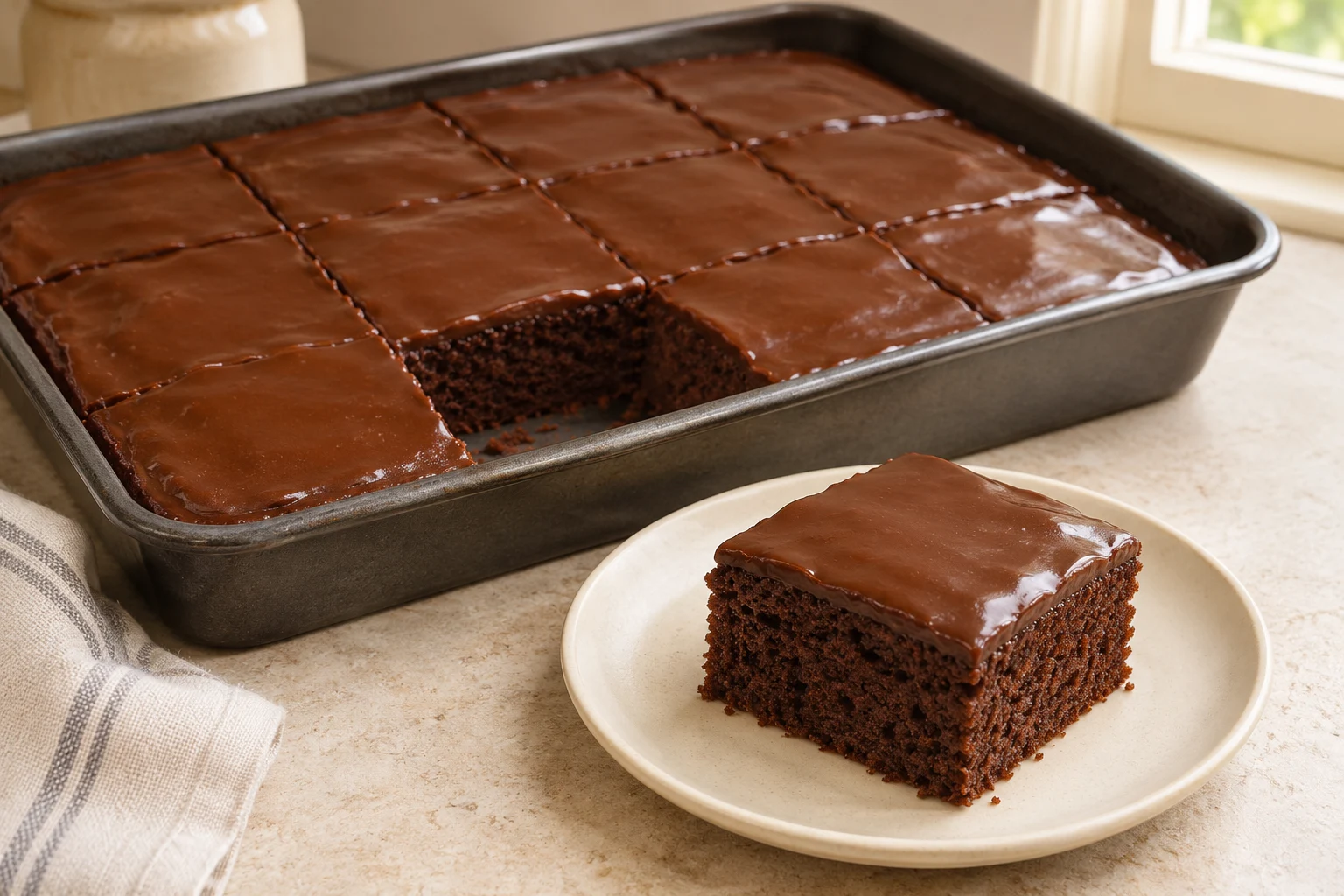
For a single cake to carry and serve, consider Chocolate Sheet Cake.
Why a layer cake is special
Layer cakes offer visual height, a clear cake-cutting moment and opportunities for contrasting textures between layers. A chocolate sponge with raspberry filling can reveal an attractive cross-section. The same complexity creates more places for things to go wrong: a wet filling can slip, a dome can tilt the stack, and soft frosting may not support travel. Plan carefully when the cake must leave your kitchen.
Baking time differs
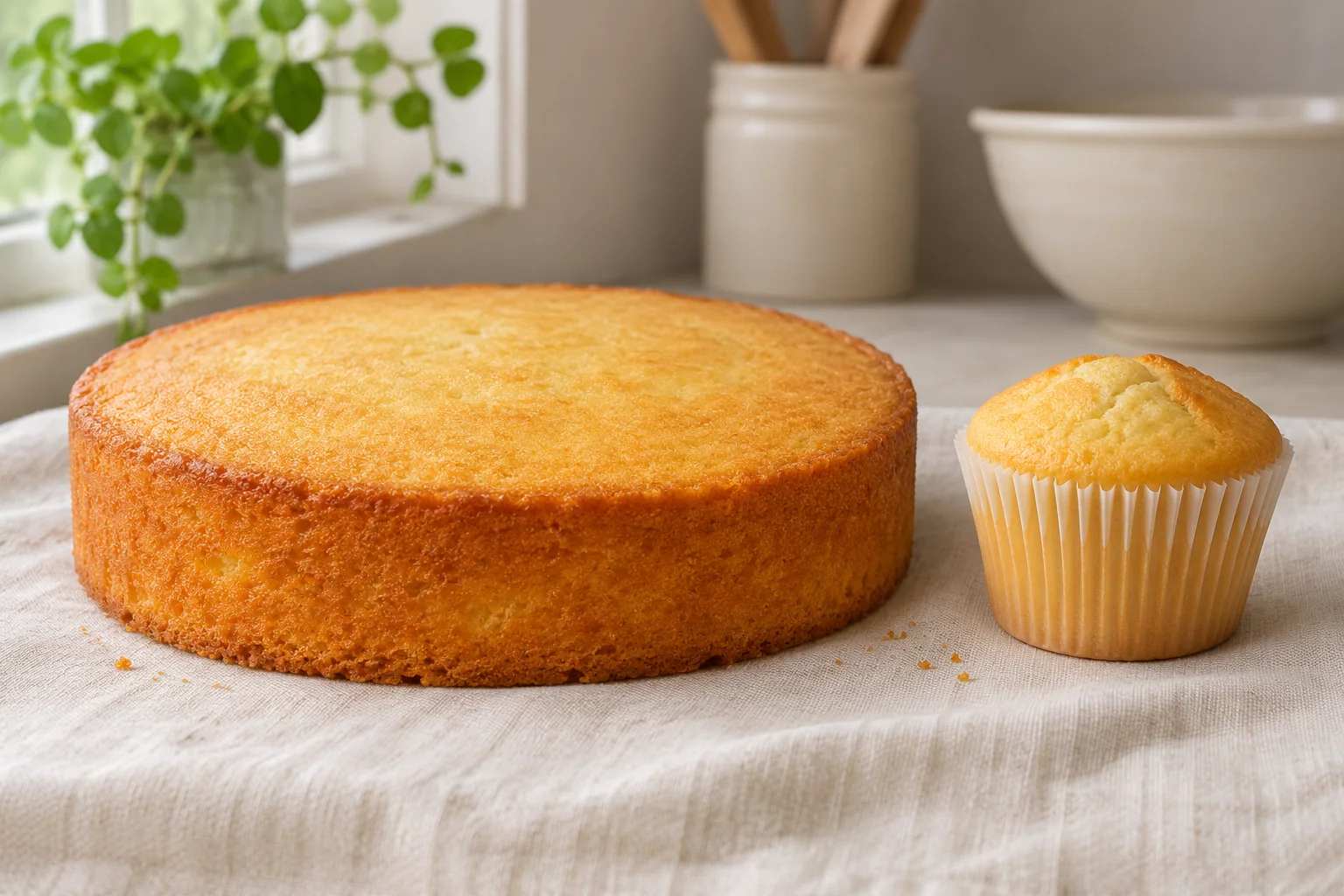
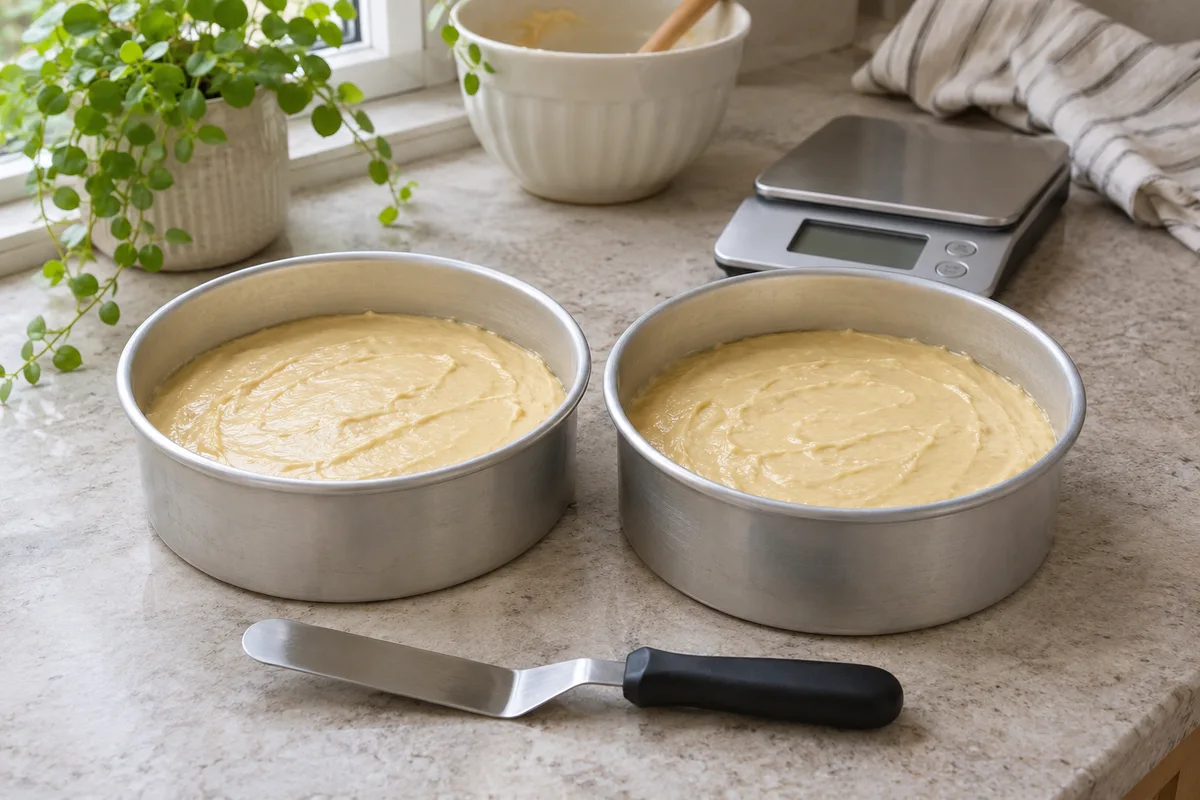
A shallow sheet and a deeper round layer heat differently even when they contain the same batter weight. Pan area, depth and material all affect the bake. Use a recipe with a stated pan variation, or make a small advance trial; do not carry the original baking time over unchanged.
Pan area and capacity
Rectangular pan area is length multiplied by width, while round area uses the radius squared times π. These calculations help compare footprint but don't account for depth, fill height or how a recipe rises. A tall cake batter cannot necessarily be poured into a shallow pan simply because its base area is similar. Compare dimensions and use a trusted conversion when scaling.
Frosting amounts
A sheet cake often needs a generous top layer but may require little or no frosting on its sides when served from the pan. A tall layer cake needs frosting between layers, a crumb coat and exterior coverage. Piped decorations add more. Start with an amount guide for the actual cake size and decorating style rather than doubling a random tub of frosting.
Use Vanilla Sheet Cake with Buttercream to estimate frosting for a broad, flat surface.

Filling choices
Sheet cakes are commonly frosted across the top, though some are split or stacked with filling. A traditional layer cake offers more room for ganache, buttercream or controlled fruit filling. Dairy-rich pastry cream, lemon curd and fresh cream require refrigeration. A filling that tastes excellent by spoon may still be too runny to support stacked cake layers.
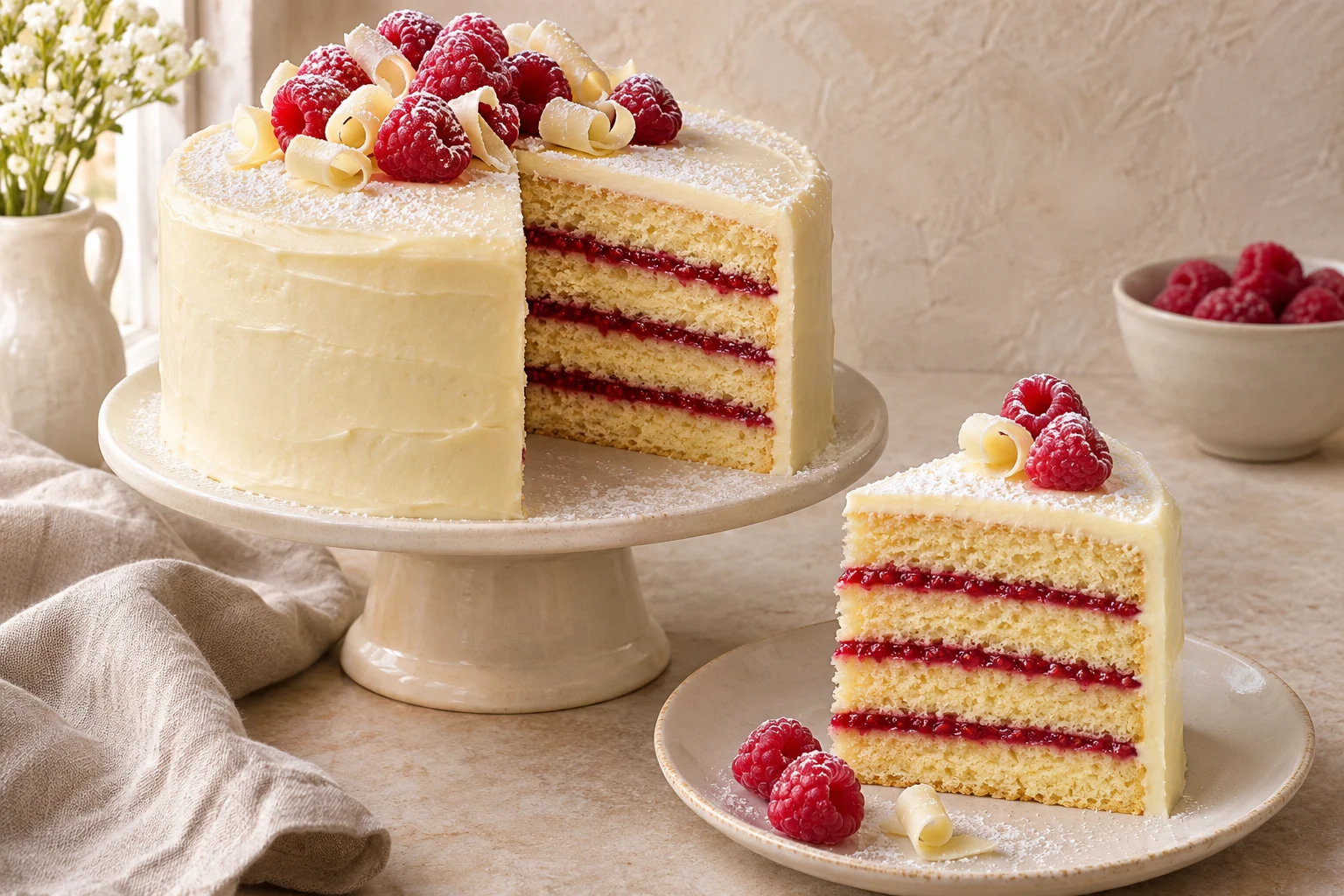
The contrasting layers in Raspberry White Chocolate Layer Cake show what a filling adds to each slice.
Leveling and crumb coating
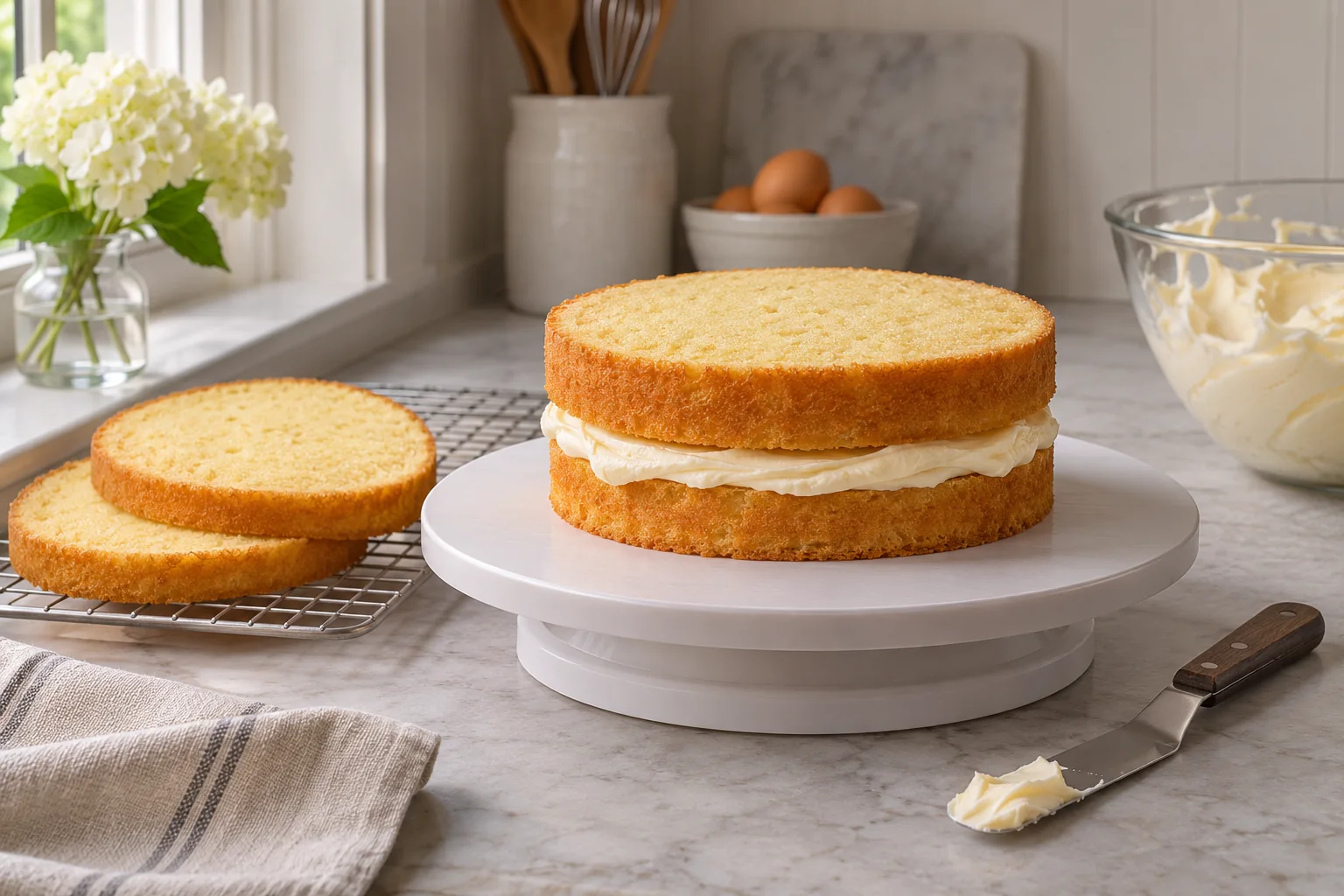
Round cake layers often need trimming if domed, then a thin crumb coat to trap loose crumbs before final frosting. A simple sheet cake may be finished directly in its pan once cool. This can save active time. If cutting round layers from a large sheet, exposed edges may shed more crumbs, making a crumb coat especially helpful.
Transporting a sheet cake
A sheet cake carried inside a suitable covered rectangular pan or rigid cake box is comparatively stable. Check the container fits the vehicle and refrigerator before baking. Avoid placing anything on top of the frosting, even for a short drive. A non-slip mat beneath the carrier can help prevent sliding, provided the box itself is secure and level.
Transporting a layer cake
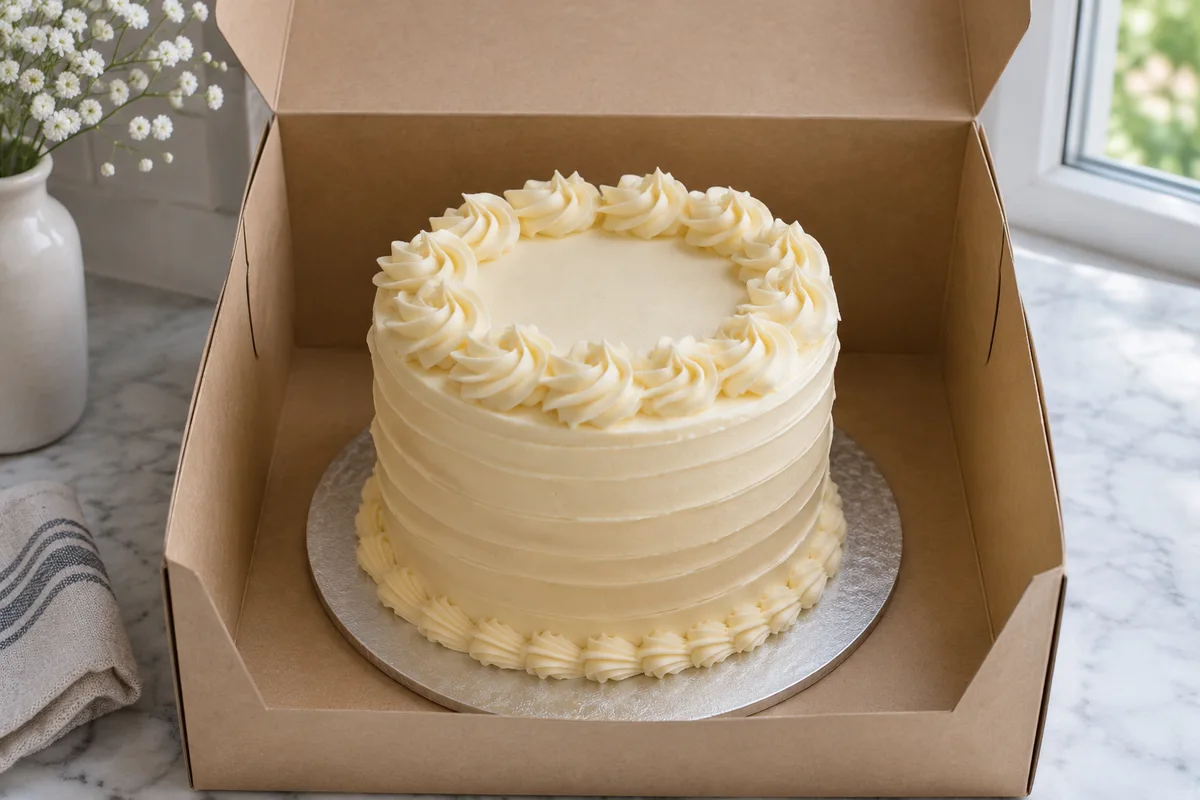
A tall round cake needs a rigid board, stable box and a flat vehicle surface. Chilling a compatible frosting may improve transport stability. Tall tiers may require internal supports and separate boards. Keep cream-based fillings safely cold. Do not carry a cake on a person's lap or an inclined seat and expect the layers to remain centered through sharp turns.
An outdoor summer party
Sun and warm weather can soften buttercream, chocolate decorations and dairy fillings. A simple sheet cake served shortly after removal from suitable cold storage may be easier than a tall cake with slippery fruit curd. Even a sheet cake containing whipped cream requires refrigeration. Choose a formula suitable for the actual venue rather than assuming one format is automatically heatproof.
Budget comparison
Sheet cakes often require less structural equipment, fewer filling components and less time spent leveling and stacking. A layer cake may use similar batter by weight but more frosting, cake boards and transport supports. If money is limited, spend on the guest's favorite flavor and one meaningful decoration. A cleanly finished sheet cake can feel more generous than a precarious tall cake.
Decoration options
A sheet cake offers a broad flat area for writing, simple piping, fruit arrangements or a playful border. A layer cake provides vertical surfaces for smooth frosting, texture combing and drips. Match the decoration to the cake and the person's preferences. Avoid using non-food-grade fresh flowers directly on dessert or inserting unsupported heavy toppers into a fragile layer.
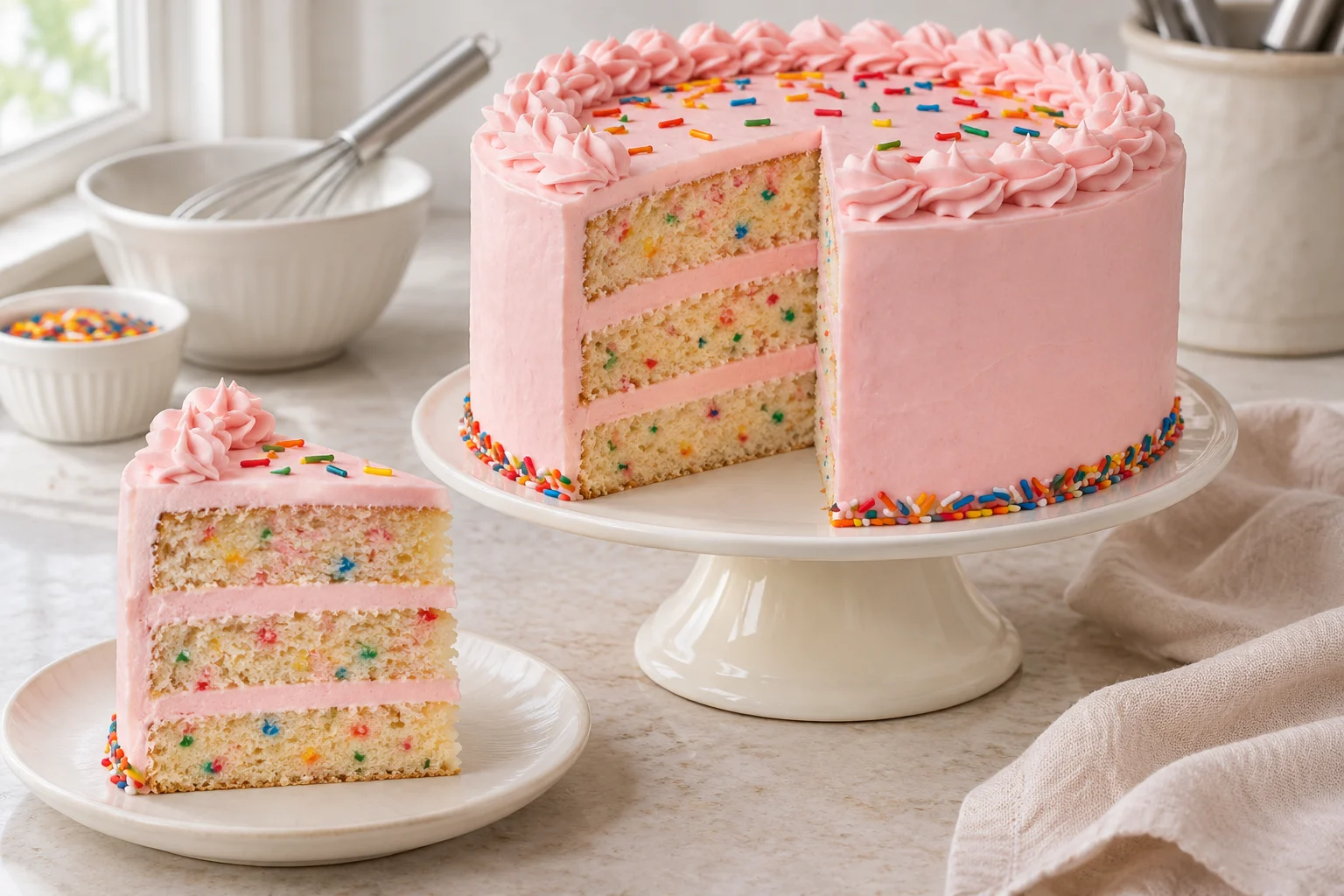
For a birthday centrepiece, Funfetti Birthday Layer Cake carries colour through to the cut interior.
Small gatherings
For six to eight people, a single-layer snack cake or modest two-layer round cake may be sufficient. A half-sheet cake is likely to create excessive leftovers unless guests want take-home slices. Choose an appropriate small recipe and pan. When selecting layers for a short guest list, prioritize flavor and manageable storage rather than making a cake tall merely for photographs.
Large gatherings
For thirty or more guests, rectangular cakes can simplify cutting and portion counts. Several sheet cakes in complementary flavors may be more practical than one very tall layered structure. If a dramatic centerpiece matters, consider a modest display cake supported by additional sheet cakes for serving. Count portions according to actual geometry and the number of other desserts.
Make-ahead workflow
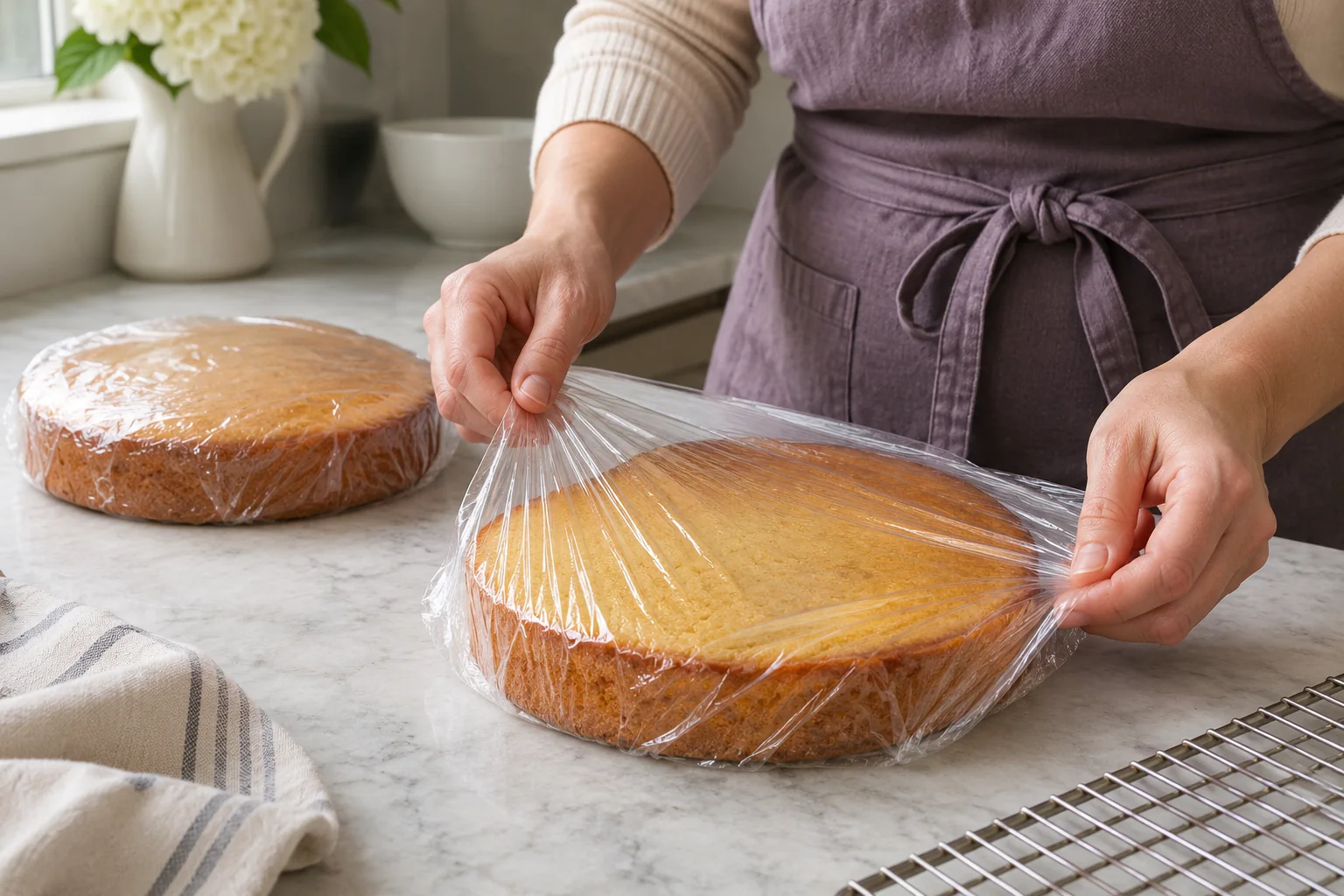
Bake layers or sheets ahead only as permitted by the recipe, cool fully and wrap to prevent drying. Refrigerate or freeze when appropriate. Prepare frosting and fillings on a separate schedule, considering safe storage. A layer cake needs additional assembly and chilling time. Plan those stages before the event instead of treating frosting as a ten-minute task.
Cutting and serving
A sheet cake can be portioned into regular rectangles with a clean knife and suitable spatula. Tall layer cakes may require careful cutting to avoid toppling portions; use a serving chart and a knife suited to the height. Wipe the blade between cuts for neat slices. Serve cream-filled or custard-filled cakes under appropriate cold-holding rules rather than leaving the full cake on the table all afternoon.
Troubleshooting an uneven sheet
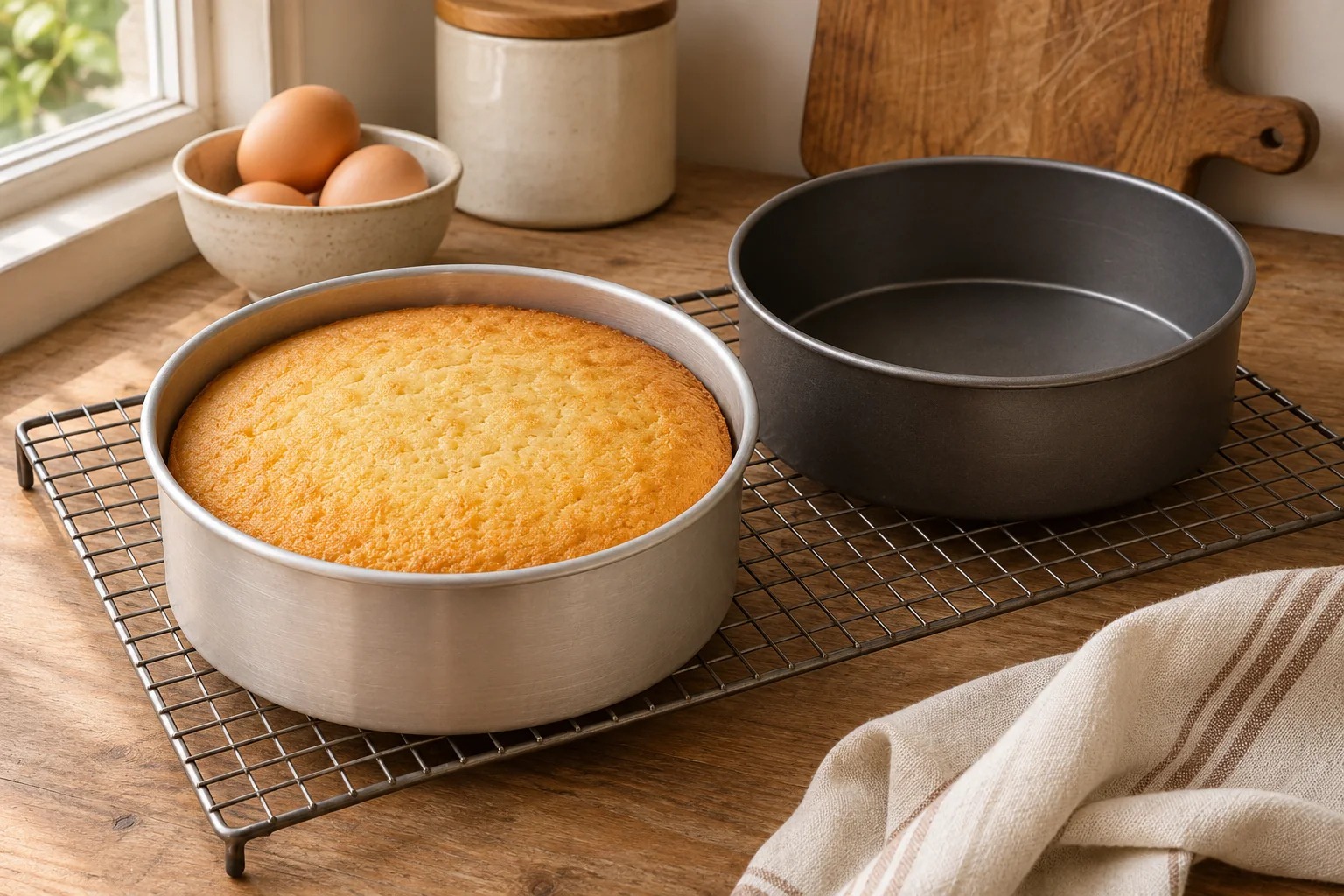
If one side rises higher, check whether the oven or rack is level, whether batter was spread uniformly and whether the pan warped. A slightly sloped top can be frosted smoothly, but significant raw spots need proper baking. Don't rely on thick frosting to conceal a structurally underbaked cake.
Troubleshooting sliding layers
A layer cake that leans may have domed layers, overly thick unstable filling, warm frosting or inadequate support. Chill as the formula directs and use a suitably firm filling. A buttercream dam may help contain soft curd, but it can't substitute for correctly supported tiers. If the stack is already unsafe to transport, don't attempt to fix it by adding more heavy decorations.

IN PICTURES
From the baking notebook
FROM THE RECIPE BOX


