Classic Yellow Sheet Cake Recipe

A tender, buttery yellow sheet cake with a velvety texture and rich vanilla flavor that's perfect for celebrations or everyday indulgence.
Difficulty:
Beginner
Prep Time:
20 mins
Cook Time:
35 mins
Serves:
1 cake (18 slices)
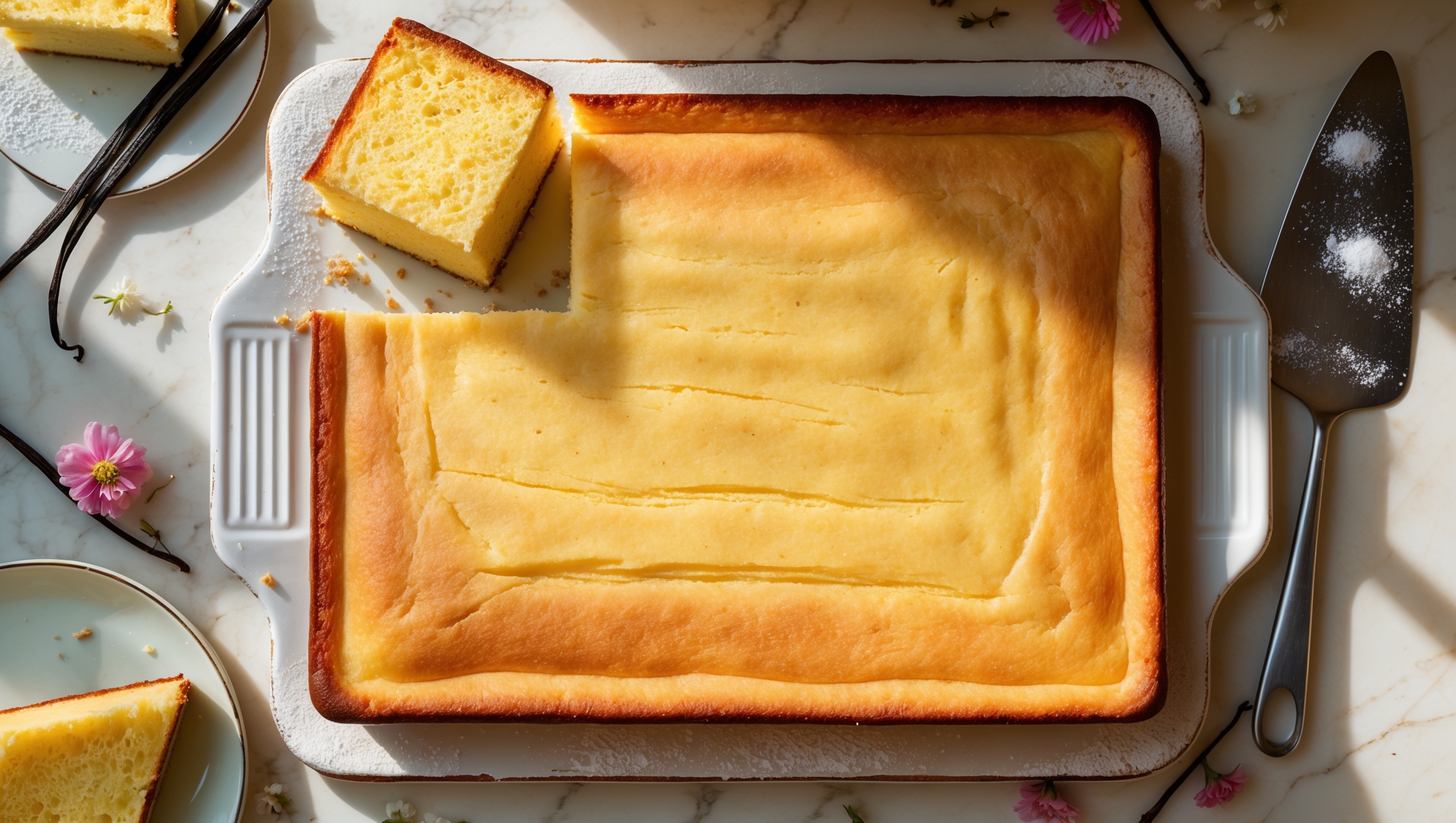
An overhead shot of a golden-hued yellow sheet cake with perfectly even height and a smooth top, photographed in warm natural light streaming through a kitchen window. One corner features a neatly cut slice revealing the cake's moist, fine crumb structure. The cake rests on a vintage white ceramic platter against a light marble countertop, with vanilla beans and fresh flowers scattered artfully around. A cake server sits nearby, ready to portion the next slice, while a delicate dusting of powdered sugar highlights the cake's soft texture. The composition captures both the cake's simple elegance and homey appeal, showcasing its perfect golden-yellow color that promises rich buttery flavor.

Ingredients

<ul class="ingredients-main-list"><li class="ingredients-single-item">280g all-purpose flour</li><li class="ingredients-single-item">2 tsp baking powder</li><li class="ingredients-single-item">1/2 tsp baking soda</li><li class="ingredients-single-item">1/2 tsp salt</li><li class="ingredients-single-item">170g unsalted butter, softened</li><li class="ingredients-single-item">300g granulated sugar</li><li class="ingredients-single-item">4 large eggs, at room temperature</li><li class="ingredients-single-item">2 tsp pure vanilla extract</li><li class="ingredients-single-item">240ml buttermilk, at room temperature (or 235ml milk + 1 tbsp lemon juice)</li></ul>

Equipment

<ul class="equipment-main-list"><li class="equipment-single-item">23×33cm (9×13-inch) baking pan</li><li class="equipment-single-item">Electric mixer (stand or hand mixer)</li><li class="equipment-single-item">Parchment paper</li></ul>
BAKE SMARTER

Kitchen Converter

Quickly switch between common baking units without leaving the recipe.

Convert
Result—

Volume uses US cups, tablespoons, and teaspoons. Converting weight to volume depends on the ingredient.

Directions

<ol class="no-list-style"><li class="MethodStepper"><h4 class="step-title">Step 1</h4>Preheat your oven to 175°C (350°F). Line your 23×33cm (9×13-inch) baking pan with parchment paper, leaving some overhang on the sides for easy removal, then lightly grease the parchment and any exposed pan.</li><li class="MethodStepper"><h4 class="step-title">Step 2</h4>In a medium bowl, whisk together the flour, baking powder, baking soda, and salt until well combined. This even distribution of leavening agents ensures your cake will rise uniformly.</li><li class="MethodStepper"><h4 class="step-title">Step 3</h4>In a large bowl using an electric mixer, beat the softened butter on medium-high speed until creamy, about 1 minute. Add the granulated sugar and continue beating for 3-4 minutes until the mixture becomes light and fluffy. This extended creaming process incorporates air into the batter, which helps create the cake's tender structure.</li><li class="MethodStepper"><h4 class="step-title">Step 4</h4>Add the eggs one at a time, beating well after each addition until fully incorporated. Scrape down the sides of the bowl as needed. The mixture might look slightly curdled – that's completely normal! Mix in the vanilla extract until combined.</li><li class="MethodStepper"><h4 class="step-title">Step 5</h4>Reduce the mixer speed to low. Add the dry ingredients in three portions, alternating with the buttermilk in two portions (beginning and ending with the dry ingredients). Mix just until combined after each addition – overmixing at this stage will develop too much gluten, resulting in a tough cake.</li><li class="MethodStepper"><h4 class="step-title">Step 6</h4>Pour the batter into your prepared baking pan and smooth the top with a spatula. Tap the pan gently on the counter a few times to release any large air bubbles.</li><li class="MethodStepper"><h4 class="step-title">Step 7</h4>Bake in the preheated oven for 32-38 minutes, or until the cake is golden on top and a toothpick inserted into the center comes out clean with just a few moist crumbs. If you notice the top browning too quickly, loosely cover with aluminum foil for the remaining bake time.</li><li class="MethodStepper"><h4 class="step-title">Step 8</h4>Allow the cake to cool in the pan for 15 minutes, then use the parchment paper overhang to lift it out onto a wire rack to cool completely. The cake must be fully cooled before slicing to allow the crumb structure to set properly – cutting too early can cause the cake to become gummy.</li><li class="MethodStepper"><h4 class="step-title">Step 9</h4>Once cooled, the cake is ready to serve as is, dusted with powdered sugar, or frosted with your favorite topping. For the best flavor and texture development, you can also wrap the cooled cake tightly in plastic wrap and let it sit at room temperature overnight before serving.</li></ol>
Nutrition Facts (per serving)

🍽️ Serving Size: 1 slice
🔥 Calories: 235 calories
🥑 Fat: 10 g
🧈 Saturated Fat: 6 g
🍞 Carbohydrates: 35 g
🍭 Sugar: 22 g
🍗 Protein: 3 g
🫀 Cholesterol: 65 mg
🧂 Sodium: 165 mg

Chef’s Notes

A few helpful details for making this recipe.

Why does my sheet cake sink in the middle after baking?

A sunken middle often indicates underbaking, opening the oven door too early, or incorrect oven temperature. Ensure your oven is properly calibrated, don't peek during the first 25 minutes of baking, and check for doneness with a toothpick before removing from the oven.

Can I make this yellow cake recipe without buttermilk?

Absolutely! Create a homemade substitute by adding 1 tablespoon of lemon juice or white vinegar to 235ml of regular milk and letting it sit for 5 minutes. Plain yogurt thinned with a bit of milk or sour cream diluted with milk also works wonderfully.

How do I ensure my sheet cake has a moist, tender crumb?

For a moist sheet cake, don't overmix the batter once you add flour (this develops gluten), measure ingredients precisely, use room temperature ingredients, and don't overbake. The buttermilk adds moisture, and wrapping the cooled cake overnight allows flavours to develop and moisture to redistribute.

Want to try something else in ...

More recipes you might like

Keep exploring with more recipes from What's Baking.