On this page
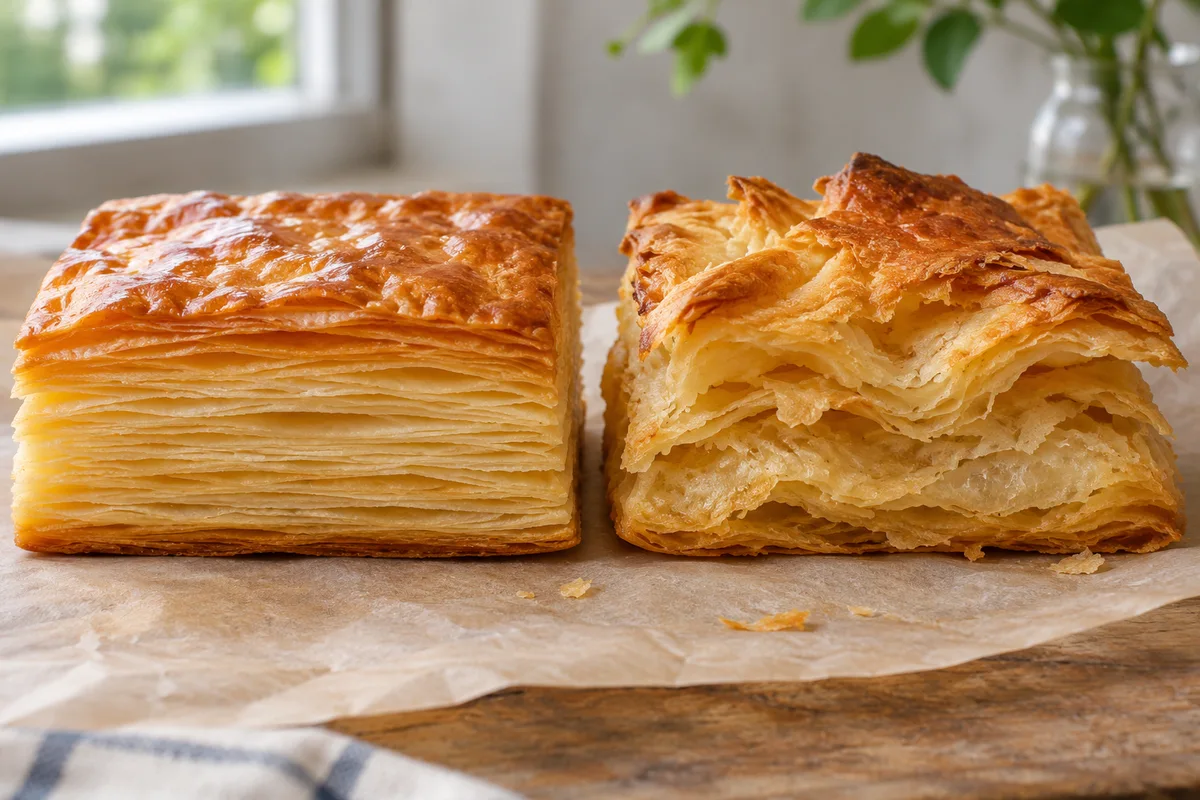
Look at the cut edge of each pastry. Classic puff starts with a continuous sheet of butter, while rough puff starts with visible pieces that flatten as you roll. Both can lift into crisp flakes. The choice is whether your finished bake needs tidy, uniform sheets or a more irregular crust.
What makes pastry puff
In laminated pastry, dough layers are separated by fat. As moisture turns to steam in the oven, layers lift apart while starch and proteins set. Butter contributes flavor and helps maintain separation. Both traditional and rough puff use this principle, although their butter distribution differs. A good result needs cold-enough butter, proper dough thickness and sufficient oven heat for expansion.

Classic puff pastry begins with a butter block
Traditional puff often uses a détrempe, or base dough, surrounding a prepared rectangular butter block. The butter is rolled into a continuous sheet between dough layers during successive turns. This requires careful control of butter and dough firmness. When executed well, the lamination can be relatively regular, giving dramatic even lift for certain pastries.
For another full lamination method, 81-Layer Reverse Puff Pastry with Cultured Butter reverses the usual arrangement of dough and butter.
Rough puff begins with butter pieces
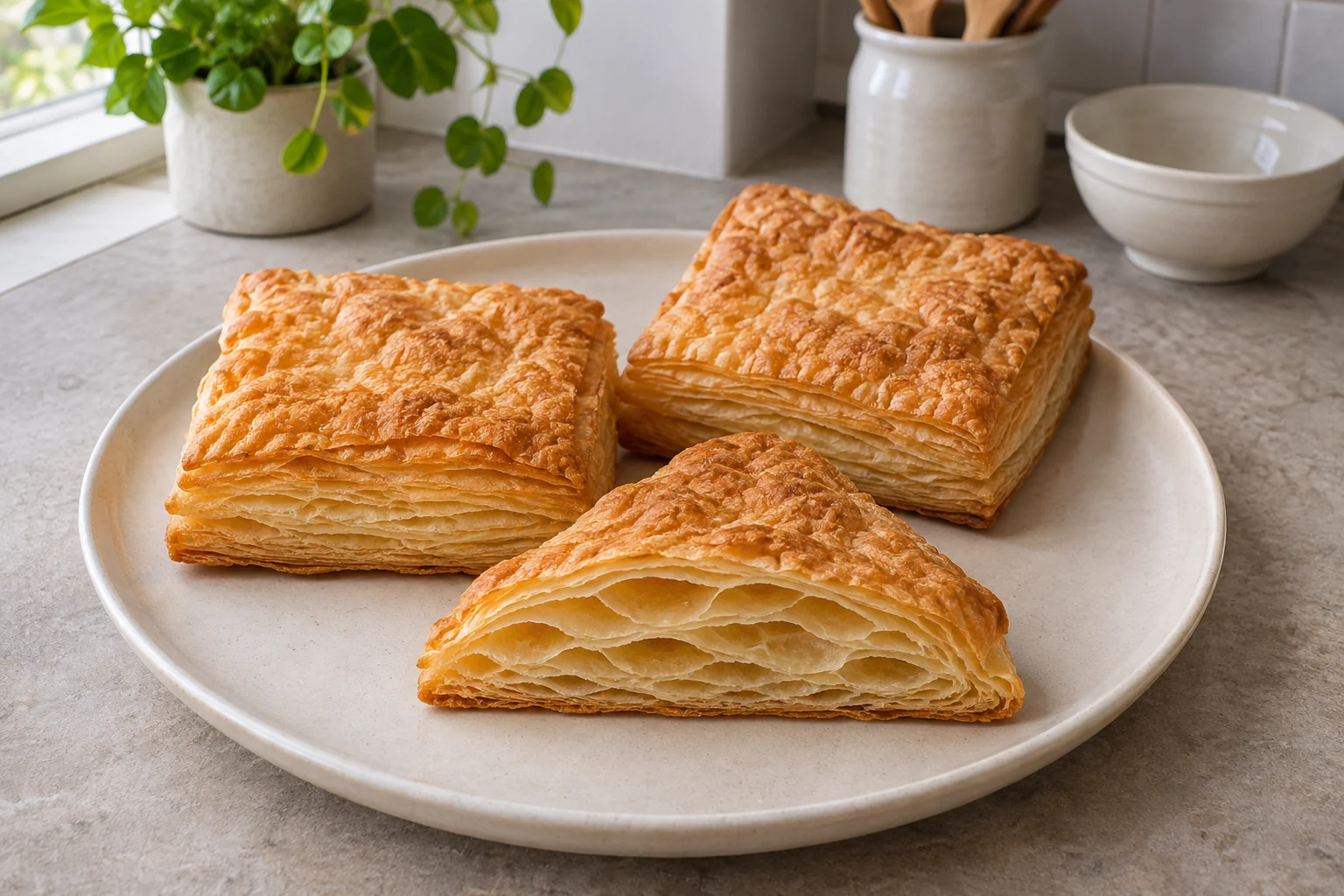
Rough puff typically uses cold butter chunks or coarse flakes worked into the dough rather than a separate full butter block. Rolling smears those pieces into irregular sheets that become layered through folds. The method is less precise but often more forgiving for a busy home baker. Large intact butter pieces are part of the design; blending everything to fine sand loses the intended flakiness.

Time is the practical difference
Classic puff involves a deliberate lock-in, multiple turns and controlled chilling intervals, often across a longer preparation schedule. Rough puff can reduce initial assembly time, though it still benefits from resting and chilling. Neither method can ignore butter temperature. A warm rushed rough puff may leak and bake heavy despite its reputation as quick pastry.
How much butter?
Both approaches are rich in fat, but the exact butter percentage depends on the source formula and intended use. A rough puff may have a different ratio from a formal puff pastry, and more butter isn't always better. Excess fat can smear or leak; too little may reduce lift. Choose a tested recipe and measure by weight rather than guessing with spoonfuls.
Flour choice and gluten
The base dough needs enough structure to hold thin layers without tearing but enough extensibility to roll repeatedly. Some recipes blend flour types for that balance. Too much gluten tension can make dough shrink, while weak dough may rupture. Follow the specified flour and resting time rather than assuming high-protein bread flour creates superior puff pastry.
Cold butter matters in both
Butter should be firm but workable. If it becomes greasy, the layers may merge; if brittle, it can shatter through dough. Rough puff tolerates more irregularity but still needs visible pieces that can flatten into layers. Traditional puff particularly benefits from butter and dough having compatible firmness during rolling. The ideal handling temperature changes with ingredients and kitchen conditions.

The rolling surface
Use a clean flat lightly floured surface, a rolling pin and enough space to form a consistent rectangle. Too much bench flour between folds can create dry seams; too little may let butter-rich dough tear against the counter. Brush away excess flour before folding as directed. A kitchen scraper helps lift sticky edges without dragging and tearing the developing lamination.

Folding creates layers
A simple turn commonly folds dough into thirds, while some methods use book folds with four sections. The exact number and sequence affect layer count and dough handling. Don't add turns indefinitely in the belief that more layers always create more height; butter can smear and gluten can become tight. Record each turn and orientation so you can follow the original method.

Why chilling intervals are useful
Resting in the refrigerator firms butter and lets gluten relax, making the next roll less likely to tear or resist. A dough that springs back immediately may need a rest even if butter remains cool. Cover properly so the surface doesn't dry out. Following the chosen recipe's timing is more reliable than rolling through every fold at once.

How classic puff looks in the oven
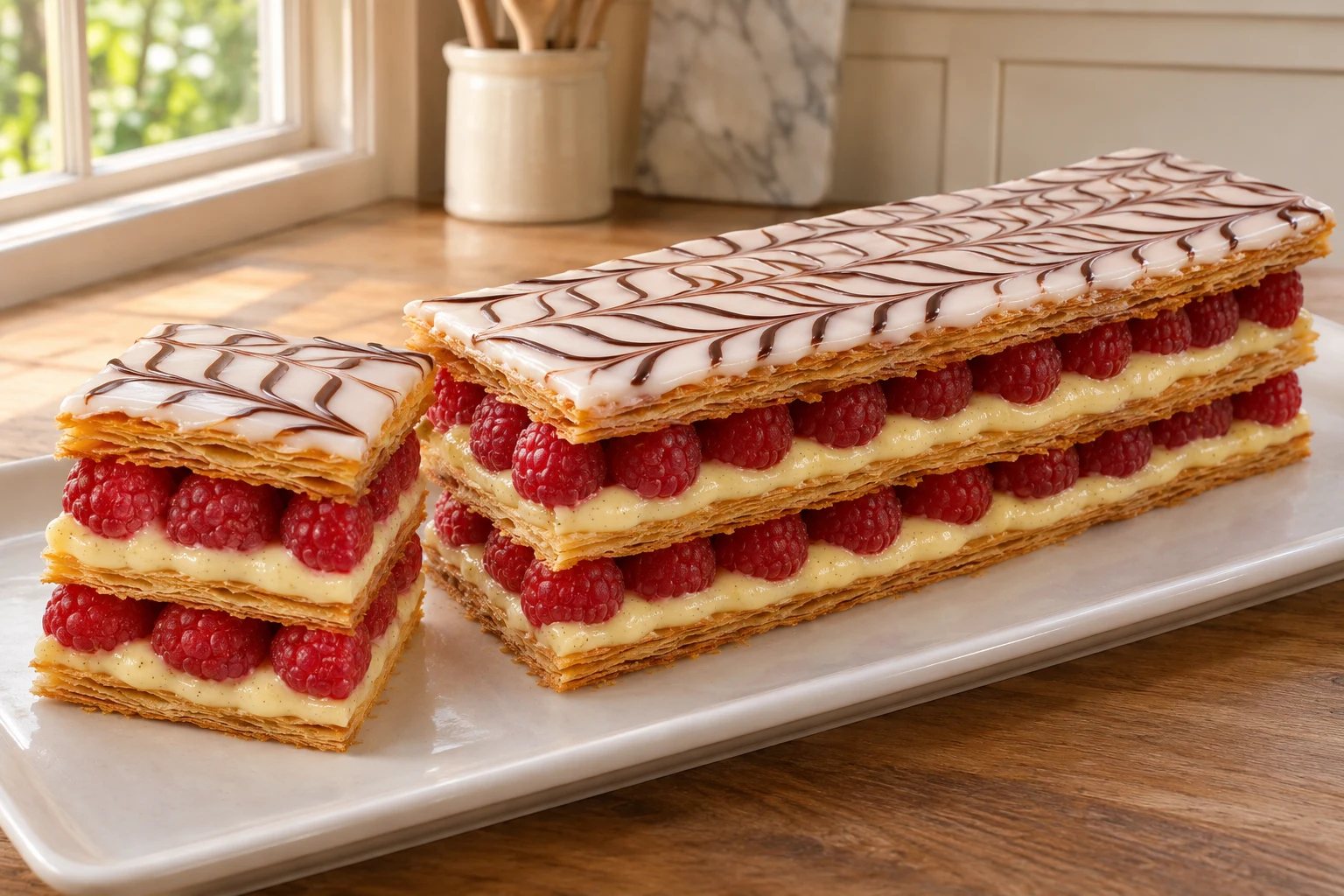
Well-made traditional puff may expand into many distinct layers and hold a relatively regular shape. This can be advantageous for mille-feuille, palmiers or precision pastry cases. But recipe, thickness, docking and baking method still determine height. A poor classic puff can underperform a carefully made rough puff, so the name alone doesn't guarantee superior results.
The straight pastry edges in Raspberry Mille-Feuille make uneven lift easy to spot.
How rough puff looks
Rough puff often produces pronounced flaky pieces and irregular lift rather than the fine uniform structure of classic lamination. For pies, tarts and turnovers, that rustic appearance can be appealing. Some modern rough puff formulas are remarkably lofty when prepared properly. The result is not automatically dense or inferior; it's a different balance of speed and precision.
Best uses for rough puff
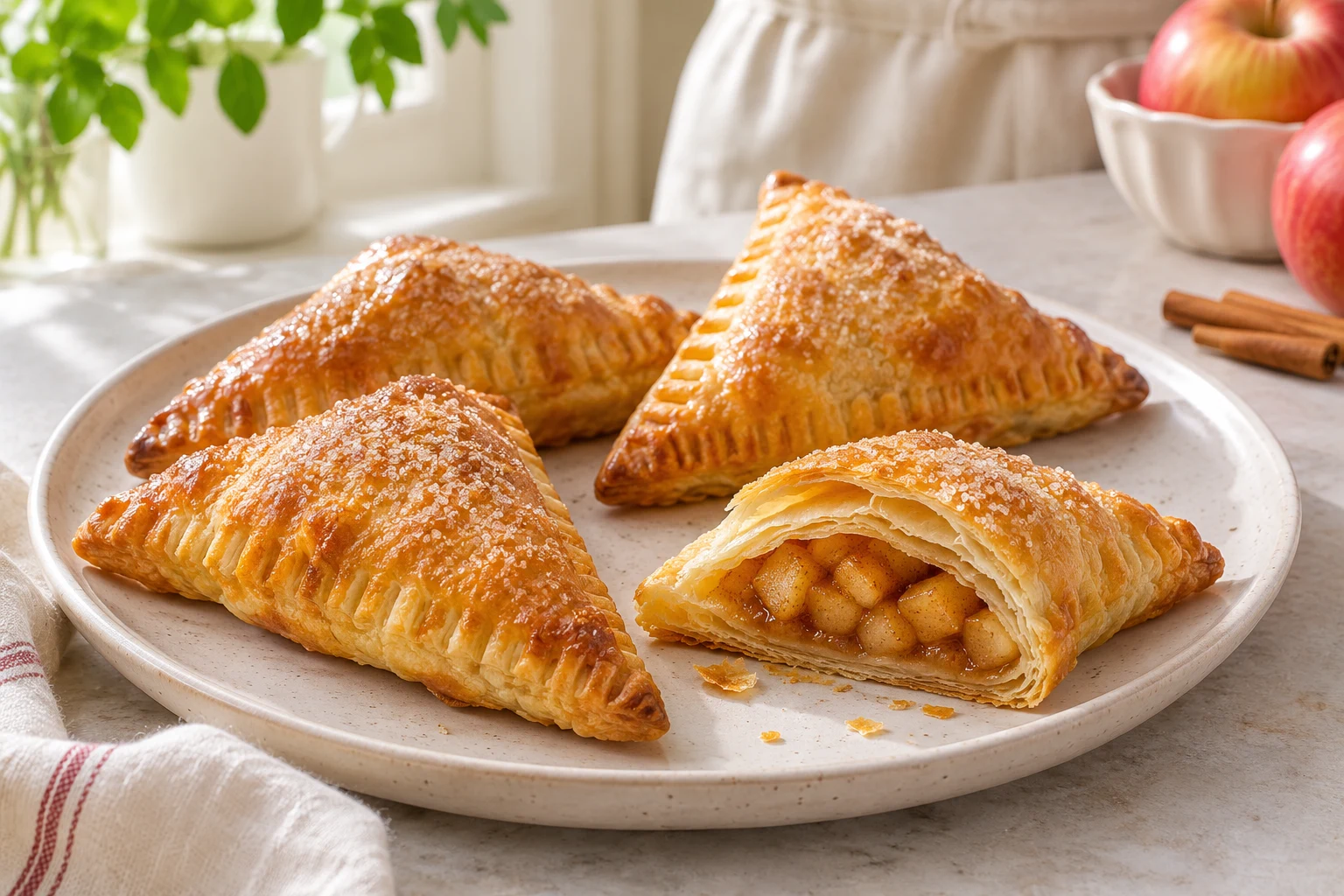
Hand pies, savory twists, galettes, sausage rolls and quick fruit tarts often work beautifully with rough puff when the recipe supports it. Its irregular flaky texture complements rustic presentations. Choose the specific pastry formula for the filling weight and shape; a wet heavy fruit filling can still make the bottom soggy regardless of lamination quality.
For a filled pastry such as Apple Turnovers, the seal and the thickness of the rolled sheet matter as much as a neat edge.
Best uses for classic puff
Napoleons, delicate vol-au-vents and pastries needing precise even layers may benefit from classic puff. It can also be used for simple savory or fruit pastries when time permits. A perfect puff sheet isn't necessary for every homemade tart, so reserve the more demanding method for projects where its regularity genuinely matters.
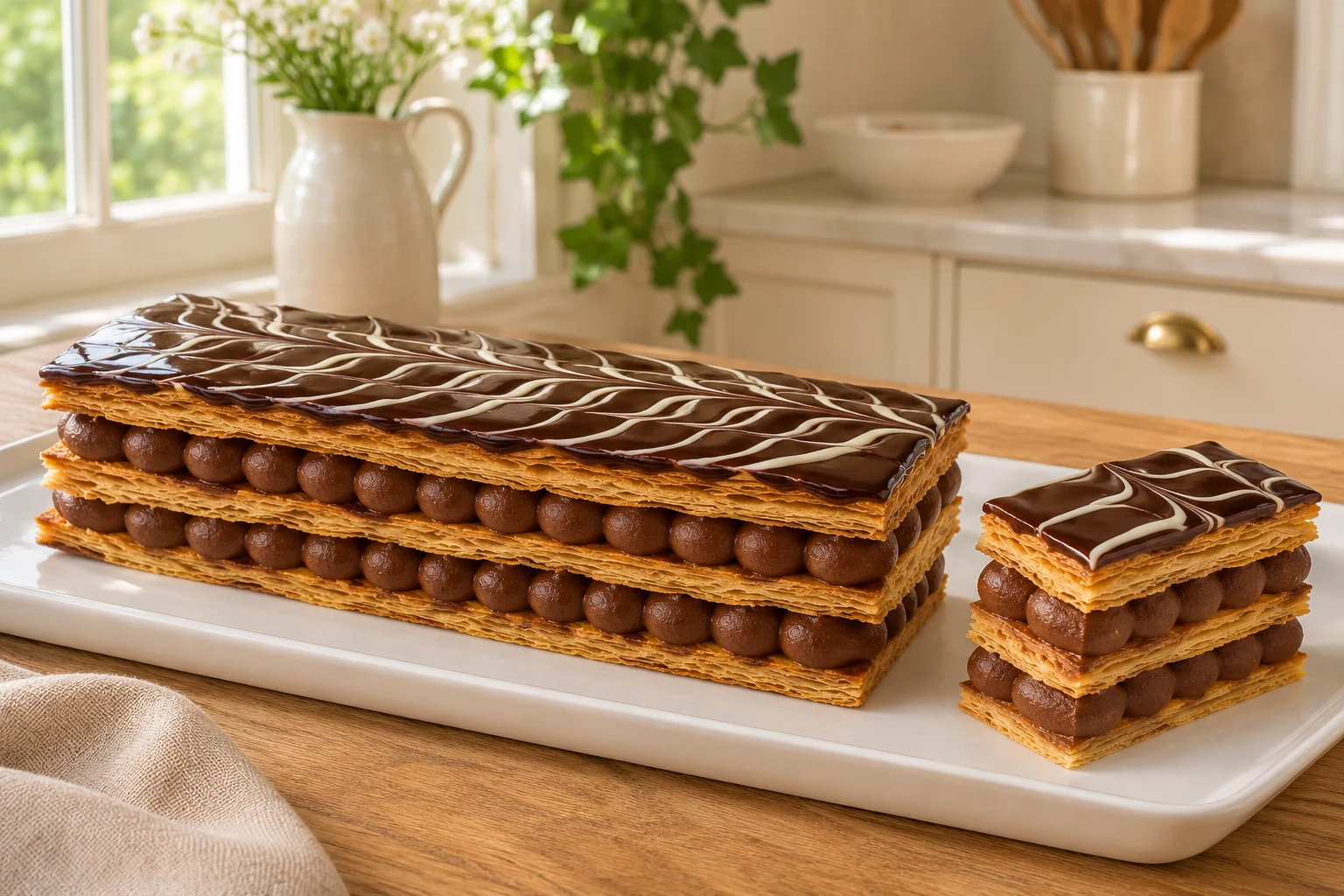
The stacked sheets in Chocolate Mille-Feuille show why a uniform thickness is valuable.
Croissants are different
Classic croissants use yeast-leavened laminated dough rather than conventional unleavened puff pastry. Their proofing stage and final crumb depend on fermentation as well as butter lamination. You cannot make ordinary croissants merely by cutting puff pastry into triangles and rolling them, although the result may be a pleasant crescent-shaped pastry. The formulas serve different purposes.
Compare the yeast and final proof in Classic Croissants with the bake for unyeasted puff.

Pie dough isn't rough puff either
Flaky pie crust often uses cold fat pieces and gentle mixing, which makes it related in spirit to rough puff. But pie dough may use fewer folds and aims for a crust that supports filling rather than maximum vertical lift. A rough puff sheet can make a great pie top in a tested recipe, but it may not be the right choice for every blind-baked bottom crust.
Cut clean edges
A sharp knife or pastry wheel can cut without compressing the exposed layers excessively. A dull blade or heavy pressure may press butter and dough together at the edge, restricting rise. Follow the recipe's trimming and assembly method, especially when cutting shapes that rely on free expansion. Avoid smearing egg wash over cut sides where it could glue layers together.
Look at the cut face of Palmiers before baking to see where the layers will open.

Docking and weighting
Some puff pastry applications require docking with a fork or baking under weights to keep the base relatively flat. A mille-feuille sheet may intentionally remain low and crisp, while a vol-au-vent should rise dramatically. The same dough can produce different heights because of shaping and baking method. Use the correct approach for the finished pastry instead of judging all flat puff as failure.
Why pastry leaks butter
Butter that melts or breaks through layers before the dough sets can pool on the pan. Causes include excessive warmth, torn dough, unsuitable butter plasticity and poor oven conditions. Rough puff is not immune to leaks. If a tray is greasy, inspect how the dough looked during folding and whether the oven was preheated properly before changing the butter amount.

Why pastry doesn't rise
Warm smeared butter, compressed cut edges, overworking, underbaking or heavy wet filling can reduce lift. Insufficient chilling may contribute, but adding endless folds won't restore lost lamination. Compare plain test pieces baked without filling; if they puff well, the filling or assembly may be the main issue. If plain pieces stay flat, revisit dough handling and oven heat.
Store and freeze correctly
Many tested puff pastry doughs can be chilled briefly or frozen after appropriate wrapping. Label the dough and follow the source's safe storage limits. Some recipes recommend freezing shaped unbaked pastries for convenience. Butter-rich dough that thaws too warm can become greasy; let it reach the intended working consistency rather than forcing a rock-hard block with the rolling pin.
Commercial pastry sheets
Store-bought puff pastry can be an excellent shortcut for weeknight tarts, but brands differ in butter versus other fats, thickness and sheet dimensions. Read thawing and baking instructions. A commercial sheet isn't automatically classic all-butter puff. If you want a particular buttery flavor, check the label rather than assuming every freezer product uses the same formulation.
A simple practice comparison
Prepare a trusted rough puff and a traditional puff formula on separate days, using the proper butter and flour for each. Cut equal small plain rectangles and bake with comparable oven and pan conditions where appropriate. Note expansion, crumb layering and active work time. This is more informative than declaring rough puff inferior because it is faster to make.
Choosing the right method
Use rough puff when you want flavorful flaky pastry with a manageable schedule. Choose classic puff when precision and consistent layers are central to the finished dessert. Both require controlled butter, measured folds, good rests and a properly heated oven. Technique matters more than the prestige attached to a recipe name.
IN PICTURES
From the baking notebook
FROM THE RECIPE BOX


