On this page
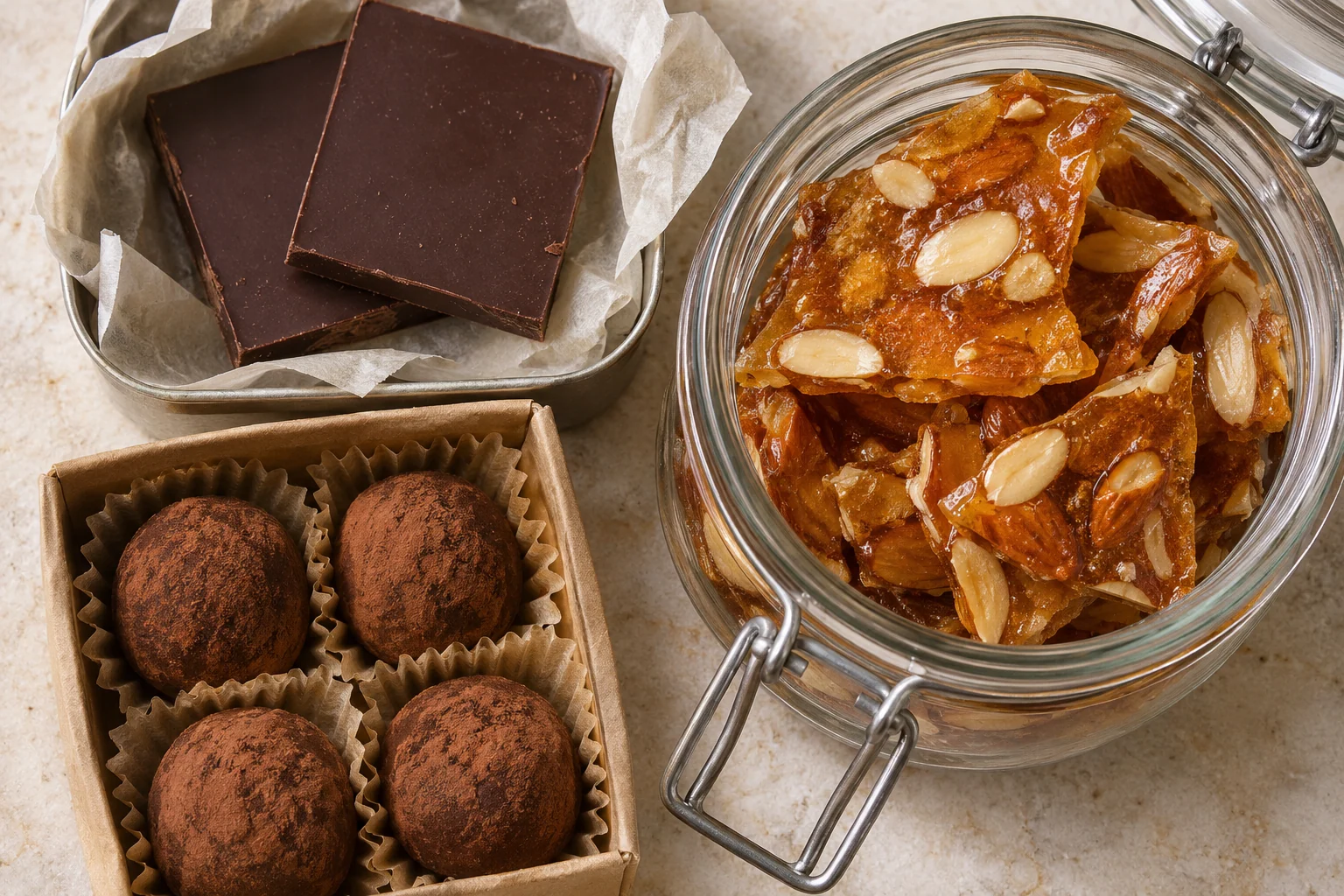
A crisp shard of brittle and a cocoa-dusted truffle can fit in the same gift box, but they rarely belong in the same place overnight. The brittle picks up moisture and loses its snap. The truffle has a perishable centre even when its chocolate coating feels firm. Look at the inside of a sweet before choosing its wrapper or shelf.
Separate three different categories
Set out three containers. One holds plain solid chocolate, another holds fully cooled hard candy or brittle, and a third is for sweets with fresh cream, cream cheese, custard or fresh fruit. The first two groups need protection from moisture and odours. The third also needs a safe cold temperature. A mixed box takes the storage requirements of its most perishable piece.
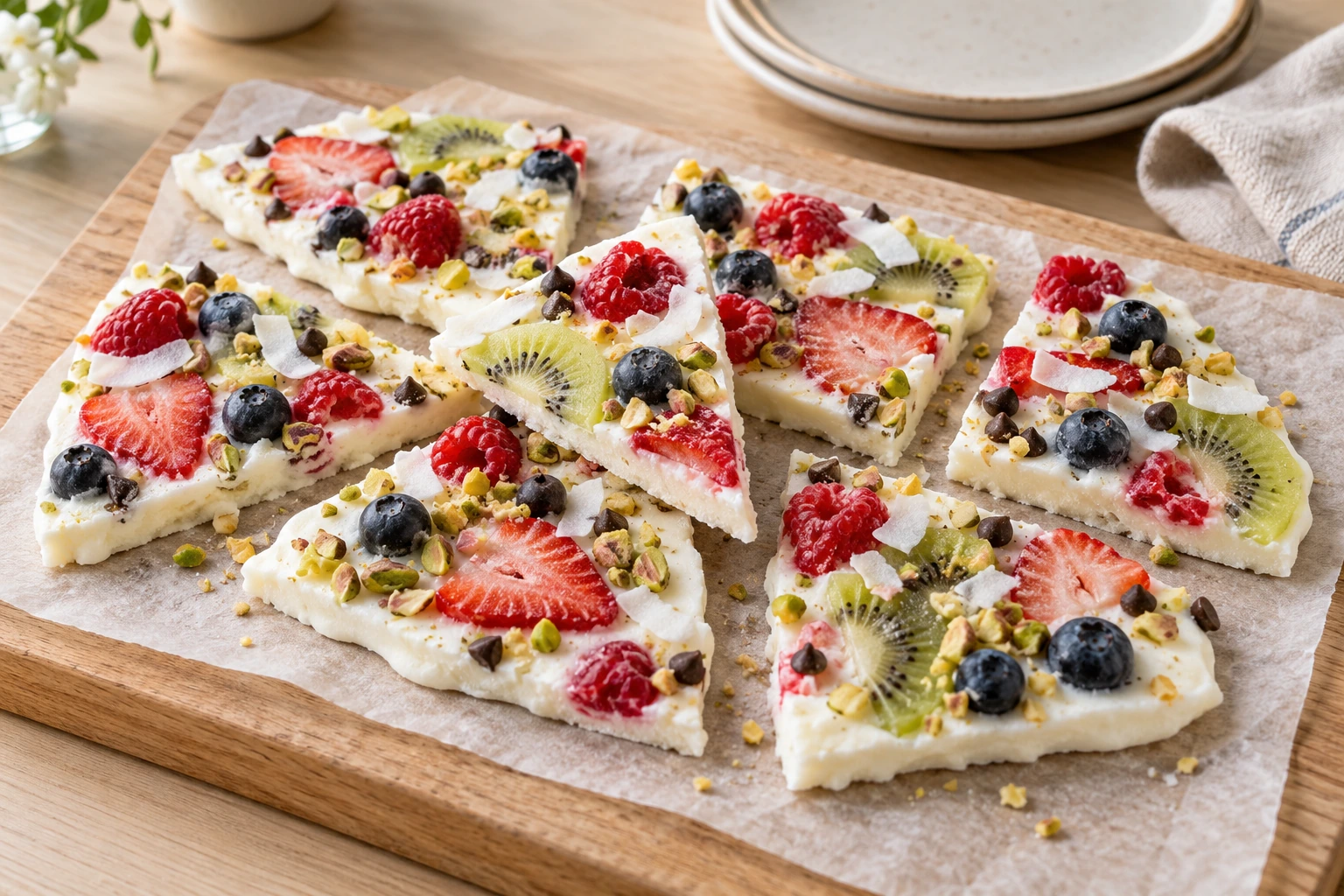
The name “bark” describes the shape of Frozen Yogurt Bark with Fruit. Its yogurt base needs freezer space even though it breaks into pieces like a chocolate slab.
The best environment for plain chocolate
Store well-tempered plain chocolate in a cool, dry place away from sunlight, cooking steam and strong smells. Consistency matters as much as the absolute temperature: repeated warming and cooling can alter cocoa butter crystals. Use clean, dry, food-safe packaging, and check the specific manufacturer's recommendation for chocolate made from purchased couverture. A pantry beside an oven or sunny window is rarely a suitable spot.

Why chocolate develops grey or white marks
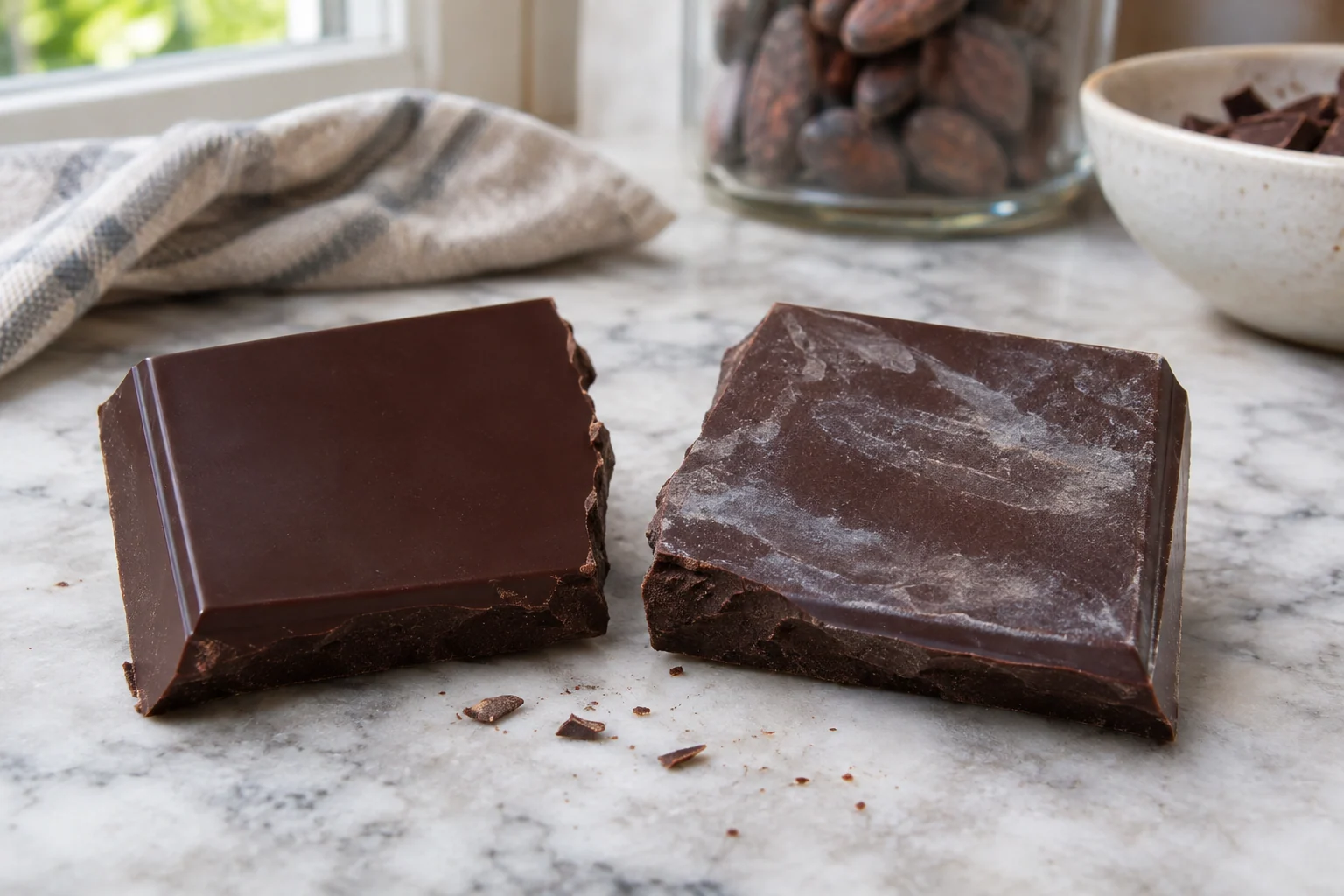
A streaky grey surface on solid chocolate can be fat bloom when cocoa butter moves or recrystallizes. A rough, pale patch can be sugar bloom after condensation dissolves surface sugar and the water evaporates. Both can spoil the finish while the bar still smells like chocolate. These clues explain a cosmetic defect only when you already know the bar and its storage history.
For White Chocolate Chip Cookies, use the packaging date and storage history to assess the cookies; a pale chocolate chip alone tells you very little about freshness.
Don't confuse bloom with mold
Dry grey bloom on otherwise sound chocolate differs from fuzzy growth, unusual odours or visibly spoiled inclusions. Handmade bars with fruit, nuts or fillings should be evaluated based on the most perishable component. Never rely on taste to decide whether a moist cream-filled candy was stored safely. If the food shows signs of spoilage or has exceeded appropriate safe handling limits, discard it.
When refrigeration makes sense
Refrigerate homemade cream-filled sweets promptly at 4°C (40°F) or colder. Keep them covered once cold and serve a few at a time. If plain, unfilled chocolate must be chilled in hot weather, seal it well and let the closed container warm gradually before opening it. That condensation precaution is for the plain bar. Keep the cream-filled box cold.
Once Chocolate Cream Cheese Sandwich Cookies are sandwiched, the cream cheese filling determines where the whole cookie goes.

Ganache centers are not shelf-stable by default
An ordinary homemade ganache centre contains water from the cream. A cocoa coating, a hard shell or a splash of alcohol gives you no reliable shelf life at room temperature. Date the container, refrigerate it promptly and follow the shorter storage period when the recipe or an ingredient calls for one. For serving, discard perishable pieces left at room temperature for more than two hours.
The whiskey in Manhattan Cocktail Truffle contributes flavour. The cream in the centre still calls for refrigeration.

Storing cocoa-dusted truffles
Cocoa powder can absorb moisture from a chilled truffle and turn dark or patchy. Keep truffles in a clean covered container with enough separation to prevent sticking, and apply a fresh light dusting close to presentation if the method allows. A decorative cocoa coating does not preserve the ganache inside. Safe storage remains determined by the filling and the recipe.
Keep Keto Chocolate Truffles in a shallow covered container. Refresh the cocoa coating just before serving if the surface has absorbed it.
Hard candy and brittles dislike humidity
Wait until brittle is completely cold before breaking and packing it. Put the shards in a clean, dry airtight tin with parchment between layers. Keep the tin away from steam from the kettle and give soft fruit or ganache its own container. Once a surface becomes sticky, more paper will separate the pieces but cannot restore the original snap.
For Toffee Custard Tart, protect the crisp toffee pieces from humidity and add them close to serving. The custard belongs in the refrigerator.

Chewy caramels are different from hard candy
Soft caramels have a higher final moisture content than glassy brittle and may change firmness over time. Wrap individual pieces in suitable food-safe candy papers or the material recommended by the recipe, then store at the stated temperature. Homemade cream caramels are not guaranteed shelf-stable; cooking temperature alone doesn't establish an approved long ambient shelf life for every formulation.
Keep Caramel-Filled Ginger Cookies apart from thin brittle. The texture you want to preserve is a soft centre inside a baked cookie.

Packaging crisp and soft pieces together
A moist chewy caramel can transfer water vapour to a crisp chocolate biscuit or brittle when enclosed in the same compartment. Keep different textures in separate food-safe inner wraps, even when giving them in one gift box. This reduces sticking and preserves crispness. Never package sweets while still steaming or warm enough to generate condensation inside the container.
For Caramel Chocolate Cheesecake with Praline Pecans, pack the praline pecans separately while the cheesecake chills and add them shortly before slicing.

How odours affect chocolate
Cocoa butter can absorb nearby odours. Open chocolate stored beside strong spices, onions or fragranced products may taste strange despite looking normal. Seal chocolate before placing it in an ordinary pantry or refrigerator, and avoid putting scented candles or soaps directly beside unwrapped chocolate gifts. Good packaging protects both flavour and appearance.
The orange in Dark Chocolate and Orange Tart is intentional. Cover the chilled tart so onion or garlic aromas from the fridge do not become part of the filling.
Molded chocolate and bark
Tempered chocolate bars and bark should be allowed to set properly before packaging. A warm bar slipped into plastic can develop condensation or lose its polished finish. Chocolate bark topped with freeze-dried fruit, cookies or nuts may have a different ideal storage window from plain chocolate because additions can contain moisture, fat or allergens. Use the most restrictive guidance among the components.
Once cooled, Chocolate Chunk Cookies can have their own cookie tin. Putting them in with cold truffles exposes the cookies to unnecessary moisture.
Fresh fruit and chocolate-dipped strawberries
Fresh berries have high moisture and remain perishable after dipping. They should be washed, dried, coated and refrigerated using a safe tested method, then enjoyed within a short recipe-supported period. Ordinary tempered chocolate storage rules do not apply to a juicy strawberry beneath the shell. Condensation can also make the coating unattractive, so prepare these treats near the intended serving time.
Assemble Air Fryer Chocolate Covered Strawberry S'mores close to serving. A coating of chocolate cannot turn a fresh strawberry into a pantry confection.

Freezing chocolate: what changes
Freeze only sweets that suit it. Wrap a small test portion tightly, date it and see how the texture stands up after thawing. Thaw cream-filled items in the fridge and keep them cold. Plain, sealed chocolate can warm gradually before you unwrap it. A frozen yogurt bark or ice cream sandwich should come straight from the freezer when you are ready to eat it.
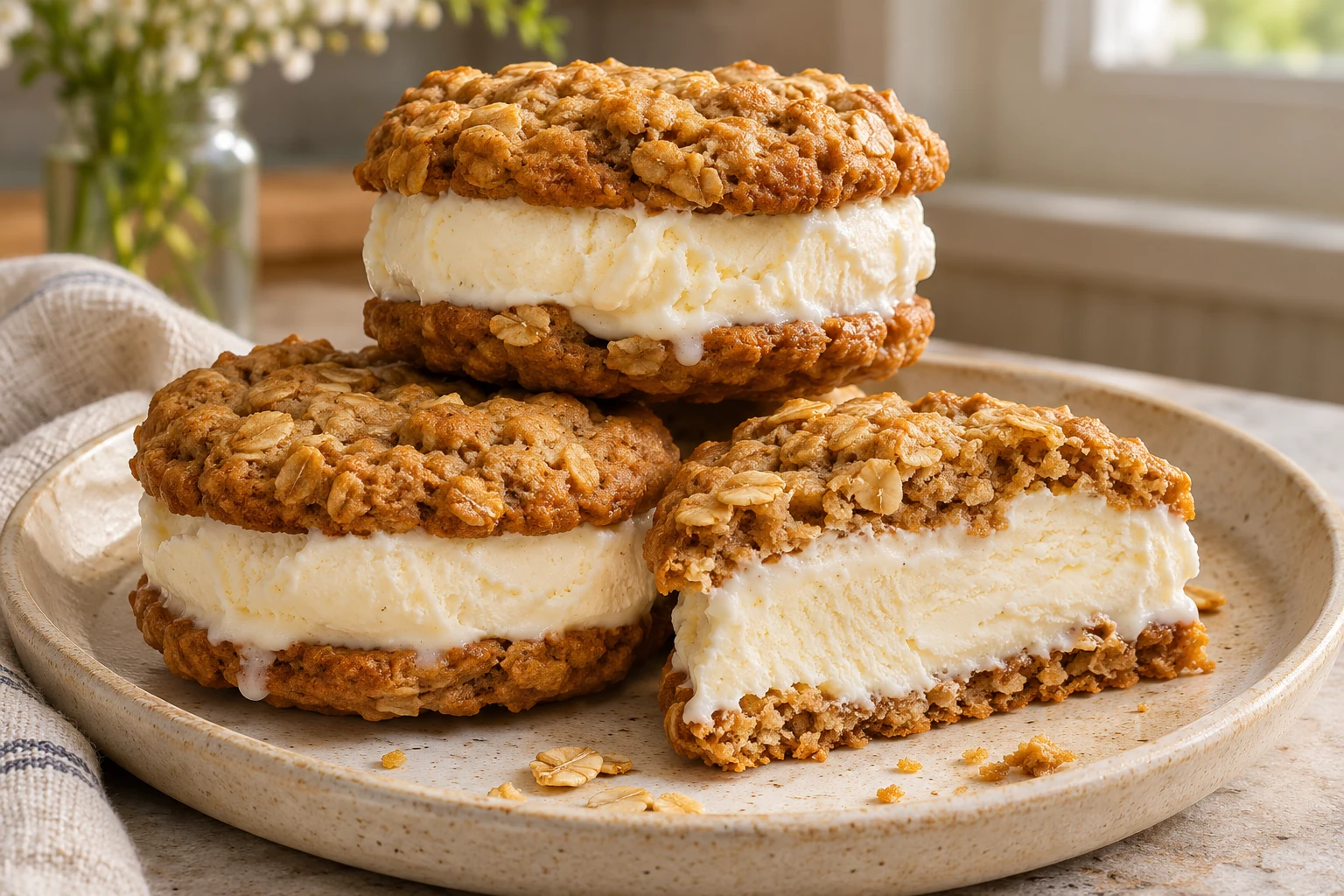
Wrap Oatmeal Cookie Ice Cream Sandwich Cookies individually in the freezer so one can be taken out without softening the rest.
Storage in hot weather
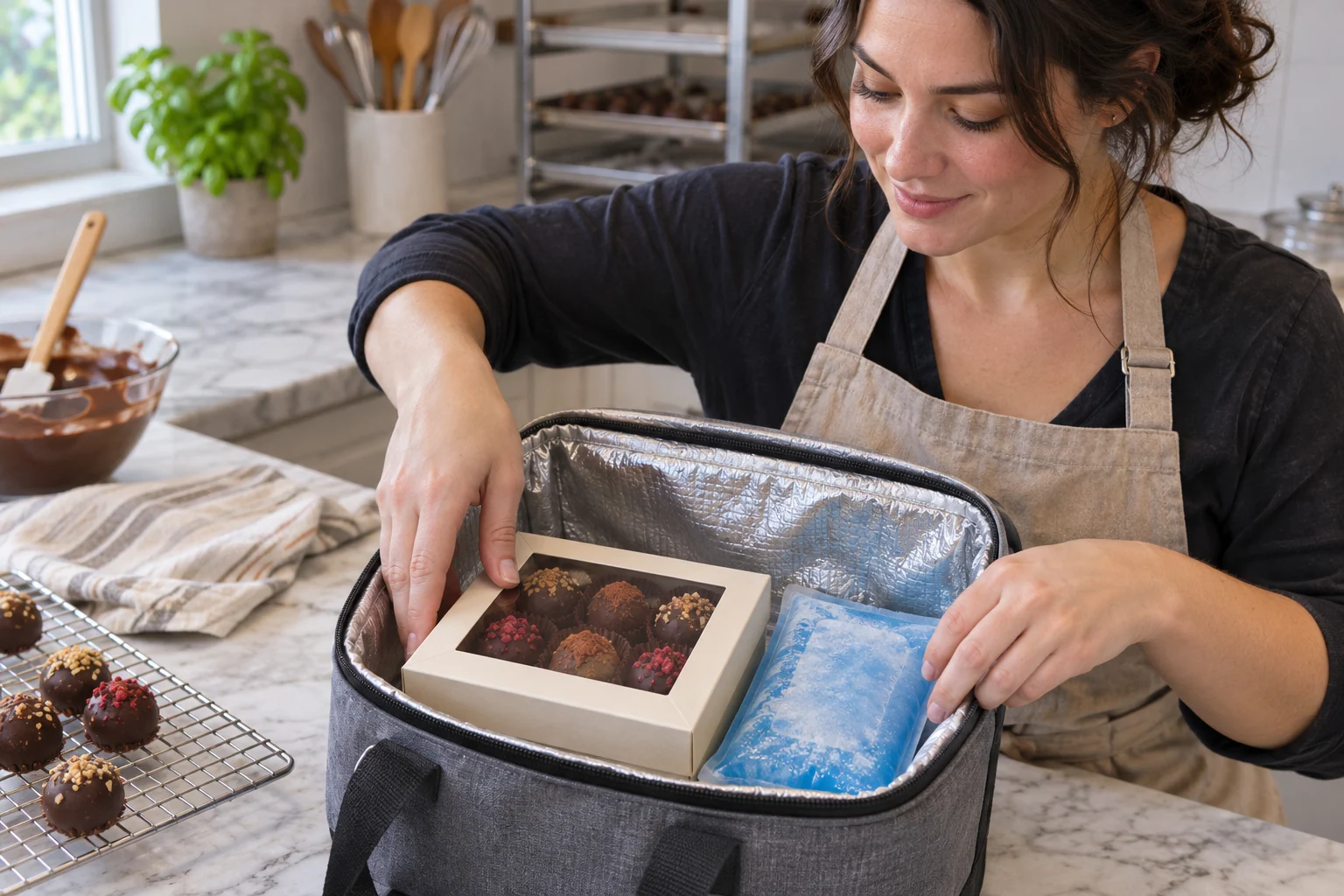
Summer heat can soften chocolate or make tempered pieces lose their snap. Avoid leaving chocolates inside a parked car or near a sunny window. For gifts, consider whether shipping trucks and doorsteps can stay within safe conditions. When stable cold transport isn't possible for cream-filled sweets, choose a dry recipe or defer mailing rather than gambling on the weather.
Bring White Chocolate Raspberry Cheesecake to a summer gathering in a cooler with cold packs, then transfer it to the host’s refrigerator.

Gift boxes and presentation
Use clean food-safe cups, dividers and secure containers so candies don't knock together. Include a short ingredient and allergen label, preparation date and clear storage directions. If you don't know a verified shelf life, don't print one confidently for the sake of an attractive label. A recipient needs honest information more than an invented promise that a homemade ganache will last indefinitely.
Allow the coating on White Chocolate Dipped Ginger Cookies to set before layering the cookies with parchment. Give chilled cream-filled pieces their own box.
How to assess quality before serving
Check the date, ingredients and temperature history before you check the finish. Dry bloom on a known plain bar is a quality issue; fuzz, wet spots of uncertain origin and a perishable centre left warm are reasons to discard the item. Smell and taste cannot confirm that a cream-filled sweet stayed safe.
Common storage questions
Should you refrigerate every chocolate bar? Not necessarily; plain chocolate prefers a stable, dry environment. Can you store truffles in a decorative tin on the counter? Only if the tested filling permits that. Does white bloom mean mold? Not always, but inspect the product. Can candy be packaged hot? No, trapped moisture can ruin texture. Can freezing undo unsafe storage? No; freezing is not a way to make spoiled candy safe.
The storage rule that matters
Protect dry chocolate from heat and moisture, crisp sugar candy from humidity, and filled confections from temperature abuse. Package different textures separately and treat every cream or fruit filling as its own food-safety question. This approach preserves both the appearance and safety of treats made with care.
A storage checklist for a party
Sort confections before arranging them on a platter. Plain chocolate may tolerate a different environment from cream truffles, fruit-dipped chocolate and chewy dairy caramels. Label any platter requiring refrigeration and bring out only a serving quantity. Use food-safe tongs and keep different allergen-containing candies apart. Return safe leftovers to their appropriate storage promptly; never combine exposed warm buffet sweets with fresh chilled candies without considering temperature history.
Reserve a spot in the fridge for Keto Chocolate Fudge. Its cream cheese makes the storage decision easy even if the squares look like ordinary fudge.

How to avoid gift-box surprises
Assemble a sample box a day before giving it. Check whether cocoa powder rubs onto nearby pieces, hard candy sticks to wrappers or chocolate transfers its odour to another item. Use individual compartments and a small ingredient card. A beautiful gift should still be practical for the recipient, especially when part of the assortment must go straight into the refrigerator.
A practical label before sharing
Put the storage instruction where the recipient will see it before opening the box. A truffle label might read “Dark chocolate cream truffles. Keep refrigerated at 4°C or colder. Contains milk.” Add the date made, the use-by guidance for that recipe and any other relevant allergens. If the recipient cannot keep the box cold on the journey, choose a different gift.
IN PICTURES
From the baking notebook
FROM THE RECIPE BOX


