
On this page
To make 1 cup of quick vegan buttermilk for baking, add 1 tablespoon of lemon juice or food-grade white vinegar to a measuring cup. Pour in enough unsweetened plant milk to reach the 1-cup mark, stir and let it sit for 5 minutes.
How to make vegan buttermilk
- Measure the acid first. Use 1 tablespoon of lemon juice or food-grade white vinegar.
- Add unsweetened plant milk. Fill the measuring cup to the 1-cup line. Use the type of milk your recipe specifies.
- Stir and rest for 5 minutes. Use the amount your recipe calls for. Some plant milks look slightly curdled, while others stay mostly smooth.
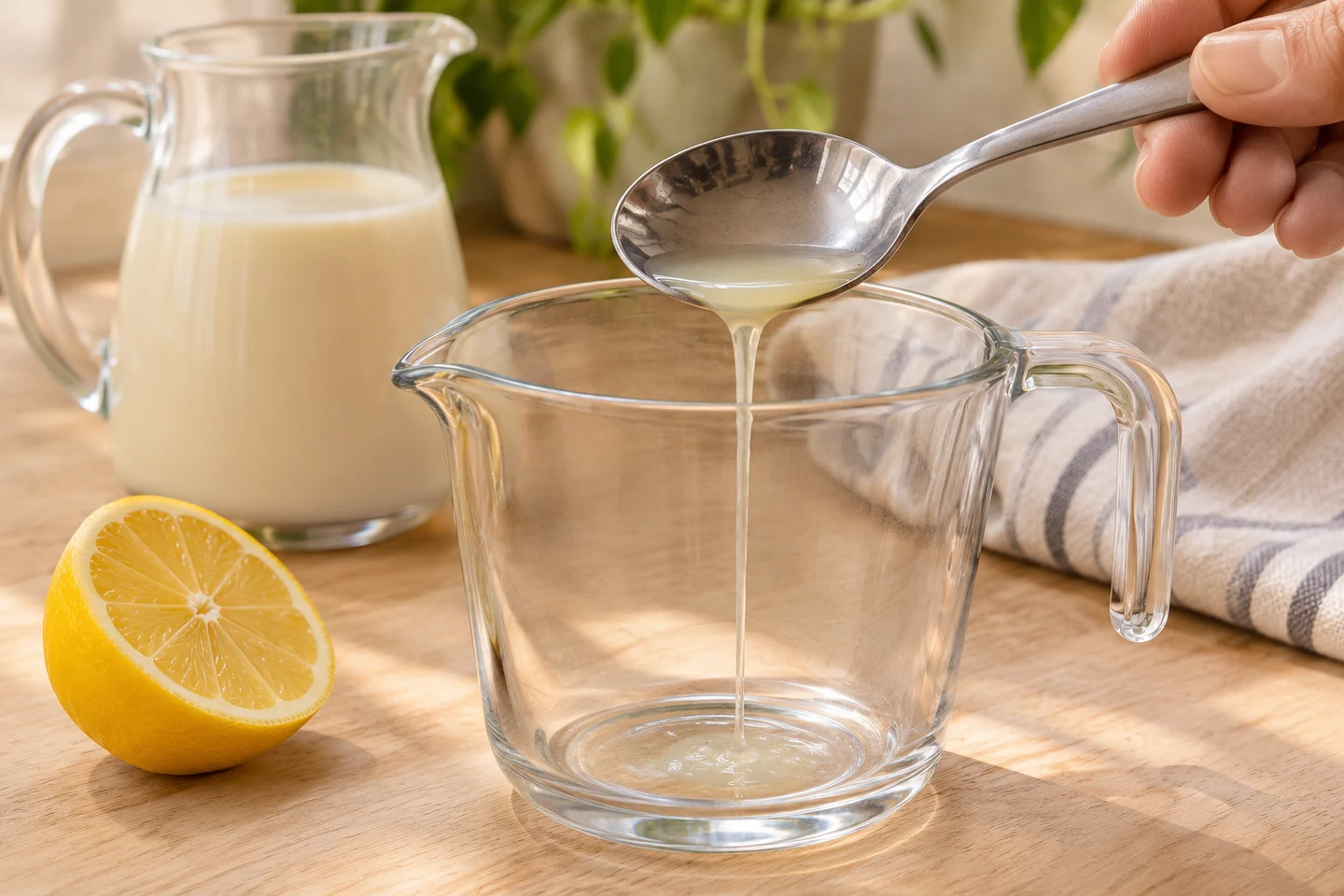
This method follows the Children’s Hospital Los Angeles baking substitution guide. Some recipes, including the example in King Arthur Baking’s dairy-free guide, add the acid to a full cup of plant milk. Follow the method in your recipe so the batter gets the intended amount of liquid.
Which plant milk works best?
- Unsweetened soy milk is a useful starting point. Its proteins can form visible curds when you add acid.
- Unsweetened oat milk has a mild flavour and may show fewer curds. Use it if the recipe lists oat milk as an option.
- Almond and other plant milks vary in protein, fat and thickness. Choose the type specified and use an unflavoured drink to avoid changing the sweetness.
White vinegar has a relatively neutral flavour in most bakes. Lemon juice can add a citrus note. If a recipe specifies apple cider vinegar, follow its directions. Use vinegar sold for food preparation.
What the acid does in baking
Acid reacts with baking soda and releases carbon dioxide, which helps lift the batter. Baking powder supplies its own acid, as NC State explains in its leavening guide. Keep the recipe’s amounts of baking soda or baking powder. The amount of visible curdling tells you little about the finished batter’s leavening.
This quick mixture adds moisture and acidity. Cultured dairy buttermilk also brings milk proteins and fermentation flavours. For a delicate cake or pastry that depends on a particular thickness, start with a vegan recipe that specifies the wet ingredients.
Recipes that use plant milk and acid
- Vegan chocolate muffins combine plant milk with apple cider vinegar before mixing the batter.
- Vegan apple fritter loaf uses a different ratio and a shorter rest. Use the quantities in the loaf recipe.
- Vegan lemon lavender muffins measure lemon juice and plant milk separately.
- Vegan lemon poppyseed scones combine cold coconut cream, plant milk and lemon juice in their own proportions.
- Vegan Victoria sponge cake combines plant milk and vinegar and uses whipped aquafaba separately in the batter.

Can you make it ahead?
Mix it just before baking for the most consistent texture. If you prepare it ahead, refrigerate it promptly at 4°C (40°F) or colder and follow the plant milk’s after-opening directions. The original storage window still applies once you add lemon juice or vinegar.
Choosing ingredients for allergies or celiac disease
Soy drinks contain soy and almond drinks contain a tree nut. If you’re baking for someone with celiac disease, choose an oat drink labelled gluten-free and check the other ingredients too. Read the full ingredient list and relevant precautionary statements, and use clean equipment to reduce cross-contact. See the CFIA guide to reading food labels and Health Canada’s guidance on gluten-free oats.
Frequently asked questions
What if the plant milk stays smooth?
Use the measured mixture as directed. Some plant milks barely separate after acid is added.
Should I warm the plant milk first?
Use the temperature called for in the recipe. Cold liquid can matter in pastry. Once the wet and dry ingredients are combined, follow the recipe’s timing for baking.
Will more vinegar help a dense cake rise?
Check the recipe’s leaveners, flour measurement and oven temperature first. Extra vinegar changes the batter’s acid balance and can leave a sour flavour.
IN PICTURES
From the baking notebook
FROM THE RECIPE BOX


