Directions
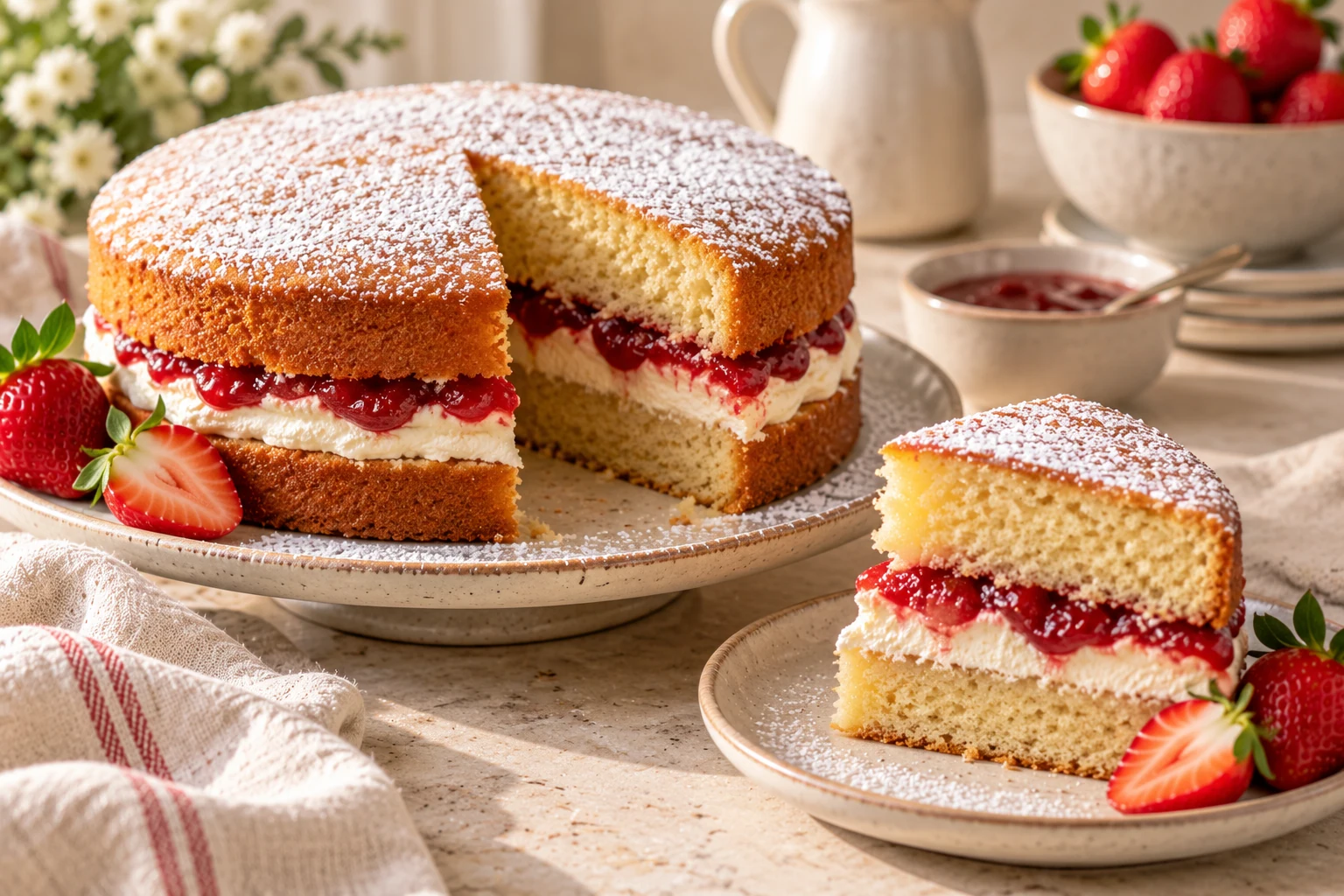
<ol class="no-list-style"><li class="MethodStepper"><h4 class="step-title">Step 1</h4>Preheat your oven to 180°C (160°C fan/350°F/Gas Mark 4). Grease two 20cm (8-inch) round cake tins and line the bases with parchment paper. A well-prepared tin ensures your cake won't stick, which is especially important for vegan cakes.</li><li class="MethodStepper"><h4 class="step-title">Step 2</h4>In a large bowl, sift together the self-raising flour, caster sugar, baking powder, bicarbonate of soda, and salt. Whisking these dry ingredients together ensures even distribution of the raising agents, which helps create a uniform rise in your sponge.</li><li class="MethodStepper"><h4 class="step-title">Step 3</h4>In a separate bowl, whisk together the plant milk, vegetable oil, white vinegar, and vanilla extract. The vinegar will react with the plant milk, slightly curdling it - this is exactly what we want! This reaction creates a buttermilk-like effect that helps tenderize and lighten the cake.</li><li class="MethodStepper"><h4 class="step-title">Step 4</h4>In another clean bowl, whip the aquafaba with an electric mixer until it forms soft peaks (about 3-4 minutes). Aquafaba works similarly to egg whites, trapping air bubbles that expand during baking to create a light, fluffy texture.</li><li class="MethodStepper"><h4 class="step-title">Step 5</h4>Pour the wet ingredients into the dry ingredients and mix gently until just combined. Then carefully fold in the whipped aquafaba using a large metal spoon or spatula. Fold with an under-and-over motion to preserve as much air as possible - this is key to a light sponge!</li><li class="MethodStepper"><h4 class="step-title">Step 6</h4>Divide the batter equally between the prepared tins and smooth the tops with a spatula. Bang each tin gently on your counter a couple of times to release any large air bubbles that might create holes in your finished cake.</li><li class="MethodStepper"><h4 class="step-title">Step 7</h4>Bake in the preheated oven for 22-25 minutes, or until the cakes are golden, well-risen, and a skewer inserted into the center comes out clean. The cakes should also spring back when pressed gently in the center.</li><li class="MethodStepper"><h4 class="step-title">Step 8</h4>Allow the cakes to cool in their tins for 10 minutes, then turn them out onto a wire cooling rack to cool completely. Patience is important here - filling a warm cake will melt your buttercream!</li><li class="MethodStepper"><h4 class="step-title">Step 9</h4>While the cakes are cooling, make the vegan buttercream. Beat the vegan butter with an electric mixer until smooth and creamy. Gradually add the sifted icing sugar, vanilla extract, and enough plant milk to create a smooth, spreadable consistency. Beat for 3-5 minutes until light and fluffy - the longer you beat, the fluffier it becomes!</li><li class="MethodStepper"><h4 class="step-title">Step 10</h4>Once the cakes are completely cool, place one layer on your serving plate. Spread the vegan buttercream evenly over the top, leaving a 1cm border around the edge (this prevents the filling from spilling out when you add the jam).</li><li class="MethodStepper"><h4 class="step-title">Step 11</h4>Warm the strawberry jam slightly if it's too firm, then spread it evenly over the buttercream. The traditional Victoria sponge has both jam and cream, creating that classic flavor combination.</li><li class="MethodStepper"><h4 class="step-title">Step 12</h4>Gently place the second cake layer on top, pressing down very lightly to secure. Dust the top with icing sugar using a fine sieve for an elegant, traditional finish. Your vegan Victoria sponge is now ready to serve with a lovely cup of tea!</li></ol>