
On this page
The most telling moment in a truffle batch comes when the scoop passes through the chilled centre. It should lift a mound that holds together, with just enough give to round it between your palms. That texture starts with a suitable chocolate-and-cream formula. Cocoa, chopped nuts and a polished shell are finishing choices you can leave until later.
What counts as a chocolate truffle?
A classic truffle centre is ganache made from chocolate and cream, sometimes enriched with butter or flavoured ingredients. The centre may be rolled in cocoa, nuts or tempered chocolate. Commercial shelf-stable truffles can be formulated quite differently from homemade fresh-cream ganache. Don't assume a handmade truffle has the same storage life as a sealed packaged product, especially when you add fruit purée or dairy.
In Manhattan Cocktail Truffle, dark and milk chocolate share the centre. Read both quantities when choosing the chocolate for a batch.
Start with the right chocolate
Choose a bar or couverture whose flavour you enjoy eating plain. Dark chocolate produces an assertive centre, while milk or white chocolate need different ratios because they contain different proportions of cocoa solids, cocoa butter, sugar and milk components. For your first batch, use the type and percentage specified in a tested truffle recipe rather than switching chocolates at the last minute.
The chopped dark chocolate specified in Dark Chocolate and Orange Tart also illustrates the kind of clearly identified bar to look for when a truffle formula names a cocoa percentage.
Understand ganache as an emulsion
Ganache combines chocolate fat and particles with a water-containing liquid such as cream. A well-formed emulsion looks smooth and glossy and sets to a cohesive texture. Incompatible proportions or uneven mixing can leave it grainy, separated or too soft. Add the liquid and mix in the sequence specified by the complete recipe; different formulas use different methods.
The filling in Chocolate Tart lets you see an emulsion spread across a tart shell. A rolled centre needs enough extra firmness to retain its shape in your hand.
Choose a ratio designed for shaping
A dark-chocolate practice formula might start with 200 g chocolate to 100 g cream for a 2:1 ratio by weight. That is a comparison point, not a promise of a rollable set for every bar. Milk chocolate, white chocolate, extra butter and liqueurs all change the result. For a gift batch, use a recipe written for the chocolate in your cupboard and test one chilled scoop first.
For an actual rolling formula, Keto Chocolate Truffles gives weighed dark chocolate, a measured quantity of cream and directions for coating the finished pieces.

Measure by weight, not a cup of chips
A cup of chopped chocolate, a cup of large discs and a cup of fine chocolate shavings all contain different amounts of actual chocolate. For reproducible truffles, weigh chocolate and cream in grams when possible. Accurate measurements make troubleshooting meaningful, particularly if you later change cocoa percentage or try milk chocolate instead of dark.
Compare the separate ganache ingredients in Malted Chocolate Layer Cake with your truffle recipe. A coating that levels over a cake can be too loose for rolling.
Chop chocolate into even pieces
Smaller, similarly sized pieces melt more evenly when warm cream is added. Very large chunks can stay unmelted as the outer portion overheats, making the mixture difficult to emulsify. Use a clean, dry knife and bowl, or chocolate callets if the recipe specifies them. Any unexpected water in the chocolate before the planned cream addition can create clumps.
The finely chopped dark chocolate in Espresso Chocolate Tart is a visual model for preparation. A bowl of even pieces melts before the cream loses its heat.

Warm cream carefully
Heat cream according to the recipe, usually just enough to melt the chocolate rather than boiling it aggressively for a prolonged time. If the liquid is much too hot, it may affect the emulsion and flavour. If it is too cool, large chocolate pieces may remain. Some recipes recommend pouring cream over chocolate, letting it stand briefly, then mixing gently from the centre outward.

Stir from the centre outward
Pour the warmed cream over evenly chopped chocolate as the recipe directs. Leave it briefly so the smaller pieces soften. Stir in a small circle in the middle until a dark glossy patch appears, then widen the circle to draw the cream at the edge into it. Scrape the base of the bowl once to find any pieces the spatula missed.
The filling for Double Chocolate Sandwich Cookies also starts as a soft mixture that thickens as it cools. Watch the centre turn glossy before chasing the last flecks around the edge.

Add flavours without breaking the balance
Vanilla, espresso, citrus zest and warm spices can complement chocolate. Liquid extracts and alcohol introduce additional water or alcohol and may change stability, texture and storage. Start with a recipe-tested quantity. Fruit purée especially changes acidity and water content; a ganache made with raspberries is not automatically as stable as one made with cream alone.
The filling in Dark Chocolate Orange Macarons gives you a measured way to introduce orange into chocolate. Borrow the flavour idea while keeping the truffle recipe’s liquid balance.

Let the ganache set correctly
Transfer the smooth ganache to a shallow clean dish so it cools evenly. Cover and refrigerate as the recipe directs. Test a spoonful taken from the middle of the dish; the firmer edge can make a batch seem ready sooner than it is. If the spoonful slumps on parchment, keep the remaining mixture cold while you wait.
The white chocolate filling in White Chocolate Macadamia Sandwich Cookies has its own proportions and resting time. Treat a switch from dark to white chocolate as a change of recipe.

Portion with a scoop or scale
Place a lined tray and a clean scoop beside the cold ganache. Portion the whole batch before rounding each piece so their sizes stay even. If your hands soften the centres, work with a few at a time and return the tray to the fridge briefly. Add cocoa or finely chopped nuts after shaping so the coating stays on the outside.

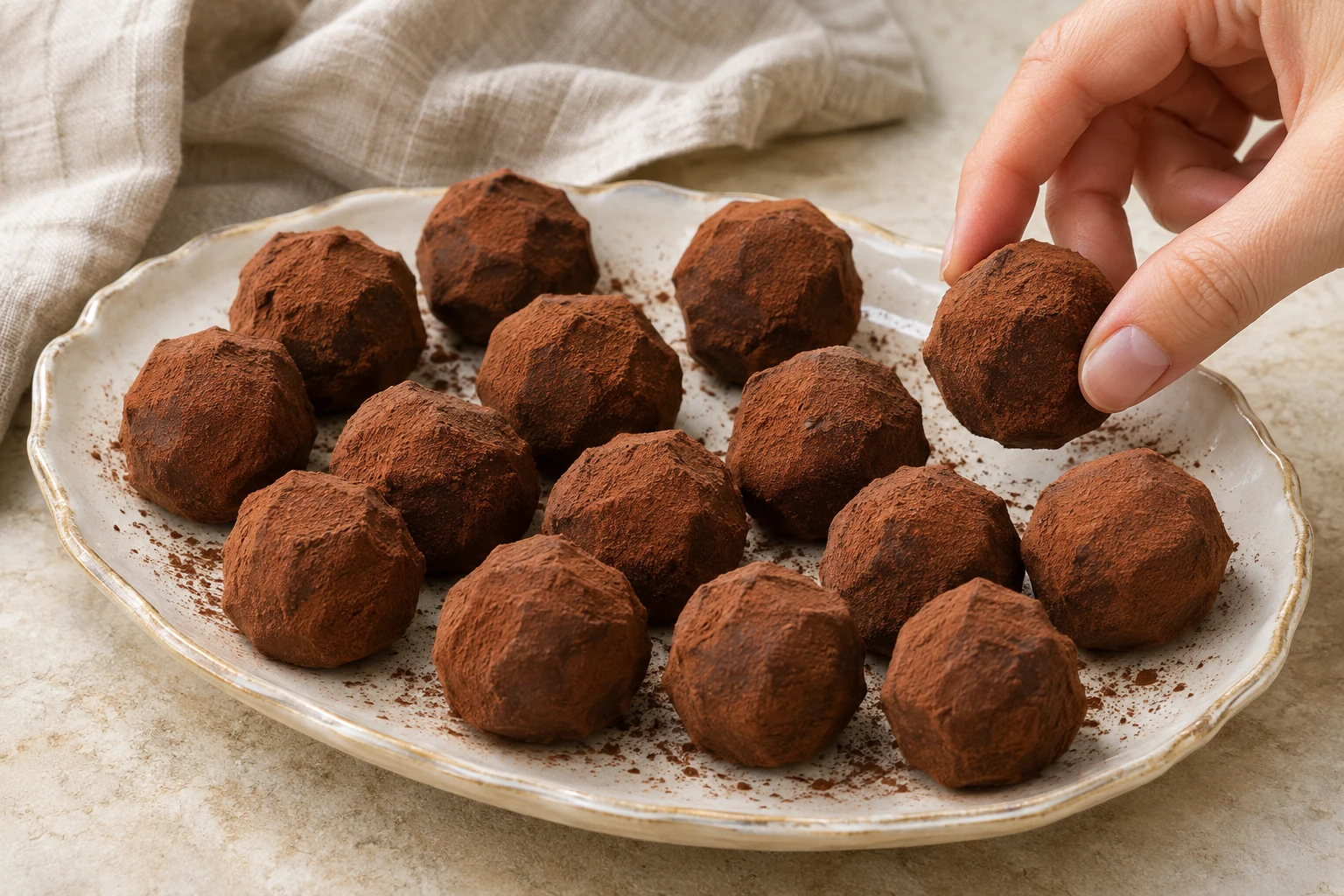
Cocoa coating for a classic finish
Roll fully shaped truffles in unsweetened cocoa powder until lightly covered. A deep bowl with a modest amount of cocoa helps. Cocoa may become damp or patchy on refrigerated truffles, so some bakers dust just before giving or serving. A cocoa shell does not preserve a perishable centre; it is primarily a flavour and presentation choice.
The optional cocoa on Chocolate Cream Pie offers a finishing cue for truffles too. Sift a modest amount and shake away loose powder before boxing.

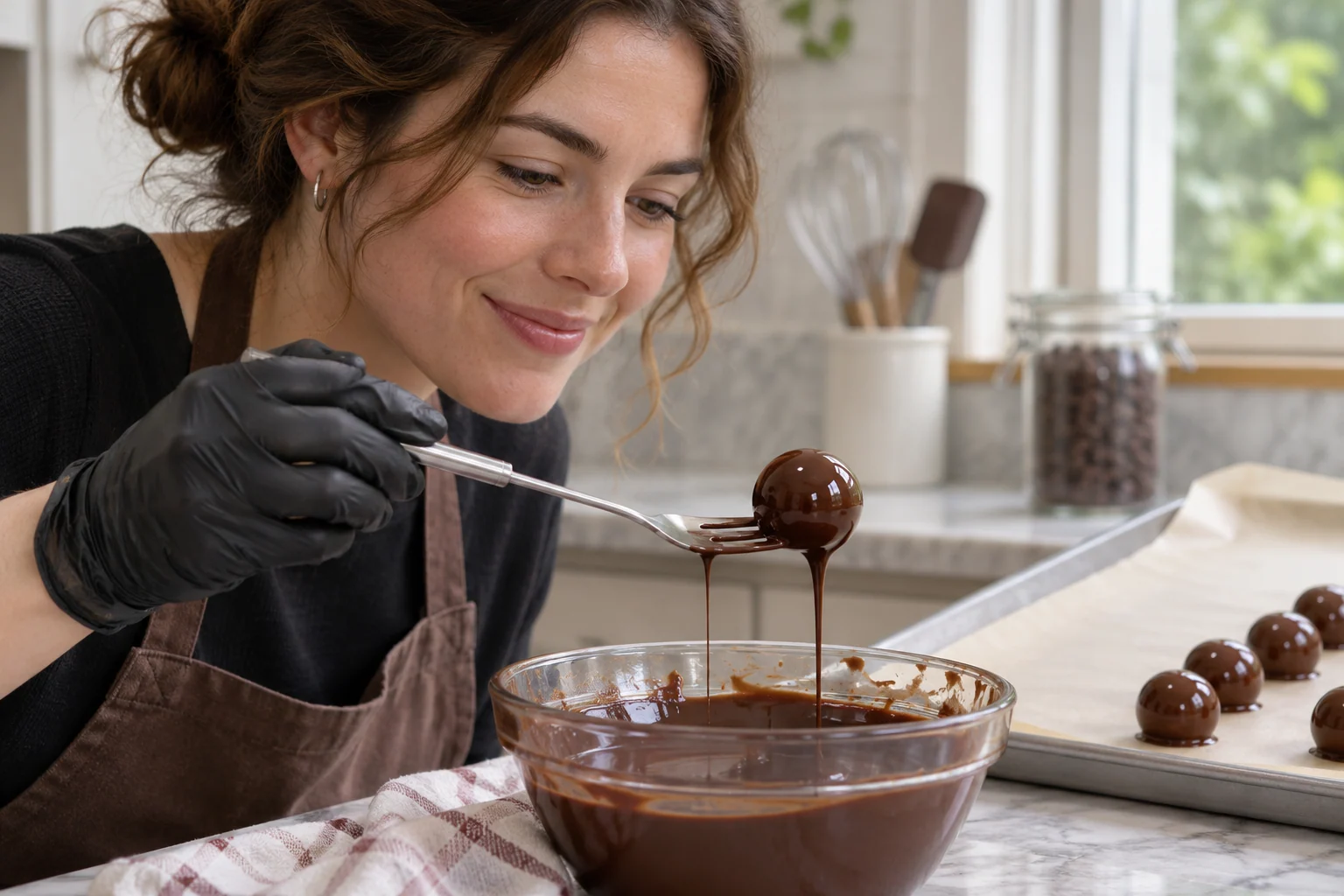
Tempered chocolate shells
A thin tempered chocolate coating gives truffles a snappy finish and more protection from handling. Tempering controls cocoa butter crystal formation, helping chocolate set shiny and firm. Work with the temperature range recommended for the actual dark, milk or white chocolate. An attractive tempered shell is not a guarantee of shelf stability for the creamy interior.
Other coating ideas
Finely chopped toasted nuts, coconut, finely crushed freeze-dried fruit and biscuit crumbs can change texture and flavour. Check allergies and moisture content. Fresh wet fruit or very coarse nuts can make the coating less stable or create a difficult mouthfeel. Separate nut-coated pieces from other truffles when allergen cross-contact matters.
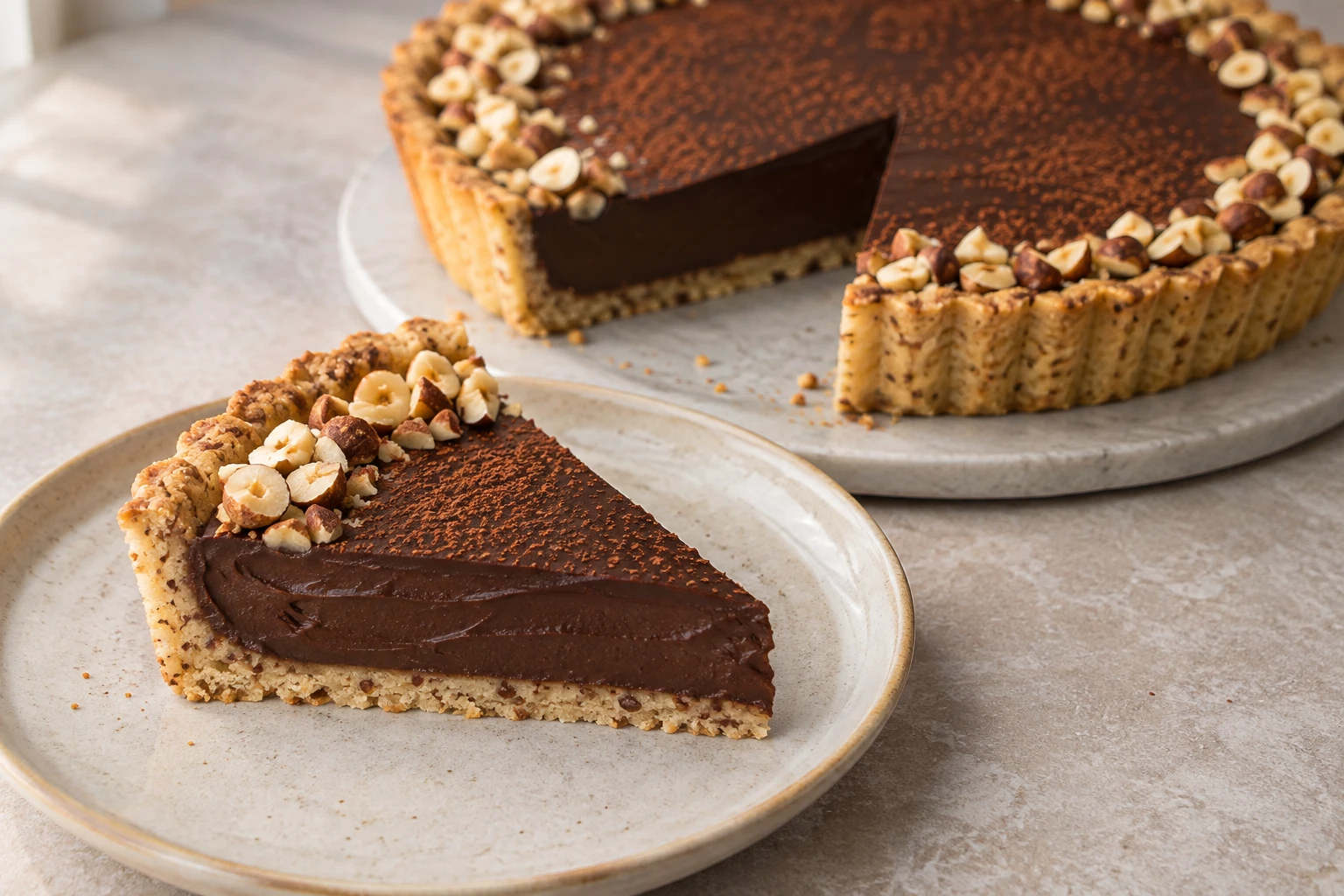
The nuts and chocolate in Hazelnut Chocolate Tart suggest a simple finish for a truffle. Use finely chopped toasted hazelnuts and label the nut coating for guests.
Why ganache separates
An oily layer or coarse speckled appearance may indicate that the emulsion broke. It can result from incorrect ratios, excessive heat or inconsistent mixing. Some formulas can be repaired through controlled gentle warming and staged incorporation of a suitable liquid. Use the instructions for that recipe instead of pouring in cold cream without measuring, which can change the finished firmness.
Why the truffles are too soft
Test one portion on a cool plate. If it slumps, allow the whole batch to finish chilling before changing the formula. If a fully chilled centre is still too soft to handle, it can make a good dessert filling. Next time, weigh the cream, chocolate and any flavouring separately and compare them with the quantities in the shaping recipe.
The white chocolate filling for Raspberry White Chocolate Tart is designed to slice with support from a crust. Start with a shaping formula when the goal is a freestanding ball.
Why the truffles feel grainy
Chocolate that overheated or failed to melt evenly can form unpleasant particles. A broken emulsion or undissolved inclusions may have a similar effect. Keep initial chocolate pieces small, use controlled heat and mix gently. A gritty centre is not fixed by repeatedly adding powdered sugar; the cause should be diagnosed before the next batch.
Food safety and refrigeration
Place homemade fresh-cream truffles in a covered container in the refrigerator at 4°C (40°F) or colder. During a party, set out small portions and keep the rest chilled. Discard perishable truffles left at room temperature for more than two hours. The cocoa coating and a splash of liqueur do not give an ordinary home recipe a shelf life in the cupboard.
Like Chocolate Mousse Phyllo Cups, cream-based truffles come out of the refrigerator in small serving batches so the rest can stay cold.

Packaging homemade truffles
Place individual pieces in food-safe paper cups inside a clean rigid box, with enough space that coatings don't rub together. Include ingredient and allergen information and accurate refrigeration directions. Avoid claiming a long room-temperature shelf life based on the fact that the centres are covered in chocolate. For gifting, check the recipient's refrigeration access and delivery timing first.

Frequently asked questions
Can I make truffles using chocolate chips? Sometimes, but some chips melt thicker than couverture and may require recipe testing. Can I use ordinary plant milk instead of cream? Not necessarily; fat and water ratios differ. Should I temper cocoa-dusted truffles? Only a tempered outer chocolate shell needs that technique. Can truffles freeze? Only if the tested filling permits it; thawing may affect texture. Do homemade cream truffles last for weeks on a shelf? Don't assume so.
The best first truffle batch
Choose one reliable dark-chocolate recipe, weigh both ingredients, create a smooth ganache, let it set properly and finish half with cocoa and half with a suitable tempered coating if you want to practise. A few well-made pieces will teach more than several flavoured batches attempted at once.
The dark chocolate and cream proportions in Chocolate Orange Pastries are worth comparing with a shaping recipe; the extra flavourings also affect how a centre sets.
A gift-ready truffle timeline
Make and chill the centre ahead, then shape a single test truffle before you roll the batch. Set out paper cups and a label while the coated pieces firm up in the refrigerator. Put them into the gift box shortly before you leave and carry the box cold. Tell the recipient where to store it as you hand it over.
A reliable three-flavour approach
Start with one compatible dark-chocolate ganache and divide into small portions only if the recipe supports variations. Espresso powder, orange zest and vanilla can offer distinct accents without much extra liquid; any additional syrup or liquor needs careful formula adjustment. Don't make different chocolate percentages share an untested cream ratio. Keeping the base consistent makes it much easier to compare textures.
The pairing in White Chocolate Dipped Ginger Cookies suggests a third flavour for a gift box. A pinch of dry ginger in the cocoa coating adds flavour without changing the centre.
IN PICTURES
From the baking notebook
FROM THE RECIPE BOX


