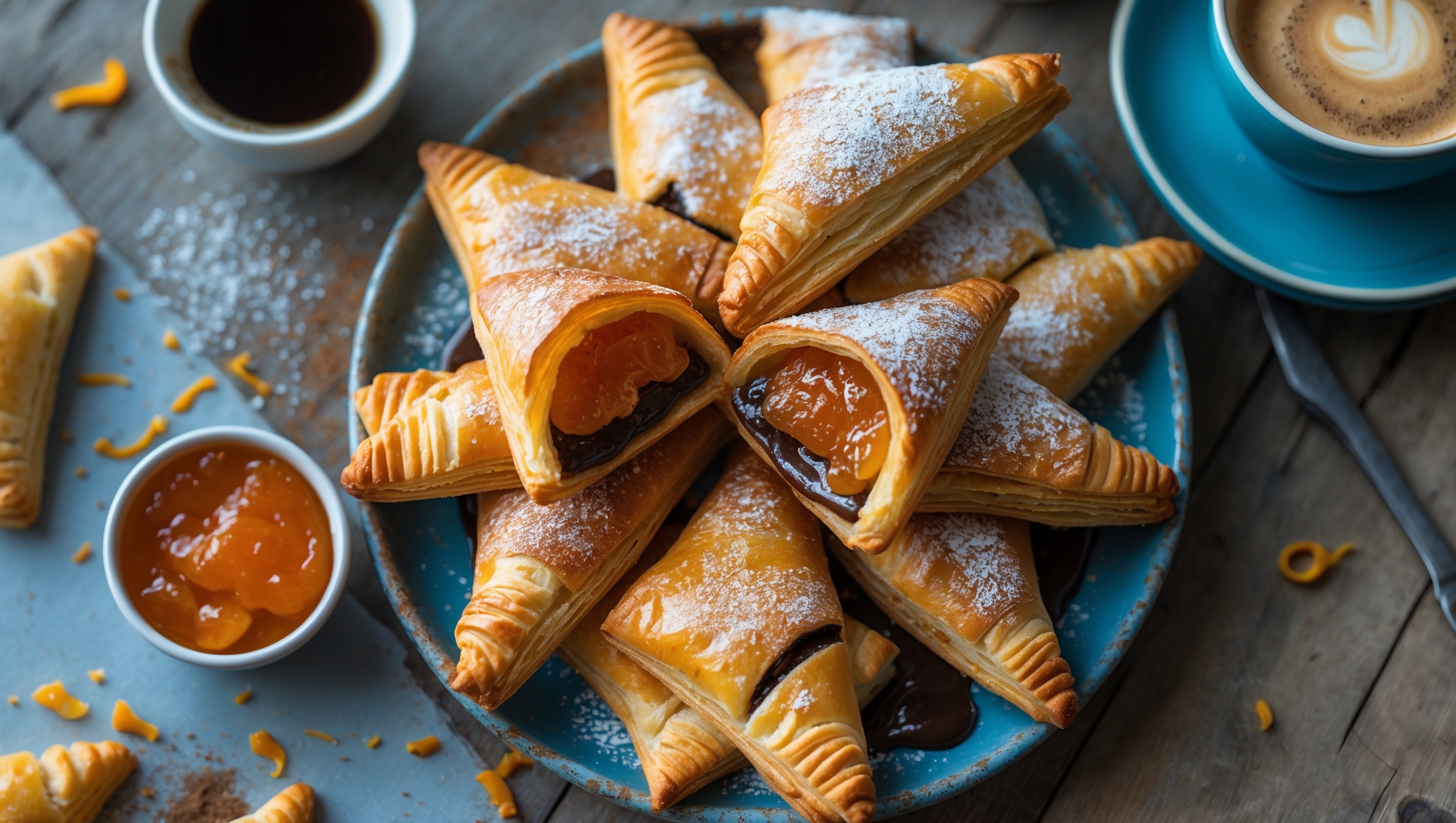
Directions
<ol class="no-list-style"><li class="MethodStepper"><h4 class="step-title">Step 1</h4>Preheat your oven to 200°C (180°C fan/gas mark 6) and line two baking trays with parchment paper. Take your puff pastry out of the refrigerator about 10 minutes before working with it – it should be cool but pliable. Cold pastry maintains its layers better, while overly warm dough can become sticky and lose its characteristic flakiness.</li><li class="MethodStepper"><h4 class="step-title">Step 2</h4>Prepare the chocolate ganache by placing the chopped dark chocolate in a heatproof bowl. Heat the double cream in a small saucepan until it just begins to simmer (tiny bubbles appear around the edges), then pour it over the chocolate. Let it sit for 1 minute, then gently stir until completely smooth and glossy. Allow to cool slightly while preparing the rest of the ingredients.</li><li class="MethodStepper"><h4 class="step-title">Step 3</h4>In a small bowl, mix the orange marmalade with half the orange zest, reserving the remainder for garnish. Give it a good stir to ensure the zest is evenly distributed, which will amplify the citrus flavor throughout your pastries.</li><li class="MethodStepper"><h4 class="step-title">Step 4</h4>Unroll your puff pastry on a lightly floured surface and cut it into 12 equal squares (approximately 10-12cm each side). You can use a pizza cutter or sharp knife for clean edges. If your pastry has become too warm and sticky at any point, pop it back in the refrigerator for 10 minutes to firm up.</li><li class="MethodStepper"><h4 class="step-title">Step 5</h4>Place a teaspoon of the orange marmalade mixture in the center of each square, followed by a teaspoon of the chocolate ganache. Be careful not to overfill – about 1-1.5 teaspoons of each filling is perfect. Leave a border of at least 1cm around the edges to ensure proper sealing.</li><li class="MethodStepper"><h4 class="step-title">Step 6</h4>Brush the edges of each square lightly with beaten egg, which acts as a glue. Fold each square diagonally to form triangles, pressing the edges firmly with a fork to seal. The tines of the fork not only secure the filling but create a decorative crimped edge.</li><li class="MethodStepper"><h4 class="step-title">Step 7</h4>Transfer the pastries to your prepared baking trays, leaving about 4cm between each one. Puff pastry expands considerably during baking, so give them room to grow. Brush the tops generously with beaten egg wash, which will give them a beautiful golden color. Then sprinkle with granulated sugar for a sweet, crunchy finish.</li><li class="MethodStepper"><h4 class="step-title">Step 8</h4>Using a sharp knife, cut a small slit in the top of each pastry to allow steam to escape during baking. This prevents the filling from bursting out of the sides and helps maintain the pastry's shape.</li><li class="MethodStepper"><h4 class="step-title">Step 9</h4>Bake in the preheated oven for 18-20 minutes, or until puffed up and golden brown. Keep a close eye on them after the 15-minute mark as they can go from perfectly golden to overdone quite quickly due to the sugar content.</li><li class="MethodStepper"><h4 class="step-title">Step 10</h4>Once baked, remove from the oven and immediately brush with melted butter for a beautiful shine and extra richness. Let them cool on the baking tray for 5 minutes before transferring to a wire rack. The pastries are most delicious when served warm, when the chocolate is still slightly molten.</li><li class="MethodStepper"><h4 class="step-title">Step 11</h4>Just before serving, dust lightly with icing sugar if desired and sprinkle with the remaining orange zest for a pop of color and fresh citrus aroma. These pastries are best enjoyed the day they're made, but can be stored in an airtight container for up to 2 days and reheated in a 160°C oven for 5 minutes to restore their crispness.</li></ol>