On this page
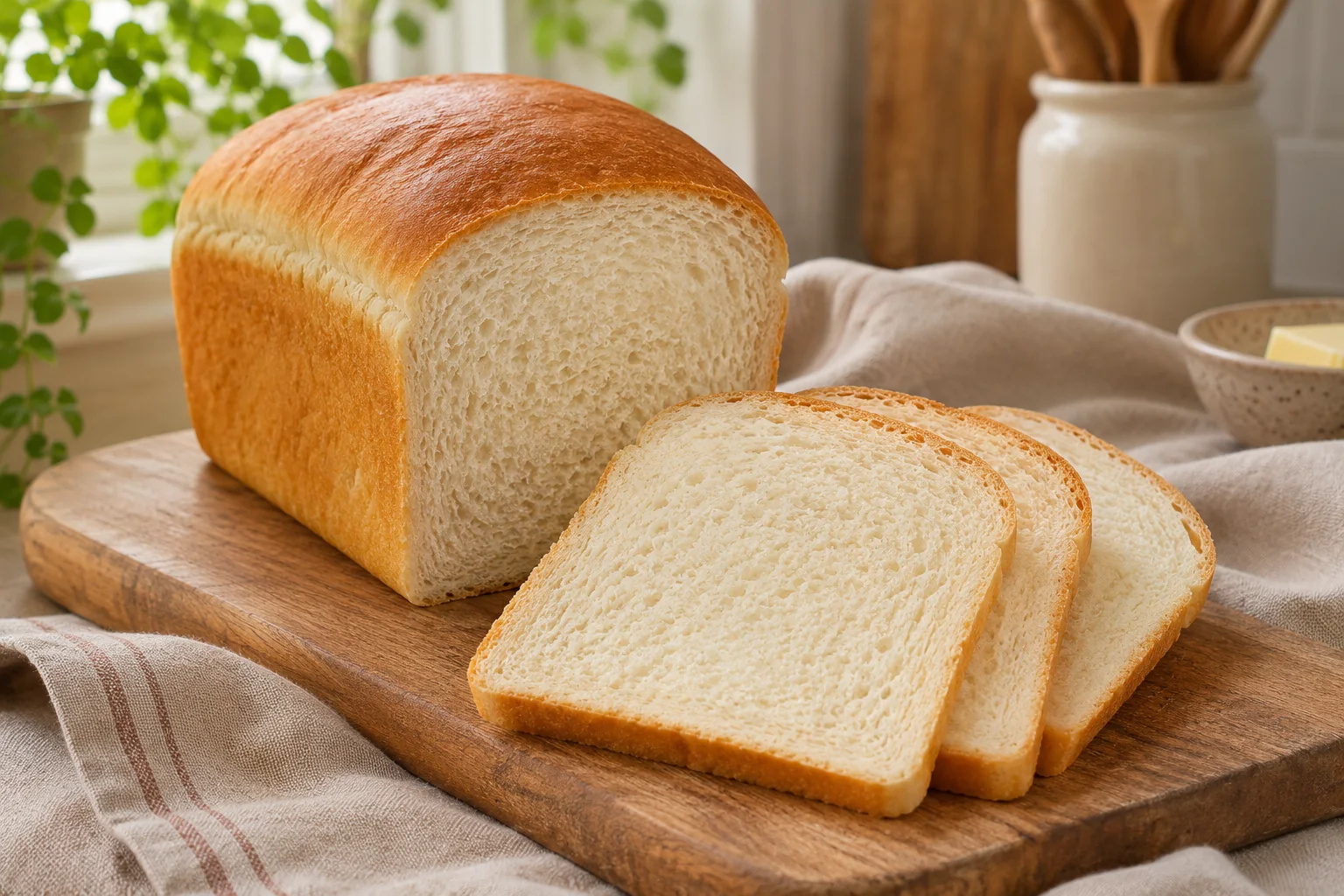
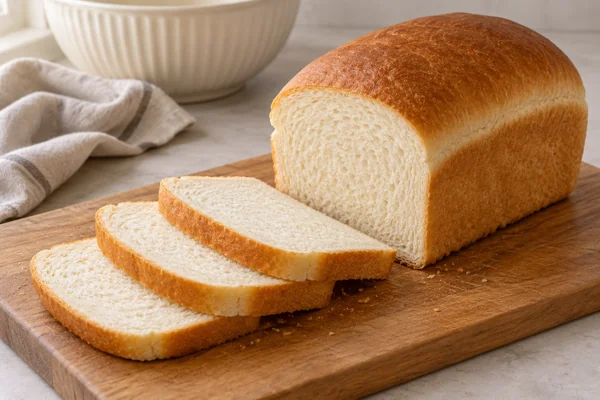
A slice of sandwich bread should support jam, eggs or peanut butter without most of the filling falling through large holes. Unlike an artisan baguette or airy sourdough, a classic pan loaf is usually designed to have a relatively fine, even crumb. That doesn't mean it should be dense or tough. The goal is small, well-distributed air cells in a soft, properly risen loaf. Flour choice, proofing, gentle but deliberate degassing and tight shaping all help create that structure.
What is a tight sandwich-bread crumb?
A tight crumb has many small, relatively even gas cells rather than irregular large cavities. It should still be tender and resilient. A gummy, heavy loaf with no lift is not a successful tight crumb; it's a bread whose fermentation, hydration or baking may need correction.
Start with a pan-loaf recipe
A bread formula developed for sandwich slices often balances flour, water or milk, yeast, salt and sometimes butter or sugar. Its pan size and dough weight help establish a predictable loaf height. A rustic high-hydration dough shaped loosely in a pan may form large holes and won't automatically behave like a sandwich bread.
Use Classic White Sandwich Bread as a baseline. Use the pan in the recipe and note how high the dough stands before baking so you can compare it with the finished slices.
Use the flour specified
Bread flour provides ample gluten strength in many sandwich formulas, but all-purpose flour works in some softer breads. Protein content, brand and added whole grains affect absorption and dough behaviour. Choose a tested pan-bread recipe for the flour you have rather than replacing it with cake flour to force a softer crumb.
Develop sufficient gluten
Kneading or mixing organizes wheat proteins into an elastic network that holds fermentation gas. A fine crumb still needs structure; undermixed dough may rise poorly or crumble. Follow the recipe's mixing method, whether by hand or mixer, and assess the dough's smoothness and elasticity.
Don't make the dough excessively dry
Too much flour can produce a stiff, heavy dough with limited expansion. Some sandwich doughs are soft and slightly tacky before fully kneaded. Add bench flour only as needed to handle the dough and within the recipe's guidance. A dry dough isn't the same thing as a finely textured bread.
Hydration affects texture
A very wet artisan dough may encourage an irregular crumb with the right handling, while many sandwich loaves use a more manageable hydration. But moisture isn't determined by water percentage alone; milk, eggs, butter and cooked-flour methods change how dough behaves. Use the formula's proportions instead of imposing one fixed hydration target.
Why dough enrichment can help
Milk, butter, oil, eggs or sugar can produce tender sandwich bread when used in a tested formula. Fat and sugar influence softness and the feel of the crumb, but also affect fermentation. You don't need extreme enrichment for a good sandwich loaf; ordinary white pan bread can be beautifully tender.
For a different flavour and another fine-crumb example, try Buttermilk Sandwich Bread. Follow that formula from the start so the dry and liquid ingredients stay in balance.

Bulk fermentation still matters
Allow dough to complete the first rise according to the recipe's volume and texture cues. Insufficient fermentation can produce a tight but heavy loaf, while excessive fermentation may weaken the structure and encourage collapse. Use the specified dough temperature and schedule as guides, not immutable timer rules.
Why degassing is useful for sandwich bread
During shaping, pressing out very large gas pockets helps create more uniform cells through the loaf. Unlike a rustic sourdough designed for irregular holes, a sandwich dough can be deliberately flattened and rolled with controlled pressure. That doesn't mean aggressively crushing the dough until it's damaged; follow the recipe's shaping method.
How to flatten before rolling
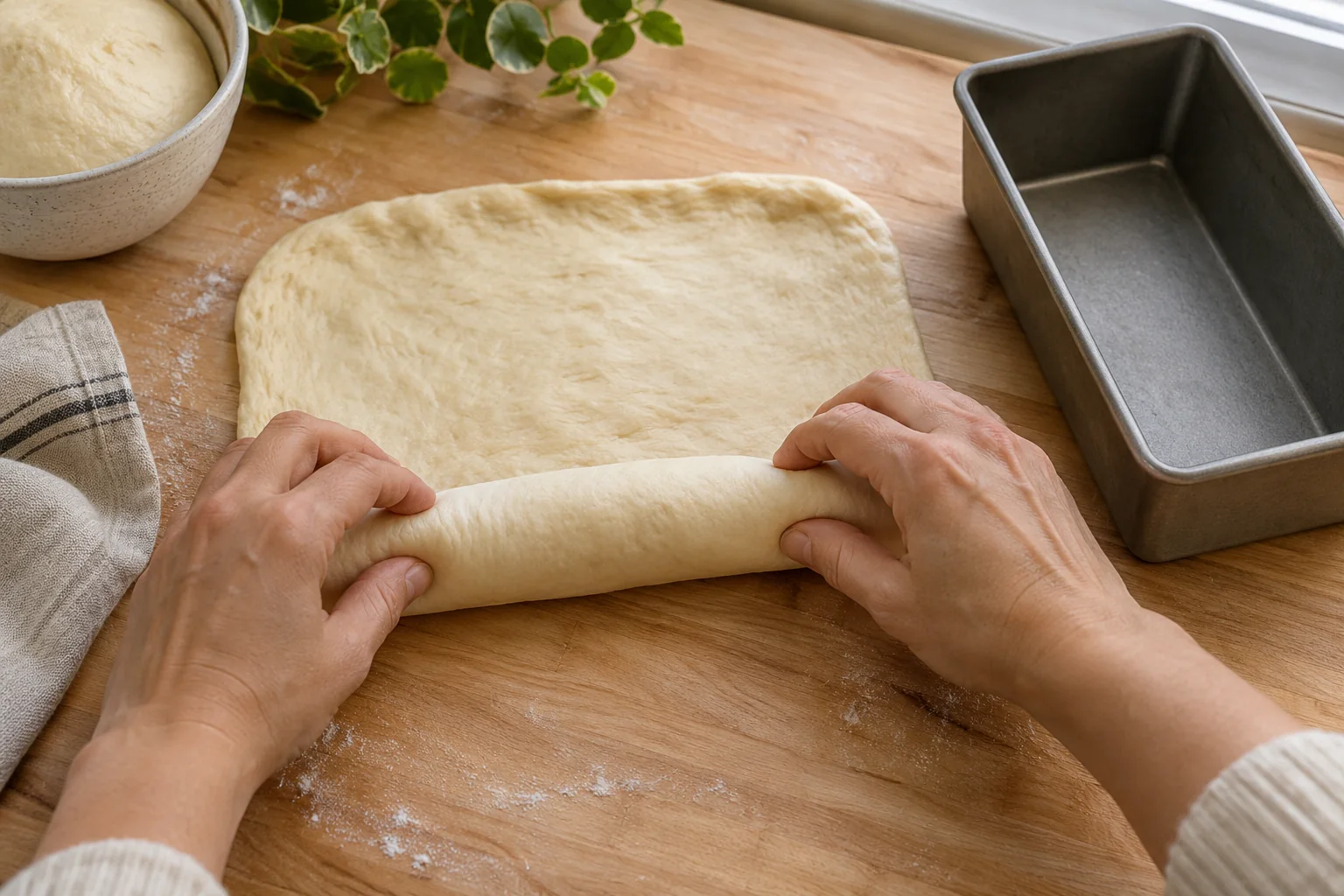
Turn the fermented dough onto a lightly floured surface and gently pat it into a rectangle suited to the pan. Remove obvious large pockets without tearing the dough. Aim for a relatively even thickness so the roll has a uniform internal structure rather than thick and thin sections.
How to roll a pan loaf
Starting from a short edge according to the recipe, roll the dough into a snug cylinder. Seal each turn or seam as directed. The roll should be cohesive enough to hold shape without creating a hard, compressed centre. A loose, uneven roll can leave spiral gaps in the baked slices.
Keep the roll snug enough to close gaps as you go. If the dough keeps springing back, cover it and let it relax briefly before finishing. A restrained dusting of flour helps with sticking while leaving the seam able to seal.
Seal the final seam
Pinch or press the seam gently so it doesn't open during final proof. Tuck the ends according to the pan-loaf shaping method. Place the dough seam-side-down in the prepared pan unless your recipe specifies otherwise. A poorly sealed underside can lead to asymmetrical rising or unwanted openings.
Use the correct loaf pan
A recipe intended for an 8½-by-4½-inch pan will rise differently in a wider 9-by-5-inch model. The total dough quantity and pan capacity influence height and texture. A small dough in an oversized pan may remain short even after fully fermenting.
Final proof to the correct height
Sandwich recipes often specify how far dough should rise above the pan rim or use a poke test suited to the formula. Under-proofing can create large ruptures and uneven spring; over-proofing may cause a fragile top or collapse. The target isn't the same for every pan or dough.
Does pressing out bubbles remove all lift?
No. Active yeast continues producing gas during final proof, and remaining small cells expand. Intentional moderate degassing redistributes gas and can improve slice uniformity. The dough must still be alive and proofed sufficiently afterward; shaping isn't a substitute for fermentation.
What causes tunnels in sandwich bread?
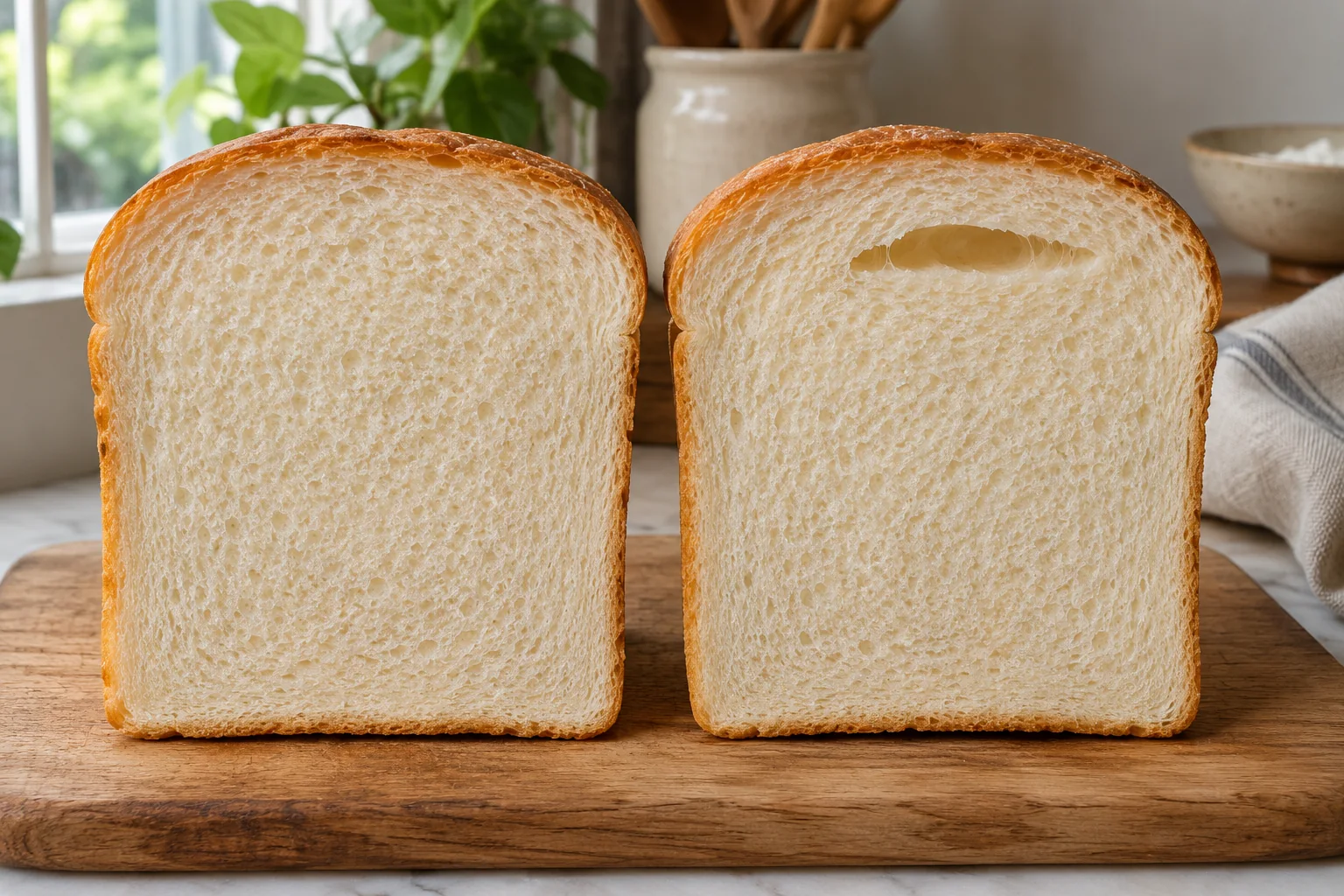
Large horizontal cavities may come from loose rolling, flour trapped between layers, poor seam adhesion or fermentation imbalances. If a hollow follows a spiral pattern, examine shaping first. If cavities are random alongside dense patches, look at fermentation and dough handling too.
A cavity just below the top crust can point to a large bubble or a gap left during shaping. On the next loaf, press down obvious bubbles before rolling, especially in the first turn of the log. Check for a continuous seam before setting it in the pan.
Why the loaf caves in
Collapse can reflect over-proofing, weak dough, ingredient imbalance or insufficient baking. A top that wrinkles after cooling may indicate that the bread's structure wasn't fully set. Follow the recipe's doneness guidance and allow sufficient cooling before bagging.
Bread temperature and doneness
Some pan-bread recipes provide a target internal temperature, while others specify crust colour, texture and baking time. Use the precise formula's endpoint because enriched bread and lean bread may finish at different temperatures. A golden top alone isn't proof the centre is fully baked.
Cooling before slicing
A just-baked sandwich loaf is tender and its crumb still settling. Cutting too early can squash the interior and produce gummy slices. Let it cool on a rack according to the recipe, then use a sharp bread knife for even slices. Wrapping warm bread can trap unwanted moisture.
Whole-grain sandwich bread
Whole wheat and other grains can produce a slightly denser crumb because bran and absorption differ from white bread flour. For a soft whole-grain loaf, choose a formula designed for it, possibly using a cooked-flour method or enrichment. Don't assume extra kneading alone will reproduce white-bread texture.
For a side-by-side comparison with the white loaf, make Honey Whole Wheat Sandwich Bread. Expect a slightly different crumb and use the whole-wheat recipe’s own rising and handling cues.

Frequently asked questions
Should I punch down sandwich dough? Follow the recipe's deliberate degassing step; it can help create even cells. Does tight crumb mean dry bread? No. Why are there large holes just under the crust? Shaping, proofing and gas distribution may contribute. Can sourdough make sandwich bread? Yes, using a formula designed for a fine pan-loaf crumb.
Make slices worth using
For a reliable sandwich loaf, use a tested pan-bread formula, develop gluten, complete bulk fermentation, gently remove oversized bubbles and roll a snug cylinder into the correct pan. Finish the proof properly and bake through. The reward is a soft, even slice that holds whatever you're putting on it.
Compare the middle slices once the loaf has cooled. Look at the shape and distribution of the holes before changing the formula. If you see a handful of tunnels in an otherwise even slice, work on shaping first.
IN PICTURES
From the baking notebook
FROM THE RECIPE BOX


