
On this page
To move from one 8-inch round tin to one 9-inch round tin at the same batter depth, square the diameters and divide: 81 ÷ 64 is about 1.27. That means roughly 27% more batter, provided the pan depth and shape are comparable.
Understand internal dimensions
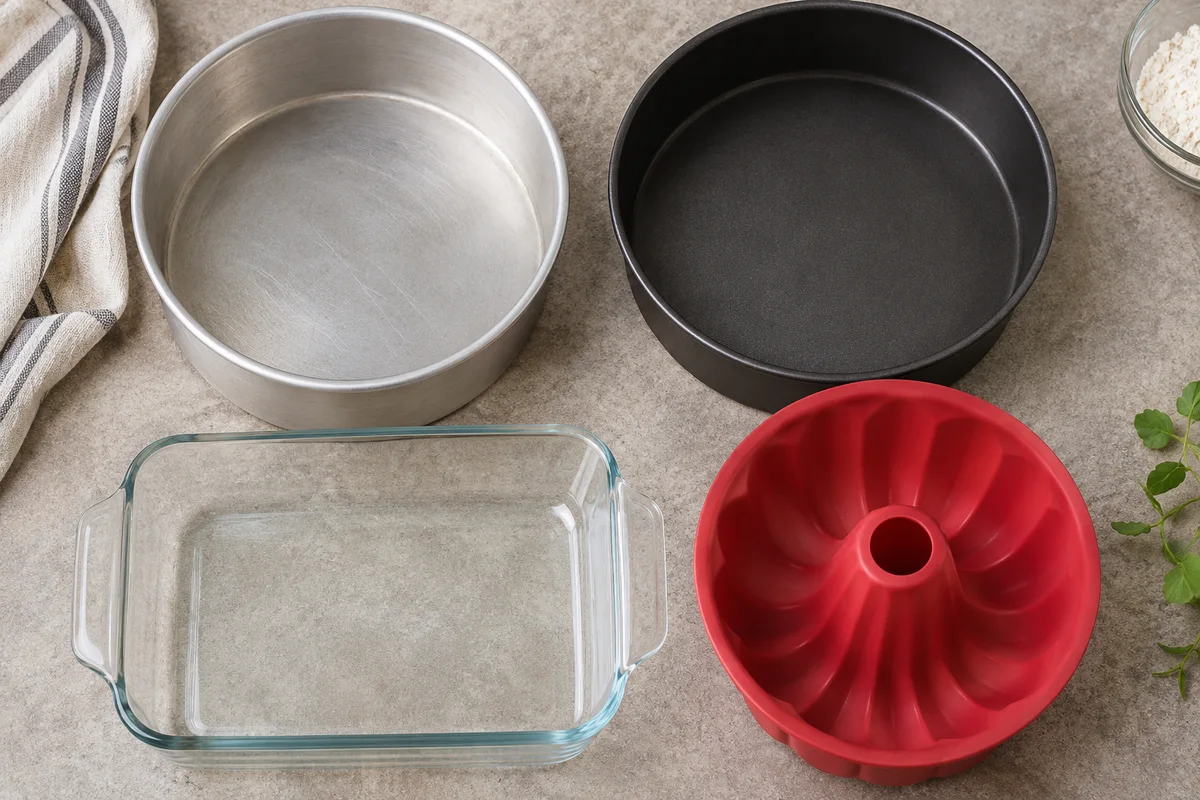
Pan labels may describe exterior diameter, top rim or nominal dimensions. Tapered sides and rounded corners reduce usable space. Measure inside at the bottom and note the depth, particularly when comparing different brands. A springform pan often has taller walls than an ordinary layer pan. Don't assume two pans share capacity just because their packaging says nine inches.
Start with base area
For flat-bottomed rectangular pans, multiply length by width. An eight-inch square has about 64 square inches of base area; a nine-by-thirteen-inch rectangle has 117. Area helps compare batter depth when pan wall height is similar. It does not guarantee a safe conversion if one pan is shallow or fluted.
Round pan area formula
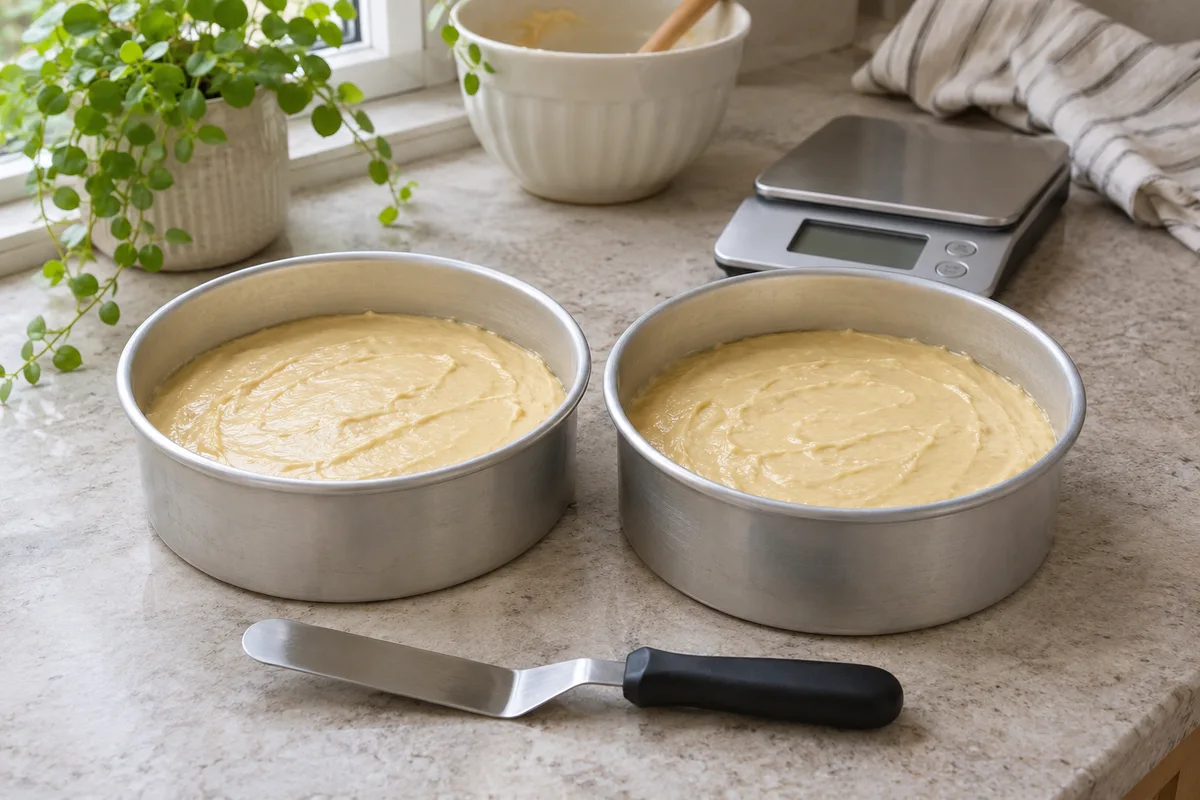
Calculate a round pan's base area as π times radius squared, where radius is half the diameter. An eight-inch round has radius four inches and area about 50.3 square inches. A nine-inch round has radius 4.5 inches and area about 63.6. This difference is much greater than the diameter numbers alone suggest.
Eight-inch versus nine-inch round
Dividing 63.6 by 50.3 gives approximately 1.27. So a nine-inch round has about 27% more base area than an eight-inch round. If both pans have comparable depth and you maintain the same batter height, the larger pan can accept roughly 27% more batter. Real capacity also depends on walls, allowable fill and recipe rise.
Use the specified pan diameter in Classic Vanilla Layer Cake as the starting point for an area calculation.

The eight-inch square comparison
An eight-inch square has a base area of 64 square inches, close to a nine-inch round at about 63.6 square inches. That can make them candidates for a pan variation when depth, batter amount and recipe style are suitable. Corners and material still affect heat transfer; similar area does not guarantee the same baking time.
Two rounds versus a sheet cake
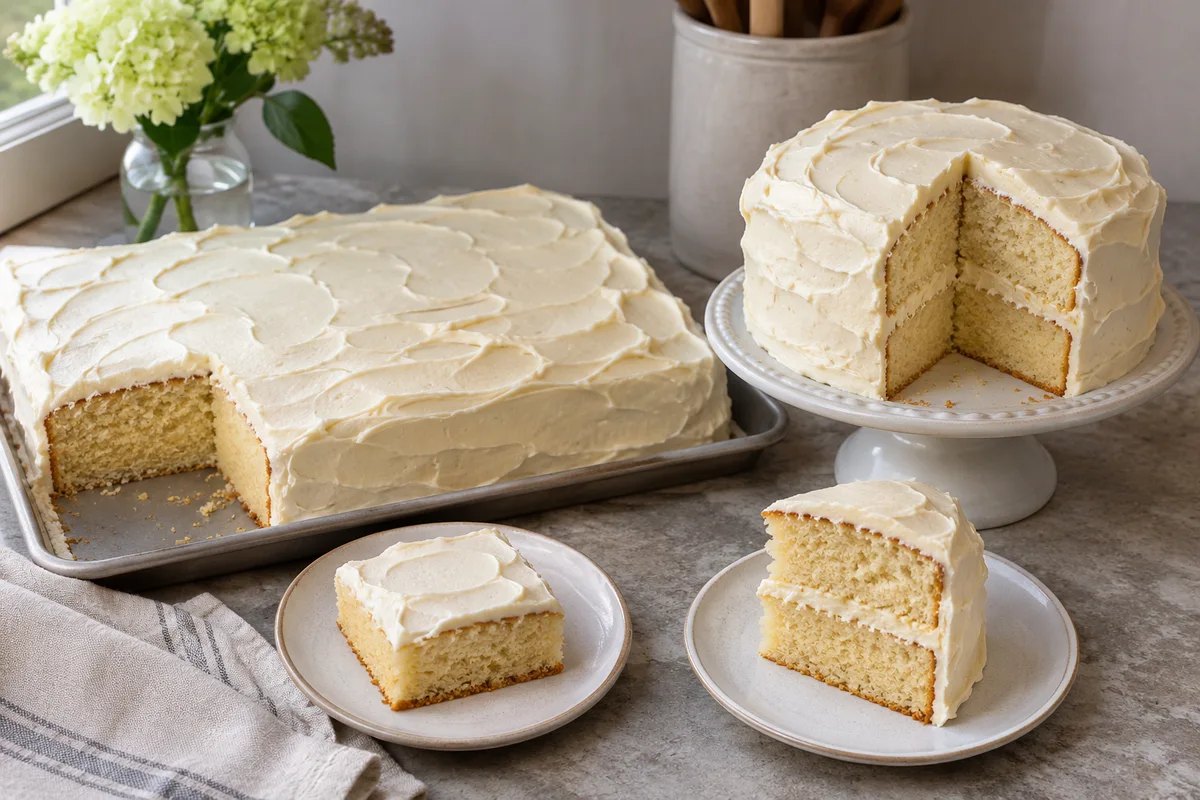
Two eight-inch rounds have a combined base area of about 100.5 square inches. A nine-by-thirteen-inch rectangle has 117 square inches, so the same batter would form a shallower layer if the pans otherwise permit the change. Use a recipe-supported conversion where available and check the bake according to the new depth.
Compare the pan specified for Classic Yellow Sheet Cake with the total base area of your rounds.
A conversion factor example
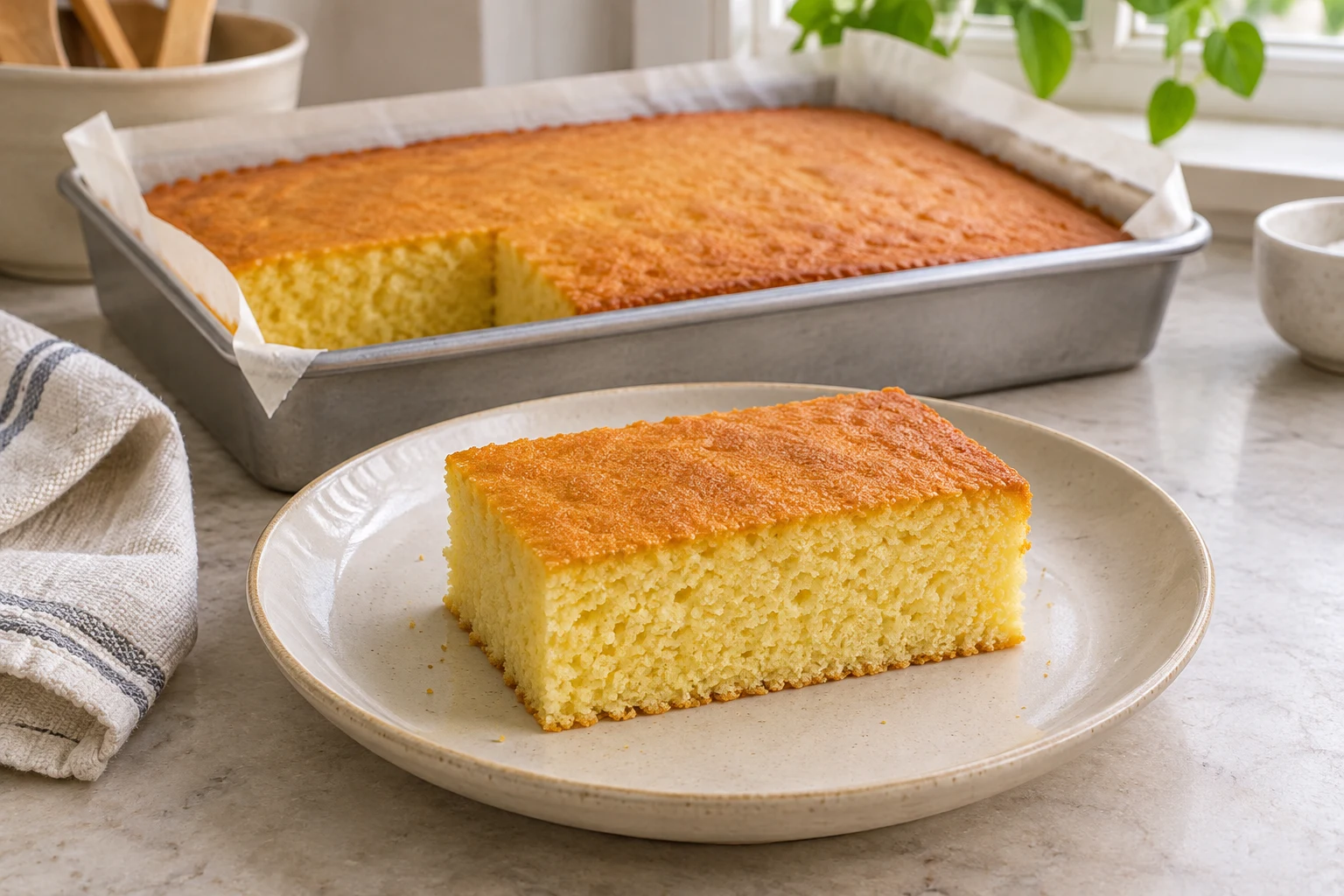
If the original pan area is 50.3 square inches and the new one is 63.6, the factor is about 1.27. For a single pan with comparable depth and desired batter height, you might theoretically scale every ingredient by that factor. However, eggs are difficult to portion without weights, and very small leavener quantities demand care. Use a trusted adaptation when possible rather than blindly multiplying an entire cake recipe.
Depth can invalidate area-only swaps
A nine-inch pan only one inch deep may hold less useful batter than an eight-inch pan three inches deep. Volume is approximately base area times depth for straight-sided pans, but safe fill height is less than wall height. Cakes expand during baking, so pans require headroom. Use real interior measurements and the recipe's maximum fill guidance.
For Vanilla Sheet Cake with Buttercream, check your pan depth as well as its length and width.

Pan volume and fill fraction
Water measured to the rim shows maximum pan capacity, not the correct batter fill. Cake batter needs room to rise, and the appropriate headroom depends on the formula. Record both the inside dimensions and the intended batter depth from a complete recipe; do not fill a cake pan to its water-capacity limit.
Why a smaller pan can be risky
Moving a recipe into a smaller pan increases batter depth and may cause overflow, cracking or a dense underbaked center. The outside may brown before heat reaches the interior. It is usually safer to use leftover batter in a separate appropriate pan than overfill the smaller vessel. Follow safe bake timing for each pan rather than assuming the small cake finishes first.
Why a larger pan changes texture
A wider pan spreads the same batter more thinly, which can shorten bake time and increase the proportion of edge cake. A thick rich batter may dry if baked for the original duration. Begin checking earlier using recipe-supported cues. The exact difference cannot be calculated from area alone because ovens, materials and formulas vary.
Glass, ceramic and metal are different
Light metal usually transfers heat differently from heavy ceramic or glass. Dark metal can brown edges more aggressively, while glass and ceramic can retain heat after removal. These differences influence the practical conversion. Check cookware guidance and respect thermal-shock limitations; don't automatically move refrigerated glass to a hot oven.
Springform and loose-bottom pans
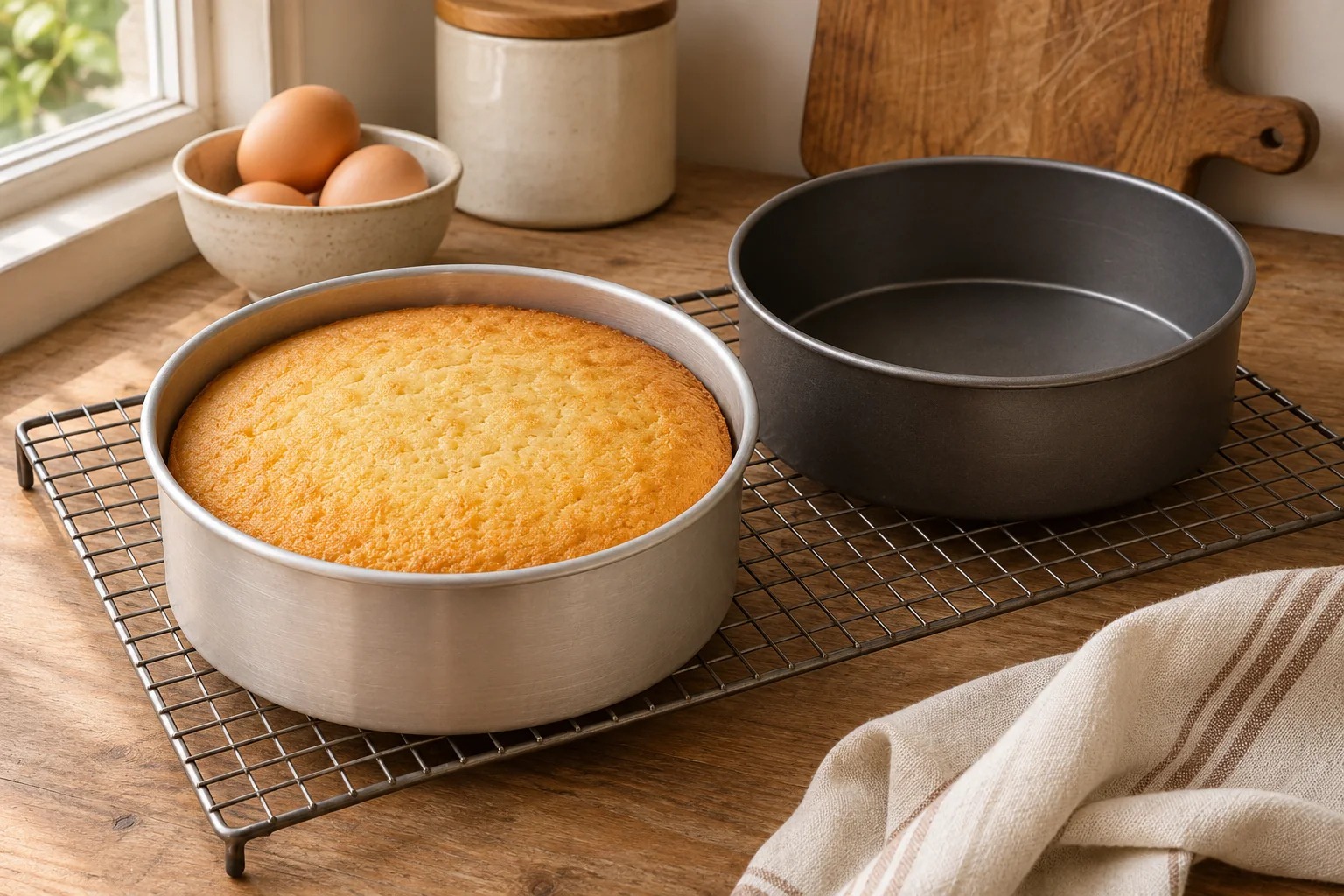
Springform pans have removable sides and often greater depth than standard layer pans. Their seams can leak thin batter or water from a bath. A cheesecake recipe may require additional wrapping or a larger protective outer pan. Don't assume a springform is interchangeable with a regular sealed pan merely because diameter matches.
Bundt pans require more thought
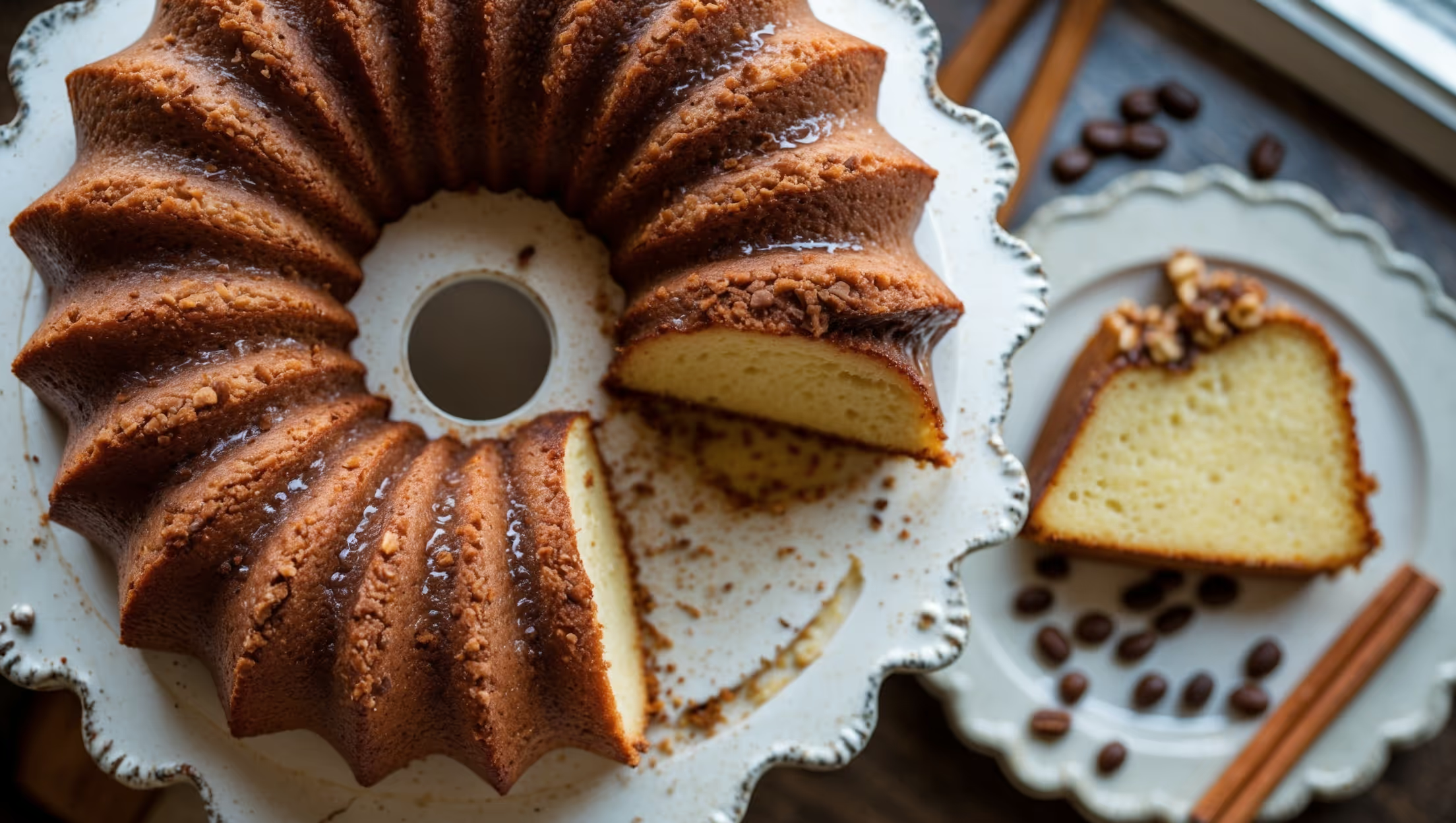
Fluted Bundt pans have irregular surface area and a central tube; the advertised capacity is often stated in cups. Compare that capacity and the recipe's intended fill level, not just diameter. A batter designed for a shallow round cake may not work equally well in a deep decorative mold. The central tube changes heat delivery and the intended release method.
The centre tube in Sour Cream Coffee Cake Bundt changes how the batter heats.
Loaf pans are not all the same
An eight-and-a-half-by-four-and-a-half-inch loaf pan differs noticeably from a nine-by-five-inch loaf pan. The bigger vessel spreads the same batter more thinly and can change height and bake time. Dense pound cakes and quick breads are sensitive to depth. Use published loaf-pan conversions or choose a recipe designed for your pan rather than filling to the top.
The upright profile of Buttermilk Sandwich Bread illustrates why loaf tins need a depth check too.

Scaling recipe ingredients
If scaling a verified recipe, multiply ingredient weights consistently, including flour, sugar, fat, eggs and leaveners, while respecting practical rounding and recipe limits. Weigh beaten eggs when the new quantity is fractional. Some formulas do not scale perfectly in a small home mixer, especially whipped foam cakes. Prefer tested batch sizes for sensitive recipes.
Dividing batter into multiple pans
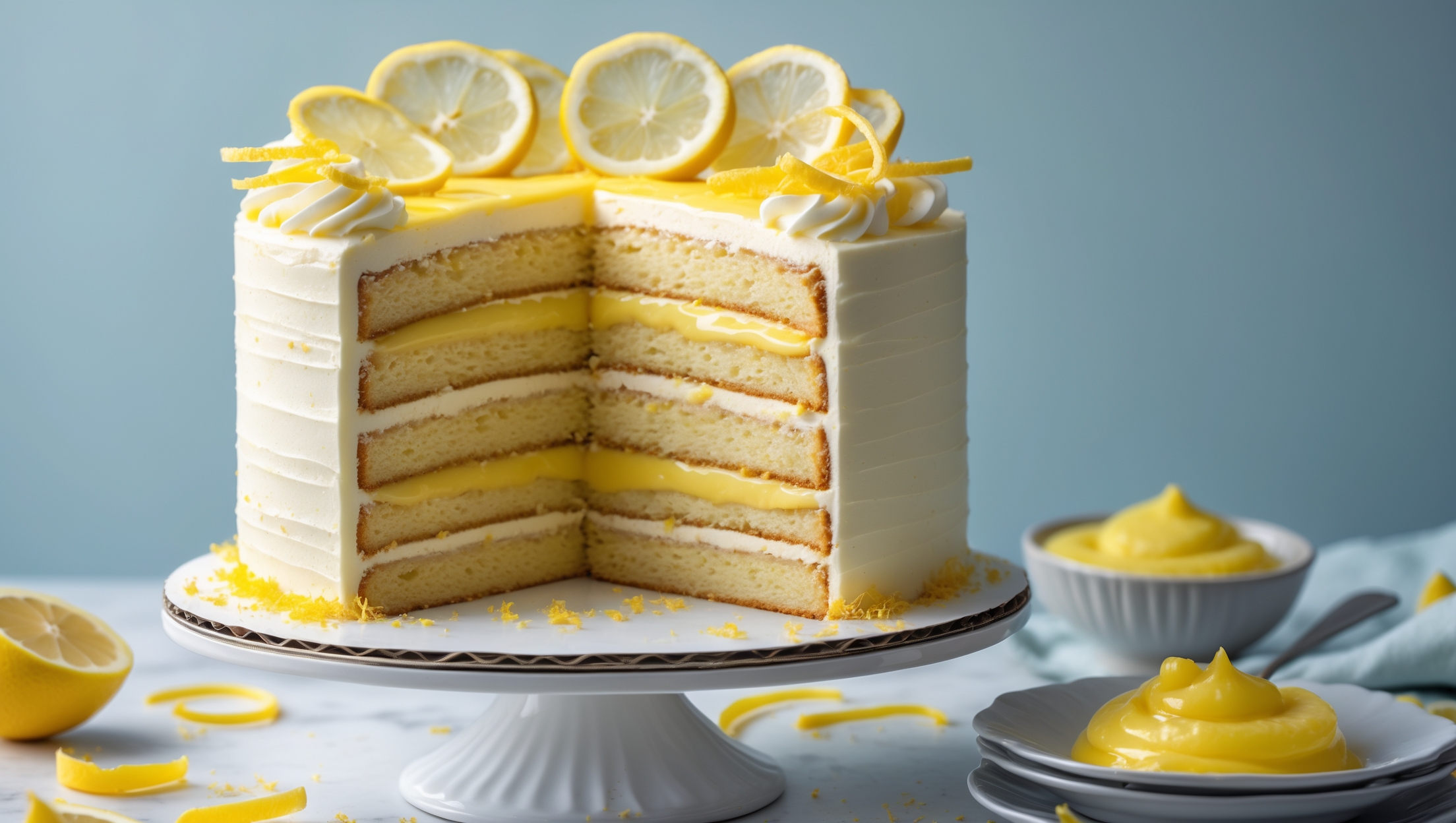
When baking two or three identical layers, weigh the total usable batter and divide evenly. One pan filled substantially deeper than another may need extra time and produce a taller dome. Use a scale rather than relying entirely on eye level. Make sure the oven has room for air circulation around the pans.
Divide the batter for Lemon Layer Cake by weight for evenly filled tins.
What happens to baking time?
There is no simple minutes-per-inch formula. A shallower batter generally heats through sooner; a deeper one may take longer, but cake composition and pan material matter. Begin checking at an appropriate earlier time for a larger surface area, following trusted conversion guidance. Do not declare the cake done simply because its top is golden.
Use the correct doneness cues
Different cakes may call for a springing top, a clean or lightly crumbed tester or another validated endpoint. Deep chocolate cake can hide browning, while rich fruit cake may remain moist after cooking. Use the actual recipe's cues and a suitable temperature reading when provided. A raw middle cannot be corrected by frosting it.
Why cakes dome after conversion
Deeper batter can create greater temperature differences between sides and center, causing the center to rise after the edges set. Overfilling and oven temperature may exaggerate the dome. Consider pan depth and area before reducing leavener. A cake strip may help some metal layer cakes if used according to product guidance.
Avoid changing the pan and formula at once
If you switch to a larger dark pan, use a different flour and reduce sugar, an unusual result offers little diagnostic information. Keep the formula intact when testing a validated pan conversion, then record changes in height and baking time. This makes later adaptations more predictable.
A conversion worksheet
Write original pan dimensions and depth, new pan dimensions and depth, estimated base areas, recipe batter weight and desired fill height. Check whether the new pan safely accommodates the batter with adequate headroom. Consult published baking instructions or a trusted calculator before changing quantities. Note the actual baking endpoint once tested.
A practical eight-to-nine-inch example
For a cake batter intended as a single layer in an eight-inch round, switching to a nine-inch round without scaling creates a shallower cake. If instead you proportionally scale ingredients to approximately 1.27 times, you may maintain similar depth in comparable pans, subject to the recipe's limits. This is theoretical geometry, not permission to ignore ingredient mixing or oven differences.
IN PICTURES
From the baking notebook
FROM THE RECIPE BOX


