
On this page
Taste a plain piece of the baked border before trying the filling. Butter is easy to pick out there. Then break the base across the grain and look for distinct flakes or a tender, crumbly bite. Flavour, handling and flakiness are three different things to compare.
What butter contributes
Butter brings milk fat, some water and milk solids. Cold pieces can flatten into streaks as the dough rolls, and their water can turn to steam during baking. The result depends on leaving pieces distinct and giving the pastry enough heat to set around them.
The cold butter in Classic Apple Pie flavours the pastry as well as leaving small pockets between the flour particles.

What vegetable shortening contributes
Ordinary vegetable shortening is generally close to all fat and has a milder flavour. It can coat flour readily and tends to stay workable over a wider temperature range than butter. Check the label: spreadable plant-based products can contain quite different amounts of fat and water.
Use the butter pastry from Cherry Pie as a reference when tasting a separately prepared shortening crust.

Flakiness versus tenderness
Flakes are visible layers that separate as you break the crust. Tender pastry yields readily to a bite, even when the layers are small. A shortening crust can be flaky, and an overworked butter crust can be tough. Look at how the fat was incorporated before assigning all the credit to the ingredient.
Examine the flat base and the thick rim of Peach Bourbon Pie separately. A tender bite at the edge and visible layers underneath can occur in the same pie.

Why butter's water matters
When butter heats, its internal moisture turns to steam and may create separation between dough layers. Shortening doesn't contain the same quantity of water, so a formula developed around butter's composition isn't a perfect one-to-one match for pure fat. A recipe designed for shortening may specify different hydration or handling. The change matters especially in a dough where small water differences strongly affect rollability and toughness.
Flavour is the biggest noticeable difference
An all-butter crust generally offers richer dairy flavour and aromatic browning. Shortening is more neutral, allowing a delicate fruit filling to dominate. This may be desirable when baking a tart apple pie or a savoury quiche, but many people prefer the pastry's butter taste. If flavour is your priority, butter is a strong option; if ease of shaping is the main challenge, an approved blend may be useful.
Melting behaviour and kitchen temperature
Butter softens as it warms and can become greasy quickly in a hot kitchen, causing layers to smear. Some shortening formulations stay workable across a somewhat broader temperature range. That doesn't mean shortening is immune to heat or that butter must be avoided in summer. Use a cool surface, work efficiently and chill the dough as the selected recipe instructs. Fat temperature remains central to both pastry systems.
The free-standing edge of Peach Bourbon Galette makes it easy to see when warm butter has begun to smear as you fold it.

How all-butter pastry rolls
A well-chilled all-butter dough may seem hard when first removed from the refrigerator. Let it become pliable as directed before rolling, then use gentle even pressure. Visible flattened butter pieces are often desirable for flakiness. If butter begins to smear on the counter, pause and chill the dough. Adding more flour to counteract every sticky spot can dry the crust and damage its final texture.
Roll the cold butter dough for Plum Pie once its edge yields to pressure and the fat still looks distinct.

How shortening pastry rolls
A shortening dough may feel more forgiving under the pin, especially in a warm kitchen. Still give it enough rest to hydrate and turn it as you roll. A greasy smear or a sheet that sticks to the bench is a reason to pause and cool it.
Why a butter-and-shortening blend exists
Some doughs use butter for flavour and shortening for handling or tenderness. Choose a formula written for the blend you want. Replacing an arbitrary portion by volume changes both the fat and water delivered to the bowl.
A butter-based double crust such as Apple Pear Pie gives you a known starting point before trying a separate blended-fat formula.

Blind-baked crusts
Tart and pie shells baked before filling need structure strong enough to hold their sides. Proper chilling, lining, docking or pie weights can matter more than the choice of fat alone. Butter crusts may shrink when stretched or insufficiently rested, while shortening crusts are not automatically slump-proof. Follow a trusted blind-bake method with the right pan and weights, then finish baking the bottom as directed.
Check the shell of Bakewell Tart after its first bake. That stage lets you see how well the sides held before the filling arrived.

Double-crust fruit pies
For apple or cherry pie, the dough needs enough flexibility for a bottom crust, a top or lattice and a secure crimp. Both butter and shortening recipes can work. Choose based on flavour preference and how confidently you can keep fat cool while rolling. The final crust also depends on filling moisture and baking the centre thoroughly; a high-quality fat cannot rescue a watery underbaked pie.
A slice of Strawberry Rhubarb Pie lets you compare the upper strips with the bottom pastry that baked against the fruit.

Decorative lattice and cutouts
A workable dough that lifts without tearing is valuable for lattice strips. Some bakers prefer shortening blends for pliability, while an all-butter dough can be excellent when handled at the correct temperature. Chill strips that become soft, use a supportive scraper and avoid stretching the lattice. Don't expect one fat choice to compensate for overworked flour or dough that was rolled too thin.
Keep the strips for Peach Raspberry Pie cool enough that their edges stay distinct as you lift them.

Savoury pie and quiche
Butter can complement cheese, mushroom and vegetable fillings with rich flavour. A neutral shortening crust may let the savoury filling dominate. Both require proper baking and, where appropriate, partial blind baking to prevent soggy bottoms. Custard pies with eggs or cream also need safe refrigeration after baking. A flaky pastry crust doesn't make a perishable filling shelf-stable.
Taste the pastry with the savoury filling of Spinach and Ricotta Quiche when deciding how much you value the flavour of butter.
Allergy and dietary considerations
Butter contains milk-derived ingredients, so it isn't appropriate for milk-protein allergy or vegan diets. Vegetable shortening may be plant-based, but read the label for all ingredients and cross-contact. A shortening crust can still contain wheat or other allergens. Ghee and clarified butter remain dairy-derived despite their different composition. Use a tested dairy-free recipe when strict avoidance is required.
For a different dietary requirement, start with the full ingredient list in Vegan Gluten-Free Pie Crust and check the individual product labels.
The butter substitute trap
Tub spreads, baking sticks and pure shortening may all be sold as alternatives to butter. Read their fat content and how the package says to use them. For a dairy-free pie, check the entire recipe and labels, including the finish on the pastry.
Comparing the same recipe isn't always fair
If you take one all-butter dough and substitute shortening gram-for-gram, the water content changes. Comparing the results doesn't reveal only the fat's intrinsic quality; it also tests an unbalanced recipe. A fairer experiment uses two tested formulas designed around each fat and keeps the fruit filling, pan and oven consistent. Record flavour, flake, ease of rolling and next-day texture.
Break a cooled edge from Apricot Almond Hand Pies and taste it before the filling. Use an equally thick piece of a shortening crust when you compare how each pastry crumbles.

How to keep butter cold
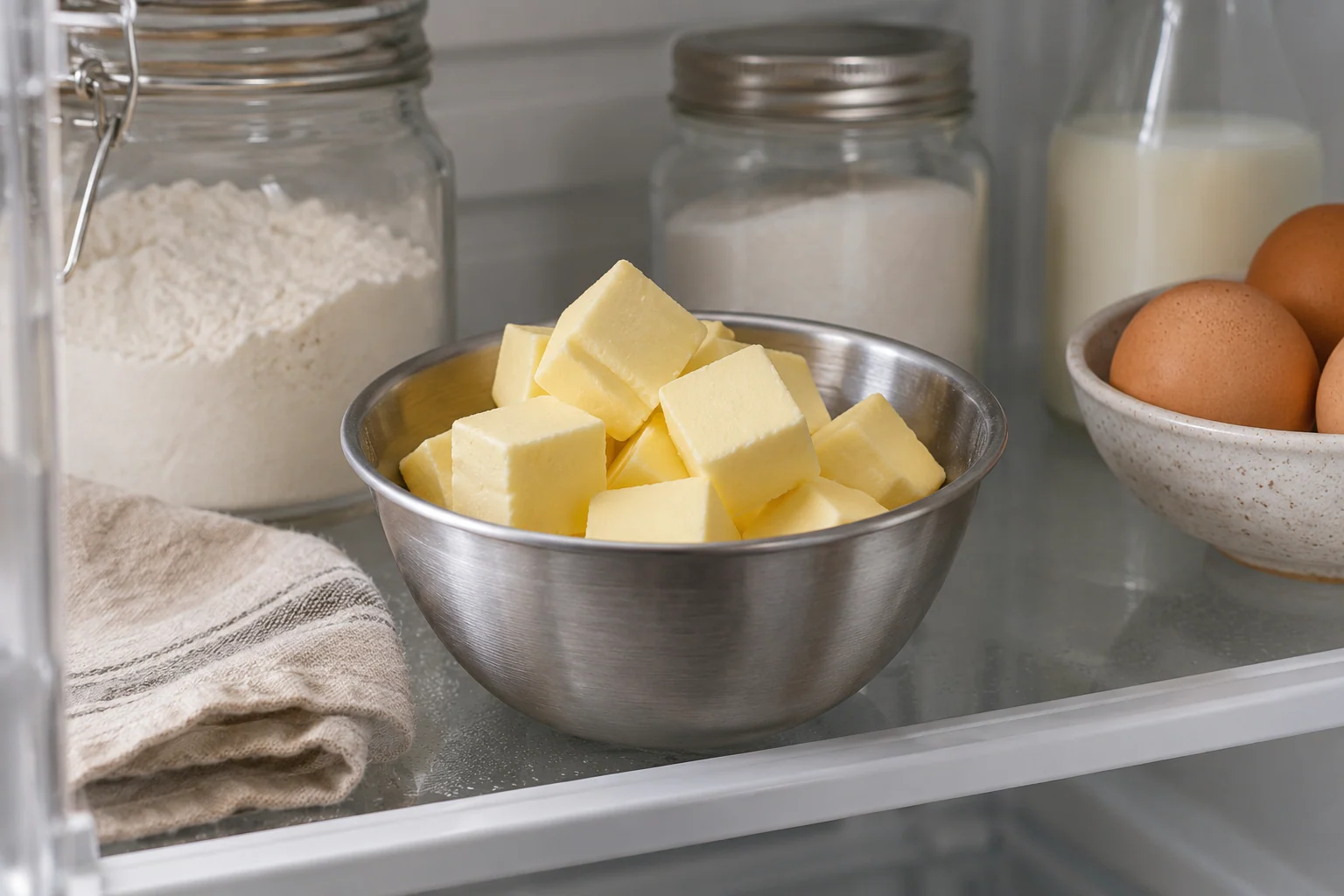
Work on a cool surface and cut butter into suitable pieces before mixing. Handle quickly enough that the fat doesn't become greasy. If the dough gets warm, chill it rather than continually adding flour. A pastry cutter, fingertips or food processor may all work under different tested methods. Avoid processing until butter completely disappears when the recipe relies on visible pieces for flaky layers.
If the border of Blackberry Lime Galette feels greasy as you fold it, chill the pastry before trying to sharpen its creases.
Why water measurement still matters
Too little water produces a crumbly sheet that cracks under a rolling pin. Too much encourages gluten and tough pastry. Because butter and shortening contain different amounts of water, the chosen formula's liquid range matters. Add cold liquid gradually and use the recipe's squeeze test rather than pouring in a fixed amount solely because you changed the fat type.
Measure the water for Maple Apple Pie into a small jug so you can record what its butter dough actually used.
Storage and freezer use
Some all-butter and shortening pie doughs freeze well when wrapped appropriately, but follow the recipe's guidance for chilling, thawing and baking. Frozen dough may crack if rolled before becoming pliable. Glass and ceramic pie plates have thermal-shock limitations; never assume they can move directly from freezer to a blazing oven. The fat choice doesn't override cookware safety.
A simple practical test
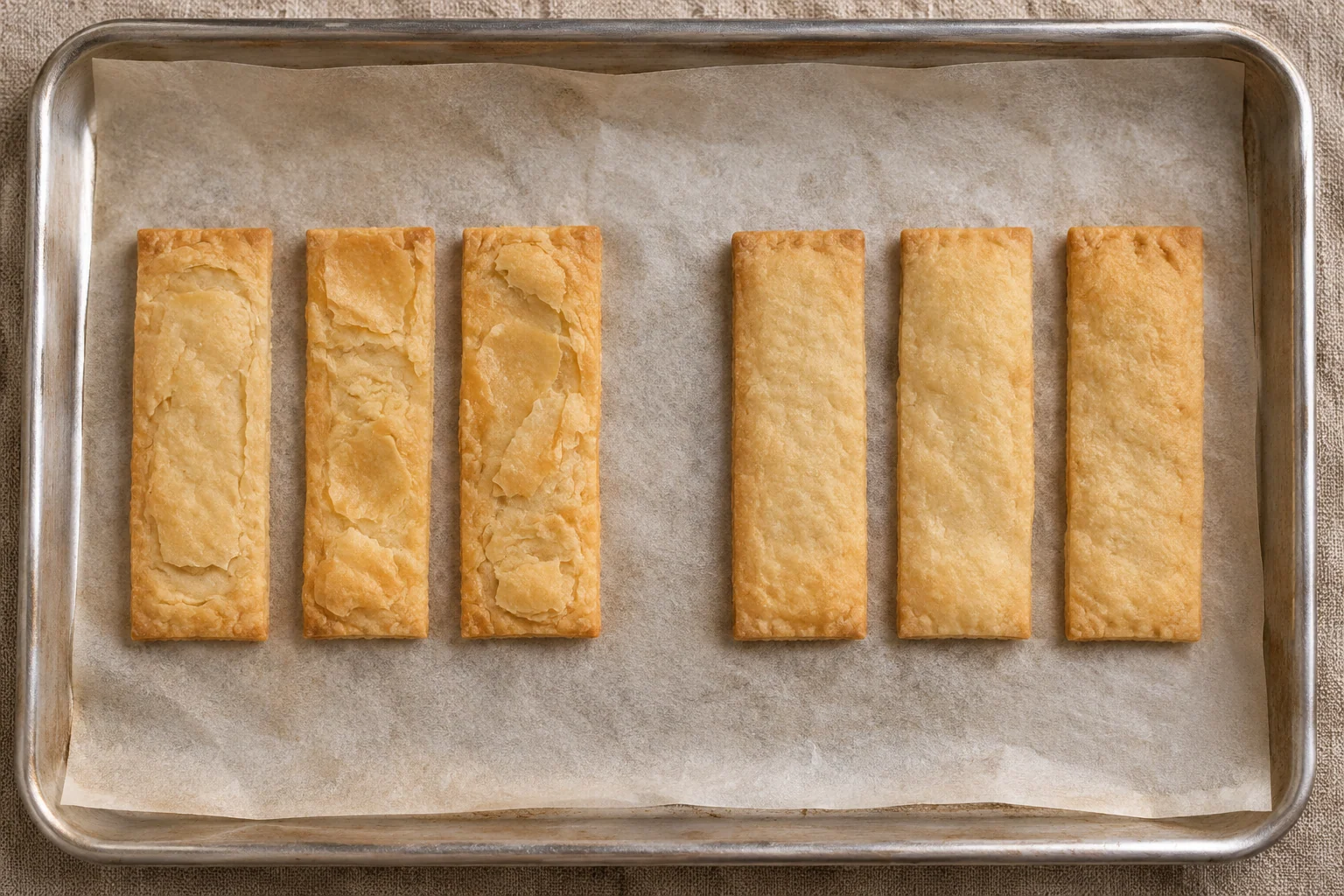
For a side-by-side test, choose one butter-crust formula and one written for shortening, roll them to the same thickness and cut equal strips. Bake as directed on comparable trays. Once cool, assess flavour, edge definition and how the strip breaks before adding either crust to a pie.
Frequently asked questions
Is butter always flakier? Not automatically; technique matters. Does shortening taste like butter? No. Can I replace one with equal grams of the other? Not reliably without considering water and recipe balance. Is all shortening vegan? Check the label. Can you combine fats? Yes, in a tested blend formula. Why did all-butter pastry shrink? Stretching, resting and hydration may be involved.
The right fat is the one that suits your pie
Choose all-butter pastry when rich flavour and golden layers are priorities, shortening when a tested recipe's handling and tenderness appeal, or a well-formulated blend for a compromise. Measure accurately, work with cool fat, add water carefully and bake fully. Those techniques matter regardless of which solid fat you choose.
With Pear Almond Pie, taste a bare piece of crust and then a bite with almond filling. That is an easy way to decide how much butter flavour you want in the finished dessert.

IN PICTURES
From the baking notebook
FROM THE RECIPE BOX


