
On this page
A seven-day meal plan is easiest to follow when it is built around food you actually enjoy, a grocery list you can use, and recipes that say what they really contain. This beginner-friendly guide brings together breakfasts, lunches, dinners and optional snacks from the What’s Baking? recipe collection. You will see colourful salads, practical egg dishes, satisfying chicken and fish meals, and a few lower-carbohydrate desserts. You will also see where the original plan needs important corrections: a linked Tuscan salmon recipe was called chicken, a quiche contains a wheat-flour pastry, and a cheesecake was proposed as breakfast.
Important: This is a recipe-planning example, not a personalized ketogenic prescription. Very-low-carbohydrate diets are not appropriate or necessary for everyone. Food portions, the carbohydrate content of branded ingredients, medications and individual medical needs vary. The daily menu below has not been calculated or tested to meet a specific net-carbohydrate target or to produce ketosis. If you want to follow a strict therapeutic or medically supervised ketogenic diet, work with an appropriately qualified clinician or registered dietitian. If you prefer a less restrictive eating pattern, these recipes can also inspire ordinary lower-carbohydrate meals.
For all the recipes mentioned here, follow the actual What’s Baking? recipe card for measurements and cooking instructions. The menu combines dishes and suggested accompaniments; side dishes, swaps and portions are planning ideas rather than separately tested recipe variations.
First, what does “keto” actually mean?
A ketogenic eating pattern is typically very low in carbohydrate and relatively high in fat, with moderate protein. Restricting carbohydrate can change how the body obtains energy, but “low-carb” and “ketogenic” are not identical labels. A person can enjoy a recipe marketed as keto without following a ketogenic diet overall. The amount of carbohydrate that results in ketosis differs from person to person.
The original article instructed every reader to aim for 20–30 grams of net carbohydrates per day and gave one fixed percentage breakdown for fat, protein and carbohydrate. Those numbers appear in some popular plans, but they are not a universal recommendation. They also cannot be validated from recipe names alone. Carbohydrate content changes with the amount of onion, berries, dressing, yoghurt, milk, packaged sauce and sweetener used. Even a recipe designed for a low-carb audience may be too high in carbohydrate for an individual's particular target.
You may see net carbs described as total carbohydrate minus dietary fibre. That calculation depends on the food labelling system, and sugar alcohols are not all metabolized in the same way. Never assume a dessert is carbohydrate-free because it uses a sugar substitute. When carbohydrate counting matters, use complete product labels, measured servings and advice from your dietitian instead of relying on recipe-title claims.
For background on the evidence and trade-offs, the Harvard T.H. Chan School of Public Health ketogenic-diet review explains both the potential short-term effects and the unresolved questions about long-term safety. The Diabetes Canada position statement on low-carbohydrate diets emphasizes individualized decisions and clinical monitoring for people with diabetes.
Who should check with a healthcare professional before trying keto?
Anyone with diabetes who uses insulin, a sulfonylurea or an SGLT2-inhibitor medication should speak with their treating clinician before making a substantial carbohydrate reduction. Medication doses may need review: insulin and some diabetes medications can cause hypoglycemia, while SGLT2 inhibitors can increase the risk of diabetic ketoacidosis in certain circumstances. Do not change or stop prescribed medication on the basis of an online meal plan.
People with kidney, liver or cardiovascular disease; an eating disorder or history of disordered eating; and those who are pregnant, breastfeeding, or feeding children should not treat a general keto article as medical advice. Ketogenic diets are sometimes used for particular health conditions under specialist supervision, but that is distinct from following a general online menu. Some people experience headaches, constipation, fatigue or digestive changes with substantial carbohydrate restriction.
A heart-conscious approach also matters. A keto-labelled recipe collection can contain butter, bacon, heavy cream, cream cheese and large amounts of saturated fat. Frequent high saturated-fat intake may raise LDL cholesterol in some people. Choose unsaturated-fat options where feasible—such as olive oil, avocado, seeds and fish—and include the vegetables your nutrition plan allows. This does not automatically make a restrictive diet healthy for every person, but it avoids treating the most indulgent ingredients as the goal.
The objective of this article is to make recipe choices transparent, not to promise weight loss, prevent disease, or guarantee improved energy levels. A sustainable, balanced eating pattern is often a more suitable choice than strict keto, depending on your needs.
Before day one: Choose the right portions and read the labels
Begin with a realistic household check. How many adults are eating these meals? Does anyone need vegetarian or dairy-free options? Are peanuts, tree nuts, fish, shellfish or eggs an issue? Will you be packing lunch away from a refrigerator? This affects the shopping list more than any trendy keto rule.
Review every linked recipe's actual ingredient list. The Keto Breakfast Sandwich with Chaffle Bread contains an egg, mozzarella, almond flour, bacon and cheddar. The Keto Smoothie Bowl contains berries, Greek yoghurt, almond butter, protein powder and other additions; it is not an everyday necessity or appropriate for every diet. The Keto Beef Stroganoff uses cream, sour cream and butter in addition to beef and mushrooms.
Keep snacks optional rather than automatic. You do not need to eat a “fat bomb” between meals just because a recipe is labelled keto. Choose based on appetite, the day's overall meals, your health needs and food preferences. Dessert can be dessert without being assigned a medical-sounding benefit.
Use the following seven days as a flexible example menu. Recipes are linked to their real published pages, and I have deliberately avoided exact macro claims because the values have not been independently calculated from tested servings.
Day 1: Egg muffins, tuna salad and garlic-butter chicken
Breakfast — Keto Egg Muffins (Veggie or Sausage). The published recipe combines eggs and cream with cheddar and either vegetables or cooked breakfast sausage. It makes 12 muffins, which can be useful when you need several portions across the week. Choose the veggie or sausage route after checking your household preferences; a combination of both requires adjusting the published recipe and should not be described as tested. Because the mixture contains eggs and dairy, cook it thoroughly and refrigerate leftovers promptly.

Lunch — Keto Tuna and Avocado Salad. This is a no-cook bowl of canned tuna, avocado, cucumber, tomatoes, onion and salad leaves with a lemon-and-mustard dressing. The recipe uses oil-packed tuna and olive oil, so consider the amount of dressing rather than assuming more is always better. Add the avocado shortly before eating to help it look fresh, and transport the salad cold.
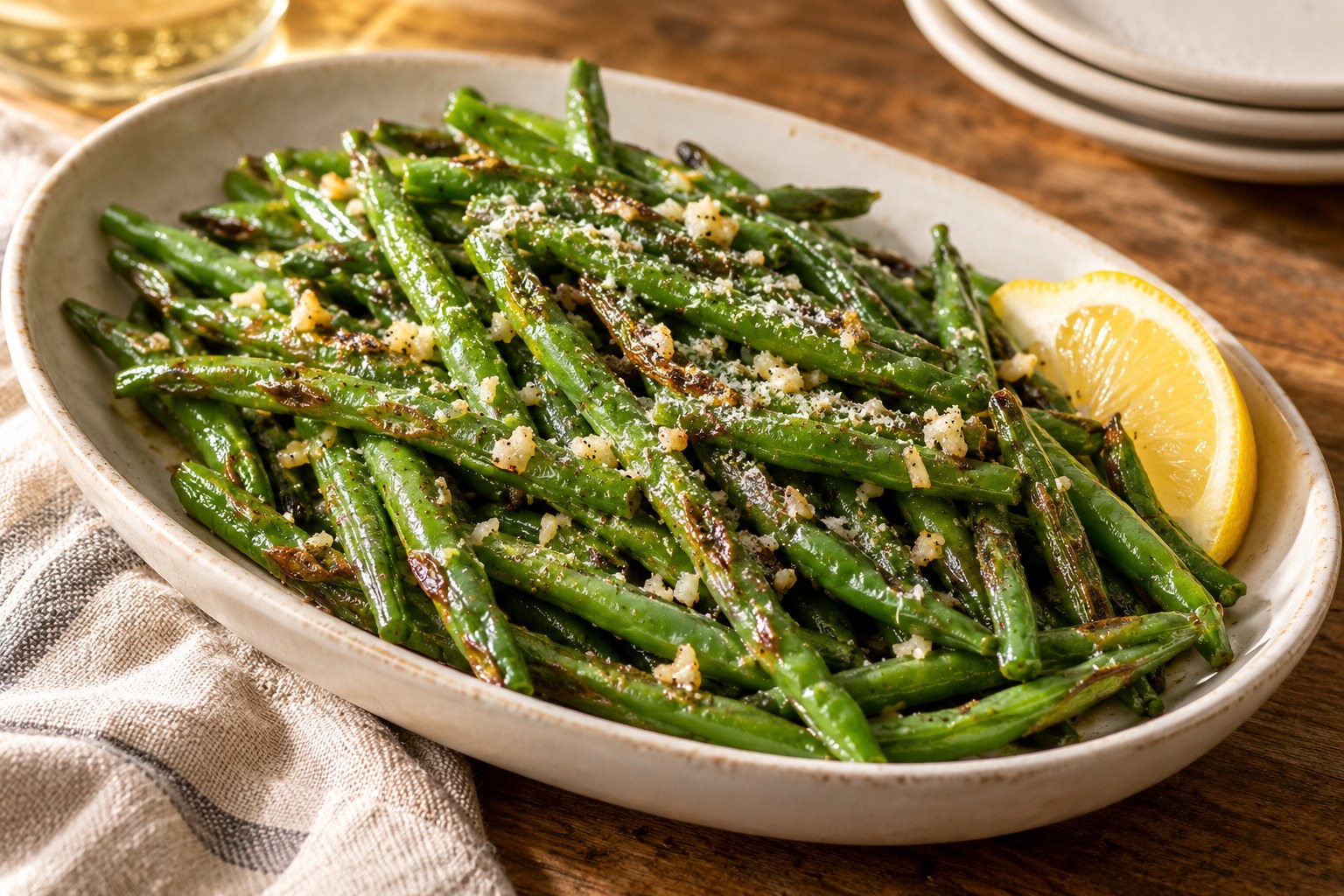
Dinner — Keto Garlic Butter Chicken Thighs with Air Fryer Green Beans. The published chicken recipe calls for bone-in, skin-on thighs, garlic, herbs, butter and olive oil. The green-bean recipe uses olive oil, garlic and Parmesan, making it a vegetable side that adds contrast to the rich chicken. Prepare chicken on a separate board from the vegetables and check its safe internal temperature with a food thermometer.
Optional snack — Keto Cucumber Sandwich Bites. These cucumber rounds feature cream cheese, bacon and herbs. They are cold, perishable bites, not an unrefrigerated lunchbox food. If you are already satisfied after meals, skip the extra snack.
Practical day-one lesson: The most useful preparation is washing the greens, organizing the egg-muffin ingredients, and choosing containers in advance. This day features eggs, dairy, tuna and chicken, so it is not vegetarian, fish-free, or dairy-free without substantial changes.
Day 2: Pancakes, Caesar salad and buffalo casserole
Breakfast — Keto Pancakes (Almond Flour or Coconut Flour). The published ingredient list offers almond flour or coconut flour with eggs, unsweetened almond milk, oil, baking powder and a sugar substitute. These two flours absorb liquid differently, so follow the recipe's specific instructions rather than substituting equal quantities. Almond flour is a tree-nut allergen, and “sugar-free syrup” can still contribute carbohydrate depending on the brand and portion.
Lunch — Keto Chicken Caesar Salad without Croutons. This version includes cooked chicken, romaine lettuce, bacon, Parmesan and a dressing made with mayonnaise, anchovies, mustard and olive oil. Unlike a basic lettuce salad, it contains fish through the anchovies and dairy through the cheese; check those details before serving. Keep dressing separate if packing lunch so the lettuce remains crisp.
Dinner — Keto Buffalo Chicken Casserole. Here the published method begins with already-cooked, shredded chicken, then combines it with buffalo sauce, cream cheese, ranch dressing, vegetables and cheese. This is a practical way to use safely cooked chicken already prepared for meal planning. Remember that the sauce and dressing brands affect sodium, sugar and carbohydrate totals; the word “keto” in the name is not a substitute for label checking.
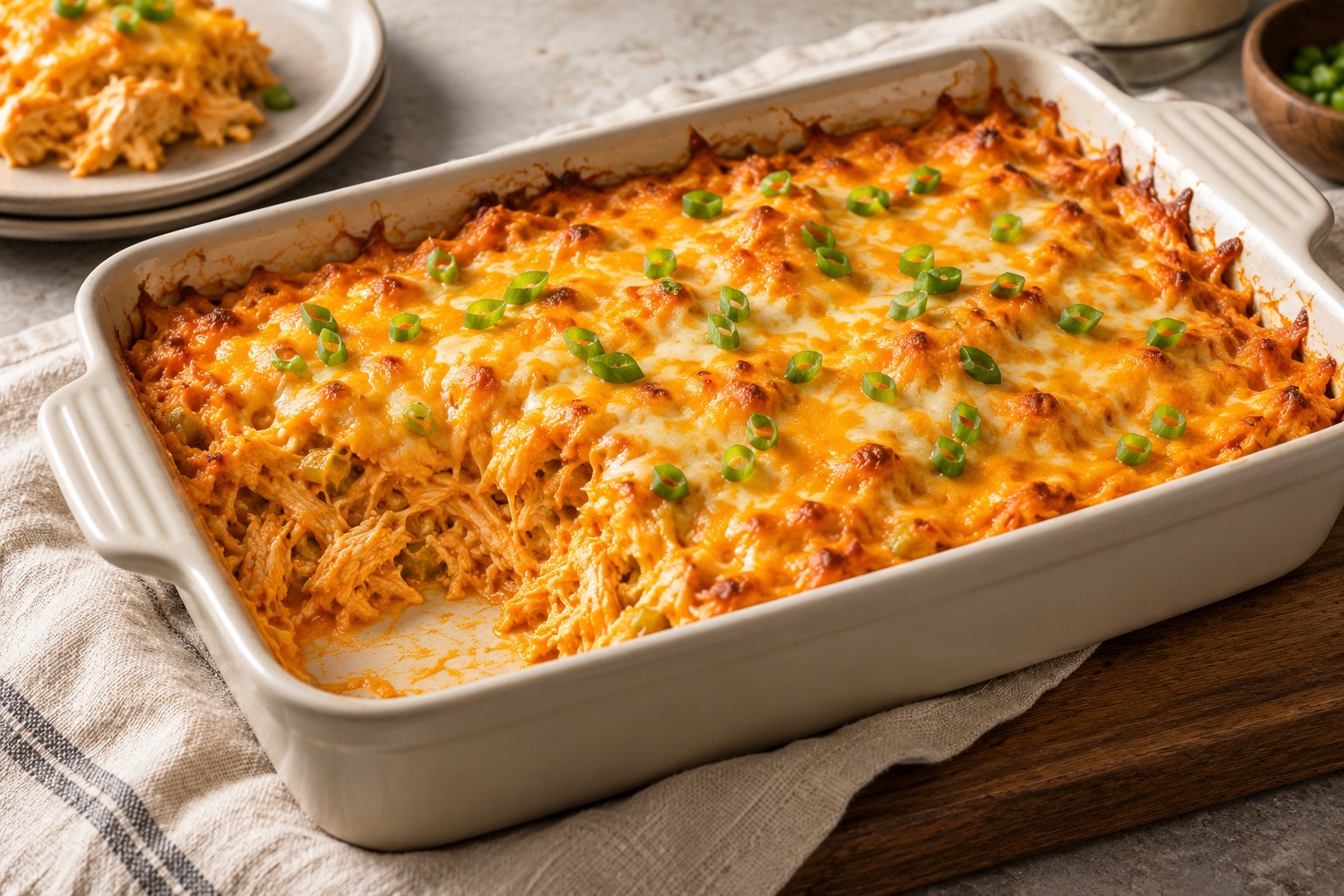
Optional snack — cucumber slices with a small portion of the published cucumber bites. A full second rich cheese-based snack may not be necessary after this dinner. Save the prepared cucumbers for another day if you prefer.
Practical day-two lesson: Plan both prep and cooking time. The linked pancakes take stovetop cooking, the chicken salad needs cooked chicken, and the casserole requires chicken ready before assembly. A recipe that lists a short assembly stage is not necessarily an entirely from-scratch, fifteen-minute dinner.
Day 3: Scrambled eggs, taco bowls and creamy salmon
Breakfast — Scrambled Eggs. The site’s classic eggs recipe contains eggs, butter and milk or cream, with optional chives. For many households it is more approachable than making a specialty butter-and-oil coffee. Eat an appropriate portion with a vegetable or other accompaniment that suits your individual eating pattern. The original plan promoted Bulletproof Coffee as breakfast; that drink contains butter and MCT or coconut oil and is not a nutritionally complete replacement for a balanced meal.
Lunch — Keto Taco Bowls, Cheese Shell or Lettuce Wrap. These use seasoned ground beef, avocado, tomatoes, onions, sour cream and optional cheese shells. The cheese-shell and lettuce-wrap options are distinct ways to serve the filling. If making a bowl, you do not have to prepare both. Check the actual beef cooking and assembly steps; do not present a cheese shell as a grain tortilla.
Dinner — Keto Creamy Tuscan Salmon. This is a recipe for salmon fillets with garlic, sun-dried tomatoes, cream, cream cheese, Parmesan and spinach. The original article called a later serving of this same recipe “Creamy Tuscan Chicken,” but the linked recipe contains salmon, not chicken. Serve it with a suitable vegetable side, such as green beans, without describing that side as part of the published salmon formula.
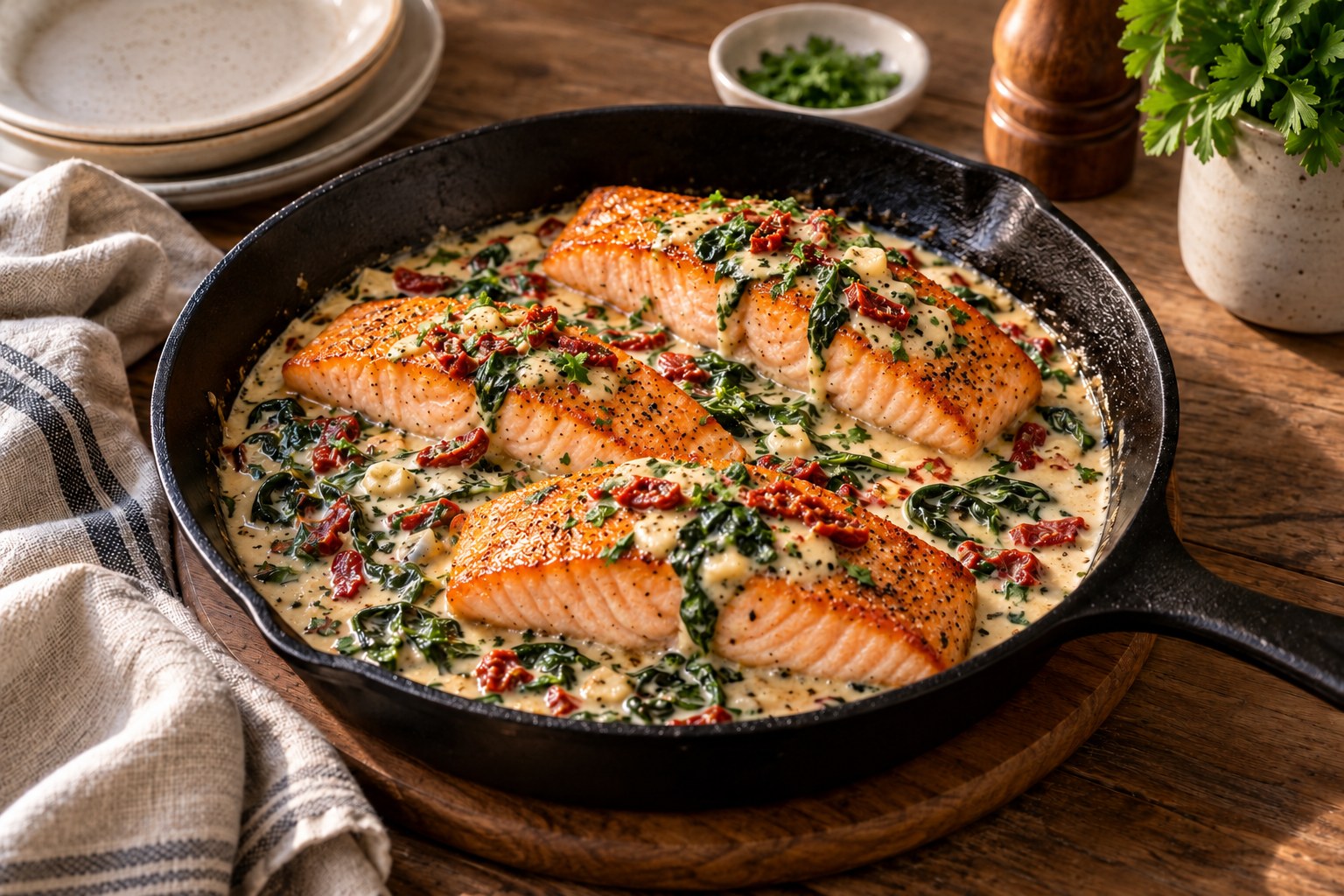
Optional snack — Keto Parmesan Cheese Crisps. The site’s recipe uses grated Parmesan and optional herbs or seasonings. They are crispy, salty, and dairy-based. They work as a small savoury addition, but do not need to be included for the sake of hitting a made-up daily fat quota.
Practical day-three lesson: Avoid duplicating the same rich sauce at multiple meals. If this day feels too dairy-heavy, use the linked dishes on different days or choose simpler accompaniments. A meal plan should fit both preference and health context.
Day 4: Berry bowl, egg salad and a flexible dinner
Breakfast — Keto Berry Smoothie Bowl. Despite its “keto” name, the published bowl contains berries, coconut milk, Greek yoghurt, almond butter, protein powder, MCT oil and sweetener, plus optional toppings. Fruit and dairy naturally contribute carbohydrate. Use the actual recipe portion, review the label of any protein powder and avoid treating supplements or MCT oil as mandatory. If those additions do not suit you, choose a simpler breakfast rather than assuming an untested removal works identically.
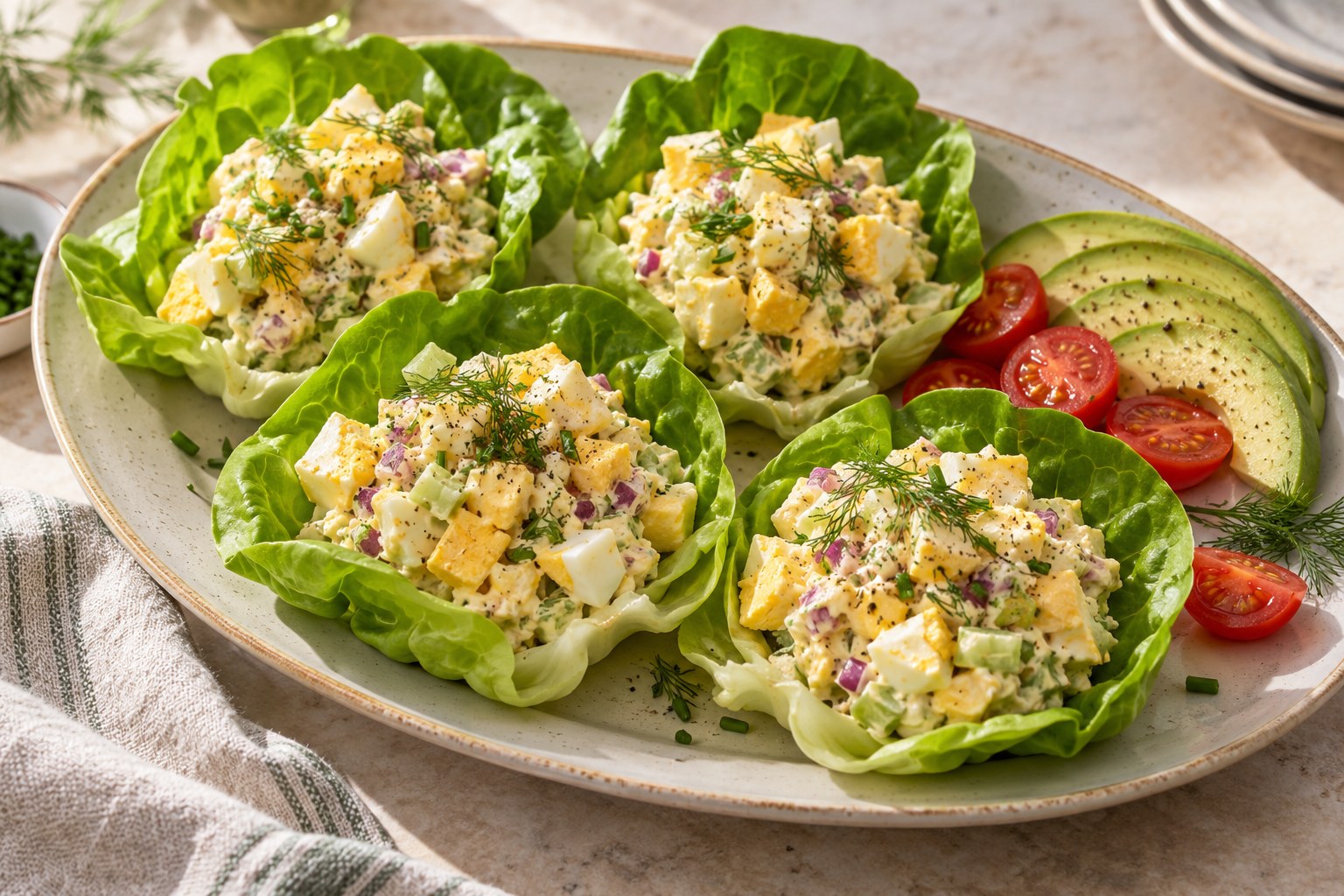
Lunch — Keto Egg Salad Lettuce Wraps. The recipe uses hard-boiled eggs, mayonnaise, mustard, herbs, lettuce and optional avocado. It is simple to assemble but requires eggs to be boiled and cooled beforehand. Pack egg salad chilled, keep lettuce separate if desired, and discard food that has been held unsafely at room temperature.
Dinner — Keto Creamy Tuscan Salmon with Keto Cauliflower Mashed “Potatoes”, or a leftover portion from a previous dinner. Reusing the salmon saves recipe decisions but also repeats fish. If repeating salmon does not appeal, you can choose another previously verified dish that suits your household, such as garlic-butter chicken. The cauliflower recipe contains cream cheese, butter and Parmesan; its title is a comparison of texture, not a claim that it contains actual potatoes.
Optional snack — a small serving of almonds or cheese, if appropriate. These contain allergens and may not be suitable in all households. Choose something compatible with your own health needs and appetite.
Practical day-four lesson: The middle of the week is where a plan benefits from flexibility. A menu with an optional leftover dinner is more realistic than forcing a second large cooking project on a busy evening.
Day 5: Chaffle sandwich, zucchini noodles and beef stroganoff
Breakfast — Keto Breakfast Sandwich with Chaffle Bread. Here a small waffle made with egg, mozzarella and almond flour stands in for bread. The filling includes an additional egg, cheddar and cooked bacon. That makes a filling speciality breakfast, but it is not nut-free or dairy-free. If you do not have a waffle maker or enough time for the separate components, choose a simpler egg-based option on a busy workday.
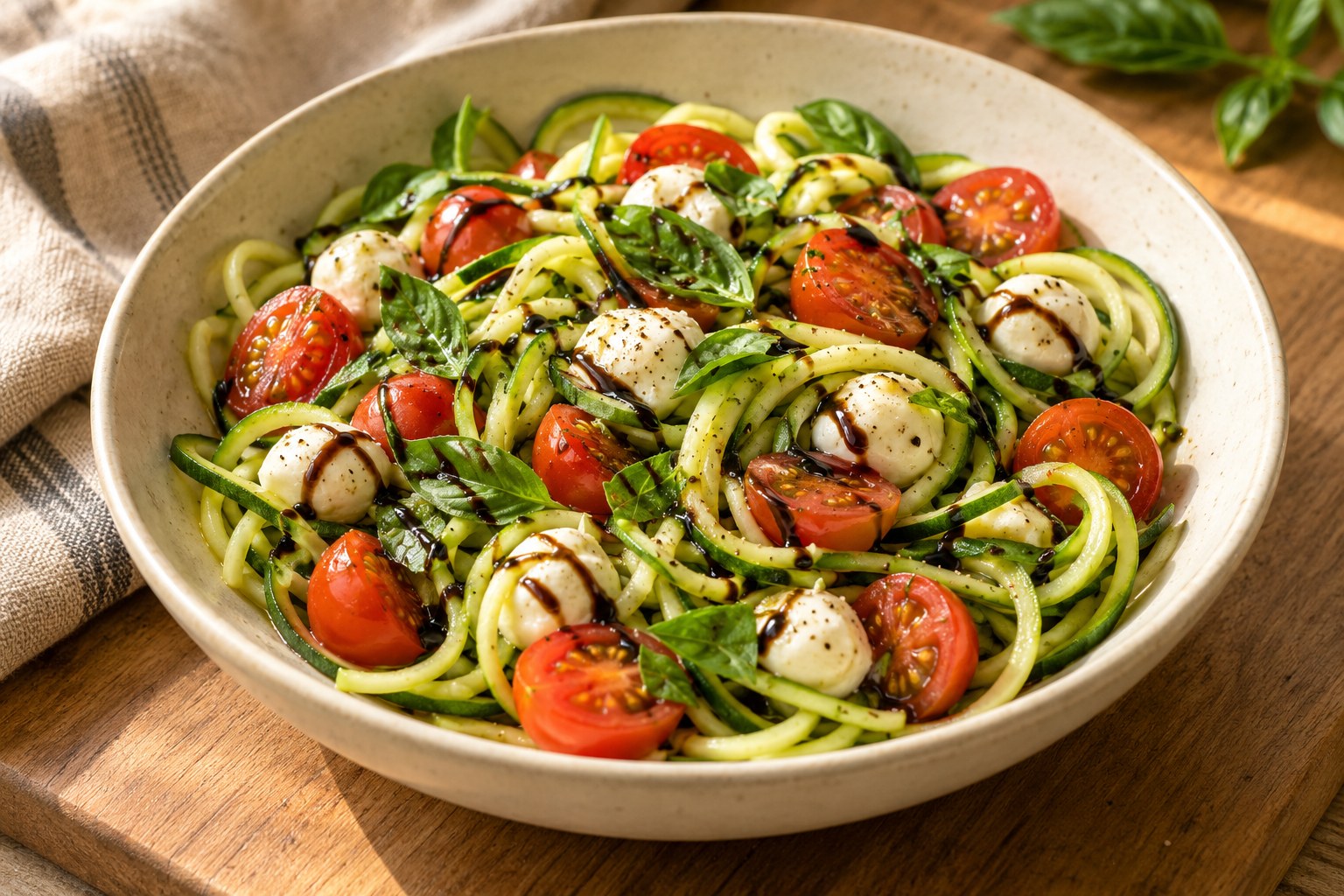
Lunch — Keto Zucchini Noodle Caprese Bowl. This combines spiralized zucchini with mozzarella, cherry tomatoes, basil, olive oil and balsamic glaze, plus optional pine nuts. The glaze may contain added sugars or concentrated fruit sugars, so use the label and measured amount if tracking carbohydrate. To avoid watery noodles, dry spiralized zucchini gently and add dressing closer to serving.
Dinner — Keto Beef Stroganoff. Beef, mushrooms, onion, broth, sour cream, cream and seasonings make a hearty meal. The published recipe already includes cauliflower rice for serving. The original meal plan suggested adding Keto Shirataki Noodles Stir Fry as though it were plain noodles; it is actually a complete chicken-or-beef stir-fry with vegetables and its own sauce. Do not present that recipe as an unseasoned noodle side.
Optional snack or treat — Keto Mug Cakes (Chocolate, Vanilla, Red Velvet). The published base recipe is divided into three mug-cake flavours; it does not imply that one person should eat all three. It uses almond flour, eggs, butter and a sugar substitute. Follow its microwave instructions carefully and remember that microwave cooking time can vary by appliance and mug.
Practical day-five lesson: Two recipes that use the same trendy ingredient are not always interchangeable. Read the whole ingredient list and method to see whether you are linking to a side dish, a main course or a dessert.
Day 6: Almond-flour French toast, Greek salad and meatloaf
Breakfast — Keto French Toast with Almond Flour Bread. This recipe begins by making an almond-flour bread with eggs and psyllium husk, then adds a separate egg-and-cream coating before frying. It is more involved than dipping a ready-made slice of bread into egg. Plan it as a slower weekend breakfast rather than a five-minute weekday recipe, and check nut and dairy allergies.
Lunch — Keto Greek Salad with Feta and Olives. Cucumber, tomatoes, red onion, olives and feta are tossed with olive oil, lemon and oregano. This is a fresh, largely no-cook option. Since the published ingredients include feta cheese, it is vegetarian but not dairy-free. Serve it cold and use the actual recipe portions rather than assuming that all dressings have negligible carbohydrate.
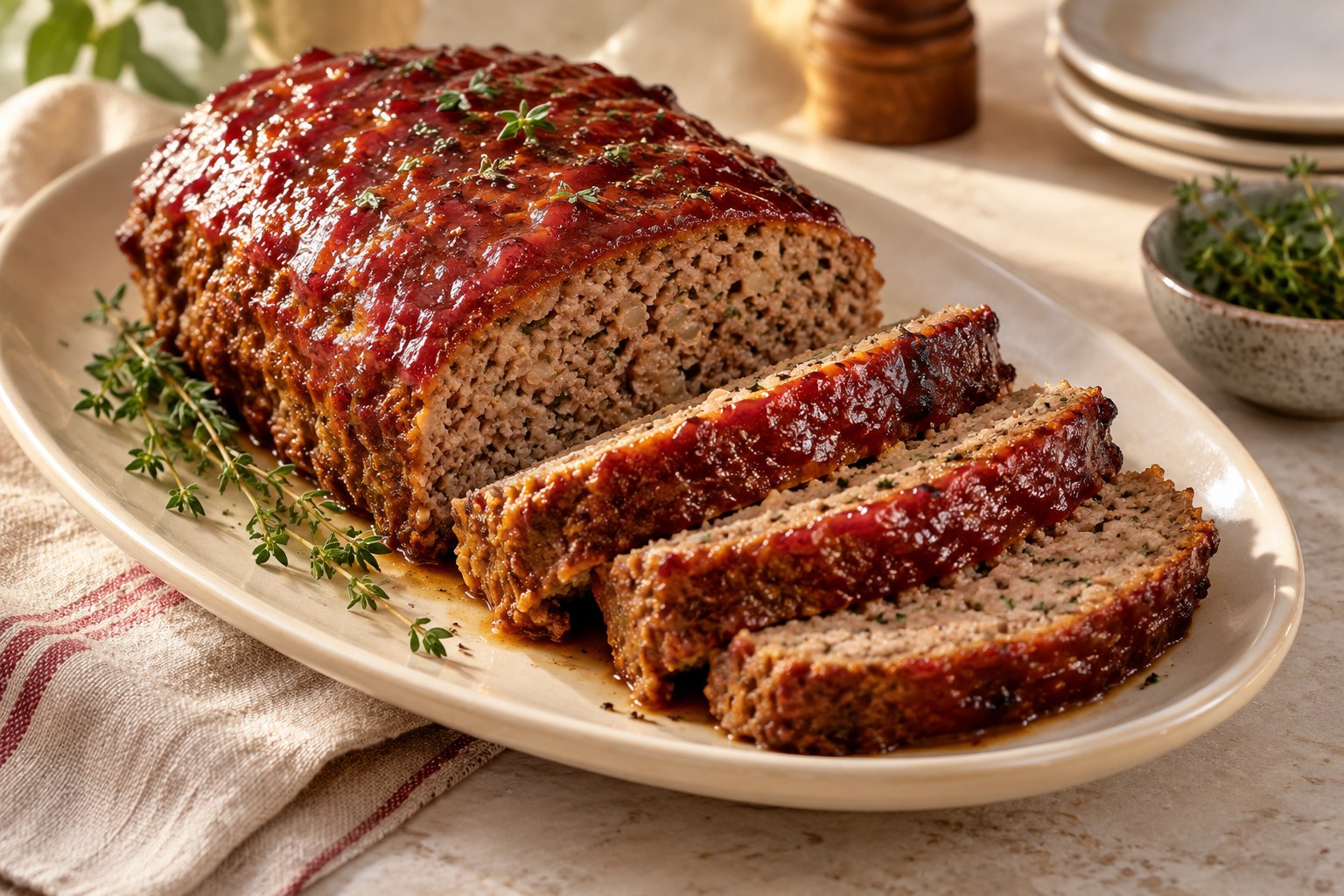
Dinner — Keto Meatloaf with a suitable vegetable side. The meatloaf recipe uses ground beef, almond flour, eggs, Parmesan, cream and a sugar-free ketchup glaze. The original plan linked to Broccoli and Cheddar Quiche as a keto vegetable side, but the quiche has a conventional wheat-flour pastry crust. It is not appropriate to label that published quiche gluten-free or reliably keto. A simpler side is Air Fryer Green Beans, with its Parmesan and olive-oil ingredients clearly noted.
Optional snack — cucumber slices or an appropriate nut or seed portion. Keep the extra modest if the day's meals are already substantial.
Practical day-six lesson: Weekend planning creates room for a more elaborate bread recipe. When adapting a menu, correct mismatched links rather than silently claiming a flour-based pastry is low-carb.
Day 7: A familiar breakfast, cabbage salad and homemade pizza
Breakfast — Scrambled Eggs or leftover Keto Egg Muffins stored and reheated safely. The original article offered Keto No-Bake Cheesecake for breakfast. That recipe contains an almond-flour-and-butter crust, cream cheese, heavy cream, sweetener and coconut oil; it is a dessert, not a practical balanced breakfast suggestion. Enjoy it on a suitable occasion if desired, but do not make it the nutritional centre of the morning.
Lunch — Keto Asian Cabbage Salad with Sesame Dressing. Green and red cabbage, peppers, spring onions, almonds and sesame seeds create crunch. The dressing has toasted sesame oil, vinegar, sweetener, soy sauce or tamari, ginger and garlic. This recipe contains both tree nuts and sesame, and regular soy sauce may contain wheat. If allergy or gluten-free considerations apply, read labels and choose a suitable tested preparation.

Dinner — Keto Fathead Pizza Dough with toppings you choose separately. The published recipe is for the dough: mozzarella, cream cheese, almond flour, egg and seasonings. It does not provide a complete independently tested pizza with pepperoni and mushrooms. If you add toppings, select and cook them safely, and count any sauce or topping carbohydrates independently. Use the recipe’s actual dough instructions and baking guidance.
Optional dessert — Keto Lemon Bars (Sugar-Free), if desired. These are made with almond flour, butter, eggs, lemon and sweetener. “Sugar-free” does not mean the bars contain no carbohydrate or are suitable for everyone with diabetes. Treat them as a dessert, not a clinical nutrition product.
Practical day-seven lesson: Review what you enjoyed, which dishes took longer than expected, and what ingredients remain. A useful plan becomes easier when you adjust it to your real week instead of insisting that every day fits an inflexible chart.
The seven-day plan at a glance
- Monday: Egg muffins; tuna-avocado salad; garlic-butter chicken with green beans; optional cucumber bites.
- Tuesday: Almond- or coconut-flour pancakes; chicken Caesar salad; buffalo chicken casserole; optional cucumber snack.
- Wednesday: Scrambled eggs; taco bowl; creamy Tuscan salmon; optional Parmesan crisps.
- Thursday: Berry smoothie bowl; egg salad lettuce wraps; salmon with cauliflower mash or a safe leftover dinner; optional suitable snack.
- Friday: Chaffle breakfast sandwich; zucchini-noodle Caprese bowl; beef stroganoff with its own cauliflower-rice accompaniment; optional mug-cake treat.
- Saturday: Almond-flour French toast; Greek salad; keto meatloaf with green beans; optional cucumber or seed snack.
- Sunday: Scrambled eggs or safely kept egg muffins; Asian cabbage salad; fathead pizza dough with separately chosen toppings; optional lemon-bar dessert.
This summary is for shopping and organization, not a calculated daily carbohydrate or calorie chart. Adjust quantities to serving needs, food safety, ingredient labels, medication advice and dietary requirements.
Grocery shopping: Build the list by department, not by recipe
Shopping is easier when you first decide which recipes you will actually cook. You probably do not need seven new breakfasts, seven completely separate lunches, seven elaborate dinners and a dessert every night. Reuse a few ingredients and save dishes that are less practical for the next week.
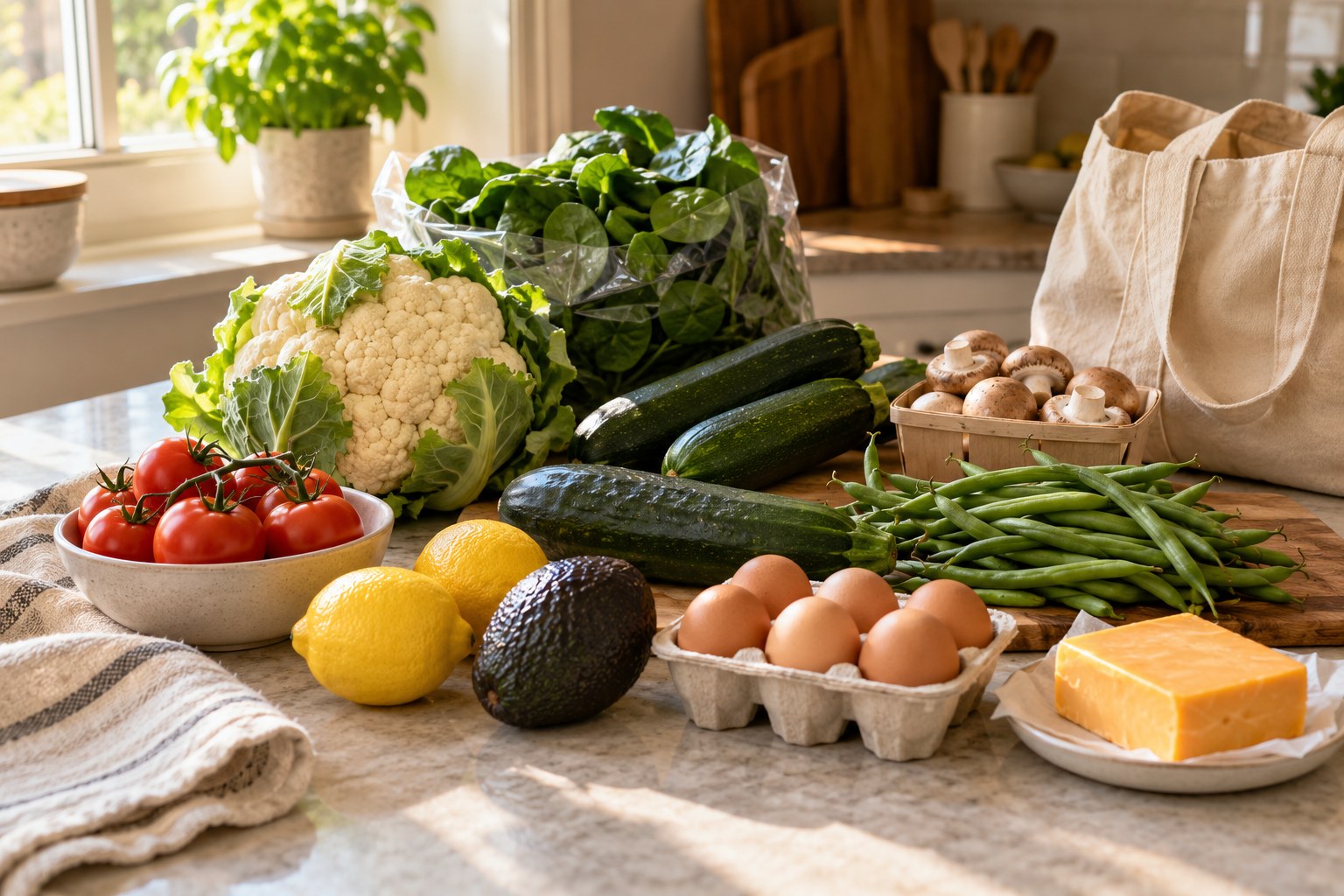
Produce: romaine or mixed salad leaves, cucumbers, spinach, green beans, zucchini, cauliflower, avocados, tomatoes, mushrooms, cabbage, onions, garlic, lemons, fresh herbs and small amounts of berries where used in linked recipes. Some recipes include bell pepper or sun-dried tomatoes. Count produce according to the servings you are preparing so fragile greens do not go unused.
Proteins: eggs, chicken thighs, cooked chicken or ingredients to prepare it safely, canned tuna, salmon fillets, ground beef and beef suitable for stroganoff. You do not need every protein in large quantities if you plan leftovers. Keep raw fish, chicken and beef sealed and away from ready-to-eat produce during shopping and storage.
Dairy and chilled foods: cream cheese, cheddar, mozzarella, Parmesan, Greek yoghurt, sour cream, butter, feta, cream or milk as specified by your chosen recipes. The sample plan is not dairy-free, and the multiple cheese-heavy dishes can make the shopping list expensive. Choose fewer dairy-intensive recipes if that better fits your preferences or health context.
Shelf-stable items: olive oil, selected spices, mustard, canned tomatoes or a suitable sauce, coconut milk, peanut butter, almond flour, optional coconut flour, chia or seeds, and any recipe-specific low-carbohydrate sweetener. Check that almond flour and nuts are appropriate for your household and guests. Read labels on dressings, marinades, ketchup and sweeteners rather than relying on front-of-package marketing.
Avoid buying everything called a keto staple. MCT oil, bulletproof-coffee ingredients, protein powder and several specialty sweeteners are not necessary to make many of these meals. Start with the grocery list for the dishes you actually choose.
A practical prep sequence for a busy household
Before shopping: Decide how many meals you will make from scratch. Check the fridge and pantry before creating duplicates. Read the recipes in full and note any advance cooking, thawing, refrigeration or chilling stages. For example, the buffalo chicken casserole expects cooked chicken, and egg salad needs cooled eggs.
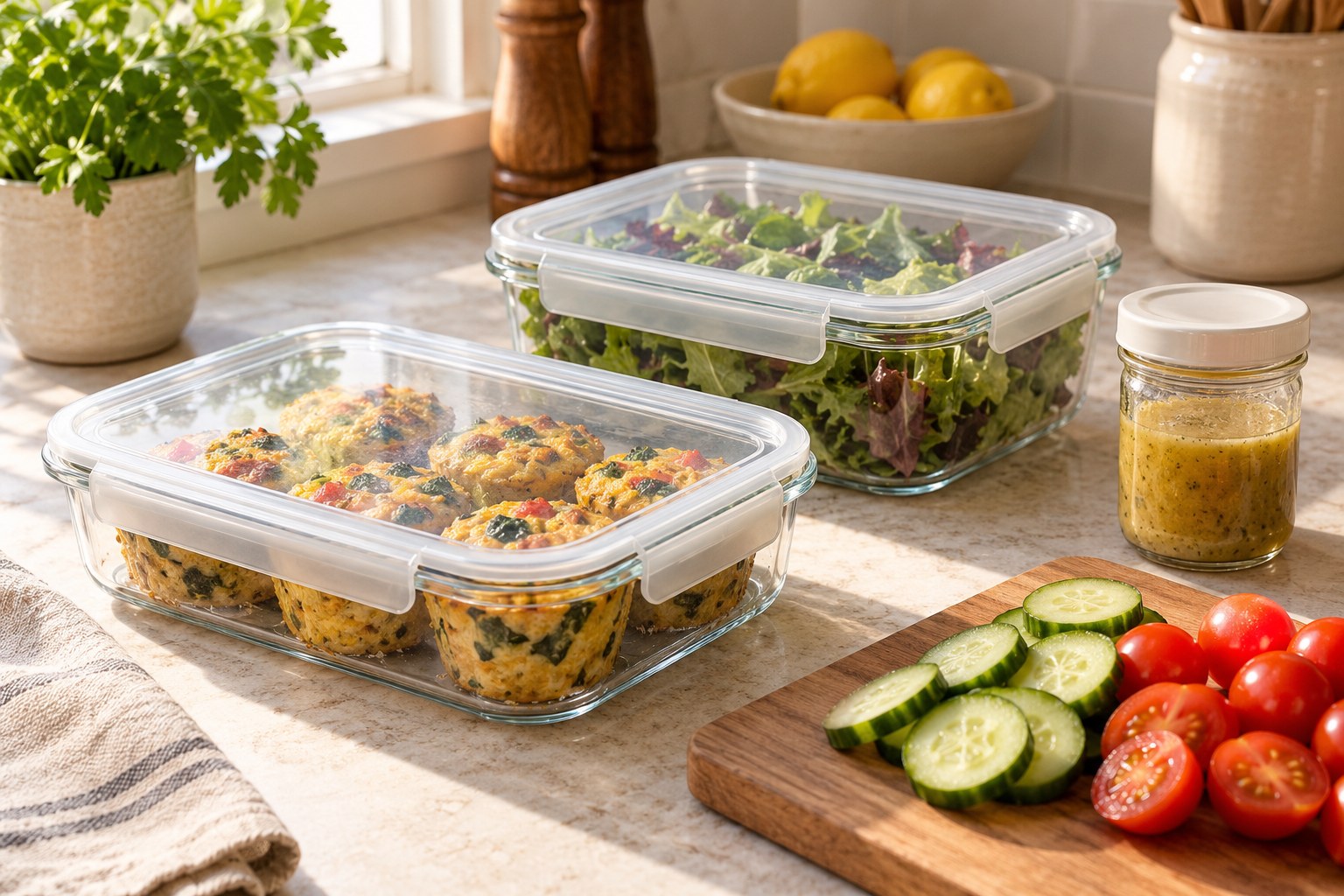
Preparation session: Wash produce as appropriate, portion suitable vegetables, set out spices, and cook any planned proteins using safe food-handling practices. Prepare egg muffins only when you can bake, cool and refrigerate them properly. Make dressing separately if it will otherwise wilt the greens. Label containers with what they contain and the preparation date.
During the week: Cook delicate fish when you can serve it freshly prepared. Keep cold salads and egg dishes chilled. Use an appropriate food thermometer for cooked proteins. Assemble avocado-based salads near serving time to reduce browning. Do not simply leave high-risk foods in the car or on an office desk until lunch.
When time runs short: Swap a complex recipe day with a simpler previously approved recipe from the week. A flexible schedule is not a failure. It reduces waste and makes it more likely that you will use the groceries you've already paid for.
For prepared food and leftovers, follow Health Canada's food safety tips for leftovers: refrigerate promptly, use refrigerated leftovers within two to three days or freeze them, and reheat leftovers to 74°C (165°F) using a thermometer. Recipe-specific handling for seafood, eggs and chicken still applies.
How to keep vegetables and fibre in the conversation
One difficulty with very-low-carbohydrate eating is that people may accidentally crowd out vegetables, legumes, fruit and whole grains, reducing their fibre and micronutrient intake. A menu full of bacon, butter, cheese and meat can appear low-carb while leaving very little room for the foods that support digestive health.
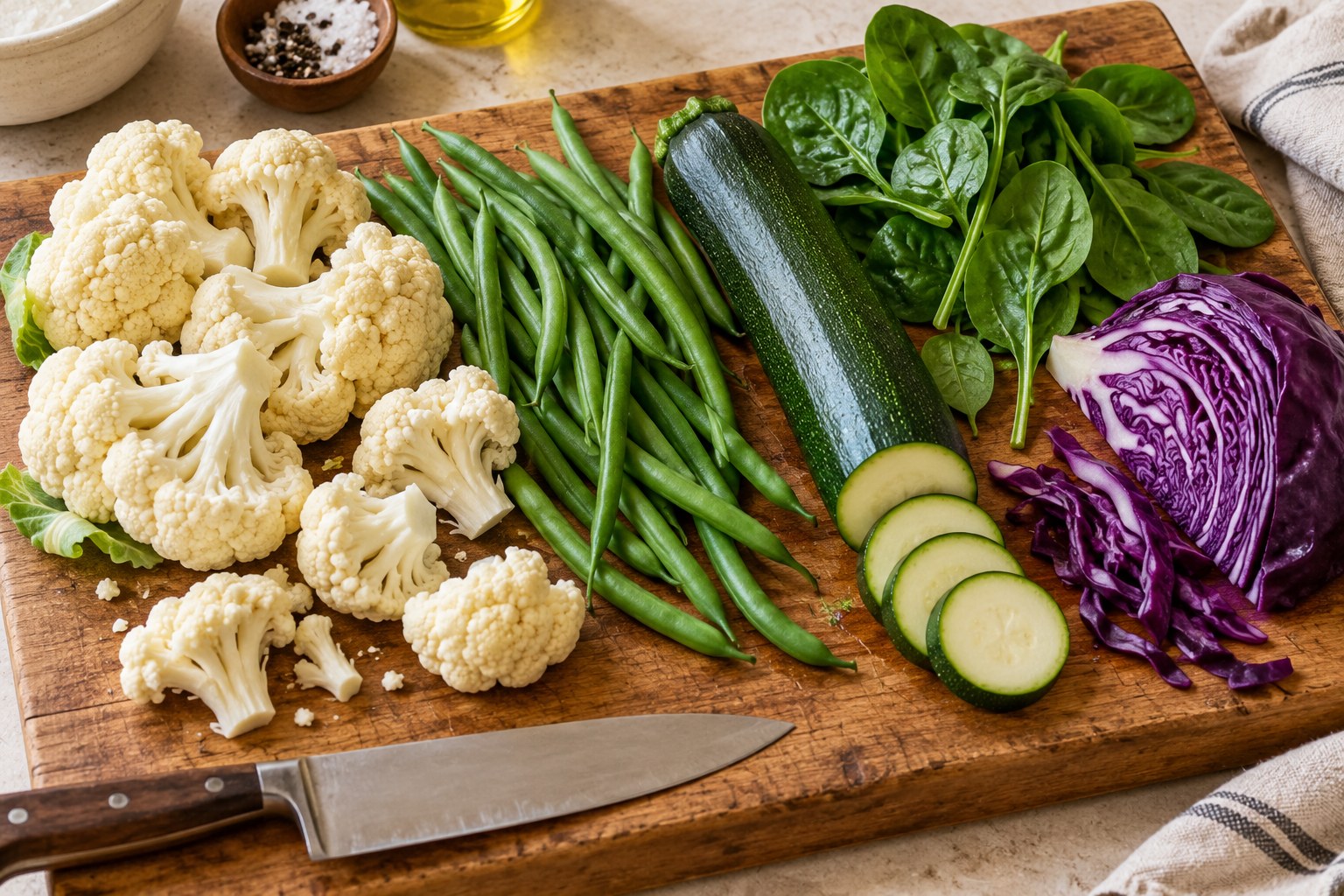
Within whatever eating pattern you and your clinician decide is appropriate, include allowed non-starchy vegetables thoughtfully. Spinach, cauliflower, green beans, cabbage and zucchini appear across this guide. These ingredients add colour, texture and variety; they are not merely decoration beside a large protein portion. Some people may benefit from a less restrictive lower-carbohydrate approach that permits a wider variety of vegetables, legumes, fruit and whole grains.
Be cautious with the assumption that a “keto” dessert improves a diet simply by replacing sugar. A high-saturated-fat dessert made from butter, cream cheese and almond flour is still a rich dessert. Likewise, a recipe with a sugar substitute may still contain meaningful carbohydrate from berries, dairy or other ingredients. Choose foods for their role in the whole diet, not only the headline on the recipe page.
Common keto meal-planning mistakes and straightforward fixes
Mistake: Treating the recipe name as a nutrition label
A recipe titled keto may use sauces or toppings with variable carbohydrate levels. The corrected approach is to read the full ingredients, measure the serving and use actual packaged-food nutrition information if carbohydrate counting is clinically relevant. This guide does not supply unverified macro numbers.
Mistake: Believing every sauce or snack is interchangeable
The site's Keto Shirataki Noodles Stir Fry is a full stir-fry with protein and vegetables, not plain shirataki noodles. The Broccoli and Cheddar Quiche contains wheat-flour pastry, even if its filling includes broccoli and cheese. Choose a side that genuinely matches the label or describe an adaptation honestly as untested.
Mistake: Assuming “fat bombs” must be eaten daily
The Keto Peanut Butter Fat Bombs contain peanut butter, coconut oil and sweetener. They are optional energy-dense treats, not an essential component of a healthy meal plan. The original guide made them sound routine; this version keeps them optional and clearly notes peanut allergies.

Mistake: Using the same rich protein preparation every night
Salmon with cream, buffalo chicken with cream cheese, and buttery chicken thighs can create repetition even if the flavourings differ. Rotate fresh salads and simpler cooked dishes when possible. The goal is not to maximize the amount of cream or cheese in every plate.
Mistake: Overprepping perishable foods
Egg salad, cooked chicken, dressed greens and leftover fish are not designed to sit in the refrigerator indefinitely. Use appropriate storage windows, chill promptly, label containers, and freeze portions that will not be eaten soon. Do not rely on smell alone to judge safety.
Mistake: Calling cheesecake a balanced breakfast
The Keto No-Bake Cheesecake is a dessert with cream cheese, cream, sweetener and almond crust. It can be enjoyed as such, but the original plan's “cheesecake for breakfast” suggestion was a poor everyday-meal description. Choose a more balanced breakfast that meets your needs.
Mistake: Ignoring medication or cholesterol considerations
Carbohydrate restriction may interact with diabetes medications and may influence LDL cholesterol depending on the quality of fats consumed. Do not use a meal-planning blog to adjust medication, diagnose an illness, or override the advice of your medical team. Refer to the Diabetes Canada position statement for the importance of individualized care and monitoring.
Frequently asked questions about a seven-day keto plan
Is this menu guaranteed to keep me in ketosis?
No. No laboratory analysis, individualized macro calculation or metabolic testing was performed for this menu. Recipe labels do not establish that an entire day meets any specific carbohydrate goal, and individual responses vary. Treat it as an idea bank unless your dietitian has adapted it for you.
Can beginners follow a less strict low-carbohydrate plan?
Yes. Low-carbohydrate eating covers a spectrum of patterns, and a less restrictive approach can allow more variety. A dietitian can help determine whether any particular carbohydrate restriction is appropriate. There is no need to follow a strict ketogenic plan to enjoy zucchini noodles or an egg-muffin recipe.
Do I need to eat breakfast, lunch, dinner and two snacks every day?
No. This article uses familiar meal slots to make planning easy. Appetite, dietary needs and medication schedules vary. Snacks are optional, and food intake should be tailored to individual requirements rather than a rigid blog schedule.
What does “net carbs” mean?
It is generally used to describe carbohydrate adjusted for dietary fibre, although labels and treatment of sugar alcohols vary. If you have diabetes or need precise carbohydrate counting, work from complete nutrition information and a professional plan rather than relying on simplistic subtraction or recipe names.
Can I prepare the whole seven-day menu on Sunday?
Not safely as seven days of refrigerated ready-to-eat meals. Health Canada recommends eating refrigerated leftovers within two to three days or freezing them for later. Fresh salads, avocado and delicate fish may also lose quality if assembled too early. Prepare safe components in advance, then cook or assemble the more delicate dishes nearer to serving.
Is a bulletproof coffee a complete breakfast?
No. The Keto Bulletproof Coffee contains coffee, butter and MCT or coconut oil. It supplies fat but is not a complete source of the varied nutrients expected from a balanced meal. The fact that the drink is popular in keto communities does not make it essential.
Is the broccoli-and-cheddar quiche keto?
The linked Broccoli and Cheddar Quiche includes a wheat-flour pastry crust. Do not call the published recipe gluten-free or confidently ketogenic without a measured serving calculation or a separately tested lower-carb crust adaptation.
Are keto desserts sugar-free and safe for diabetes?
Not automatically. A no-added-sugar or sugar-substitute dessert can still contain carbohydrate and may affect blood glucose. Ingredients and individual responses vary. People with diabetes should discuss carbohydrate targets, medications and monitoring with their healthcare team.
Can I use plant-based alternatives in these recipes?
Some dishes already contain plant-derived ingredients, but most of this particular seven-day menu includes eggs, dairy, fish or meat. Dairy-free cheese, coconut-based cream, plant-based protein and other swaps can alter cooking behaviour and nutrition. Use a tested alternative recipe whenever possible and do not call a modification proven without testing.
Is keto helpful for weight loss or long-term health?
Some studies have observed short-term effects, but long-term superiority and safety are less clear, and responses vary. High-saturated-fat versions may adversely affect LDL cholesterol. The Harvard Nutrition Source review provides a balanced overview. An individualized sustainable eating pattern is usually more useful than a universal promise about seven days.
Which recipe should I try first if I'm new to lower-carb cooking?
Choose one that uses familiar techniques and ingredients, such as Keto Tuna and Avocado Salad, Scrambled Eggs, or Air Fryer Green Beans. You do not have to buy a collection of speciality oils and sweeteners before making one meal.
Final thoughts: Use the plan as a framework, not a promise
A useful seven-day keto-style plan starts with accurate recipes, manageable shopping and clear expectations. The strongest choices here are not the most restrictive or indulgent; they are dishes you understand and can prepare safely. A breakfast made from eggs, a lunch assembled from fresh vegetables, and a dinner with an appropriately cooked protein offer more practical information than an unverified “20 net carbs per day” promise.
Browse the What’s Baking? Keto Recipes collection, follow the individual recipes as written, and build a week around what suits your household. Keep medical guidance separate from food inspiration, look beyond the recipe title, and remember that a low-carb recipe can be a useful idea even when a strict ketogenic diet is not the right choice for you.
IN PICTURES
From the baking notebook
FROM THE RECIPE BOX


