On this page
Sometimes the best snack recipe is the one that does not ask you to turn on the oven, wash three baking trays, or wait for a loaf to cool. No-bake snacks can be practical on hot afternoons, between school and dinner, or when you want something to prepare with children at the kitchen table. They can be crunchy, creamy, chewy, fruity, sweet, or savoury. Better still, several ingredients can be reused in different combinations, so a small grocery list produces more than one sort of snack.
But no-bake does not necessarily mean no cooking. Some bars use a saucepan to melt butter and sugar, some cereal treats need gently melted marshmallows, and frozen yogurt bark requires several hours in the freezer. We will distinguish truly no-cook assembly ideas from oven-free recipes that use a little heat. That way you can choose the right snack for the time, equipment, and supervision you have available.
This guide offers 15 practical no-bake snack ideas and shows where they connect to existing, published recipes from What’s Baking?. The original article included links to baked muffins, pretzels, homemade cheese crackers, baked apple chips, and even a popcorn-shrimp recipe under the heading “no-bake snacks.” Those are not accurate matches for this collection, so they have been replaced with options that actually suit the topic. We will also be specific about nut and seed allergies, cold storage, and modifications needed for younger children.
At a glance: Choose a no-bake snack for your day
- For a chocolate craving: Chocolate oat bars, date-chocolate balls, or an easy fruit-and-chocolate plate.
- For a make-ahead lunchbox: Power bites or apple sandwiches, packed according to your school's allergen policy.
- For hot weather: Frozen yogurt bark, fresh fruit-and-yogurt cups, or homemade smoothie pops.
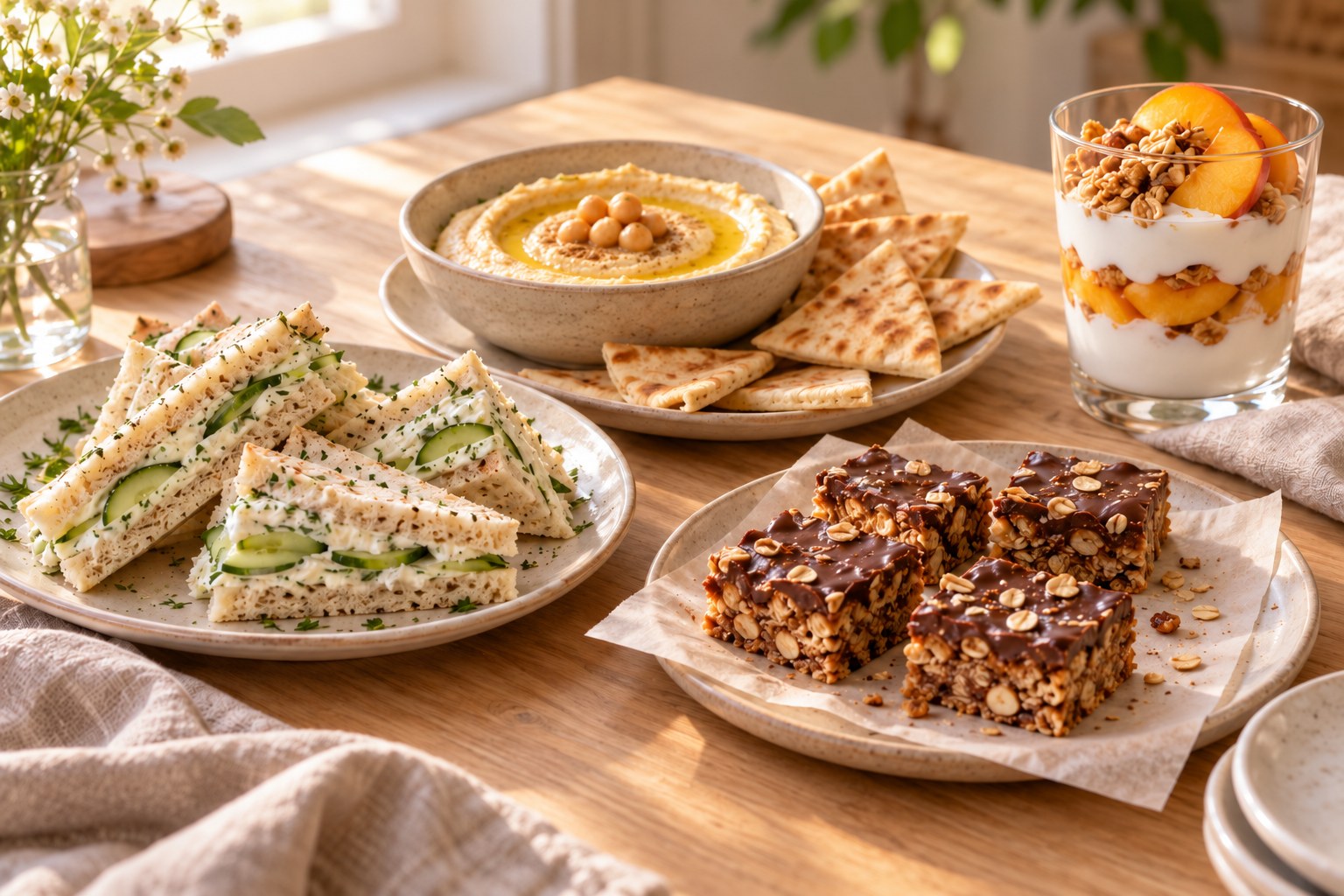
- For a savoury break: Cucumber sandwich bites, hummus with dippers, or cracker-and-cheese snack boxes.
- For a very quick option: Rice cakes with toppings, banana roll-ups, and a simple fruit parfait.
How to read this guide: A linked recipe is an actual What’s Baking? recipe. An “assembly idea” is a flexible, original serving suggestion rather than a tested recipe card; the quantities are adjustable. Always follow the linked recipe for its complete measurements and method.
What makes a no-bake snack genuinely useful?
A great no-bake snack should fit the moment. A spoonful of yogurt topped with berries may be excellent when everyone is hungry now. Frozen bark is a fun make-ahead treat, but it is the wrong answer when you have five minutes. Date-based energy bites are portable, although they are sticky and may not be a comfortable texture for a very young child. Planning around these differences is more useful than promising that every idea works for every family.
Think about the roles of the ingredients rather than labelling foods “good” or “bad.” Fresh fruit and vegetables bring flavour, water, colour, and a range of nutrients. Yogurt, hummus, seed butter, cheese, or other protein-containing foods can make a snack more satisfying. Whole grain crackers, oats, and bread provide texture and variety. A sweet dessert-style snack is also fine to enjoy; it simply serves a different purpose from a balanced afternoon mini-meal. Canada's Food Guide recommends choosing a variety of foods, including vegetables or fruit with protein foods and whole grains when practical.
A little preparation also makes snacking easier. Wash berries and cucumbers, portion spreads, and keep a few suitable crackers or rice cakes on hand. Refrigerate cut produce and dairy-based snacks promptly rather than leaving them out for hours. If children are helping, give them age-appropriate jobs such as stirring a bowl, arranging soft fruit on a plate, or sprinkling toppings. An adult should handle sharp knives, blenders, heat, and anything that creates a choking hazard.
1. No-bake chocolate oat bars
Published recipe: No-Bake Chocolate Oat Bars.
Chocolate oat bars are a good option when you want neat squares to make in advance. The published What’s Baking? recipe uses rolled oats, butter, brown sugar, chocolate chips, peanut butter, vanilla, and salt. It is oven-free, not heat-free: the method begins on the stovetop to melt and combine ingredients. That distinction matters if you are choosing a project for children to make without adult help.
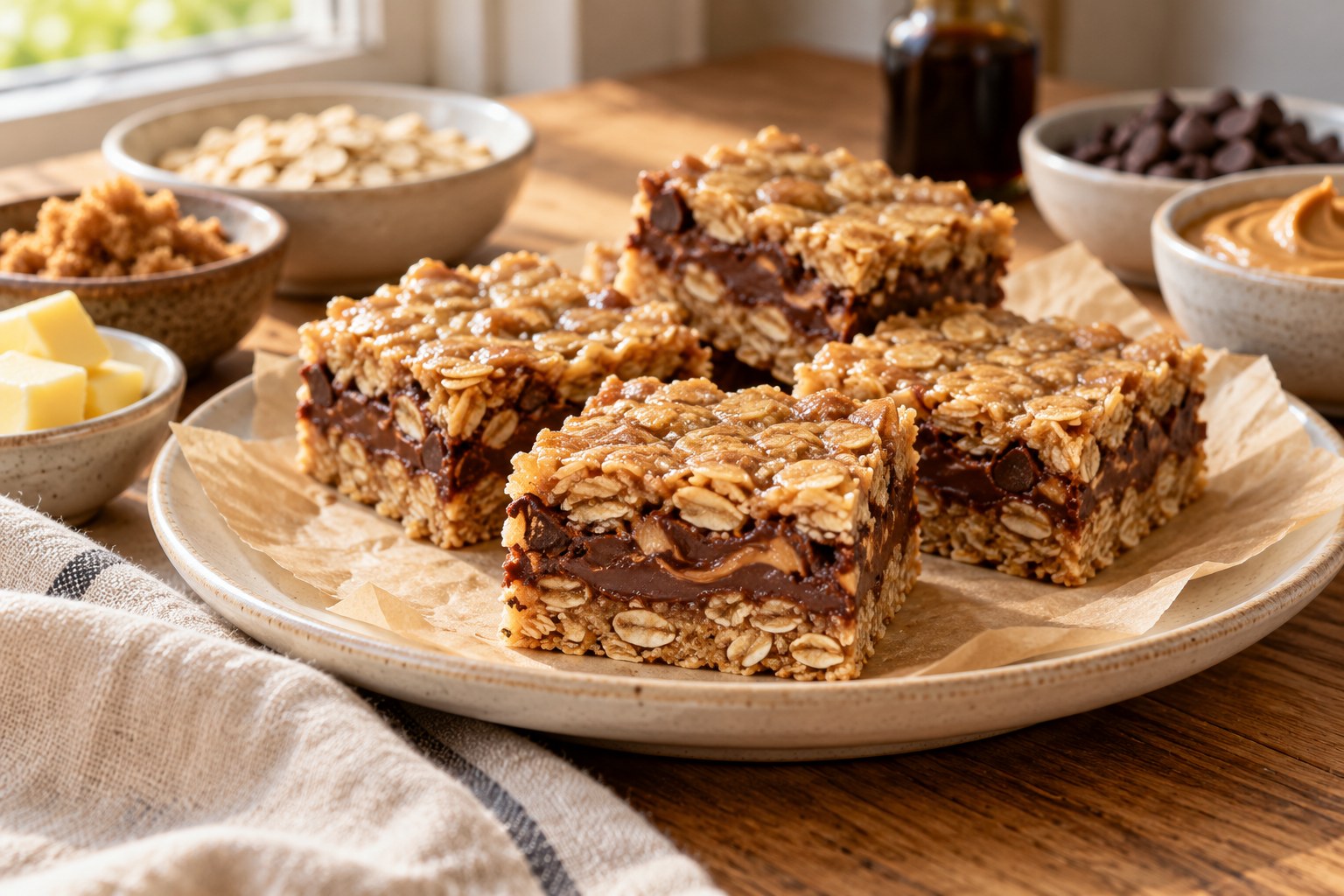
The oats provide a chewy foundation while the chocolate and peanut butter give richness. Use the recipe's measured ingredients rather than assuming that the simpler combination printed in the old blog is identical. Pressing the mixture firmly into a parchment-lined pan makes it easier to portion once chilled. Cut small squares for a sweet snack and serve with fruit if you want more variety on the plate.
Peanut butter is a major allergen, and chocolate products can have other allergen warnings. Do not call these bars nut-free simply because a spread could theoretically be swapped; a tested substitution has to hold the mixture together, and school rules may also prohibit certain ingredients. Follow the published storage instructions, keep the bars chilled as needed, and put cold snacks in an insulated bag with an ice pack for school.
2. Mini no-bake power bites
Published recipe: Mini No-Bake Power Bites.
These small oat-based bites are useful when portioning a larger batch is easier than making individual snacks every day. The linked recipe combines oats, nut butter, honey or maple syrup, ground flaxseed, chocolate chips, dried cranberries, chopped almonds, chia seeds, vanilla, salt, and cinnamon. It is a no-oven mixture that you stir, shape, and chill.
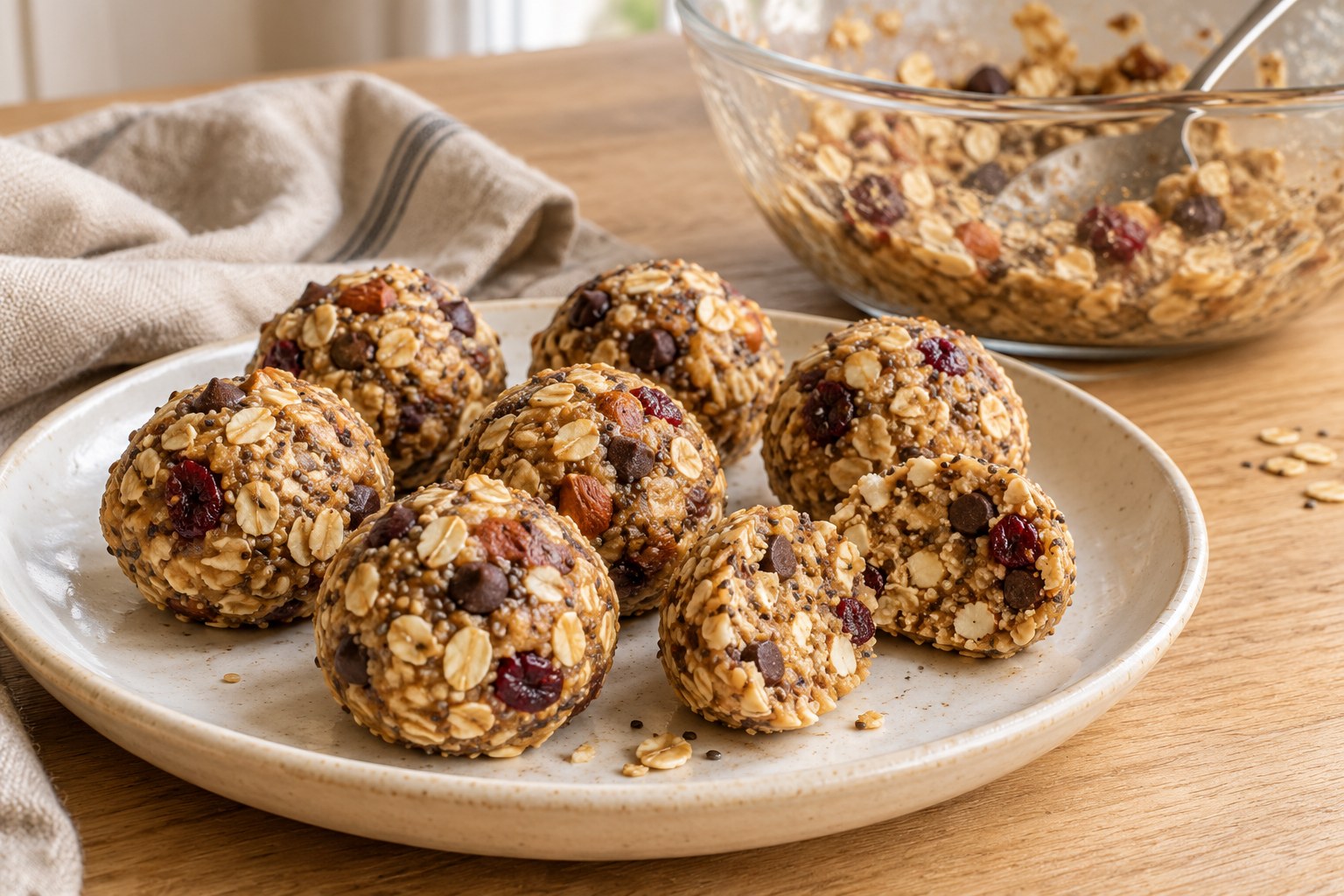
For a more consistent texture, stir the dry ingredients first so seeds and chocolate do not collect in one corner. Add the sticky ingredients and mix until everything holds together; use the recipe's method to judge when the texture is correct. Chilling briefly can make a soft mixture easier to roll. Small portions work well beside sliced fruit or plain yogurt, although how many to serve depends on appetite and age.
These are not automatically school-safe or suitable for young children. The published recipe contains peanut or almond butter and chopped almonds, as well as a chewy, sticky mixture. Follow school allergen restrictions and use developmentally appropriate textures. An adult can flatten a portion or offer an alternative soft snack when small round bites or hard pieces would be risky. If you need a certified nut-free option, choose a properly labelled product and a recipe explicitly designed for the restriction rather than guessing at several substitutions.
3. Frozen yogurt bark with colourful fruit
Published recipe: Frozen Yogurt Bark with Fruit.
Frozen yogurt bark is playful to assemble because every tray can look different. The published recipe starts with Greek yogurt, honey or maple syrup, vanilla, assorted berries, kiwi, nuts, and optional coconut or chocolate. Spread the yogurt into an even layer on a parchment-lined tray, add toppings, then freeze according to the recipe. It is a no-oven recipe that takes hours to set, not a five-minute snack.
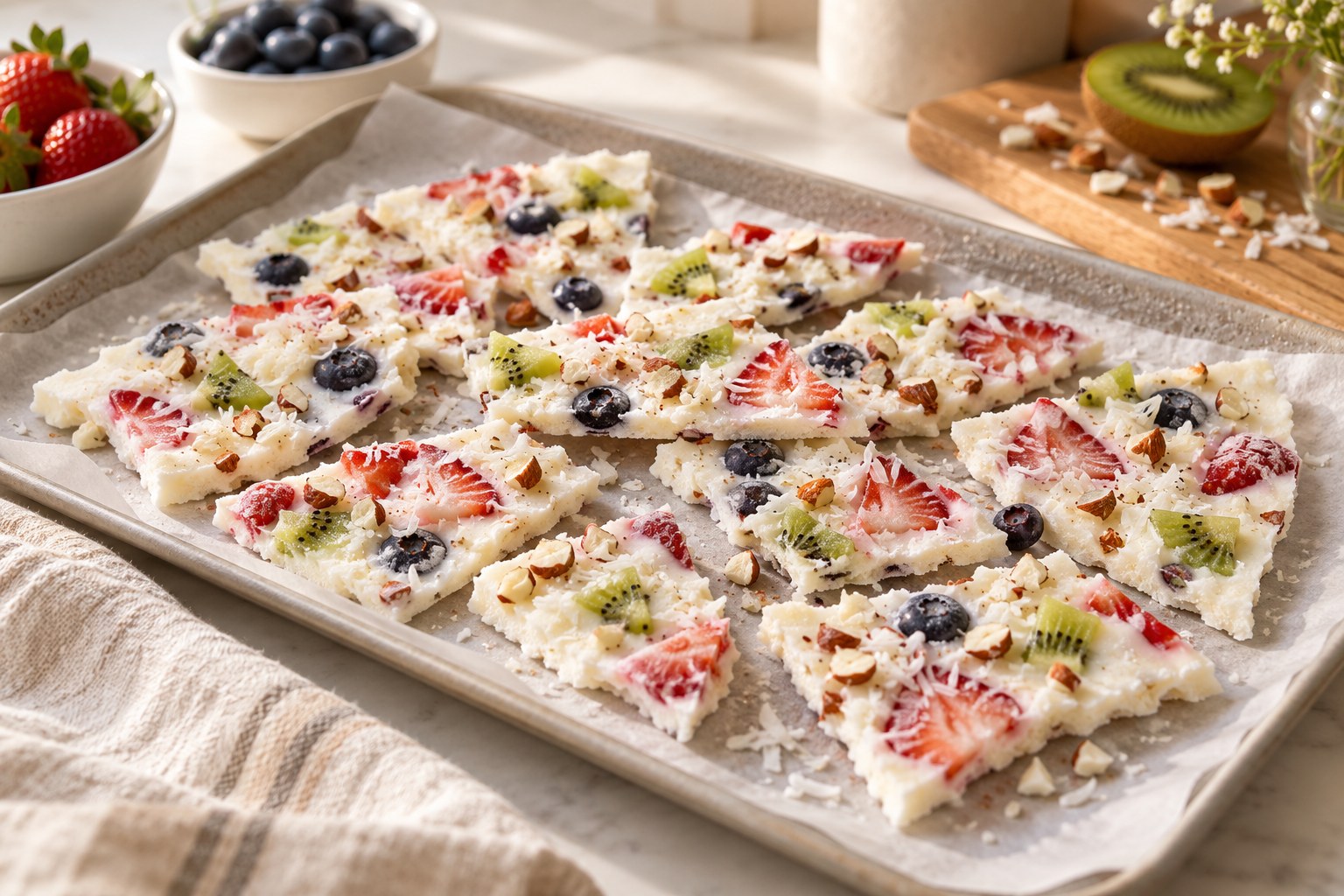
For attractive, easy-to-handle pieces, avoid piling fruit in the centre of the tray. Use smaller slices of fruit, spread them across the yogurt, and press very gently so they stick. If you use frozen fruit, expect some colour to bleed into the yogurt as it softens. Break or cut the finished bark into portions and return the extras to the freezer promptly rather than allowing the whole tray to thaw and refreeze repeatedly.
This is a frozen dairy snack as published. Families avoiding dairy can experiment separately with a suitable thick plant-based yogurt, but the outcome may be icier and has not been verified as the same recipe. Nuts must be omitted or replaced only when allergen and cross-contact requirements can be met. For younger children, serve a texture and size they can manage rather than offering sharp, very hard frozen shards.
4. Apple sandwiches with sunflower seed butter
Published recipe: Apple Sandwiches with Sunflower Seed Butter & Raisins.
Apple sandwiches turn simple fruit into a snack that looks more considered than an apple tossed into a bag. The linked recipe uses apples, sunflower seed butter, raisins, lemon juice, optional cinnamon, and optional honey or maple syrup. The slices are layered with a spread and toppings, making them easy to customize while preserving the recipe's basic idea.
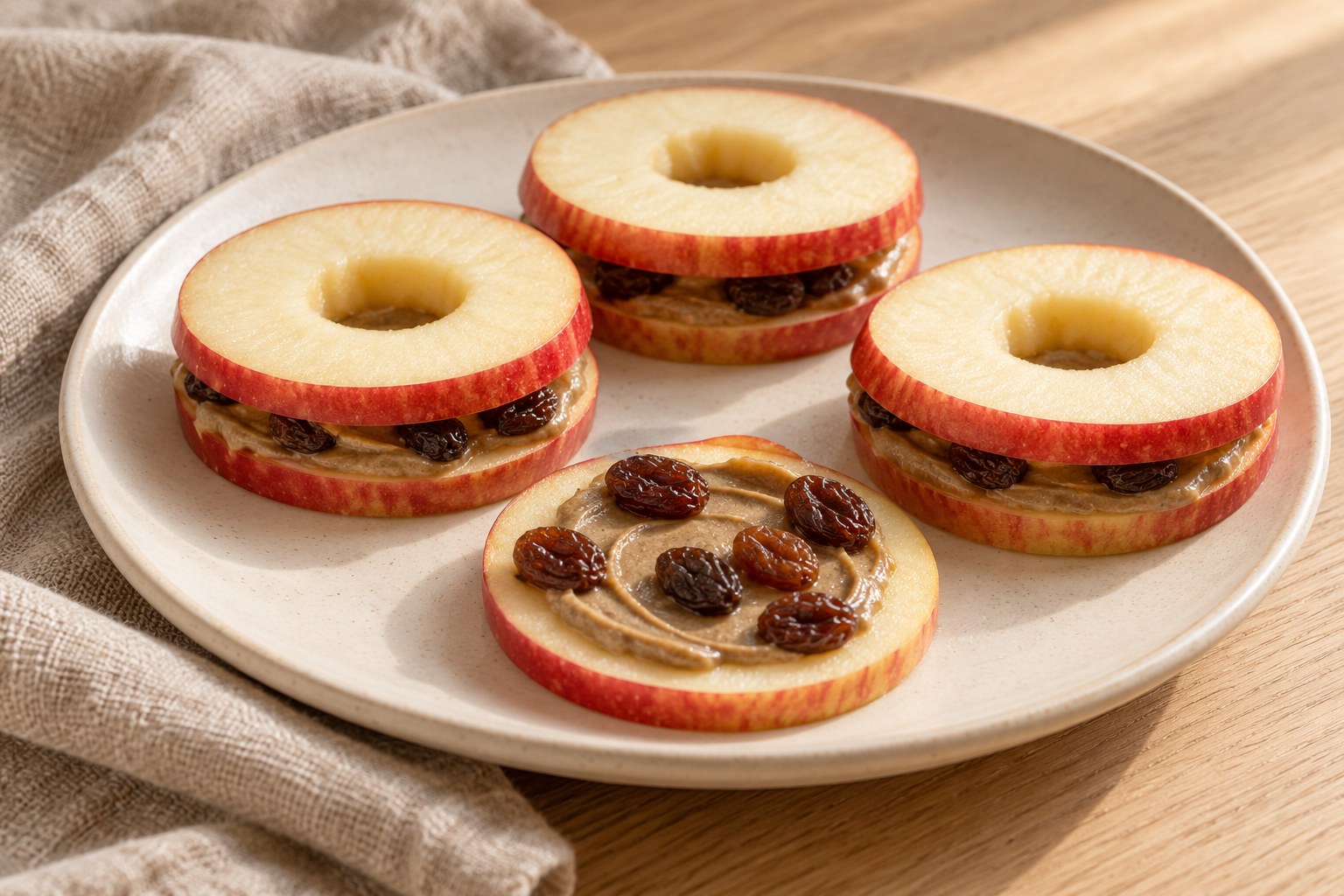
Dry the apple slices after washing so the spread adheres. A little lemon juice may help limit browning, although it does not keep cut fruit fresh indefinitely. If you are packing the snack ahead, store the prepared apple pieces cold and allow for some softening. These sandwiches are best when the apple still has a pleasant crisp bite and the filling is not sliding out.
Sunflower seed butter is a useful option when peanut butter is restricted, but it is not a universal allergy guarantee. Always check packaged ingredients, facility warnings, and your school's policy. The original blog suggested these firm apple sandwiches for toddlers without qualification; that is too broad. Raw apple rounds, sticky spreads, and raisins need modification for children who cannot chew them safely. Thin spreads and suitably softened or finely cut fruit may be more appropriate for younger eaters, with supervision.
5. Date-chocolate balls without tree nuts
Published recipe: Date-Chocolate Balls (Nut-Free).
Dates create a naturally sticky base for chocolate-flavoured snack bites. The published recipe uses Medjool dates, cocoa powder, rolled oats, coconut, maple syrup or honey, coconut oil, vanilla, salt, and a little water if required. It has no tree nuts listed in its ingredient formula, but coconut, oats, and packaged cocoa still need appropriate label checks for the person eating them.
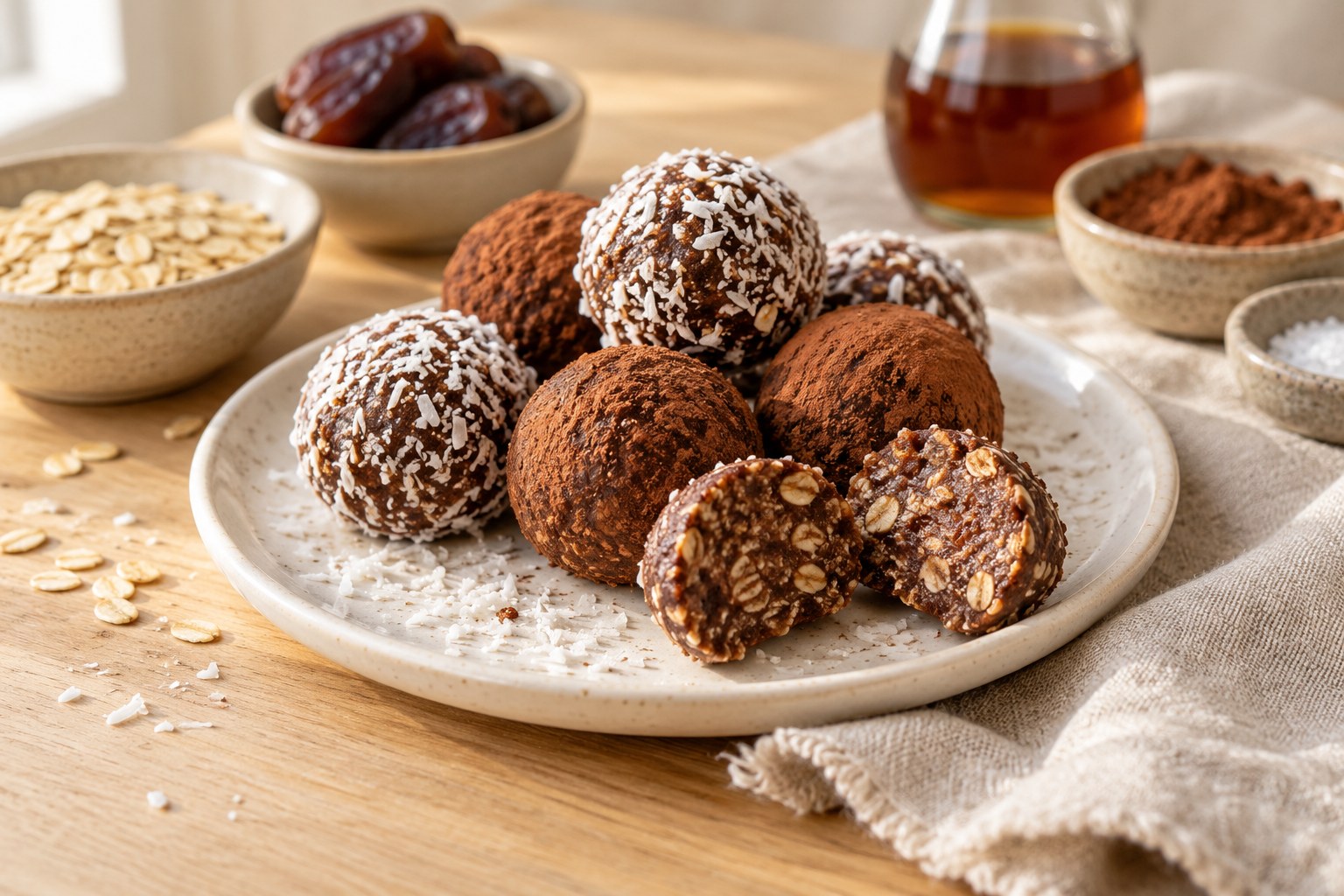
If dates feel leathery, follow the recipe's softening step before processing them. Pulse until the pieces break down and then check the texture before adding water; too much added liquid can turn the mixture into a paste. Rolling the mixture in desiccated coconut or cocoa changes the outside texture without needing an oven. Set aside a few pieces without coating if someone prefers a less powdery finish.
Dates and cocoa make these sweet and rich; they do not make the snack “sugar-free.” The sugars in dates are part of the fruit, and the published recipe may include a syrup as well. Offer small portions and pair with fresh produce or a protein food when appropriate. As with other dense or sticky balls, modify shape and texture for young children and follow allergy and school guidelines instead of treating the title alone as a medical guarantee.
6. Cucumber sandwich bites with herbed cream cheese
Published recipe: Cucumber Sandwich Bites.
For a savoury snack that feels more like afternoon tea than a rushed lunchbox filler, make cucumber sandwich bites. The existing recipe includes sandwich bread, cream cheese, fresh dill, chives, lemon zest, seasoning, and cucumber. It involves spreading, slicing, and assembly rather than baking or cooking. Its clean flavours pair well with fresh fruit or a few crunchy vegetables on a larger snack platter.
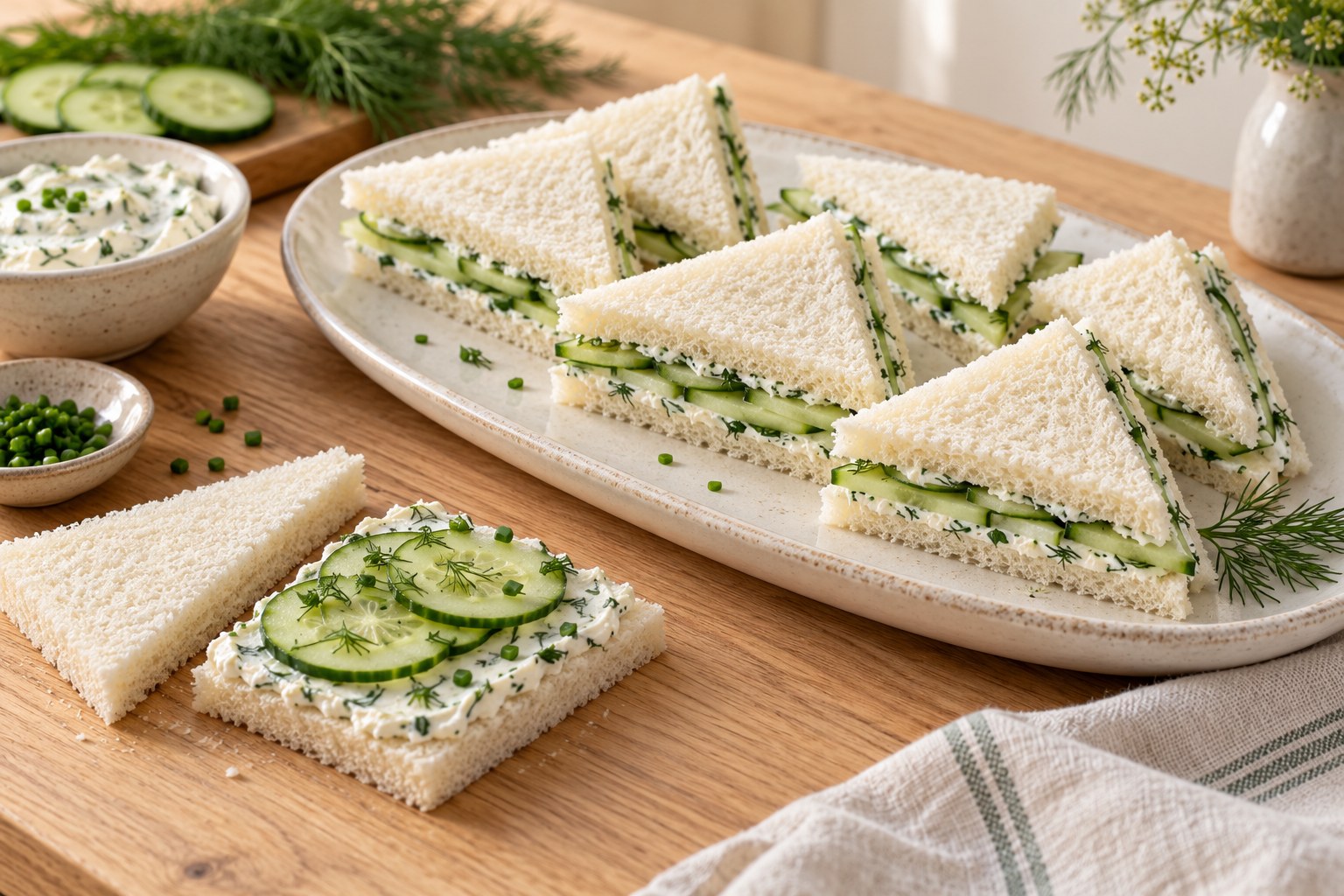
Use thin cucumber slices and pat away excess surface moisture so the bread does not become soggy immediately. The herb mixture can be prepared first and spread evenly across the bread; then assemble just before serving for the best texture. Small triangles or squares look inviting, but precise shapes are optional. For a gathering, arrange the finished bites on a tray and keep them cold until needed.
Cream cheese is a dairy ingredient and bread usually contains wheat. If you need alternatives, select suitable products and check all labels rather than describing the original recipe as dairy-free or gluten-free. In a school lunchbox these bites require cooling, because of the cream cheese. Small children may need softer or differently shaped servings; adults should prepare any cucumber that would otherwise be too firm or awkward to chew.
7. Fresh fruit-and-yogurt salad
Published recipe: Fruit Yogurt Salad.
This colourful bowl is one of the simplest ways to use seasonal fruit without baking. The published recipe combines Greek yogurt with honey or maple syrup and vanilla, then adds strawberries, blueberries, kiwi, mango, and apple. Mint, toasted almond flakes, or granola can finish the dish if desired. It is an adaptable fruit salad with a creamy dressing, not a baked dessert.

To preserve the fruit's appearance, cut firmer fruit into similar bite-size pieces and fold in delicate berries gently. If you are preparing ahead, chill the fruit and yogurt separately and combine closer to serving; juicy fruit can release liquid into the dressing. Granola adds crunch when sprinkled on just before eating, but it softens during storage. Serve in small cups for a party or a larger bowl at home.
The recipe as written contains dairy and may contain tree nuts in the optional garnish. It also uses a sweetener, so do not describe it as automatically unsweetened or allergen-free. For children, adjust fruit sizes appropriately, especially round berries or firm apple pieces. A chilled yogurt-and-fruit snack works best when it can stay at a safe temperature until eaten.
8. Homemade hummus with vegetables or pita
Published recipe: Classic Homemade Hummus.
A hummus snack can feel satisfying without requiring anything to be baked. The What’s Baking? recipe blends canned chickpeas, lemon juice, tahini, garlic, olive oil, cumin, salt, and a little reserved chickpea liquid or water. It is a blender or food-processor recipe, and the listed method has no oven step. Serve a spoonful with soft pita pieces, crackers, or appropriately cut vegetables.
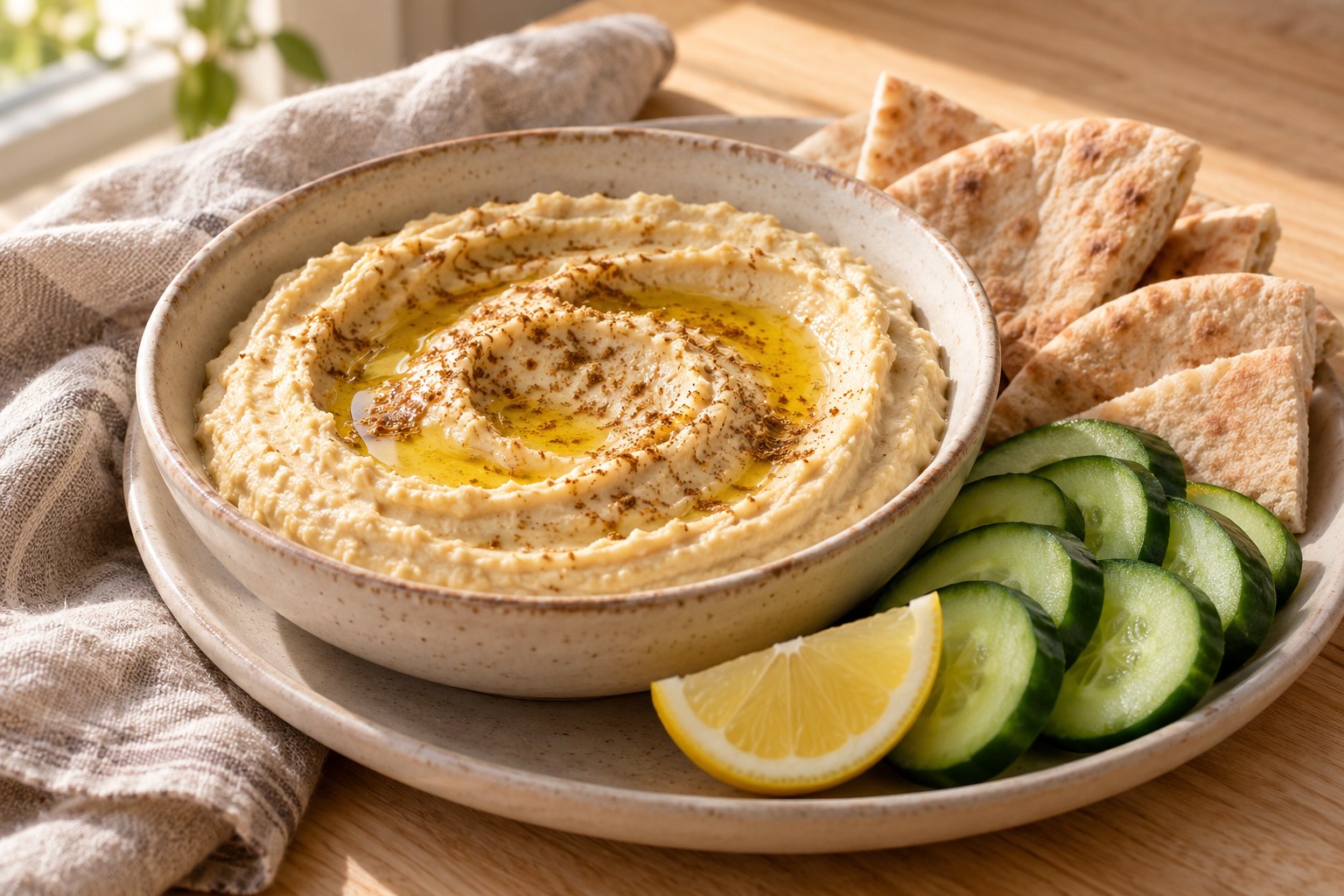
The key to a smooth hummus is enough liquid and thorough blending. Start with the recipe's amounts, pause to scrape the processor, then decide whether a small additional splash of water is necessary. Extra lemon gives brightness, while cumin brings a warm savoury note. Hummus also works as a spread in a small wrap or as the creamy layer in a cracker stack, so one batch can become several different snacks.
Tahini contains sesame, an important allergen. Check the ingredient label and keep shared utensils out of other foods if an allergy is present. Store homemade hummus refrigerated, not on the kitchen counter as an all-day dip. Raw carrot sticks and other hard vegetables are unsuitable for many very young children unless altered to an age-appropriate texture; soft pita is an alternative for a supervised snack.
9. Stovetop crispy-rice treats
Published recipe: Rice Krispie Treats.
Crispy-rice squares are a familiar sweet treat made without an oven. The linked recipe combines butter, marshmallows, puffed rice cereal, vanilla, and a little salt. It does require stovetop heat to melt the butter and marshmallows, so the cooking stage belongs with an adult. Once the mixture has cooled enough to handle, children can help press it into the pan using appropriate utensils and supervision.

Keep the heat gentle: overheating marshmallow mixtures can make the finished squares unusually firm. Press the cereal together evenly without compressing it into a brick. After the mixture sets, cut manageable squares and store according to the recipe's instructions. You can serve one square as a dessert-style snack alongside fruit; it does not need to be presented as a nutrition substitute for lunch.
Cereal and marshmallow brands vary. If you are looking for gluten-free or vegetarian products, verify the actual packages rather than relying on assumptions. Marshmallows and dense sticky confections can be choking hazards for younger children, and heat adds an obvious kitchen risk during preparation. This is a fun occasional option, but it should not be labelled a no-cook project or a health food.
10. Savoury cracker-and-cheese snack boxes
Original assembly idea — no published recipe required.
A simple cracker box can be more interesting than a handful of crackers if you include contrasting textures. Choose ready-made crackers, bite-size pieces of cheese, soft fruit or cucumber, and perhaps a small container of hummus. Arrange them in a reusable box with separate sections so crunchy items stay dry. This is an assembly idea, not the site's baked homemade cheese-cracker recipe.
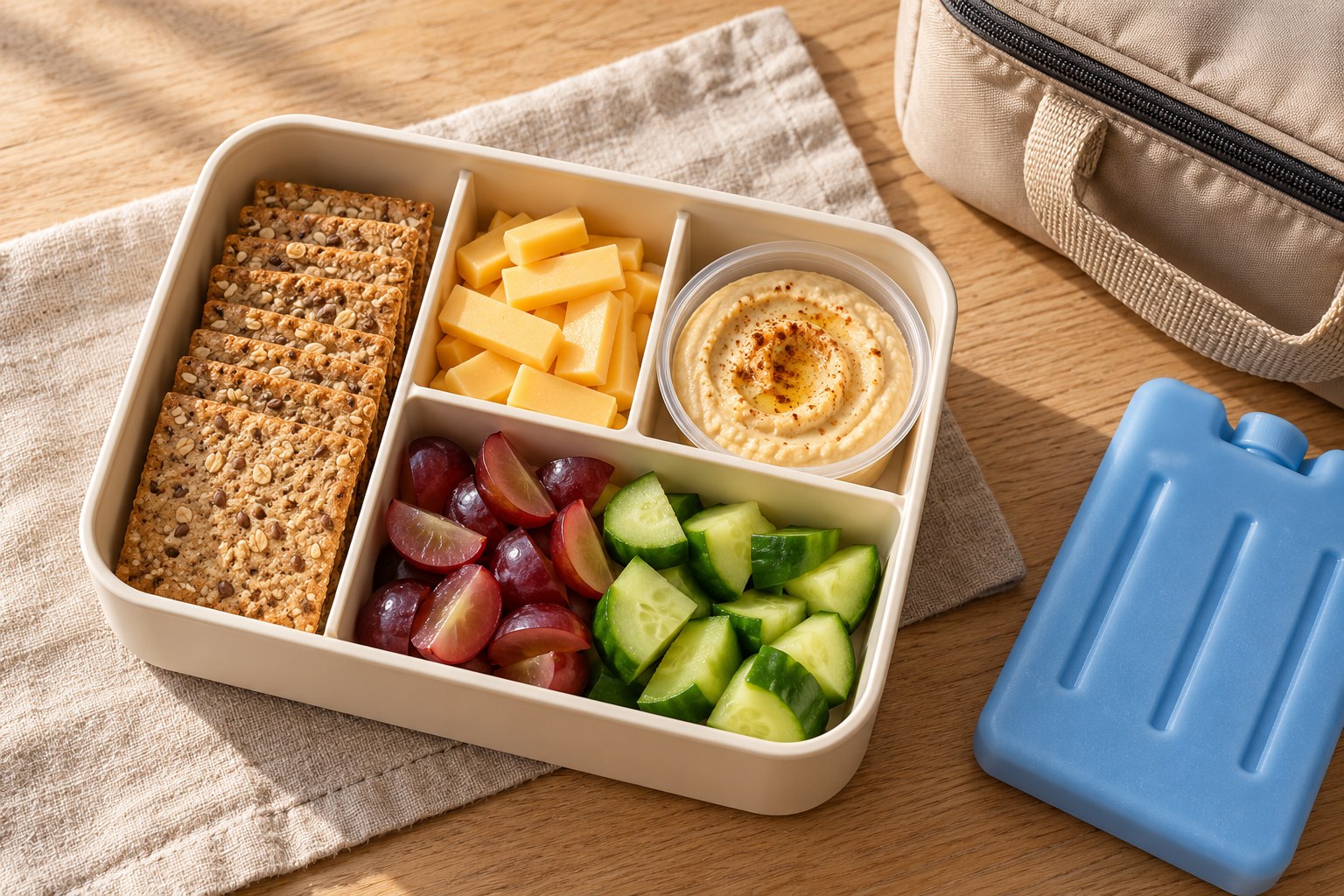
For an adult snack, try a firmer cheese with whole grain crackers and grapes. For a school-aged child, choose foods allowed by the school and follow age-appropriate food preparation. If the cheese must stay cold, pack an ice pack with the lunch. Put wet vegetables in a separate compartment to keep crackers crisp. Rotate flavour combinations throughout the week rather than buying a new packaged snack each day.
This is one of the easiest ideas to scale for different preferences. Use a suitable dairy-free cheese alternative if necessary, or replace the cheese with hummus or another protein food. Check wheat and milk labels. Hard cheese chunks and round grapes need care for younger children; serve chopped or otherwise modified portions according to developmental ability.
11. Five-minute yogurt and fruit parfaits
Original assembly idea — not a separate tested What’s Baking? recipe.
Layer plain yogurt, soft fruit, and a small sprinkle of oats or granola in a transparent cup. A few berries at the bottom, a spoonful of yogurt in the centre, and diced ripe fruit on top make a pretty snack with almost no effort. Use whatever fruit is ripe and affordable. For contrast, try peaches with cinnamon, mashed berries with vanilla, or banana with a thin swirl of seed butter when appropriate.
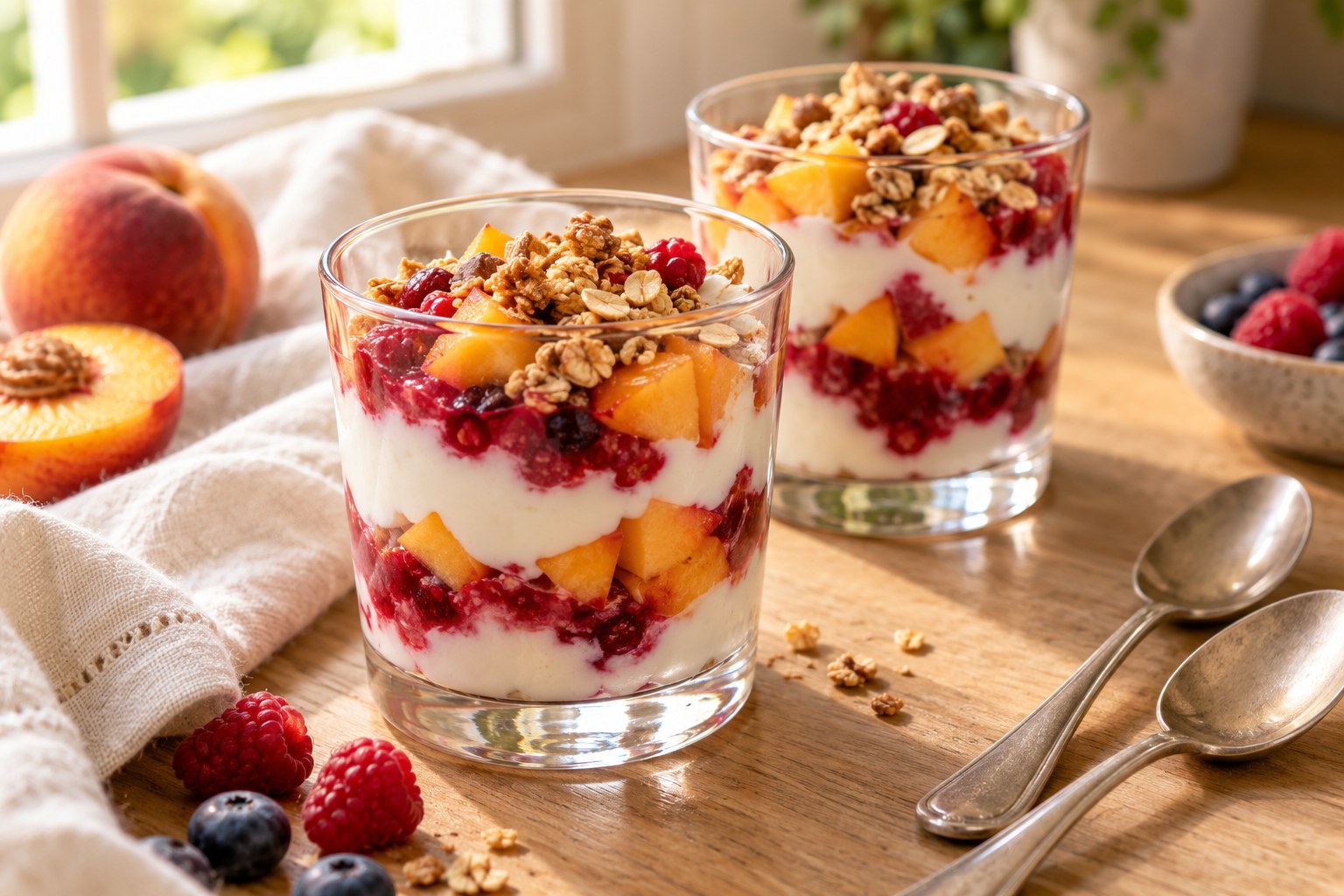
Do not assemble the parfait too far in advance if you want a crisp granola layer. Instead, keep the yogurt and fruit chilled and add crunch immediately before eating. A lidded jar is convenient for an adult at work; for school, pack in an insulated bag with a cold pack. If you want to reduce sweetness, use unsweetened yogurt and let the fruit provide much of the flavour rather than adding syrup automatically.
This is flexible enough to use dairy yogurt, soy yogurt, or another suitable alternative, but fortified nutritional values vary by product. Read labels when calcium, protein, or allergies are important. Young children should receive fruit cut and softened as needed, rather than whole round berries or hard toppings.
12. Rice cakes with sweet or savoury toppings
Original assembly idea — no oven or stove required.
Rice cakes provide a crisp base for a different combination each time. Spread one with cream cheese and finely chopped cucumber, another with hummus and grated carrot, or a third with thinly spread seed butter and soft banana slices. The best result uses a modest amount of topping: too much spread can collapse the rice cake before you finish eating it.
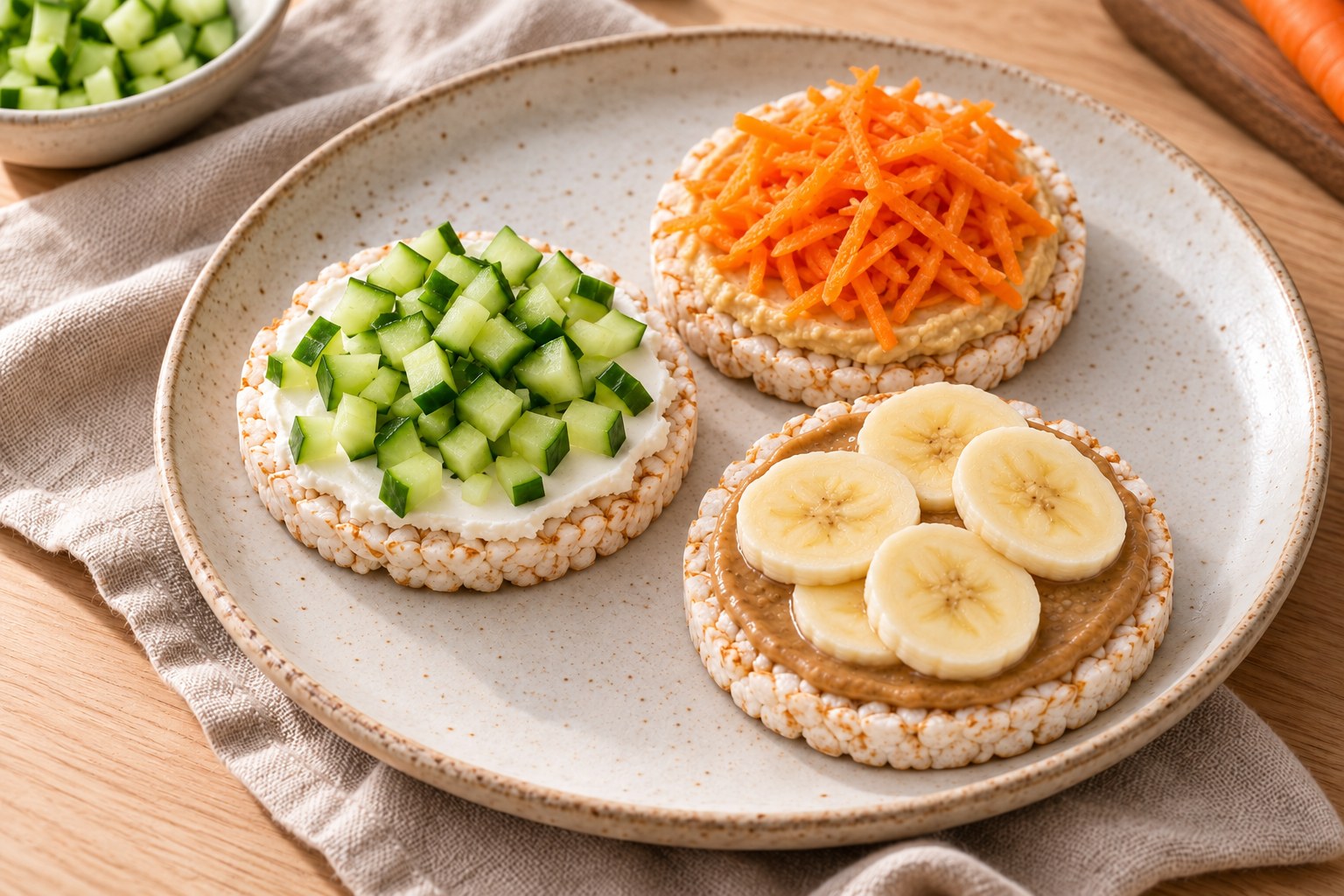
Prepare these shortly before serving, because moisture makes rice cakes soften quickly. Keep toppings ready in small refrigerated containers and let everyone assemble their own snack at the table. The activity works for older children who can spread ingredients safely and understand food allergies; an adult should handle slicing and decide which textures are appropriate. Offer a variety of colours without turning the snack into a test of whether a child eats everything.
Rice cakes are not a substitute for all whole grains in the diet, and toppings determine whether this is mostly a light snack or something more substantial. When packing, put rice cakes and spreads in separate containers. Check allergy restrictions for seed butter, dairy spreads, or other additions.
13. Overnight chia pudding cups
Original assembly idea — requires several hours of chilling.
Chia pudding is an easy way to prepare tomorrow's snack tonight. A basic starting point for one small adult portion is about 2 tablespoons chia seeds to 120 ml milk or suitable plant beverage. Stir carefully, wait a few minutes, stir again to prevent clumps, then cover and refrigerate until the mixture thickens. This is a flexible assembly ratio, not a tested What’s Baking? recipe; different milks and chia brands can change the result. Add extra liquid when needed.
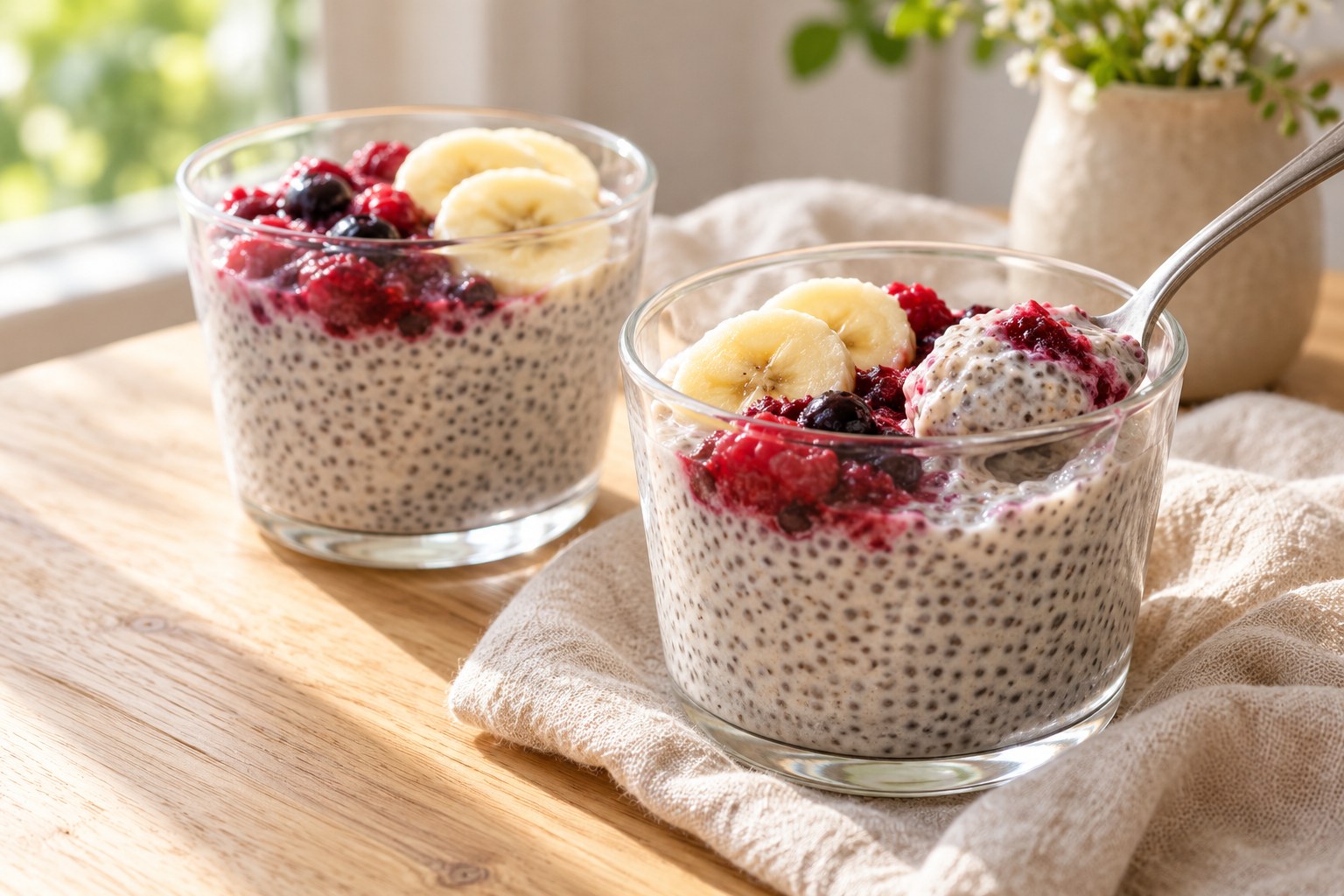
Once thick, add mashed berries, cinnamon, banana, or a spoonful of yogurt. Keep crunchy toppings separately until serving. A small jar is convenient, but the snack is not instant: the seeds need enough time to absorb liquid. Use refrigerated milk or plant beverages and keep the finished pudding chilled. For children, suitability depends on age, developmental ability, allergies, and texture tolerance; seek age-appropriate guidance for very young children rather than assuming whole hydrated seeds are universally suitable.
Chia pudding should not be called protein-rich without considering which beverage and toppings are used. Milk, fortified soy beverage, and low-protein plant drinks have different nutrient profiles. Select the version that fits the household's needs and tastes.
14. Banana-and-spread tortilla roll-ups
Original assembly idea — a quick cold wrap.
Spread a thin layer of peanut butter or another suitable smooth spread over a soft tortilla, place a peeled banana near one edge, and roll snugly. Cut crosswise into portions or leave as one wrap for an older eater. A dusting of cinnamon adds aroma; a few soft berries can make the snack brighter. The combination is soft, portable, and easy to make with ingredients that may already be in the kitchen.
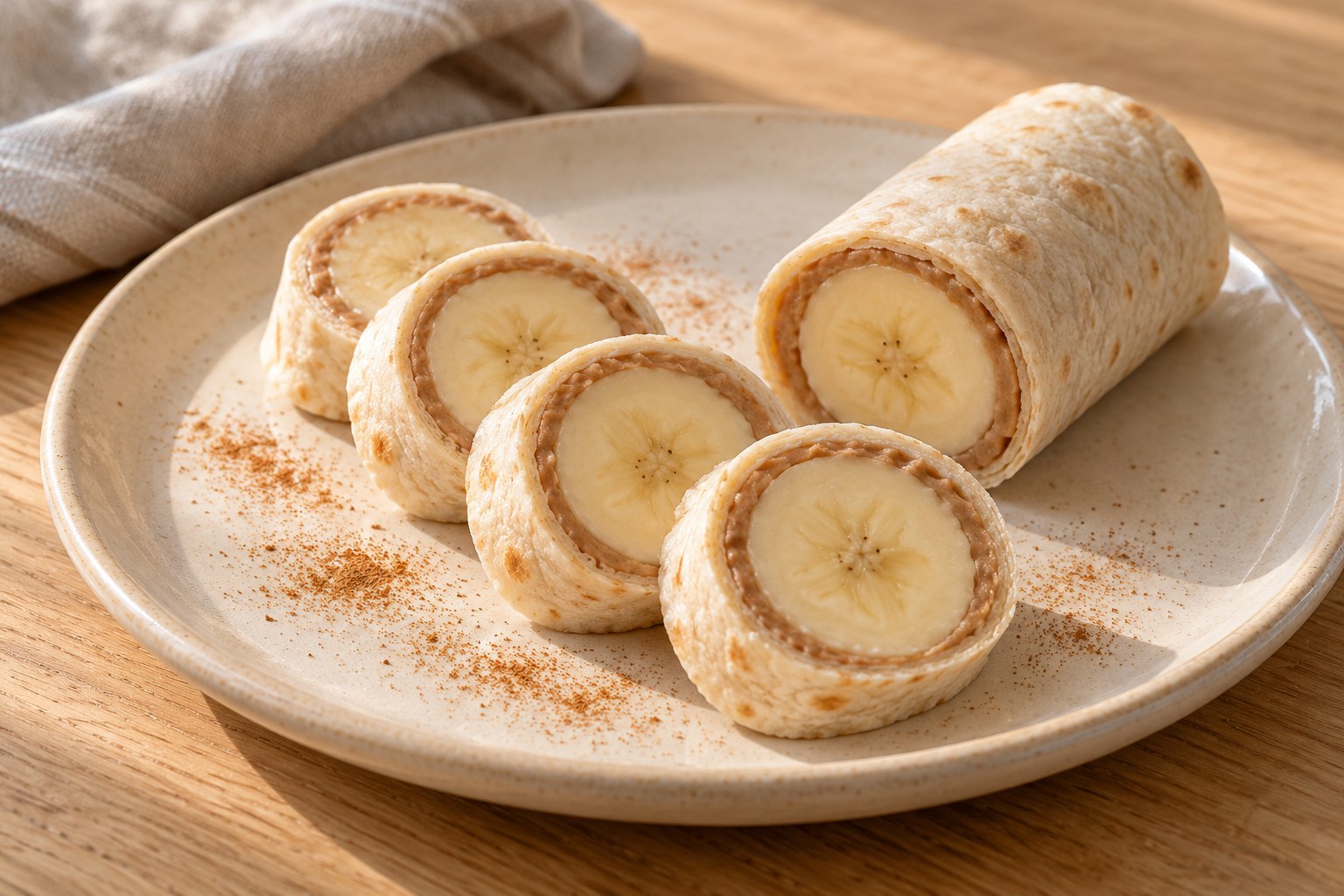
Use a moderate amount of spread to prevent it from squeezing out. If preparing in advance, wrap the roll and refrigerate promptly, but expect the tortilla to soften. For a school lunch, choose a permitted filling and check cross-contact information. Peanut butter and tree-nut butter are never safe for everyone, while seed butters may still be restricted or unsuitable for some individuals.
Young children's needs differ: large sticky clumps of nut or seed butter and poorly cut rounds of food can be choking hazards. Spread thinly, adapt the size and texture, and supervise eating. Because this is an assembly idea rather than a standardized recipe, adjust quantities to appetite instead of declaring a fixed number of calories or grams of protein.
15. Homemade freezer smoothie pops
Original assembly idea — blend, freeze, and enjoy later.
Smoothie pops turn a familiar fruit drink into a freezer treat without heating the kitchen. Blend yogurt or a suitable dairy-free alternative with ripe banana and berries until smooth, pour into clean freezer-pop moulds, insert the sticks, and freeze until fully solid. For a more tangy result, add a little citrus; for a milder one, use ripe mango or banana. The exact consistency depends on the fruit and yogurt, so add only enough liquid to allow easy blending.
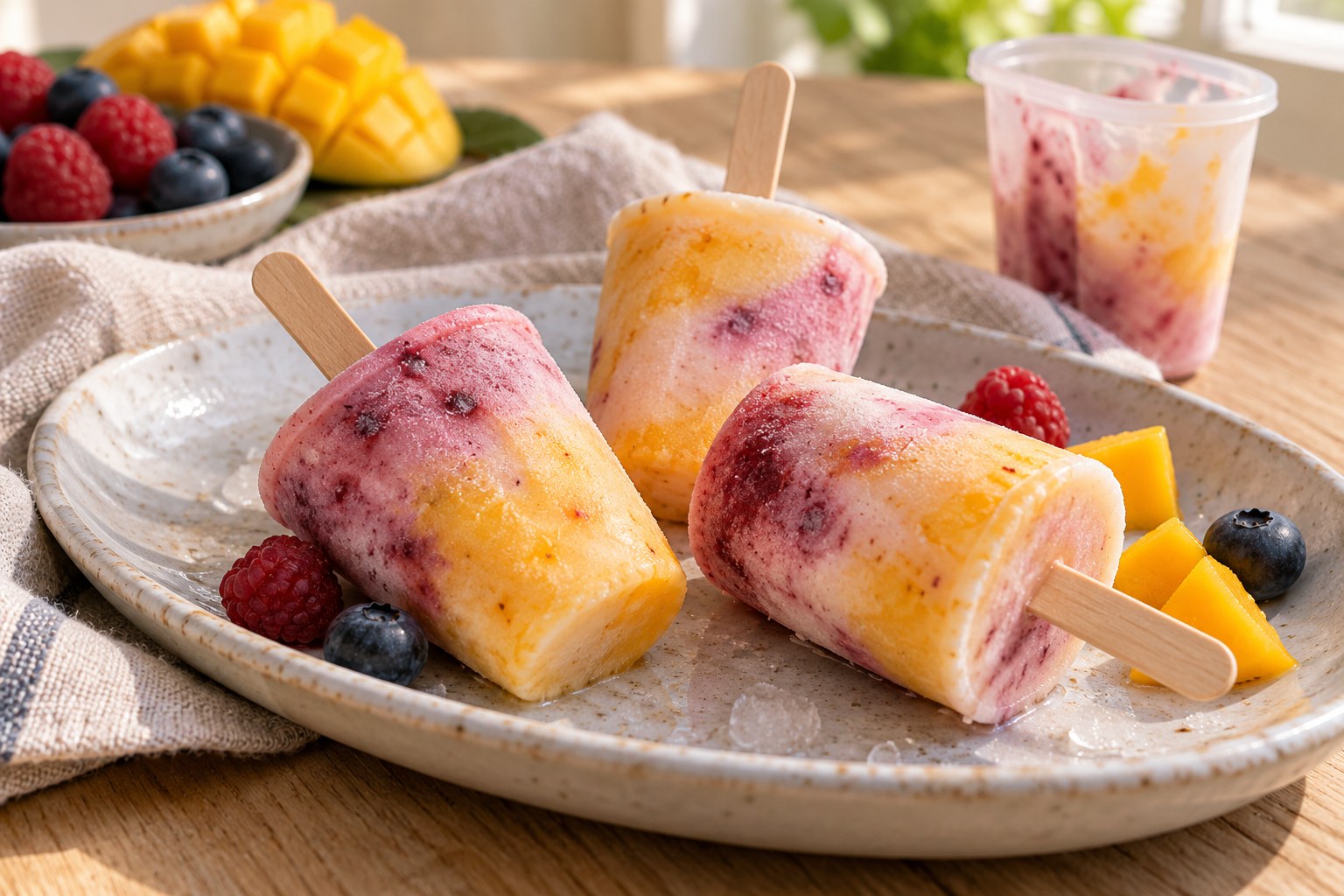
The appeal is convenience: you can portion a batch in advance, then take out just what you need. Do not leave the moulds on the counter for extended periods before freezing, and keep finished pops frozen until serving. If the pops are made with dairy yogurt, treat them as a perishable dairy food during preparation. The fruit provides flavour, so added sugar is often unnecessary, but this depends on the ingredients you choose.
Hard frozen treats may be unsuitable for young children depending on their chewing and swallowing abilities. Use developmentally appropriate serving methods and supervise. For older children and adults, try two colours in a mould—perhaps mango and berry—for a visually interesting treat without needing an oven or a food-colouring bottle.
What was removed from the original no-bake list, and why?
A useful cooking guide should not send readers to an unrelated recipe. The original page recommended mini muffins and soft pretzel bites as no-bake snacks, even though the published recipes require baking. It described a baked homemade cheese-cracker recipe as though it were simply cheese cubes with crackers. It linked baked apple chips for a no-cook idea, and a shrimp recipe under the heading “popcorn trail mix.” Those mismatches could waste ingredients and undermine reader trust.
We have kept the theme of convenient family snacking while replacing those entries with real no-oven options. The guide also avoids suggesting that a recipe for a toasted coconut bundt cake proves how to make coconut-lime energy balls, or that cinnamon rolls are a tested variation of a power-bite recipe. Flavour ideas are fine, but they should be presented as ideas unless the linked recipe actually demonstrates them.
A related distinction is that something can be made ahead of time without being no-bake. Pre-baked muffins or pretzels are excellent snacks in their own right, but they belong in baking or freezer-prep collections. Here we are focusing on meals and treats prepared without putting a raw batch into an oven.
How to build a snack that suits the occasion
For a snack eaten within minutes, prioritize no-cook options such as cucumber sandwiches, fruit and yogurt, apple sandwiches, or hummus with suitable dippers. If you have half an hour and a food processor, consider date balls or power bites. If you are planning a weekend treat for the coming week, chocolate oat bars, rice cereal treats, chia pudding, and frozen yogurt bark can be prepared ahead. Always account for the actual setting and chilling time; “15-minute prep” does not mean the snack is ready to eat in 15 minutes.
For afternoon hunger, a combination of foods often feels more satisfying than a sweet item alone. Add fruit to a bar, serve hummus with a few crackers, or include yogurt alongside a small oat bite. The goal is flexibility, not constructing a perfectly balanced mini-meal at every snack. Snacks should complement usual meals rather than become a source of rigid food rules.
Presentation can help without making snack time complicated. A shallow bowl of bright fruit, a few neatly sliced sandwich bites, or separate compartments for crackers and dip can make ordinary food more inviting. Let children make age-appropriate choices between two safe options, and avoid promising that a particular shape will persuade every child to eat a new ingredient. Preferences can change slowly, and positive, pressure-free exposure is more constructive than tricks.
School lunchboxes: What actually travels well?
The best lunchbox snack is one that will still be appetizing and safe several hours after it is packed. Dry crackers and unopened shelf-stable foods are convenient, but cut fruit, hummus, yogurt, cream cheese, and similar perishable ingredients need proper cooling. Health Canada recommends insulated lunch bags and ice packs for foods that should stay cold. Keep food out of the temperature danger zone and clean containers and preparation surfaces carefully.
Before packing nut or seed spreads, check the individual school's allergen policy. A sunflower seed spread may be permitted where peanut butter is restricted, but that does not make every brand allergy-safe. Check ingredient labels, “may contain” warnings where relevant, and any instructions given for a specific child's allergy. Do not encourage children to share lunches if allergies are a concern.
For texture, pack crisp components away from moisture. Put granola beside rather than inside a yogurt parfait, spread rice cakes at lunchtime, and keep fruit cut to sizes that travel well. For a frozen treat, think realistically about whether a lunchbox can keep it frozen; smoothie pops and yogurt bark are often better at home. A frozen item that melts in a warm school bag may no longer be the snack you intended.
Choking-risk adjustments for younger children
A photograph of a snack is not proof that it is appropriate for a toddler. Whole grapes, popcorn, whole nuts, hard chunks of raw apple, sticky marshmallow mixtures, and thick spoonfuls of nut butter can be choking hazards for young children. The American Academy of Pediatrics recommends avoiding or changing the form of high-risk foods for children under about four, with attention to each child's development. Never assume that a small, round energy ball is automatically safer just because it is homemade.
For younger eaters, adapt shapes and textures deliberately: spread nut or seed butter thinly where permitted, chop round or firm foods appropriately, avoid hard nut pieces, and offer foods that match the child's ability to chew and swallow. Always supervise snack time. Children with swallowing difficulties or particular medical needs may require individual professional guidance beyond a general recipe blog.
Allergy awareness: “Nut-free” is not one universal label
Peanuts, tree nuts, sesame, milk, wheat, and soy are among the ingredients that may appear in snack recipes or packaged toppings. The no-bake category is especially rich in nut butters, seeds, chocolate, granola, and yogurt, so do not assume that an oven-free recipe is allergy-free. In the published collection, the power bites explicitly list chopped almonds and nut butter; the hummus uses sesame tahini; cucumber sandwiches contain cream cheese and wheat bread.
When making substitutions, think about function as well as dietary restrictions. Peanut butter helps bind energy balls; changing to a runnier spread may require an adjustment. Greek yogurt freezes differently from some plant-based yogurts. Wheat-free crackers can have other allergens. If a serious allergy is involved, use products and recipes suitable for that person, follow professional advice where needed, and prevent cross-contact with utensils and preparation surfaces.
Storage and make-ahead guidance
Follow individual recipe instructions and safe food handling rules rather than applying a blanket “one week in the fridge” claim to every item. Fresh-cut fruit changes texture quickly. Yogurt bark needs to remain frozen. Homemade hummus and dairy-based sandwiches belong in the refrigerator, while dry crackers should be protected from moisture. Date balls and bars may firm in the fridge, but their practical keeping quality depends on exact ingredients and storage conditions.
Health Canada advises that refrigerators should be kept at 4°C (40°F) or lower and freezers at −18°C (0°F) or lower. Perishable foods should not sit out longer than two hours at ordinary room temperature, and less time may be appropriate in hot weather. If you cannot keep a lunchbox cold, choose a shelf-stable snack instead of relying on a yogurt cup to remain safe all morning.
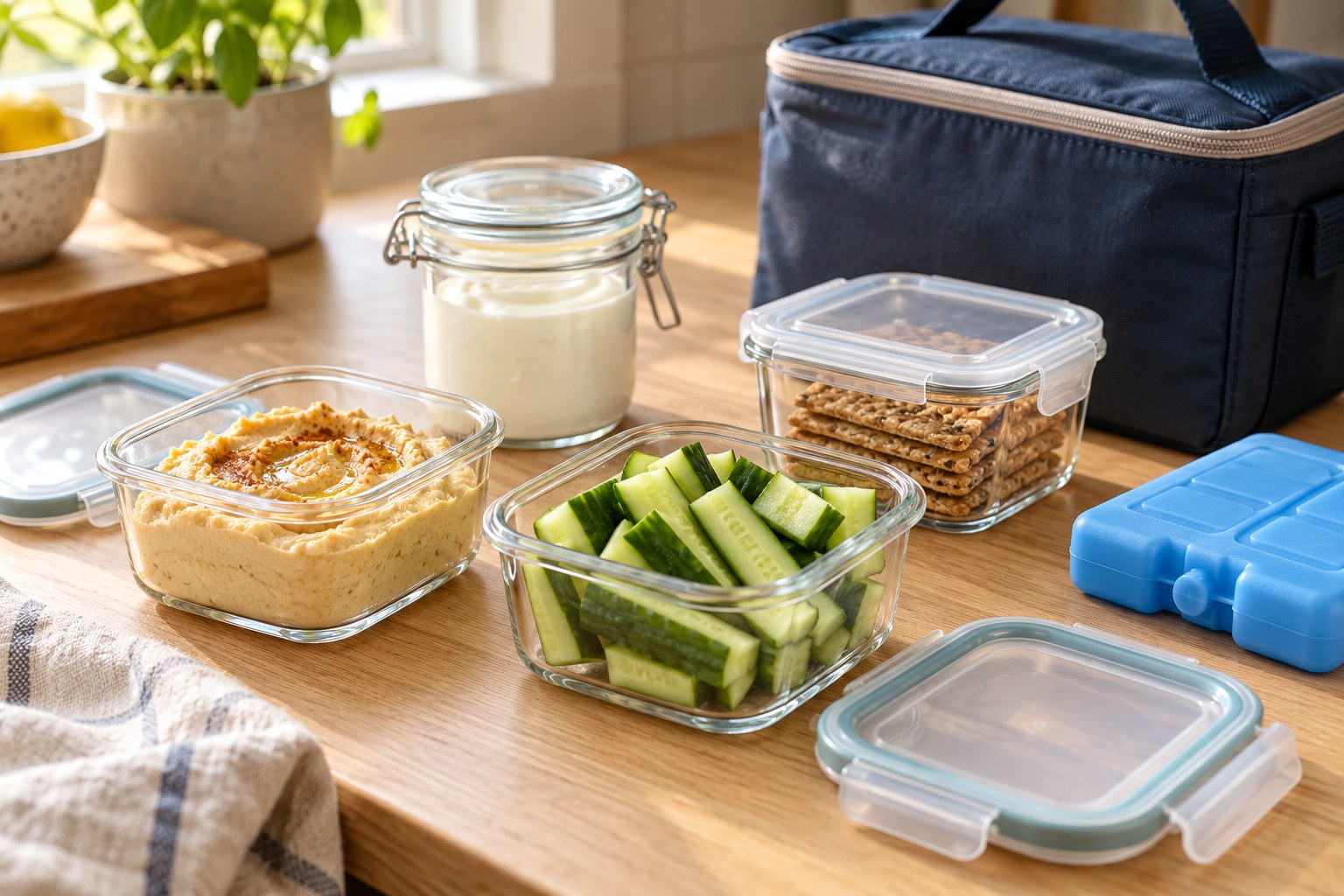
A simple routine is to make one or two snacks ahead, label containers with their preparation date, and prepare cut fruit in smaller batches during the week. That approach protects quality and helps avoid forgetting food in the back of the fridge. Freeze only recipes suitable for freezing; not every fresh sandwich or watery fruit mixture will thaw pleasantly.
Make a five-day snack rotation without a complicated schedule
Monday: A chilled fruit-and-yogurt cup and a few crackers. Pack the yogurt cold, or eat it at home. Tuesday: A small no-bake chocolate oat bar paired with a banana. Wednesday: Hummus with pita and age-appropriate vegetables. Thursday: Apple sandwiches prepared close to snack time, following allergen rules. Friday: A cucumber sandwich bite and a soft fruit portion. Reserve frozen yogurt bark or smoothie pops for an at-home weekend snack where storage is easier.
This rotation is an example, not a prescription for portions, calories, or frequency. Adjust for hunger, preferences, dietary needs, activity, and what is available. If you dislike a food, choose another from the fifteen options rather than forcing the plan. Repeating familiar ingredients across several days is a practical way to keep grocery costs and food waste manageable.
Frequently asked questions about no-bake snacks
Is no-bake the same as no-cook?
No. The chocolate oat bar and crispy-rice treat recipes use heat on the stovetop; yogurt bark and chia pudding require chilling or freezing. “No-bake” means the snack does not need to be baked in an oven. Choose fruit plates, cucumber sandwiches, and basic parfaits for truly no-cook assembly.
Which ideas are best when I only have five minutes?
Fruit with yogurt, ready-made crackers with an appropriate spread, a rice cake with hummus, and a banana wrap can be assembled quickly when the ingredients are already in the kitchen. Fresh hummus, energy balls, bars, and frozen desserts require more time, so prepare them ahead rather than relying on optimistic prep estimates.
Are these fifteen snacks healthy?
They serve different purposes. Hummus with vegetables or yogurt with fruit may contribute different nutrients from a chocolate oat bar or marshmallow cereal treat. You can enjoy sweet treats without pretending they are nutritionally identical to a savoury protein-containing snack. Variety and usual eating patterns matter more than applying a label to a single recipe.
Can I make every idea nut-free?
Not without reviewing the recipe and ingredients individually. Several published recipes contain peanut or almond butter, chopped almonds, or optional nuts. Substitute only when the product is suitable and the recipe will still work. A school policy and a child's personal allergy plan take priority over generic substitution advice.
Can these go into a school lunchbox?
Many can, but not all travel equally well. Perishable yogurt, cream cheese, hummus, and cut fruit need cold storage. Frozen treats often melt before lunchtime. Allergy policies also differ. Check your school's guidance, and pack safe portions in clean containers with an ice pack when required.
Are energy balls and frozen bark suitable for toddlers?
Not automatically. Sticky balls, whole nuts, dried fruit, firm raw fruit, and very hard frozen pieces can create choking risks. Serve age-appropriate textures and sizes with supervision, and consult individualized advice for children with feeding or swallowing difficulties.
What should I do if my no-bake oat bars crumble?
First follow the published recipe's specific ratios. In general, crumbly bars can result from insufficient binding or not pressing the mixture together firmly enough. Chilling helps some recipes set, but simply adding large amounts of extra syrup can make them sticky rather than stable. Change one factor at a time when testing a variation.
How can I keep sandwiches and crackers from going soggy?
Keep wet ingredients separate for as long as practical. Dry cucumber well, assemble sandwiches close to serving, and carry crackers apart from dips. Use a small sealed container for yogurt or hummus rather than layering everything into one box for several hours.
Do I need special kitchen equipment?
No. A knife, cutting board, mixing bowl, spatula, and refrigerator handle many ideas. A food processor helps for hummus and date balls; a freezer tray or pop mould is useful for frozen snacks. Some linked recipes use a saucepan. Choose an assembly idea if you want to avoid appliances entirely.
Can I prepare the same snack every day?
You can repeat favourites, but rotating ingredients adds interest and offers a broader range of foods across the week. Use the components you already have: a tub of yogurt might become parfaits and fruit salad; hummus might accompany crackers on one day and cucumber slices on another. Start with two or three recipes you actually enjoy.
Final thoughts: Less baking, more useful choices
No-bake snacks are not about elaborate kitchen hacks. They are about knowing which simple ingredients fit your schedule and how to prepare them safely. A chilled yogurt bowl, a square of chocolate oat bar, or a tray of hummus and vegetable dippers can all be good answers to different kinds of snack cravings. The key is being clear about preparation time, oven use, allergies, and the texture appropriate for the person eating.
Begin with the published No-Bake Chocolate Oat Bars when you want a sweet make-ahead project, or Classic Homemade Hummus when you need a savoury option. For a cool after-school treat, try Frozen Yogurt Bark with Fruit and plan enough freezer time. These are real recipe links, with real ingredient lists, not mismatched shortcuts. Choose one that fits your day—and keep snack time enjoyable.
Sources and safety guidance: Health Canada: Healthy snacks; Health Canada: Safe school lunches; Health Canada: Safe food handling for children five and under; American Academy of Pediatrics: Choking prevention.
IN PICTURES
From the baking notebook
FROM THE RECIPE BOX


