On this page
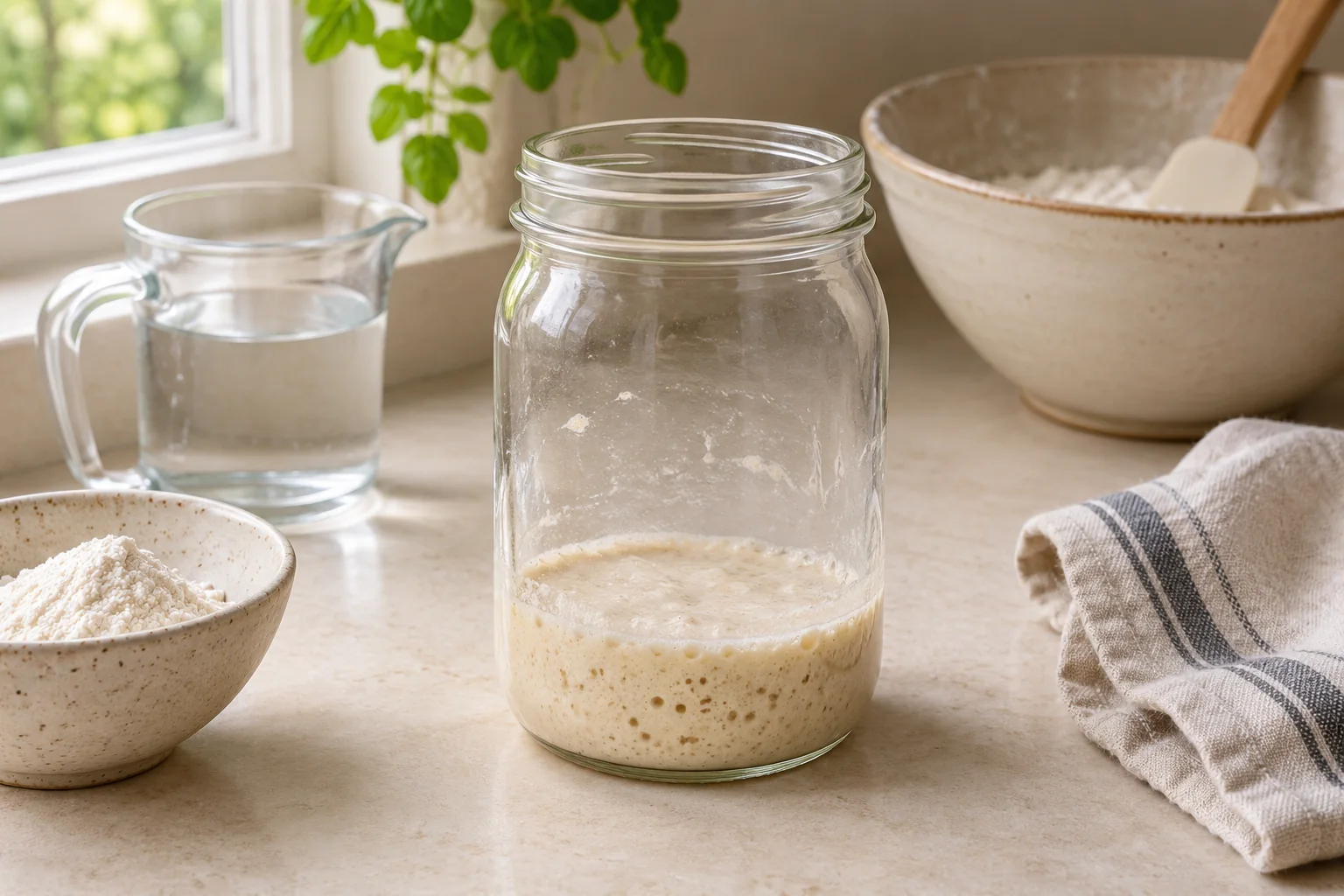
A starter that isn't rising can make a baker feel as though the whole sourdough project has stalled. You feed it, watch the jar and see only a few bubbles—or nothing at all. The cause may be as simple as a cold kitchen or a feeding ratio that needs more time. In a new starter, the quiet stage may even be normal. This guide helps you distinguish slow but healthy fermentation from a genuine problem and regain predictable activity.
First check whether it rose and fell while you were away
If you didn't mark the jar after feeding, you may have missed the peak. Look for a dried line or streaks of starter above the current surface. A culture that rose overnight and collapsed can resemble one that never moved. Next time, mark the starting height and check at intervals.
1. The kitchen is too cold
Temperature has a major influence on fermentation. A starter in a cool room often takes much longer to rise than one in a comfortably warm kitchen. Move it to a stable, moderate location consistent with the recipe's guidance. Avoid direct heaters, ovens with unpredictable warming cycles or hot water that could damage the culture.
2. The feeding ratio requires more time
At 1:4:4, the starter receives far more new flour and water relative to the seed than at 1:1:1. It generally takes longer to reach peak. Confirm which ratio you're using before concluding the starter is weak.
3. It's a new starter
A starter in its first days may show a dramatic early rise, followed by a quieter phase while the microbial community stabilizes. This can be normal. Continue the proven development schedule and evaluate progress across several days rather than expecting a mature rise immediately.
4. Your starter was recently refrigerated
Cold starter may appear sleepy immediately after removal. Some need more than one measured room-temperature feeding to return to vigorous activity. Judge recovery by repeated rise and peak timing rather than by a single spoonful or an exact number of hours after removal from the fridge.
5. Too much old starter was retained
If your feeding is mostly old acidic starter with very little fresh food, the culture may exhaust its meal quickly and rise and fall before you notice. Use a measured seed and appropriate fresh flour and water. A straight-sided jar makes the changes visible.
6. Too little active seed was used
A very large feed ratio with only a tiny amount of weak starter may take an unusually long time to show gas production. That doesn't automatically mean it is dead. For recovery, use a trusted smaller refreshment and monitor activity before increasing feed size.
7. Flour changed without accounting for it
Whole-grain and white flours can produce different activity patterns and texture. A shift between brands, milling styles or flour types can change how readily the starter rises. Keep one flour blend consistent for a few cycles and compare results before making another adjustment.
8. Water quality or temperature may matter
Use water suitable for drinking and within the temperature specified by the starter method. Extremely hot water can harm the microorganisms. If you suspect an unusual local water-treatment issue, consult reliable baking guidance rather than assuming every tap-water starter must fail.
9. Your jar makes rise difficult to see
A wide bowl can show substantial gas and fermentation without a dramatic height increase. A clear, straight-sided jar with a marked starting level is easier to interpret. Leave headroom so the culture doesn't spill over the rim and mask its actual rise.
10. The starter is very liquid or very stiff
Hydration changes how easily a starter traps gas. A relatively liquid culture may form bubbles but hold less visible height, while a stiff starter may dome differently. A consistent 100%-hydration feeding is an approachable baseline for troubleshooting unless your bread formula calls for another style.
11. The culture is hungry or over-acidified
A starter that has been left too long between feeds may smell sharply acidic and show diminished activity. Controlled refreshments can help rebalance it when no contamination is present. Avoid relying on smell alone: a healthy culture may smell tangy at different stages.
12. You aren't weighing ingredients
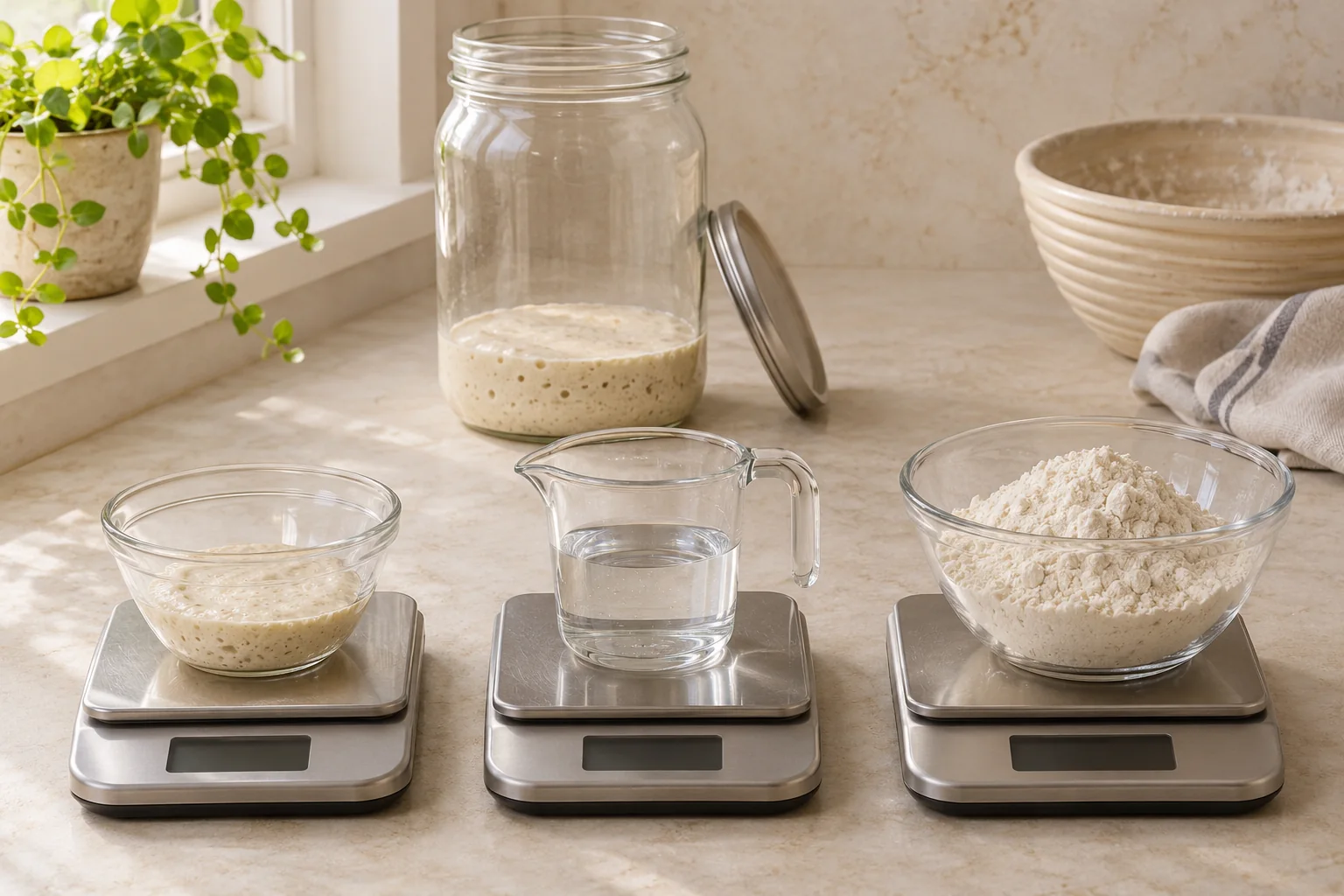
A cup of flour is not the same weight as a cup of water. Feeding equal volumes can unintentionally create a very different hydration than 1:1:1 by weight. Use a scale to remove that variable, and keep notes of seed, flour and water quantities.
13. It may be contaminated
Visible mold, unusual pink or orange growth or a genuinely putrid odour indicates a safety issue, not ordinary slowness. Discard contaminated starter completely. Do not taste raw starter to judge safety or scrape away mold and continue using the remainder.
14. Feeding too frequently can obscure recovery
Repeated large feeds before a weak culture has had time to develop may make every sample look inactive, especially when combined with cool temperature. Follow a consistent schedule suitable for starter development or revival instead of changing ratios whenever the jar appears quiet.
How to run a controlled three-day observation
Use a tested feed such as equal weights established starter, flour and water in a clean jar. Mark the level and record temperature and feeding time. Follow the maintenance schedule for several cycles while noting bubbles, rise and peak. Change only one variable when there is a clear reason.
What does a healthy rise look like?
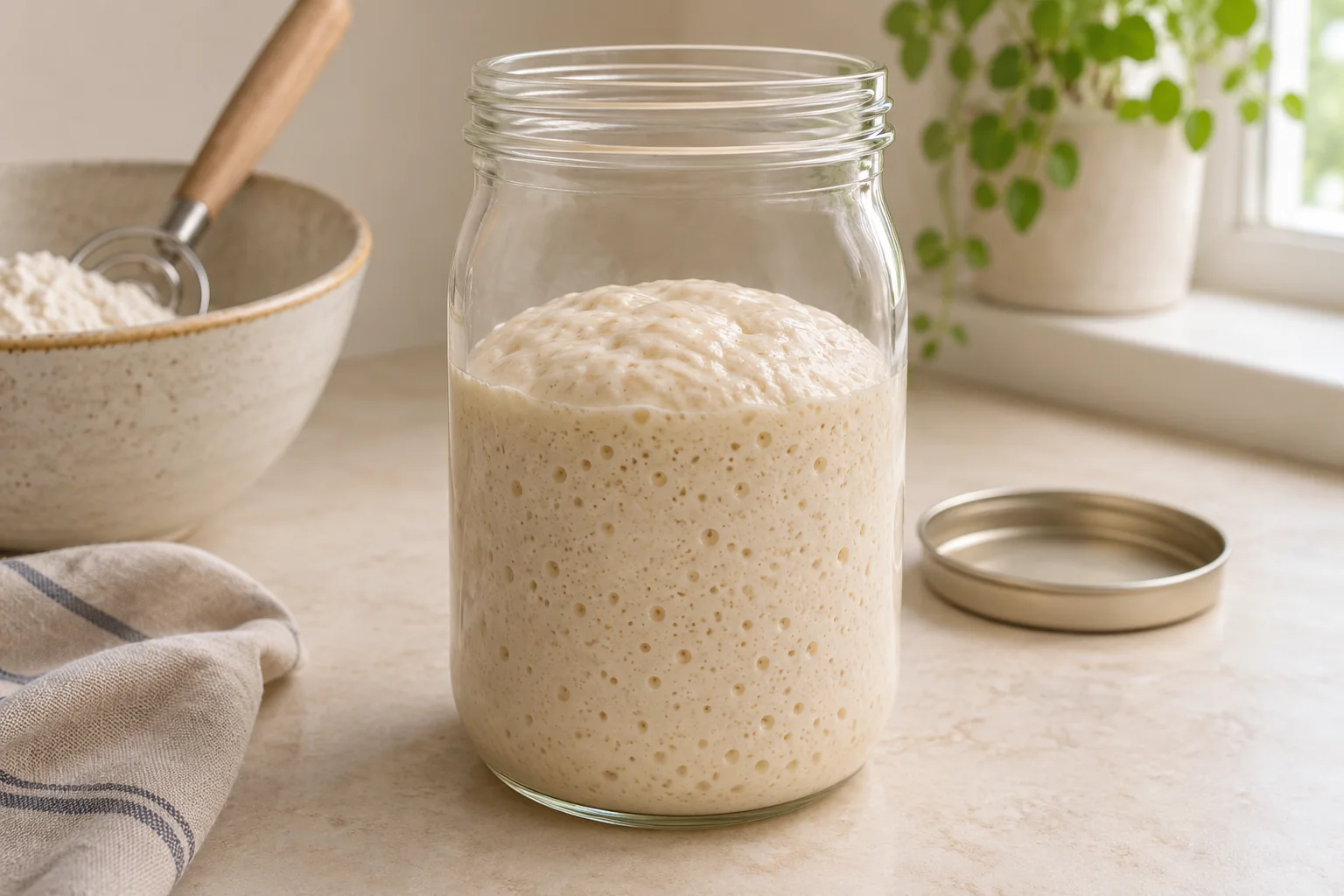
A mature active starter typically expands substantially, shows bubbles throughout and eventually begins receding.
What if there are bubbles but no height increase?
Possible explanations include a very liquid mixture, a wide container, weak gas retention or low activity. Verify hydration, use a suitable jar and see whether a more typical texture produces predictable expansion. Bubbles are evidence of some activity, but do not necessarily prove bread-leavening strength.
Why the float test doesn't solve it
A floating starter sample may simply hold bubbles; a sinking sample may have been stirred or contain less trapped gas. Neither diagnoses culture health adequately. Focus on consistent expansion, maturity and the way the starter performs under repeated feeds.
When to bake after a slow period
Once the starter again reaches a predictable, vigorous peak over successive feedings, build the amount needed for bread. Don't use a weak culture merely because you've waited a fixed number of days. If you need reliable bread immediately, select a separate recipe using commercial yeast rather than pretending starter strength no longer matters.
Recipe to try: Sourdough Country Loaf. The loaf calls for active starter. Check its maturity and the dough’s fermentation cues before moving on to shaping.

Preventing future slowdowns
Maintain a small starter at a stable feeding ratio, use a predictable temperature and refrigerate mature starter if you bake infrequently. Label jars and record feeding dates. Many apparent emergencies become manageable once you know the culture's normal timing.
Recipe to try: Sourdough Ciabatta. Ciabatta provides a different dough and loaf shape to practise with. Keep its hydration and handling instructions together.

Frequently asked questions
Can a starter be alive without rising? Some fermentation may occur without a large visible rise. Why did it stop after day two? New starter development can fluctuate. Will more sugar make it rise? Use flour and water as directed instead. Does it need sunlight? No. What if it smells sour? Smell alone is not a proof of leavening strength.
Recipe to try: Sourdough Crackers. These crackers use sourdough discard. Use discard from a healthy established starter and bake it fully; this is not a raw-starter snack.

Diagnose before you restart
Check the jar markings, temperature, ratio, flour and starter age in that order. Most starter troubles become easier to understand when you observe one consistent feeding cycle. Safety concerns require discarding; simple slow fermentation usually calls for patience and controlled maintenance.
IN PICTURES
From the baking notebook
FROM THE RECIPE BOX


