On this page
A fresh loaf smells wonderful, but when you slice it the knife leaves sticky streaks and the crumb feels damp, pasty or rubbery. That texture is often described as gummy. It can come from an underbaked centre, cutting too soon, fermentation imbalance or a formula with more water than its structure can manage. The most useful question is not simply whether the loaf rose: it's whether the crumb cooked and stabilized correctly.
What gummy bread looks like
Gummy crumb may cling to the knife, form compressed translucent patches or feel tacky and dough-like after cooling. Some high-hydration breads are naturally moist and chewy, but they shouldn't contain obvious uncooked batter. Compare the loaf with the intended style before calling every slightly tacky crumb a failure.
Underbaking is a leading explanation
Bread needs sufficient heat for its starches and proteins to establish a stable structure. A dark crust can form before a large loaf's centre is finished, especially when oven heat is excessive or pan depth is unusual. Follow the recipe's total baking schedule and a valid internal temperature endpoint when provided.
Why a brown crust can hide a raw centre
Sugars, milk or egg wash can brown the exterior quickly. A rich sandwich loaf may look golden while the centre still needs time. For large or enriched loaves, check doneness beyond surface colour rather than raising heat to make the crust even darker.

Cutting while hot can mimic gumminess
Freshly baked bread contains heat and moisture still redistributing within the crumb. Slicing too early can smear starch and compress an interior that would have become more stable after cooling. Let the loaf cool on a rack for the period required by the formula, especially when it is large or high hydration.
The role of hydration
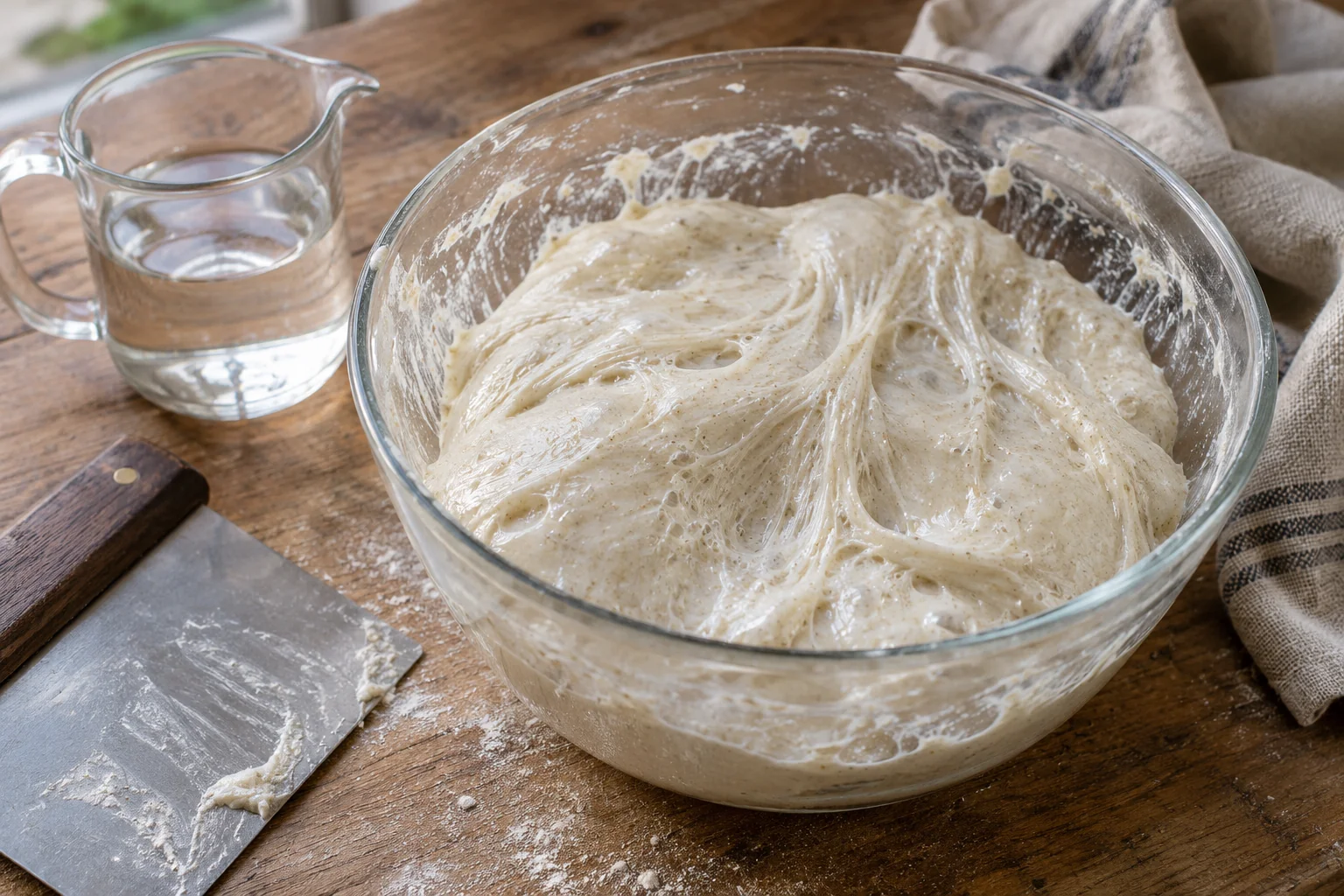
High-hydration dough can produce an open, moist crumb when gluten development and fermentation are balanced. Add too much water for the flour's absorption capacity and the loaf may become weak, spread or bake with wet patches. Use measured weights rather than judging hydration by how sticky the dough feels alone.
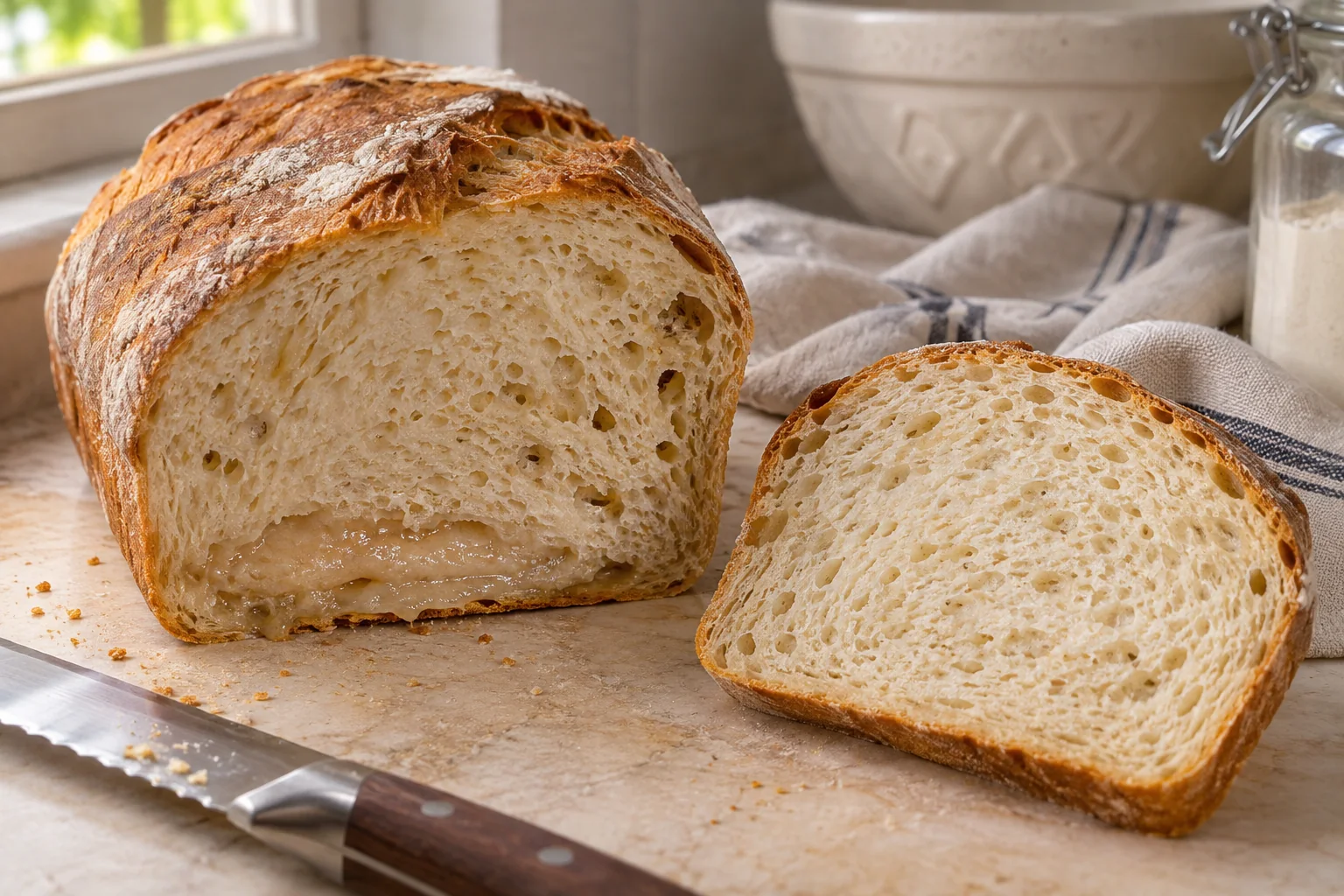
Recipe to try: Sourdough Country Loaf. A rustic, tangy loaf with a crackling crust and tender, open crumb structure that showcases the complex flavors developed through slow fermentation.
Flour absorption varies
Bread flour, all-purpose, whole wheat and rye absorb and retain water differently. A formula designed for strong white wheat flour may need adjustment when baked with a weaker blend. Don't add lots of extra water because another baker's dough looked wetter in a video.
Why rye behaves differently
Rye breads rely more on starches and other flour components for structure than a conventional white wheat loaf. Many high-rye breads require special acid balance, thorough baking and an extended resting period before slicing. Use a tested rye recipe rather than diagnosing its naturally close crumb by white-bread standards.
Recipe to try: 36-Hour Fermented Dark Rye with Malted Barley. Rye-rich dough has different handling and crumb-setting needs from white wheat bread. Follow this formula’s complete fermentation, baking and cooling method.

Under-fermentation can create dense wet areas
Dough that has not fermented sufficiently may form a tight crumb that feels heavy and damp, sometimes accompanied by a large crust tear. Assess bulk and final proof against the formula's rise and texture cues. More oven time won't create gas that never developed in the dough.

Over-fermentation can weaken dough
When fermentation proceeds too far, gluten structure may lose strength and the loaf can collapse or form dense patches. An over-proofed loaf may have inconsistent crumb despite adequate baking. The remedy is correct fermentation timing, not simply adding more flour after shaping.
Gluten development matters
Insufficient kneading or folding can leave the gas-holding network weak. In a wet artisan dough, properly timed folds may improve strength. In sandwich bread, the method may call for sustained kneading. Follow the specific bread formula rather than imposing one mixing time on every dough.
What a gummy streak at the bottom suggests
A dense line above the crust can reflect underbaking, weak dough or excessive moisture concentrated near the base. It may also be caused by baking conditions that don't deliver enough bottom heat. Check the pan, rack and cooling method before assigning a single diagnosis.
Enriched bread considerations
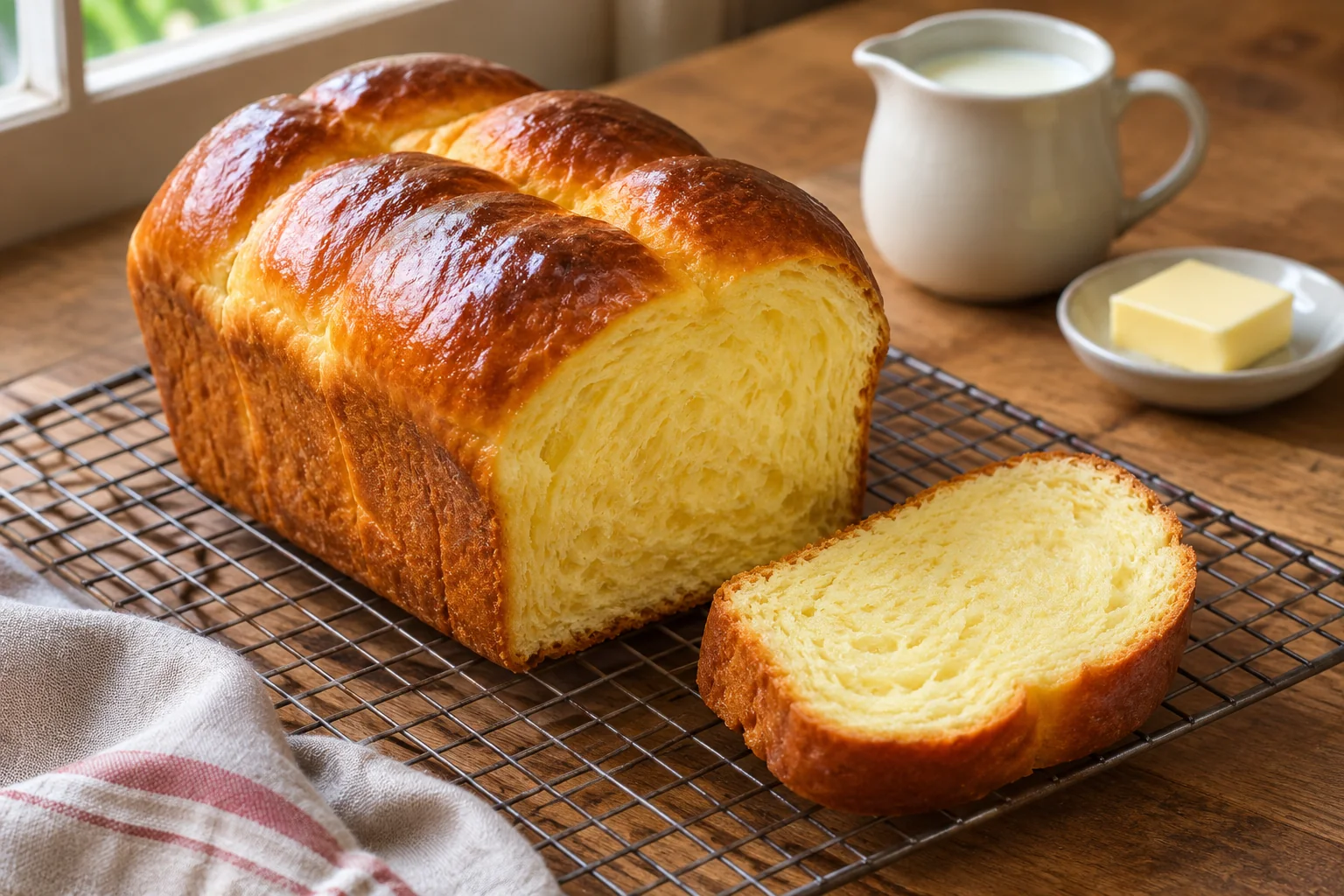
Butter, milk, eggs and sugar create a tender crumb and alter browning and fermentation. An enriched loaf may take longer to set in the centre than its brown crust suggests. Use the recipe's oven and temperature guidance instead of treating it like a lean baguette.
Recipe to try: Soft Milk Bread. Pillowy-soft, subtly sweet milk bread with a tender, pull-apart texture and golden crust that makes for perfect sandwiches, toast, or enjoying warm with butter.
Too much filling can create wet pockets
Swirls of cinnamon sugar, cheese, fruit or other fillings can release moisture and create an apparent gummy streak. Use the amount and preparation prescribed. A large wet filling may prevent surrounding dough from baking evenly.
How pan size changes the middle
A small pan filled with too much dough creates a deep loaf that needs longer cooking. Its top may brown dramatically before the centre sets. Choose the recommended pan rather than squeezing a double recipe into one tin.
When to use an internal thermometer
A probe can improve consistency in bread recipes with a specified doneness temperature. Insert it into the proper location without touching the pan. Different breads require different endpoints, so don't adopt one universal number for every loaf.
Cooling correctly
Transfer bread to a wire rack when the recipe directs so steam can escape. A loaf left in a closed pan or bag while hot may collect condensed moisture that softens the crust and outer crumb. Wrap only after sufficiently cooling for the product.
Can you rescue gummy bread?
If a loaf has already cooled and is clearly underbaked, the result may be difficult to restore to ideal texture. Some fully baked but overly moist bread can be toasted in individual slices. Don't serve an obviously raw dough centre; use a dependable bake endpoint next time.
Diagnose with the whole loaf
Observe crumb openness, loaf height, crust colour, fermentation history and whether the knife stuck only when hot. A very open moist crumb sliced prematurely calls for a different solution than a squat dense loaf with a raw centre.
Frequently asked questions
Does sourdough always feel gummy? No, when properly baked and cooled it can be moist without raw patches. Will more flour fix it? Not automatically. Should I cut warm bread? Only if the particular bread style supports it. Can too much yeast cause gumminess? Fermentation imbalance can contribute, but baking and cooling matter too.
Use temperature, fermentation and patience
Bake the correct amount of dough in the intended pan, develop it according to the method, verify doneness and allow full cooling. Those fundamentals produce a crumb that is pleasantly moist rather than paste-like.
Related recipe: Classic White Sandwich Bread.
IN PICTURES
From the baking notebook
FROM THE RECIPE BOX


