On this page
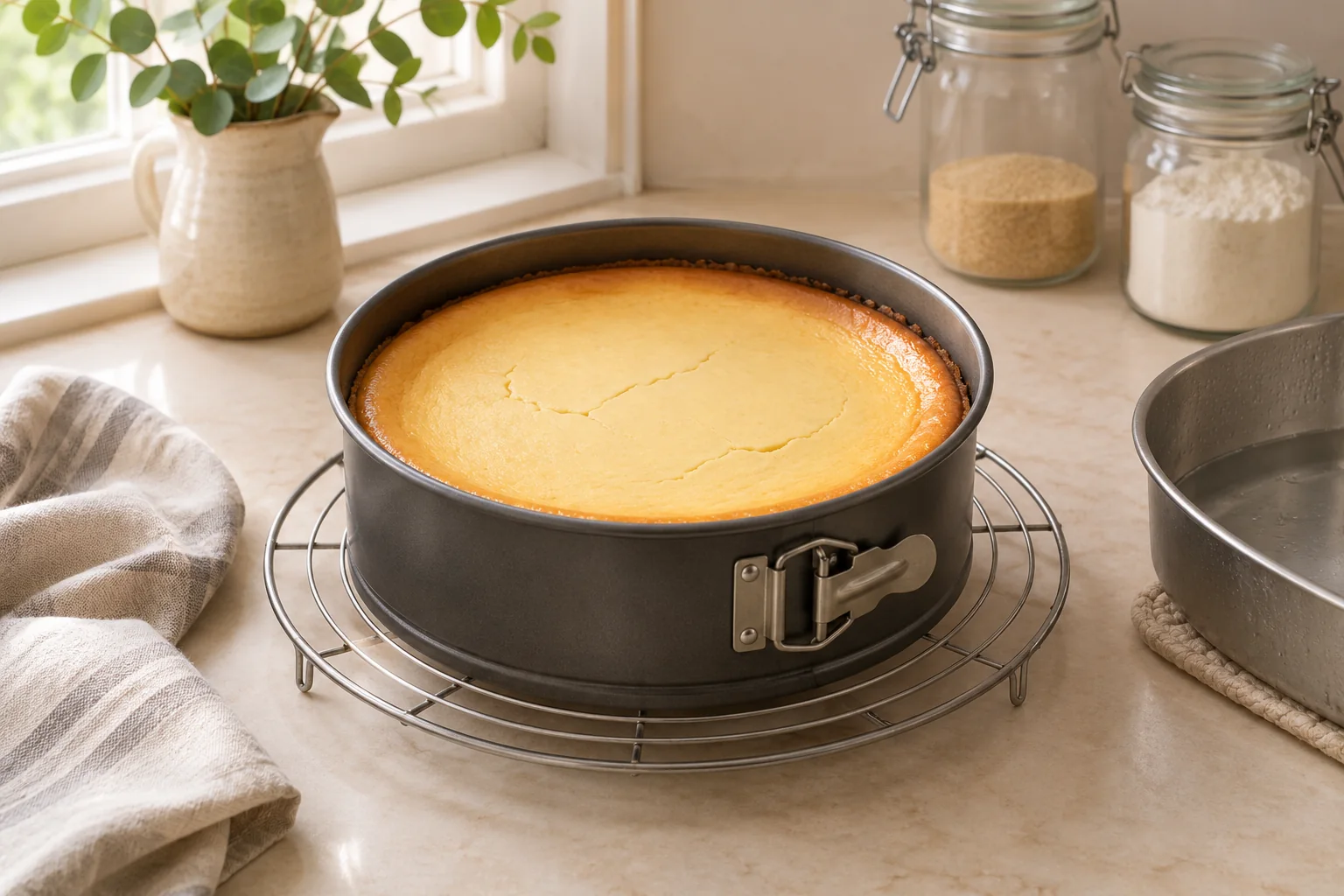
Cheesecake can look flawless when the oven switches off, then develop a deep crack during cooling. The reason is often not the recipe's flavour or a missing ingredient but the way a hot, egg-rich custard contracts as its temperature drops. A gentle transition from baking to refrigeration helps the filling settle more evenly. Yet cooling slowly does not mean leaving dairy out for hours without regard for food safety. Here's how to balance texture, appearance and proper handling.
The reason cheesecake contracts
A baked cheesecake is a delicate network of cooked egg proteins suspended in cream cheese, sugar and other dairy. As heat leaves the filling, its structure changes size and firmness. The edges may already be firmly attached to the springform while the centre is still soft. If contraction is uneven or restrained at the rim, stress can produce a visible surface crack.
Why an abrupt temperature change matters
Moving a very hot cheesecake directly to a chilly counter or draft can increase temperature differences between its surface and centre. Controlled cooling moderates the transition, but cannot always undo overbaking or a batter that was excessively aerated.
A crack usually has more than one cause
Overbaking, aggressive mixing, a pan with very hot sides and rapid cooling can work together. If your cake rises dramatically, splits and sinks, investigate the baking endpoint as well as the cool-down plan. Simply propping the oven door open will not make a badly overbaked cheesecake silky again.
Use the recipe's oven-rest instruction
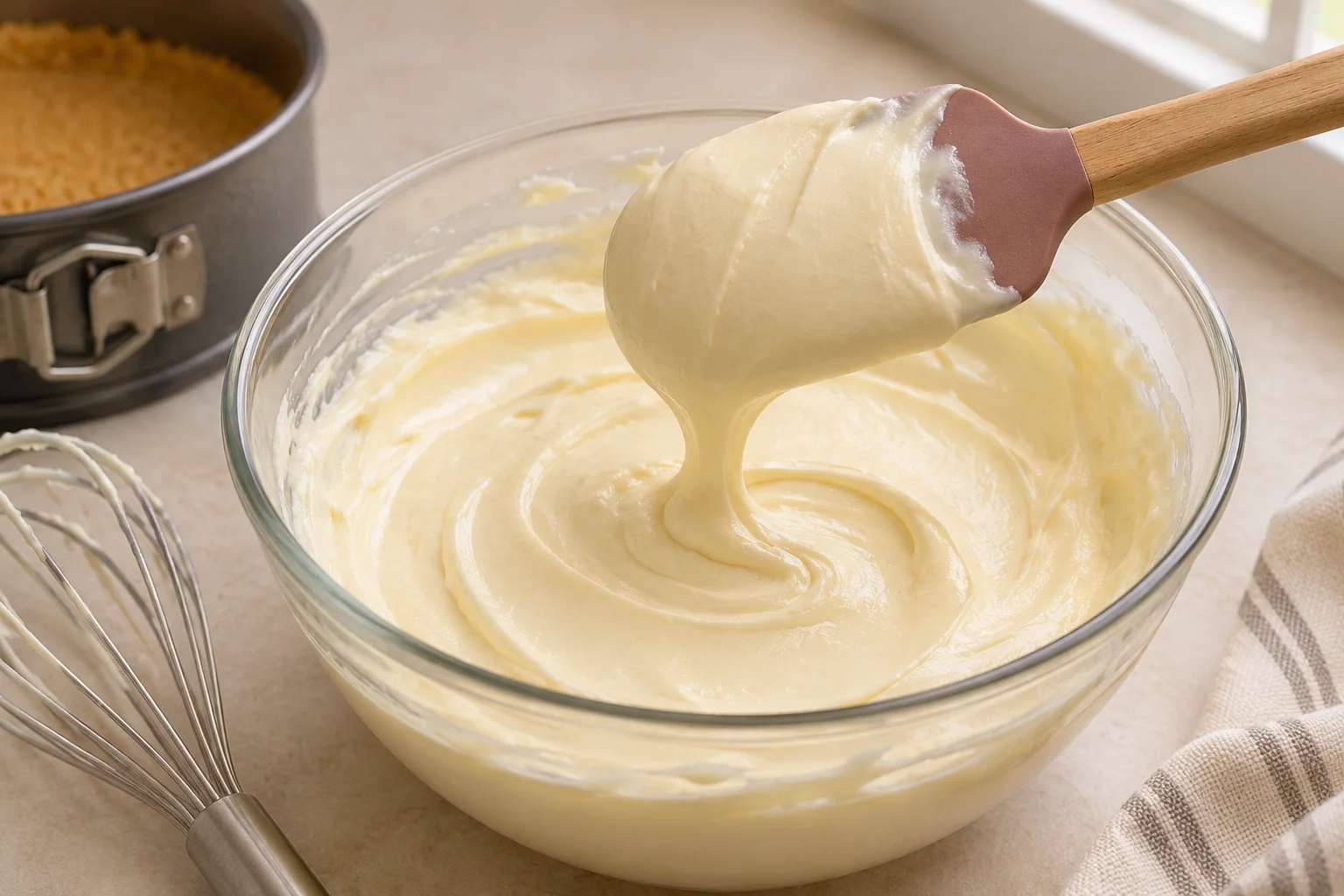
Some cheesecakes are left in a switched-off oven with its door slightly ajar for a prescribed period. Others are transferred to a rack sooner. Each method is tuned to that formula, pan depth and oven schedule. Follow the original instructions instead of adding an arbitrary two-hour oven rest to every cream-cheese dessert.
Recipe to try: Classic New York Cheesecake. Follow this cheesecake’s complete mixing, baking, cooling and chilling sequence. A slice is easiest to assess after the required chill.
An oven rest is not the same as a warm countertop hold
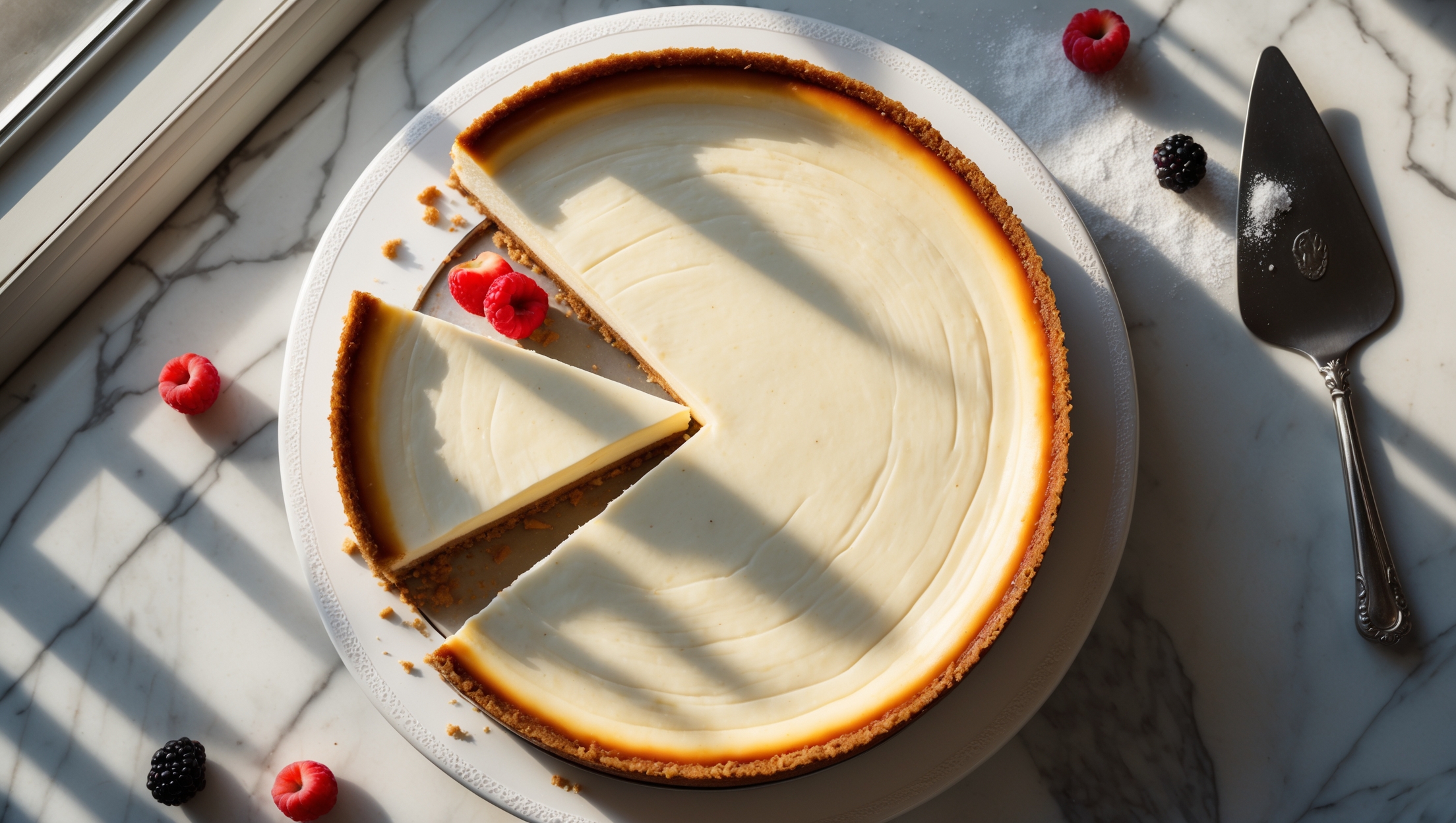
The short controlled period immediately after baking belongs to a tested cooking process; it should not be confused with casually leaving a perishable dessert on the counter all afternoon. After the recipe's prescribed cooling stages, refrigerate promptly under safe food-handling guidance.
Look at the centre before cooling begins
A properly baked cheesecake frequently has set edges with a small central region that wobbles gently like gelatin. It should not look like liquid batter sloshing in the entire pan.
Why the centre continues to set
The outer filling and pan retain heat after the oven is switched off, so residual energy continues moving inward. Eggs finish developing structure while the entire cake gradually cools. Baking until the centre looks completely rigid may leave the perimeter dry and grainy, especially in a tall rich cake.
How the water bath changes cooling
A water bath moderates heat during baking and may slow the cooling of the sides. This can help the cheesecake cook more evenly. It does not eliminate the need for the recipe's prescribed cool-down and refrigeration stages. Hot water and heavy pans also create burn risks when the cake is moved.
When to loosen the edge
Some recipes advise carefully separating the cheesecake from the pan wall at a particular point during cooling. That can allow the filling to contract without being pulled taut around the rim. Other recipes leave the ring in place until fully chilled. Follow the stated timing with a suitable thin tool, avoiding damage to the crust.
Should the cheesecake stay in its springform?
Many formulas keep the cheesecake supported by the base and ring during early cooling. The pan protects a fragile hot filling, and removing it prematurely may distort the sides. Wait until the method says to loosen or unmould rather than treating the cake like a conventional sponge that must leave its tin immediately.
How to avoid condensation
Tightly wrapping a warm cheesecake can trap steam that condenses on the surface and crust. Let it complete the controlled cooling stage before covering as the recipe directs. Cooling without a cover for a specified short period can protect texture, but the cake still needs appropriate food-safe handling.
When refrigeration begins
Dairy- and egg-based cheesecakes are perishable. After the recipe's safe cooling steps, refrigerate at 4°C (40°F) or colder. Follow the applicable food-safety limits for time outside refrigeration. A cake that feels cool at the edge may still be warm deep inside, so allow sufficient refrigerator space and airflow.
Cooling before chilling versus overnight chilling
Cooling moderates the transition away from oven heat; chilling develops a fully cold, sliceable dessert. Many recipes specify several hours or overnight in the refrigerator even after the cheesecake has cooled. Skipping either stage can make the final slices messy and may change the texture.
Why New York cheesecake may take longer
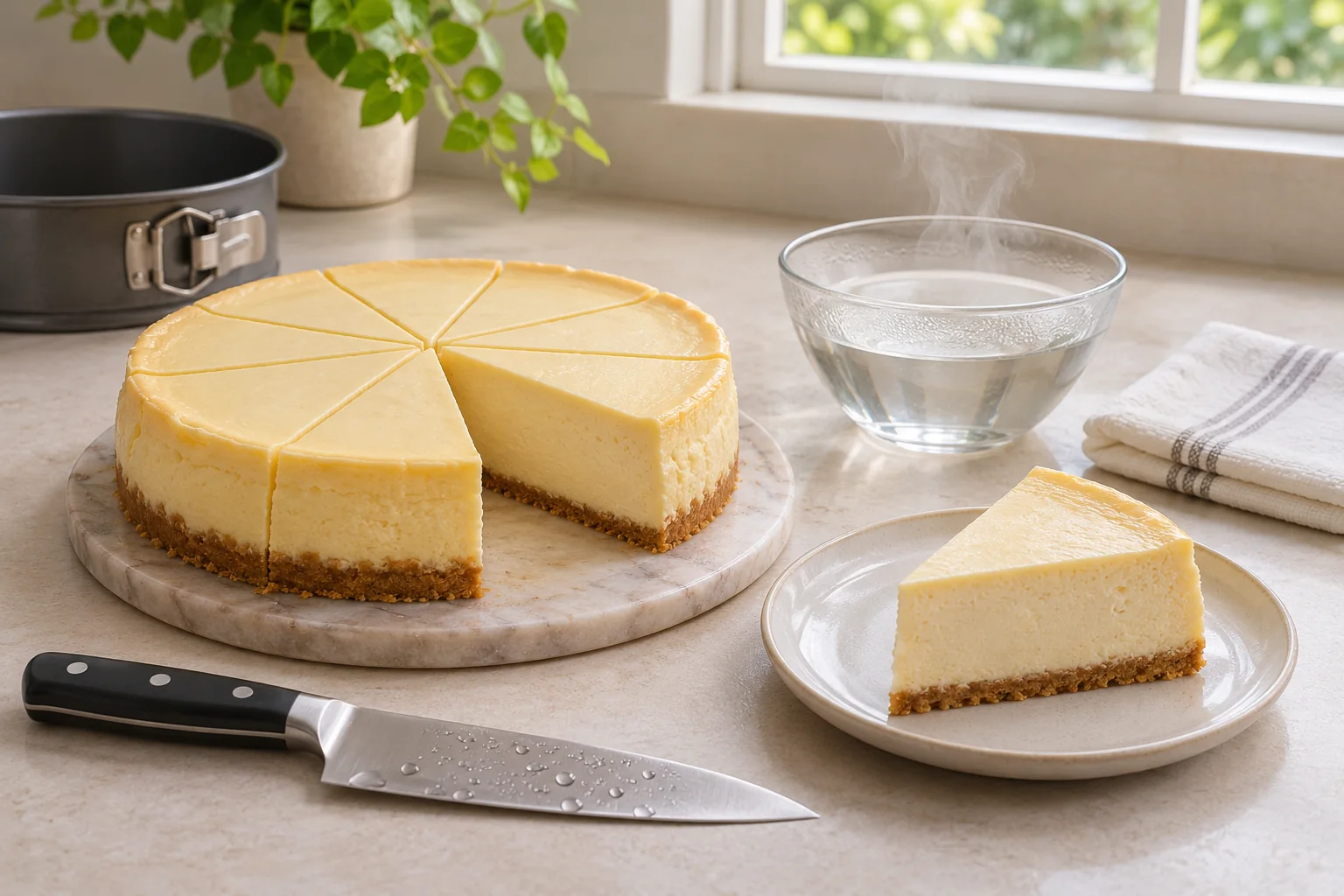
A deep rich New York cake has more mass than a shallow cheesecake pie. Its centre heats and cools more slowly. Recipes for these two formats can therefore specify different baking endpoints and rests. Don't scale a shallow cheesecake timeline based solely on the diameter.
What if the cheesecake cracked anyway?
A surface crack isn't automatically a food-safety defect. If it was baked and stored correctly, the filling can still taste excellent. A recipe-appropriate sour cream layer or fruit topping may conceal the crack for presentation, but shouldn't be used to disguise an uncooked centre.
Common cooling mistakes
Setting hot glass or ceramic on a cold wet counter risks thermal shock. Opening the springform too early can break the crust. Refrigerating a steaming cake without regard for surrounding foods may warm the fridge. Leaving it unrefrigerated overnight is unsafe. These equipment and food-handling choices matter alongside appearance.
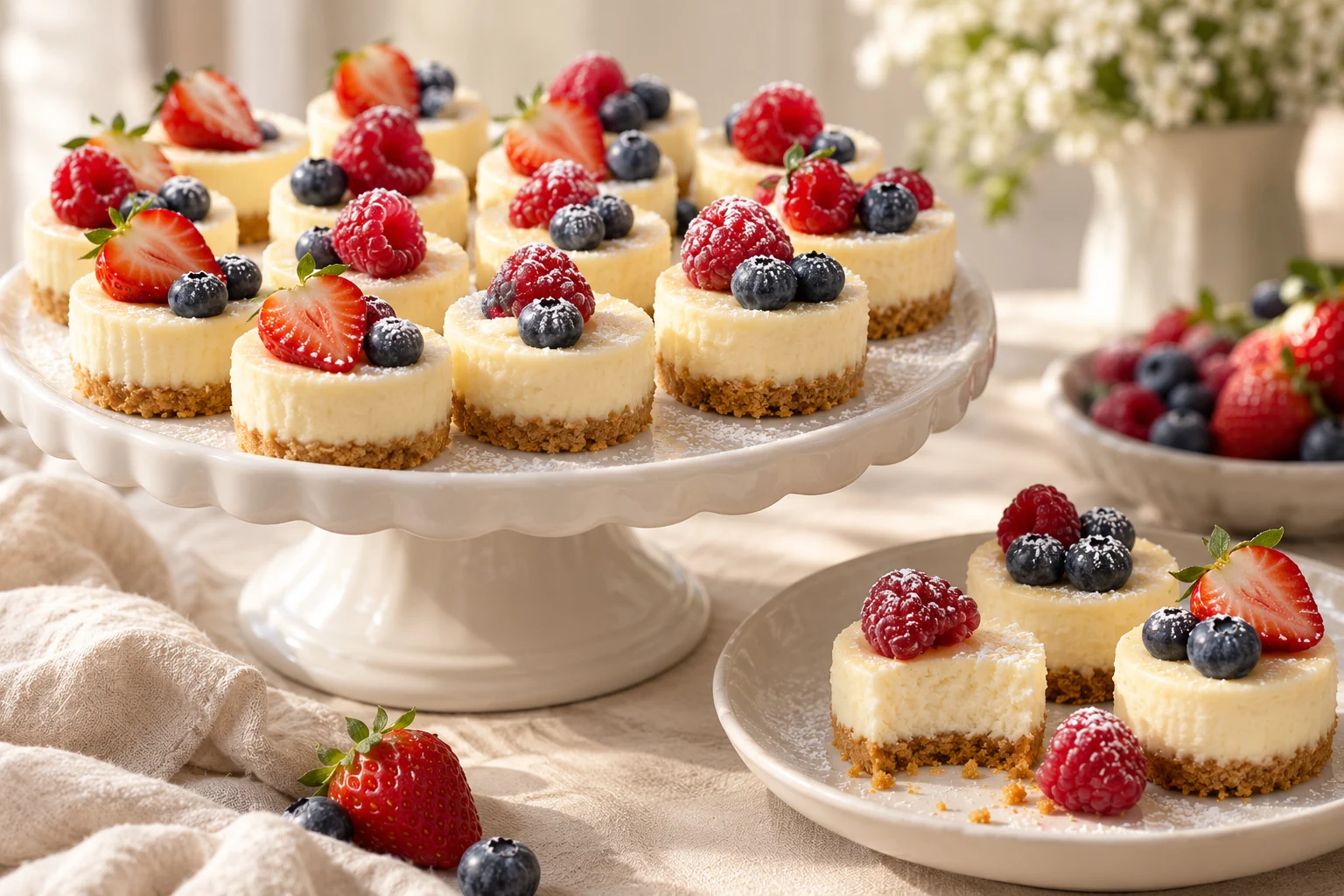
Recipe to try: Mini Cheesecake Bites. Mini cheesecakes have their own portion size and baking schedule. Do not use a whole cheesecake’s bake time for these small cups.
A reliable cooling checklist
Before baking, read the entire finish-and-cool section. Check centre doneness using the recipe. Complete the specified oven or rack rest. Loosen edges only when directed. Refrigerate promptly after the safe cooling stage, then allow the full chilling period before unmoulding and cutting.
Frequently asked questions
Does every cheesecake need to cool in the oven? No. Does slow cooling guarantee no cracks? No, overbaking and excess mixing still matter. Should a baked cheesecake jiggle? Often at the centre, depending on the formula. Can I leave it out overnight? No. Can I chill to fix raw batter? No; proper baking must come first.
The real goal
A gently cooled cheesecake keeps its delicate custard from experiencing unnecessary stress while it becomes sliceable. Work with the recipe's temperatures and rests, and treat proper refrigeration as part of the baking process, not an optional final detail.
Recipe to try: No-Bake Cheesecake. For a chilled alternative, choose this no-bake formula. Its setting method is separate from an egg-based baked cheesecake.

IN PICTURES
From the baking notebook
FROM THE RECIPE BOX


