On this page
A jar of sourdough starter can look exciting one day and almost motionless the next. Bubbles alone don't tell you whether it can raise a loaf. The more useful question is whether your starter can reliably ferment fresh flour and water on a repeatable schedule. When it grows predictably, holds gas and reaches a clear peak after feeding, you can plan dough mixing around its strongest period instead of trusting the clock or a viral float test.
What does ready to bake mean?
For a typical naturally leavened bread, a ready starter contains a vigorous population of yeast and lactic-acid bacteria capable of fermenting the dough. It should rise substantially after refreshments at a known temperature and provide the amount of mature starter called for by the recipe. A starter that's merely sour or bubbly isn't necessarily strong enough to leaven bread without added yeast.
Watch a full feeding cycle
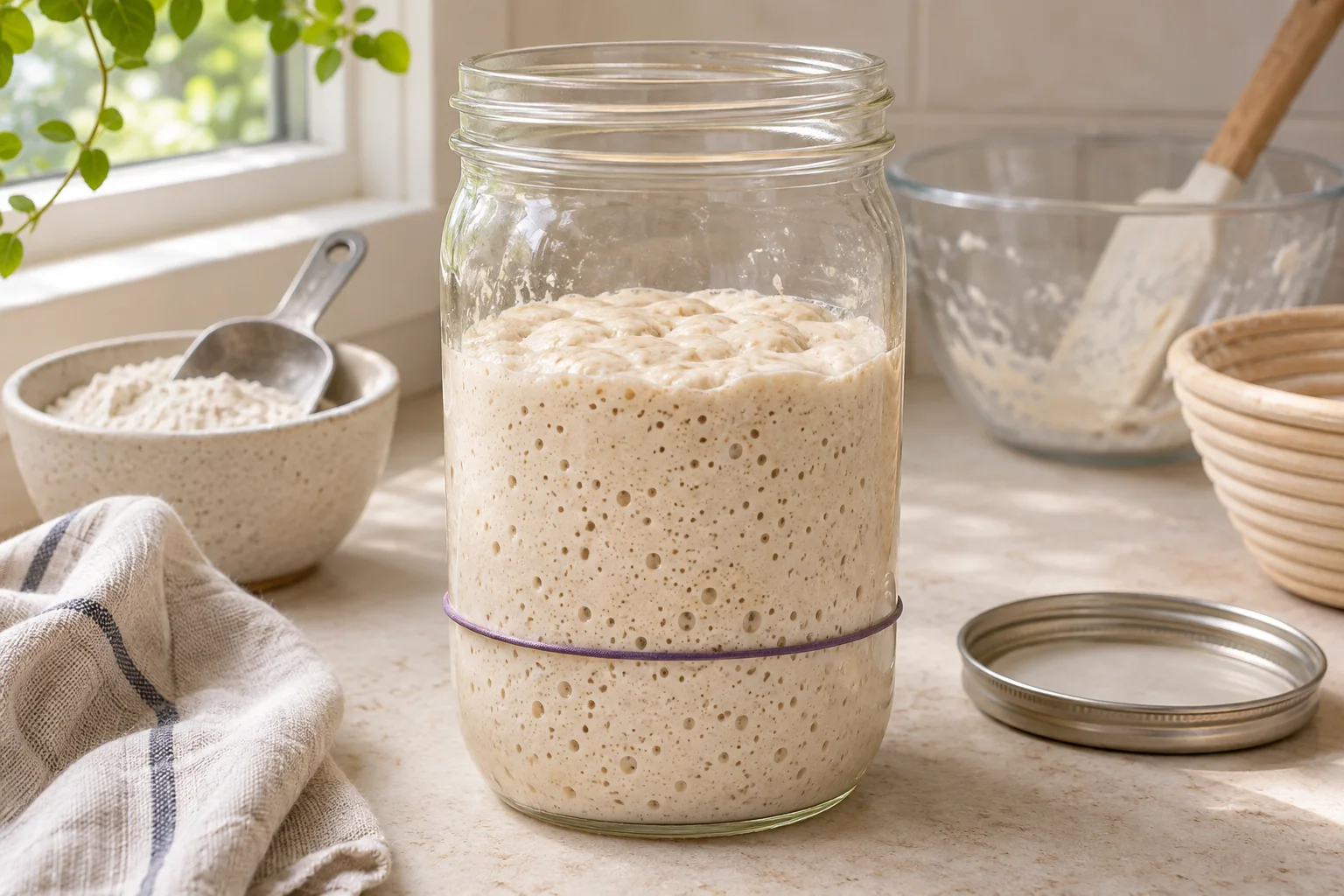
Retain the amount of existing starter called for by your feeding plan, add weighed flour and water, mix, then mark the jar's starting height with a band. Observe it as it expands, approaches a maximum height and eventually recedes. That complete cycle tells you much more than a single photograph of bubbles shortly after mixing.
Look for a predictable rise
Look for a repeatable rise and fall after feeding, with bubbles throughout the mixture. Timing varies with the feeding ratio, flour and temperature. Several predictable cycles give you more useful information than one unusually fast rise.
Inspect bubbles throughout, not only on top
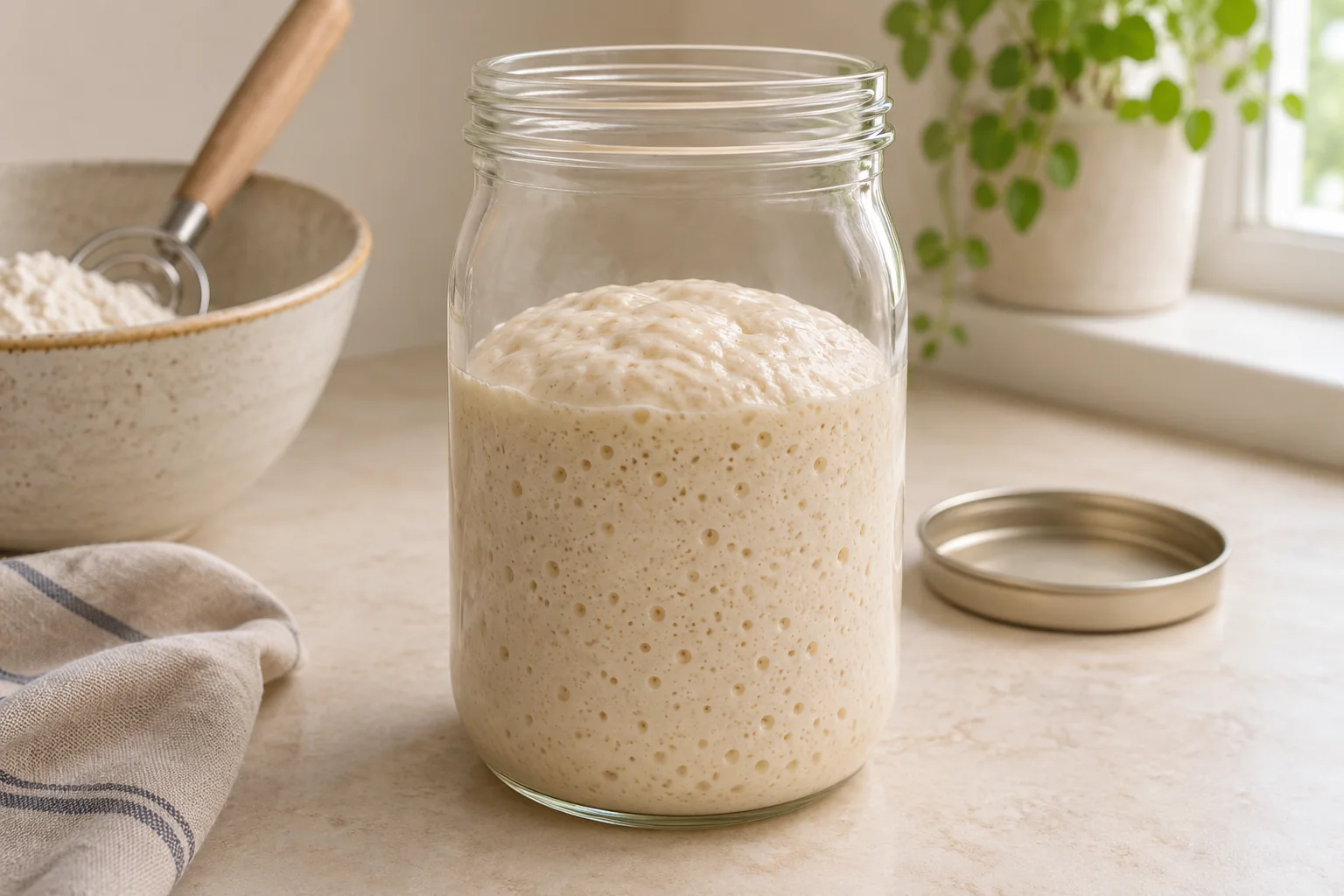
A thriving starter often shows small and medium bubbles through the sides of a clear jar, with a gently aerated or domed surface. Large bubbles alone can occur even in immature cultures, and stiff starters may look different from a liquid 100%-hydration starter. Combine the bubble pattern with actual growth and the time since feeding.
Learn the difference between rising and peak
A starter that's still rising has not reached its highest volume. Peak is the crest of that rise, just before the culture begins dropping back. Many lean sourdough recipes benefit from starter used near peak, when leavening activity is robust. Follow the specific formula when it calls for a young or mature levain instead.
Know what a healthy aroma is
A mature starter can smell pleasantly tangy, fruity, yeasty or mildly alcoholic, depending on age and feeding conditions. Strong acidity alone doesn't prove strength. Unusual putrid odours, visible mold or pink or orange contamination indicate a problem; discard a contaminated culture rather than attempting to rescue it.
Why a brand-new starter may seem ready too early
In the first few days of creating a starter, different microorganisms can produce a dramatic early burst of gas before the culture stabilizes. This initial rise isn't reliable proof of mature sourdough activity. Continue the established feeding schedule until the starter displays repeatable growth and a consistent, appropriate aroma.
Flour choice affects activity
Whole wheat and rye can change nutrient supply and fermentation behaviour compared with white flour. A starter fed whole grain may rise faster or show a different texture. A successful maintenance plan doesn't require changing flour every day; consistency helps you understand the culture's normal rhythm.
Water temperature and room temperature
Warmer conditions within the starter's normal working range generally speed fermentation; cool kitchens slow it. Don't try to compensate for a slow starter with dangerously hot water, which can damage the microorganisms. Record the temperature and compare feeds under similar conditions before diagnosing weakness.
The feeding ratio is part of readiness
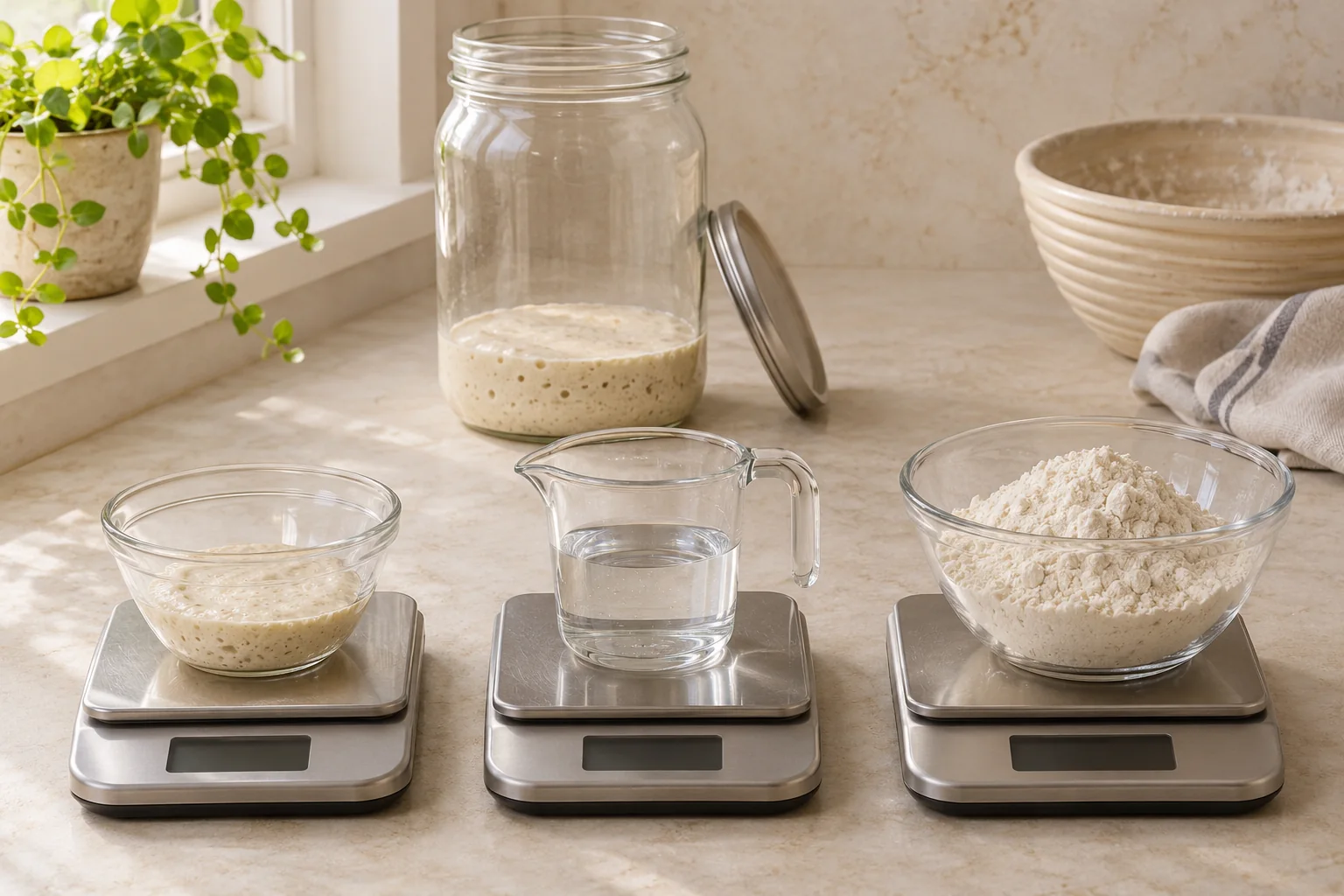
A 1:1:1 feed gives equal weights of existing starter, flour and water. A 1:2:2 or 1:4:4 feed supplies a larger meal relative to the inoculation and usually takes longer to peak. Compare rises at a consistent ratio before deciding one starter is stronger than another.
Does the float test prove readiness?
Not reliably. A spoonful that floats contains trapped gas, but floating doesn't establish adequate yeast activity; a sample that sinks may simply have been disturbed or be more hydrated. Use rise, timing, internal bubbles and consistency instead. The float test is supplementary at best, not a pass-fail gate.
How many successful feeds are enough?
There is no magic number that works for every new culture. For a recently sluggish or refrigerated starter, consecutive predictable cycles offer useful confidence before mixing a labour-intensive loaf.
Build enough starter for the recipe
Your bread formula may require more starter than you routinely maintain. Calculate the amount needed for the dough plus a small reserve for the next feeding, allowing for what sticks to utensils. A final build with measured flour and water can provide the quantity without maintaining an unnecessarily large jar every day.
Recipe to try: Sourdough Country Loaf. The loaf calls for active starter. Check its maturity and the dough’s fermentation cues before moving on to shaping.

Room-temperature versus refrigerator starter
Starter kept cold is usually less active immediately after removal. Many recipes call for one or more room-temperature feedings to restore a predictable rise before baking. A week-old refrigerated starter may still be healthy; it simply needs a refreshment schedule suited to the recipe.
When your starter takes longer than expected
First check the actual room temperature, feeding ratio and flour. A 1:4:4 feed can peak much later than a 1:1:1 feed even with the same healthy starter. If several consistent feedings produce almost no expansion, review culture age, water quality and maintenance before assuming it's ready.
What if it peaks before you can mix?
A slightly past-peak starter may still work in some formulas, though it can change fermentation speed and acidity. For a repeated mismatch, adjust feeding time or use a recipe-approved larger feed ratio to reach peak closer to your mixing window. Avoid leaving a starter depleted for long periods simply because the schedule is inconvenient.
Signs that mean don't use it
Visible fuzzy mold, pink or orange discolouration and a rotten or otherwise suspicious smell warrant discarding the starter and cleaning the container. A harmless-looking dark liquid on top may sometimes reflect hunger, but it should not be confused with signs of contamination. When in doubt about safety, begin a fresh culture.
A simple readiness checklist
Feed by weight, mark the starting height and record temperature. Does the starter rise strongly? Is it aerated throughout? Can it do so consistently over successive feedings? Does it smell appropriately fermented without signs of contamination? Is it near the stage required by your recipe? A yes to these observations is a stronger foundation than a single float test.
Recipe to try: Sourdough Ciabatta. Ciabatta provides a different dough and loaf shape to practise with. Keep its hydration and handling instructions together.

Common beginner mistakes
Using starter immediately after an early false rise, feeding at random ratios, judging strength by smell alone, failing to mark jar height and mixing bread before a recently refrigerated starter has revived are common setbacks. Keeping one stable feeding routine for several days can be more effective than constantly changing flour and water.
Frequently asked questions
Can you bake with starter that has not doubled? Some recipes use different types of preferment, but a beginner lean loaf usually benefits from a reliably rising starter. Does sour smell mean ready? No. Should it always triple? Not necessarily. Is the float test required? No. Can you use it straight from the fridge? Some formulas allow it; others need refreshment.
Make activity predictable before baking
A healthy sourdough starter isn't defined by a dramatic photo. It's a living culture that responds consistently to fresh flour and water. Learn how it rises, when it peaks and how it behaves at your kitchen temperature. Then your bread schedule becomes far more manageable.
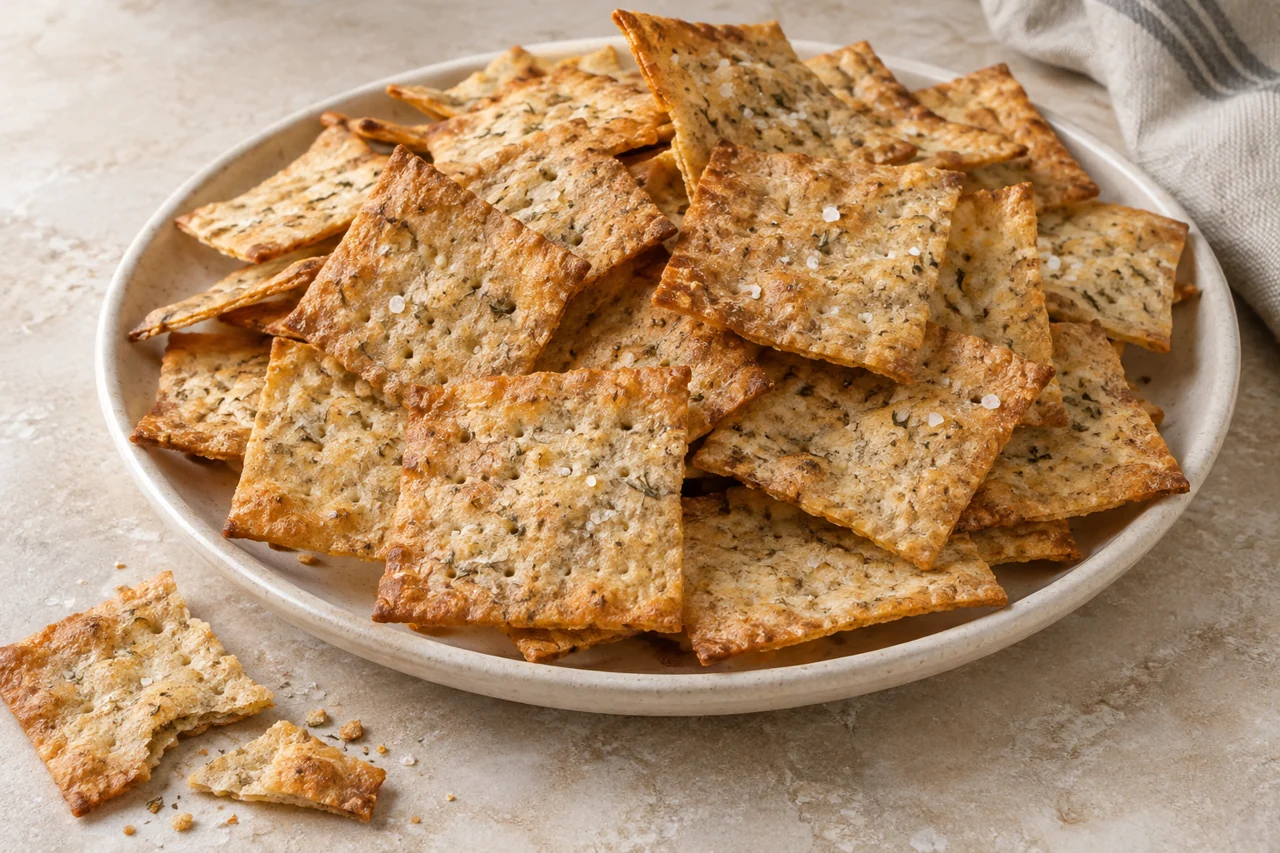
Recipe to try: Sourdough Crackers. These crackers use sourdough discard. Use discard from a healthy established starter and bake it fully; this is not a raw-starter snack.
IN PICTURES
From the baking notebook
FROM THE RECIPE BOX


