On this page
Bulk fermentation is the stage of sourdough baking that asks the most of your judgement. The recipe might say four hours, but your dough doesn't know the time on the clock. A cool kitchen, a vigorous starter, warmer water or a different flour can change the pace. End bulk too early and the loaf may bake dense; push it too long and the dough may weaken and spread. Learning to read the actual dough is one of the most useful skills a sourdough baker can develop.
What is bulk fermentation?
Bulk fermentation is the first major fermentation period after the dough is mixed and before it's divided or preshaped. In naturally leavened dough, yeast and bacteria ferment sugars, creating gas and acids while the dough develops flavour and structure. Some bakers use an autolyse or other rest before adding starter; follow the recipe's definition of when bulk starts rather than assuming that all preliminary mixing time counts the same way.
Why the bulk stage matters so much
Fermentation creates gas that expands the dough. Organic acids help shape flavour and influence gluten behaviour. During this stage, folds or other strength-building techniques may also make the dough smoother and more resilient. Bulk isn't just waiting for a visible rise; it builds much of the loaf's final crumb and handling characteristics.
The short answer: look for several signs together
A properly fermented dough often shows a meaningful increase in volume, some bubbles at the sides or top, a smoother surface, an airy feel and gentle movement when the bowl is shaken. How much rise is appropriate depends on dough temperature, recipe, flour and the plan for final proof. No single sign—or universal doubling rule—fits every dough.
1. The dough has grown visibly
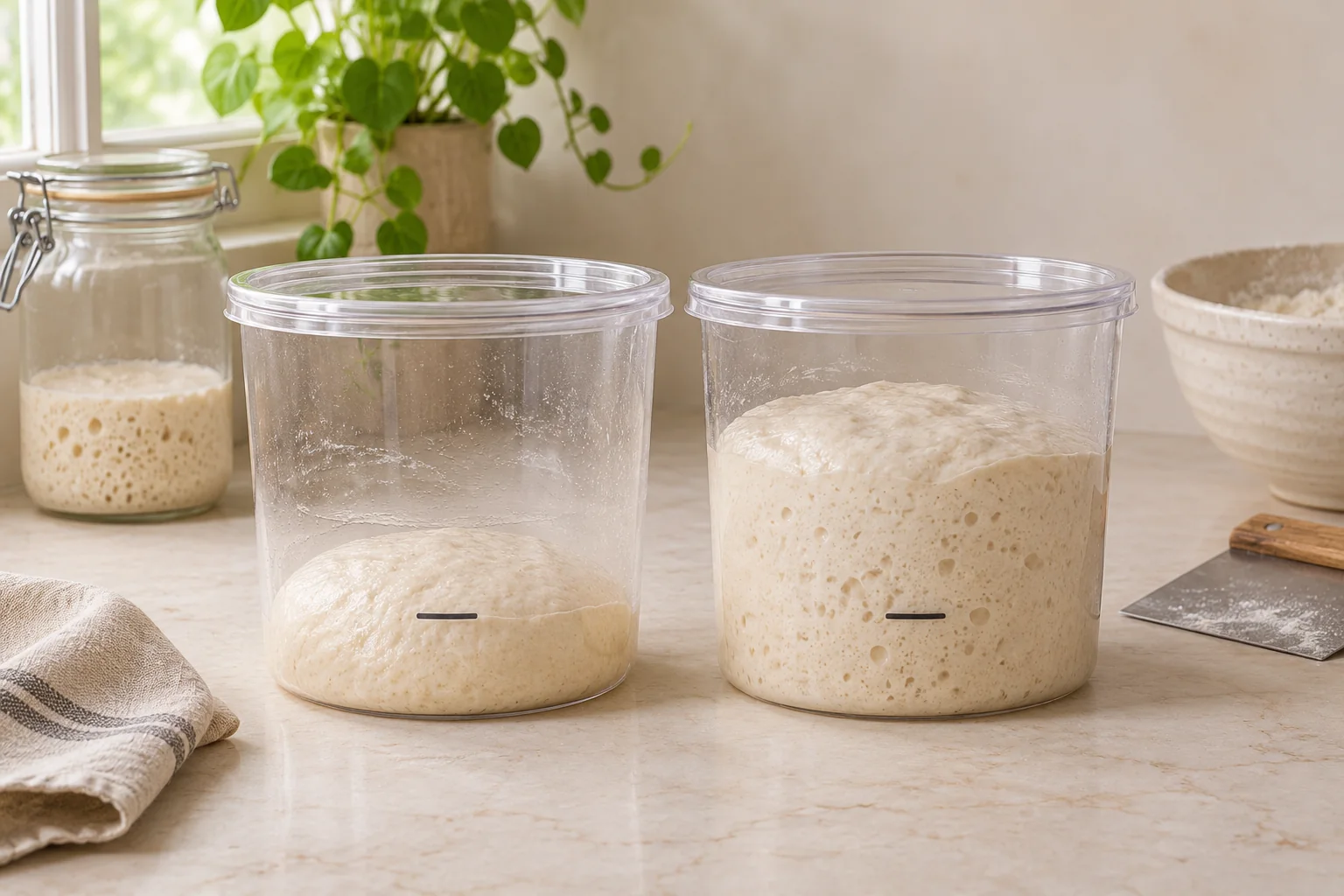
Use a clear, straight-sided container if possible and mark the starting level after mixing. That lets you see percentage rise rather than judging a curved bowl by eye. The exact increase to aim for is recipe-specific. A warm dough headed for an overnight cold proof may need a different bulk endpoint from a cooler dough that will complete its final proof at room temperature.
2. Bubbles show developing gas
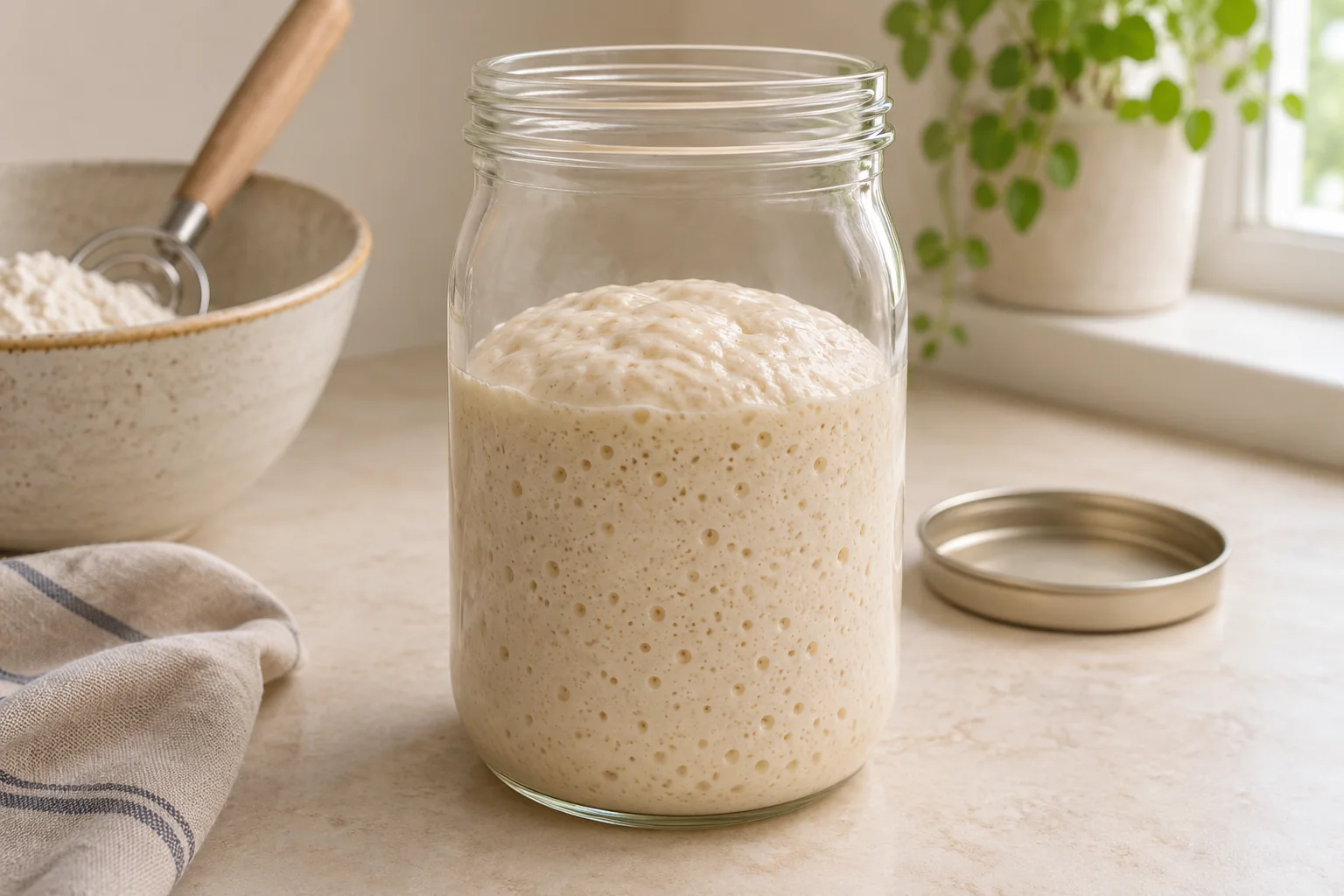
Small bubbles along the container wall or surface indicate active fermentation. Some recipes show a few visible larger bubbles by the end of bulk. Absence of obvious surface bubbles is not always proof of failure, particularly in a thick or whole-grain dough. Observe the volume and feel as well.
3. The surface becomes smoother
Early in mixing, the dough may be shaggy and irregular. As hydration, fermentation and folding progress, it often becomes smoother and more cohesive. A slight dome at the edges can be another useful visual cue. Smoothness alone isn't proof of finished fermentation because kneading also smooths dough; combine it with rise and aeration.
4. The dough feels lighter
A well-fermented dough often feels less dense and more buoyant than it did immediately after mixing. When handled gently, it may hold pockets of gas and stretch with resistance. Don't repeatedly press your fingers deeply through the mass in an attempt to measure airiness; excessive degassing can distort the very structure you're assessing.
5. It jiggles when moved
Aerated dough often wobbles slightly because of the internal gas. A very stiff dough may jiggle less than a highly hydrated one, so treat the observation as supportive rather than decisive.
6. The dough has enough strength
A well-developed wheat dough should have some elasticity and hold shape better than a shapeless early mix. Folds during bulk help develop strength and can distribute temperature more evenly. If the dough is very slack, you must distinguish inadequate gluten from over-fermentation. Either can make shaping difficult, but the solutions are different.
Why the clock isn't enough
Fermentation time changes with dough temperature, starter strength and the formula. Use the clock to remind you to check the dough. Judge the developing volume, bubbles, strength and feel together before moving to shaping.
Dough temperature is a major variable
Fermentation becomes more active as dough warms within the viable range of the microbes. If the formula targets 24°C and your dough is several degrees cooler, its rise may lag significantly. Measure the dough itself with a clean thermometer when possible and record it beside the time. Be cautious with attempts to speed fermentation using uncontrolled high heat.
Starter maturity changes timing
A young, weak or recently refrigerated starter may not leaven dough as quickly as a starter that rises predictably after feeding. Even at the same room temperature, inoculation percentage and starter condition change the pace. Follow the recipe's target starter stage and use a consistent feeding routine.
Flour type changes the visual cues
Whole-wheat and rye flour behave differently from strong white bread flour. The dough's texture, gas retention and acidity may change. A rye-rich dough may not become highly elastic in the way a wheat dough does. Judge bulk using a method appropriate to the grain mixture, not only the feel of a white artisan sourdough.
What about hydration?
Wetter dough may look more fluid and visibly bubble, while firmer dough may hold a rounded form with subtler movement. These are tendencies, not a universal diagnostic. Hydration should match the formula and flour. Don't add water mid-bulk simply because a dough doesn't look like a high-hydration tutorial.
Should bulk always double the dough?
No. Some sourdough approaches end bulk well before doubling, especially when warmer dough is followed by an extended refrigerated proof. Other formulas expect a much larger rise. A rigid 100% rise can over-ferment some doughs. Follow the formula's percentage or visual target and adjust for actual dough temperature.
What if you end bulk too early?
The dough may feel tight or heavy during shaping, show relatively few bubbles and bake with a dense crumb or large uneven cavities. The loaf may burst unpredictably as the remaining fermentation and oven spring try to expand it. For a future loaf, track the dough's rise and give bulk more development if the evidence supports under-fermentation.
What if bulk goes too long?
Excess fermentation can make dough weak, excessively sticky or difficult to shape. It may spread quickly rather than holding tension and produce limited oven spring. More flour on the bench won't restore a badly weakened gluten structure. A shorter or cooler bulk may help next time, depending on the cause.
The role of stretch and folds
Folds are commonly performed early in bulk to strengthen dough without intense kneading. As the dough becomes lighter and more gas-filled, handling is often reduced to preserve its structure. Follow the recipe's fold schedule; doing one more vigorous fold late in fermentation can expel gas and make the endpoint harder to judge.
Recipe to try: Sourdough Ciabatta. Ciabatta provides a different dough and loaf shape to practise with. Keep its hydration and handling instructions together.

How to use an aliquot jar
Some bakers place a small representative sample of mixed dough in a narrow, marked container and watch its rise. This can help estimate percentage growth when the main container has sloping sides. The sample may not behave exactly like the large dough mass if their temperatures differ, so treat it as a useful indicator, not a substitute for examining the main dough.
Bulk before an overnight cold proof
If a recipe calls for shaping and refrigerating the loaf overnight, some fermentation may continue as the dough cools. The appropriate end of bulk accounts for that later period. Don't use the same endpoint as a room-temperature final proof without checking the recipe. A large loaf cools more slowly than a small dough sample.
Bulk before a same-day bake
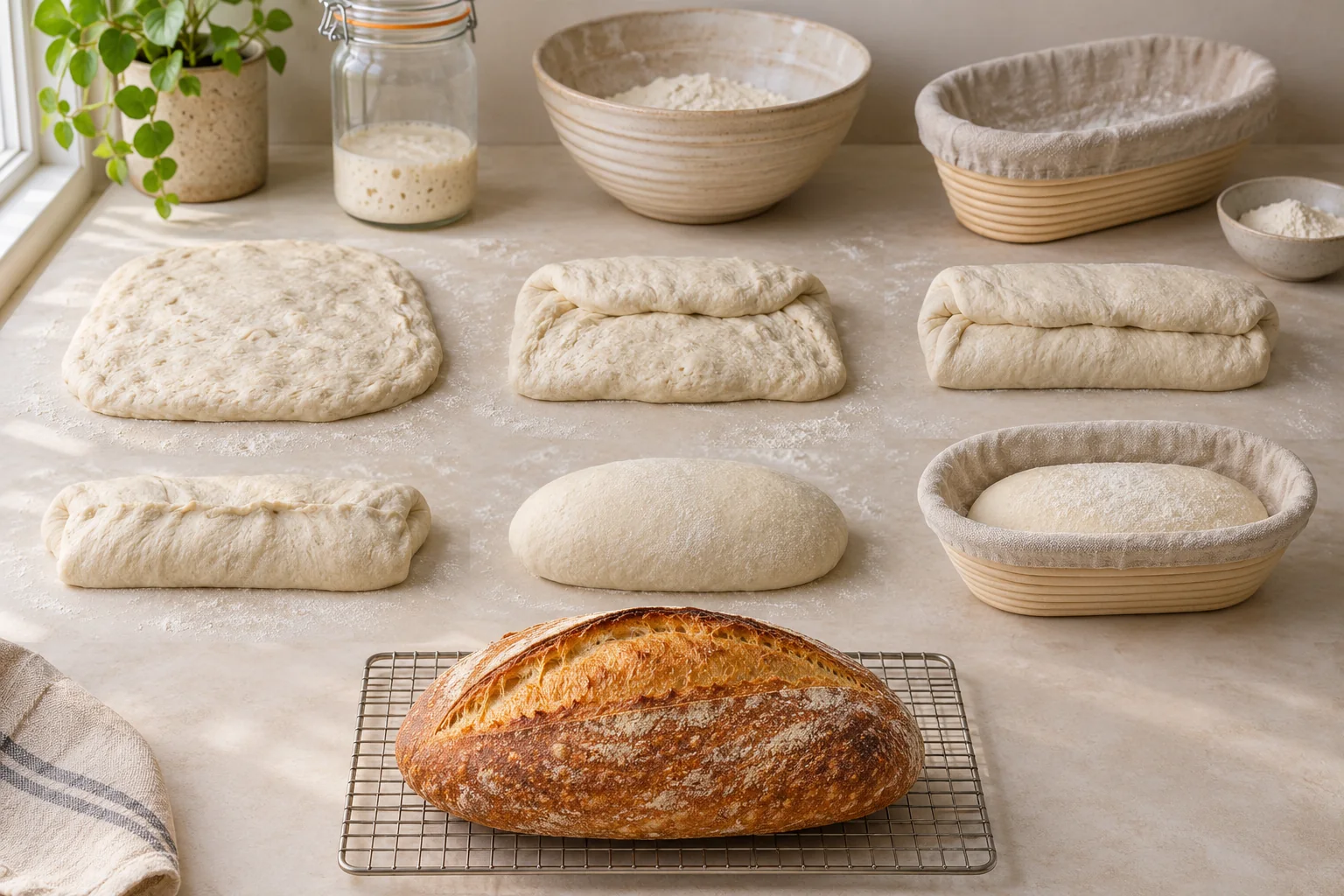
A loaf that will proof at room temperature and bake the same afternoon may use a different bulk endpoint and final proof schedule. The combined fermentation is what matters. Keep the two stages connected in your notes rather than treating them as unrelated waiting periods.
Recipe to try: Sourdough Baguette. These elongated loaves use active sourdough starter. Follow their own shaping and proofing method rather than a round-loaf schedule.

Is the finger-poke test useful during bulk?
The poke test is more commonly associated with judging final proof, and even there it has limitations. During bulk, total rise, aeration, feel, temperature and recipe directions are usually more informative than making a single indentation in the dough.
A practical readiness checklist
Ask: Has the dough risen in the amount expected for this recipe and temperature? Are there visible signs of gas? Has it gained smoothness and strength? Does it feel lighter and gently jiggle? Is it still cohesive enough to preshape? The more those observations agree, the more confident you can be in the endpoint.
Record the process for next time
Write down starter feeding time, dough temperature after mixing, room conditions, number and timing of folds, bulk start and end, visible rise and how the dough shaped. Then photograph the crumb after baking. This connects process to outcome and makes each subsequent loaf more repeatable.
Recipe to try: Sourdough Country Loaf. The loaf calls for active starter. Check its maturity and the dough’s fermentation cues before moving on to shaping.

Frequently asked questions
How long is sourdough bulk fermentation? It depends on temperature, starter, hydration and formula. Must it double? No. Are bubbles enough? Not by themselves. Can I refrigerate during bulk? Only as part of a method developed for that schedule. What if the dough isn't jiggly? Consider its hydration and all the other cues rather than assuming failure.
The goal is the right stage, not the right hour
Bulk fermentation ends when the dough has enough gas, flavour and strength for the next step while retaining potential for final proof and oven spring. Learn the sight and feel of the dough you actually bake, and the clock will become a guide instead of a guess.
IN PICTURES
From the baking notebook
FROM THE RECIPE BOX


